Dog Bladder Stones: Symptoms, Treatment, and Surgery Costs
Dog bladder stones cause straining, bloody urine, and frequent squatting, and an untreated blockage is an emergency. Learn the symptoms, stone types, treatment options, and what surgery really costs.

BVMS MRCVS
Medically reviewed by Dr. Pippa Elliott, BVMS MRCVS · Last reviewed

This article contains affiliate links. Webvet may earn a commission when you buy through them, at no extra cost to you.
Dog bladder stones, known medically as uroliths or cystic calculi, are hard mineral deposits that form inside the bladder and cause straining, bloody urine, and frequent squatting with little coming out. Most stones can be dissolved or surgically removed, but a stone that lodges in the urethra and blocks urine flow is a life-threatening emergency that needs a vet immediately. This vet-reviewed guide covers the symptoms, the different stone types, how vets diagnose and treat them, realistic surgery costs, and exactly when a urinary problem becomes an emergency.
- 1Bladder stones are hard mineral deposits (uroliths) that irritate the bladder and cause straining, blood in the urine, and frequent, painful urination.
- 2A dog straining with little or no urine coming out may have a urinary blockage, which is a true emergency, so call a vet or ER now.
- 3Stone type matters: struvite stones can often be dissolved with a therapeutic diet and antibiotics, while calcium oxalate stones cannot be dissolved and usually require removal.
- 4Diagnosis relies on X-rays, ultrasound, and urinalysis, with stone analysis after removal to prevent recurrence.
- 5Home care and supplements are adjuncts only and never replace a hands-on veterinary exam and treatment plan.
What Are Bladder Stones in Dogs?
Bladder stones are rock-like collections of minerals that form in a dog's urinary bladder. Vets call them uroliths or cystic calculi, and they range from a single large stone to hundreds of tiny, sand-like grains. They start when minerals that are normally dissolved in the urine become too concentrated, crystallize, and then clump together over days to weeks into solid stones.
Those stones do real damage. Their rough surfaces rub against the bladder wall, causing inflammation, bleeding, and pain, and they create a haven where bacteria can hide from the immune system. The most dangerous scenario is when a stone moves out of the bladder and becomes wedged in the urethra, the narrow tube that carries urine out of the body. In male dogs especially, this can fully block urine flow, which is a medical emergency.

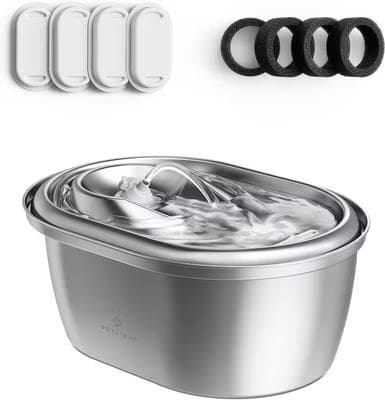
304 food-grade stainless steel pet water fountain, 101 oz. The circulating, filtered water encourages cats to drink more, which supports urinary tract and kidney health.
Webvet may earn a commission when you click through to Chewy, at no extra cost to you.
Symptoms of Bladder Stones in Dogs
The signs of bladder stones come from an inflamed, irritated bladder and often look identical to a urinary tract infection. Watch for these common symptoms:
- Blood in the urine: pink, red, or cloudy urine, a sign called hematuria.
- Straining to urinate: hunching and visibly working to pass urine, called dysuria.
- Frequent small voids: squatting over and over but producing only a few drops each time.
- Indoor accidents: a housetrained dog suddenly leaking or urinating inside.
- Genital licking: repeatedly licking the area because it feels irritated.
- Cloudy or strong-smelling urine: a common sign when infection accompanies the stones.

Some dogs show no symptoms at all until a stone grows large or blocks the urethra. If you notice your dog peeing blood or your dog straining to urinate, do not wait it out. A dog that strains with nothing coming out may be blocked, which is a true emergency covered later in this guide.
Types of Bladder Stones in Dogs
Not all bladder stones are the same, and the type matters enormously because it dictates the treatment. Some stones can be dissolved with a special diet, while others can only be removed. The two most common types in dogs are struvite and calcium oxalate, which together make up the large majority of cases.
| Stone type | Typical driver | Can it be dissolved with diet? |
|---|---|---|
| Struvite | Usually urinary infection with urease-producing bacteria | Yes, with a therapeutic diet and antibiotics |
| Calcium oxalate | Metabolic and dietary factors, certain breeds | No, requires removal |
| Urate | Liver shunts, Dalmatian genetics | Sometimes, with diet and medication |
| Cystine | Inherited kidney defect, mostly intact males | Sometimes, with diet and medication |
| Silica | Certain plant-based diet ingredients | No, requires removal |
This is why vets almost always analyze a stone in the lab after it is removed or passed. Knowing the exact mineral makeup lets your vet build a prevention plan aimed at the specific stone your dog forms, rather than guessing.
What Causes Bladder Stones in Dogs?
Stones form when minerals in the urine become concentrated enough to crystallize and then build into solid masses. Several factors push urine toward stone formation. Urine pH is a big one: struvite stones tend to form in alkaline urine, while calcium oxalate stones favor acidic urine. A urinary tract infection in dogs is the classic driver of struvite stones, because certain bacteria produce an enzyme called urease that makes the urine alkaline and rich in the minerals struvite needs.
Diet, hydration, and genetics all play a part too. Diets that are very concentrated in certain minerals, urine that stays too concentrated because a dog does not drink enough, and breed or metabolic predisposition can all tip the balance. Miniature Schnauzers, Bichon Frises, Shih Tzus, Lhasa Apsos, and Dalmatians are among the breeds seen more often with stones, and each breed tends toward particular stone types.
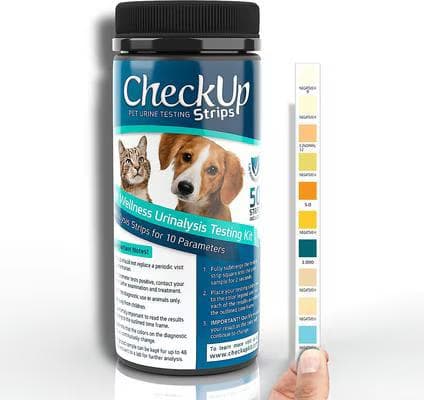
At-home urine test strips that screen for glucose, blood, pH, and protein in seconds, so you can catch early signs of diabetes, kidney disease, or a UTI and bring real numbers to your vet.
Webvet may earn a commission when you click through to Chewy, at no extra cost to you.
What Foods Cause Bladder Stones in Dogs?
No single food reliably causes bladder stones, but diet strongly influences whether they form. The two levers that matter most are mineral load and hydration. Diets very dense in the minerals that make up stones (magnesium and phosphorus for struvite, calcium and oxalate for calcium oxalate) can raise the risk in a susceptible dog, and a diet that keeps urine highly concentrated gives crystals more chance to grow.
For dogs prone to calcium oxalate stones, vets often advise limiting high-oxalate foods such as spinach, sweet potato, and certain nuts. But the far more important factor for most dogs is water intake. Feeding moisture-rich food and keeping fresh water constantly available dilutes the urine and flushes the bladder, which does more to prevent stones than avoiding any single ingredient. If your dog already forms a specific stone type, a prescription therapeutic diet is more precise than any home guesswork.
 $65 · no membership
Worried about your dog's urinary or kidney symptoms?
A licensed vet can examine your dog over video and prescribe treatment online when it's appropriate.
 Talk to a vet
- Licensed vets
- All 50 states
- same-day Rx
Webvet may earn a commission if you book.
How Veterinarians Diagnose Bladder Stones
Because the symptoms of a urinary problem in dogs overlap so heavily with a simple infection, a vet does not diagnose stones by signs alone. Diagnosis combines imaging with urine testing to confirm the stones, estimate their number and size, and check for infection.

- X-rays: most struvite and calcium oxalate stones show up clearly on a plain radiograph.
- Ultrasound: helps find stones that X-rays miss, such as some urate and cystine stones, and shows bladder wall thickening.
- Urinalysis: reveals crystals, blood, pH, and signs of infection, and hints at the likely stone type.
- Urine culture and stone analysis: a culture identifies infection, and lab analysis of a removed stone confirms its exact mineral makeup.
How Are Dog Bladder Stones Treated?
There is no single urinary treatment for dogs that fits every case. The right approach depends on the stone type, its size, whether it is causing a blockage, and your dog's overall health. Vets choose from several options:
- Dietary dissolution: for struvite stones, a therapeutic diet that changes urine chemistry can slowly dissolve them over several weeks, usually alongside antibiotics for the underlying infection.
- Surgery (cystotomy): the vet opens the bladder and removes the stones directly. This is the fastest, most definitive option and is often preferred for oxalate stones, large stones, or a blockage.
- Voiding urohydropropulsion: for very small stones, the vet fills the bladder with fluid and manually expresses the tiny stones out through the urethra without surgery.
- Cystoscopy and laser lithotripsy: at referral centers, a scope passed into the bladder lets the vet fragment stones with a laser and remove the pieces with minimal or no surgical incision.

Whatever the method, treating any underlying infection and analyzing the stone afterward are essential steps. Skipping them is the most common reason stones come back.
What Dissolves Bladder Stones Fast in Dogs?
The honest answer is that nothing dissolves stones truly fast, and only certain stones can be dissolved at all. Struvite stones, the most common dissolvable type, can be broken down with a veterinary therapeutic diet combined with antibiotics to clear the infection driving them. Even then, dissolution typically takes several weeks to a few months, not days, and your vet confirms progress with follow-up X-rays.
Calcium oxalate stones, the other very common type, cannot be dissolved by any diet or medication. They must be physically removed by surgery or another procedure. This is exactly why identifying the stone type is so important: it determines whether dissolution is even an option or whether removal is the only path.

Webvet may earn a commission when you click through to Chewy, at no extra cost to you.
Dog Bladder Stone Surgery Costs
One of the first questions owners ask is what treatment will cost. Prices vary widely by region, clinic, your dog's size, and how complicated the case is, so treat these as general ranges to discuss with your own vet, not fixed quotes. Emergency and referral care sit at the higher end.
| Item | Typical range (USD) | Notes |
|---|---|---|
| Diagnostics (X-ray, ultrasound, urinalysis, culture) | $250 to $600 | Often needed before any treatment decision |
| Cystotomy surgery (bladder stone removal) | $800 to $3,000 | Includes anesthesia, monitoring, and hospital stay |
| Emergency unblocking of an obstructed dog | $1,500 to $5,000+ | Higher with ICU care or repeat blockage |
| Dietary dissolution (struvite) | $80 to $150 per month | Cheaper up front but takes weeks to months plus rechecks |
| Follow-up rechecks and imaging | $100 to $300 each | Confirms the stones are gone and monitors recurrence |
Surgery costs more up front, but for oxalate stones or a blockage it is often the safest and most cost-effective choice over time, because a blocked or repeatedly infected dog racks up far larger bills. Pet insurance and payment plans can help, and it is worth asking your clinic about options before you decide.
How Long Can a Dog Live With Bladder Stones?
A dog can live for months or even years with small, silent bladder stones that are not blocking urine flow, but that is not a safe plan. Every day a stone sits in the bladder, it causes ongoing irritation, repeated infections, and the constant risk that it shifts and blocks the urethra. The real danger is not the stone itself but the blockage it can cause.
If a stone fully blocks the urethra, a dog can go from uncomfortable to critically ill very quickly, often within a day or two. Urine backs up, waste toxins build in the blood, and the bladder can rupture, which is often fatal without emergency care. So while an untreated stone may not cause immediate harm on any given day, leaving it in place is a gamble with a potentially deadly outcome. Treated promptly, the outlook for most dogs is very good.
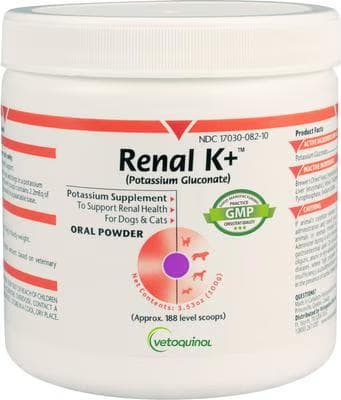
Vet-formulated potassium supplement that supports kidney health in dogs and cats with chronic kidney disease. An easy oral powder you mix into food.
Webvet may earn a commission when you click through to Chewy, at no extra cost to you.
Recovery and Aftercare

After surgery, most dogs recover quickly. Expect restricted activity for one to two weeks, a recovery cone to protect the incision, pain medication, and often a course of antibiotics. Mild blood in the urine for a few days is normal as the bladder heals, but heavy bleeding, straining, or an inability to urinate warrants an immediate call to your vet.
The most important part of aftercare is preventing the next stone. Your vet will use the stone analysis to set a prevention plan, which usually means a specific diet, encouraging water intake, and periodic recheck X-rays or ultrasounds to catch new stones while they are still small. Because recurrence is common, especially with oxalate stones, these rechecks are not optional extras but the core of long-term management.
How to Prevent Bladder Stones in Dogs
You cannot prevent every stone, but the right habits meaningfully lower the risk of a first stone and, more importantly, a recurrence:
- Keep urine dilute. Encourage water intake and consider moisture-rich food so crystals have less chance to form and clump.

- Feed the prescribed diet. For stone-forming dogs, a therapeutic urinary diet targets the exact stone type and is far more effective than home food swaps.
- Treat infections promptly. Because urinary infections drive struvite stones, catching and fully treating a UTI helps stop stones before they start.
- Offer frequent potty breaks. Regular, complete emptying flushes the bladder and gives crystals less time to settle.
- Recheck on schedule. Keep the follow-up imaging appointments so new stones are caught while they are small and easy to manage.
When to See a Vet vs. Emergency
Any dog showing urinary signs (straining, blood in the urine, frequent small voids, or accidents) should be seen by a vet promptly, because early treatment is simpler and cheaper than treating a blockage. But some signs are true emergencies that cannot wait for a regular appointment.
Supportive home care, such as keeping your dog well hydrated, has a place as an adjunct once your vet is involved, but it never replaces a real diagnosis and treatment plan. If you want a plain-language overview of urinary trouble in dogs, our own guide to home care for a dog UTI and our partners at Petful, who also cover UTIs in dogs, are good starting points, but stones themselves always warrant a hands-on veterinary exam.
Urinary stones and blockages are not just a dog problem, and a blocked cat is an even faster-moving emergency. If you also share your home with cats, it is worth understanding feline urinary health too; start with our hub on UTIs and urinary problems in cats. Across every species, the same rule holds: urinary signs deserve a prompt, accurate veterinary diagnosis.
Frequently Asked Questions
How do you treat bladder stones in dogs?
Bladder stones in dogs are treated in one of several ways depending on the stone type, size, and whether a blockage is present. Struvite stones can often be dissolved over several weeks with a veterinary therapeutic diet plus antibiotics to clear the underlying infection. Other stones, especially calcium oxalate, cannot be dissolved and are removed with surgery (cystotomy), a minimally invasive procedure called voiding urohydropropulsion for very small stones, or laser lithotripsy with cystoscopy at a referral center. A dog with a urinary blockage needs emergency care to relieve the obstruction first. Your vet also treats any infection and analyzes the removed stone to build a prevention plan against recurrence.
What foods cause bladder stones in dogs?
No single food reliably causes bladder stones, but diet strongly influences the risk. Diets very dense in the minerals that make up stones can contribute: magnesium and phosphorus for struvite stones, and calcium and oxalate for calcium oxalate stones. For oxalate-prone dogs, vets often suggest limiting high-oxalate foods such as spinach, sweet potato, and certain nuts. Just as important as ingredients is hydration, because urine that stays too concentrated lets crystals form and clump. Feeding moisture-rich food and keeping fresh water constantly available dilutes the urine and does more to prevent stones than avoiding any single food. If your dog already forms a specific stone type, a prescription therapeutic diet is more precise than home guesswork.
How long can a dog last with bladder stones?
A dog can last months or even years with small stones that are not blocking urine flow, but leaving them untreated is risky. The stones cause ongoing irritation, repeated infections, and the constant danger that one shifts and blocks the urethra. If a stone fully blocks urine flow, a dog can go from uncomfortable to critically ill very quickly, often within a day or two, because toxins build up in the blood and the bladder can rupture, which is often fatal without emergency care. So while a stone may not cause harm on any single day, leaving it in place is a gamble. Treated promptly, most dogs do very well.
What dissolves bladder stones fast in dogs?
Nothing dissolves bladder stones truly fast, and only some stones can be dissolved at all. Struvite stones, the most common dissolvable type, can be broken down with a veterinary therapeutic diet combined with antibiotics to clear the infection driving them, but this takes several weeks to a few months, not days, and your vet confirms progress with follow-up X-rays. Calcium oxalate stones cannot be dissolved by any diet or medication and must be physically removed. There is no safe over-the-counter product that dissolves stones quickly, and dietary dissolution is never appropriate for a dog with a urinary blockage, which is an emergency requiring immediate veterinary treatment.
How long can dogs live with bladder stones?
Dogs can live for a long time with small, silent bladder stones, sometimes months or years, but that is not a safe long-term plan. Untreated stones keep irritating the bladder, fuel recurring infections, and carry a persistent risk of blocking the urethra. A blockage is life-threatening and can kill a dog within a day or two if not relieved. With prompt treatment, whether by dissolution diet or removal, plus a prevention plan built around the stone type, most dogs live full, normal lives. The key is not to leave stones in place and hope, but to have them diagnosed and managed by a veterinarian.
How long will a dog live with bladder stones?
How long a dog lives with bladder stones depends almost entirely on whether the stones are treated and whether a blockage occurs. Left alone, small stones may not shorten a dog's life for a while, but they raise the risk of a sudden, life-threatening urinary blockage that can prove fatal within a day or two if it is not relieved. Once a dog is properly treated, either by dissolving struvite stones with diet and antibiotics or by removing stones surgically, and then kept on a prevention plan with the right diet and periodic rechecks, the outlook is excellent and most dogs live a normal lifespan. The danger comes from delay, not from stones that are diagnosed and managed early.
$65 · no membershipWorried about your dog's urinary or kidney symptoms?
A licensed vet can examine your dog over video and prescribe treatment online when it's appropriate.
Talk to a vet- Licensed vets
- All 50 states
- same-day Rx
Webvet may earn a commission if you book.

Editor
The Webvet Editorial Team is the in-house group of pet-care editors and writers behind Webvet, operated by Smart Pet Collective. The team researches, writes, and maintains Webvet's pet health, behavior, and medication content. Every article follows a defined editorial process: research from reputable veterinary and scientific sources, careful drafting, mandatory review of medical content by a credentialed veterinarian, and dated publication. Health and medication articles are medically reviewed by a licensed veterinary professional before they go live and are kept current over time.
Veterinarian · BVMS MRCVS
Dr. Pippa Elliott, BVMS, MRCVS, is a veterinarian with nearly 30 years of experience in companion animal practice. Dr. Elliott earned her Bachelor of Veterinary Medicine and Surgery from the University of Glasgow. She was also designated a Member of the Royal College of Veterinary Surgeons. Married with 2 grown-up kids, Dr. Elliott has a naughty Puggle named Poggle, 3 cats and a bearded dragon.
Related reading

Kidney Disease in Dogs: Why Tracking Water Intake Can Help Your Vet

Best Cat Water Fountain Picks of 2026, Vet Informed

Dog Straining to Urinate: Is It a UTI, Blockage, or Emergency?
