Dog UTI Symptoms: 9 Warning Signs and What to Do Next
Worried your dog has a bladder infection? Learn the 9 warning signs of a dog UTI, the straining red flag that means an emergency, and exactly what to do next.

BVMS MRCVS
Medically reviewed by Dr. Pippa Elliott, BVMS MRCVS · Last reviewed

This article contains affiliate links. Webvet may earn a commission when you buy through them, at no extra cost to you.
Recognizing dog UTI symptoms early can spare your dog real pain and keep a simple bladder infection from turning into a kidney infection or a life-threatening blockage. A urinary tract infection makes the bladder feel full and irritated even when it is nearly empty, so the classic signs revolve around how, how often, and how comfortably your dog urinates.
This vet-reviewed guide walks through the 9 warning signs to watch for, the emergency red flags that mean you should not wait, and exactly what to do next.
- 1The most common dog UTI symptoms are frequent urination, straining, blood or cloudy urine, foul odor, indoor accidents, and excessive genital licking.
- 2A dog straining to urinate with little or no output can mean a urinary obstruction, a true emergency that needs a vet immediately.
- 3A dog UTI does not reliably clear up on its own and can ascend to the kidneys if left untreated.
- 4Many conditions mimic a UTI, so only a urinalysis and, ideally, a urine culture can confirm a real infection.
- 5Home care and supplements are adjuncts only; the cure is a vet-prescribed, culture-guided antibiotic.
What Is a UTI in Dogs?
A urinary tract infection is an infection somewhere in the system that makes and carries urine out of the body. In dogs, the most common form is a bacterial infection of the bladder, called bacterial cystitis. Bacteria, most often Escherichia coli from the dog's own gut and skin, climb up the urethra, reach the bladder, and multiply, irritating the bladder lining and triggering the discomfort behind every symptom below.
Vets divide the urinary tract into a lower part (the bladder and urethra) and an upper part (the kidneys). Most dog UTIs are lower-tract infections in the bladder. Left untreated, they do not reliably resolve on their own, and the infection can travel upward to a kidney, a far more serious condition called pyelonephritis.
For the full clinical picture, causes, and treatment, see our complete guide to UTIs in dogs. This article focuses on the warning signs and what to do the moment you spot them.

Webvet may earn a commission when you click through to Chewy, at no extra cost to you.
9 Warning Signs Your Dog Has a UTI
No single sign confirms a bladder infection, but a cluster of these is a strong reason to call your vet. Here are the 9 warning signs to watch for, from the most common to the ones owners often miss.
1. Frequent urination in small amounts
The most classic dog UTI symptom is asking to go out far more often than usual, then producing only a small amount each time. An inflamed bladder feels full even when it is nearly empty, so your dog squats again and again with little to show for it. If a normally once-every-few-hours dog is suddenly begging at the door every 20 minutes, take note.

2. Straining or crying while peeing
Hunching, visibly working to pass urine, or whimpering and crying out mid-stream all point to a painful, irritated bladder. Straining to urinate deserves special attention: if your dog strains and almost nothing comes out, that can signal a blockage rather than a simple infection, which is an emergency covered below.
3. Blood, cloudy, or dark urine
Pink, red, orange-tinged, or cloudy urine is a sign called hematuria, and it is one of the most alarming symptoms owners notice. It comes from the irritated bladder lining bleeding into the urine. If your dog is peeing blood, it always warrants a vet visit, since blood in the urine can also point to stones, tumors, or a clotting problem rather than a UTI.

4. Strong or foul urine odor
Urine that suddenly smells unusually strong, foul, or fishy can reflect the bacteria and inflammatory debris of an infection. Odor alone is not proof, since concentrated urine from a dehydrated dog also smells strong, but a new, distinctly unpleasant smell alongside other signs is worth flagging to your vet.
Owners sometimes notice this first when a dog has an accident indoors and the odor is far stronger than usual.
5. Accidents in the house or loss of housetraining
A reliably housetrained dog who suddenly leaks or urinates indoors is not misbehaving. The urgency and loss of bladder control that come with a UTI can override even solid training. Sudden accidents, dribbling on bedding, or waking up to urinate at night all deserve attention rather than scolding.

6. Excessive licking of the genitals
Dogs often lick the genital area repeatedly when it feels irritated or sore, which is a subtle but common UTI symptom. Some owners mistake it for grooming or a skin issue. If the licking is new, persistent, and paired with any urinary changes, a bladder infection is a real possibility.
7. Increased thirst
A noticeable jump in how much your dog drinks can accompany a urinary problem. Increased thirst is also a hallmark of look-alike diseases such as diabetes, kidney disease, and Cushing's disease, so a dog that is suddenly draining the water bowl needs bloodwork and a urine test, not just a course of antibiotics.
8. Lethargy or decreased appetite
A simple bladder infection is uncomfortable but does not usually make a dog systemically ill. When a dog becomes tired, withdrawn, or goes off food, it can mean the infection has spread toward the kidneys or that something more serious is going on.
A dog that is also feverish, shivering, or clearly unwell alongside urinary signs may be developing a kidney infection, which is far more dangerous than a bladder infection. Lethargy and appetite loss push a routine appointment toward a same-day one.
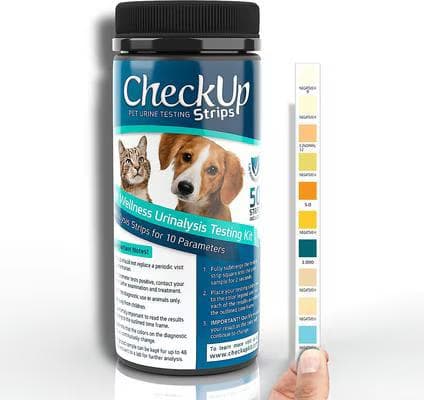
At-home urine test strips that screen for glucose, blood, pH, and protein in seconds, so you can catch early signs of diabetes, kidney disease, or a UTI and bring real numbers to your vet.
Webvet may earn a commission when you click through to Chewy, at no extra cost to you.
9. Signs of pain or a firm, tender abdomen
A dog that flinches, tenses, or reacts when you touch its lower belly, or that stands in a hunched, guarded posture, may be in real pain. A firm, distended, or painful abdomen is a warning sign that should never be ignored, because a bladder that cannot empty can become dangerously overfull. When in doubt, have your vet examine it.
One symptom on its own does not confirm a UTI, but two or more together, especially straining, blood, or a change in how often your dog urinates, are a clear signal to pick up the phone.
 $65 · no membership
Worried about your dog's urinary or kidney symptoms?
A licensed vet can examine your dog over video and prescribe treatment online when it's appropriate.
 Talk to a vet
- Licensed vets
- All 50 states
- same-day Rx
Webvet may earn a commission if you book.
When Is It an Emergency? Urinary Blockage Red Flags
Most UTIs warrant a prompt but non-emergency vet visit. Some urinary signs, though, are true emergencies, and the difference can be life or death. The single most important pattern to recognize is a dog that strains to urinate but produces little or nothing.
A dog straining with nothing coming out may have a urinary obstruction, most often a stone or plug lodged in the urethra. A blocked dog cannot empty the bladder, pressure backs up toward the kidneys, toxins build in the blood, and the bladder can rupture.
This is a life-threatening emergency that needs a vet immediately, day or night. Do not wait to see if it passes.

Short of those red flags, book a regular appointment promptly if your dog shows frequent or painful urination, blood in the urine, indoor accidents, or excessive licking. Puppies, senior dogs, and dogs with diabetes or a history of stones should be seen sooner rather than later.
What Can Be Mistaken for a Dog UTI?
Here is what surprises many owners: a large share of dogs with UTI-like signs do not actually have a bladder infection. Frequent, painful, or bloody urination is a symptom, not a diagnosis, and several other conditions produce the exact same picture.
That is why a vet visit and a urine test matter so much, because treating the wrong problem wastes time and lets the real one worsen.
The most common look-alikes include bladder stones and crystals, sterile bladder inflammation (idiopathic cystitis), incontinence, bladder tumors such as transitional cell carcinoma, prostate infection or enlargement in male dogs, and metabolic diseases like diabetes, Cushing's disease, and kidney disease that make dogs drink and urinate far more.
| Condition | How it can look like a UTI | How vets tell it apart |
|---|---|---|
| Bladder stones or crystals | Straining, blood, frequent urination | Imaging (X-ray or ultrasound) plus urinalysis |
| Idiopathic cystitis | Straining, blood, urgency with no bacteria | Urine culture comes back negative |
| Bladder cancer (TCC) | Chronic blood and straining, often in older dogs | Ultrasound, urine tests, sometimes biopsy |
| Prostate disease (male dogs) | Straining, blood, discomfort urinating | Rectal exam, imaging, prostate-specific testing |
| Diabetes, Cushing's, or kidney disease | Drinking and urinating a lot, accidents | Bloodwork plus urinalysis |
| Incontinence or behavioral marking | Indoor accidents, dribbling, small volumes | History, exam, ruling out infection first |
Because these conditions overlap so heavily, a vet almost never treats presumed UTI signs blindly in a dog with recurring or ongoing problems. The urine, and often imaging or bloodwork, tells the real story.
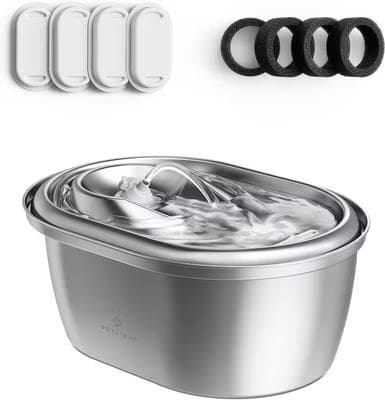
304 food-grade stainless steel pet water fountain, 101 oz. The circulating, filtered water encourages cats to drink more, which supports urinary tract and kidney health.
Webvet may earn a commission when you click through to Chewy, at no extra cost to you.
What Causes a UTI in Dogs?
Most dog UTIs are caused by bacteria that normally live around the anus, on the skin, and in the environment making their way into the urethra and up to the bladder. Escherichia coli is by far the most common culprit, but Staphylococcus, Proteus, Enterococcus, and Klebsiella are also frequent offenders.
A healthy urinary tract has natural defenses. Regular, complete urination flushes bacteria out, the bladder lining resists attachment, and the urine's acidity discourages growth. A UTI develops when those defenses are overwhelmed, for example when a dog holds urine too long, cannot empty the bladder fully, or has a condition that makes the urine a friendlier place for bacteria to grow.
This is why an underlying problem, such as diabetes or bladder stones, so often sits behind a UTI that keeps coming back, and why your vet may look beyond the infection itself when it recurs.
Are Some Dogs More at Risk?
Some dogs are simply more prone to urinary infections. Female dogs get UTIs more often than males because their urethra is shorter and wider, giving bacteria a shorter climb to the bladder. Beyond sex, several factors raise the risk:
- Older age, as immune defenses and bladder function decline over time.
- Diabetes and Cushing's disease, which put sugar in the urine and suppress immunity, making infections both more likely and more stubborn.
- Bladder stones or crystals, which irritate the bladder lining and harbor bacteria.
- A recessed or hooded vulva, and skin folds that trap moisture and bacteria near the urethra.
- A weakened immune system, from illness, medication, or recent catheterization or surgery.
If your dog carries one of these risk factors, take a suspected UTI seriously the first time, and investigate for a root cause if it keeps returning.
How Vets Diagnose a Dog UTI
Diagnosis starts with a physical exam and a urinalysis, the workhorse test that examines the urine for white blood cells, red blood cells, bacteria, crystals, protein, and concentration. A urinalysis can strongly suggest an infection, but it does not tell the vet which bacteria are involved. The same logic applies across species, as our overview of how veterinarians diagnose urinary problems in cats explains.
For a precise answer, vets rely on a urine culture and sensitivity test. The lab grows the bacteria from the sample, identifies the species, and tests which antibiotics will kill it. The most reliable sample is collected by cystocentesis, a quick technique where the vet draws urine directly from the bladder with a fine needle, avoiding contamination.
When a UTI keeps recurring, imaging and bloodwork are added to hunt for stones, tumors, or an underlying disease.
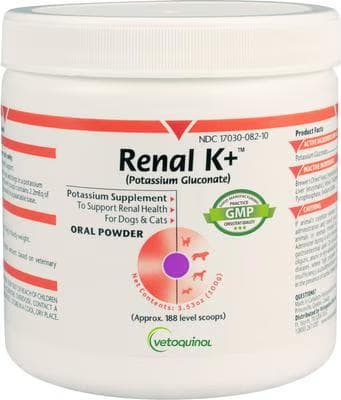
Vet-formulated potassium supplement that supports kidney health in dogs and cats with chronic kidney disease. An easy oral powder you mix into food.
Webvet may earn a commission when you click through to Chewy, at no extra cost to you.
How a Dog UTI Is Treated
The cornerstone of dog UTI treatment is a course of antibiotics chosen to match the specific bacteria causing the infection, ideally guided by the culture and sensitivity results. Your vet may also prescribe pain relief to keep your dog comfortable while the antibiotics work, since an inflamed bladder is genuinely painful.
Two principles are non-negotiable. First, finish the entire prescribed course, even after your dog looks normal within a couple of days, because stopping early lets surviving bacteria rebound and encourages antibiotic resistance. Second, treat the underlying cause. If stones, diabetes, or an anatomical issue is fueling the infections, the UTI will keep returning until that root problem is addressed.
Can You Check for or Treat a Dog UTI at Home?
You can observe a lot at home, but you cannot truly diagnose or cure a UTI there. The most valuable thing you can do is watch your dog closely and collect a fresh urine sample for your vet. Note how often your dog urinates, how much comes out, whether there is straining, and whether the urine looks pink, red, or cloudy.
To catch a sample, slide a clean, dry container into the stream once your dog starts, refrigerate it, and get it to the clinic within a few hours.
Over-the-counter urine strips and cranberry products are not a substitute for veterinary care. A strip cannot identify which bacteria are present or which antibiotic will work, and a normal strip can give false reassurance while a real problem goes untreated.
Supportive steps like plenty of water, frequent potty breaks, and vet-approved home remedies for a dog UTI have a place only as adjuncts alongside prescribed treatment, never instead of it. If your dog's signs point to a possible obstruction, skip home care entirely and go straight to an emergency vet.
How to Help Prevent Recurrent UTIs
You cannot prevent every infection, but simple habits meaningfully lower the odds, especially in dogs prone to recurrence:
- Keep water flowing. Constant fresh water dilutes urine and helps the bladder flush bacteria before they can settle in.
- Offer frequent potty breaks. Do not make your dog hold urine for long stretches, since stale urine gives bacteria time to multiply.
- Mind hygiene. Keep the genital area and any skin folds clean and dry, particularly in dogs with a recessed vulva.
- Manage underlying conditions. Keeping diabetes or Cushing's well controlled removes a major driver of stubborn infections.
If your dog has recurrent UTIs, ask your vet to look for a root cause rather than just re-treating each flare. Prevention succeeds when the underlying reason is found and managed. For a plain-language overview of the same topic, our partners at
Petful also cover UTIs in dogs in reader-friendly detail. And because urinary trouble is not just a dog problem, cat owners should read our hub on UTIs and urinary problems in cats, since a blocked cat is an even faster-moving emergency. Whatever the species, urinary signs deserve a prompt, accurate veterinary diagnosis.
Frequently Asked Questions
Can I treat my dog's UTI without going to vet?
No, you cannot safely treat a dog UTI without a vet. A bacterial infection needs the correct antibiotic at the correct dose, and choosing the right one requires a urine culture. Using a leftover or human antibiotic risks picking a drug that will not work, dosing it wrong, and fueling antibiotic resistance, all while your dog stays in pain and the infection can spread to the kidneys. Home care such as plenty of water and frequent potty breaks can support recovery, and cranberry or urinary supplements may help as an adjunct if your vet approves, but none of these replaces vet-prescribed, culture-guided antibiotics.
Can a dog's UTI go away by itself?
No, you should not expect a dog UTI to go away by itself. A true bacterial bladder infection does not reliably clear without the correct antibiotic, and leaving it untreated is risky. Bacteria in the bladder can travel up to the kidneys and cause pyelonephritis, a serious infection that can damage kidney function and, in severe cases, lead to sepsis. Waiting also leaves your dog in avoidable pain. A suspected UTI is a reason to see a veterinarian promptly, and any dog straining with little or no urine coming out needs emergency care immediately.
What can be mistaken for a UTI in dogs?
Several conditions can be mistaken for a UTI in dogs because they cause the same frequent, painful, or bloody urination. The common look-alikes include bladder stones or crystals, sterile bladder inflammation (idiopathic cystitis), bladder cancer such as transitional cell carcinoma, prostate infection or enlargement in male dogs, urinary incontinence, and metabolic diseases like diabetes, Cushing's disease, and kidney disease that make dogs drink and urinate more. This overlap is exactly why a vet runs a urinalysis and often imaging or bloodwork rather than treating the signs blindly, since the true cause changes the treatment entirely.
Can I check my dog for a UTI at home?
You can observe for signs and collect a sample at home, but you cannot truly diagnose a UTI there. Watch how often your dog urinates, how much comes out, whether it strains, and whether the urine looks pink, red, or cloudy. The most useful step is catching a fresh mid-stream urine sample in a clean container, refrigerating it, and getting it to your vet within a few hours. Over-the-counter urine test strips are not a substitute for veterinary testing, because they cannot identify which bacteria are present or which antibiotic will work, and a normal strip can falsely reassure you while a real problem goes untreated.
How long can a dog live with untreated UTI?
There is no safe amount of time to leave a dog UTI untreated, and the outcome varies widely. A simple bladder infection left alone can persist for weeks while causing ongoing pain, and it can ascend to the kidneys and cause pyelonephritis, which may damage kidney function or progress to life-threatening sepsis. If the underlying problem is actually a urinary obstruction rather than a simple infection, a dog can die within one to two days without emergency care. Because you cannot tell at home how far an infection has progressed or whether a blockage is present, an untreated UTI should always be seen by a vet promptly rather than waited out.
How do I treat my dog's UTI at home?
You cannot cure a dog UTI at home, only support your dog alongside vet care. A bacterial infection requires a vet-prescribed, culture-guided antibiotic, so the first step is always a veterinary diagnosis. Once your vet has confirmed the infection and started treatment, helpful supportive measures at home include ensuring constant access to fresh water, offering frequent potty breaks so the bladder flushes often, keeping the genital area clean, and giving every dose of the prescribed antibiotic on schedule until the course is finished. Cranberry or urinary-support supplements should only be used if your vet approves them, and they are comfort and prevention aids, not a cure. If your dog is straining with little or no urine, skip home care and go to an emergency vet immediately.
$65 · no membershipWorried about your dog's urinary or kidney symptoms?
A licensed vet can examine your dog over video and prescribe treatment online when it's appropriate.
Talk to a vet- Licensed vets
- All 50 states
- same-day Rx
Webvet may earn a commission if you book.

Editor
The Webvet Editorial Team is the in-house group of pet-care editors and writers behind Webvet, operated by Smart Pet Collective. The team researches, writes, and maintains Webvet's pet health, behavior, and medication content. Every article follows a defined editorial process: research from reputable veterinary and scientific sources, careful drafting, mandatory review of medical content by a credentialed veterinarian, and dated publication. Health and medication articles are medically reviewed by a licensed veterinary professional before they go live and are kept current over time.
Veterinarian · BVMS MRCVS
Dr. Pippa Elliott, BVMS, MRCVS, is a veterinarian with nearly 30 years of experience in companion animal practice. Dr. Elliott earned her Bachelor of Veterinary Medicine and Surgery from the University of Glasgow. She was also designated a Member of the Royal College of Veterinary Surgeons. Married with 2 grown-up kids, Dr. Elliott has a naughty Puggle named Poggle, 3 cats and a bearded dragon.
Related reading

Kidney Disease in Dogs: Why Tracking Water Intake Can Help Your Vet

Best Cat Water Fountain Picks of 2026, Vet Informed

Dog Bladder Stones: Symptoms, Treatment, and Surgery Costs
