Cat Cataracts: Signs, Causes, Treatment & Cost
A vet-reviewed guide to cat cataracts: how to spot the cloudy-eye signs, what causes them, surgery cost and financial help, and how to keep a low-vision cat safe at home.

BVMS MRCVS
Medically reviewed by Dr. Pippa Elliott, BVMS MRCVS · Last reviewed

This article contains affiliate links. Webvet may earn a commission when you buy through them, at no extra cost to you.
WebVet may earn a commission from qualifying purchases made through links on this page, at no additional cost to you.
If your cat's eye has turned cloudy and you are bracing for bad news, start here. Cat cataracts are far less common than in dogs, they usually develop slowly, and most cats keep a good quality of life even without surgery. The real questions owners ask are what it costs, whether it is worth treating, and how to keep a cat safe if vision fades. This vet-reviewed guide answers all three first.
Cataracts happen when the normally clear lens inside the eye clouds over, scattering light before it reaches the retina. The result is blurred or lost vision in that eye. Surgery can restore sight in the right candidate, but many cats do well with monitoring, comfort care, and a few home adjustments instead.
- 1A cataract is a clouding of the eye's lens; it looks like a cloudy white or bluish-white spot inside the pupil and it blocks vision.
- 2In cats, cataracts are usually gradual and painless on their own, though the underlying cause (often inflammation) can be uncomfortable.
- 3Surgery (phacoemulsification by a veterinary ophthalmologist) is the only proven way to restore vision and typically costs $1,500 to $4,000 per eye.
- 4No eye drop or supplement dissolves an existing cataract; drops manage comfort and inflammation, not the cataract itself.
- 5Most cats adapt remarkably well to low vision, so treatment is a quality-of-life decision, not an emergency, unless the eye is suddenly red or painful.
- 6Sudden cloudiness with redness, squinting, or pawing is a same-day vet visit, because that points to a different problem, not a slow cataract.
 Sponsored
Have a health question about your cat?
Talk to a licensed vet at Dutch over video or message, including nights and weekends.
Use code Pets60
Plans start at $12/month · covers up to 5 pets
- Licensed vets in most states
- Rx for 150+ conditions
- 4.7 on Trustpilot
Quick Answer: What Cat Cataracts Mean for Your Cat
A cataract by itself is rarely a crisis. Because it develops over weeks to months, most cats quietly adjust, and owners often notice the cloudy eye before the cat seems bothered. That gives you time to make a calm, informed decision rather than a panicked one.
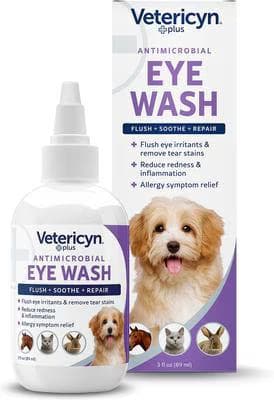
A sterile antimicrobial rinse that flushes irritants, pollen, and discharge out of the eye and helps lift tear stains. A sensible at-home first step for mild irritation, though it does not replace a vet exam for a painful eye.
Webvet may earn a commission when you click through to Chewy, at no extra cost to you.
Comfort care is part of the picture from day one. A vet-approved lubricating gel such as Optixcare Eye Lube Plus can ease everyday eye dryness in an older cat, and it is commonly used during surgical recovery. It supports comfort only and does not replace veterinary care.
Your three practical options are surgery to restore vision, non-surgical monitoring with comfort care, or treating the underlying cause (such as diabetes or eye inflammation) to protect the other eye. Which path fits depends on your cat's age, health, the cause, and your budget.
The one scenario that is urgent: a cloudy eye that appears suddenly and comes with redness, squinting, or pawing at the face. That combination usually means something other than a simple cataract and needs prompt veterinary attention.
What Are Cat Cataracts? Types & How the Lens Clouds
The lens sits behind the pupil and focuses light onto the retina. When proteins in the lens break down and clump, the lens loses its clarity and a cataract forms. A small cataract may barely affect sight; a mature one that covers the whole lens can cause functional blindness in that eye.
Cataracts are grouped by their cause and the age at which they appear. Knowing the type helps your vet predict how fast it will progress and whether the other eye is at risk.
- Congenital cataracts: present at or near birth, sometimes with other eye abnormalities.
- Senile (age-related) cataracts: develop in older cats as lens proteins naturally degrade.
- Diabetic cataracts: linked to high blood sugar; recognized in cats but far less common than in dogs.
- Traumatic cataracts: follow an eye injury, such as a scratch or blunt impact.
- Inflammatory (uveitis-related) cataracts: form when chronic inflammation inside the eye damages the lens.
| Cataract type | Typical cat affected | Notes |
|---|---|---|
| Congenital | Kittens | May occur with other inherited eye defects |
| Senile / age-related | Senior cats | Slow, often mild; part of overall aging |
| Diabetic | Diabetic cats | Uncommon in cats, unlike in dogs |
| Traumatic | Any age after injury | Often affects one eye only |
| Uveitis-related | Any age with eye inflammation | A leading cause in cats |
One important look-alike is nuclear (lenticular) sclerosis, a normal bluish-gray haze in the lens of older cats. It is not a cataract, it does not seriously affect vision, and it needs no treatment. Only a veterinary exam reliably tells the two apart.
Cat Cataract Stages: From Early Stage Cat Cataracts to Mature
Vets grade a cataract by how much of the lens has clouded over. The stage predicts how much vision is left and how many treatment doors are still open. A cat with cataracts caught at the first stage has more choices than one whose lens is already solid white.
- Incipient: under roughly 15 percent of the lens is cloudy. These beginning cat cataracts are easy to miss and vision is usually normal.
- Immature: more of the lens is involved but light still reaches the retina. Sight blurs, and your cat may hesitate in dim rooms.
- Mature: the whole lens is opaque and that eye is functionally blind. Surgery is still possible, though the pre-op workup matters more.
- Hypermature: the lens shrinks and leaks protein, which can inflame the eye. Uveitis and secondary glaucoma risk climb at this stage.
How fast a cataract moves depends on the cause, not the calendar. Diabetic and inflammatory cataracts can go from mild to mature in weeks, while age-related ones often creep along for years. Early stage cat cataracts spotted at a routine exam give your vet the widest range of options.
The stage is the single most useful thing cataracts cat owners can write down after an exam, because it drives every decision that follows: whether to refer, whether to operate, and how often to recheck the eye.
| Stage | Lens clouded | What the cat can usually see |
|---|---|---|
| Incipient | Under about 15% | Essentially normal vision |
| Immature | Partial, light still passes | Blurred, worse in low light |
| Mature | Complete | Functionally blind in that eye |
| Hypermature | Complete, lens shrinking | Blind, with added inflammation risk |
Do Cat Cataracts Affect One Eye or Both Eyes?
Cataracts can affect one eye or both eyes, and the pattern is itself a clue to the cause. Compare your cat's eyes side by side in good light before the appointment.
- Both eyes, fairly symmetrically: points toward congenital, hereditary, or diabetic cataracts.
- One eye only: usually trauma, or uveitis confined to that eye.
- One eye now, the other later: common when chronic inflammation or diabetes is still active.
Either way, ask your vet to examine both eyes. A cataract in one eye does not mean the other is safe, and protecting the second eye is often the main reason to treat the underlying cause.
Signs & Symptoms: How to Tell If Your Cat Has Cataracts
Owners searching for the signs of cataracts in cats are usually reacting to one thing: a cat eye that looks cloudy white. That milky or bluish-white appearance inside the pupil is the classic clue, but behavior changes often tell you how much vision is actually affected.
Here is how to tell if a cat has cataracts at home. Watch for a cluster of these, not just one:
- A cloudy, milky, or bluish-white area inside the pupil (the cat eye cloudy white look).
- Bumping into furniture or walls, especially in unfamiliar spots.
- Hesitating at stairs, jumping less, or misjudging distances.
- Clumsiness or reluctance to move in dim light.
- Changes in pupil size or a pupil that looks different from the other eye.
- Cautious, low-to-the-ground movement or startling easily.

These cat going blind signs often appear gradually, so a cat may compensate well until vision loss is advanced. If you notice cloudiness plus watery eyes or discharge, that can point to a separate issue; our guide to watery eyes in cats covers that overlap. A change in pupil size rather than lens cloudiness is worth reading about in our page on dilated pupils in cats.
Early Stage Cat Cataracts vs. Later Stages: What Owners Actually See
Most owners meet a cataract only once it is plainly visible. Early stage cat cataracts almost never announce themselves that way. At the incipient stage, under about 15 percent of the lens is affected, and the change sits too deep in the eye to register in ordinary room light.
That is why the first stage is usually found by a veterinarian with magnification and a dilated pupil rather than by an owner at home. Still, there are early signs of cataracts in cats that some owners do pick up:
- A faint pinpoint, wedge, or spoke of haze that only shows in bright, angled light or a flash photo.
- One pupil that catches light slightly differently from the other eye.
- No behavior change at all, because vision at this stage is typically normal.
- Later, a little hesitation on stairs or in dim hallways as more of the lens clouds over.
Later stages look quite different. An immature cataract blurs sight enough to change how a cat moves in low light, and a mature one reads as a solid white or gray disc filling the pupil. By then the eye is obvious, but the easiest decisions are already behind you.
Comparing your cat against pictures online can help you put a name to what you are seeing. Photographs cannot show the symptoms that matter most to a vet, though, including pain, eye pressure, and how much vision your cat has actually lost.
SponsoredVet care that's always there
Unlimited video calls and messaging with licensed vets for less than a typical vet visit. One membership covers up to five pets.
Use code Pets60
Plans start at $12/month · covers up to 5 pets
- Licensed vets in most states
- Rx for 150+ conditions
- 4.7 on Trustpilot
What Causes Cataracts in Cats? (Aging, Diabetes, Genetics, Injury)
Cats develop cataracts much less often than dogs, and the reasons differ too. In cats, long-standing inflammation inside the eye is one of the most common triggers, which is why finding the cause matters as much as spotting the cataract.
The main causes of feline cataracts are:
- Aging: senior cat cataracts arise as lens proteins slowly break down over years.
- Chronic uveitis: ongoing inflammation inside the eye, a leading feline cause.
- Trauma: a scratch, bite, or blunt injury to the eye.
- Genetics: hereditary cataracts run in certain breeds.
- Diabetes: diabetic cat cataracts occur but are uncommon compared with dogs.
- Congenital defects: some kittens are simply born with them.

Certain breeds are more prone to hereditary cataracts. The hereditary cat cataracts breeds to watch include Persian, Himalayan, Birman, Siamese, Russian Blue, and British Shorthair cats, so ask your vet to check the lenses at routine visits if you own one.
Because oxidative stress plays a role in lens aging, some veterinary ophthalmologists suggest antioxidant vision-support supplements such as Ocu-GLO for general lens and retinal health. To be clear: no supplement reverses a cataract that has already formed. These products aim to support overall eye health, and they are never a substitute for treating an underlying cause like diabetes or uveitis.
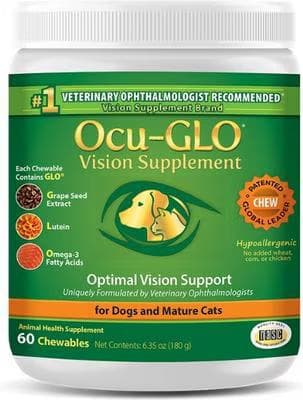
A chewable version of Ocu-GLO for dogs and mature cats, useful when a pet refuses gelcaps. Hypoallergenic with no added wheat, corn, or chicken, and formulated by veterinary ophthalmologists.
Webvet may earn a commission when you click through to Chewy, at no extra cost to you.
At What Age Do Cats Get Cataracts?
There is no single answer to at what age do cats get cataracts, because the cause drives the timing far more than age does. A kitten can be born with one, a two-year-old can develop one after a fight injury, and age-related clouding usually shows up after about ten.
- Birth to 6 months: congenital and inherited cataracts, often affecting both eyes.
- 1 to 8 years: trauma and chronic uveitis are the usual culprits in young adult cats.
- 8 years and older: senile lens change, diabetes, and long-standing inflammation stack up.
Because uveitis can smolder quietly at any age, a yearly eye check beats watching the calendar. Ask your vet to look at the lens at every wellness visit once your cat turns ten, and sooner in the breeds listed above.
How Vets Diagnose Cat Cataracts
Diagnosis starts with a full eye exam. Your veterinarian dims the room, uses magnification and a bright focal light, and looks directly at the lens to confirm the cloudiness is truly a cataract and not nuclear sclerosis, a corneal problem, or inflammation.
Expect some or all of these steps:
- A complete ophthalmic exam with magnified light to grade the cataract.
- Pupil dilation to see the full lens and the retina behind it.
- Tonometry to measure eye pressure and screen for glaucoma.
- A fluorescein stain to rule out a corneal ulcer or scratch.
- Bloodwork to check for diabetes or other systemic disease.

If surgery is on the table, your primary vet will refer you to a board-certified veterinary ophthalmologist. That specialist performs additional tests, including an electroretinogram and an ocular ultrasound, to confirm the retina still works before recommending an operation. There is no point removing a cataract if the retina behind it cannot see.
Cataract Surgery: Procedure, Recovery & Success Rate
Surgery is the only treatment that restores vision lost to a cataract. The standard procedure is phacoemulsification: the surgeon makes a tiny incision, uses ultrasound to break up and suction out the cloudy lens, and usually places an artificial lens in its place. It is done under general anesthesia by a veterinary ophthalmologist.
Good candidates are cats that are otherwise healthy, have a working retina, and do not have active, uncontrolled eye inflammation. So how do you treat cataracts in senior cats specifically? Age alone does not rule out surgery, but older cats need careful screening for kidney disease, heart disease, high blood pressure, and diabetes first, because anesthesia and healing depend on overall health more than on the number on the birthday cake.
Recovery asks a lot of the owner. Cats wear a protective cone, need a calm indoor space, and often receive several eye medications and lubricating gels such as Optixcare Eye Lube Plus for days to weeks. Follow-up visits check pressure and healing. When done in a suitable candidate, cataract surgery restores functional vision in a high percentage of cases, often cited around 90 percent, though outcomes depend on the individual eye.
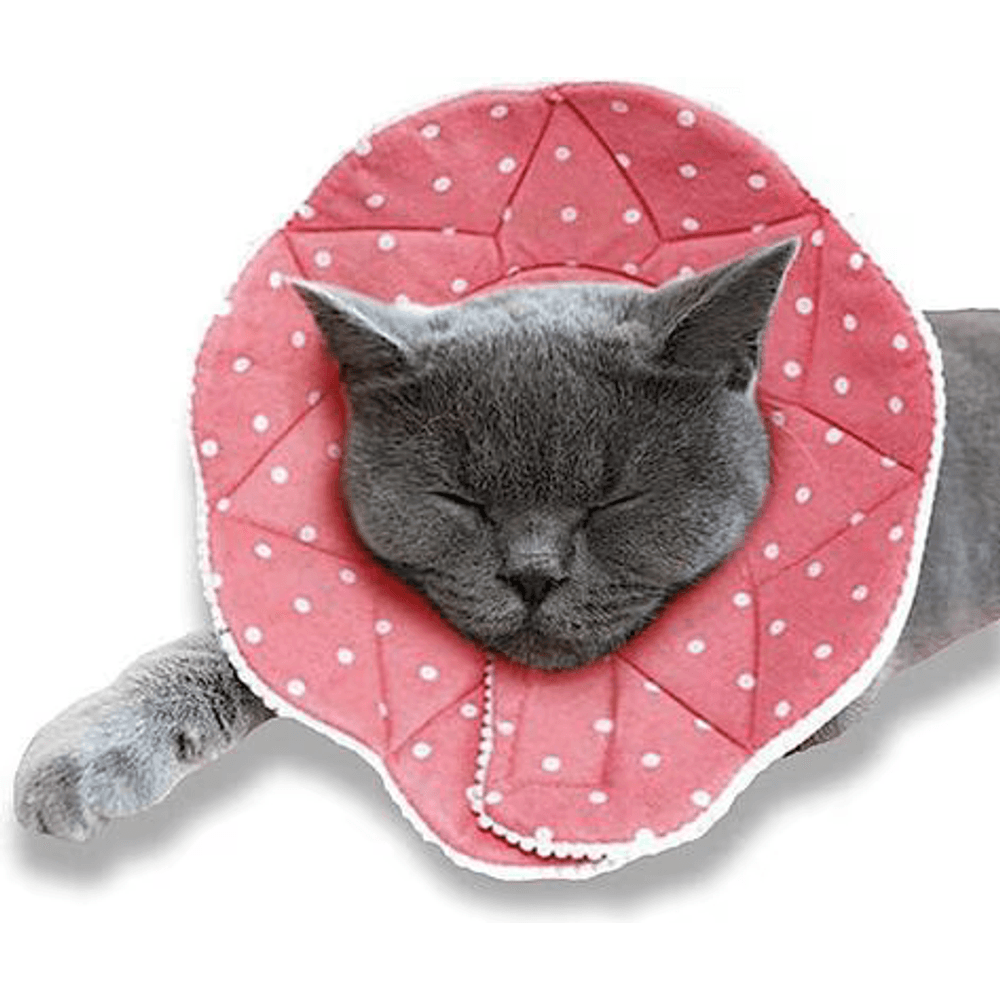
A lightweight, padded fabric cone that gently blocks a pet from pawing, scratching, or rubbing a healing eye, wound, or hot spot, and it is far softer and less stressful than a hard plastic cone.
Webvet may earn a commission when you click through to Chewy, at no extra cost to you.
Not every cat needs or should have surgery. Many cats, especially those with slow senile cataracts and no pain, do very well with watchful monitoring instead. The table below compares the two paths.
| Factor | Surgery (phacoemulsification) | Non-surgical monitoring |
|---|---|---|
| Goal | Restore vision | Preserve comfort, protect the eye |
| Best candidate | Healthy cat, working retina | Older or higher-risk cat, mild cataract |
| Typical cost | $1,500 to $4,000+ per eye | Low ongoing cost for exams and drops |
| Outcome | Vision often restored | Vision unchanged, cat adapts |
| Upkeep | Intensive short-term aftercare | Periodic rechecks, comfort drops as needed |
Cat Eye Surgery Before and After: What Recovery Looks Like
Before surgery, the pupil reads as a solid white or gray disc and the cat navigates mostly by memory. After a successful phacoemulsification, the pupil looks dark and clear again, often within a day or two, and many cats start tracking movement in the first week.
The eye still looks a little red and watery in those early days, which is normal healing rather than a failed result. What owners notice most in the before-and-after comparison is behavior: jumping with confidence, finding toys by sight, and moving normally in dim light.
- Days 1 to 3: cone on at all times, several medicated drops a day, quiet indoor confinement.
- Days 5 to 10: first recheck to measure eye pressure and confirm the incision is sealing.
- Weeks 2 to 4: drops taper on the specialist's schedule while jumping and rough play stay restricted.
- Weeks 6 to 8: final recheck, then a long-term plan of annual eye exams.
Results are not guaranteed. A cat with cataracts driven by uveitis carries a higher complication rate, and some eyes develop scarring or pressure problems that blunt the outcome. Ask your ophthalmologist for a realistic estimate based on your cat's specific eye, not a general success rate.
Cat Cataract Surgery Cost & Financial Help Options
Cost is the deciding factor for most families, so let us be direct about how much cat cataract surgery costs. Cataract surgery is a specialist procedure, and price reflects that.
How much does cat cataract surgery cost in practice? Surgery typically runs $1,500 to $4,000 per eye for the operation itself. Once you add the specialist workup, anesthesia, artificial lens, medications, and follow-up visits, the total for one eye often lands between $2,700 and $6,000, with both eyes higher. Prices vary widely by region and by the specialist, so always get a written estimate.
| Cost scenario | Typical total range |
|---|---|
| One eye, surgery only | $1,500 to $4,000 |
| One eye, all-in (exams, anesthesia, meds, rechecks) | $2,700 to $6,000 |
| Both eyes, all-in | $4,000 to $10,000+ |
| Non-surgical management (exams + comfort drops per year) | A few hundred dollars |
So what if you can't afford your cat's surgery? You have more options than you might think, and choosing non-surgical management is a legitimate, humane path many owners take:
- CareCredit and Scratchpay: medical credit lines that spread the cost over months.
- Pet insurance: helps if the policy was active before diagnosis (it will not cover a pre-existing cataract).
- Veterinary teaching hospitals: university clinics often perform surgery at lower cost.
- Charitable assistance funds: groups like RedRover Relief, The Pet Fund, and Frankie's Friends help qualifying owners.
- In-clinic payment plans: some specialists offer staged payments; always ask.
If surgery is out of reach, comfort-focused care with lubricating drops such as Optixcare Eye Lube keeps a non-surgical cat comfortable while it adapts. For product options, our roundup of the best cat eye drops compares lubricants and vet-recommended choices.
Cat Cataracts Treatment Cost Without Surgery
Surgery is not the only line on the budget. If you choose monitoring, the cat cataracts treatment cost becomes a predictable yearly figure instead of one large bill, which is why many families find the non-surgical path genuinely manageable.
- Recheck exams: usually two per year for a stable, painless cataract.
- Specialist consult: a one-time ophthalmology exam to grade the cataract and confirm the retina works.
- Comfort and anti-inflammatory drops: prescribed only when the eye actually needs them.
- Underlying disease control: insulin and glucose monitoring for a diabetic cat, or uveitis treatment, which protects the second eye.
Treating the cause is the line owners underestimate and the one that pays off most. Controlling diabetes or uveitis will not clear a cataract that has already formed, but it protects the other eye and your cat's wider health.
If watery eyes, sneezing, or discharge join the cloudiness, that combination points somewhere other than a simple cataract. Our guide to cat sneezing and watery eyes covers those differences and when they need a vet visit.
Can a Cat Live With Cataracts? Prognosis & Quality of Life
Yes. A cat can live with cataracts, and most do so happily. Cats rely heavily on smell, hearing, whiskers, and memory of their space, so even significant vision loss rarely ruins their quality of life the way many owners fear. Cat blindness in one or both eyes is something cats generally manage with grace, especially indoors.
Is it painful for a cat to have cataracts? The cataract itself is not painful. What can hurt is the cause or a complication. Uveitis is uncomfortable, and advanced cataracts can occasionally trigger secondary glaucoma or lens luxation, which are painful and need prompt care. That is why regular rechecks matter even when you choose not to operate.
The prognosis is generally good. If the cataract stems from a treatable condition like diabetes, controlling that disease protects the healthy eye and the rest of the body. For a stable, painless cataract, the outlook is a comfortable cat that leans on its other senses.
Living With a Blind or Low-Vision Cat: Home Safety Tips
A few simple changes make a low-vision cat confident again. The golden rule is consistency: cats map their home from memory, so keep the layout stable and predictable.

Try these adjustments to keep a blind or low-vision cat safe and comfortable:
- Keep furniture, litter boxes, food, and water in the same places.
- Block stairs, balconies, and high ledges, or add soft edge mats.
- Use night lights to help cats with partial vision at dawn and dusk.
- Talk before you approach so you never startle your cat.
- Add scent and texture cues (a mat by the food, a rug by the bed) as landmarks.
- Keep your cat indoors, where the environment is controlled and safe.
Senior and low-vision cats sometimes tear more or collect debris in the corner of the eye. Gently cleaning the area with a cat-specific product such as Nutri-Vet Cat Eye Rinse keeps things tidy and lets you spot new redness or discharge early. Always use products labeled for cats, and check with your vet before adding anything new.
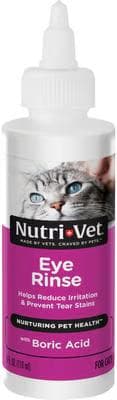
The cat formulation of Nutri-Vet's boric acid rinse, made for gently clearing everyday debris and limiting tear stains around a cat's eyes. Not a substitute for vet care if the eye looks painful.
Webvet may earn a commission when you click through to Chewy, at no extra cost to you.
Cataracts vs. Other Cat Eye Problems: When It's an Emergency
Not every cloudy or troubled eye is a cataract, and some look-alikes are true emergencies. The key difference: cataracts are slow and painless, while surface and infection problems tend to be sudden, red, and painful.
Use these differentials to guide where to read next. A painful, sudden surface cloudiness is more likely a corneal ulcer in cats, which needs same-day care. Redness with discharge often means conjunctivitis or pink eye, while thick discharge and swelling can signal a cat eye infection. These pages cover the urgent care those conditions need, so we do not repeat it here.
Cat Cataract FAQs
Below are the questions owners ask most once they know their cat has a cataract.
Frequently Asked Questions
How fast do cataracts progress in cats?
A: It varies. Age-related feline cataracts often progress slowly over months to years, and some stay small and never blind the cat. Diabetic or inflammatory cataracts can advance faster. Regular vet rechecks track the speed so you can act if the eye changes or becomes painful.
Can a cat live with cataracts?
A: Yes. Most cats adapt well to reduced vision using smell, hearing, whiskers, and memory of their space. With a stable home layout and periodic vet checks, a cat with cataracts can have an excellent quality of life, with or without surgery.
How much does it cost to remove cataracts from a cat?
A: Surgery typically costs $1,500 to $4,000 per eye, and the all-in total with exams, anesthesia, medications, and follow-up often reaches $2,700 to $6,000 per eye. Both eyes and specialty regions run higher, so ask for a written estimate.
What if I can't afford my cat's cataract surgery?
A: Non-surgical monitoring with comfort drops is a humane, common choice. You can also look into CareCredit or Scratchpay, pet insurance (if active before diagnosis), lower-cost veterinary teaching hospitals, and charity funds like RedRover Relief or The Pet Fund.
How do you treat cataracts in senior cats?
A: Senior cats can have surgery if they pass health screening for kidney, heart, blood-pressure, and diabetes issues. Many older cats instead do well with monitoring and comfort care, since a slow, painless cataract rarely reduces their day-to-day happiness.
Are there eye drops that cure cat cataracts?
A: No. There is no proven eye drop or supplement that dissolves an existing cataract; surgery is the only way to restore vision. When owners search for the best eye drops for cat cataracts, what actually helps are lubricating and anti-inflammatory drops that keep the eye comfortable, plus vet-directed treatment of the underlying cause.
How do I find cat cataract surgery near me?
A: Ask your primary veterinarian for a referral to a board-certified veterinary ophthalmologist. You can also search the American College of Veterinary Ophthalmologists directory, or contact a nearby veterinary teaching hospital, which often offers specialist surgery at lower cost.
Is it painful for a cat to have cataracts?
A: The cataract itself is not painful, but the cause (like uveitis) or complications (like glaucoma or lens luxation) can be. Signs of pain include squinting, redness, and pawing at the eye, and they warrant a prompt veterinary visit.
What exactly is a cat cataract?
A cataract is a clouding of the lens, the clear structure behind the pupil that focuses light onto the retina. That clouding of the lens scatters light and blurs or blocks vision in the affected eye. In cats it is usually gradual and painless on its own, and most cats keep a good quality of life whether or not they have surgery.
What are the stages of cat cataracts?
Veterinarians describe four: incipient (a small cloudy spot with near-normal vision), immature (partial clouding and blurred sight), mature (a fully opaque lens and functional blindness in that eye), and hypermature (a shrinking lens that can inflame the eye). Early stage cat cataracts leave you the most options, so book an exam as soon as you notice haze.
Can you see early stage cat cataracts at home?
Usually not. At the incipient stage under about 15 percent of the lens is cloudy, which is too small to spot in normal light. Most are found by a veterinarian using magnification and a dilated pupil. If you do notice haze in bright or angled light, book an exam rather than waiting to see whether it grows.
Sources

Editor
The Webvet Editorial Team is the in-house group of pet-care editors and writers behind Webvet, operated by Smart Pet Collective. The team researches, writes, and maintains Webvet's pet health, behavior, and medication content. Every article follows a defined editorial process: research from reputable veterinary and scientific sources, careful drafting, mandatory review of medical content by a credentialed veterinarian, and dated publication. Health and medication articles are medically reviewed by a licensed veterinary professional before they go live and are kept current over time.
Veterinarian · BVMS MRCVS
Dr. Pippa Elliott, BVMS, MRCVS, is a veterinarian with nearly 30 years of experience in companion animal practice. Dr. Elliott earned her Bachelor of Veterinary Medicine and Surgery from the University of Glasgow. She was also designated a Member of the Royal College of Veterinary Surgeons. Married with 2 grown-up kids, Dr. Elliott has a naughty Puggle named Poggle, 3 cats and a bearded dragon.
Related reading

World's Best Cat Litter Review: Clumping, Tracking, Flushing, and Which Cats It Suits

Litter Genie Review: Does It Really Work, What Refills Cost, and the Best Alternatives

Best Litter Box Enclosures and Litter Furniture: What Vets Say About Enclosed Boxes
