Cat Fever: Signs, Causes, and Safe Next Steps
Learn the signs that may accompany cat fever, what a temperature reading can tell you, and how to arrange safe veterinary care while avoiding dangerous human medicines.

BVMS MRCVS
Medically reviewed by Dr. Pippa Elliott, BVMS MRCVS · Last reviewed

This article contains affiliate links. Webvet may earn a commission when you buy through them, at no extra cost to you.
Cat fever is an increase in body temperature caused by a change in the body’s temperature regulation, often in response to disease. A cat that feels warm, hides, or stops eating may be ill, but those observations alone cannot confirm fever or identify its cause.
A safely obtained temperature helps the veterinarian interpret the problem. If your cat struggles to breathe, collapses, becomes poorly responsive, or is severely weak, seek urgent care. Do not delay for a home temperature check or try a human fever medicine.
Fever in cats: temperature and action chart
A common adult rectal reference range is 100.5–102.5°F (38.1–39.2°C). The Merck Veterinary Manual provides that reference. A reading above the range needs context: stressful handling and environmental heat can affect temperature, and the number cannot identify a particular infection.
- 1A measured reading is more useful than feeling the ears or nose.
- 2Report poor appetite, lethargy, breathing changes, and other symptoms to your veterinarian.
- 3Never give acetaminophen or another human fever medicine to your cat.
This temperature-plus-appetite action plan for fever in cats makes persistent poor intake and medication toxicity as visible as the fever number. Report the measured reading and symptoms when asking about urgent care. The see-a-vet row prevents a normal-looking result from dismissing a cat that is weak, repeatedly vomiting, or struggling to breathe.
A thermometer for an agreed home-check plan
The Vet-Temp Rapid Flexible digital thermometer is a rectal model for dogs and cats. Keep it separate from human-use devices, and use it only if your veterinary team has recommended and demonstrated a home check. A pet that cannot be handled safely can have its temperature taken at the clinic.
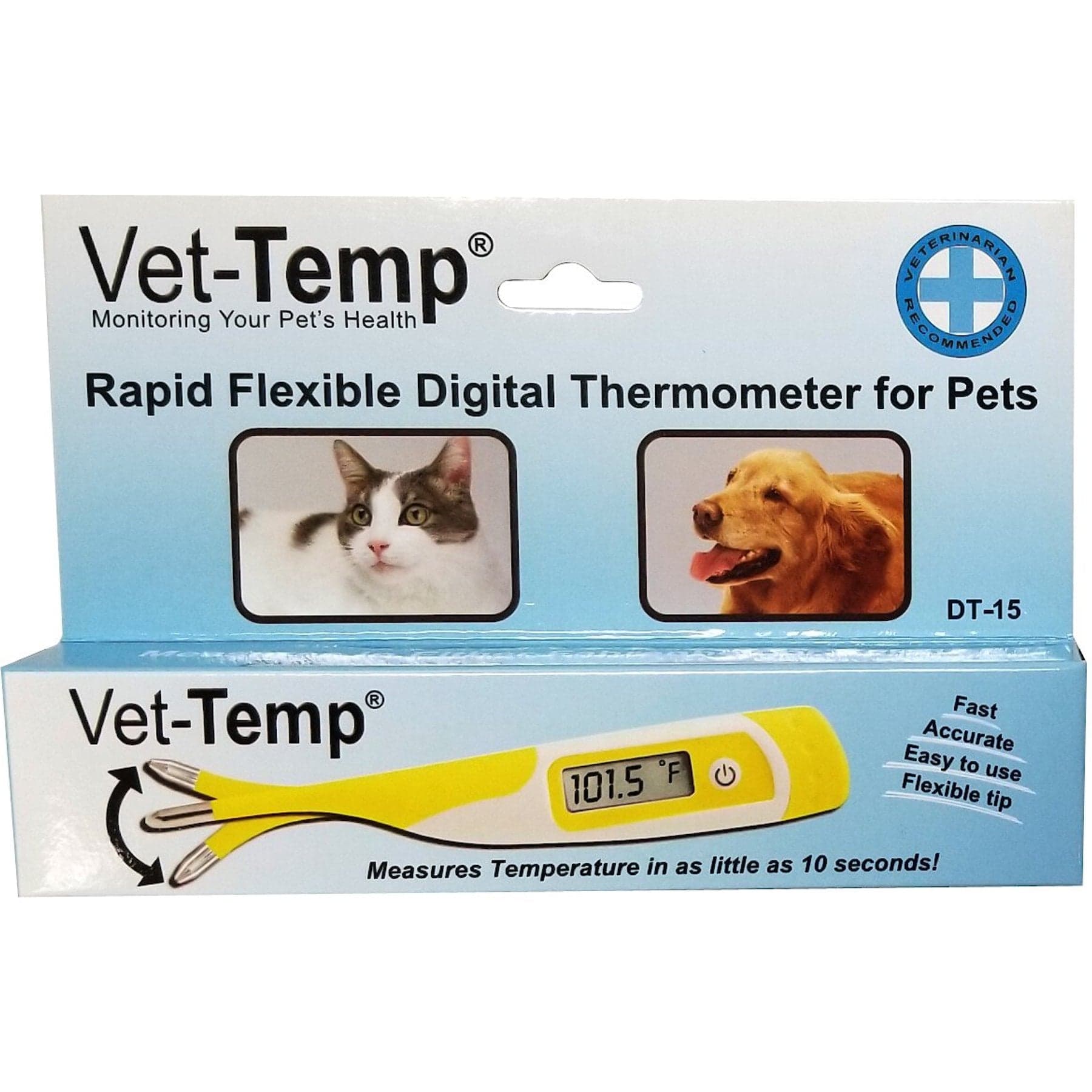
A flexible digital rectal thermometer for a pet temperature check when your veterinary team has shown you how to do it safely.
Webvet may earn a commission when you click through to Chewy, at no extra cost to you.
| Finding | Interpretation | Next step |
|---|---|---|
| 100.5–102.5°F / 38.1–39.2°C rectally in an adult | General reference range | Other symptoms still matter |
| Mild elevation after struggling or stressful handling | May need confirmation in context | Ask the clinic; do not repeatedly restrain the cat |
| Persistently above the range | Fever or another source of increased temperature is possible | Call your veterinarian |
| Around 104°F / 40°C or higher | Possible temperature emergency | Contact an emergency veterinarian now and arrange immediate assessment |
| Fever concern with refusal of food, marked lethargy, or repeated vomiting | An unwell cat needs assessment | Contact your veterinarian promptly |
| See a vet: breathing distress, collapse, confusion, severe weakness, or an unwell newborn | Emergency signs regardless of the number | Seek urgent care now |
A sudden high fever in cats needs prompt assessment. A cat fever of 105°F requires emergency veterinary care, not household medicines and waiting. Call an emergency clinic now and arrange transport. A cat can also need urgent care below 104°F when symptoms are concerning. The chart does not replace veterinary triage.
Fever is different from overheating
True fever involves the body raising its regulated temperature. Excess environmental heat raises temperature through a different mechanism. Tell the clinic about a hot room, car, enclosed space, or other possible heat exposure. The initial care instructions may differ, so do not assume that every high temperature needs the same home cooling routine.
For cat fever in Celsius, report the unit clearly: 40°C equals 104°F. Do not round a concerning reading down to make it fit a reference chart, and do not compare an infrared surface reading directly with a rectal reference.
Keep a paper reference with the care instructions
The spiral-bound Pet Vet First Aid Guide is an optional paper reference for advance preparation. Keep your clinic's phone number and your cat's individual instructions with it. For a current fever, follow the treating veterinarian's advice rather than selecting medicines from a general chart.

A spiral-bound pet first-aid reference to keep with your veterinary instructions and clinic contact details.
Webvet may earn a commission when you click through to Chewy, at no extra cost to you.
How to tell if a cat has a fever
Cat fever symptoms can include reduced activity, poor appetite, hiding, shivering, or changes in grooming and behavior. They are nonspecific: many illnesses can produce them without fever. The question “how to tell if a cat has a fever” therefore has two parts: obtain a safe measurement and investigate why the cat seems unwell.

Useful observations include:
- How much the cat has eaten compared with usual.
- Whether it is drinking and urinating normally.
- Hiding, unusual stillness, or reluctance to move.
- Sneezing, nasal discharge, coughing, or breathing changes.
- Vomiting, diarrhea, wounds, swelling, or apparent pain.
Do not assume a cat that is quiet is simply choosing to rest. “My cat has a fever and is lethargic” is important information even when the fever is only suspected. State what you measured, if anything, and what behavior changed.
Poor intake and breathing deserve separate attention
A cat fever and vomiting combination can affect hydration and the ability to eat or take medicine. Repeated vomiting, inability to keep water down, or worsening weakness needs prompt advice. See our guide to a cat not eating and lethargic for that distinct concern.
If breathing is visibly difficult, minimize handling and seek emergency care. Our cat labored breathing guide explains the warning signs. Do not wrap the cat tightly or repeatedly restrain it to take a temperature when breathing is compromised.
Keep the usual water available
A Frisco collapsible travel bowl is a portable option for offering your cat's usual water on a routine clinic trip or keeping a bowl nearby during the agreed home-care plan. This is the Small, 1.5-cup version. It is ordinary drinking equipment, not a treatment for fever or a substitute for veterinary fluids.

Collapsible silicone travel bowl with a carabiner that clips to a leash or bag, so your dog always has fresh water on walks, hikes, and car trips.
Webvet may earn a commission when you click through to Chewy, at no extra cost to you.
 $65 · no membership
Have a health question about your cat?
A licensed vet can assess your cat over video and prescribe online when it's appropriate.
 Talk to a vet
- Licensed vets
- All 50 states
- same-day Rx
Webvet may earn a commission if you book.
What causes fever in cats?
Cat fever causes include infections, inflammation, immune-mediated disease, and some other underlying illnesses. An abscess after a bite, an upper respiratory infection, or another infection may be relevant, but the temperature does not distinguish among them. Diagnosis depends on the history, examination, and sometimes testing.
Discuss these possibilities and clues with your veterinarian:
- Wounds or abscesses: recent fights, outdoor access, pain, swelling, or a draining area.
- Respiratory illness: sneezing, discharge, reduced smell and appetite, or breathing changes.
- Inflammatory or immune-mediated disease: symptoms that do not point to one obvious infection.
- Other disease: persistent or recurrent fever can require investigation beyond a simple infection check.
Feline infectious peritonitis, or FIP, is one condition veterinarians may consider in the right clinical circumstances. Fever alone does not diagnose FIP. Avoid treating an online symptom match as confirmation, and let the veterinarian interpret age, history, examination findings, and appropriate tests together.
Can stress cause fever in cats?
Stressful handling can increase a cat’s measured temperature, but a stress-associated temperature rise is not automatically the same as a disease-related fever. The distinction matters. A cat that struggled during the check may need a better-context measurement, while a cat with poor appetite or lethargy still needs assessment.
Tell the clinic whether the reading followed a car trip, restraint, or agitation. Do not dismiss a sudden high fever in cats as stress simply because the cat dislikes handling. The examination and other findings help determine whether stress is a plausible explanation.
Prepare transport for a planned appointment
For a stable cat, the Frisco Travel Safety carrier is one option for a planned veterinary visit. This link opens the Medium model, so check its dimensions against your pet before choosing. Introduce the carrier ahead of time; an urgent problem calls for the clinic's transport instructions, not a shopping delay.

Soft-sided travel safety carrier that keeps a stressed cat secure and well-ventilated on the way to the vet, with mesh panels for airflow and a seat-belt loop.
Webvet may earn a commission when you click through to Chewy, at no extra cost to you.
Fever of unknown origin and veterinary testing
How long a cat fever lasts is part of the diagnostic history, but duration alone does not identify the cause.
Cat fever of unknown origin is a clinical description used when persistent fever remains unexplained after an initial assessment. It is not a separate disease or a label to apply after one high home reading. VCA’s fever guidance explains why a structured investigation may be needed.
For persistent cat fever, the veterinarian may consider:
- A detailed history and repeat physical examination.
- Blood counts and blood chemistry.
- Urine testing and culture when indicated.
- Imaging or sampling of a suspected problem area.
- Selected infectious-disease tests based on risk and findings.
Not every cat needs every test. The aim is to answer the most relevant questions first and avoid treating an assumption. Some causes become clearer as new findings emerge or as a carefully planned recheck shows how the illness is evolving.
Bring a usable history
Write down the first day you noticed changes, measured temperatures and methods, food intake, medications, recent vaccines, travel, outdoor exposure, and contact with other animals. Bring the names and strengths of any products already given. A symptom log helps the clinic interpret the course without relying on memory.
Ask what the initial tests can and cannot establish, what should improve, and which changes should prompt an earlier return. A recheck plan is particularly useful when the first examination does not reveal an obvious cause.
Cat fever treatment and medicine safety
To bring down a fever in a cat safely, the veterinarian first assesses its cause and the cat’s condition. Cat fever treatment targets the underlying cause and supports the cat’s condition.
Depending on the findings, treatment may involve fluids, appropriate prescribed medicine, nutritional support, or other care. There is no universal cat fever medicine name, syrup, or household remedy that is safe to choose from the temperature alone.
Human medicines can be dangerous
Never give acetaminophen to a cat. The FDA warns that acetaminophen can be fatal to cats. Human anti-inflammatory and combination cold medicines also require particular caution. A smaller fraction of a human dose does not make a product appropriate for feline use.
Avoid:
- Acetaminophen, ibuprofen, naproxen, or human cold-and-flu products.
- Aspirin or any other human medicine unless the veterinarian specifically prescribes it for this cat.
- Leftover antibiotics or another animal’s prescription.
- Combining medicines without checking with the treating veterinarian.
- Essential oils, alcohol rubs, or unapproved supplements presented as fever remedies.
The best medicine for cat fever is a question for the treating veterinarian after assessment. Antibiotics treat susceptible bacterial infections, not every cause of fever. A prescribed veterinary medicine also needs the correct dose, duration, and monitoring for the individual cat.
If a medicine was already given
Contact a veterinarian or animal poison service immediately. Provide the exact product, active ingredients, strength, amount, time, and the cat’s weight. Do not wait for visible illness and do not induce vomiting without professional instructions. Keep the packaging available so the ingredients can be checked accurately.
What you can do while arranging care
Treating a sick cat without going to the vet is not a safe assumption when fever or other illness signs are present.
How to treat cat fever at home begins with getting a veterinary plan. Comfortable rest and observations can support that plan, but they cannot identify or treat every cause. A home remedy for a cat with fever and cold signs should not delay assessment of poor intake, weakness, or breathing trouble.

While following the clinic’s advice:
- Keep the cat in a quiet, comfortably ventilated space.
- Provide fresh water and familiar food if the cat can eat and drink normally.
- Minimize handling and allow easy access to the litter tray.
- Record food intake, vomiting, urination, and changes in behavior.
- Prepare a secure carrier for transport.
Do not force water or food into a weak, nauseated, or poorly responsive cat. Do not use an ice bath or an alcohol rub to lower a number. If environmental overheating is suspected, tell the emergency clinic and follow its specific instructions while arranging prompt care.
If you are checking cat fever at home without a thermometer, describe observations rather than inventing a reading. No thermometer is needed to recognize collapse or obvious breathing distress as urgent. A cat that cannot be handled safely can still be assessed by the veterinary team.
Normal cat temperature and measurement
Our normal cat temperature guide covers the adult range, age limits, safe rectal measurement, and the limitations of ear and infrared devices. It also explains why the normal adult chart does not apply directly to newborn kittens. Follow the veterinary team’s instructions for your cat.
You can observe breathing without touching a settled cat; see normal cat breathing rate. That provides another useful observation, but neither a normal count nor a normal temperature rules out illness. Use the whole picture and seek advice when the cat’s condition changes.
Frequently asked questions
Is 102 a high fever for a cat?
A rectal temperature of 102°F is not a high fever for an adult cat; it falls within the commonly used normal adult range. That result does not rule out another illness.
Other signs of illness still matter, including poor appetite, lethargy, vomiting, and breathing changes. Report those concerns even with a normal reading, and use age-specific guidance for newborn kittens.
Can you tell if a cat has a fever by touching?
You cannot tell reliably if a cat has a fever by touching it. Warm ears, a dry nose, or a hot-feeling coat can occur without a disease-related temperature rise. Touch is unreliable for confirmation.
Temperature measurement is more informative when safely performed. Do not force a check or delay care for an unwell cat; tell the clinic what changed and whether a reliable reading is available.
How long does a cat fever last?
How long a cat fever lasts depends on the underlying cause and response to treatment. A fixed number of days cannot tell you when waiting is safe. Ask your veterinarian for a recheck plan.
Persistent or recurrent elevation, reduced eating, worsening lethargy, or new symptoms deserves follow-up rather than an assumed recovery deadline. The clinic can explain which changes require earlier contact.
Is cat scratch fever the same as fever in a cat?
No. Cat-scratch disease refers to a human infection associated with Bartonella bacteria and is different from evaluating a cat’s high temperature. A person with concerns after a scratch or bite should contact a healthcare professional. Do not use human cat-scratch disease treatments or symptom lists to diagnose or medicate a cat.
$65 · no membershipHave a health question about your cat?
A licensed vet can assess your cat over video and prescribe online when it's appropriate.
Talk to a vet- Licensed vets
- All 50 states
- same-day Rx
Webvet may earn a commission if you book.

Editor
The Webvet Editorial Team is the in-house group of pet-care editors and writers behind Webvet, operated by Smart Pet Collective. The team researches, writes, and maintains Webvet's pet health, behavior, and medication content. Every article follows a defined editorial process: research from reputable veterinary and scientific sources, careful drafting, mandatory review of medical content by a credentialed veterinarian, and dated publication. Health and medication articles are medically reviewed by a licensed veterinary professional before they go live and are kept current over time.
Veterinarian · BVMS MRCVS
Dr. Pippa Elliott, BVMS, MRCVS, is a veterinarian with nearly 30 years of experience in companion animal practice. Dr. Elliott earned her Bachelor of Veterinary Medicine and Surgery from the University of Glasgow. She was also designated a Member of the Royal College of Veterinary Surgeons. Married with 2 grown-up kids, Dr. Elliott has a naughty Puggle named Poggle, 3 cats and a bearded dragon.


