Normal Cat Temperature: Chart and Safe Checking Tips
Understand the normal adult cat temperature range, learn when home checking is appropriate, and recognize high or low readings and symptoms that need veterinary care.

BVMS MRCVS
Medically reviewed by Dr. Pippa Elliott, BVMS MRCVS · Last reviewed

This article contains affiliate links. Webvet may earn a commission when you buy through them, at no extra cost to you.
Normal cat temperature is generally 100.5–102.5°F (38.1–39.2°C) for an adult cat when measured rectally. A cat’s fur, ears, or nose may feel warm without establishing a fever. The measurement method and the cat’s condition matter alongside the number.
If your cat is weak, poorly responsive, struggling to breathe, or unable to stand, seek urgent veterinary help. Do not delay care to obtain a temperature or force a frightened cat through a home check.
Normal cat temperature chart in Fahrenheit and Celsius
The Merck Veterinary Manual’s rectal temperature table lists 100.5–102.5°F for cats. Some first-aid references use slightly different boundaries. Use the reference your veterinarian recommends, and avoid turning a small difference between charts into a diagnosis.
- 1Match the reference range to the measurement method.
- 2Stop a home check if your cat resists, becomes distressed, or cannot be handled safely.
- 3Ask your veterinarian about an unexpected reading or a cat that seems unwell.
This cat temperature method-and-action chart pairs Fahrenheit and Celsius with clear handling limits and kitten exceptions. A rectal reading must be interpreted with the cat’s condition, and the see-a-vet row applies even when the number looks normal. Stop unsafe home checking and let the veterinary team obtain the measurement when needed for care.
A thermometer for an agreed home-check plan
The Vet-Temp Rapid Flexible digital thermometer is a rectal model for dogs and cats. Keep it separate from human-use devices, and use it only if your veterinary team has recommended and demonstrated a home check. A pet that cannot be handled safely can have its temperature taken at the clinic.
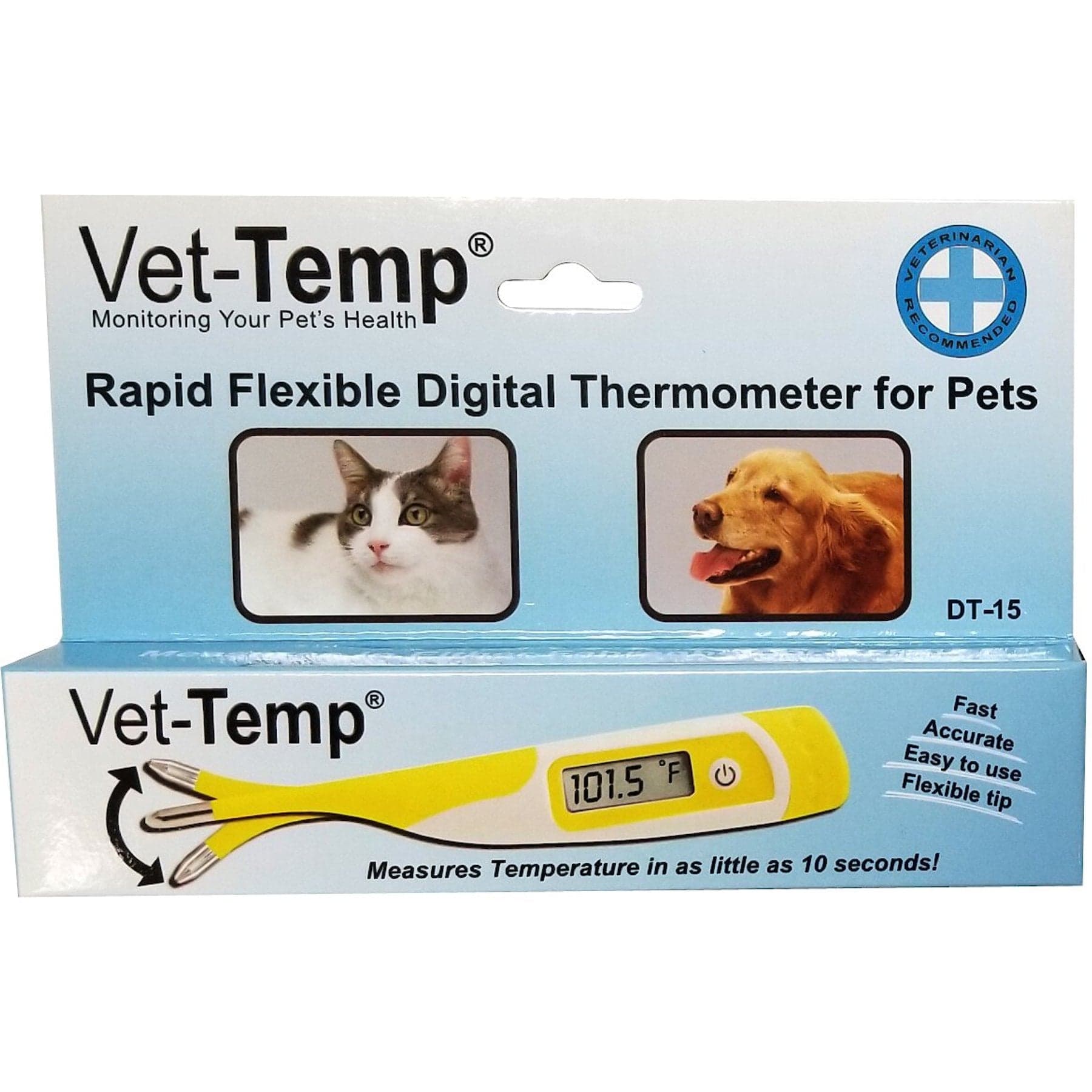
A flexible digital rectal thermometer for a pet temperature check when your veterinary team has shown you how to do it safely.
Webvet may earn a commission when you click through to Chewy, at no extra cost to you.
| Reading or situation | Interpretation | Next action |
|---|---|---|
| Adult rectal temperature 100.5–102.5°F / 38.1–39.2°C | General adult reference | Assess appetite, activity, and other signs too |
| Slight elevation after stressful handling | Stress may affect temperature | Ask the clinic how to interpret or recheck safely |
| Persistently above the adult range | Fever or another cause of increased temperature is possible | Contact your veterinarian |
| Lower than expected | Measurement error, cold exposure, or illness may be involved | Seek veterinary advice, especially with symptoms |
| Adult around 104°F / 40°C or higher, or below 99°F / 37.2°C | Possible temperature emergency | Contact an emergency veterinarian now and arrange immediate assessment |
| See a vet: collapse, marked weakness, confusion, breathing trouble, or an unwell newborn | Symptoms override the chart | Arrange emergency care without waiting for another reading |
Choose covers that match the thermometer
Vet-Temp digital probe covers are compatible with the DT-15 flexible thermometer above. Keep the single-use covers with the device and follow its instructions for preparation and cleaning. They are an accessory for an appropriate home-check plan, not a reason to keep repeating an uncomfortable measurement.
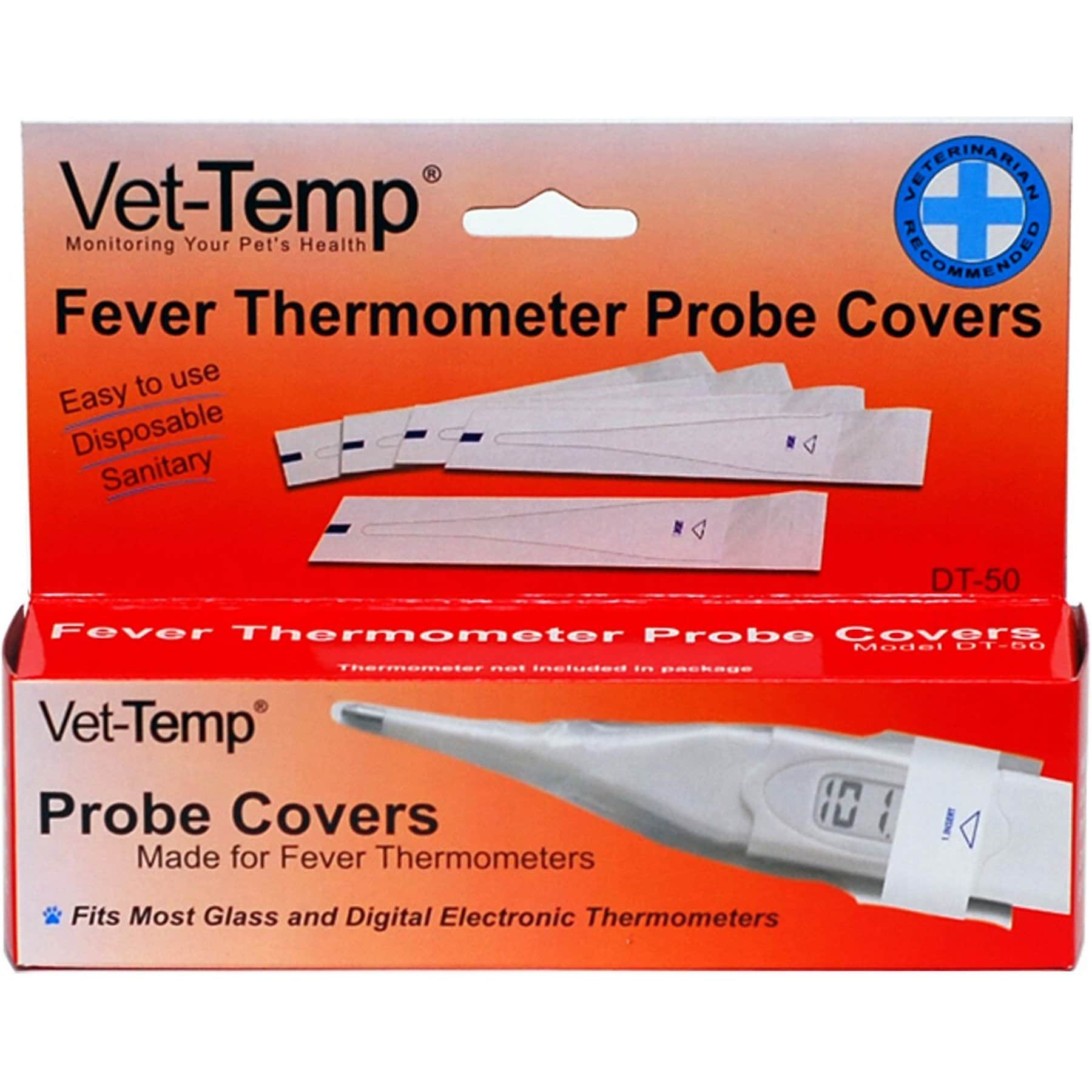
Single-use digital thermometer probe covers compatible with the Vet-Temp DT-15. Follow the thermometer instructions for use and cleaning.
Webvet may earn a commission when you click through to Chewy, at no extra cost to you.
Celsius and Fahrenheit describe the same finding
The normal temperature for a cat in Celsius is not a different clinical target. It expresses the same reference using another scale. When calling the clinic, state the unit as well as the number. “39.5” and “103.1” describe the same temperature but can be confusing without units.
Record the time and method with a cat body temperature reading. Tell the clinic whether the cat had been struggling, exercising, exposed to heat, or recovering from anesthesia. Those details help distinguish an interpretable result from one that needs confirmation.
How to take a cat’s temperature safely
Taking a cat’s temperature at home is optional, not a test an owner must complete before asking for help. Some cats tolerate a demonstrated technique; others should be assessed at the clinic. Ask your veterinary team whether home measurement is appropriate for your cat and have the method shown to you.

If your veterinarian recommends a rectal check, prepare first:
- Use a suitable digital thermometer reserved for pet use.
- Have the recommended lubricant and a clean towel available.
- Choose a quiet place and a calm helper if advised.
- Know where to stop if the cat struggles or the device meets resistance.
- Keep the clinic’s contact details available.
Follow the demonstrated positioning and device instructions. Lubricate the tip, use gentle handling, hold the thermometer securely until it signals completion, and clean it afterward. Never force insertion or leave the device unsupported. The appropriate technique depends on the animal and cannot be reduced to one insertion depth for every cat and kitten.
Keep a paper reference with the care instructions
The spiral-bound Pet Vet First Aid Guide is an optional paper reference for advance preparation. Keep your clinic's phone number and your cat's individual instructions with it. Read it before you need it; a general reference does not replace the plan your veterinary team gives you.

A spiral-bound pet first-aid reference to keep with your veterinary instructions and clinic contact details.
Webvet may earn a commission when you click through to Chewy, at no extra cost to you.
When to leave measurement to the clinic
Stop if your cat becomes frightened, painful, aggressive, or increasingly breathless. Repeated restraint can make both the reading and the experience worse. A towel should never restrict the chest or become a way to overpower a struggling cat.
VCA’s temperature-taking guidance discusses the value and limits of home checking. If you cannot take a reliable reading, tell the clinic what you can observe: behavior, appetite, drinking, urination, and breathing. “No safe measurement available” is useful, honest information.
Do not give a sedative solely to obtain a home temperature unless the treating veterinarian specifically instructs it. If the cat is already receiving medication, report that when discussing the reading.
Ear and infrared thermometers: what they can miss
A normal cat temperature ear reading cannot be assumed to equal a rectal reading. Ear devices depend on their design, positioning, and the ear canal. Hair, wax, inflammation, and movement can affect results. Follow the specific device instructions and ask your veterinarian what reference applies.
Methods differ in what they measure:
- Rectal digital thermometer: provides the reference used in the main chart when correctly positioned.
- Ear thermometer: may be useful with a suitable device and technique, but is not interchangeable with every rectal reference.
- Surface infrared thermometer: may measure coat or skin temperature rather than internal temperature.
- Touch: can identify that a cat seems unusually warm or cold, but cannot give a reliable body temperature.
Prepare transport for a planned appointment
For a stable cat, the Frisco Travel Safety carrier is one option for a planned veterinary visit. This link opens the Medium model, so check its dimensions against your pet before choosing. Introduce the carrier ahead of time; an urgent problem calls for the clinic's transport instructions, not a shopping delay.

Soft-sided travel safety carrier that keeps a stressed cat secure and well-ventilated on the way to the vet, with mesh panels for airflow and a seat-belt loop.
Webvet may earn a commission when you click through to Chewy, at no extra cost to you.
If you are learning how to take cat temperature with an infrared thermometer, first establish that the exact device and intended site are suitable for cats. A human forehead device does not become a reliable cat thermometer simply because it produces a reading.
Avoid improvised corrections
Do not add a fixed degree to an ear or surface reading to make it “rectal equivalent.” There is no universal household conversion for all devices and cats. Tell the veterinarian the actual result and how it was obtained. A clinic measurement may be necessary if the result could change care.
An apparently normal infrared reading should not reassure you about a cat that is lethargic, not eating, or breathing abnormally. The limits of the tool remain relevant even when its display looks precise.
 $65 · no membership
Have a health question about your cat?
A licensed vet can assess your cat over video and prescribe online when it's appropriate.
 Talk to a vet
- Licensed vets
- All 50 states
- same-day Rx
Webvet may earn a commission if you book.
Kitten temperature and age limits
Normal kitten temperature depends on age, especially during the neonatal period. Newborn kittens have immature temperature regulation and do not use the same reference as healthy adults. Their warmth, nursing, weight gain, and responsiveness need to be considered together.
The Merck Veterinary Manual’s neonatal care guidance explains that young puppies and kittens need particular support with temperature regulation. A cold, weak, or poorly nursing kitten warrants prompt veterinary advice. Do not simply assume a lower reading is normal because the kitten is young.
A kitten-specific care plan
Ask your veterinarian about:
- An age-appropriate temperature reference and measurement method.
- Safe ambient warmth and how the kitten can move away from a heat source.
- Feeding decisions if a kitten is cold, weak, or not nursing normally.
- How to record weight and recognize a concerning change.
Avoid direct contact with hot heating pads or hot-water bottles. Burns can occur even when the goal is to warm the kitten. Do not attempt rapid heating or force-feeding a cold, weak newborn without professional guidance. Safe warming and feeding depend on the kitten’s condition.
Low cat temperature and warning signs
Low cat temperature can reflect cold exposure, effects of anesthesia, serious illness, or an inaccurate reading. What causes low body temperature in cats cannot be determined from touch or a single number alone.
A new low reading in a cat that is lethargic or not eating is more concerning than an isolated questionable measurement in a comfortable cat.

While arranging care, bring the cat into a sheltered, comfortable space and dry a wet coat gently. Follow the clinic’s transport and warming instructions. A dry blanket can provide comfort, but direct intense heat may burn the skin or make it harder to recognize deterioration.
When appetite changes matter
Cat low temperature with not eating or drinking is a combination to report promptly. Poor intake can accompany many illnesses and should not be dismissed because the temperature is only slightly below the chart. Our guide to a cat not eating and lethargic explains that separate urgent concern.
Watch for:
- Hiding, unusual stillness, or difficulty waking.
- Weakness, wobbliness, or inability to stand.
- Shallow, slow, or visibly difficult breathing.
- Vomiting, dehydration concerns, or very pale gums.
Cat temperature low treatment is not one standard home remedy. The veterinary team may need to address circulation, underlying illness, environmental exposure, or medication effects. Do not make the cat exercise or repeatedly handle it to try to raise the number.
High temperature and fever in cats
A cat temperature of 104°F (40°C) or higher warrants immediate veterinary assessment. Contact an emergency veterinarian now, even if other symptoms seem mild. A high reading does not establish its cause: heat exposure, stress, and disease can create different clinical situations.
The cat fever guide covers signs, causes, testing, and medicine safety. Do not give acetaminophen or other human fever medicines to a cat. Tell the clinic about any medication already given, including the exact product and amount.
For the other vital signs, use normal cat breathing rate and normal cat heart rate. Breathing difficulty remains an emergency regardless of temperature. A collection of normal numbers cannot rule out illness in a cat that is behaving abnormally.
Frequently asked questions
Can you tell if a cat has a fever by touching?
You cannot tell reliably if a cat has a fever by touching its ears, nose, or coat. Warm ears and a hot-feeling surface do not establish the internal temperature or its cause.
A suitable thermometer gives more useful information when used safely. Do not delay care for a cat that is weak, not eating, or breathing abnormally because you cannot obtain a reading.
Are cats ok in an 85 degree house?
Some cats may tolerate an 85 degree house better than others, but that room temperature is not universally safe. Ventilation, humidity, access to cooler areas and water, and the cat’s health affect the risk of heat stress.
Move an uncomfortable cat to a cooler setting and seek advice about panting, weakness, or other illness signs. Body temperature and room temperature are different measurements.
Do cats like cold rooms at night?
Cats vary in how comfortable they are in cold rooms at night. Ambient temperature and individual vulnerability matter: kittens, older cats, thin cats, and ill cats may need more support staying warm.
Provide a dry sheltered resting place without unsafe direct heat. If the cat seems weak, poorly responsive, or unwell, seek veterinary advice rather than assuming ordinary nighttime chill explains the behavior.
Is 102°F normal for a cat?
A rectal reading of 102°F is within the common adult reference range. It does not indicate fever by itself, but other signs of illness still matter. A cat that stops eating, becomes markedly lethargic, or has breathing difficulty needs assessment even with a reference-range temperature. Newborn kittens require age-specific guidance.
$65 · no membershipHave a health question about your cat?
A licensed vet can assess your cat over video and prescribe online when it's appropriate.
Talk to a vet- Licensed vets
- All 50 states
- same-day Rx
Webvet may earn a commission if you book.

Editor
The Webvet Editorial Team is the in-house group of pet-care editors and writers behind Webvet, operated by Smart Pet Collective. The team researches, writes, and maintains Webvet's pet health, behavior, and medication content. Every article follows a defined editorial process: research from reputable veterinary and scientific sources, careful drafting, mandatory review of medical content by a credentialed veterinarian, and dated publication. Health and medication articles are medically reviewed by a licensed veterinary professional before they go live and are kept current over time.
Veterinarian · BVMS MRCVS
Dr. Pippa Elliott, BVMS, MRCVS, is a veterinarian with nearly 30 years of experience in companion animal practice. Dr. Elliott earned her Bachelor of Veterinary Medicine and Surgery from the University of Glasgow. She was also designated a Member of the Royal College of Veterinary Surgeons. Married with 2 grown-up kids, Dr. Elliott has a naughty Puggle named Poggle, 3 cats and a bearded dragon.


