Normal Cat Heart Rate: Resting Ranges and How to Count
Understand why cat heart-rate references differ, learn a gentle counting method, and recognize when an unusual pulse or associated symptoms needs veterinary attention.

BVMS MRCVS
Medically reviewed by Dr. Pippa Elliott, BVMS MRCVS · Last reviewed

This article contains affiliate links. Webvet may earn a commission when you buy through them, at no extra cost to you.
Normal cat heart rate depends on whether the cat is quietly resting, asleep, excited, or being handled. Published references differ: Merck lists 120–140 beats per minute at rest, while the American Red Cross gives 160–220 in its pet first-aid guide. Those numbers should not be averaged into one universal cutoff.
Measure gently, record the circumstances, and ask your veterinarian what is expected for your cat. Breathing difficulty, collapse, severe weakness, or sudden painful inability to use the back legs needs urgent care regardless of the count.
Normal cat heart rate chart: rest versus handling
The Merck resting-heart-rate table and the Red Cross cat first-aid reference serve different reference purposes. A nervous handled cat may have a faster rate than the same cat relaxed at home. The clinical context is essential when comparing them.
- 1Record whether the cat was asleep, calmly awake, or stressed by handling.
- 2Compare like conditions and discuss the cat’s individual pattern with your veterinarian.
- 3Symptoms override the number; do not keep counting a cat in distress.
Observe the cat in a familiar resting place
A Best Friends by Sheri Meow Hut can serve as a covered resting option for a cat that already prefers that style of bed. This is the Standard variant. Use the cat’s familiar chosen spot for observations; do not pull a sleeping cat out of a hiding place just to obtain a heart-rate number.
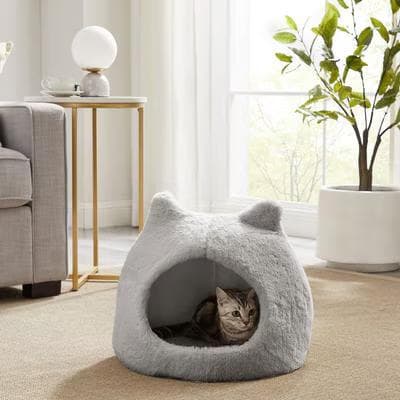
A Standard covered cat bed for cats that prefer an enclosed resting place. Observe the cat without disturbing its chosen resting spot.
Webvet may earn a commission when you click through to Chewy, at no extra cost to you.
This rest-versus-handling chart explains conflicting published feline ranges instead of averaging them into a false universal cutoff. Record the reference context and compare beats per minute under similar conditions. Symptoms override the number, and the see-a-vet row keeps the next action visible when a cat has a new persistent change or seems unwell.
| Reference or situation | Beats per minute | What it means for an owner |
|---|---|---|
| Merck resting reference | 120–140 | A published resting reference, not a target for every individual |
| Red Cross first-aid reference | 160–220 | A broader first-aid reference; consider handling and arousal |
| Sleep, excitement, fear, pain, or recent activity | Rate can differ from a calm awake count | Record the circumstances instead of selecting whichever chart seems reassuring |
| Anesthesia or known heart disease | Individual clinical interpretation required | Follow the treating team’s guidance |
| See a vet: persistent unexpected rate, new rhythm change, weakness, or poor responsiveness | No universal safe cutoff | Contact your veterinarian; collapse or breathing distress needs emergency care |
Keep a paper reference with the care instructions
The spiral-bound Pet Vet First Aid Guide is an optional paper reference for advance preparation. Keep your clinic's phone number and your cat's individual instructions with it. Read it before you need it; a general reference does not replace the plan your veterinary team gives you.

A spiral-bound pet first-aid reference to keep with your veterinary instructions and clinic contact details.
Webvet may earn a commission when you click through to Chewy, at no extra cost to you.
Why one “normal” number can mislead
A small study comparing healthy cats in different environments found that heart-rate measurements change with setting and handling. The published home-versus-hospital study supports taking measurement context seriously. It does not provide a home rule that can diagnose disease or clear every low sleeping count.
Record:
- Whether the cat was asleep or awake.
- Whether touching it caused movement, tension, or vocalization.
- The counting method and duration.
- Any changes in breathing, appetite, energy, or mobility.
The purpose is to describe a finding accurately. Repeatedly restraining a cat to obtain a lower number can increase stress and make the comparison less useful. A veterinarian can interpret a cat resting heart rate alongside the examination and medical history.
How to count a cat’s heartbeat and pulse
Learning how to count heart rate in cats starts with a calm cat. To count a cat’s heartbeat, wait until it is comfortable and willing to remain still.
A gentle hand against the left chest just behind the front elbow may let you feel the heartbeat. The femoral pulse may be felt high on the inner thigh with two fingertips. Ask your veterinary team to show the location.

For a cooperative cat:
- Let the cat choose a comfortable resting position.
- Place your hand gently at the demonstrated location without pressing or restraining.
- Count complete beats for 30 seconds.
- Multiply by two to estimate beats per minute.
- Record the result, context, and any difficulty counting.
If the rhythm is uneven, a full-minute count may be more informative when it can be obtained comfortably. Count one heartbeat as one cycle, not each component of a “lub-dub.” At the thigh, avoid using your thumb because your own pulse can confuse the reading.
Observe rest without approaching the bed
An INSTACHEW Purrsight camera can provide a view of your cat's usual resting place without approaching or waking it. Use it for observing behavior, not for measuring a pulse or diagnosing a breathing problem. Choose a view that shows the resting area, and continue the hands-on checks or direct observations your veterinarian requested.
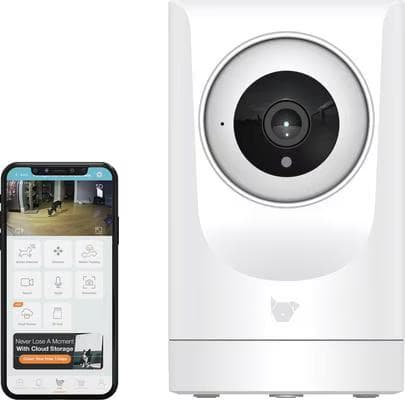
360-degree Wi-Fi pet camera so you can watch your cat's resting breathing rate and behavior from your phone and catch worrying changes early.
Webvet may earn a commission when you click through to Chewy, at no extra cost to you.
Stop when the count becomes a struggle
Purring, movement, coat thickness, and body position can make a count difficult. Do not squeeze harder or force the cat onto its side. “I could not obtain a reliable count” is better information than a guessed number. The clinic can listen with a stethoscope and assess the rhythm directly.
A cat pulse rate usually reflects the heartbeat, but some contractions may not create an easily felt peripheral pulse. A home pulse check cannot reliably identify that problem. Report an irregular-feeling pattern or an unexpected discrepancy rather than trying to interpret it yourself.
If breathing is abnormal, do not add restraint for a pulse check. The cat open-mouth breathing guide explains why that sign needs urgent attention. Transport and veterinary assessment take priority over completing the measurement.
Prepare for a routine heart-health appointment
A Frisco Travel Safety carrier can support a planned veterinary visit for a stable cat. The linked model is Medium, so check the fit before selecting it. Bring the count, the time, and the circumstances. For a cat showing urgent symptoms, follow the clinic’s immediate transport advice rather than delaying for new equipment.

A Medium carrier for a stable cat attending a planned appointment. Check fit and follow the clinic’s transport guidance.
Webvet may earn a commission when you click through to Chewy, at no extra cost to you.
Kittens, sleep, and anesthesia
Kitten heart rate needs age-specific interpretation. Very young kittens are not simply small adult cats, and handling or excitement can make any cat’s count faster. A kitten that is weak, not feeding, cold, or poorly responsive needs prompt veterinary advice rather than reassurance from an adult chart.
A normal cat heart rate while sleeping can differ from an awake resting rate. If a kitten’s heart is beating fast while sleeping, note whether the kitten was in active dream sleep, moving, or already awake when you touched it. Repeated unexpected readings in settled sleep deserve advice, particularly with other symptoms.
Compare the same conditions
Useful comparisons include:
- Quiet sleep with quiet sleep.
- Calm awake rest with calm awake rest.
- Readings taken by the same method and over the same duration.
- A new result with the cat’s established pattern and veterinary plan.
A fast sleeping count does not identify heart disease by itself. Conversely, a lower sleeping number is not automatically safe because sleep often slows the rate. Your veterinarian can help distinguish a familiar individual pattern from a change that needs investigation.
Under anesthesia
Normal cat heart rate under anesthesia is interpreted with the drugs used, blood pressure, oxygenation, temperature, and the procedure. It cannot be judged from a household chart alone. If you have concerns about a recorded anesthetic rate, ask the treating team what the full monitoring record showed.
After a procedure, follow the discharge instructions. Poor responsiveness, breathing difficulty, or an unexpected decline deserves a call even if a home count seems ordinary. Do not change medications or try to wake a cat through vigorous handling merely to obtain a different reading.
 $65 · no membership
Have a health question about your cat?
A licensed vet can assess your cat over video and prescribe online when it's appropriate.
 Talk to a vet
- Licensed vets
- All 50 states
- same-day Rx
Webvet may earn a commission if you book.
A fast or slow cat heart rate: when to call
Why is a cat’s heart rate so fast? Fear, pain, fever, dehydration, anemia, thyroid disease, heart disease, and other conditions can be relevant. The rate alone cannot distinguish them. A persistent unexpected count at genuine rest is a reason to discuss the situation with your veterinarian.

A high count needs more than a label
A high heart rate for a cat depends on the context and the animal’s expected pattern. A count around 200 may fit a first-aid reference during handling but still be an unexpected change during settled rest for a particular cat. Describe the circumstances rather than calling every 200 reading normal or dangerous.
Ask for advice about:
- A repeatedly fast count when the cat is truly calm.
- An unusually slow count or a new irregular rhythm.
- Fainting, weakness, reduced activity, or poor appetite.
- New breathing changes or exercise intolerance.
The veterinarian may recommend an examination, blood pressure measurement, blood tests, ECG, or cardiac imaging depending on the findings. A consumer device or a manually counted pulse cannot replace those assessments.
Heart rate does not predict death
Searches about a dying cat’s fast heartbeat often reflect a frightening change. A cat’s heart rate when dying is not a reliable home prediction tool, and there is no single number that establishes that outcome. Treat sudden severe symptoms as a reason to seek help, not as proof that nothing can be done.
If your cat already has an advanced illness, ask the treating veterinarian for an individualized plan covering comfort, breathing, mobility, appetite, and emergencies. That plan is more useful than trying to judge prognosis from a pulse alone.
Heart rate and respiratory rate are different
Normal cat heart rate and respiratory rate measure different processes: beats per minute versus breaths per minute. You can observe breathing without touching a settled cat. Our normal cat breathing rate guide explains the detailed counting method and home-monitoring guidance.
Hypertrophic cardiomyopathy, or HCM, is an important feline heart condition, but a normal pulse does not rule it out. Some affected cats have few obvious signs until complications develop. Early heart failure concerns may include a rising resting breathing rate or reduced stamina; visible breathing distress requires urgent assessment.
For practical next steps:
- Follow the veterinarian’s individual monitoring targets if heart disease is known.
- Report sustained changes and accompanying symptoms.
- Seek immediate help for labored breathing, collapse, or sudden painful hind-leg dysfunction.
- Use the normal cat temperature guide for that separate measurement.
A normal number in one category cannot cancel an abnormal sign in another. Monitoring is useful when it improves communication with your veterinary team and prompts appropriate care.
Frequently asked questions
Is 200 bpm high for a cat?
Whether 200 bpm is high for a cat depends on the circumstances. Handling or excitement may produce a rate within the higher first-aid reference, while 200 could be unusual compared with an individual cat’s resting baseline.
Report a persistent unexpected count at genuine rest, especially with symptoms. Breathing difficulty, collapse, or severe weakness needs urgent help regardless of whether 200 appears in a chart.
Is a heart rate of 80 bpm normal for a cat?
A heart rate of 80 bpm is lower than common reference ranges for a cat. Measurement error, sleep, medication, or illness may affect interpretation, so contact your veterinarian rather than assuming it is normal.
If the cat is weak, poorly responsive, or breathing abnormally, seek urgent care. Do not wait through repeated checks to find a more reassuring number.
Can purring affect a heart-rate count?
Yes. Vibration can mask beats and make a manual count difficult. Let the cat remain comfortable and do not restrain or frighten it to stop the purring. Report that the count was uncertain. A veterinary team can assess the heart with appropriate techniques and equipment when the result matters to a clinical decision.
Can heart rate tell whether a cat is dying?
A pulse cannot predict death or determine prognosis by itself. Urgent clinical signs such as collapse, severe breathing difficulty, or poor responsiveness need veterinary assessment, whatever the rate. For a cat with a known serious illness, use an individualized comfort and emergency plan from the treating veterinarian rather than a single home cutoff.
$65 · no membershipHave a health question about your cat?
A licensed vet can assess your cat over video and prescribe online when it's appropriate.
Talk to a vet- Licensed vets
- All 50 states
- same-day Rx
Webvet may earn a commission if you book.

Editor
The Webvet Editorial Team is the in-house group of pet-care editors and writers behind Webvet, operated by Smart Pet Collective. The team researches, writes, and maintains Webvet's pet health, behavior, and medication content. Every article follows a defined editorial process: research from reputable veterinary and scientific sources, careful drafting, mandatory review of medical content by a credentialed veterinarian, and dated publication. Health and medication articles are medically reviewed by a licensed veterinary professional before they go live and are kept current over time.
Veterinarian · BVMS MRCVS
Dr. Pippa Elliott, BVMS, MRCVS, is a veterinarian with nearly 30 years of experience in companion animal practice. Dr. Elliott earned her Bachelor of Veterinary Medicine and Surgery from the University of Glasgow. She was also designated a Member of the Royal College of Veterinary Surgeons. Married with 2 grown-up kids, Dr. Elliott has a naughty Puggle named Poggle, 3 cats and a bearded dragon.


