Luxating Patella in Dogs: Grades, Symptoms, Treatment, and Surgery
A luxating patella is a kneecap that slips out of its groove, and it is one of the most common causes of a skipping back leg in small dogs. Here are the four grades, the symptoms and causes, treatment with and without surgery, recovery, and cost.

BVMS MRCVS
Medically reviewed by Dr. Pippa Elliott, BVMS MRCVS · Last reviewed

This article contains affiliate links. Webvet may earn a commission when you buy through them, at no extra cost to you.
What Is a Luxating Patella in Dogs?
A luxating patella in dogs is a kneecap that slips out of its groove at the end of the thigh bone, and the classic sign is a dog that suddenly skips on one back leg for a few steps. Treatment depends on the grade, which vets score from 1 to 4.
Patellar luxation is one of the most common orthopedic conditions in dogs, according to the American College of Veterinary Surgeons (ACVS), and it mainly affects small and toy breeds. Mild cases often need only monitoring and home care, while higher grades usually need surgery to keep the kneecap in its groove.
- 1A luxating patella in dogs is a kneecap that slips out of the groove at the end of the thigh bone, the femur.
- 2The signs of a luxating patella are skipping, holding a back leg up, sudden lameness, and in severe cases a bow-legged stance.
- 3Vets grade a luxating patella from 1, a kneecap that slips out only when pushed, to 4, a kneecap that stays out and cannot be pushed back.
- 4Mild luxating patella cases are often managed with weight control, controlled exercise, and rehabilitation, and surgery is most often considered from grade 2 up.
- 5Repeated slipping can lead to arthritis and predisposes the knee to a cranial cruciate ligament tear.
The knee joint connects the femur (thigh bone) and the tibia (shinbone). The kneecap, or patella, normally sits in a groove at the end of the femur called the trochlear groove, VCA Animal Hospitals explains, and with a luxating patella it moves out of that position.
ACVS describes patellar luxation as the kneecap riding outside the femoral groove when the knee bends: medial when it rides on the inner side of the knee, lateral when it rides on the outer side.
Treatment depends on the grade and on how much the dog favors the leg. For many mild cases, home care focuses on a healthy weight and less strain on the knee, and Oakland Veterinary Referral Services advises avoiding repeated jumping from furniture and using ramps or steps instead.
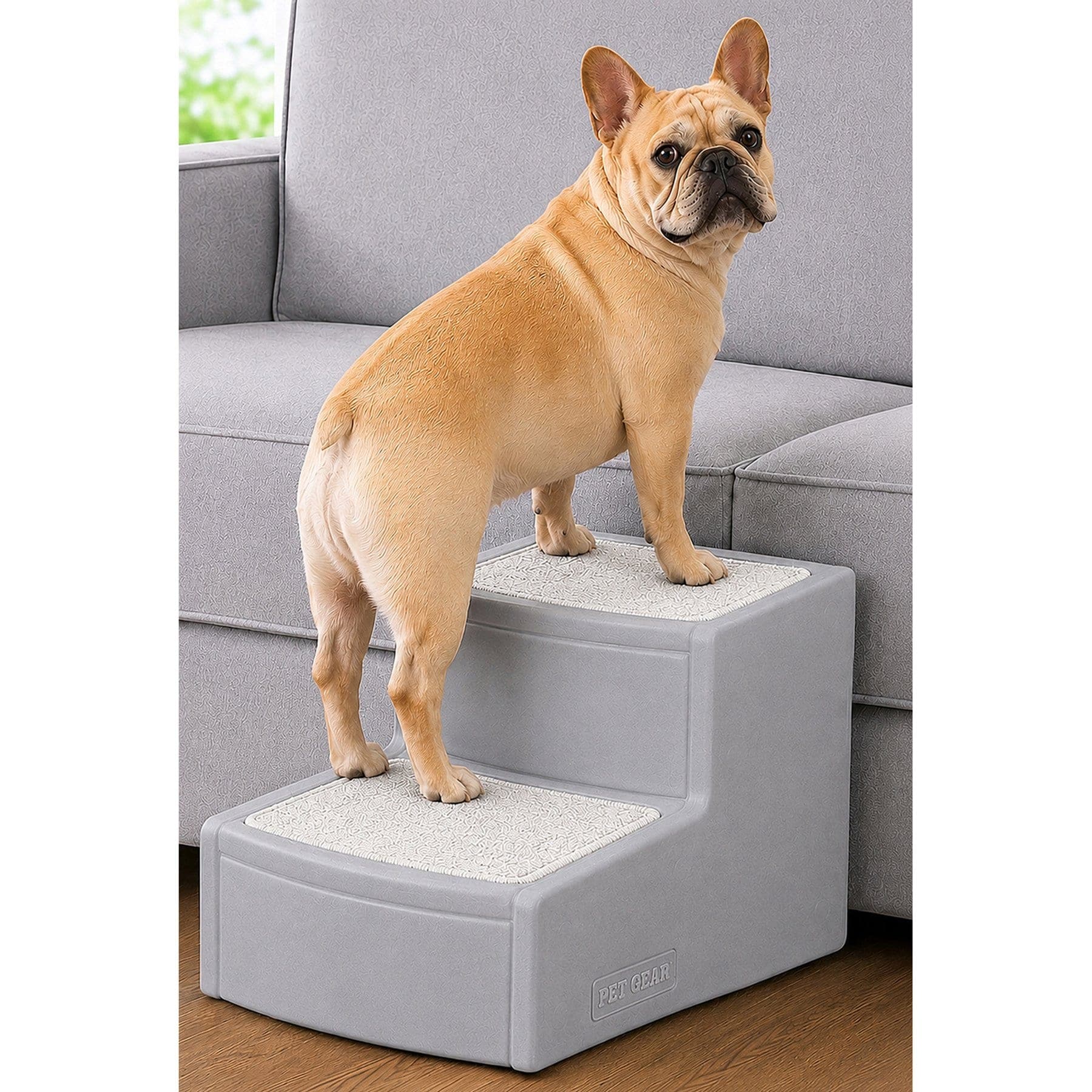
Pet Gear Easy Step Dog & Cat Stairs, Small, are pet stairs a small dog can use to reach a couch or bed.
Webvet may earn a commission when you click through to Chewy, at no extra cost to you.
Symptoms of a Luxating Patella in Dogs
The main symptom of a luxating patella in dogs is a skipping gait: the dog suddenly runs on three legs for a few steps with one back leg held up, then carries on normally. Cornell University's Riney Canine Health Center calls this skip the most commonly seen sign.

The signs of luxating patella in dogs are skipping, holding a back leg up, sudden lameness, and in severe cases a bow-legged stance. In grades 1 and 2, the Orthopedic Foundation for Animals (OFA) notes, a dog limps only while the kneecap is out.
At home, a luxating patella looks like:
- Skipping or hopping for a few steps on one back leg
- Holding a back leg up, then using it normally again
- Kicking the leg out to the side or stretching it backward, which can pop the kneecap back into place
- A bow-legged or crouched stance with the feet turned in, in more severe cases
- Avoiding stairs or showing signs of knee pain
Many dogs with medial luxation learn to kick the leg out to the side, VCA explains, which snaps the kneecap back into place. Over time the soft tissues around the joint stretch, and the kneecap pops out more easily.
Puppies with severe medial luxation often look bow-legged, a shape that worsens with growth, ACVS says, and OFA notes that dogs with grade 3 or 4 shift most of their weight onto the front legs.
A limp alone does not confirm a slipping kneecap; our guide to why a dog is limping covers other causes.
Do dogs with luxating patella feel pain?
A luxating patella does not always hurt, but pain becomes more likely as it progresses. ACVS says mildly affected dogs are often not in pain, while the condition can become quite painful later. OFA links pain to damaged cartilage on the kneecap and femur, though most dogs show little discomfort when the knee is handled.
Much of the longer-term pain comes from arthritis, because frequent slipping wears away the joint cartilage. VCA lists prescription anti-inflammatories, antibody therapy, joint supplements, and therapeutic mobility diets as options that may slow arthritis and help control discomfort.
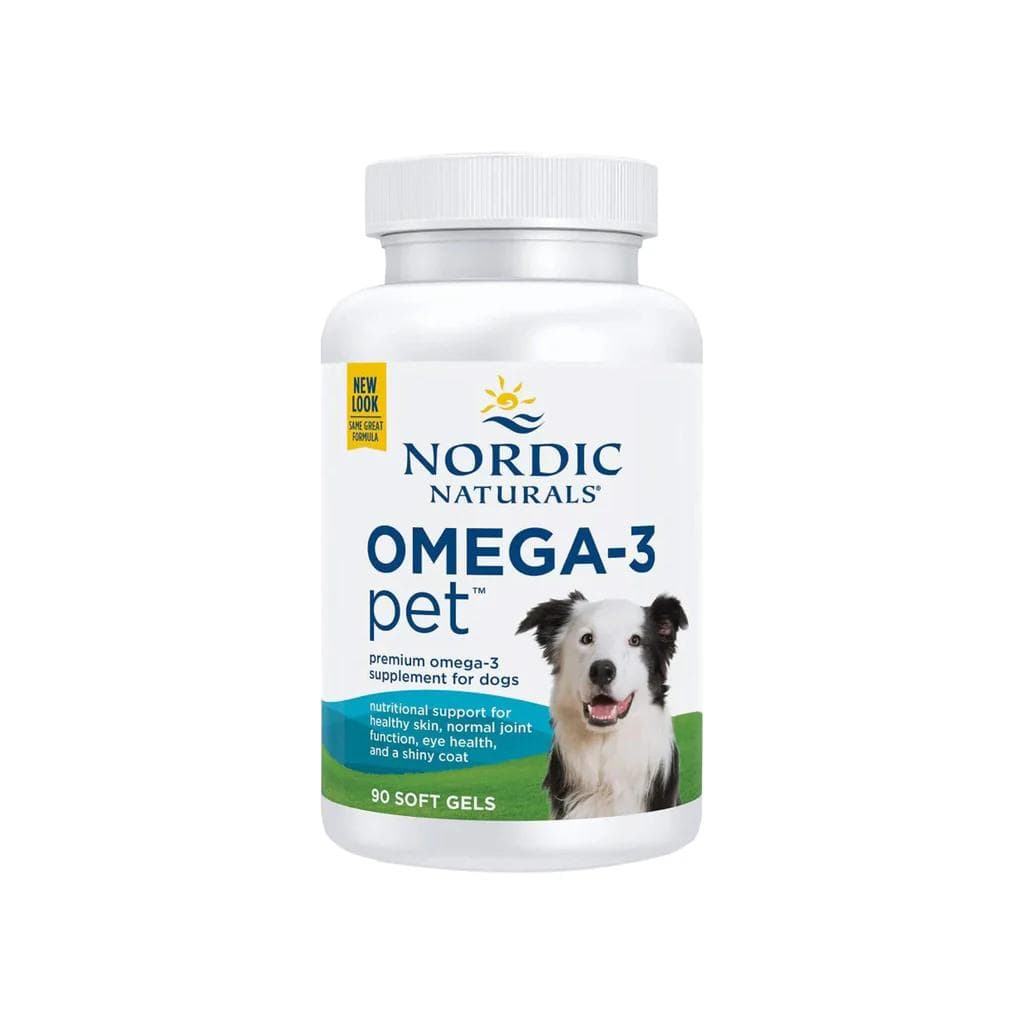
Nordic Naturals Omega 3 Pet Softgels are fish oil softgels with 315 mg of total omega-3 fatty acids in each.
Webvet may earn a commission when you click through to Chewy, at no extra cost to you.
The Four Luxating Patella Grades
The four luxating patella grades run from an occasional slip to a kneecap that stays out: grade 1 slips out only when pushed, and grade 4 stays out of the groove and cannot be pushed back. Vets assign the grade during a hands-on exam, and it guides treatment along with how the dog uses the leg.
This luxating patella grade table matches each of the four grades to what the vet feels, what the owner sees at home, and the usual treatment, including whether surgery is usually advised.
| Luxating patella grade | What the vet feels | What you see at home | Usual treatment |
|---|---|---|---|
| Grade 1 | The kneecap can be pushed out of the groove but goes back as soon as the pressure is released | Often no signs, since the kneecap slips only under pressure | Monitoring and home care; surgery not usually needed |
| Grade 2 | The kneecap pops out on its own or with pressure and can stay out until the leg is straightened | Intermittent skipping or holding a back leg up | Conservative care if lameness is minimal; surgery often considered if the dog is lame |
| Grade 3 | The kneecap is out most of the time; it can be pushed back in but slips out again easily | Consistent lameness, with evident bone deformity | Surgery usually advised |
| Grade 4 | The kneecap stays out of the groove and cannot be pushed back in | Severe lameness and a crouched, bow-legged stance with the feet turned in | Surgery usually advised; the outlook is more guarded |
Grades also come with a direction, and one or both knees can be involved:
- Medial: the kneecap slips toward the inside of the knee. A board-certified surgeon's conference slides, hosted by the University of Illinois College of Veterinary Medicine, put medial patellar luxation at 80 to 90% of cases.
- Lateral: the kneecap slips toward the outside of the leg. VCA says dogs with a laterally luxating patella are often medium or large dogs.
- Bilateral: both knees are affected, sometimes at different grades. VCA says approximately half of affected dogs have bilateral luxating patellas.
A mild luxating patella in dogs, grade 1 or a grade 2 with little or no limping, is usually managed without surgery. The Merck Veterinary Manual reserves conservative care for these dogs, older dogs, and dogs that cannot have surgery, and recommends surgery for grades 2 to 4, marked lameness, or worsening signs.
Grade alone does not settle the decision: two veterinary orthopedic authors in Vet Times argue it should rest on the dog's pain, the type and duration of lameness, and how well the leg works.
Breeders may meet a second scale: OFA's registry grades by bone deformity, so its grades differ from the clinic grades VCA and Merck use.
 Sponsored
Wondering why your dog seems stiff or sore?
Talk to a licensed vet at Dutch over video, often the same day. They can recommend treatment and prescribe it when it's appropriate.
Use code Pets60
Plans start at $12/month · covers up to 5 pets
- Licensed vets in most states
- Rx for 150+ conditions
- 4.7 on Trustpilot
What Causes a Luxating Patella, and Which Dogs Get It?
A luxating patella is usually caused by the way the back leg forms and lines up during growth, and less often by an injury to the knee. Because the kneecap sits in the knee of the back leg, the condition affects the back legs, not the front legs.
The causes of a luxating patella in dogs are inherited limb alignment, a shallow groove, and injury, and more than one can be at work in the same dog. ACVS says most cases come from a growth disorder with abnormalities that may be present at birth, though the precise cause is unclear in most dogs and likely multifactorial.
- A shallow groove: the femoral groove the kneecap rides in is commonly shallow or absent in affected dogs.
- Inherited limb alignment: ACVS now sees developmental luxation as part of a limb-wide problem, including an abnormal hip such as hip dysplasia and a malformed femur and tibia.
- Injury: knee trauma occasionally causes it, with sudden, severe lameness in a dog that had no problems while growing.
The condition runs in families. OFA says the deformities behind it are present at birth and calls it an inherited disease, and a 2018 Swedish Kennel Club study found it in 23% of the Chihuahuas studied, with an estimated heritability of 0.25.
Toy breeds are the dogs most affected, plus a growing number of large breeds that get it. ACVS says the condition affects primarily small dogs, and VCA notes a genetic predisposition to medial luxation in many toy and small breeds. ACVS adds that cases in large breed dogs have risen over the past ten years.
In a VetCompass study of 210,824 dogs at 119 English primary-care clinics, 1.30% had a diagnosed patellar luxation, and Chihuahuas had 5.9 times the odds of a diagnosis compared with crossbred dogs. ACVS reports a figure of 7% in puppies, a different group.
 Sponsored
Vet care that's always there
Unlimited video calls and messaging with licensed vets for less than a typical vet visit. One membership covers up to five pets.
Use code Pets60
Plans start at $12/month · covers up to 5 pets
- Licensed vets in most states
- Rx for 150+ conditions
- 4.7 on Trustpilot
How Vets Diagnose a Luxating Patella
Vets diagnose a luxating patella by feeling the knee during an orthopedic exam to see whether the kneecap moves out of its groove, then grading it from 1 to 4. Diagnosis is by knee palpation, with X-rays to check the bones of the leg and look for other joint problems.

ACVS says the diagnosis rests essentially on palpation of an unstable kneecap. A 2018 University of Naples review describes the test: the vet holds the kneecap between thumb and index finger, extends the leg, and twists the foot inward to check for medial luxation or outward for lateral luxation.
A full work-up for diagnosing luxating patella in dogs can include:
- Watching the dog walk, since a dog may stretch the leg backward to reseat a slipped kneecap, the Naples review notes
- Feeling each knee and assigning a grade from 1 to 4, which Cornell says helps guide treatment
- X-rays of the knee, pelvis, and shinbones, which VCA and ACVS describe for judging the extent of the problem, checking bone shape, and looking for hip dysplasia
- CT or MRI in some cases, according to Cornell
The skip you notice at home is a reason to book an exam, not a diagnosis; confirming a slipping kneecap and its grade takes the vet's hands-on knee exam.
Luxating Patella Treatment Without Surgery
Treatment without surgery for a luxating patella in dogs means weight control, exercise changes, physical rehabilitation, and pain relief, and it suits mild cases best. Cornell says most mild cases without clinical signs need no treatment, while dogs with occasional lameness or arthritis from the luxation may need conservative management that includes:
- Keeping the dog at an ideal weight
- Joint supplements
- Pain medication such as nonsteroidal anti-inflammatory drugs (NSAIDs)
- Exercise restriction
- Physical rehabilitation
Joint supplements are one piece of that plan. One glucosamine and chondroitin option is Nutramax Dasuquin Chewable Tablets for Small/Medium Dogs Under 60 lb, 84 count; its maker lists 600 mg of glucosamine hydrochloride and 250 mg of chondroitin sulfate per tablet and says to allow 4 to 6 weeks to note a response. Our Cosequin vs Dasuquin comparison explains how the two differ.
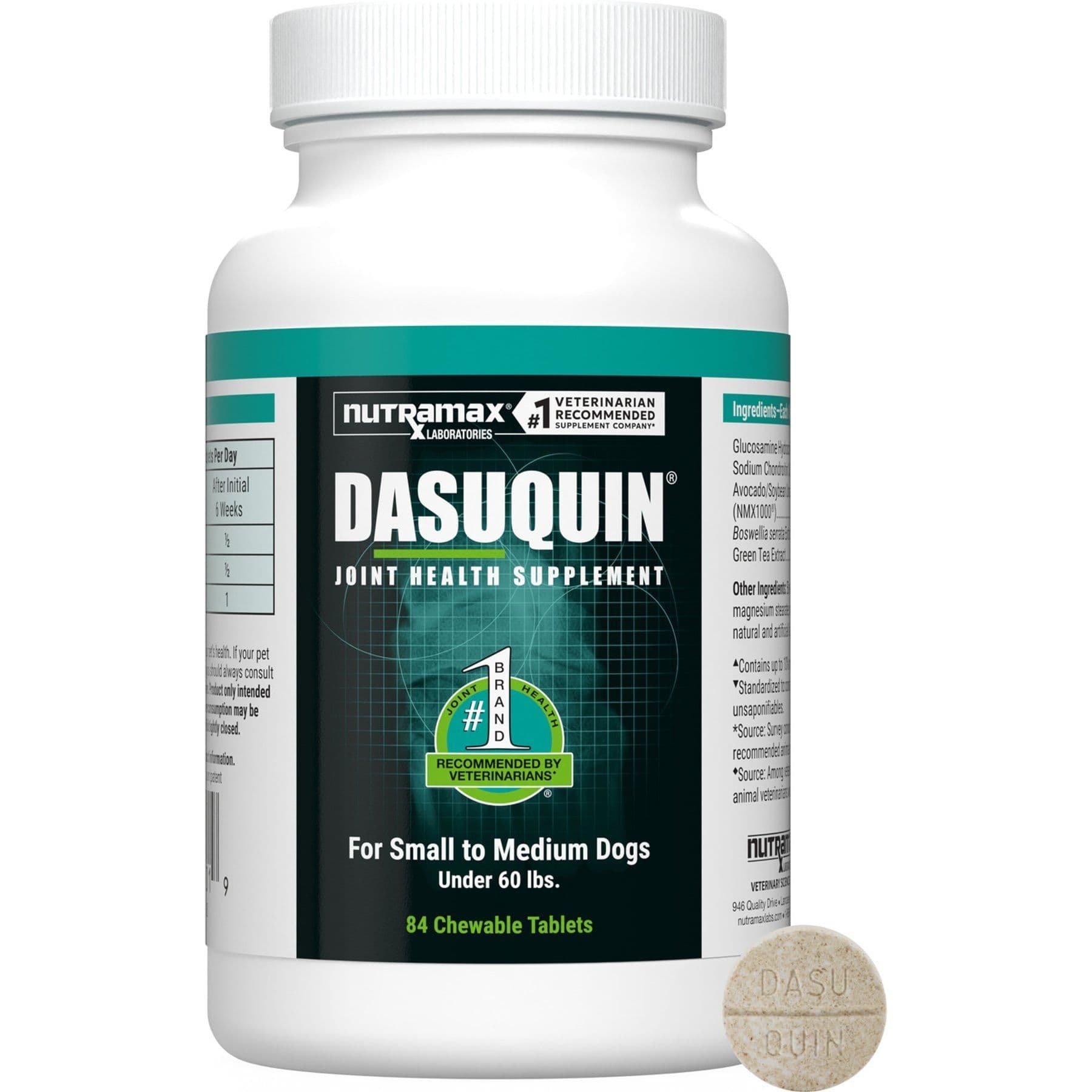
Nutramax Dasuquin Chewable Tablets are a glucosamine and chondroitin joint supplement for dogs under 60 lb, 84 count.
Webvet may earn a commission when you click through to Chewy, at no extra cost to you.
The Naples review calls weight control essential to reduce stress on the knee, uses rehabilitation exercises to strengthen the quadriceps mechanism in the thigh, and relies on NSAIDs, alone or with other painkillers, for pain. Prescription NSAIDs such as carprofen are given under a vet's direction.
Conservative care eases pain and inflammation, but it does not put the kneecap back in place permanently. Merck says it leaves the underlying anatomy uncorrected, so the luxation can still progress, and Vet Times authors note limited long-term outcome data.
How to treat luxating patella in a dog?
Treat it according to the grade and how the dog uses the leg. Dogs with no signs are monitored. Dogs with mild, occasional lameness get weight control, controlled exercise, rehabilitation, and vet-prescribed pain relief. Surgery is most often considered from grade 2 up, ACVS says, and Merck adds marked lameness or worsening signs as reasons to operate.
Can a dog live with luxating patella without surgery?
Yes, many dogs do. VCA says some dogs, especially with grade 1, tolerate a luxating patella for many years or even their whole lives, and OFA says many dogs with grade 2 live reasonably well for years. The tradeoff is joint wear: VCA notes that arthritis develops as these dogs age and cannot be reversed.
Living well without surgery depends on everyday footing as well as medicine. Oakland Veterinary Referral Services lists trimmed nails, non-slip rugs or runners, controlled and regular exercise, and avoiding sudden increases in activity among its home supports for these dogs.
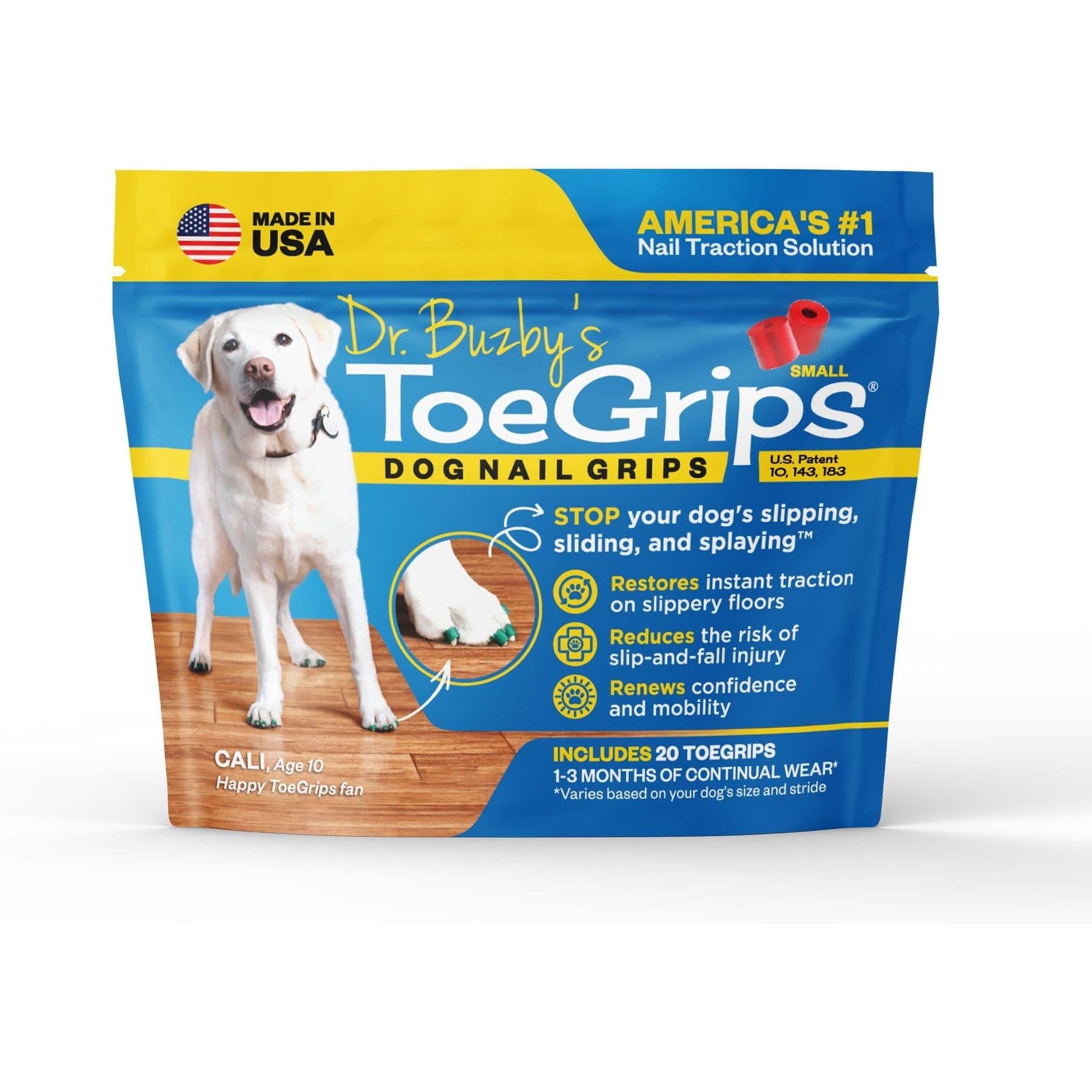
Dr. Buzby's ToeGrips Dog Nail Grips are nail grips made for dogs that slip on smooth floors, 20 per pack.
Webvet may earn a commission when you click through to Chewy, at no extra cost to you.
Luxating Patella Surgery: Recovery and Cost
Luxating patella surgery in dogs realigns the pull on the kneecap and deepens its groove so it stays in place. For owners, surgery means one or both of two bone procedures (groove deepening and tibial tuberosity transposition), a recovery of at least 6 weeks of restricted activity, and a cost that pet insurers put in the thousands of dollars per knee.
The two main procedures, as VCA describes them:
- Tibial tuberosity transposition: moving the point where the patellar ligament attaches to the shinbone to its proper location, which Merck says realigns the quadriceps mechanism.
- Trochleoplasty: deepening the groove in the femur where the kneecap glides, so it is harder for the kneecap to slip out.
VCA says surgery may be recommended sooner rather than later to reduce the chance of arthritis or a cruciate ligament tear, and the higher the grade, the sooner. The Vet Times authors differ for dogs that are not lame: citing a 1992 study, they say sound dogs are likely not to benefit, because joint degeneration progresses similarly anyway.

Recovery needs at least 6 weeks of restricted activity because the surgery cuts and repositions bones that must heal, Southwest Veterinary Surgical Service explains. Hospital aftercare plans lay out luxating patella surgery recovery week by week:
- Weeks 1 to 6: short, slow leash walks, starting at 5 to 10 minutes 2 to 3 times a day at the Animal Clinic of Billings and increased gradually. MedVet allows no off-leash time, running, jumping, play, flights of stairs, or slippery floors.
- Weeks 1 to 8: the Naples review restricts activity for 6 to 8 weeks and adds rehabilitation exercises for range of motion, strength, posture, and flexibility.
- Week 8: if all is going well at the recheck, the Billings clinic typically lifts most limits except ball play, rough-housing, and off-leash activity.
- Weeks 10 to 12: all restrictions are typically lifted.
Weighing the pros and cons of luxating patella surgery:
- Pro: over 90% of owners are satisfied with their dog's progress, ACVS reports, and MedVet expects success, a return to normal or near-normal activity, in more than 90% of patients.
- Con: in a 2006 series of 109 dogs, 18% had a complication, 13% needed revision surgery, and 8% had the kneecap slip out again, with more problems in dogs of 20 kg or more and in higher grades.
- Con: in a 2024 study of dogs under 10 kg, minor complications affected about 46% of dogs, and the kneecap slipped out again in about 19%.
Problems after luxating patella surgery include the kneecap slipping out again, loose or broken implants, and fractures near the top of the shinbone, Vet Times authors list. Southwest Veterinary Surgical Service calls the prognosis generally good for most grade 2 and 3 luxations and more guarded for grade 4.
How much does luxating patella surgery cost for a small dog?
Pet insurers put the surgery at about $1,000 to $5,000 per leg, according to MetLife Pet Insurance, or $1,500 to $3,000 per affected knee with a board-certified surgeon, according to Embrace Pet Insurance. These are insurer estimates, and clinic quotes vary.
MetLife says the price depends on the dog's size, the severity, other injuries or arthritis, location, and whether one or both knees need surgery. Vet Times authors add that higher grades often mean more complex surgery and higher costs.
For dogs that need regular pain medication or supplements, Embrace puts the typical cost at about $20 to $50 a month.
Exercise and Home Care for a Luxating Patella
Exercise and home care for a luxating patella aim to keep the knee moving without sudden strain. Daily care has two parts, walking and home care: short leash walks, ramps or steps instead of jumping, and traction on smooth floors, set to your vet's advice.
VCA suggests these changes at home for dogs with mobility problems:
- Lay non-slip rugs or runners without raised edges along your dog's usual routes, and wherever it still jumps on or off furniture.
- If your vet says furniture is still safe, teach your dog to use stairs or a ramp made for pets. Our best dog ramps guide compares ramps, and the Pet Gear Easy Step Dog & Cat Stairs, Small are one set of pet steps.
- Add grip with nail caps, pad coverings, or boots, after asking your vet or a rehabilitation therapist which suits your dog. Dr. Buzby's ToeGrips Dog Nail Grips, 20 count, Small are made for dogs that slip on smooth indoor floors, though a published gait study of them used healthy dogs.
- For more support, see our guide to mobility aids for dogs, from harnesses to ramps.

Physical therapy for a luxating patella, often called physio, centers on exercises that build the quadriceps, the Naples review says. Massage, home remedies, and natural treatments do not put the kneecap back in its groove for good, since Merck notes that non-surgical care leaves the underlying anatomy uncorrected. Ask your vet or a rehabilitation therapist before adding them.
Preventing the inherited form is a breeding matter, since the deformities behind it are present at birth. For a dog that already has a luxating patella, the goal is to prevent extra strain with a lean weight, no repeated jumping, and steady exercise.
Is it okay to walk a dog with luxating patella?
Yes, with short, controlled leash walks. Cornell's arthritis guidance lists leash walks and swimming as low-impact activities, and VCA says the vet sets the level of exercise restriction, which can range from complete rest to brief walks around the block, so ask your vet how far and how often.
Long-Term Outlook: Arthritis and Cruciate Risk
The long-term outlook is often good in mild cases, but the main long-term risks are arthritis plus a cruciate ligament tear. ACVS explains that frequent slipping erodes cartilage and exposes bone, causing arthritis and pain, and strains the knee in ways that may predispose it to a ruptured cranial cruciate ligament.
In a 2010 study of 162 small-breed dogs with medial luxation, 41% also had a cranial cruciate ligament rupture, and those dogs averaged 7.8 years old versus 3.0 years for luxation alone. That injury is often called a torn ACL in dogs.
With or without surgery, many dogs with more severe luxation or persistent signs may develop arthritis that requires medical management, Cornell says; see our guide to osteoarthritis in dogs and its signs.
Do luxating patellas get worse with age?
They can. Cornell says patellar luxation may progress over time, causing more frequent bouts of lameness, and a luxating patella does not heal or correct itself. In older dogs with grade 1 or 2 luxations, OFA says sudden lameness can appear as the soft tissues break down after minor trauma or as arthritis pain worsens.
Size matters too: VCA says dogs with lateral luxation, often medium and large dogs, tend to have more mobility problems. Our article on whether size matters for a dog with arthritis covers that side.
What happens if luxating patella is left untreated?
It depends on whether the dog has signs. Cornell says dogs without significant signs generally have a good prognosis and can be managed comfortably for many years. For a dog already showing knee problems, MedVet says the signs generally progress, with a steady loss of limb function, muscle loss, and a worse grade of luxation.
When to See a Vet
See a vet if your dog skips, limps, holds up a back leg, avoids stairs, or shows signs of knee pain, Oakland Veterinary Referral Services advises. Sudden or severe signs need more urgent care.
If surgery is on the table, a Cornell surgeon urges owners of dogs with orthopedic problems to seek care from a Diplomate of the American College of Veterinary Surgeons.
Luxating Patella in Dogs FAQs
Frequently Asked Questions
What is the best supplement for a dog with a luxating patella?
No supplement corrects a slipping kneecap, so the best choice targets the arthritis that often follows. Cornell's arthritis guidance lists glucosamine and chondroitin sulfate and omega-3 fatty acids for joint support.
The evidence differs: a 2022 systematic review found a clear pain-relief effect for omega-3 supplements in dogs and cats with osteoarthritis but no effect from glucosamine-chondroitin products, while a 2007 JAVMA review rated a glucosamine, chondroitin, and manganese ascorbate combination as moderate.
How to put luxating patella back in place?
Many slipped kneecaps go back on their own when the dog straightens the leg. OFA says extending the knee lets the kneecap return to its groove in grades 1 and 2, and the Naples review notes that dogs often stretch the leg backward to reseat it. Do not try to force the joint.
If the kneecap seems stuck out of place or the dog keeps limping, have a vet check it; a grade 4 kneecap cannot be put back by hand.
Can a brace help a luxating patella in dogs?
Veterinary references do not show that a brace corrects a slipping kneecap, and a brace does not replace surgery when surgery is advised. Merck's conservative plan is weight management, controlled exercise, physical therapy, and anti-inflammatory pain relief, with no brace on the list.
A 2025 report on custom knee braces covered two dogs with cruciate ligament injuries, not a slipping kneecap.
Will pet insurance cover luxating patella surgery?
Pet insurance can cover it if the condition is not pre-existing when you enroll. MetLife's guide to hereditary conditions says these can be covered as long as no symptoms appear before enrolling or during its 14-day waiting period.
Lemonade's health conditions guide treats a luxating patella as bilateral, so signs in one knee before a policy starts make the other knee pre-existing too, and its pre-existing conditions guide says a limp recorded before enrolling can rule out coverage for related surgery.
What should I do if my dog jumped after luxating patella surgery?
If your dog jumped during recovery, call your vet. VCA advises contacting the vet whenever a dog gets more activity than intended; the vet may have you watch at home for signs of pain or may schedule a recheck.
Southwest Veterinary Surgical Service asks owners to contact the surgeon immediately for bandage problems, unusual swelling, incision discharge, more lameness after improvement, or limping on another leg.
Is a luxating patella genetic in dogs?
Yes, at least in part. ACVS says the condition is at least partly genetic and that dogs diagnosed with patellar luxation should not be bred.
The VetCompass researchers call it a welfare priority and say breeding control strategies that include it are worthwhile goals, especially in predisposed breeds. Puppy buyers can ask whether the parents were checked for it.

Editor
The Webvet Editorial Team is the in-house group of pet-care editors and writers behind Webvet, operated by Smart Pet Collective. The team researches, writes, and maintains Webvet's pet health, behavior, and medication content. Every article follows a defined editorial process: research from reputable veterinary and scientific sources, careful drafting, mandatory review of medical content by a credentialed veterinarian, and dated publication. Health and medication articles are medically reviewed by a licensed veterinary professional before they go live and are kept current over time.
Veterinarian · BVMS MRCVS
Dr. Pippa Elliott, BVMS, MRCVS, is a veterinarian with nearly 30 years of experience in companion animal practice. Dr. Elliott earned her Bachelor of Veterinary Medicine and Surgery from the University of Glasgow. She was also designated a Member of the Royal College of Veterinary Surgeons. Married with 2 grown-up kids, Dr. Elliott has a naughty Puggle named Poggle, 3 cats and a bearded dragon.
Related reading

Hip Dysplasia in Dogs: Symptoms, Causes, Treatment, and Surgery Options

Elbow Dysplasia in Dogs: Symptoms, Causes, Treatment, and Surgery

Degenerative Myelopathy in Dogs: Symptoms, Stages, Breeds, and Treatment
