Torn ACL in Dogs: Symptoms, Treatment Options, and Recovery
A torn cruciate ligament can cause knee pain and instability. Compare diagnosis, surgery, conservative care, recovery needs, and the questions that help families make an individual treatment decision.

BVMS MRCVS
Medically reviewed by Dr. Pippa Elliott, BVMS MRCVS · Last reviewed

This article contains affiliate links. Webvet may earn a commission when you buy through them, at no extra cost to you.
Torn ACL in dogs usually means damage to the cranial cruciate ligament, or CCL, inside a hind-leg knee, also called the stifle. ACL is the familiar human term; CCL is the canine term. Treatment aims to restore comfortable function and control joint instability, with a plan matched to the dog and the household's recovery-care resources.
Torn ACL symptoms in dogs and the CCL terminology
- 1The canine cranial cruciate ligament stabilizes the knee in a back leg. It is not a front-leg ligament.
- 2Knee instability can cause pain even when a dog still walks or never cries. A partial tear can progress to a complete rupture.
- 3A veterinary examination, rather than a home joint test, guides the choice between surgery and conservative management.
How can you tell if your dog tore a cruciate ligament? Common signs include a new or recurring hind-leg limp, stiffness after rest, difficulty rising, reluctance to jump, and reduced weight bearing. Some dogs sit with the affected leg held away from the body. These signs warrant a knee examination; you cannot know whether your dog tore the ligament from the limp alone. A front-leg limp needs a different explanation.
While arranging the assessment, prepare an easily reached resting place. A low FurHaven NAP supportive bed is one option if its size suits your dog and the floor provides secure footing. Position the bed where your dog can settle without climbing onto furniture. Comfortable bedding supports the rest plan but cannot stabilize the knee.
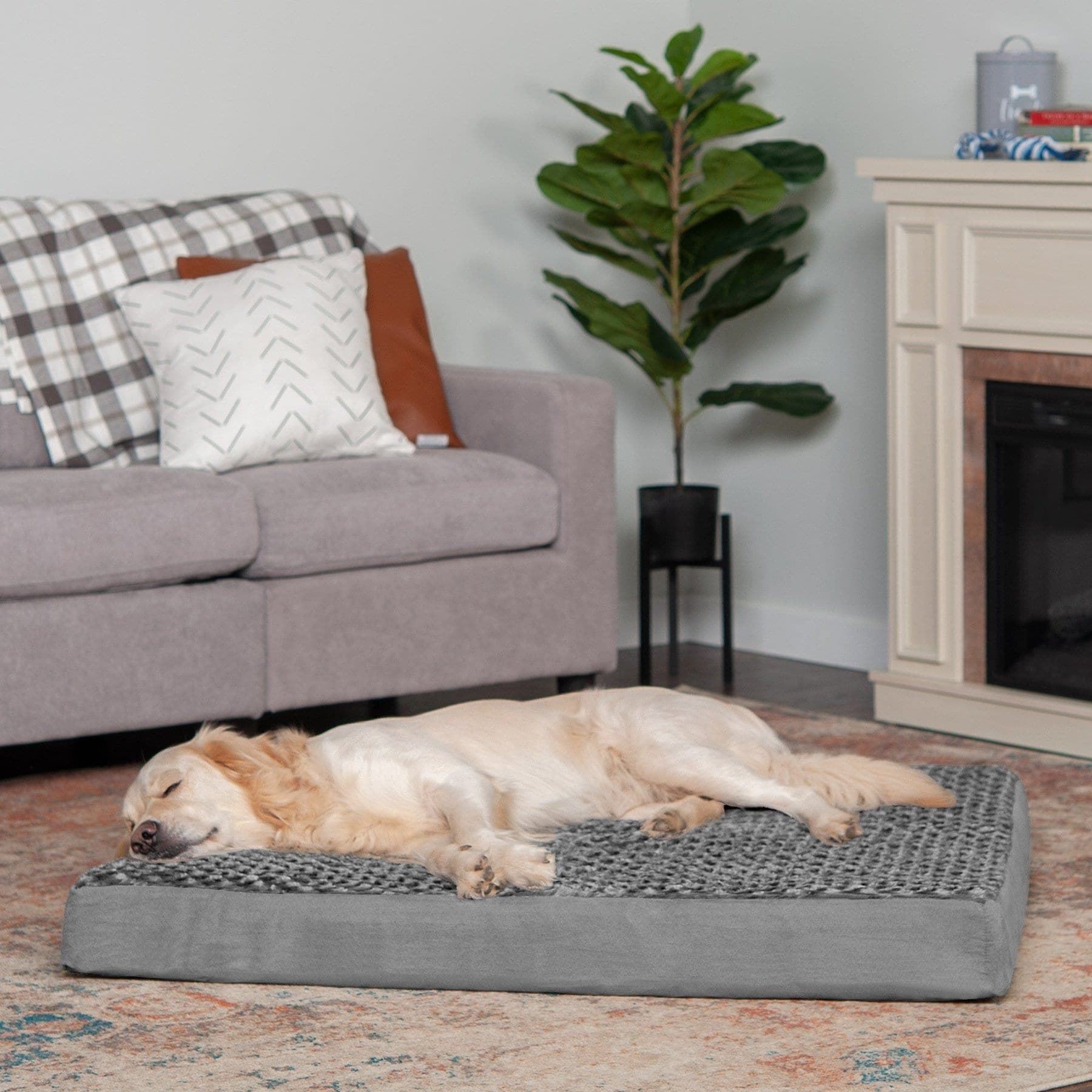
A low supportive bed helps arrange the surgeon-prescribed recovery space; sizing and easy access matter.
Webvet may earn a commission when you click through to Chewy, at no extra cost to you.
Cruciate disease often develops gradually before a seemingly sudden injury. The American College of Veterinary Surgeons' CCL guide and labeled canine knee diagram describes contributions from ligament degeneration, body condition, genetics, and skeletal shape. Both small and large dogs, including English Bulldogs, can be affected; breed does not establish the cause of a limp. The knee contains cranial and caudal cruciate ligaments, but the common canine injury called an ACL tear concerns the cranial ligament. A partial tear leaves some fibers intact; a complete rupture disrupts the ligament fully. Continued loading can worsen a partial tear.
- The meniscus, a cushioning structure between the thigh and shin bones, can also be injured and add pain.
- Both knees may develop cruciate disease, sometimes at different times. A new limp in the other back leg deserves assessment.
- Hip dysplasia, arthritis, and other conditions can coexist with knee disease.
- A suspected leg sprain should not be assumed minor because the dog still walks or jumps.
How a vet confirms a cruciate ligament tear
The veterinarian reviews the history, watches movement when appropriate, and examines the knee and the rest of the limb. Tests for cranial drawer or tibial thrust assess abnormal movement between the bones. Muscle tension can make a partial tear harder to recognize, so sedation may be needed. Do not try these maneuvers at home: they can hurt and are easily misinterpreted.

A gated recovery area can also be planned while you discuss the diagnosis. A properly installed KidCo Safeway mounted gate can block unsupervised stairs or access to furniture. Check the opening, mounting requirements, and your dog's ability to jump the barrier. Tell the clinic if your home's layout makes the proposed restriction impractical.
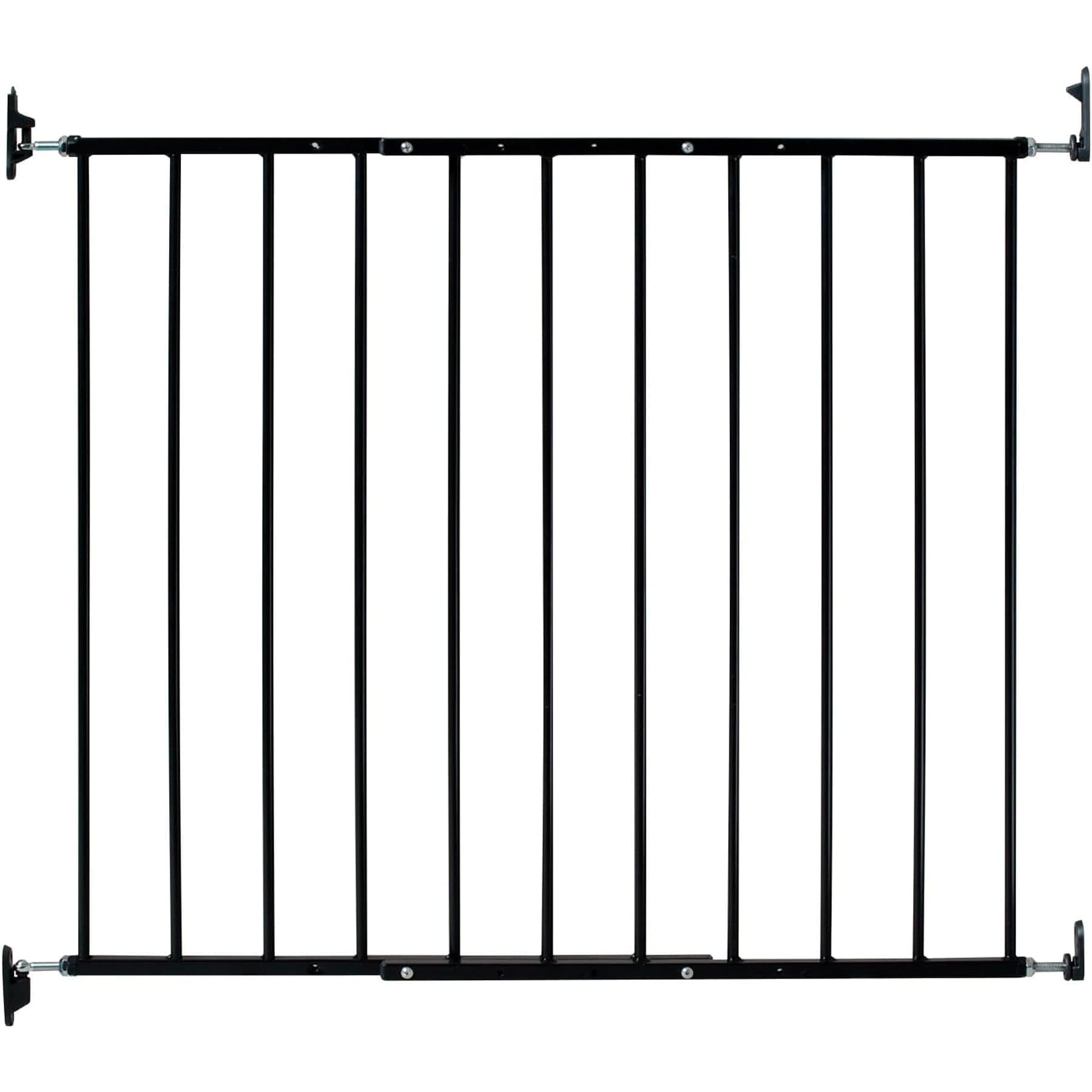
A correctly installed gate can prevent unsupervised stairs and jumping while the surgeon limits activity.
Webvet may earn a commission when you click through to Chewy, at no extra cost to you.
An X-ray does not directly display a torn CCL as a simple broken line. Radiographs help assess joint swelling, arthritis, other bone problems, and the measurements needed for surgical planning. A knee X-ray that seems normal to an owner does not rule out a partial tear. Bloodwork may also be recommended before anesthesia or certain pain medicines.
Ask the clinician to explain three findings:
- Is the diagnosis a partial tear, complete rupture, or still uncertain?
- How unstable is the knee, and is meniscal injury suspected?
- Does another problem change the treatment choice or recovery expectations?
If the source of pain remains unclear, the broader guide to causes of limping in dogs explains why a focused knee diagnosis matters.
 $65 · no membership
Is your dog slowing down or seeming sore?
A licensed vet can examine your dog over video and prescribe treatment online when it's appropriate.
 Talk to a vet
- Licensed vets
- All 50 states
- same-day Rx
Webvet may earn a commission if you book.
Surgery versus conservative management
Surgery generally provides the most reliable way to control cruciate-related knee instability. Conservative management is an individualized combination of activity restriction, prescribed pain relief, weight management, and rehabilitation. It can improve comfort and function in selected dogs, but it does not recreate the torn ligament. A dog feeling better on medication is not evidence that the knee has become mechanically stable.
| Option | Main goal | Important limitation | Care burden and question to ask |
|---|---|---|---|
| Surgical stabilization | Control knee instability during weight bearing | Does not erase existing arthritis or guarantee freedom from complications | Confinement, incision care, rechecks and rehabilitation; which procedure fits this knee? |
| Conservative management | Improve comfort and usable movement with restricted activity and rehabilitation | Instability and risk of further meniscal injury may remain | Daily restrictions, weight control and reassessment; what finding means the plan is not working? |
| Individually fitted brace | Provide selected external support as part of a clinician's plan | Does not regrow the ligament; fit, skin sores and tolerance can limit use | Fitting, skin checks and follow-up; what benefit is realistic for this dog? |
Body size, activity, knee anatomy, overall health and practical home support affect treatment choice, alongside the degree of instability. A small dog is not automatically a nonsurgical candidate, and a large dog is not automatically excluded from conservative care. A partial tear also needs follow-up because symptoms may improve before the underlying problem is resolved.
Braces, rehabilitation, and alternative treatments
There is no universal best knee brace for a torn ACL. An off-the-shelf sleeve is not equivalent to a professionally fitted orthosis. The ACVS guide notes limited evidence about custom-brace outcomes and possible sores, persistent pain, and poor tolerance. Ask who will fit the brace, check it, and assess whether it is helping.
Laser treatment, platelet-rich plasma injections, supplements, or other adjuncts should be discussed in terms of a specific goal and evidence. They should not be presented as proven replacements for mechanical stabilization. Essential oils are not a way to repair a torn ligament. Do not add treatments that interfere with prescribed care or delay reassessment of ongoing pain.
For a nonsurgical plan, agree on the allowed activity, the medication schedule, and a review date. Ask what improvement would justify continuing and what would prompt a surgical consultation. The guide to pain medicines for dogs explains why medication choice requires veterinary assessment; leftover or human medicines are not interchangeable.
TPLO, TTA, and other surgical options
Whichever operation is discussed, plan for short, controlled toilet outings afterward. A fixed-length Leash Boss standard leash can help manage those trips when the surgeon permits walking. Choose suitable handling equipment and ask about assistance before discharge if your dog is large or unsteady. A leash does not authorize extra exercise or replace instructions for supporting the dog.
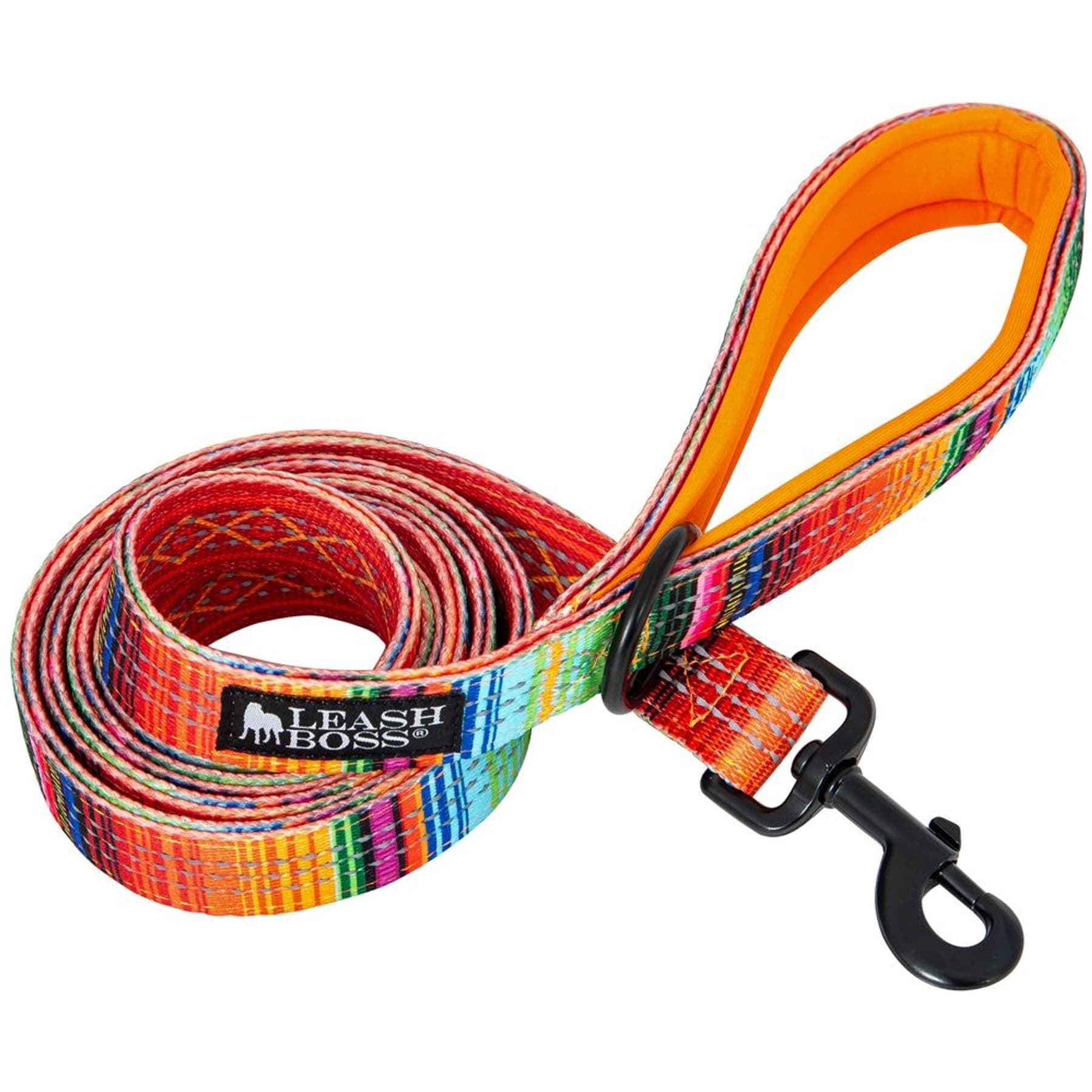
A standard leash supports short controlled outings according to the surgeon’s plan; choose a suitable length and fit.
Webvet may earn a commission when you click through to Chewy, at no extra cost to you.
The main procedures achieve stability in different ways:
- TPLO: Tibial plateau leveling osteotomy changes the angle at the top of the shin bone through a planned bone cut, then stabilizes it with a plate and screws.
- TTA: Tibial tuberosity advancement moves the front portion of the shin bone to change forces around the knee. Implants support the bone while it heals.
- Extracapsular or lateral suture repair: Strong suture outside the joint limits abnormal movement while surrounding tissues develop support. The older De Angelis approach belongs to this family of repairs.
- TightRope and other techniques: These use specific implant or bone-cutting approaches. Ask why the surgeon recommends that option for your dog's size, anatomy, and activity.
VCA's explanation of TTA describes both the bone realignment and the need for follow-up examinations and radiographs. TPLO is itself a type of cruciate surgery, rather than an alternative to “ACL surgery.” These operations usually compensate for the damaged ligament instead of replacing it with a new ligament.
ACVS reports significant improvement in roughly 85–90% of surgically treated cases. That is a broad outcome statement, not a procedure-specific guarantee for your dog. Ask how the surgeon defines success, which complications they monitor, and how simultaneous or staged treatment would work if both knees are affected.
Recovery at home and veterinary rehabilitation

Recovery combines confinement, short controlled outings, incision protection, and surgeon-led rehabilitation. Bone-cutting procedures require protected healing, and suture repairs also need restricted activity. Prepare a small, calm area with nonslip footing, blocked stairs, and a route for the permitted toilet trips. Ask for written instructions that every caregiver can follow.
If incision protection is prescribed, a correctly fitted Dogswell rigid protective collar is one option. The listed small size is not suitable for every dog. Have the veterinary team confirm that your dog cannot reach the incision and can eat, drink, and rest safely. An inflatable collar or soft substitute may not prevent access to a hind leg.
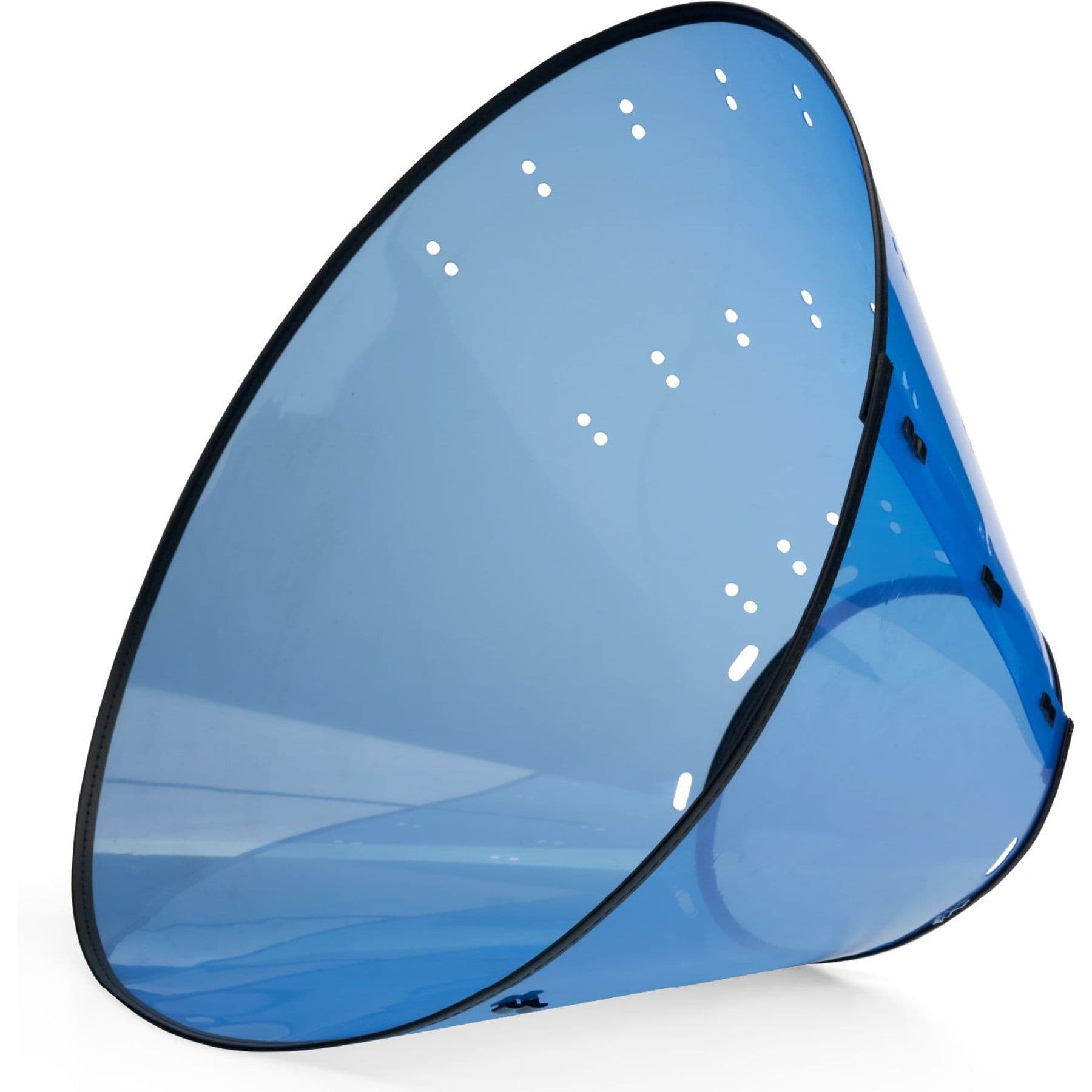
A correctly fitted rigid collar can prevent access to an incision; confirm reach and size with the veterinary team.
Webvet may earn a commission when you click through to Chewy, at no extra cost to you.
Several weeks of confinement are commonly needed, with recovery progressing over months. VCA's TTA guidance describes many dogs beginning normal walking and play at about four months, with stressful activities still restricted. That example does not set the recovery time after every procedure. The operation, healing seen at rechecks, and your dog's progress determine the schedule.
What to monitor during recovery
- Follow the prescribed medicines and report suspected adverse effects.
- Check the incision as instructed; report discharge, opening, increasing redness, or swelling.
- Contact the clinic about worsening lameness, new reluctance to bear weight, marked pain, or concerning leg shaking.
- If your dog jumped off the couch after ACL surgery, stop further activity and call the surgical team. Describe when it happened and any new limp, pain, or swelling; even an apparently normal dog may need advice about the repair. Do not give extra medicine to compensate.
- Keep scheduled rechecks and X-rays even when walking looks better.
Some bruising or swelling may occur after surgery, but the team should tell you what is expected for that operation. Increasing swelling, heat, discharge, or worsening pain needs their assessment. A new click, recurrent limp at eight or ten weeks, or limping a year later cannot be diagnosed from timing alone. Possible causes include meniscal problems, arthritis, implant or suture complications, reinjury, or a problem in the other knee.
Rehabilitation may include specific assisted movements and progressively longer controlled walks, but exercises need professional instruction. Ask when to start, how to perform them, and when to stop. Swimming, stairs, jumping, and balance exercises are not automatically gentle choices. Walking with a torn ligament or after surgery is possible, but the amount allowed is a treatment decision.
Cost, age, and quality-of-life decisions
Comparing an itemized ACL surgery estimate
The cost to treat a dog's cruciate ligament tear depends on the operation and included services. As a published US benchmark checked October 2, 2026, CareCredit's veterinary cost guide lists an average of US$3,525 per knee for CCL TPLO surgery. That is a procedure benchmark, not a personalized all-in quote, and it does not price every type of ACL repair.
A useful estimate separates the consultation, imaging, bloodwork, operation and implants, anesthesia, medicines, rechecks, follow-up X-rays, and rehabilitation. Ask whether referral and complication care cost extra. Compare written estimates for the same proposed treatment and follow-up before deciding that one hospital is less expensive.
Options when surgery is unaffordable
If you cannot afford ACL surgery for your dog, ask the veterinarian to build a workable pain-control and restricted-activity plan now while you explore an appropriate referral, alternative operation, financial assistance, or payment arrangement. A monitored conservative plan may be reasonable for some dogs; it needs a recheck and clear comfort goals. Difficulty paying does not make untreated pain acceptable or euthanasia inevitable.
Request separate estimates for immediate care and the proposed longer-term treatment. Ask the clinic about assistance programs it actually works with; approval is not guaranteed. If you have insurance, check the deductible, reimbursement rules, and pre-existing-condition exclusions before assuming surgery is covered.
Deciding whether surgery is worthwhile
ACL surgery can be worthwhile when improved knee stability is likely to restore comfortable daily movement and the dog can safely undergo treatment and recovery. The benefit is less straightforward when serious concurrent illness limits function or makes anesthesia unusually risky. Compare expected comfort and mobility with each realistic option, including the months of restricted activity and rehabilitation. Persistent pain or repeated loss of function is a reason to reconsider the plan.
Assessing an older dog for surgery
A 10-year-old dog may be a reasonable candidate for ACL surgery when the likely functional benefit supports it. Age alone does not decide surgical candidacy; overall health and anesthetic assessment matter. Ask how heart or kidney disease, existing osteoarthritis, hip disease, and the other knee affect recovery. A comfortable retirement with easier toileting and walking may be a meaningful goal even when athletic activity is no longer relevant.
Comfort and end-of-life decisions
A torn ACL, or difficulty paying for surgery, is not automatically a reason for euthanasia. A veterinarian-guided end-of-life discussion becomes appropriate when suffering cannot be acceptably relieved with realistic treatment and support. Persistent inability to rise or toilet comfortably, inability to settle because of pain, or loss of ordinary enjoyment despite care are reasons to have that conversation promptly. The decision considers the whole dog's quality of life, other illnesses, and available care; there is no ACL-specific age or deadline for euthanasia.
Cruciate ligament questions
Frequently Asked Questions
How long can a dog live with a torn ACL?
A torn ACL does not by itself set a remaining lifespan. A dog can live with cruciate disease long term when an individualized plan maintains comfort and useful movement. Pain control is central to that plan. Assess quality of life through the ability to rise, toilet, settle, and enjoy ordinary activities. Persistent pain or declining mobility means the plan needs reassessment, regardless of appetite or age.
Can my dog recover from an ACL tear without surgery?
Some dogs improve with conservative management, including prescribed medication, activity changes, weight control, and rehabilitation. Improvement does not recreate the torn ligament or prove knee instability has resolved. Set a recheck and clear criteria for reconsidering surgery if pain or function remains unacceptable.
Is a torn ACL in a dog painful?
Yes. Knee instability and inflammation are painful, and meniscal injury can add discomfort. Dogs may show pain through limping, stiffness, or reduced activity without crying. Veterinary pain relief and a treatment plan are needed even when your dog continues to bear weight.
What are the downsides of ACL surgery?
Surgery involves cost, anesthetic risk, possible infection or implant complications, and a substantial rehabilitation commitment. Arthritis can still progress afterward. Those tradeoffs need to be weighed against the benefits of improved stability and comfort, using the surgeon's assessment of the individual dog.
$65 · no membershipIs your dog slowing down or seeming sore?
A licensed vet can examine your dog over video and prescribe treatment online when it's appropriate.
Talk to a vet- Licensed vets
- All 50 states
- same-day Rx
Webvet may earn a commission if you book.
Veterinarian · BVMS MRCVS
Dr. Pippa Elliott, BVMS, MRCVS, is a veterinarian with nearly 30 years of experience in companion animal practice. Dr. Elliott earned her Bachelor of Veterinary Medicine and Surgery from the University of Glasgow. She was also designated a Member of the Royal College of Veterinary Surgeons. Married with 2 grown-up kids, Dr. Elliott has a naughty Puggle named Poggle, 3 cats and a bearded dragon.


