Dog Sprained Leg: Symptoms, Diagnosis, and Recovery
A limping dog may have a sprain, strain, or another injury. Learn when to call the vet, what diagnosis involves, and how to manage prescribed rest, pain relief, and a gradual return to activity.

BVMS MRCVS
Medically reviewed by Dr. Pippa Elliott, BVMS MRCVS · Last reviewed

This article contains affiliate links. Webvet may earn a commission when you buy through them, at no extra cost to you.
A dog sprained leg can cause limping, swelling, and reluctance to move, but those signs do not establish the diagnosis. A torn nail, fractured bone, injured tendon, or damaged knee ligament can look similar. Stop exercise, keep your dog comfortable, and contact your veterinarian for guidance about how promptly the leg needs examination.
Once a sprain is diagnosed, recovery usually involves a specific combination of activity restriction, veterinary pain relief, and reassessment. The useful question is not simply whether your dog can walk. It is whether the injured tissues are ready for the activity you are asking them to do.
Dog sprained leg symptoms and when to call the vet
- 1Weight bearing does not rule out a fracture or substantial ligament injury. A lameness examination is needed to distinguish the possible causes.
- 2Seek prompt veterinary help for severe pain, an inability to use the leg, obvious deformity, a major accident, or illness alongside the limp.
- 3Until you have instructions, stop running and jumping, prevent stairs, and avoid bending or testing the painful limb yourself.
While arranging care, choose a quiet place on one level. For essential toilet trips, an ordinary fixed-length leash gives you more control than allowing your dog to wander. A Leash Boss standard six-foot leash is one option when it suits the dog's size and handling needs. Keep the outing brief and follow the clinic's transport advice if your dog struggles to walk.
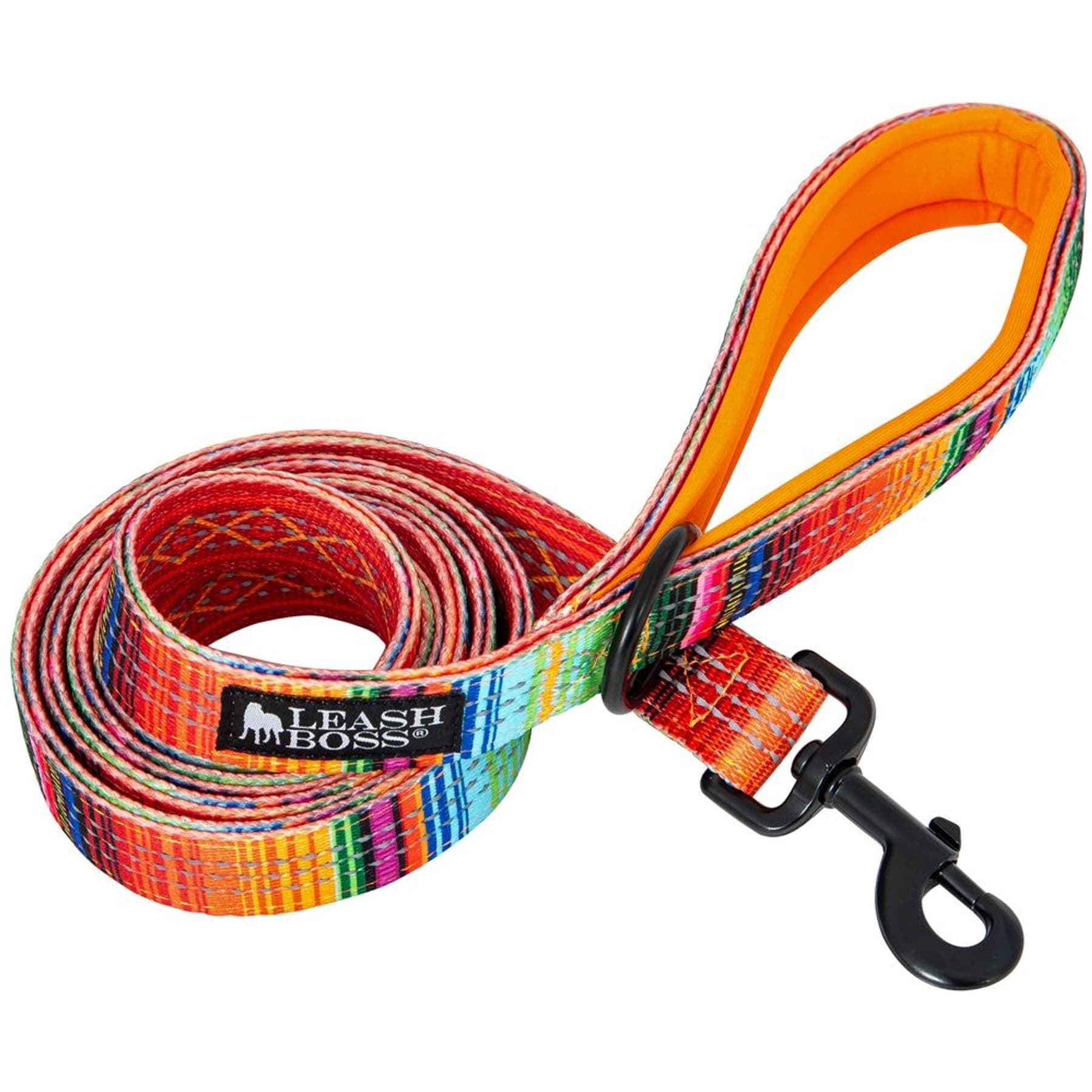
A standard leash option for short, controlled toilet trips when your veterinarian permits walking. Choose a suitable size and length.
Webvet may earn a commission when you click through to Chewy, at no extra cost to you.
Possible signs include a shortened stride, holding up a paw, swelling, licking, or hesitating to stand. These changes can affect a sprained front or back leg. A French Bulldog needs the same assessment as any other dog: breed alone cannot distinguish a sprain from a fracture. Dogs can remain interested in food and company despite substantial pain.
An Achilles tendon injury is sometimes described as a "sprain," but it affects tendons rather than a joint's ligaments. A newly dropped ankle or flat-footed hind-leg stance deserves prompt assessment. The American College of Veterinary Surgeons describes limping, swelling, and an abnormal stance as possible signs. Keep the dog quiet and do not stretch the ankle or try to correct its position.

| What you notice | What it can mean | Safest next step |
|---|---|---|
| No weight bearing, severe pain, or an oddly angled leg | A fracture, dislocation, or major soft-tissue injury needs consideration | Call for urgent assessment; ask how to move the dog safely |
| Some weight bearing but persistent limping | A sprain is possible, but walking does not settle the diagnosis | Arrange a lameness examination and restrict activity meanwhile |
| Limping after a fall, collision, or vehicle accident | Other injuries may be present even when the leg attracts attention | Seek prompt veterinary assessment and describe the entire accident |
| A diagnosed injury worsens during recovery | Reinjury, inadequate pain control, or another problem may need investigation | Stop the increased activity and contact the clinic for a recheck |
| A dog improves at rest but limps on toilet trips | Comfort at rest does not show that the tissues tolerate exercise | Record the pattern and ask the clinic whether the plan needs adjustment |
Control access to the house instead of relying on your dog to rest voluntarily. A properly installed KidCo Safeway mounted gate can help block stairs or a busy room. Check the manufacturer's installation requirements and whether the height and spacing suit your dog. A gate is a practical boundary, not treatment for the injured ligament.

A mounted gate can help block stairs or busy rooms during restricted activity. Check the installation requirements and fit for your dog.
Webvet may earn a commission when you click through to Chewy, at no extra cost to you.
The VCA first-aid guidance for limping dogs emphasizes cautious handling because pain can make even a familiar dog bite. Do not force an examination, squeeze every toe, or repeatedly make the dog walk to demonstrate the limp. A short video of naturally occurring movement can be helpful if the clinic requests one and recording it does not require extra activity.
What to do for a suspected sprained front paw
If your dog has a suspected sprained front paw, restrict activity and call the clinic. Describe what happened and whether your dog can place the foot down. Do not assume that swelling around the wrist, ankle, or toes identifies a sprain. The paw itself may contain the injury, or pain farther up the leg may change how the paw is used.
Sprain, strain, or fracture: what a limp cannot tell you
A sprain affects a ligament, the tissue connecting bones around a joint. A strain affects a muscle or tendon, which transmits a muscle's pull to bone. Everyday descriptions such as “muscle sprain” often mix these terms. The distinction matters because an injured muscle, an unstable joint, and a broken bone may require different protection and recovery plans.
There is no reliable home test for a dog's leg sprain versus a break. Being able to stand, accepting a treat, or not crying cannot exclude a fracture. Likewise, severe limping does not tell you which structure is injured. A wrist, shoulder, knee, hock, or toe problem can alter the whole gait, and the most visible change may not mark the source of pain.
Several distinctions are worth discussing with the veterinarian:
- A damaged nail or pad can make the whole paw painful without a joint sprain.
- A broken toe involves bone and may need fracture-specific support and rechecks.
- A hind-leg limp can result from cranial cruciate ligament disease, often called a torn ACL, rather than a minor strain.
- Arthritis and other causes of lameness can flare after activity without a new sprain.
If the cause is still uncertain, the broader guide to why a dog may be limping explains the range of possibilities. Avoid trying to distinguish them by pulling on the leg, bending joints, or comparing how much force each limb will tolerate. Those maneuvers can cause pain and are not a substitute for an examination.
 $65 · no membership
Is your dog slowing down or seeming sore?
A licensed vet can examine your dog over video and prescribe treatment online when it's appropriate.
 Talk to a vet
- Licensed vets
- All 50 states
- same-day Rx
Webvet may earn a commission if you book.
What will a vet do for a sprained leg?
The veterinarian starts with the history and a lameness examination. Bring details about the onset, any known accident, previous episodes, recent strenuous exercise, and medicines already given. The examination may include watching movement, checking the paws and nails, and carefully assessing bones, muscles, tendons, and joints. Some painful or difficult examinations require sedation.
Radiographs, commonly called X-rays, may be recommended to look for fractures, dislocation, or changes around a joint. They do not show every ligament or tendon injury directly. Normal-looking bones therefore do not automatically establish that the problem is a mild sprain. Depending on the findings, the veterinarian may suggest further imaging, a specialist opinion, or reassessment after an initial treatment period.
For example, the American College of Veterinary Surgeons explains that a cruciate tear is assessed through a veterinary examination for abnormal knee movement; sedation or radiographs may help in less clear cases. That is one reason an apparently simple hind-leg sprain should not be diagnosed by an owner testing the joint.
Treatment matched to the injured tissue
- Restricted activity tailored to the suspected or confirmed injury.
- Prescription pain relief, with instructions about dose, frequency, and adverse effects to report.
- A cold pack or other local care when appropriate for that particular injury.
- Veterinary support or stabilization for selected injuries, rather than a universal wrap or brace.
- A planned recheck and specific instructions for returning sooner.
A low bed can make the prescribed recovery area more comfortable without requiring a climb. The FurHaven NAP supportive bed is an example to consider in an appropriate size. Check that the dog can lie in a natural position, get up without scrambling, and reach the rest area without crossing a slippery floor. No bed replaces prescribed pain relief or activity restriction.
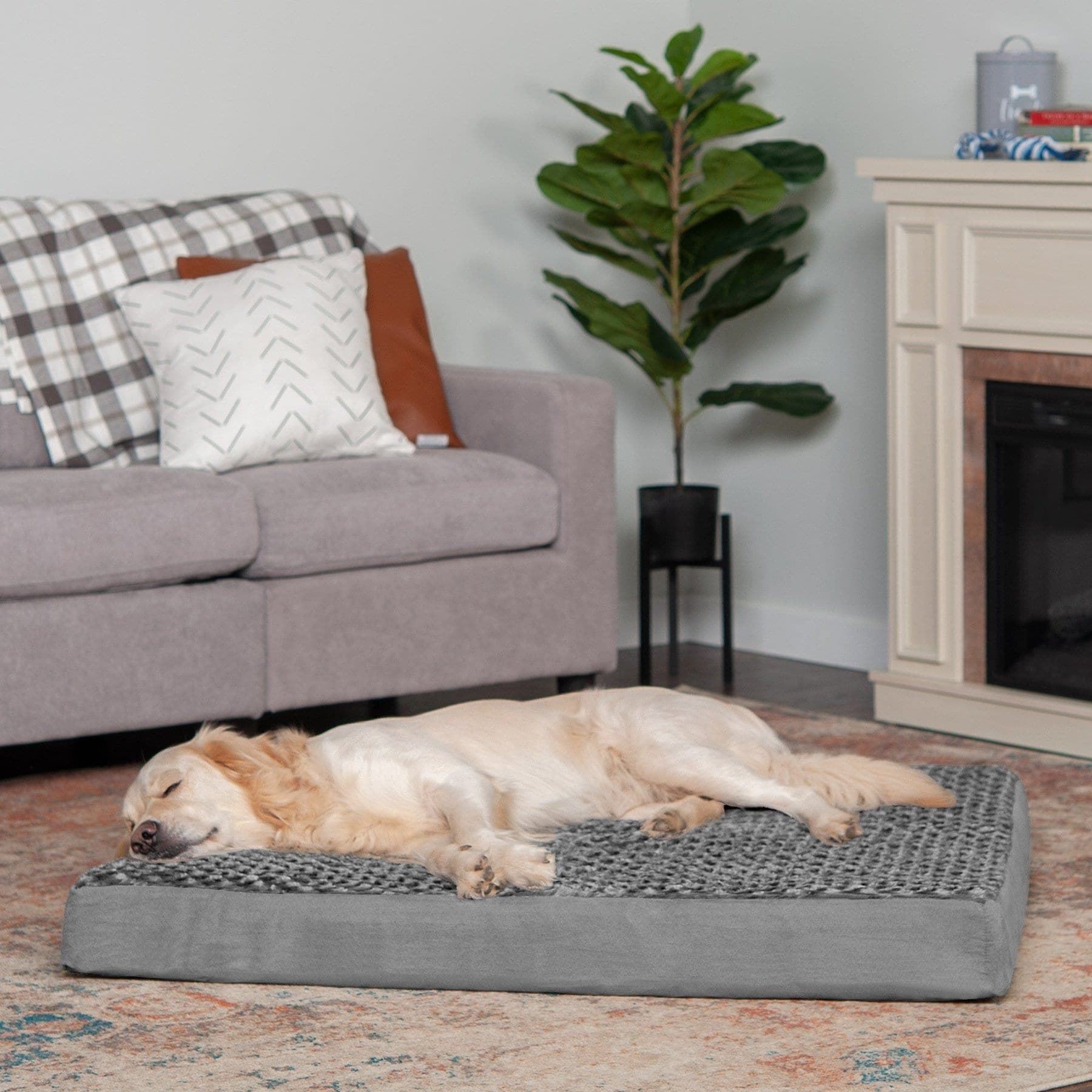
A low supportive bed option for a comfortable recovery area. Choose the size your dog needs and provide nonslip access.
Webvet may earn a commission when you click through to Chewy, at no extra cost to you.
Treatment for a suspected sprained ankle, also called the hock, starts with identifying whether the injury involves a ligament, tendon, or bone. A stable soft-tissue injury may be managed with prescribed rest and pain relief; instability or a damaged tendon may require specialist treatment or stabilization. Do not apply a tight ankle wrap or choose a brace yourself. Ask which movements to prevent and whether support is actually indicated for your dog's diagnosis.
Severe ligament damage or joint instability may need a different treatment path, including surgery in some cases. Ask what degree of injury the veterinarian suspects, what has been ruled out, and what remains uncertain. That explanation is more useful than the label “sprain” alone.
There is also no single sprained-leg treatment cost. The bill changes with the examination, imaging, sedation, medicines, support, and follow-up required. Request an itemized estimate and ask whether the first recheck is included. A cheaper initial visit and a more complete diagnostic visit may cover different services.
How to care for a diagnosed sprain at home
Home care starts with the veterinary plan. “Rest” usually means preventing running, rough play, jumping on furniture, and uncontrolled stairs, with only the permitted toilet trips. Ask whether your dog should remain in a small room, gated area, or familiar crate. Keep food and water within easy reach and use nonslip footing where the dog must stand or turn.
If confinement is prescribed and your dog already settles in a crate, an appropriately sized MidWest iCrate can be one way to follow that plan. The listed size will not suit every dog. Confirm that your dog can stand, turn, and rest normally, and discuss another arrangement if confinement causes frantic movement. Injury recovery is a poor time to force unfamiliar crate confinement without support.
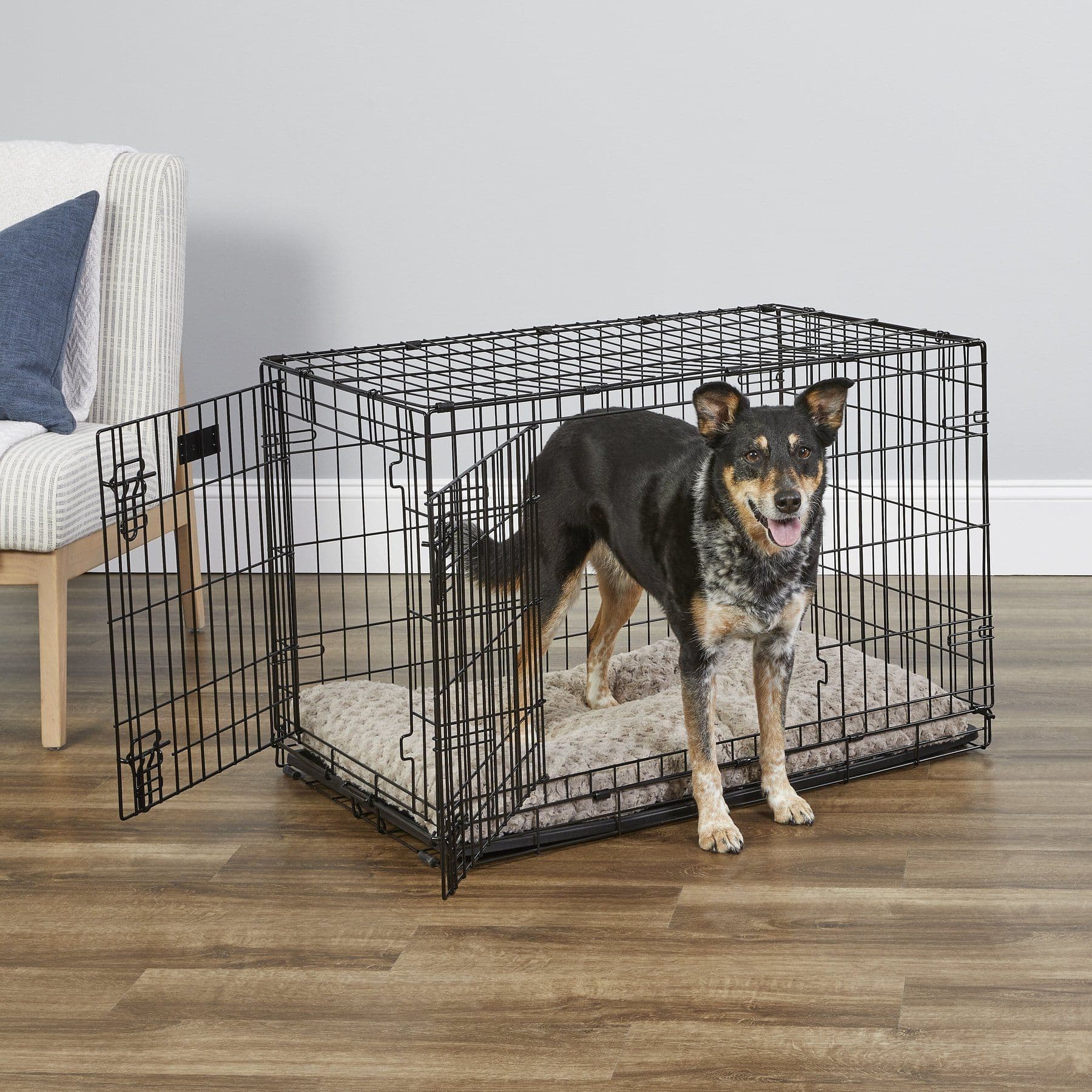
A crate option for a dog already comfortable with confinement when the vet prescribes it. Confirm the size and discuss alternatives if your dog becomes distressed.
Webvet may earn a commission when you click through to Chewy, at no extra cost to you.
For cold treatment, ask whether a wrapped cold pack is suitable, where to place it, and for how long. Do not press a pack against a painful joint, put ice directly on skin, or restrain a distressed dog to keep it in place. Heat and massage are not interchangeable with cold therapy. Avoid improvising either while the diagnosis or stage of injury is uncertain.
The guide to pain medicines for dogs explains why the drug and the individual dog's health both matter. For a prescribed NSAID, the FDA advises stopping the drug and calling the veterinarian immediately if a side effect is suspected. Report vomiting, diarrhea, appetite changes, or other concerning changes. Extra medication is not a safe way to make an overly active recovery plan work.
Why a limping leg should not be wrapped at home
If your dog is limping, do not assume you should wrap the leg. Wrapping a suspected sprained ankle or another painful joint is not a routine home remedy. A poorly placed compression wrap can slip, create pressure injuries, or restrict circulation. Restrict activity and arrange an examination instead of splinting the leg or buying a brace to test whether it helps. If the veterinarian prescribes support, obtain fitting, monitoring, and recheck instructions for that specific device.
How long should a dog rest a sprained leg?

Rest duration depends on the injured tissue, severity, stability, other health problems, and the response at rechecks. PetMD's veterinarian-written sprain and strain guide provides two different planning contexts:
- Many soft-tissue injuries require about 2–4 weeks of strict rest.
- Recovery after surgery such as cruciate repair may take about 8–12 weeks.
These ranges do not clear your dog for exercise. Substantial ligament injuries may need longer or different restrictions than a mild strain. Ask for a written initial restriction period and the date or criteria for reassessment.
Less limping is encouraging, but it is not permission to resume fetch or long walks. Pain relief can improve movement before the damaged tissues regain strength. Conversely, a dog that still struggles to rise or avoids the leg despite the plan needs reassessment, not simply another week of waiting.
Use a simple daily record rather than repeatedly testing the leg:
- Note comfort when resting and rising normally.
- Record whether weight bearing improves or worsens during permitted movement.
- Write down medicines given and any suspected adverse effects.
- Note new swelling, licking, or reluctance to use the limb.
- Record unexpected jumps, slips, or bursts of running so the clinic has an accurate history.
Before leaving the clinic, establish these checkpoints:
- What activity is allowed now, including toilet-trip length and handling on steps?
- Which change means you should call the same day?
- When is the planned recheck, even if the dog seems better?
- Who should authorize a longer walk or rehabilitation exercise?
- What happens if improvement stalls or the limp returns?
Healing time can also be affected by repeated slips or bursts of activity. If your dog bolts through an open door or jumps off a sofa, tell the clinic what happened and whether movement changed afterward. Do not hide the incident or try to compensate with extra medicine. Accurate information helps the veterinarian decide whether the original plan remains appropriate.
Returning to activity and preventing another injury
Return to activity should be gradual and directed by the clinician who assessed the injury. The first increase may be controlled walking, while running, tight turns, jumping, and off-leash play remain restricted. Rehabilitation can be valuable when prescribed, but exercises need to match the injured structure and stage of healing.
Ask for a plan that fits your household. An apartment with unavoidable steps, several energetic dogs, or slippery floors creates different practical problems from a single-level home. Discuss safe assistance with the veterinary team rather than improvising a sling or lifting a painful dog in a way that twists the limb.
Useful prevention measures after recovery include:
- Maintaining an appropriate body condition with a veterinarian-guided feeding plan.
- Building activity consistently instead of alternating prolonged inactivity with intense exercise.
- Improving traction on frequently used walking routes.
- Keeping nails maintained and checking the paws after outdoor activity.
- Addressing repeated limping rather than assuming every episode is another minor sprain.
Keep the return-to-walking plan specific enough that everyone caring for the dog can follow it. “A little more exercise” means different things to different people. Ask the clinic to describe permitted duration, pace, surface, and frequency, and whether the next increase depends on a recheck. One person can keep the activity log so a morning outing is not accidentally followed by another family member's usual long walk.
Tell the clinician what happens later as well as during an outing. A dog may appear willing to walk but become stiffer after resting. Record that pattern rather than increasing exercise solely because the dog remained enthusiastic outside. Do not add hills, stairs, swimming, or balance exercises because they sound gentle; each places different demands on the recovering limb.
- Prepare the toilet route before opening the recovery area.
- Keep excitable greetings and playmates separate during the restriction period.
- Ask the clinic about practical help if your dog repeatedly becomes distressed at rest.
If lameness returns as exercise increases, stop that increase and contact the clinic. A recurrent limp may mean the tissues need more protection, the exercise progressed too quickly, or the original diagnosis needs another look. The goal is comfortable, sustainable movement with a plan based on your dog's findings.
Sprained leg questions
Frequently Asked Questions
Will a dog's sprained leg heal on its own?
A mild sprain may improve with an appropriate rest plan, but an owner cannot reliably identify a mild sprain from limping alone. A lameness examination helps rule out problems that need different treatment. Do not use apparent improvement as a reason to ignore severe pain, recurrent limping, or the veterinarian's recheck instructions.
Will a dog walk on a sprained leg?
Some dogs continue walking with a sprain. Weight bearing does not show how severe a ligament injury is and does not exclude a fracture or another painful problem. Do not encourage extra walking to test the leg; describe the movement you have already observed to the clinic.
Should I wrap my dog's sprained leg?
Only apply support if your veterinarian has prescribed it and explained how to monitor it. A homemade compression wrap can interfere with circulation or cause pressure sores. Rest and an examination are safer starting points than wrapping an undiagnosed limp or fitting an over-the-counter brace.
$65 · no membershipIs your dog slowing down or seeming sore?
A licensed vet can examine your dog over video and prescribe treatment online when it's appropriate.
Talk to a vet- Licensed vets
- All 50 states
- same-day Rx
Webvet may earn a commission if you book.
Veterinarian · BVMS MRCVS
Dr. Pippa Elliott, BVMS, MRCVS, is a veterinarian with nearly 30 years of experience in companion animal practice. Dr. Elliott earned her Bachelor of Veterinary Medicine and Surgery from the University of Glasgow. She was also designated a Member of the Royal College of Veterinary Surgeons. Married with 2 grown-up kids, Dr. Elliott has a naughty Puggle named Poggle, 3 cats and a bearded dragon.


