How to Brush Dog Teeth (and How Often): Vet Guide
A vet-reviewed, step-by-step guide to brushing your dog's teeth: the right supplies, safe toothpaste, the gumline technique, how often to brush, and what to do when your dog resists.

BVMS MRCVS
Medically reviewed by Dr. Pippa Elliott, BVMS MRCVS · Last reviewed

This article contains affiliate links. Webvet may earn a commission when you buy through them, at no extra cost to you.
Learning how to brush dog teeth is one of the highest-payoff things you can do for your pet at home, and it is far simpler than most owners fear. This vet-reviewed guide covers the full method (technique plus frequency plus what to do when your dog resists), so you can start tonight with the right supplies and a calm, safe routine.
If you have ever wondered how to brush the teeth of a dog without a wrestling match, the answer is mostly patience and the correct angle, not strength. Below we walk through how to brush a dog teeth step by step, how to brush your dog teeth safely with dog-specific products, and how to brush dog teeth properly at the gumline where it actually counts.
This article is the brushing how-to in our dental cluster. It links out to dedicated guides on tartar, bad breath, chews, and professional cleaning so you can go deeper on any single topic without losing the plot here.
- 1Daily brushing with a dog-safe enzymatic toothpaste is the single most effective at-home defense against periodontal disease.
- 2Aim for daily, accept three to four times a week as a realistic minimum, focus on the outer surfaces at the gumline, and never use human toothpaste.
Why brushing your dog's teeth matters
Here is the uncomfortable reality of why brush dog teeth at all: dental disease is the most common health problem vets see in adult dogs. More than 80% of dogs over age three have some degree of periodontal disease in dogs, according to VCA Animal Hospitals, and it is largely preventable at home.
The mechanism is a simple progression. Bacteria and food debris form a soft film called plaque within hours of eating. Brushing removes plaque while it is still soft. Left alone, plaque mineralizes into hard tartar (calculus) in as little as 24 to 72 hours, and tartar cannot be brushed off, only scaled off by a vet.
Understanding dog teeth plaque vs tartar is the whole game: you can win against plaque at home, but you lose to tartar. The dog teeth tartar stages roughly track the severity of gum disease, from mild gingivitis to bone loss.
| Stage | What you see | Reversible? |
|---|---|---|
| Stage 1 (gingivitis) | Slight redness at gumline, mild plaque, no tartar | Yes, with brushing |
| Stage 2 (early periodontitis) | Some tartar, red and slightly swollen gums | Partly, needs cleaning |
| Stage 3 (moderate) | Visible tartar, receding gums, bad breath | No, damage is permanent |
| Stage 4 (advanced) | Heavy tartar, loose or rotting teeth, pain | No, often needs extractions |
So what happens if I never brush my dog's teeth? Plaque hardens, gums become inflamed and bleed, and bacteria erode the bone that holds teeth in place. The result is pain, tooth loss, and a bacterial load that can stress the heart, liver, and kidneys. For the full progression and how loose or decaying teeth are handled, see our guide to dog rotting teeth.
What you'll need: toothbrush and dog-safe toothpaste

You only need two things to start: a dog toothbrush and a dog-safe dog toothpaste. This is not a shopping spree, it is a starter kit.
For the brush, you have a few sensible options:
- Dual-ended dog toothbrush: a long handle with a large and small head, good for medium and large dogs.
- Finger toothbrush: a soft rubber sleeve that slips over your fingertip, ideal for beginners, small dogs, and nervous pets that tolerate touch better than a handle.
- Electric dog toothbrush: a dog toothbrush electric option exists, but it is optional and the vibration spooks many dogs, so only introduce it after your dog is fully comfortable with manual brushing.
A soft-bristled child's toothbrush also works for larger dogs. The combination you want is a dog toothbrush and toothpaste pairing where the bristles are soft and the paste is made for dogs.
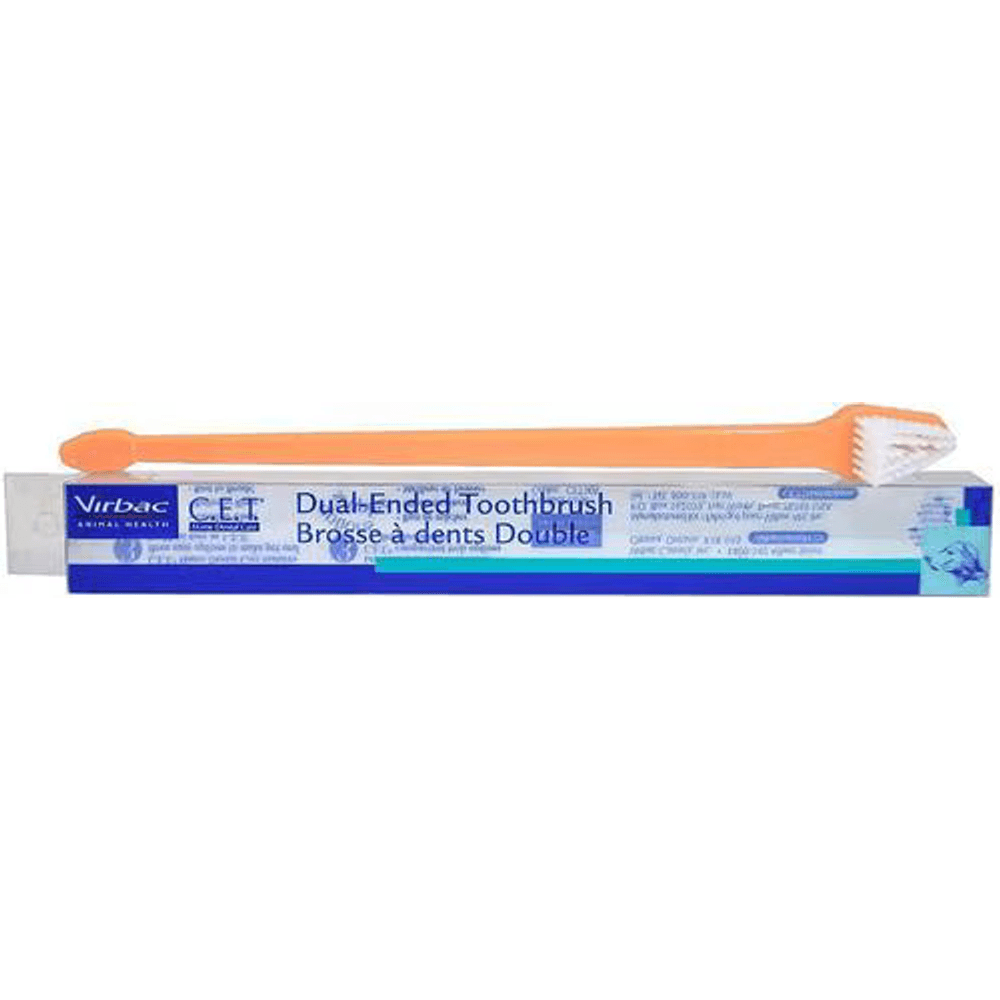
A dual-ended toothbrush with a large and a small head to fit different mouth sizes and reach the back molars where plaque hides. Soft bristles angled for the gumline.
Webvet may earn a commission when you click through to Chewy, at no extra cost to you.
For paste, look for an enzymatic dog toothpaste. Enzymes help break down plaque chemically, which boosts the mechanical effect of brushing. Most owners searching for a vet recommended dog toothpaste are pointed toward enzymatic, poultry- or malt-flavored formulas because dogs treat them like a reward, not a chore. For a product-selection framework, see our guide to dog toothpaste.
When choosing a vet recommended dog toothbrush, prioritize bristle softness and a head that fits comfortably inside your dog's mouth. Big-headed brushes are useless on a Chihuahua.
Is dog toothpaste really necessary? (and what NOT to use)
Yes, the toothpaste must be made for dogs, and this is the one place we get firm. The safety question matters more than any technique tip.
Can you brush dogs teeth with human toothpaste? No. Human toothpaste contains fluoride and frequently xylitol, both of which are toxic to dogs when swallowed. Dogs cannot spit, so they swallow everything. Per the Merck Veterinary Manual, xylitol is especially dangerous and can cause a life-threatening drop in blood sugar. Never use it.
The DIY substitutes deserve honest answers:
- Can you brush a dogs teeth with baking soda? Vets generally advise against it. Baking soda is highly alkaline, tastes unpleasant, and an upset stomach is likely if swallowed in quantity. If you are searching how to brush dog teeth with baking soda because you ran out of paste, skip the baking soda and brush with water for now instead.
- Can I brush my dogs teeth with coconut oil? Coconut oil is non-toxic and dogs like the taste, but it has no proven plaque-reducing power. It is fine as a flavored lubricant to get a reluctant dog used to the brush, not as a true substitute.
- Can I brush my dogs teeth with water? Yes. How to brush dog teeth without toothpaste is straightforward: the mechanical scrubbing action of a wet brush at the gumline does most of the work. Water-only is far better than not brushing at all.
So what can i brush my dogs teeth with at home if the store is closed? A soft brush and plain water tonight, then enzymatic dog paste as soon as you can get it. And how to brush a dog's teeth without dog toothpaste long term is simple: you can, but enzymatic paste is more effective and dogs enjoy it, so it is worth buying.
How to brush your dog's teeth, step by step

This is the core of how to brush dog teeth at home. The goal is short, calm, consistent sessions. Do not try to scrub every tooth on day one.

- Pick a calm moment. After a walk, when your dog is relaxed, not hyper. Sit on the floor beside or slightly behind them, not looming over their face.

- Let them taste the paste. Put a dab of enzymatic paste on your finger and let your dog lick it off. Do this for a day or two so the paste becomes a treat.
- Touch the teeth with your finger. Gently lift the lip and rub a finger along the outer teeth and gums. This is the bridge between licking paste and accepting a brush.
- Introduce the brush. Add paste to the brush and let them lick it, then briefly touch it to a few front teeth.
- Lift the lip and angle the bristles. Hold the brush at about a 45-degree angle to the gumline. This is the single most important detail in how to brush dog teeth properly, because plaque collects right where tooth meets gum.
- Use small circular motions. Brush the outer surfaces with gentle circles, focusing on the large cheek teeth and canines where tartar builds fastest. You can largely skip the inner surfaces, the tongue handles those.
- Keep it short and reward. Finish with praise or a treat.
How long to brush dog teeth? Aim to work up to about two minutes total, roughly 30 seconds per quadrant, but a solid 30 to 60 seconds beats a stressful two minutes. Build duration over weeks.
A common question is how to brush dog teeth with finger versus a brush. A finger brush gives you more control and feels less invasive, which is why it shines for small or anxious dogs. How to brush dog teeth with finger toothbrush follows the same gumline-angle and circular-motion rules, just with the rubber bristles on your fingertip.
For how to hold a dog to brush teeth, kneel beside your dog so you both face the same direction, cradle the muzzle with one hand, and gently lift the lip with your thumb. You do not need to pry the mouth open. To work the outer surfaces, how to get dog to open mouth to brush teeth is mostly a non-issue, because you brush with the mouth closed, lifting only the lip.
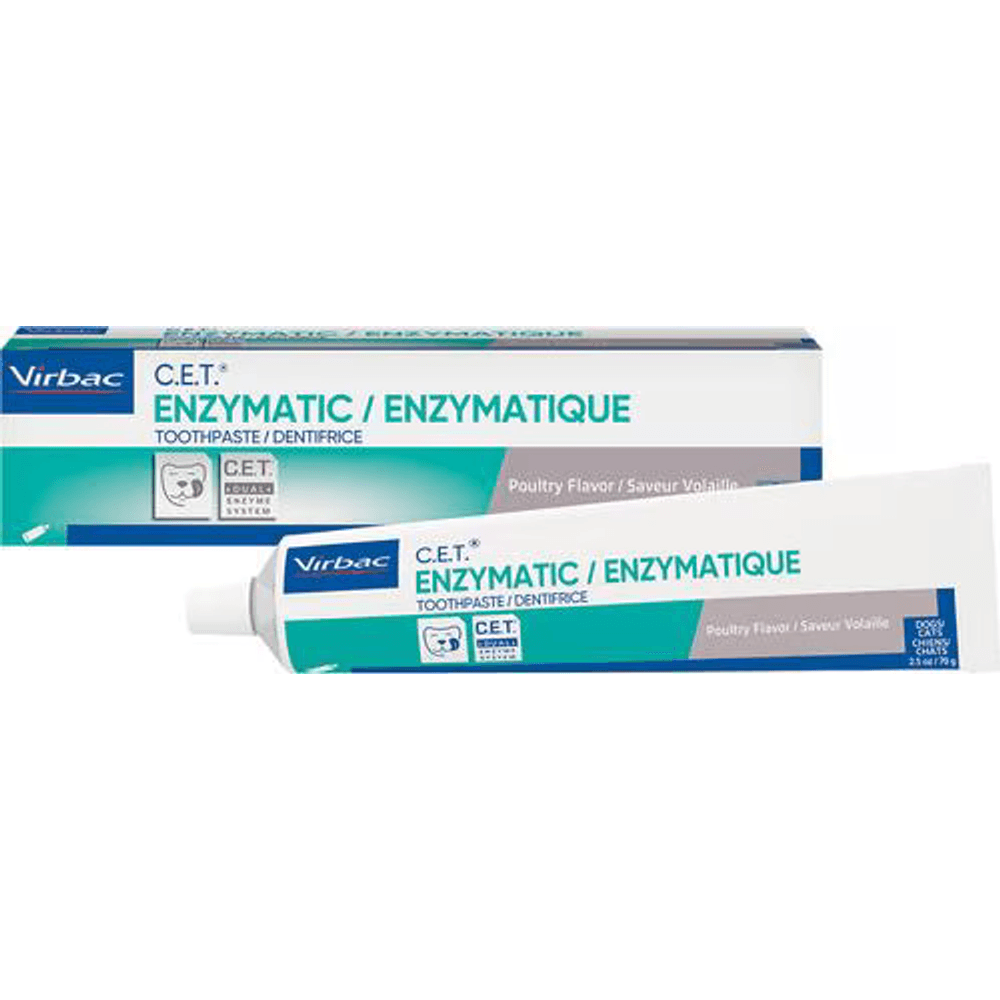
The vet-favorite enzymatic toothpaste. Its dual-enzyme system keeps working between brushings to control plaque and freshen breath, and the poultry flavor makes daily brushing easy.
Webvet may earn a commission when you click through to Chewy, at no extra cost to you.
For a more detailed walkthrough with troubleshooting, see our deep dive on how to brush a dog's teeth.
 $65 · no membership
Have a health question about your dog?
A licensed vet can assess your dog over video and prescribe online when it's appropriate.
 Talk to a vet
- Licensed vets
- All 50 states
- same-day Rx
Webvet may earn a commission if you book.
How often should you brush your dog's teeth?

The honest answer to how often to brush dog teeth is: as often as you realistically can, with daily as the target. The AVMA names daily brushing the gold standard, and recommends a minimum of three times a week to meaningfully slow plaque.
That frequency matters because of timing: plaque starts mineralizing into tartar within about 24 to 72 hours. Brush daily and you clear plaque before it can harden. So should i brush my dogs teeth everyday? Ideally yes, and how frequently to brush dog teeth comes down to beating that hardening window.
| Frequency | Effectiveness | Verdict |
|---|---|---|
| Daily | Gold standard, beats tartar formation | Best |
| 3 to 4 times a week | Meaningfully slows plaque and tartar | Good, realistic minimum |
| Once a week | Minimal benefit | Not enough alone |
| Never | Plaque hardens to tartar within days | Leads to dental disease |
A few related questions: should i brush my dogs teeth twice a day? It is not necessary; once daily is plenty. How often to brush dog teeth at night is a fine routine if bedtime is your calm window, the time of day does not matter, consistency does. And how often to brush puppy teeth? Start young to build the habit, even on baby teeth, brushing a few times a week, so brushing is normal by adulthood. How many times to brush dog teeth in a week, then, lands at seven if you can, three to four at minimum.
What to do when your dog won't let you brush
If your dog clamps shut, pulls away, or panics, you are not failing, you are skipping the desensitization step. The fix for how to brush dog teeth when they refuse is to slow down and rebuild trust over days, not force a single session.
Here is the desensitization ladder for how to train dog to brush teeth:
- Day 1 to 2: Touch your dog's muzzle and lift the lip for a second, then reward. Nothing else.
- Day 3 to 4: Let them lick enzymatic paste off your finger so the flavor predicts good things.
- Day 5 to 6: Rub paste on a few teeth with your finger, reward immediately.
- Day 7 onward: Introduce the brush with paste, a couple of teeth at a time, building up.
This patient progression is the real answer to how to get dog to brush teeth and how to get my dog to brush his teeth. You are teaching the routine to predict rewards, which is exactly how to teach dog to brush teeth without a fight.
The best toothbrush for dogs who hates brushing teeth is usually a soft finger brush, because it feels like a hand rather than a foreign object. If resistance persists despite a slow ramp, ask your vet to check for mouth pain, a sore tooth makes any dog refuse.
Brushing by size and breed: small dogs, large dogs, and flat-faced breeds

Mouth anatomy changes the mechanics. The technique is the same, but the tools and trouble spots differ.
How to brush small dog teeth is mostly a tool problem: small mouths need small heads. Knowing how to brush little dog teeth comes down to a finger brush or a small-headed brush, gentle pressure, and patience, because toy breeds are prone to crowded teeth that trap plaque. The best dog toothbrush for small dogs is typically a finger brush or an extra-small dual-ended brush.
How to brush large dog teeth is easier in some ways, more room to work, but the big cheek teeth carry heavy tartar and need attention. A full-size dual-ended brush or a soft child's brush works well, and the best dog toothbrush for large dogs is one with a head large enough to cover those big molars efficiently.
Flat-faced (brachycephalic) breeds need special care. How to brush pug dog teeth, along with Bulldogs, Boston Terriers, and Shih Tzus, means working around crowded, rotated, and overlapping teeth that trap debris. Go slowly, use a finger brush for control, and expect to spend extra time on the rotated premolars where plaque hides.
Cleaning a dog's teeth without brushing (and natural methods)

Plenty of owners search how to clean dog teeth without brushing, and the honest answer is: several methods reduce plaque, but none fully replace the brush. Brushing is the only method that mechanically clears plaque from the gumline daily.
That said, how to clean dog teeth naturally and how to clean dog teeth naturally at home can absolutely supplement brushing:
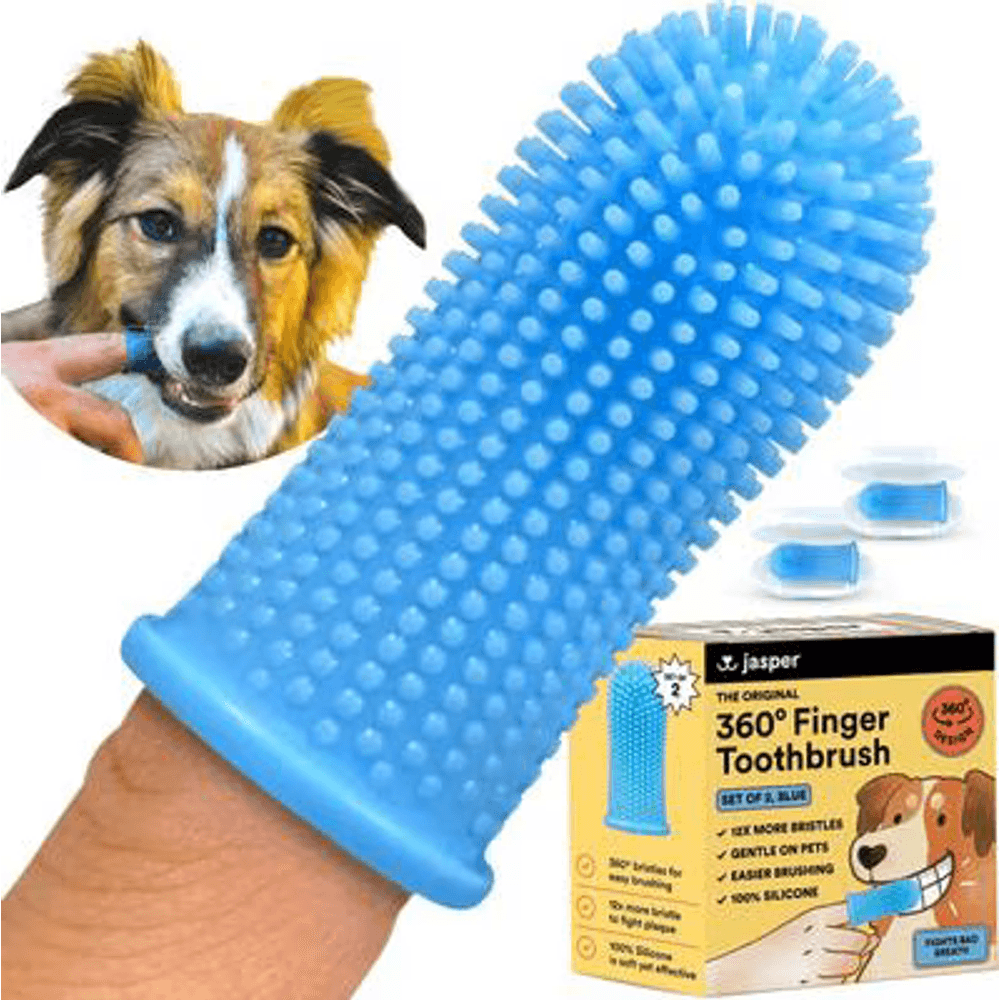
A 360-degree silicone finger toothbrush that brushes every side of a tooth at once. Gentle on gums and ideal for dogs new to brushing or owners who find a handled brush awkward.
Webvet may earn a commission when you click through to Chewy, at no extra cost to you.
- Dental chews and treats: approved dental chews mechanically scrape plaque as the dog gnaws. See our roundup of vet-recommended dog dental chews.
- Dental diets and foods to clean dogs teeth: certain kibble is engineered with a fibrous texture that wipes the tooth as the dog bites. For more on whether texture helps, see our pillar on dog dental health.
- Water additives: tasteless solutions added to the water bowl help control bacteria. We cover these in detail in our guide to dog dental water additives.
When evaluating any of these, look for the Veterinary Oral Health Council seal. The VOHC reviews products for proven plaque and tartar control, so the seal separates real adjuncts from marketing.
A word on how to clean dog teeth plaque and how to deep clean dogs teeth at home: you can reduce soft plaque with brushing, chews, and additives, but you cannot safely remove hardened tartar yourself. What can i brush my dogs teeth with naturally? Plain water and a soft brush, supplemented by VOHC-accepted chews, is a sound natural routine, but it complements brushing rather than replacing it.
For the deeper tartar discussion, including how it forms and what softens it, see our dedicated guides on tartar on dog teeth and home remedies for dog bad breath.
How vets and groomers brush dogs' teeth (and the anesthetic cleaning)
There is an important line between home brushing and a professional cleaning. How do vets brush dogs teeth during a checkup is not really brushing at all, it is a full dental, done under anesthesia, that includes scaling tartar above and below the gumline, polishing, probing each tooth, and dental X-rays. This is the only way to clean below the gumline safely.
How do groomers brush dogs teeth? Groomers offer cosmetic brushing or hand-scaling on awake dogs as an add-on. It can freshen the mouth and remove some surface buildup, but it does not address disease under the gumline and is not a substitute for a veterinary dental.
This is where a serious safety warning belongs. Searches like how to put your dog to sleep to brush teeth at home are dangerous, sedating a dog at home is not safe and can be fatal. Likewise, an ultrasonic dog teeth cleaning at home device cannot replicate a vet's cleaning, can damage enamel, and does nothing below the gumline.
There is a middle option some owners ask about: anesthesia-free dental cleaning. We cover its real limits in our guide to non-anesthetic dog teeth cleaning. For vet recommended dog teeth cleaning, the consensus favors a professional dental under anesthesia paired with daily home brushing.
How much does a professional dog dental cleaning cost?
Cost is exactly why home brushing pays off. A professional deep cleaning dog teeth cost in the United States typically runs from a few hundred dollars for a routine cleaning to well over a thousand when extractions, X-rays, and advanced disease are involved.
The professional dog teeth cleaning cost varies with your dog's size (more anesthesia), your region, and how much tartar and gum disease has accumulated. An ultrasonic dog teeth cleaning cost done properly is part of that anesthetic dental, not a cheaper at-home shortcut.
Here is the payoff math: brushing for a few minutes a day can delay or reduce the frequency of these cleanings and head off costly extractions. Daily brushing is the cheapest dental insurance you can buy.
Warning signs that need a vet

Brushing is prevention, not treatment. If your dog already shows these signs, book a vet visit rather than relying on the brush:
- Bad breath dog: persistent foul breath is the number one early sign of dental disease, not just normal dog breath. Our guide to dog bad breath causes breaks down what different odors mean.
- Bleeding gums dog or swollen gums dog: red, puffy, or bleeding gums signal gingivitis or worse.
- Visible tartar: brown or yellow buildup, especially at the gumline, indicates hardened deposits a vet must remove.
- Dropping food, chewing on one side, or pawing at the mouth: these point to oral pain. A dog that suddenly eats less can be telling you its mouth hurts, see dog eating less for related causes.
- Loose, discolored, or missing teeth: signs of advanced periodontal disease.
These are the signs of periodontal disease, and they mean it is time for a professional exam. Owners ask how to soften dog tartar or how to remove tartar from dog teeth without dentist, and the safe answer is that you cannot, hardened tartar must be scaled by a vet. Trying to chip it off at home risks fracturing the tooth and injuring the gums.
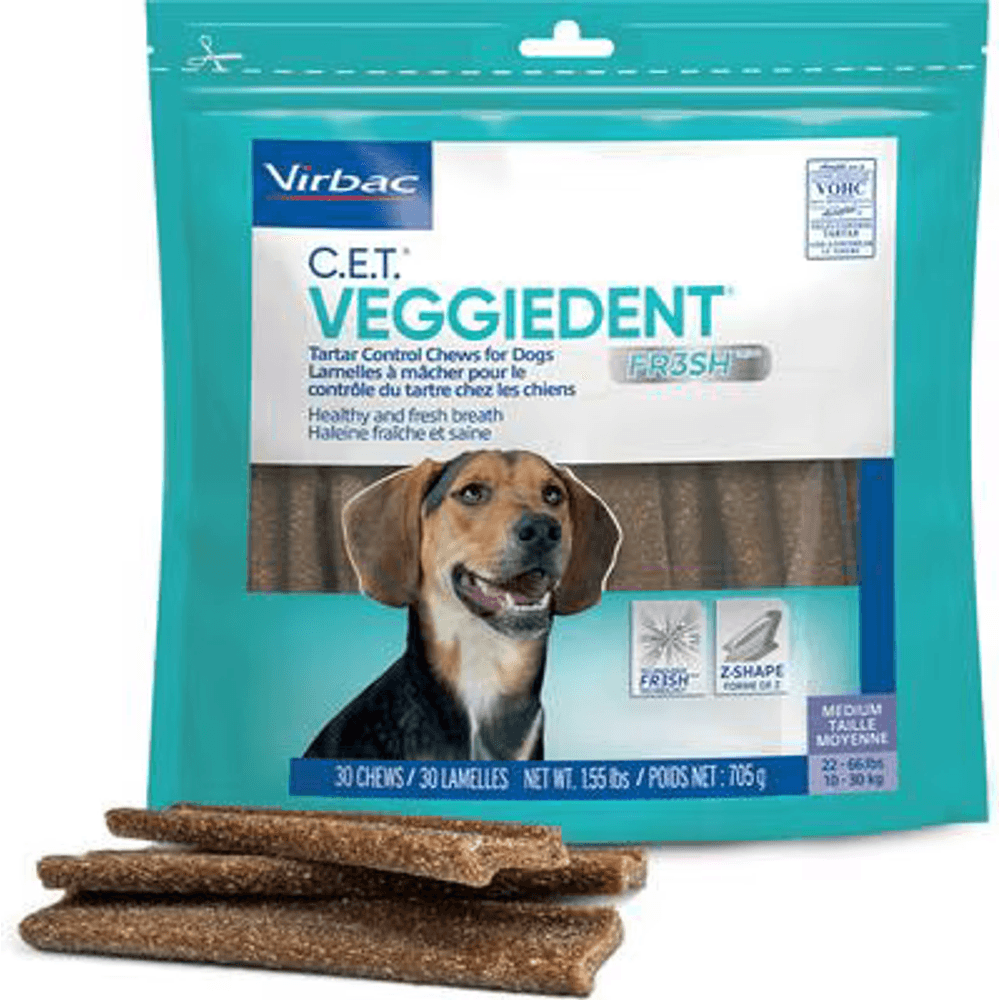
VOHC-accepted dental chews clinically shown to reduce plaque and tartar. The Z-shape and texture clean as your dog chews and freshen breath. A plant-based daily chew for medium dogs.
Webvet may earn a commission when you click through to Chewy, at no extra cost to you.
- 1Brushing prevents disease but cannot cure it.
- 2Bleeding or swollen gums, persistent bad breath, visible tartar, or any sign of mouth pain warrant a veterinary exam.
- 3Home brushing and professional cleanings work together, not in place of each other.
Frequently Asked Questions
Is brushing dogs' teeth necessary?
Yes. Brushing is the single most effective at-home way to prevent periodontal disease, which affects more than 80% of dogs over age three. It removes plaque before it hardens into tartar that only a vet can remove. Chews and additives help but do not replace daily brushing.
Is it too late to start brushing dogs' teeth?
It is almost never too late. If your dog's teeth and gums are healthy, start the desensitization routine today. If there is already heavy tartar or gum disease, see your vet for a cleaning first, then brushing maintains the clean teeth afterward. An older dog can learn to accept brushing with patience.
What is the 3 3 3 rule for brushing teeth?
The 3-3-3 framing is a memory aid, not a strict veterinary protocol, and you will see it used differently across sources. For dogs, the practical rule that actually matters is simpler: brush daily if you can, at least three times a week, focusing on the outer surfaces at the gumline. Daily is the gold standard.
How to brush dogs' teeth when they won't let you?
Slow down and desensitize over days. Start by touching the muzzle and lifting the lip, then let your dog lick enzymatic paste off your finger, then rub paste on a few teeth, and only then introduce the brush. Keep sessions under 30 seconds, reward heavily, and stop while your dog is still calm. A soft finger brush is best for resistant dogs.
What happens if I never brush my dog's teeth?
Plaque hardens into tartar within days, gums become inflamed and bleed, and bacteria erode the bone holding the teeth. The result is pain, tooth loss, and a bacterial load that can stress the heart, liver, and kidneys. It also leads to expensive professional cleanings and extractions.
Are greenies better than brushing teeth?
No. Dental chews like Greenies can reduce plaque and freshen breath as a useful supplement, especially VOHC-accepted ones, but they do not clean the gumline the way brushing does. Think of chews as a helpful add-on, not a replacement. The best routine combines daily brushing with a quality dental chew.
How do groomers brush dogs' teeth?
Groomers typically offer cosmetic brushing or hand-scaling on awake dogs as an add-on service. This can freshen the mouth and remove some surface buildup, but it does not clean below the gumline where disease develops and is not a substitute for a veterinary dental cleaning under anesthesia.
Can I brush my dog's teeth with just water if I don't have dog toothpaste?
Yes. The mechanical scrubbing of a soft, wet brush at the gumline does most of the plaque-removal work, so water-only brushing is far better than not brushing. Switch to an enzymatic dog toothpaste when you can, since the enzymes add chemical plaque control and dogs enjoy the flavor.
Is baking soda safe to brush a dog's teeth with?
Vets generally advise against it. Baking soda is highly alkaline, tastes unpleasant to dogs, and can upset the stomach if swallowed in quantity. It also lacks the enzymes that make dog toothpaste effective. Use water or dog-specific enzymatic toothpaste instead.
Can I use human toothpaste on my dog?
No. Human toothpaste contains fluoride and often xylitol, both toxic to dogs, who swallow rather than spit. Xylitol can cause a dangerous drop in blood sugar. Always use toothpaste formulated for dogs.
Should I brush my dog's teeth every day or is a few times a week enough?
Daily is the gold standard because plaque hardens into tartar within about 24 to 72 hours, and daily brushing clears it first. If daily is not realistic, three to four times a week still meaningfully slows tartar. Consistency matters more than the time of day.
How long does it take to brush a dog's teeth?
Aim to work up to about two minutes total, roughly 30 seconds per quadrant, but a calm 30 to 60 seconds is more valuable than a stressful two minutes. Build duration gradually as your dog gets comfortable.
How do I get my dog to open his mouth to brush his teeth?
You usually do not need to. Brush with the mouth gently closed and simply lift the lip to reach the outer tooth surfaces, where most plaque collects. Cradle the muzzle with one hand and lift the lip with your thumb. The tongue handles most of the inner surfaces.
How is brushing a small dog's teeth different from a large dog's?
The technique is the same, but small dogs need a finger brush or a small-headed brush and have crowded teeth that trap plaque, so go gently and patiently. Large dogs have more room to work but carry heavy tartar on the big cheek teeth, so use a full-size brush and spend extra time there.
Do dental chews or water additives work as well as brushing?
No single one matches brushing, which mechanically clears the gumline daily. VOHC-accepted chews, dental diets, and water additives are genuinely useful supplements that reduce plaque, but they work best alongside brushing, not instead of it.
How much does a professional (anesthetic) dog dental cleaning cost?
In the United States a routine cleaning under anesthesia commonly runs from a few hundred dollars to well over a thousand when X-rays, advanced disease, or extractions are involved. Cost rises with the dog's size, your region, and how much tartar and gum disease has built up, which is exactly why daily home brushing pays off.
What are the stages of tartar buildup on a dog's teeth?
It progresses from soft plaque (removable by brushing) to hardened tartar within days, then to gingivitis (red gums), early periodontitis (tartar plus swollen gums), and advanced periodontal disease (heavy tartar, receding gums, loose or rotting teeth). Only the plaque stage is reversible at home.
Can I clean my dog's teeth at home without brushing?
You can reduce plaque with VOHC-accepted dental chews, dental diets, and water additives, and these help. But none clears the gumline the way brushing does, and none removes hardened tartar, which only a vet can scale off. Use them to supplement brushing, not replace it.
Is it safe to use an at-home ultrasonic dog teeth cleaner?
No. At-home ultrasonic scalers and anesthesia-free scraping cannot clean below the gumline where disease develops, can damage enamel, and may injure the gums. Professional ultrasonic scaling is done under veterinary anesthesia for a reason. Stick to brushing at home and leave scaling to your vet.
$65 · no membershipHave a health question about your dog?
A licensed vet can assess your dog over video and prescribe online when it's appropriate.
Talk to a vet- Licensed vets
- All 50 states
- same-day Rx
Webvet may earn a commission if you book.

Editor
The Webvet Editorial Team is the in-house group of pet-care editors and writers behind Webvet, operated by Smart Pet Collective. The team researches, writes, and maintains Webvet's pet health, behavior, and medication content. Every article follows a defined editorial process: research from reputable veterinary and scientific sources, careful drafting, mandatory review of medical content by a credentialed veterinarian, and dated publication. Health and medication articles are medically reviewed by a licensed veterinary professional before they go live and are kept current over time.
Veterinarian · BVMS MRCVS
Dr. Pippa Elliott, BVMS, MRCVS, is a veterinarian with nearly 30 years of experience in companion animal practice. Dr. Elliott earned her Bachelor of Veterinary Medicine and Surgery from the University of Glasgow. She was also designated a Member of the Royal College of Veterinary Surgeons. Married with 2 grown-up kids, Dr. Elliott has a naughty Puggle named Poggle, 3 cats and a bearded dragon.


