Dog Toothpaste: How to Choose a Safe, Effective Formula
Dog toothpaste must be safe to swallow and practical to use. Learn how to compare formulas, avoid human toothpaste, understand enzymes, and spot signs that need a vet.

BVMS MRCVS
Medically reviewed by Dr. Pippa Elliott, BVMS MRCVS · Last reviewed

This article contains affiliate links. Webvet may earn a commission when you buy through them, at no extra cost to you.
Dog toothpaste is made for a routine in which the product will be swallowed. The right formula is pet-specific, acceptable to your dog, and realistic for you to use often. It can support plaque control and fresher breath, but it cannot safely remove hardened tartar or replace a veterinary dental examination.
Start with the label, not the flavor claim on the front. Choose a toothpaste made specifically for dogs, check the directions and age guidance, and avoid human toothpaste. Then match the texture, taste, and applicator to the dog in front of you. A theoretically impressive product has little value if your dog refuses it every time.
- 1Use only pet-specific toothpaste; dogs swallow paste during brushing.
- 2Never use human toothpaste, especially a product that may contain xylitol.
- 3Judge evidence product by product and keep plaque-control claims separate from tartar removal.
- 4The most useful formula is one your dog accepts as part of a repeatable daily brushing routine.
How to choose the best dog toothpaste for your dog
The best dog toothpaste is a pet-only formula that your dog tolerates and that fits the way you can brush. Look for four things in this order: safety when swallowed, appropriately scoped evidence, acceptance by the dog, and a practical applicator. Brand familiarity matters less than those four checks.

The Virbac C.E.T. Enzymatic Poultry Flavor Dog & Cat Toothpaste is one pet-specific example available for owners who want a poultry-flavored enzymatic paste. Its role is to make a proper brushing routine more workable, not to perform a professional cleaning at home.
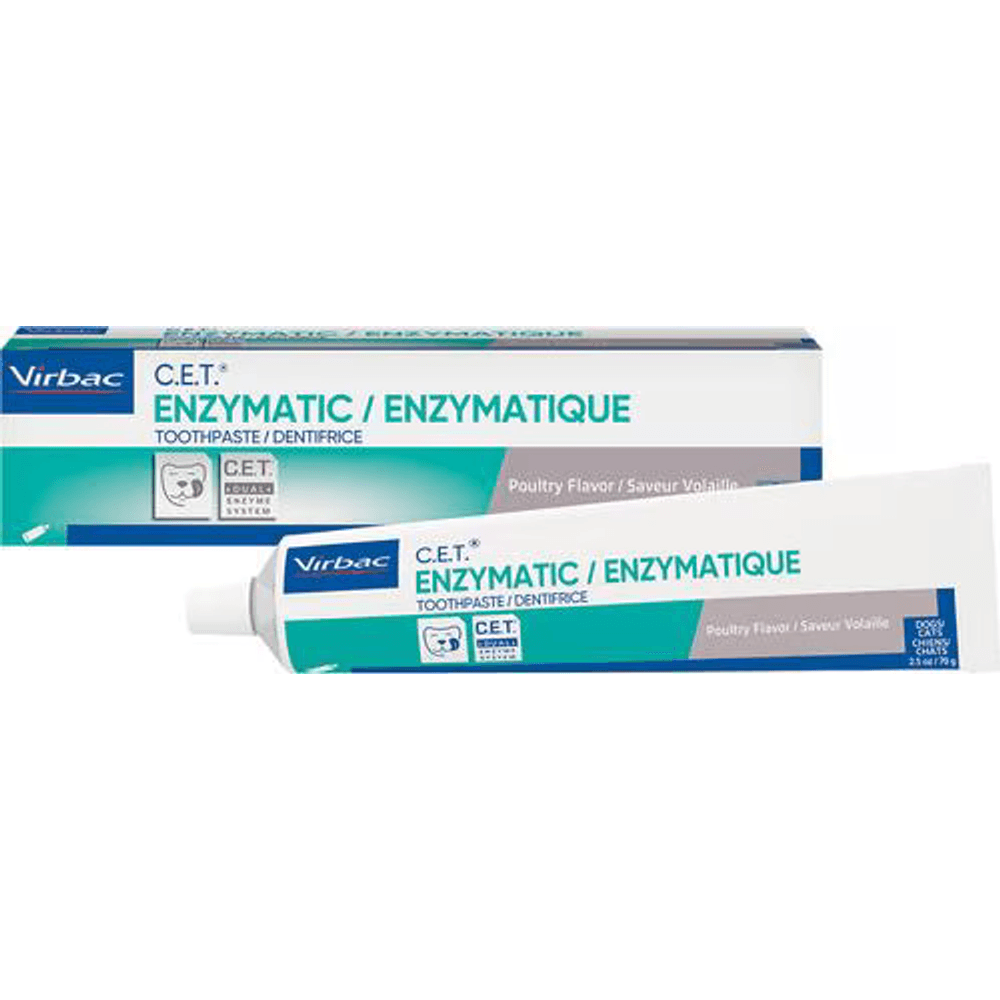
The vet-favorite enzymatic toothpaste. Its dual-enzyme system keeps working between brushings to control plaque and freshen breath, and the poultry flavor makes daily brushing easy.
Webvet may earn a commission when you click through to Chewy, at no extra cost to you.
1. Confirm that it is made for pets
The package should clearly identify the product as dog toothpaste or dog-and-cat toothpaste and provide animal-specific directions. That is a more useful first screen than words such as natural, freshening, advanced, or veterinarian-inspired. Those phrases do not establish that a formula is appropriate to swallow.
Do not transfer a pet paste into an unlabeled container. Keeping the original tube preserves the ingredient list, directions, lot information, and contact details in case your dog reacts to it or eats an unusual amount.
2. Read the claim at the product level
The Veterinary Oral Health Council accepted-products lists are useful because they identify individual products and the specific plaque-control or tartar-control claim each one has earned. The presence of one accepted product from a company does not automatically validate every toothpaste, chew, water additive, or diet sold under that brand.
That distinction prevents two common errors. First, a dental category can be useful without every product in it having the same evidence. Second, a product may have evidence for reducing plaque or tartar accumulation without being able to reverse established dental disease.
| Selection check | What to look for | Why it matters |
|---|---|---|
| Pet-only safety | Dog or dog-and-cat labeling with animal directions | Dogs swallow toothpaste during use |
| Evidence scope | A product-specific plaque or tartar claim | Category-wide language can overstate what was tested |
| Acceptance | A flavor and texture your dog willingly licks | Cooperation makes a consistent routine possible |
| Routine fit | A tube and applicator you can handle safely | Complicated tools often reduce how often brushing happens |
| Clear limits | No promise to dissolve heavy tartar or cure gum disease | Hardened deposits and painful mouths need veterinary care |
3. Match flavor and texture to the dog
Poultry, beef, peanut, malt, mint, and neutral flavors exist because dogs differ. A dog who dislikes one flavor has not necessarily rejected brushing itself. Let the dog lick a tiny amount from your clean finger first, following the label, before you introduce the brush.
Texture matters too. A runny gel may slide off a brush before it reaches the teeth, while a very thick paste can be hard to spread in a small mouth. Owners with limited hand strength may prefer an easy-open cap. Dogs with short muzzles may be easier to reach with a compact brush head than with a long, bulky applicator.
4. Prefer the routine you can repeat
The AAHA dental-care guidelines place home care inside a larger dental plan. Toothpaste works through what happens repeatedly at the tooth surface. A calm 30-second session that you can build on is usually more useful than an ambitious session that creates avoidance.
The Sentry Petrodex Veterinary Strength Enzymatic Poultry Flavor Dog Toothpaste is another dog-specific enzymatic option. Flavor acceptance is individual, so compare it on your dog's response and the label directions rather than assuming poultry flavor guarantees cooperation.
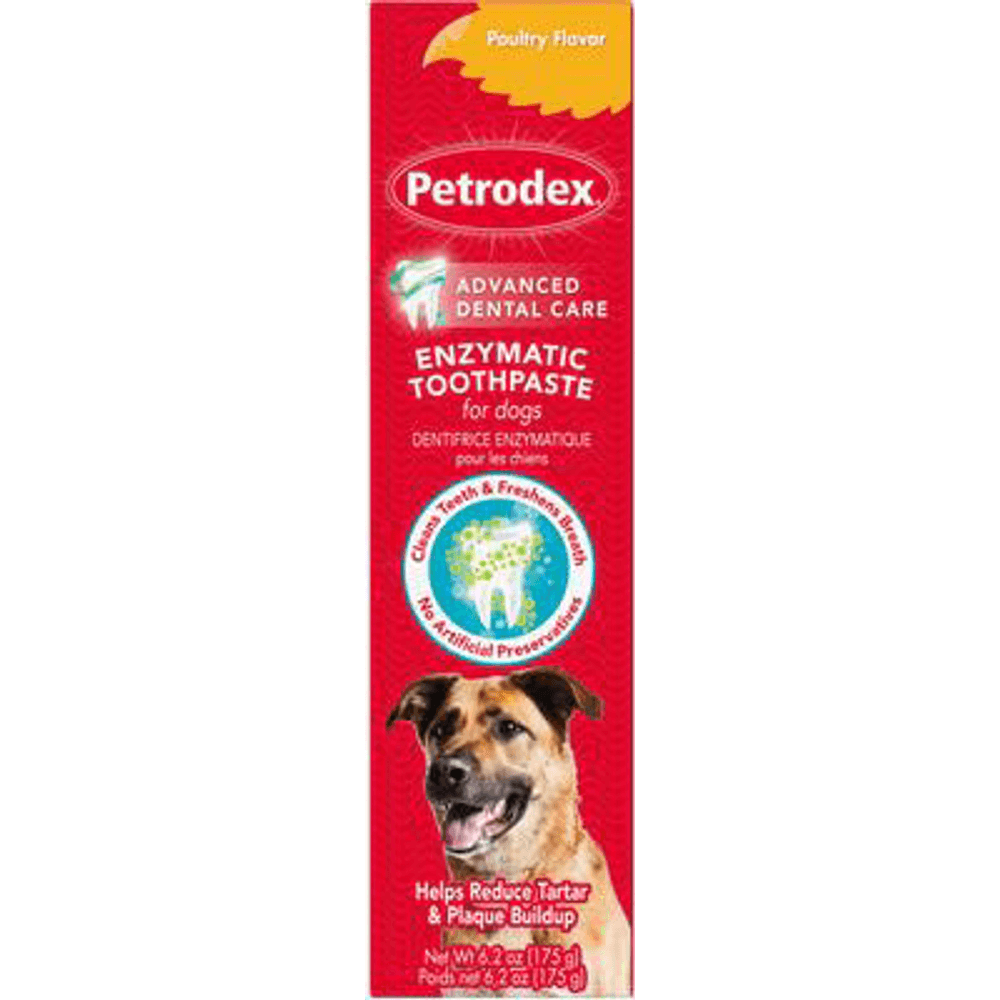
Veterinary-strength enzymatic toothpaste that helps reduce tartar and plaque buildup while freshening breath. Poultry flavored, made for dogs, with no artificial preservatives.
Webvet may earn a commission when you click through to Chewy, at no extra cost to you.
What makes dog toothpaste safe?
Safe dog toothpaste is formulated and labeled for pets that will swallow it. Human toothpaste is designed to be spat out, and it may contain ingredients or concentrations that are inappropriate for dogs. The safest default is simple: never substitute a human oral-care product for a labeled pet toothpaste.
The FDA warns that xylitol is toxic to dogs. This sweetener can appear in sugar-free products, including some human dental items. A rapid insulin release can cause severe low blood sugar, and some exposures can damage the liver. Do not rely on taste, packaging color, or a product's claim to be natural when checking for it.
If a dog eats human toothpaste or another product that may contain xylitol, contact a veterinarian or animal poison-control service immediately. Do not wait for weakness, vomiting, poor coordination, collapse, or seizures, and do not induce vomiting unless a veterinary professional specifically instructs you to do so.

Ingredients are only one part of safety
An ingredient list cannot tell you whether a dog with a painful mouth should be brushed. Stop and arrange a veterinary examination if you see bleeding that is more than a faint trace, swelling, loose or broken teeth, a facial lump, pus, persistent pawing at the mouth, sudden resistance, or difficulty eating.
Dogs with food allergies may also need extra label scrutiny because flavor systems can contain animal proteins. A dog on a veterinary elimination diet should not receive a flavored toothpaste until the veterinarian managing that diet confirms it fits. The amount may be small, but an unplanned protein can still interfere with a tightly controlled food trial.
Puppies need a product whose label covers their age, plus gentle handling that protects their developing relationship with mouth care. Senior dogs deserve the same slow introduction, especially if they have arthritis, neck pain, reduced vision, or a history of dental disease.
How can I clean my dog's teeth naturally?
To clean your dog's teeth naturally, use gentle mechanical brushing with a soft brush and a labeled pet toothpaste rather than a homemade formula. Homemade or natural dog toothpaste is not a reliable substitute for a tested, labeled pet formula. Recipes built around baking soda, coconut oil, herbs, essential oils, or peroxide can introduce stomach upset, excess calories, irritating ingredients, or unsafe concentrations. They also lack the directions and product-specific evidence that help you judge a commercial pet paste.
If you are temporarily out of dog toothpaste, use a soft brush dampened with plain water or practice calm lip handling. Mechanical contact with a suitable brush is the useful part of that stopgap. Resume a labeled pet toothpaste when available, and ask your veterinarian before using any DIY recipe for a dog with allergies, a medical diet, or oral disease.
The Arm & Hammer Complete Care Chicken Flavored Dog Toothpaste is a pet-labeled paste option. Check the current package directions and ingredient list before use, especially for a dog with known food sensitivities. Do not infer an enzymatic claim from a retailer title or an older offer name unless the package itself states it.
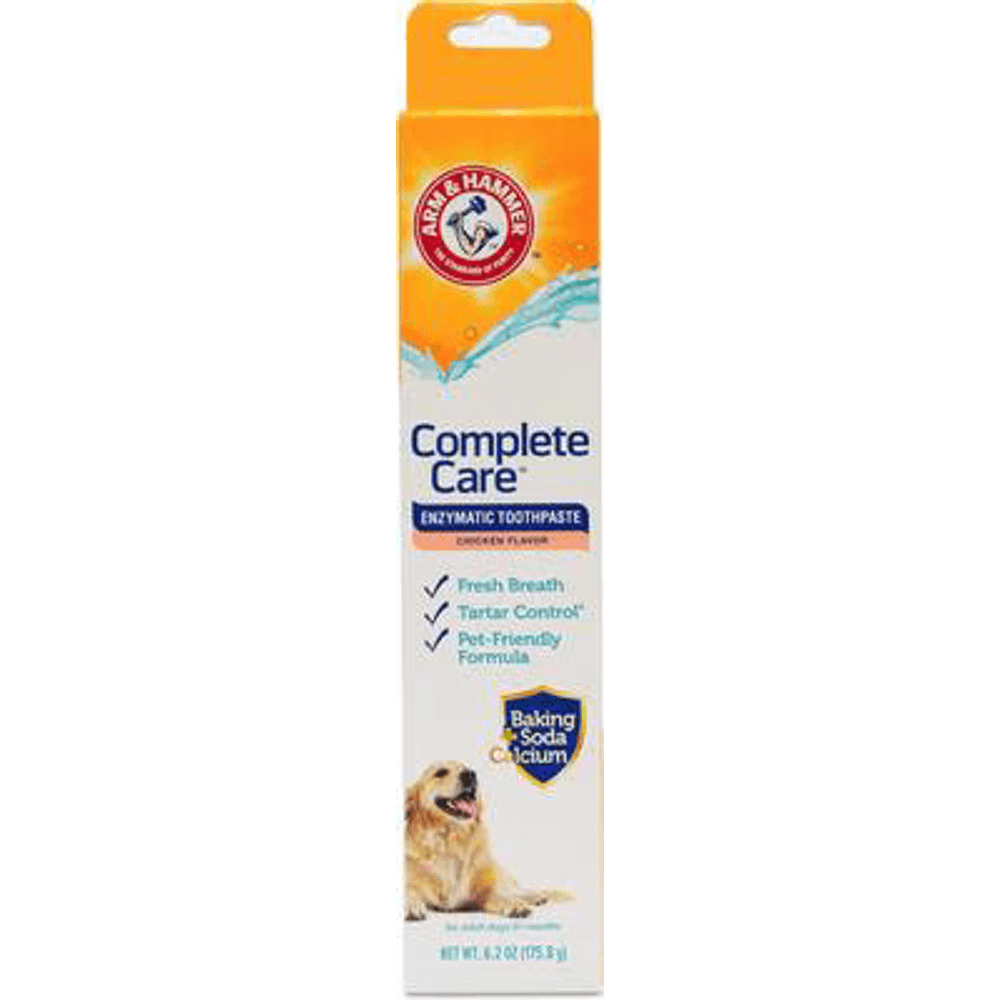
Enzymatic dog toothpaste with baking soda that fights plaque, tartar, and bad breath. Chicken flavored so most dogs accept daily brushing, and safe to swallow with no rinsing needed.
Webvet may earn a commission when you click through to Chewy, at no extra cost to you.
How enzymatic dog toothpaste works
Enzymatic dog toothpaste is intended to support oral hygiene through enzymes in the formula, while brushing supplies the important physical contact at the tooth surface. The word enzymatic does not mean the paste dissolves hardened tartar, sterilizes the mouth, or makes mechanical cleaning unnecessary.
Plaque begins as a soft bacterial film. Brushing can disrupt that film before minerals in saliva help it harden into calculus, commonly called tartar. Once a visible deposit is hard and firmly attached, adding more paste or scraping at it with a home tool is not a safe solution.

The cheek-facing surfaces of the upper teeth tend to collect obvious buildup, especially near the gumline and on the large premolars toward the back. That does not mean the unseen surfaces are disease-free. A veterinarian evaluates the whole mouth, and a complete professional assessment may include probing and dental radiographs under anesthesia.
Enzymes do not replace brushing
Some products are marketed for licking onto teeth or applying without a brush. A dog licking an enzymatic paste may get flavor exposure and some contact with the mouth, but it does not create the same controlled friction as a soft brush moving along the outer tooth surfaces. Treat brushless claims as a lower-contact option, not proof of equivalent cleaning.
If your dog will only lick the paste today, that can be a useful acclimation step. Build from licking, to touching the lip, to lifting the lip briefly, to contacting one or two teeth. The goal is a calm progression toward brushing, not a wrestling match.
Is it okay to scrape plaque off dogs' teeth?
It is not okay to scrape plaque off a dog's teeth with a metal scaler, fingernail, or another hard object at home. Home scraping can injure enamel or gums, miss disease below the gumline, and give a false sense that the mouth is healthy because a visible surface looks cleaner.
Our guide to tartar on dog teeth explains how plaque hardens and when professional cleaning is warranted. Heavy brown deposits, red gums, oral pain, loose teeth, or a new refusal of hard food call for an examination rather than a stronger toothpaste.
 $65 · no membership
Have a health question about your dog?
A licensed vet can assess your dog over video and prescribe online when it's appropriate.
 Talk to a vet
- Licensed vets
- All 50 states
- same-day Rx

Webvet may earn a commission if you book.
How to use dog toothpaste with a toothbrush
Introduce dog toothpaste in tiny, cooperative steps and brush the outer tooth surfaces with a soft tool. You do not need to force the jaws open or scrub every surface on day one. Most of the useful access comes from gently lifting the lip while the mouth stays comfortably closed.
The Jasper 360 Dog Finger Toothbrush & Storage Case is an applicator, not a toothpaste and not a substitute for evaluating oral pain. It may suit a calm dog who accepts close handling; a standard brush is the safer choice when bite risk or hand placement is a concern.
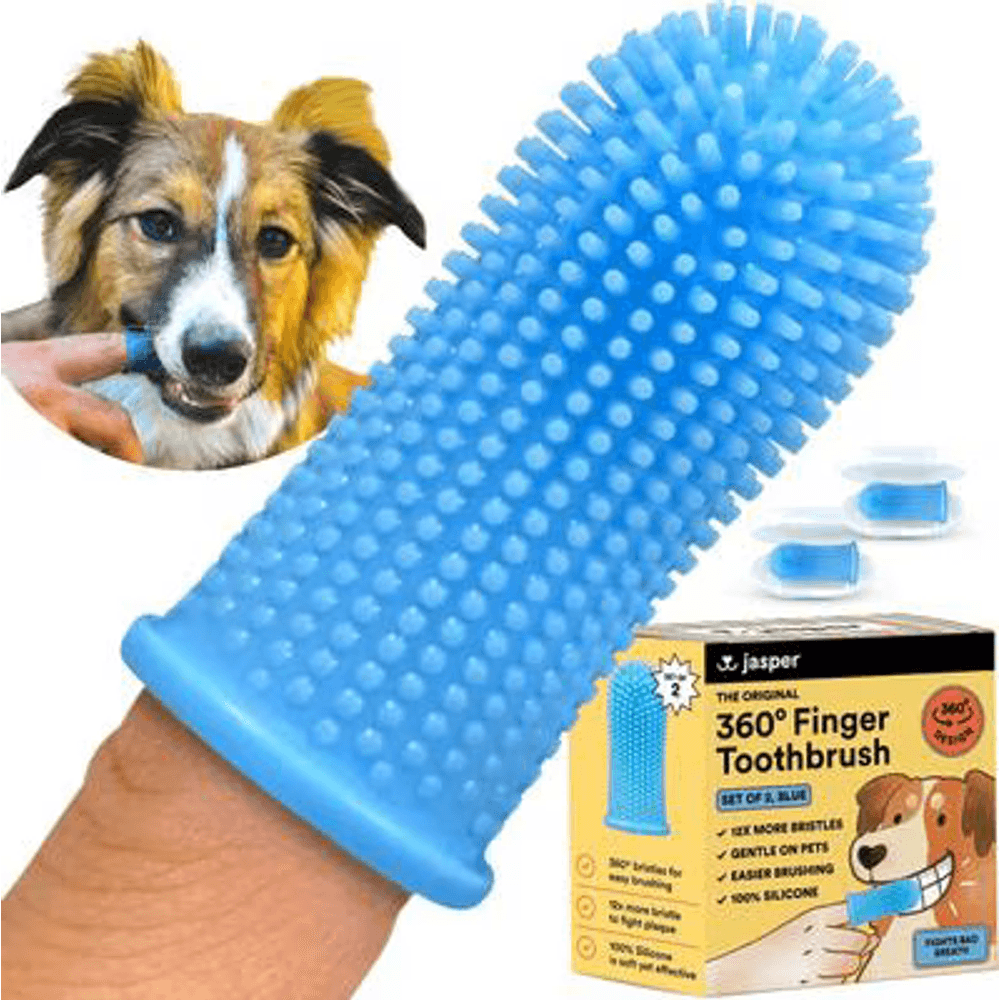
A 360-degree silicone finger toothbrush that brushes every side of a tooth at once. Gentle on gums and ideal for dogs new to brushing or owners who find a handled brush awkward.
Webvet may earn a commission when you click through to Chewy, at no extra cost to you.
- Let your dog taste a label-directed dab from a clean finger.
- Touch the cheek and lip briefly, then reward calm behavior.
- Lift the lip for one second without inserting a brush.
- Add a soft brush or finger brush and contact one or two outer teeth.
- Build the duration gradually, stopping before your dog becomes worried.
For a complete acclimation plan, brush angles, and step-by-step technique, use our guide on how to brush your dog's teeth. This article owns toothpaste selection; the brushing guide owns the full hands-on routine.
A long-handled soft toothbrush offers distance from the teeth and can make small circular motions easier. A silicone finger brush can feel less bulky and gives direct tactile feedback, but it places your finger closer to the bite line. Do not use a finger brush with a dog who has snapped, guarded the mouth, or shown pain.
How much toothpaste should you use?
Use the amount on the product label. More paste does not create proportionally better cleaning, and an oversized glob can make the dog focus on licking instead of allowing brush contact. A small amount also makes it easier to see where the bristles are and to keep the session controlled.
Do not rinse the dog's mouth with human mouthwash. Pet toothpaste is designed around the reality that the dog will swallow it. Keep water available as usual unless your veterinarian or the product directions say otherwise.
How often should you brush?
Daily brushing provides the most consistent opportunity to disrupt fresh plaque, but the right starting schedule is the one your dog can tolerate without fear. If daily handling is not yet realistic, practice brief cooperative steps and increase frequency. Occasional aggressive scrubbing is not a good substitute for regular gentle contact.

Where dental chews fit in a home-care plan
Dental chews can add mechanical action on days when they are appropriate, but they do not turn toothpaste into an either-or decision. Choose a chew for the individual dog's size, chewing style, calorie needs, and medical history, then supervise use. Our guide to vet-recommended dog dental chews covers that selection decision in detail.
A dog who swallows large pieces, guards food, has a fractured tooth, or has dietary restrictions may need a different home-care tool. Count chew calories inside the daily diet, and do not offer a hard object that your veterinarian considers a fracture risk.
Water additives, dental diets, wipes, and gels also have different evidence and use cases. They should support a veterinarian-guided plan, not be stacked indiscriminately. Select one or two sustainable tools, observe how the dog responds, and reassess at dental visits.
How to tell whether the routine is working
Look for a routine that becomes easier, not one that requires increasing restraint. Your dog should approach or tolerate the setup, accept brief lip handling, and recover normally after the session. Track how often you actually brush rather than how often you intended to brush. Consistency is an important part of product fit.
Photograph the same outer tooth surfaces in similar lighting once a month if your veterinarian agrees. Images can help you notice increasing redness, a chipped tooth, or new deposits, but they cannot show disease below the gumline. Do not use a photograph to postpone an examination when breath, appetite, comfort, or chewing changes.
At the next wellness or dental visit, bring the toothpaste name and describe the frequency, applicator, and any problems. The veterinary team can compare the current mouth with prior findings and tell you whether the home plan is reasonable. A paste can be pleasant and easy to use while still being only one part of the plan.
Can dog toothpaste fix bad breath?
Dog toothpaste may make breath smell better temporarily and can support plaque control, but persistent bad breath is not merely a cosmetic problem. Odor can accompany periodontal disease, an infected tooth, something trapped in the mouth, an oral mass, or a non-dental illness.
Read about the causes of bad breath in dogs if the odor is new, strong, or returning quickly after brushing. Seek veterinary care sooner when bad breath appears with drooling, facial swelling, bleeding, appetite change, pawing at the mouth, or difficulty chewing.
When to ask your veterinarian about toothpaste
Ask before starting if your dog has known dental disease, a recent oral procedure, a broken tooth, a restricted diet, a history of mouth pain, or behavior that makes handling unsafe. The veterinarian can identify whether home brushing is comfortable now and which product categories fit the treatment plan.
Also ask if a previously cooperative dog suddenly refuses toothpaste. A flavor preference can change, but a sudden behavior change may be the earliest visible sign of pain. Switching flavors repeatedly without looking in the mouth can delay the examination the dog needs.
AAHA's guidance on recommending dental products emphasizes that home care should be tailored to the pet and does not eliminate the need for examinations, dental radiographs, or treatment when indicated. That is the right frame for every toothpaste choice.
Dog toothpaste questions
Frequently Asked Questions
What can I use as toothpaste for my dog?
Use a toothpaste specifically labeled for dogs, or for dogs and cats, and follow the pet toothpaste label. Do not use human toothpaste, mouthwash, whitening products, peroxide, essential oils, or homemade baking-soda mixtures. If you have no pet toothpaste, skip the paste for that session and use a soft pet toothbrush with plain water or practice calm lip handling instead. Ask your veterinarian for a product recommendation when your dog has allergies, a medical diet, oral pain, or a history of reacting to dental products.
Is human toothpaste safe for dogs?
No. Human toothpaste is designed to be spat out, and dogs swallow whatever you brush with. Fluoride and foaming agents can upset the stomach, and some sugar-free formulas contain xylitol, which is toxic to dogs even in small amounts. If your dog swallows human toothpaste, check the ingredient list for xylitol and call your veterinarian right away if it is listed.
What dog toothpaste do veterinarians recommend?
Most veterinarians steer owners toward pet-specific formulas with a clear product-level claim, such as enzymatic toothpastes and products accepted by the Veterinary Oral Health Council. The best recommendation is still the formula your dog accepts readily, because plaque control comes from brushing often rather than from any single ingredient. Your own veterinarian can match a formula to your dog's health history and diet.
How often should I brush my dog's teeth?
Daily brushing is the goal, because plaque starts hardening into tartar within a few days. If daily is not realistic, aim for several short sessions a week and keep each one calm and positive. Consistency beats intensity: a brief routine your dog tolerates will do more for plaque control than an occasional thorough scrub your dog learns to dread.
$65 · no membershipHave a health question about your dog?
A licensed vet can assess your dog over video and prescribe online when it's appropriate.
Talk to a vet- Licensed vets
- All 50 states
- same-day Rx
Webvet may earn a commission if you book.

Editor
The Webvet Editorial Team is the in-house group of pet-care editors and writers behind Webvet, operated by Smart Pet Collective. The team researches, writes, and maintains Webvet's pet health, behavior, and medication content. Every article follows a defined editorial process: research from reputable veterinary and scientific sources, careful drafting, mandatory review of medical content by a credentialed veterinarian, and dated publication. Health and medication articles are medically reviewed by a licensed veterinary professional before they go live and are kept current over time.
Veterinarian · BVMS MRCVS
Dr. Pippa Elliott, BVMS, MRCVS, is a veterinarian with nearly 30 years of experience in companion animal practice. Dr. Elliott earned her Bachelor of Veterinary Medicine and Surgery from the University of Glasgow. She was also designated a Member of the Royal College of Veterinary Surgeons. Married with 2 grown-up kids, Dr. Elliott has a naughty Puggle named Poggle, 3 cats and a bearded dragon.


