Dog Rotting Teeth: Signs, Causes & What to Do
A vet-reviewed guide to dog rotting teeth: what decayed teeth look like, why they happen, the four stages of decay, whether they are dangerous, treatment and cost, and how to prevent them.

BVMS MRCVS
Medically reviewed by Dr. Pippa Elliott, BVMS MRCVS · Last reviewed

This article contains affiliate links. Webvet may earn a commission when you buy through them, at no extra cost to you.
If you have noticed brown or black buildup on your dog's teeth, a smell that clears a room, or a tooth that wiggles when your dog chews, you are in the right place. Dog rotting teeth are one of the most common health problems veterinarians see, and they almost never fix themselves. The good news is that dog rotting teeth are also one of the most treatable and preventable conditions in canine medicine, once you know what you are looking at and what to do next.
This guide walks you through exactly what rotten dog teeth look like, the signs and symptoms beyond what you can see, why a dog's teeth rot in the first place, the four stages of dog tooth decay, who is most at risk, whether the problem is painful or dangerous, what vet treatment and costs look like, and how to stop it from coming back. A quick note on language: when most owners say "dog tooth decay" or "rotting teeth dog," they usually mean periodontal (gum) disease, not true cavities. We will untangle that below.
- 1Dog rotting teeth are almost always periodontal disease, a bacterial infection of the gums and the structures holding teeth in place.
- 2It is progressive, painful, and cannot be reversed at home once it sets in, but it is highly treatable by a veterinarian and largely preventable with daily care.
- 3If you see a loose tooth, a facial swelling, or your dog stops eating, call your vet promptly.
This article is part of our dog dental health hub, which links out to deeper guides on brushing, chews, tartar, and more.
What Do Rotting Teeth in Dogs Look Like? (With Pictures)

The single most common question owners ask is what do rotting dog teeth look like, because the mouth is the first place the problem shows up. Healthy dog teeth are creamy white to off-white with a thin, even surface. Healthy gums are pink (or naturally pigmented black in some breeds), firm, and sit snugly against each tooth.
When teeth start to rot, the picture changes in stages you can often spot at home. Knowing what dog tooth decay looks like helps you decide how urgently to act.
- Discoloration. Yellow shading is early plaque and tartar. Brown, gray, or black staining at the gumline signals heavier tartar and advancing decay.
- Hard buildup. A crusty, cement-like coating (tartar or calculus) that you cannot wipe off, usually worst on the big cheek teeth and canines.
- Red, swollen, or bleeding gums. Inflamed gums that bleed when touched are gingivitis, the first reversible stage.
- Receding gums and exposed roots. As disease advances, gums pull back and the darker tooth root becomes visible.
- Loose, broken, or missing teeth. A tooth that moves, a fractured tooth with a dark center, or a gap where a tooth used to be all point to late-stage decay.
- Pus or a draining sore. A bubble of pus at the gumline or a draining tract on the face often means a tooth-root abscess.
Because so much decay happens below the gumline where you cannot see it, even a clean-looking mouth can hide disease. A picture is a starting point, not a diagnosis. Only an oral exam (and dental X-rays under anesthesia) reveals the full extent.
Signs & Symptoms of Tooth Decay in Dogs

Not every sign of rotting teeth is visible inside the mouth. Many dogs are stoic and hide pain, so the first dog rotten teeth symptoms owners notice are behavioral. Watch for these dog tooth decay symptoms, especially in combination:
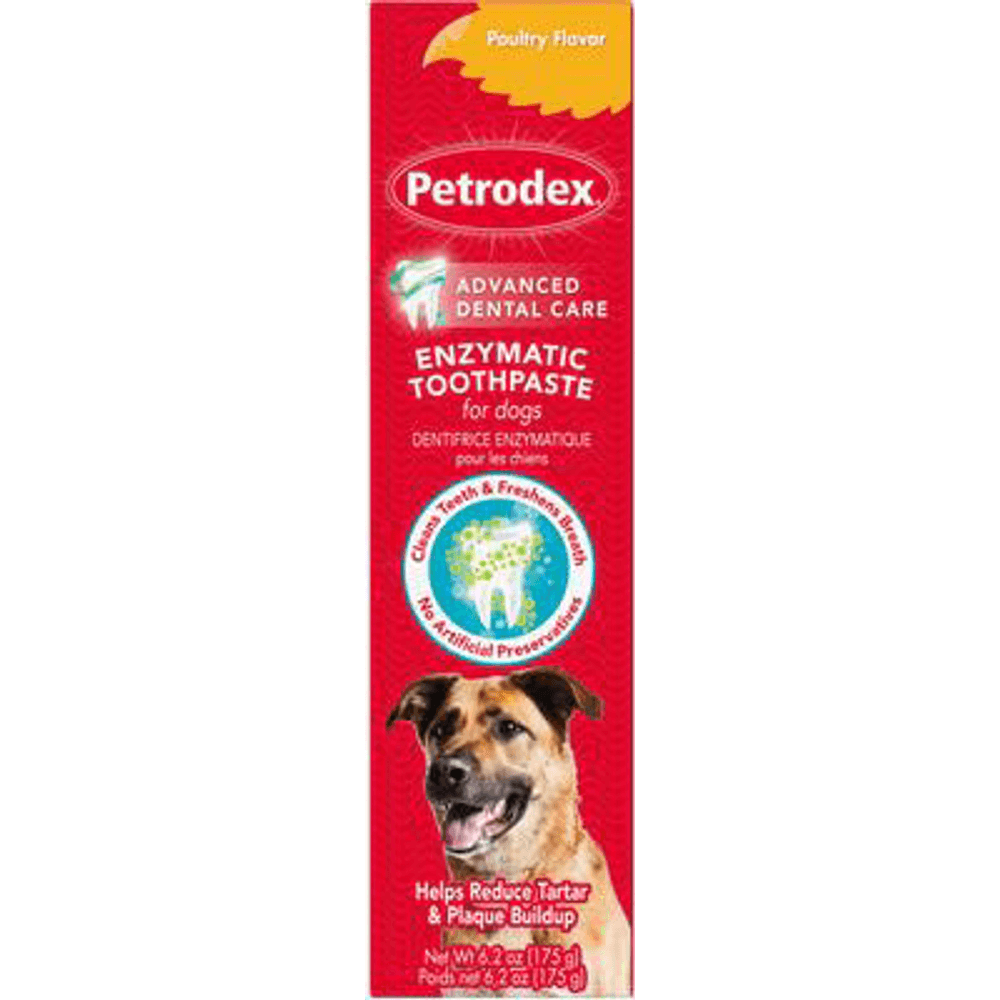
Veterinary-strength enzymatic toothpaste that helps reduce tartar and plaque buildup while freshening breath. Poultry flavored, made for dogs, with no artificial preservatives.
Webvet may earn a commission when you click through to Chewy, at no extra cost to you.
- Bad breath that is foul or rotten, not just "doggy." This is often the earliest clue (more on the smell below).
- Drooling, sometimes tinged with blood.
- Dropping food, chewing on one side, or approaching the bowl eagerly then backing away.
- Pawing at the mouth or rubbing the face on furniture and carpet.
- Reluctance to chew toys or play tug, or yelping when a treat is taken.
- Loose teeth in dogs that shift or fall out, sometimes found on the floor or in a chew toy. Rotten dog teeth falling out is a sign disease is well advanced.
- Reduced appetite or weight loss. A painful mouth is a leading reason for a dog eating less, so dental disease should always be on the list when appetite drops. See our guide on why a dog may be eating less for the broader picture.
If you have noticed the smell along with the symptoms above, you are seeing the dog teeth rotting out pattern that owners search for most: bad breath plus visible buildup plus a change in eating.
Why Does a Dog's Breath Smell So Bad with Rotting Teeth?
That distinctive dog rotting teeth smell is not just leftover food. It is the byproduct of bacteria. Plaque is a living film of bacteria, and as it builds and feeds on debris under the gumline, it releases volatile sulfur compounds. The same chemistry that makes rotten eggs smell is, in a milder form, what makes a decaying dog mouth smell so distinctly foul.
So when owners describe a dog bad breath tooth decay connection, they are smelling active infection. A genuinely rotten, metallic, or sickly-sweet odor usually means periodontal disease, an infected tooth root, or both. The worse and more sudden the smell, the more likely there is significant disease underneath.
Masking the smell with a flavored water additive or breath spray does not treat the infection causing it. The odor is the symptom; the rotting tooth is the disease.
What Causes a Dog's Teeth to Rot?
Understanding what causes dog teeth to rot makes prevention click into place. The process is almost always periodontal disease, and it follows a predictable chain:
- Plaque forms. Within hours of eating, a sticky film of bacteria coats the teeth.
- Plaque hardens into tartar. If not brushed away, plaque mineralizes within days into hard tartar (calculus) that bonds to the tooth and cannot be brushed off.
- Gums become inflamed. Bacteria at the gumline trigger gingivitis (red, swollen gums).
- Infection moves below the gumline. Bacteria destroy the gum, ligament, and bone that anchor the tooth, the definition of periodontal disease.
- Teeth loosen and "rot." With their support destroyed, teeth loosen, abscess, and fall out.
According to the Merck Veterinary Manual, the majority of dogs show some degree of periodontal disease by just a few years of age, and untreated gum disease is the leading cause of tooth loss in dogs.
A few clarifications on common cause questions:
- True cavities are rare in dogs. What looks like a "cavity" is usually tartar, a fractured tooth, or exposed root from periodontal disease, not the holes we think of in human teeth.
- Does wet dog food cause tooth decay? Diet plays a smaller role than most owners think. Neither wet nor dry food prevents periodontal disease on its own, and "dry food cleans teeth" is largely a myth because most kibble shatters without scrubbing the gumline. The real driver is whether plaque is removed daily.
- Dog rotten teeth infection can spread. Chronic oral bacteria are linked to stress on the heart, liver, and kidneys, which is part of why dental disease is a whole-body concern, not just a mouth problem.
We go deeper on the buildup itself in our guide to tartar on dog teeth.
 $65 · no membership
Have a health question about your dog?
A licensed vet can assess your dog over video and prescribe online when it's appropriate.
 Talk to a vet
- Licensed vets
- All 50 states
- same-day Rx
Webvet may earn a commission if you book.
The Stages of Dog Tooth Decay (Stage 1 to Stage 4)

Veterinarians grade periodontal disease in four stages. Knowing the dog tooth decay stages helps you understand what each looks like, what treatment it needs, and how much can still be saved. This is the framework behind every "dog tooth decay stages pictures" search.
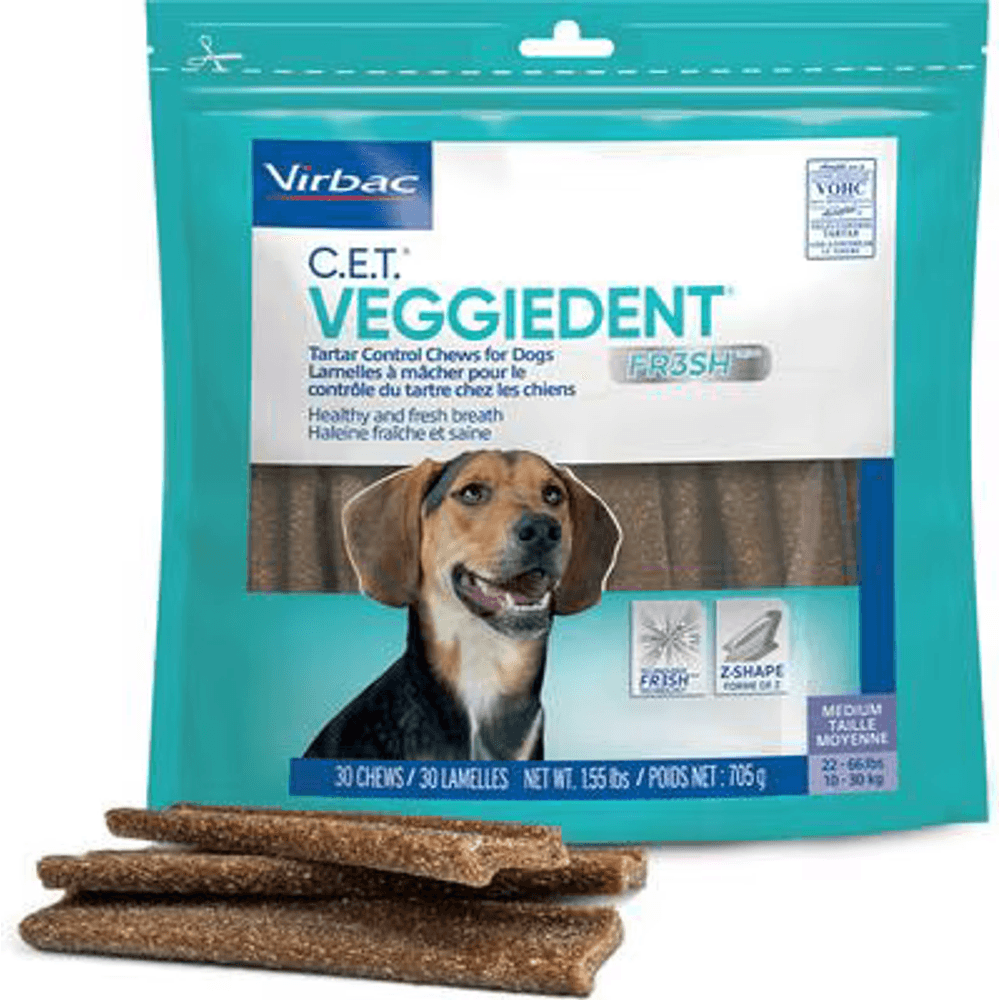
VOHC-accepted dental chews clinically shown to reduce plaque and tartar. The Z-shape and texture clean as your dog chews and freshen breath. A plant-based daily chew for medium dogs.
Webvet may earn a commission when you click through to Chewy, at no extra cost to you.
| Stage | Name | What it looks like | What it means | Typical treatment |
|---|---|---|---|---|
| Stage 1 | Gingivitis | Red, slightly swollen gums; mild plaque; may bleed when touched | Reversible. No bone loss yet. | Professional cleaning + daily home brushing fully reverses it |
| Stage 2 | Early periodontitis | More tartar; gums recede slightly; up to ~25% attachment loss | Mild but permanent damage begins | Cleaning, X-rays, deep scaling below gumline |
| Stage 3 | Moderate periodontitis | Heavy tartar; visible recession; loose teeth; 25-50% attachment loss | Significant bone loss; some teeth may not be savable | Deep cleaning, possible extractions, X-rays |
| Stage 4 | Advanced periodontitis | Severe tartar; pus; very loose or missing teeth; over 50% attachment loss | Severe, painful; teeth are failing | Extractions of affected teeth; treat infection |
The crucial line is between Stage 1 and the rest: gingivitis (Stage 1) is fully reversible with cleaning and home care, while Stages 2 through 4 involve permanent bone loss that can only be managed, not undone. Only dental X-rays under anesthesia can accurately stage each tooth, because most of the damage is hidden below the gumline.
Which Dogs Are Most at Risk? (Breeds, Senior & Old Dogs)

Any dog can develop rotting teeth, but some are far more prone, and the risk rises sharply with age.
Small, toy, and flat-faced breeds top the list. Chihuahuas, Yorkshire Terriers, Pomeranians, Dachshunds, and brachycephalic breeds like Pugs and Bulldogs have the same number of teeth crammed into a much smaller jaw. Crowded, crooked teeth trap plaque and are very hard to keep clean, so these breeds often show serious disease by middle age.
Senior and old dogs are the other big group. Owners search senior dog rotting teeth, old dog teeth rotting, and old dog rotten teeth what to do for a reason: decades of plaque accumulation mean most older dogs carry significant periodontal disease. A 15 year old dog with bad teeth or a 17 year old dog with bad teeth is common, and these dogs often need treatment most while also needing the most careful anesthetic planning.
Other risk factors include a soft diet with no chewing, no home dental care, and certain health conditions. If you have a predisposed breed or a senior dog, plan for earlier and more frequent dental checks rather than waiting for symptoms.
Are Rotting Teeth Painful or Dangerous? Can They Kill a Dog?
This is the cluster of questions that worries owners most, so here are honest answers.
Are rotting teeth painful for dogs? Yes. Exposed roots, inflamed gums, fractured teeth, and abscesses are genuinely painful, the same way they would be for a person. Dogs rarely show it the way we expect; they keep eating and wagging because their instinct is to mask weakness. Quietness, not crying, is the usual sign.
Can dogs survive with rotten teeth, and how long can a dog live with bad teeth? Many dogs live a long time with bad teeth, but "surviving" is not the same as being well. Chronic dental infection causes ongoing pain and floods the bloodstream with bacteria that stress the heart, liver, and kidneys over time. So untreated rotting teeth can shorten quality and, indirectly, length of life even when they are not immediately fatal.
Can rotten teeth kill a dog? Rarely and indirectly, yes. A severe tooth-root abscess can spread infection, and in fragile or immunocompromised dogs, sepsis from oral bacteria is possible. More often, the danger is the slow systemic burden of untreated infection rather than a sudden event.
The bottom line: rotting teeth are a real medical problem, not a cosmetic one. The discomfort and systemic risk are reasons to treat, not panic.
What to Do If Your Dog's Teeth Are Rotting (Vet Treatment)

If you are wondering what to do if your dog has rotten teeth or how to help a dog with rotting teeth, the honest answer is that this is a veterinary problem with a veterinary solution. Here is the typical path.
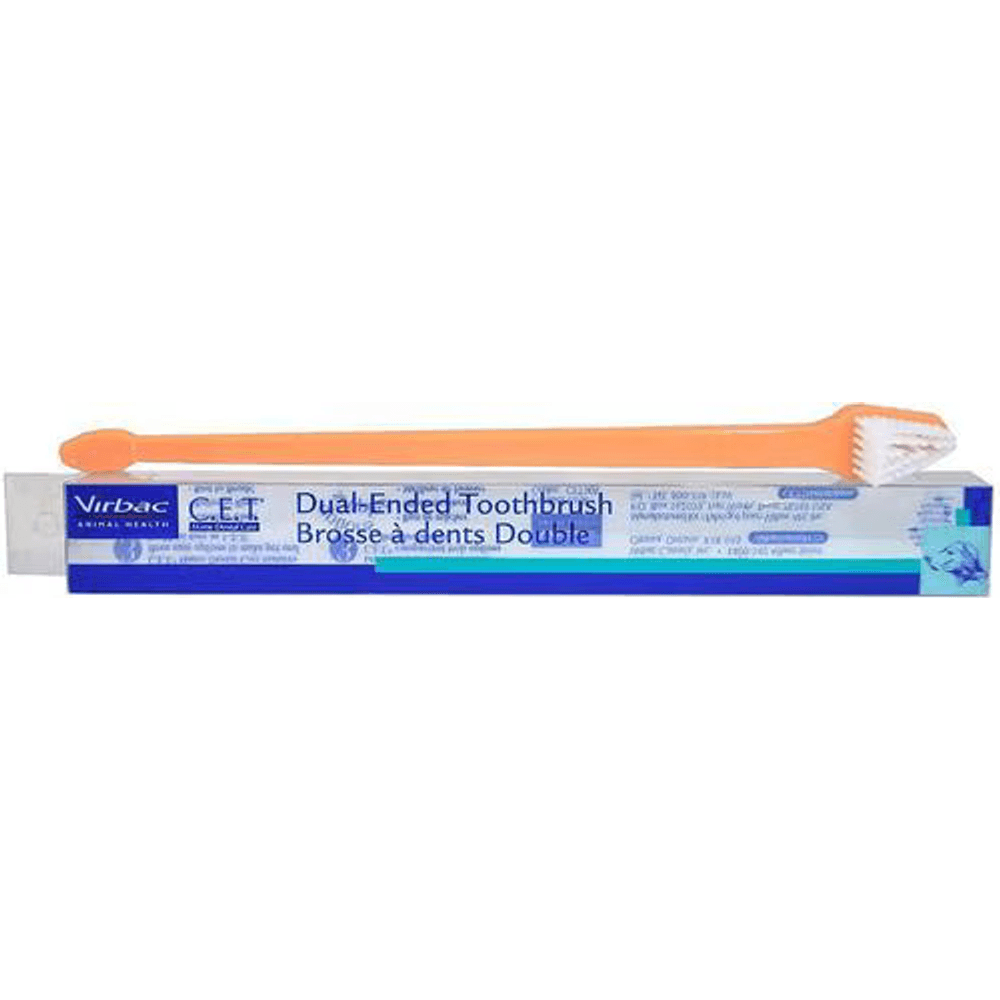
A dual-ended toothbrush with a large and a small head to fit different mouth sizes and reach the back molars where plaque hides. Soft bristles angled for the gumline.
Webvet may earn a commission when you click through to Chewy, at no extra cost to you.
- Book a veterinary oral exam. Your vet assesses the mouth, grades the disease, and recommends a professional dental.
- Pre-anesthetic workup. Bloodwork (and sometimes an ECG or chest imaging in older dogs) checks that anesthesia is safe.
- Professional cleaning under anesthesia (a "dental"). The only way to clean below the gumline, take full-mouth X-rays, and treat painlessly. Awake "anesthesia-free" cleaning only scrapes visible tartar and misses the disease that matters, which is why most vets advise against it. We explain why in our guide to non-anesthetic dog teeth cleaning.
- Scaling and polishing. Tartar is removed above and below the gumline and teeth are polished smooth.
- Extractions if needed. Teeth too damaged to save (typically Stage 3-4) are removed. Dogs do remarkably well, and often more comfortably, after losing diseased teeth.
- Treat infection. Antibiotics or pain medication may be prescribed around the procedure.
Can my dog's rotting teeth be fixed? Disease that has destroyed bone cannot be reversed, but the mouth can absolutely be made healthy and pain-free again by cleaning savable teeth and removing those that cannot be saved. Gingivitis (Stage 1) can be fully resolved. For the rotting teeth itself, the fix is professional treatment plus lifelong home care, not a product.
How Much Does It Cost to Treat / Remove Rotting Dog Teeth?

Cost is one of the biggest reasons owners delay, so here is what to expect. Prices vary widely by region, clinic, your dog's size, disease severity, and how many teeth need work, so treat these as general ranges and get a written estimate from your own vet.
| Service | Typical cost range (US) | Notes |
|---|---|---|
| Routine dental cleaning (no extractions) | $300 to $800 | Includes anesthesia, scaling, polishing; more for large dogs |
| Dental X-rays | $75 to $250 | Often bundled into the procedure |
| Single tooth extraction (simple) | $50 to $300 per tooth | Small front teeth are cheaper |
| Surgical extraction (large/multi-root) | $300 to $800+ per tooth | Canines and big cheek teeth take more work |
| Full dental with multiple extractions | $800 to $3,000+ | The most common real-world bill for advanced cases |
A dog tooth extraction cost without insurance is the figure most owners are searching, and the wide range above is why an estimate matters. To manage cost, ask your clinic about pet insurance with dental coverage, payment plans, and accredited low-cost or dental-school options. "Low cost dog tooth extraction near me" searches often turn up nonprofit and teaching clinics worth calling.
Can You Reverse or Treat Rotting Teeth at Home?

This is where we have to be honest, because a lot of hopeful searches (how to reverse dog tooth decay, dog tooth decay home remedy baking soda, dog tooth decay home remedy vinegar) are looking for something that does not exist.
Can dog tooth decay be reversed at home? No. Once tartar has hardened and bone has been lost (Stage 2 and beyond), no amount of brushing, supplements, coconut oil, baking soda, or vinegar will reverse it. Tartar is mineralized onto the tooth and can only be removed with dental instruments. Worse, some popular home remedies are actively harmful: vinegar is acidic and can damage enamel, and human toothpaste with xylitol or fluoride is toxic to dogs.
What home care can do is meaningful but specific:
- Reverse Stage 1 gingivitis. Caught at the red-gums stage and paired with a professional cleaning, daily brushing can fully resolve gingivitis.
- Slow progression and prevent new disease on healthy teeth.
- Keep a treated mouth healthy after the vet has done the cleaning and any extractions.
So the realistic plan for an old dog with bad teeth or a dog with bleeding gums is: see the vet to treat what is already there, then use proven home care to protect what remains. For the safe, vet-approved at-home options (and the ones to skip), see our dedicated guide to home remedies for dog dental issues.
How to Prevent Rotting Teeth in Dogs

Prevention is the whole point, and it works. The goal is simple: remove plaque before it hardens into tartar. The American Veterinary Medical Association identifies daily brushing, professional cleanings, and proven dental products as the evidence-based pillars of canine dental care.

Pre-moistened finger-glove dental wipes with baking soda and tea polyphenol that wipe away plaque and freshen breath. The easiest brushless option for a dog that will not tolerate a toothbrush.
Webvet may earn a commission when you click through to Chewy, at no extra cost to you.
- Brush daily. Daily toothbrushing with a dog toothbrush and dog-specific enzymatic toothpaste is the single most effective thing you can do. A few minutes a day prevents the disease that costs hundreds to fix. Our step-by-step guide on how to brush a dog's teeth makes it easy even for resistant dogs.
- Use VOHC-accepted products. Only products carrying the Veterinary Oral Health Council (VOHC) Seal of Acceptance are independently verified to reduce plaque or tartar. Look for the seal on dental chews, treats, and additives rather than trusting marketing claims. See our roundup of vet-recommended dog dental chews and the evidence on dental water additives.
- Schedule routine professional cleanings. Even with perfect home care, most dogs need periodic vet cleanings to reach below the gumline. Senior and small breeds usually need them more often.
- Watch for early signs. Catching gingivitis early (the only reversible stage) saves teeth, money, and discomfort.
- 1The prevention formula is short: brush daily, choose VOHC-accepted chews and additives, and schedule regular professional cleanings.
- 2Done consistently, this prevents the vast majority of rotting teeth and the painful, expensive extractions that follow.
For the full prevention playbook and how it ties together, start at our dog dental health hub.
When to See Your Veterinarian
Call your vet if you notice loose or missing teeth, persistent bad breath, bleeding or swollen gums, facial swelling, drooling, dropping food, or any change in eating. Because dogs hide pain so well, do not wait for obvious distress. A routine oral exam at your dog's regular checkup is the easiest way to catch trouble early. This article is educational and vet-reviewed, but it is not a substitute for an in-person diagnosis from your own veterinarian, who can examine your dog and recommend the right plan.
Frequently Asked Questions
What should I do if my dog's teeth are rotting?
Book a veterinary oral exam. Rotting teeth are periodontal disease and need professional cleaning under anesthesia, dental X-rays, and possibly extractions, which cannot be done safely at home. Your vet will grade the disease and recommend treatment, then you maintain the result with daily home care.
What do rotting dog teeth look like?
They typically show brown or black tartar buildup at the gumline, red, swollen, or receding gums, and loose, fractured, or missing teeth. You may also see pus or exposed dark tooth roots. Because much of the disease sits below the gumline, the mouth can look better than the true extent of decay.
Can dogs survive with rotten teeth?
Many dogs live for years with bad teeth, but they live in chronic pain and carry an ongoing bacterial load that stresses the heart, liver, and kidneys. Surviving is not the same as being healthy, which is why treatment is recommended rather than leaving rotten teeth in place.
Are rotting teeth painful for dogs?
Yes. Inflamed gums, exposed roots, fractured teeth, and abscesses hurt. Dogs instinctively hide oral pain and keep eating, so the usual sign is subtle (quietness, chewing on one side, or dropping food) rather than obvious crying.
Can a dog die from rotten teeth?
Rarely and usually indirectly. A severe tooth-root abscess can spread infection, and in fragile dogs, bacteria entering the bloodstream can cause serious illness. More commonly, untreated dental disease shortens quality of life through pain and the slow systemic burden of chronic infection.
How long can a dog live with bad teeth?
There is no fixed number; many dogs live a long time with untreated bad teeth, but with reduced comfort and added strain on internal organs. Treating the teeth removes pain and infection and supports better overall health for whatever time the dog has.
Can a dog live with a rotten tooth?
A dog can live with a single rotten tooth, but it remains a source of pain and infection that will not improve on its own and will likely worsen. The right answer is to have your vet evaluate and usually extract it rather than leave it.
What is Stage 4 tooth decay in dogs?
Stage 4 is advanced periodontitis, the most severe stage. More than half of the bone supporting the teeth is destroyed, teeth are very loose or already lost, and abscesses and pus are common. The mouth is painful, and affected teeth almost always need extraction.
At what age do dogs' teeth start rotting?
Periodontal disease can begin early; most dogs show some degree of it within the first few years of life, and it becomes common and more severe with age. Small and flat-faced breeds often show meaningful disease sooner, which is why dental care should start in young adulthood, not old age.
Can rotten teeth in dogs be reversed?
Only Stage 1 gingivitis is reversible, with a professional cleaning plus daily home care. Once tartar has hardened and bone has been lost (Stage 2 and beyond), the damage is permanent and can only be treated and managed, not reversed.
How much does it cost to remove a dog's rotten teeth?
It varies widely. A cleaning without extractions often runs $300 to $800, simple extractions add roughly $50 to $300 per tooth, and a full dental with multiple surgical extractions can reach $800 to $3,000 or more. Always get a written estimate from your own clinic.
Does wet dog food cause tooth decay?
Diet is a minor factor. Neither wet nor dry food prevents periodontal disease on its own, and the idea that dry kibble cleans teeth is largely a myth. The real driver of rotting teeth is whether plaque is removed daily, not whether food is wet or dry.
How many dogs die from teeth cleaning (is anesthesia safe)?
Anesthetic deaths during dental procedures are very rare with modern protocols. Pre-anesthetic bloodwork, IV fluids, and continuous monitoring make dental cleanings safe for the vast majority of dogs, including healthy seniors. The risks of leaving infected teeth untreated typically outweigh the small anesthetic risk; discuss your individual dog with your vet.
What should I do for an old dog with bad or rotting teeth?
Do not assume your dog is too old. Ask your vet for pre-anesthetic bloodwork and a senior-tailored anesthetic plan, then treat the painful teeth. Relieving chronic oral pain often noticeably improves an older dog's energy, appetite, and comfort.
Can I treat my dog's rotting teeth at home?
No. You cannot remove hardened tartar, reverse bone loss, or safely extract teeth at home, and some popular remedies (vinegar, baking soda, human toothpaste) are harmful. Home care prevents new disease and maintains a treated mouth, but existing rot needs a veterinarian.
What does Stage 4 dog tooth decay look like?
Stage 4 shows heavy brown or black tartar, severely receded gums, pus, and teeth that are very loose or already missing. There is often facial swelling or a draining sore from an abscess, and the mouth smells strongly foul. These teeth need professional extraction.
$65 · no membershipHave a health question about your dog?
A licensed vet can assess your dog over video and prescribe online when it's appropriate.
Talk to a vet- Licensed vets
- All 50 states
- same-day Rx
Webvet may earn a commission if you book.

Editor
The Webvet Editorial Team is the in-house group of pet-care editors and writers behind Webvet, operated by Smart Pet Collective. The team researches, writes, and maintains Webvet's pet health, behavior, and medication content. Every article follows a defined editorial process: research from reputable veterinary and scientific sources, careful drafting, mandatory review of medical content by a credentialed veterinarian, and dated publication. Health and medication articles are medically reviewed by a licensed veterinary professional before they go live and are kept current over time.
Veterinarian · BVMS MRCVS
Dr. Pippa Elliott, BVMS, MRCVS, is a veterinarian with nearly 30 years of experience in companion animal practice. Dr. Elliott earned her Bachelor of Veterinary Medicine and Surgery from the University of Glasgow. She was also designated a Member of the Royal College of Veterinary Surgeons. Married with 2 grown-up kids, Dr. Elliott has a naughty Puggle named Poggle, 3 cats and a bearded dragon.


