Lysine for Cats: Dosage, Safety, and Whether It Helps Feline Herpes
Lysine has long been sold for cats with feline herpesvirus, but controlled trials have not shown that it reduces flare-ups, and some guidance now advises against it. The evidence, the safety picture, and what your vet may recommend instead.

BVMS MRCVS
Medically reviewed by Dr. Pippa Elliott, BVMS MRCVS · Last reviewed

This article contains affiliate links. Webvet may earn a commission when you buy through them, at no extra cost to you.
Lysine for cats: what it is, what the evidence shows, and whether to ask your vet first
Lysine for cats is an amino acid supplement that has been sold for years to manage feline herpesvirus, the virus behind many sneezing and eye flare-ups. Controlled trials in cats have not shown that it reduces flare-ups or viral shedding, and some current guidance advises against giving it routinely.
That makes lysine for cats a question to raise with your vet before you buy anything. A cat with squinting, eye discharge, breathing changes, or a poor appetite needs a veterinary exam first, because those signs have causes and treatments that a supplement cannot address.
- 1Lysine is an amino acid supplement long sold for feline herpesvirus type 1 in cats.
- 2What lysine was meant to do: lower arginine and slow the virus, which would mean fewer flare-ups and less viral shedding.
- 3What controlled trials in cats found: the larger trials showed no reduction in infection or flare-ups, and two trials in shelter or shelter-like groups saw more disease in cats fed lysine-rich diets.
- 4Vets now lean on antivirals such as famciclovir, eye treatments, supportive care, vaccination, and stress reduction.
- 5If your vet still suggests lysine, the vet sets the dose and the length of the course.
What lysine is and how it was supposed to help
L-lysine is one of the essential amino acids that cats get from protein in their food. Lysine supplements for cats are usually L-lysine hydrochloride, sold as powders, gels, pastes, and chews. VCA Animal Hospitals describes lysine as a supplement used for the clinical signs of feline herpes infection.
Owners usually reach for an L-lysine supplement for cats for one of these reasons:
- A cat with a known herpes history starts sneezing or gets runny eyes again
- A new cat, shelter adoption, or move brings a stressful change at home
- A label promises immune support, respiratory health, or eye health
- A breeder, shelter, or friend recommended it
Owners also ask whether lysine helps cats with asthma, allergies, or FIV. The cat trials looked only at feline herpesvirus and shelter respiratory disease, so there is no cat evidence for lysine in asthma, allergies, or FIV. Those conditions need their own veterinary plan.

Is lysine bad for cats?
Lysine is not toxic at the amounts tested, and several small studies reported it was well tolerated. The concern is different: it may not work, it may delay effective treatment, and two trials in shelter or shelter-like groups found more disease in cats fed lysine-rich diets.
If you and your vet still decide to try a lysine supplement, the practical choice is the form your cat will actually take every day. A gel given with a small amount of food can suit cats that refuse powders, such as Vetoquinol Viralys Gel Immune Supplement for Cats, 5-fl oz.
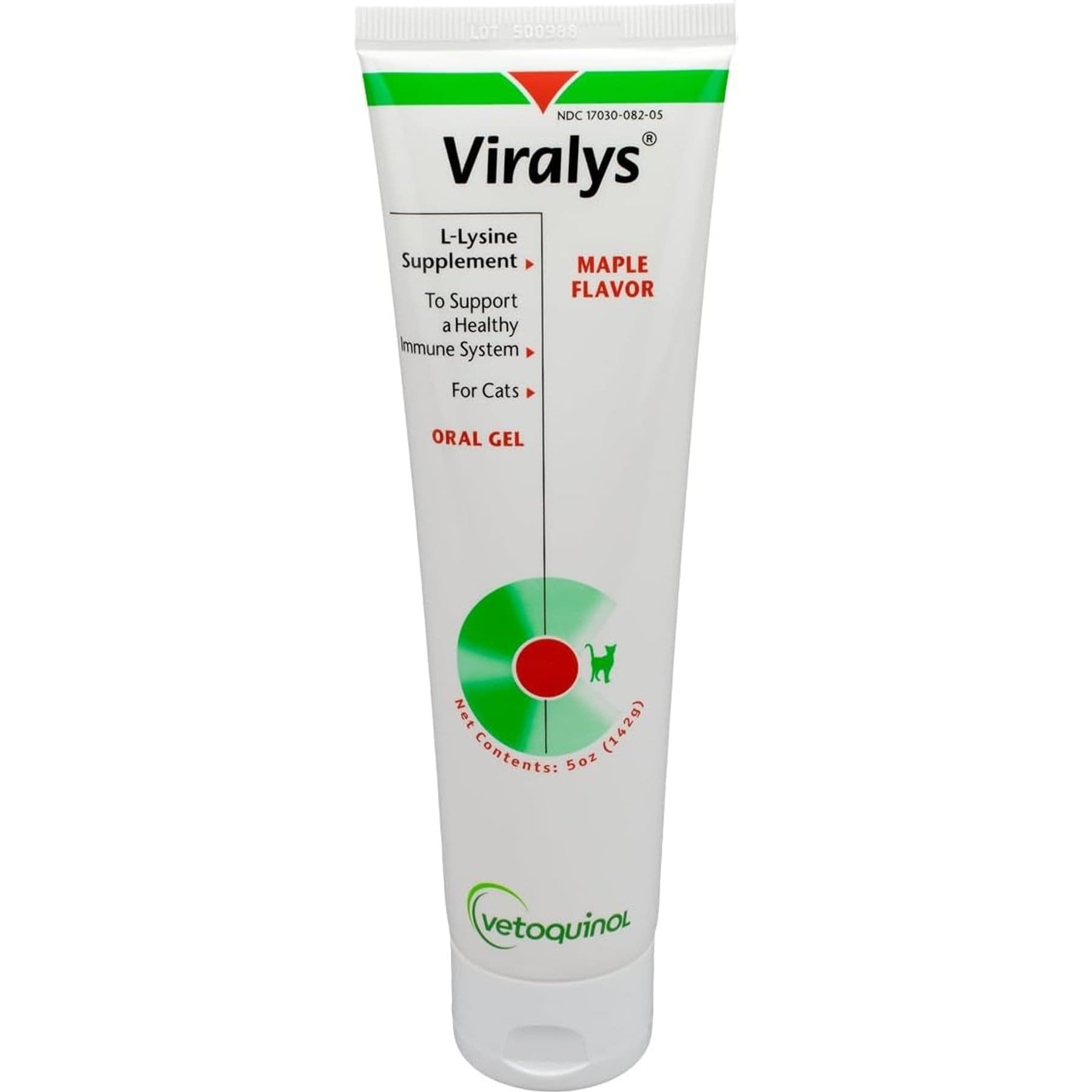
A lysine gel for cats whose vet has suggested a lysine trial and who refuse powder mixed into food.
Webvet may earn a commission when you click through to Chewy, at no extra cost to you.
Choosing the best lysine for cats comes down to form, strength per serving, and extra ingredients. Before buying any product, check these points on the label:
- Milligrams of L-lysine per serving, so your vet can match it to the planned dose
- Added ingredients such as flavorings, sweeteners, or other supplements
- Whether the product is meant for cats and kittens
- How the serving is given: scoop, pump, syringe, or chew
Comparing brands, blends, and reviews
Vetoquinol sells lysine under the Viralys name in powder and gel forms. Imuquin and multivitamins that include lysine add other ingredients to the mix. Bring the label to your vet and ask what each ingredient is meant to do for your cat.
Owner reviews of lysine products describe individual cats, often during a flare-up that would have improved on its own. Herpes flare-ups come and go, so a cat that seems better after a week of lysine may simply be recovering on schedule. Reviews cannot replace controlled trials.
The same caution applies when a cat has a respiratory infection. Sneezing and discharge in cats can come from several sources, and only an exam can sort them out:
- Feline herpesvirus, which stays in the body and can flare again
- Feline calicivirus, which often causes mouth ulcers
- Secondary bacterial infection on top of a virus
Lysine does not treat any of these infections directly. Antibiotics, antivirals, and supportive care are the tools a vet uses, depending on the cause.
For cats that take treats easily, soft chews are a common format, and chew strength varies widely between brands. Some chews list 250 mg of lysine each and others list 500 mg, so the count per day changes with the brand.
A 250 mg chew such as VetriScience Vetri-Lysine Plus Immune Health Cat Chews, 90 count lets a vet build up a dose in smaller steps.
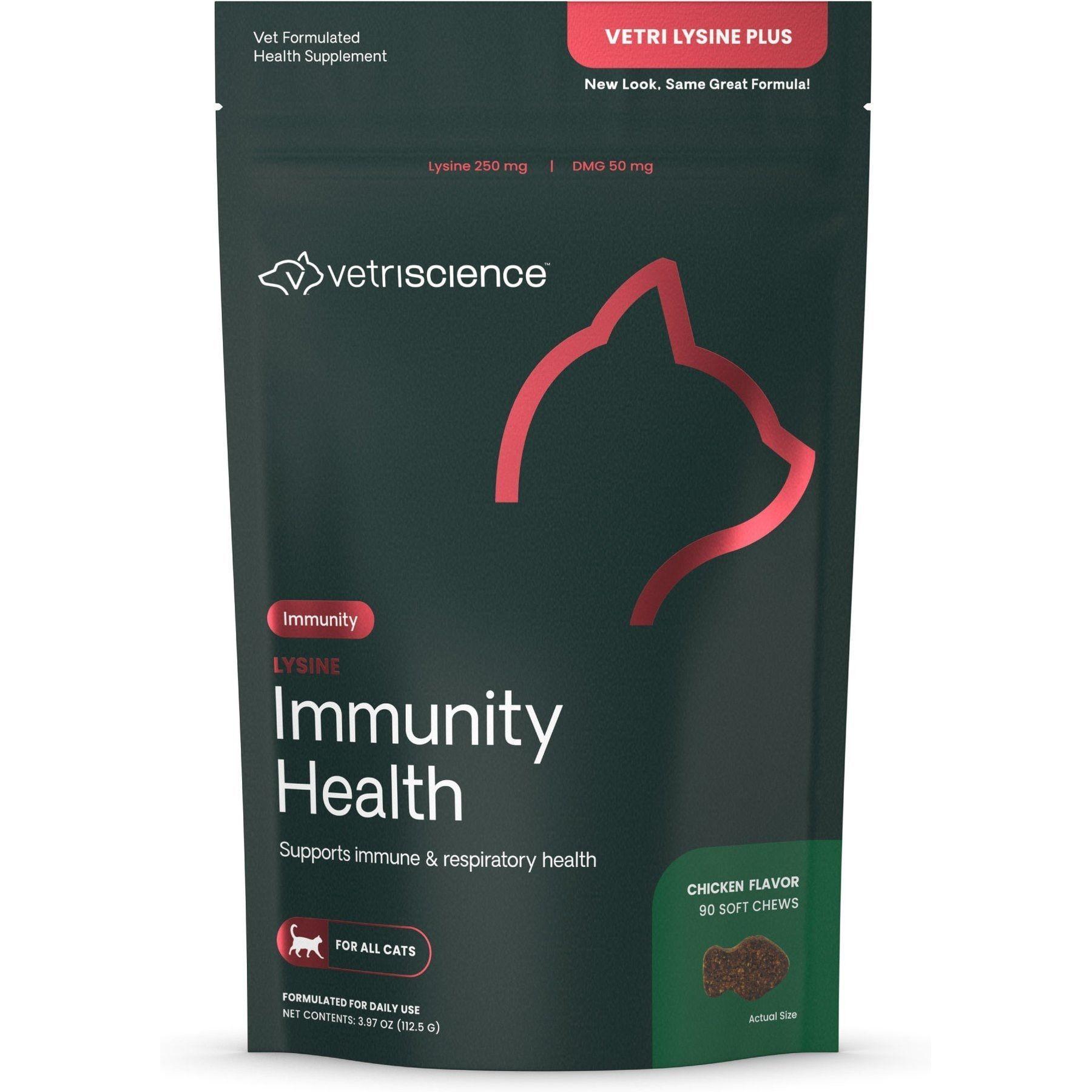
A chicken-flavored lysine chew for cats that take treats, for use only when your vet has set the dose.
Webvet may earn a commission when you click through to Chewy, at no extra cost to you.
To understand the virus itself, how cats catch it, and why it returns, the feline herpesvirus guide covers the disease in depth.
 Sponsored
Have a health question about your cat?
Talk to a licensed vet at Dutch over video or message, including nights and weekends.
Use code Pets60
Plans start at $12/month · covers up to 5 pets
- Licensed vets in most states
- Rx for 150+ conditions
- 4.7 on Trustpilot
Why lysine was recommended for feline herpes
The idea of using lysine against feline herpesvirus type 1 came from lab work on herpes viruses. The herpes virus needs the amino acid arginine to copy itself, and lysine was thought to compete with arginine. In theory, extra lysine would starve the virus, cutting flare-ups and the shedding that spreads infection to other cats.

Two small, early studies made the idea look promising:
- Stiles and colleagues gave 8 young cats 500 mg of lysine every 12 hours starting before herpes infection. Lysine-treated cats had milder conjunctivitis, but virus isolation did not differ between the groups.
- Maggs, Nasisse, and Kass gave 14 latently infected cats 400 mg of L-lysine once daily for 30 days. Treated cats had fewer shedding episodes after rehousing, though not after a steroid triggered the virus, and clinical differences were not statistically significant.
Those results made lysine routine advice for cats with herpes. A survey cited in the Bol and Bunnik systematic review in BMC Veterinary Research found that more than 90 percent of veterinarians in cat hospitals recommended lysine.
Lysine was also marketed for immune support, and many labels promise help with sneezing and the immune system. No cat trial has shown that lysine boosts immunity. A sneezing cat with a runny nose has several possible causes, explained in the guide to cat sneezing and a runny nose.
Using lysine for upper respiratory infection in cats was a natural extension of the herpes theory, since herpesvirus is a leading cause of feline upper respiratory infection. The larger trials that followed tested exactly that use.
What the evidence shows: lysine trials in cats
| Common claim | Evidence level in cats | Practical risk | What a vet uses instead |
|---|---|---|---|
| Fewer herpes flare-ups | Low: shelter trials found no prevention | Delayed treatment of eye or breathing problems | Famciclovir, eye medication, exam |
| Less viral shedding | Conflicting: one small study saw less shedding, larger trials saw more FHV-1 DNA | False reassurance in multi-cat homes | Vaccination, stress reduction, hygiene |
| Stronger immunity | None: no cat trial measured an immune boost | Money spent on an unproven product | Vaccination and good nutrition |
| Milder eye signs | Low: one 8-cat study saw milder conjunctivitis | Missed corneal ulcer | Eye exam and prescribed eye treatment |
| Safe to try | Moderate: well tolerated in short studies, but more disease in two group-housed diet trials | Possible worse disease; food refusal | Proven therapies chosen by your vet |
Lysine claims carry very different evidence levels, and the strongest data come from the larger, later studies that tested lysine where it was most used.
In the Drazenovich trial in the American Journal of Veterinary Research, led by a UC Davis team including David Maggs, 261 shelter cats ate a diet with 1.7 percent or 5.7 percent lysine for 4 weeks.
The results ran the wrong way for lysine:
- No difference between groups in mild disease
- More lysine-fed cats developed moderate to severe disease in week 4
- Herpes DNA was found more often in lysine-fed cats in week 2
In an earlier Maggs study in the Journal of Feline Medicine and Surgery, 50 cats with ongoing respiratory disease ate a basal or lysine-rich ration for 52 days. Supplemented cats had higher disease scores and more herpes DNA detections, though the authors noted that fighting among some male cats may have added stress and said their data did not permit a definitive conclusion.
A separate Rees and Lubinski shelter trial compared 144 cats given lysine once daily with 147 untreated cats. Lysine did not prevent upper respiratory infection or conjunctivitis on any measure.
Does L-lysine actually help cats?
Based on the controlled trials, probably not. The 2015 Bol and Bunnik review examined five cat studies and two lab studies and concluded that lysine does not prevent or treat feline herpesvirus 1.
The review found lysine has no antiviral action, does not antagonize arginine in cats, and had no effect on viral replication in the lab. The authors called for an immediate stop to supplementation.
Guidance has not moved in one direction, though:
- The Cornell Feline Health Center calls lysine controversial and notes studies suggesting it may worsen symptoms.
- The Merck Veterinary Manual still lists lysine as possibly reducing the severity of herpes infection.
- The ABCD guideline update rates the efficacy reports as conflicting, while noting lysine can reduce spontaneous eye shedding in some latently infected cats.
That disagreement is why advice on lysine varies from clinic to clinic. As for how long lysine takes to work in cats, VCA Animal Hospitals says full effects can take a few weeks, which is also how long many flare-ups take to settle on their own.
Is lysine good for cats with FIV? No trial has tested it in FIV-positive cats, so any benefit is unknown, and those cats need an individual plan from their vet.
What vets recommend instead for herpes flare-ups
Because herpes stays in a cat for life, the goal is shortening flare-ups and preventing complications. Cornell Feline Health Center notes that infected cats carry the virus for life and that many shed it periodically, usually when stressed.

Here is what vets use instead, depending on the signs:
- Famciclovir, an oral antiviral. In a controlled study of 16 experimentally infected cats, Thomasy and colleagues found it lowered disease scores, helped weight, and cut herpes DNA shedding compared with placebo.
- Eye medication, such as topical antivirals for herpes corneal ulcers, which the Merck Veterinary Manual lists for these cases
- Antibiotics when a secondary bacterial infection is present
- Supportive care, including keeping the cat eating and drinking, which Cornell calls very important
- Vaccination, which Cornell recommends for all cats to lessen disease severity and shedding
Stress is a common trigger for herpes flare-ups. The authors of the Rees and Lubinski trial suggested that shelters put their effort into reducing stress and infection control rather than lysine, and the same logic applies at home. Practical ways to lower stress are covered in the guide to cat stress relief.
When a flare-up mainly affects the eyes, the treatment plan is specific to the eye. The guide to feline herpes eye explains corneal ulcers, eye drops, and follow-up checks.
SponsoredVet care that's always there
Unlimited video calls and messaging with licensed vets for less than a typical vet visit. One membership covers up to five pets.
Use code Pets60
Plans start at $12/month · covers up to 5 pets
- Licensed vets in most states
- Rx for 150+ conditions
- 4.7 on Trustpilot
Lysine safety and side effects in cats
Is L-lysine safe for cats? In short studies, it was generally well tolerated. Stiles and colleagues described 500 mg as well tolerated, and Maggs found 400 mg daily caused no adverse clinical effects. The ABCD guideline update in the Journal of Feline Medicine and Surgery lists no published evidence of side effects.
Side effects of lysine in cats reported in the sources, and worth watching for at home, include:
- Diarrhea, listed by VCA Animal Hospitals
- Reduced food intake on high-lysine diets, noted in the Bol and Bunnik review
- More respiratory disease in two group-housed trials of lysine-rich food
How much lysine is safe for cats also depends on product strength. Optixcare lists 500 mg per chew, while Vetri-Lysine Plus lists 250 mg, so two chews of one brand are not the same as two of another. Larger chews such as Optixcare L-Lysine Cat Chews, 60 count bag suit a plan where the vet wants fewer pieces.
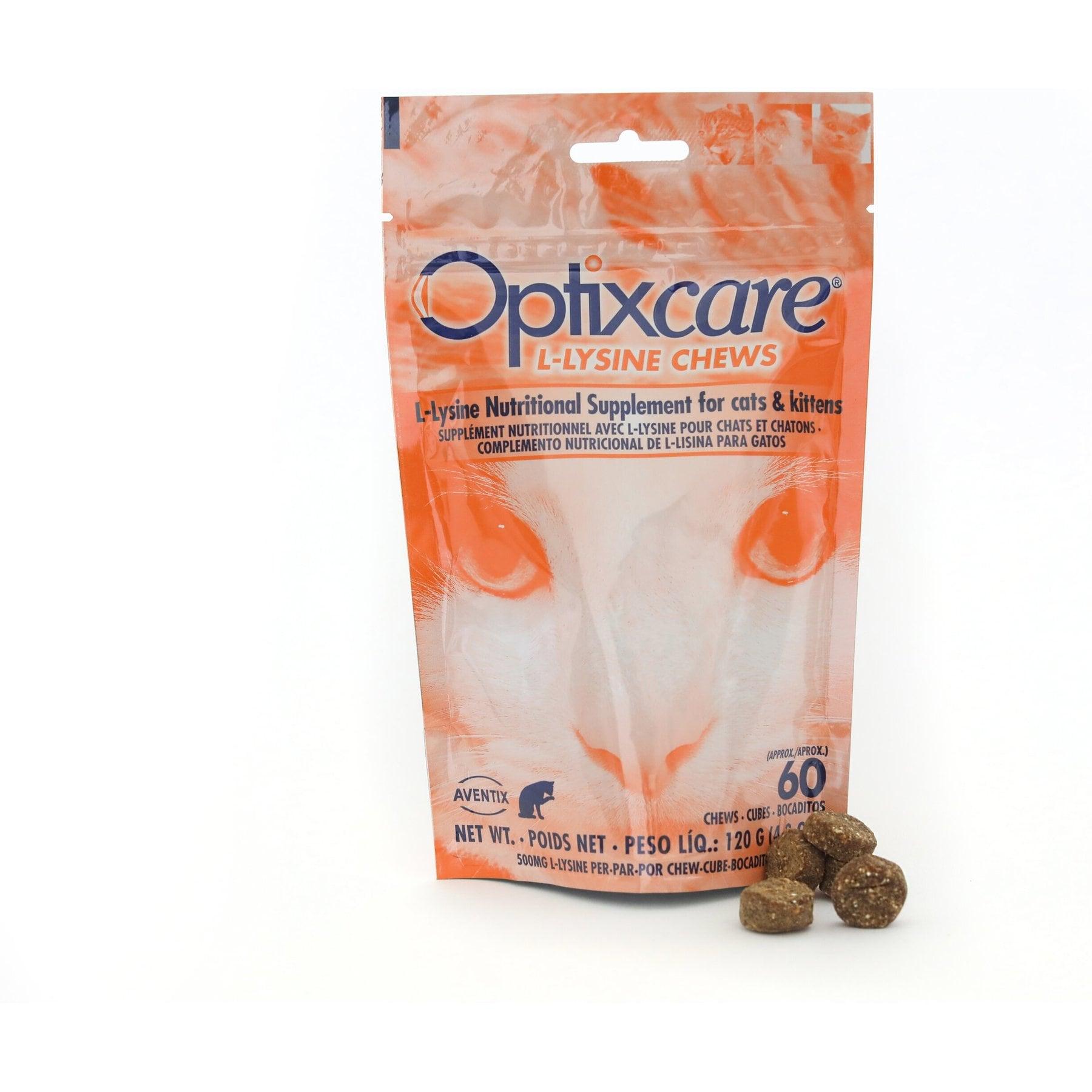
A 500 mg lysine soft chew for cats on a vet-set plan that calls for fewer pieces per day.
Webvet may earn a commission when you click through to Chewy, at no extra cost to you.
With treats and chews, side effects can come from the extras rather than the lysine. Flavorings, other supplements such as DMG in Vetri-Lysine Plus, and the treat base can upset a sensitive stomach. With powder, the main problem is palatability, since a cat may refuse food that tastes different.
Too much lysine raises a specific worry. Cats cannot make their own arginine, and the Bol and Bunnik review warns that arginine deficiency causes high blood ammonia, which can be fatal.
Can cats overdose on lysine? Published reports of supplement overdose in cats are lacking, but the arginine concern is a good reason to stick to the amount your vet sets.
What is the downside of lysine?
The main downside is that it may not help, and two diet trials in group-housed cats linked it to more disease. Using lysine can also delay an exam for problems like a corneal ulcer. Smaller downsides include diarrhea, food refusal, cost, and the daily stress of dosing a cat that resists.
What not to mix lysine with?
VCA advises caution when lysine is given with arginine or oral calcium supplements, and with other medications. Tell your vet about every product your cat takes. The ABCD update recommends giving lysine as a separate dose rather than mixed into food, so ask your vet how they want it given.
When a sneezing or squinting cat needs a vet
Most mild sneezing in an adult cat settles, but some signs mean the problem is more than a cold. The Bol and Bunnik review notes that cats can recover from active herpes without treatment, yet still recommends a veterinary exam.
These are the signs that need a vet now or within a day:
- Squinting, a cloudy eye, or thick yellow or green eye discharge
- Rapid breathing; Cornell Feline Health Center says resting breathing should not exceed 35 breaths per minute
- Not eating, since congestion can blunt the smell of food
- Fever, lethargy, or hiding
- A kitten with any respiratory signs, since young cats are most susceptible

Red, watery eyes can also come from other infections or irritants, described in the guide to cat conjunctivitis and pink eye. For sneezing with discharge and congestion, the guide to upper respiratory infection in cats explains causes and treatment.
If your vet still suggests lysine: forms, giving it, and how a vet decides the dose
Some vets still suggest lysine as an add-on, especially for cats with frequent, mild flare-ups. Powder is often the simplest form for cats that eat wet food. Vetoquinol Viralys Powder Immune Supplement for Cats, 3.5-oz is an L-lysine HCl powder labeled for cats and kittens, listed at $31.99 on Chewy when checked in November 2026.
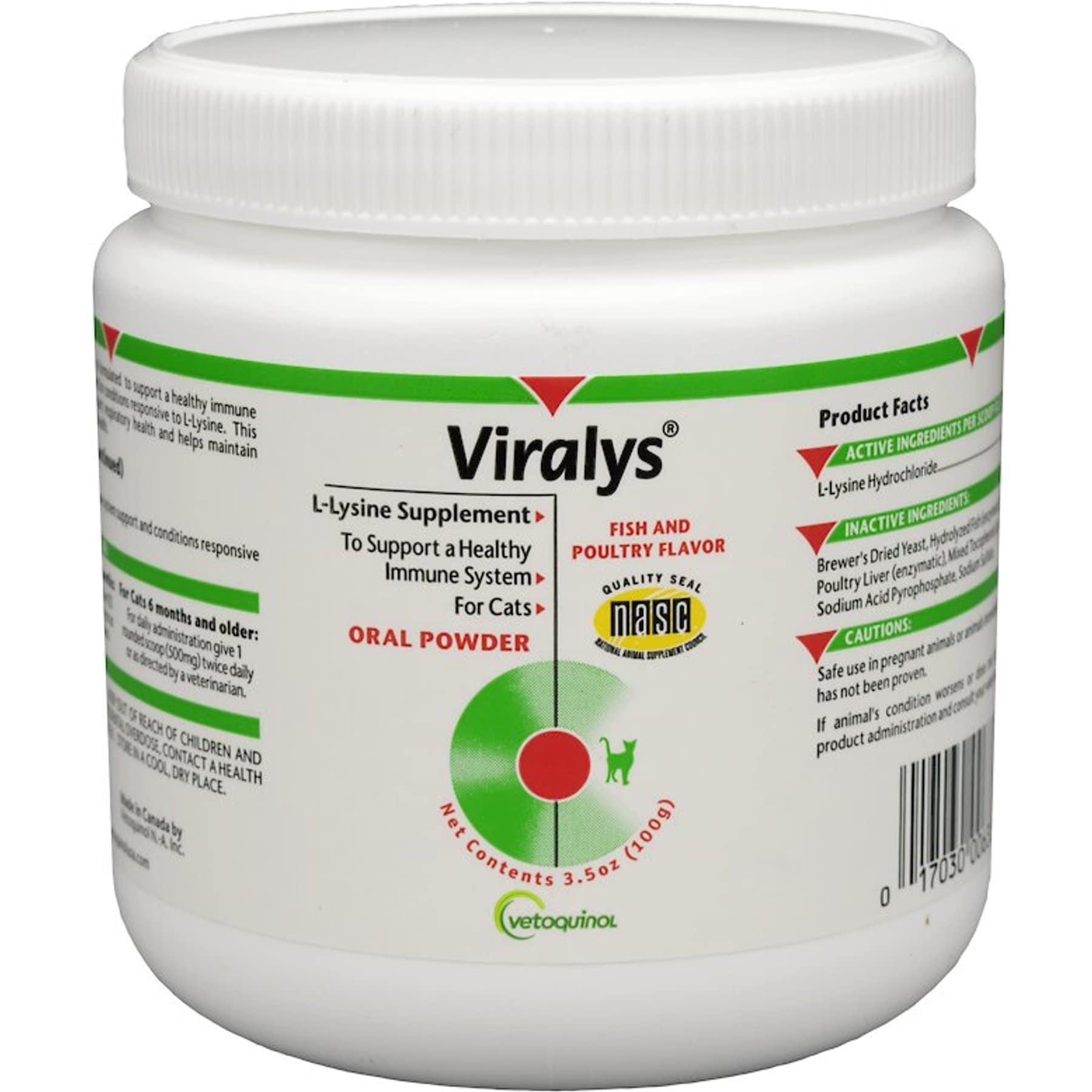
An L-lysine powder for cats and kittens that mixes into wet food, with the dose set by your vet.
Webvet may earn a commission when you click through to Chewy, at no extra cost to you.
How a vet decides the dose
No single lysine dose has agreement across sources, which is why how much lysine to give your cat comes from your vet, not a label. Published doses vary:
- 250 mg by mouth 2 to 3 times a day, in the Merck Veterinary Manual
- 500 mg every 12 hours as a separate dose, not added to food, in the ABCD guideline update
- 500 mg every 12 hours in the Stiles study and 400 mg once daily in the 2003 Maggs study
- No dose at all, in the Bol and Bunnik review, which advises stopping lysine
When working out a plan, a vet typically weighs:
- Your cat's size, age, and body condition
- Other medications and supplements, including calcium products
- Kidney and liver health, and any history of poor appetite
- How often flare-ups happen and which signs they bring
- Whether famciclovir or eye treatment is the better first choice
How often the dose is given matters as much as the amount. In the 2003 Maggs study, a single daily 400 mg dose raised blood lysine at 3 hours but not at 24 hours, and blood arginine did not change. That short window is one reason some references split the dose through the day.
How lysine is given also differs from the trials that raised concern. The two trials that found more disease mixed large amounts of lysine into the whole diet, and in the 2007 Maggs study food intake fell during peak illness, so lysine intake fell with it. A measured dose given separately avoids tying the supplement to a sick cat's appetite.

A dosage chart on a product listing cannot account for those factors. Label directions are written for a typical cat, and strength per scoop, pump, or chew differs by brand. VCA also notes that the FDA does not review non-drug supplements for safety or effectiveness before sale, so label claims are not a dosing guide.
Questions worth asking at the appointment:
- Is lysine worth trying for my cat, or would an antiviral work better?
- How many milligrams per day, split into how many doses?
- Should it go in food or be given on its own?
- How long is the trial, and what change should I look for?
- What should make me stop and call you?
Choosing a form your cat will take
The best form is the one your cat accepts every day without a struggle, since stress can trigger flare-ups. VCA Animal Hospitals lists powder, crushed tablet, chewable tablet, and paste or gel forms, given with a small amount of food.
Common forms and how they are given:
- Powder: mixed into a small portion of wet food. Viralys lysine powder and NOW Pets L-Lysine Immune System Support Cat Supplement, 8-oz jar, a lower-cost pure L-lysine powder listed at $9.99 on Chewy when checked in November 2026, both come as scoopable powders.
- Gel or paste: given with a small amount of food, as VCA describes for paste and gel forms. Viralys L-lysine gel comes in a 5-fl oz bottle.
- Chews: given as a treat. Optixcare L-lysine chews list 500 mg each and Vetri-Lysine Plus chews list 250 mg each.
- Syringe or drops: These suit cats that refuse food mix-ins. Duralactin Feline L-lysine Supplement for Cat, 32.5-mL syringe combines L-lysine with MicroLactin and is listed at $11.75 on Chewy when checked in November 2026.
Ask your vet whether to give it in food or as a separate dose, since the ABCD update prefers a separate bolus while the shelter trials and VCA used food.
Comparing common lysine products
Once your vet has named a daily amount, the product choice comes down to strength per serving, extra ingredients, and price. The products owners most often ask about differ in useful ways:
- Viralys powder: L-lysine HCl powder for cats and kittens, sprinkled on dry food or mixed into canned food. Easy to measure in small amounts for kittens or light cats.
- Viralys gel: a lysine gel in a 5-fl oz bottle, listed at $24.49 on Chewy when checked in November 2026. An option for cats that refuse powder in their food.
- Vetri-Lysine Plus chews: chicken-flavored chews with 250 mg of lysine that also contain DMG, listed at $14.72 on Chewy when checked in November 2026. Other VetriScience lysine products differ in strength, so compare the milligrams per serving on each label.
- Optixcare chews: cube-shaped soft chews with 500 mg of L-lysine each, listed at $23.94 on Chewy when checked in November 2026.
Product labels describe immune, respiratory, and eye support. Those are marketing descriptions rather than trial results, and the controlled cat studies did not show those benefits. Treat the label as a guide to strength and ingredients, not as evidence that the product works.
Combination products add another layer. Vetri-Lysine Plus includes DMG and Duralactin adds MicroLactin, and neither extra ingredient was part of the lysine trials. A plain lysine product makes it easier for your vet to judge whether the lysine itself is doing anything.
What to watch for during a lysine trial
Herpes flare-ups naturally wax and wane, which makes it hard to tell whether a supplement is helping. A short written log gives your vet something concrete to judge at the check-in:
- Number of sneezing bouts per day
- Eye discharge, squinting, or redness, and which eye
- Appetite and how much of each meal is eaten
- Stool quality, since diarrhea is the side effect VCA lists
- Any stressful events, such as visitors, travel, or a new pet
VCA notes that full effects can take a few weeks, so most vets set a trial period before judging. If flare-ups continue at the same rate, that matches what the controlled trials found, and it is a reason to discuss antivirals or other options instead.
Giving lysine to kittens
Kittens raise the most questions, because they are the cats most likely to have active herpes signs. A sick kitten needs an exam before any supplement, since kittens can dehydrate and stop eating quickly.
If the vet does suggest lysine for a kitten, the vet calculates the kitten dose from weight and age. Choose a product the label describes for kittens, such as Viralys powder, and do not split adult chews without the vet's guidance.

Two cautions apply to young cats and their mothers:
- Food first: Cornell Feline Health Center stresses nutrition and hydration as supportive care, and a kitten that refuses food because of a flavored mix-in is worse off than one with no supplement at all.
- Pregnant or nursing cats: VCA advises caution with lysine in pregnant or nursing pets, so a queen with kittens should not get lysine unless her vet approves it.
Lysine in multi-cat homes
Owners with several cats often hope lysine will stop the virus spreading. The shelter trials, which tested exactly that idea in crowded groups, found no protection. The Rees and Lubinski authors pointed instead to stress reduction, infection control, and limiting spread on hands, bowls, and bedding.
At home, that translates to steps such as:
- Keeping all cats current on vaccination, as Cornell recommends
- Separate food bowls, water, and litter boxes for a sick cat
- Washing hands and bowls after handling a cat with discharge
- Giving a newly adopted cat a quiet room before introductions
- Keeping routines steady during moves, visitors, or renovations
Practical tips for giving lysine at home
A few habits make a vet-planned course easier:
- Give it at the same time each day, as VCA suggests
- Mix powder into a small portion of food your cat will finish, not a full bowl
- Measure with the product's own scoop or pump, since strengths differ
- Keep a simple log of sneezing, eye discharge, and appetite to share with your vet
- Store the product in a cool, dry place in a tightly sealed container, as VCA advises
- Stop and call your vet if diarrhea, vomiting, or food refusal appears
Reassess with your vet if there is no clear change after the agreed trial period. Given the trial evidence, a lack of improvement is a reason to switch strategy rather than raise the dose.
Many cats with herpes do well long term with good vaccination, low stress, and quick vet care during flare-ups. Lysine, if used at all, is a small add-on to that plan rather than the plan itself.
Lysine for cats questions
Frequently Asked Questions
How long should I give my cat lysine?
The course length is set by your vet. Some vets use lysine only during a flare-up, while others suggest a longer trial for cats with frequent episodes. Agree on a check-in date before you start, keep notes on sneezing and eye signs, and stop if your vet sees no benefit. A course should not run indefinitely by default.
Can kittens have lysine?
Some lysine products are labeled for kittens, but a vet should examine any kitten with sneezing or eye discharge first. Kittens are the most vulnerable to herpes complications, including eye ulcers and dehydration, and the vet sets any kitten dose by weight. Food and fluids matter more than any supplement for a young kitten.
Does lysine help a cat with an upper respiratory infection?
Shelter trials found that lysine did not prevent upper respiratory infection, and two diet trials in group-housed cats saw more severe disease in lysine-fed cats. Sneezing, congestion, and discharge are better handled with a vet exam and targeted treatment, plus fluids, food, and rest.
Are lysine treats as good as lysine powder?
They deliver the same amino acid, so the difference is strength and acceptance. Treats are easy for cats that like them but carry extra ingredients, while powder allows finer measuring and has fewer additives. Either form only makes sense on a vet's plan.
What are the side effects of lysine in cats?
Lysine is usually well tolerated in short courses. The side effects reported include diarrhea, an upset stomach, and reduced appetite, especially with high-lysine diets. Flavored chews can add their own digestive upset. Call your vet if your cat stops eating or seems unwell while taking it.
Veterinarian · BVMS MRCVS
Dr. Pippa Elliott, BVMS, MRCVS, is a veterinarian with nearly 30 years of experience in companion animal practice. Dr. Elliott earned her Bachelor of Veterinary Medicine and Surgery from the University of Glasgow. She was also designated a Member of the Royal College of Veterinary Surgeons. Married with 2 grown-up kids, Dr. Elliott has a naughty Puggle named Poggle, 3 cats and a bearded dragon.


