Plants Safe for Cats: The Vet-Checked List
Which plants are safe for cats, with every verdict checked against the ASPCA plant database: safe houseplants, flowers, herbs and garden plants with botanical names, the four owners wrongly assume are safe, and what to do if your cat chews one.

BVMS MRCVS
Medically reviewed by Dr. Pippa Elliott, BVMS MRCVS · Last reviewed

This article contains affiliate links. Webvet may earn a commission when you buy through them, at no extra cost to you.
Plants safe for cats exist in every category you actually shop in: houseplants, cut flowers, kitchen herbs and garden beds. Spider plant, Boston fern, parlor palm, African violet, moth orchid, rose, sunflower, basil and rosemary all sit on the non-toxic side of the ASPCA Animal Poison Control plant database.
Two limits come attached to that list. Non-toxic means no known systemic poisoning, not harmless. And four plants owners routinely add to their own list of plants safe for cats, lavender, eucalyptus, mint and aloe, are listed by the ASPCA as toxic to cats.
- The three-step check that clears any plant, including one this page never names.
- Named safe houseplants, flowers, herbs and garden plants, with the botanical name beside every common name.
- The plants most often mistaken for cat-safe, and the one palm that is not a palm at all.
- A keep-or-remove decision for the toxic plants already on your shelf.
If you have already found chewed leaves, do not read this page first. Call your veterinarian, the ASPCA Animal Poison Control Center on (888) 426-4435, or Pet Poison Helpline on (855) 764-7661, and do not try to make your cat vomit.
This guide covers plants and flowers. Household chemicals, medications and the rest of that job belong to our guide to poison-proofing your cat's home, and food questions such as whether cats can eat chocolate are answered separately.
How to know a plant is safe for your cat

- 1Work from the botanical name, not the shop label. One common name can cover two species with opposite verdicts.
- 2Search that botanical name in the ASPCA toxic and non-toxic plant database, then read the line for cats rather than the line for dogs.
- 3Non-toxic means no known systemic poisoning. It does not mean harmless, and it does not mean unlimited.
- 4If the plant is not in the database at all, absence is not a safe verdict. Ask your veterinarian before it comes home.
To check whether a plant is safe for your cat, find its botanical name, search that name in the ASPCA toxic and non-toxic plant database, and read the entry for cats specifically. A non-toxic entry means no known systemic poisoning in cats. It never means the plant is safe to eat.
- Find the botanical name. It is on the nursery tag, on the retailer's product page, or identifiable from a clear photo of the leaves and flowers. If you use a plant identification app, confirm the result against a second photo before you trust it.
- Search that name. Put it into the ASPCA toxic and non-toxic plant database, scientific name first and common name second, because the database files many plants under names no shop uses.
- Read the entry for cats. Every entry lists species separately. A plant can be non-toxic to dogs and toxic to cats, and the reverse is also true.
It is worth knowing what an entry gives you. Each one carries the common names a plant is sold under, the scientific name, the plant family, the species affected, the toxic principle where one is known, and the clinical signs that have been reported.
Read that last field closely. It separates a plant that causes a sore mouth for an evening from a plant that damages an organ, and a list printing only toxic or non-toxic hides the difference completely.
Common names are where owners get hurt. They are marketing, folklore and regional habit, and they travel freely across species that have nothing in common botanically. The database is organized by species, so the species name is the only search that returns a verdict you can act on.
- Marigold. Garden marigold, Calendula officinalis, is non-toxic to cats. Tagetes marigold, the French and African bedding kind, is a separate ASPCA entry and is not on the non-toxic side.
- Bamboo. True bamboo, Bambusa species, is non-toxic. Lucky bamboo, Dracaena sanderiana, is a dracaena, and dracaenas are toxic to cats.
- Rubber plant. Baby rubber plant, Peperomia obtusifolia, is non-toxic. The rubber tree, Ficus elastica, is not.
- Daisy. Gerbera daisy, Gerbera jamesonii, is non-toxic. The common oxeye daisy sits with the chrysanthemums, which are toxic to cats.
- Palm. Parlor palm and areca palm are true palms and are non-toxic. Sago palm, Cycas revoluta, is not a palm at all, and it is one of the most dangerous plants a cat can meet.
- Ivy. Swedish ivy, Plectranthus verticillatus, is non-toxic. English ivy, Hedera helix, contains saponins and is toxic.
Build one more habit while you are at it. Signs reading pet friendly, pet safe or non-toxic sit on shop shelving with no agreed standard behind them and usually no species named. Treat that label as a prompt to check, never as the verdict itself.
Sourcing matters here more than on almost any other pet topic. Plant care sites, florists and retailers repeat each other, and the errors circulate for years. Every verdict on this page traces to a primary veterinary source: the ASPCA plant database, Pet Poison Helpline, the Merck Veterinary Manual or VCA.
Is any plant 100 percent safe for a cat?
No. No plant is 100 percent safe for a cat, and a non-toxic listing does not claim that it is. It means no systemic poisoning has been established in that species, which is a narrower promise than harmless and a much narrower one than unlimited.
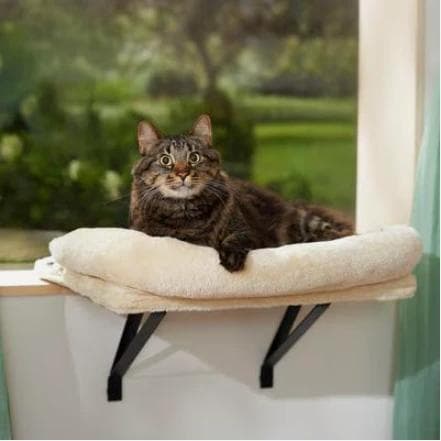
A window perch gives your cat a dedicated resting spot. Install it as directed and keep it away from accessible plants.
Webvet may earn a commission when you click through to Chewy, at no extra cost to you.
A non-toxic verdict still leaves several things on the table.
- Vomiting or diarrhea from the sheer volume of plant matter in a stomach built for meat.
- Drooling or mouth irritation from sap, leaf hairs or fibrous stems.
- An obstruction risk from long stringy leaves or a swallowed piece of stem.
- Choking on a folded leaf or a piece of bark, which matters most in kittens.
- Mold on damp soil, plus the fertilizer, drainage stones and insecticide that arrived in the pot.
- A contact or allergic reaction, which is uncommon but not impossible.
There is no published safe amount for any of this. No veterinary source sets a number of leaves or a weight that separates a harmless nibble from a problem, and any page that hands you such a figure has invented it.
What you can use instead is a threshold for picking up the phone. One episode of vomiting in a cat that is otherwise bright, eating and using the litter box is usually watch-and-see. Anything beyond that earns a call.
- Vomiting repeats, or carries on beyond a few hours.
- Your cat drools, paws at its mouth, or will not swallow.
- Appetite drops for more than a day, or your cat hides and will not settle.
- Your cat is a kitten, is elderly, or has kidney, liver or heart disease.
- You cannot identify what was chewed.
Our guide to a cat vomiting but acting normal works through that when-to-worry line in more detail, including the signs that turn a wait into a same-day visit.
Does your cat have to eat the plant to get sick?
No. Eating is the most common route, but it is not the only one, and the exposures owners miss are precisely the ones that do not look like eating.
- Chewing and swallowing. Leaves, stems and flowers, and with bulb plants the bulb, which is usually the most concentrated part.
- Grooming. Sap, pollen or plant dust that lands on the coat is swallowed the next time your cat cleans itself. Contact becomes ingestion within minutes.
- Pollen. Lily pollen is the case that matters most. A cat that brushes past an arrangement and grooms the pollen off its face has been exposed.
- Vase water. Cats drink from vases. Water that has held toxic stems carries plant compounds, and after a few days it carries bacteria as well.
- Soil and pot. Fertilizer granules, systemic insecticide and mold on wet soil are exposures the plant verdict does not cover.
- Skin contact. A few plants cause contact dermatitis, and a cat that walks through sap will lick it off.
Lilies are where this stops being theoretical. True lilies and daylilies are dangerous to cats in every part, and veterinary sources include the pollen and the vase water in that. A cat with any known lily contact needs a veterinarian the same day, before symptoms appear.
It is also why moving a plant to a high shelf is only half a fix. If petals, pollen or leaves fall, or if the vase stays where your cat drinks, the exposure route is still wide open.
Do cats avoid toxic plants on their own?
No, not reliably. Cats have no sense that identifies a toxic plant, and the instinct owners credit them with does not hold up in practice. Plant poisonings frequently involve a cat that had lived beside the plant for months without touching it.
Cats chew plants for reasons that have nothing to do with safety.
- Texture. Thin, dangling, ribbon-shaped leaves move like prey and shred satisfyingly.
- Boredom. An indoor cat with no other job will find the plant.
- Fiber and gut movement. Grass eating is normal feline behavior and is not by itself a sign of illness.
- Habit. Kittens explore with their mouths, and the habit outlasts the kitten.
- Taste. Some plants are simply interesting to some cats.
None of those motives include a safety check, and several of the most dangerous plants are not unpleasant to chew. Lily petals are soft, sago palm seeds are attractive, and garden bulbs get dug up the same way a cat digs anywhere else.
The practical conclusion is that prevention has to be structural. Placement, substitution and removing the highest-risk plants work. Trusting your cat's judgment does not.
Houseplants safe for cats

Houseplants safe for cats include spider plant, Boston fern, parlor palm, areca palm, African violet, prayer plant, calathea, peperomia, bromeliad, Christmas cactus, money tree and cast iron plant. Each is listed as non-toxic to cats in the ASPCA plant database, which is the entry to check before you buy.
For indoor pet-safe plants, check the botanical name beside each common name in the table. A child-friendly label does not establish safety for cats, and a cat verdict does not automatically clear the plant for dogs. In a home with cats and dogs, check both species on the same ASPCA entry before buying.
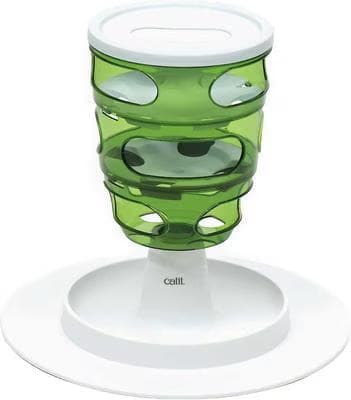
A food-tree puzzle adds an activity to everyday feeding. Introduce it gradually using part of your cat’s usual food allowance.
Webvet may earn a commission when you click through to Chewy, at no extra cost to you.
| Houseplant | Botanical name | ASPCA verdict for cats | Note |
|---|---|---|---|
| Spider plant | Chlorophytum comosum | Non-toxic | The plant cats chew most; volume alone can cause vomiting |
| Boston fern | Nephrolepis exaltata | Non-toxic | Asparagus fern is not a true fern and is toxic |
| Bird's nest fern | Asplenium nidus | Non-toxic | Tolerates a humid bathroom |
| Staghorn fern | Platycerium bifurcatum | Non-toxic | Usually mounted, which keeps it out of reach |
| Maidenhair fern | Adiantum raddianum | Non-toxic | Delicate fronds, high humidity |
| Parlor palm | Chamaedorea elegans | Non-toxic | A true palm, unlike sago palm |
| Areca (butterfly) palm | Dypsis lutescens | Non-toxic | Large floor plant |
| Cat palm | Chamaedorea cataractarum | Non-toxic | Named for its size, not for cats |
| Majesty palm | Ravenea rivularis | Non-toxic | Needs bright light and water |
| Ponytail palm | Beaucarnea recurvata | Non-toxic | Strap leaves attract chewers |
| African violet | Saintpaulia species | Non-toxic | Flowering, low light |
| Prayer plant | Maranta leuconeura | Non-toxic | Low light tolerant |
| Calathea / rattlesnake plant | Calathea species | Non-toxic | Humidity lover |
| Baby rubber plant (peperomia) | Peperomia obtusifolia | Non-toxic | Not the rubber tree, Ficus elastica, which is toxic |
| Polka dot plant | Hypoestes phyllostachya | Non-toxic | Small, easy to place high |
| Cast iron plant | Aspidistra elatior | Non-toxic | Survives the darkest corner |
| Bromeliad | Bromeliaceae species | Non-toxic | Central cup holds water; keep it clean |
| Christmas cactus | Schlumbergera bridgesii | Non-toxic | Winter flowering, unlike true cacti it has no spines |
| Money tree | Pachira aquatica | Non-toxic | Braided trunk, floor plant |
| Zebra haworthia | Haworthiopsis fasciata | Non-toxic | One of the few safe popular succulents |
| Hens and chicks | Echeveria elegans | Non-toxic | Rosette succulent |
| Burro's tail | Sedum morganianum | Non-toxic | Trailing succulent; drops beads that get swallowed |
| Swedish ivy | Plectranthus verticillatus | Non-toxic | Not a true ivy; English ivy is toxic |
| Baby's tears | Soleirolia soleirolii | Non-toxic | Ground-cover texture, terrarium plant |
| Friendship plant | Pilea involucrata | Non-toxic | Small tabletop plant |
| True bamboo | Bambusa species | Non-toxic | Lucky bamboo is a dracaena and is toxic |

A few notes on turning that table into a real room.
- Ferns. Boston fern, bird's nest fern, staghorn fern and maidenhair fern are non-toxic. Asparagus fern is not a true fern and is toxic, so read the tag rather than the shape of the leaf.
- Palms. Parlor palm, areca palm, cat palm, majesty palm and ponytail palm are non-toxic. Sago palm is a cycad, not a palm, and it is the most dangerous plant sold in the same aisle.
- Succulents. Haworthia, echeveria, burro's tail and Christmas cactus are non-toxic. Most of the popular ones are not: aloe, jade, kalanchoe, string of pearls and pencil cactus are all toxic to cats.
- Low light. Cast iron plant, parlor palm, Boston fern, calathea and prayer plant tolerate a dim corner and stay on the safe side.
- Large floor plants. Areca palm, majesty palm, ponytail palm, money tree and true bamboo give you height without a toxic trunk in the living room.
- Hanging and trailing. Spider plant, Swedish ivy, burro's tail and Boston fern trail safely. Pothos and philodendron, the two trailing plants sold most, do not.

- Humid rooms. Ferns, calathea and bromeliad suit a bathroom, and none of them is on the toxic list.
Spider plant deserves its own warning, and not because it is dangerous. It is the plant on this list that cats eat most enthusiastically, the dangling plantlets are the reason, and a cat that strips one can still vomit from the volume.

Non-toxic is a verdict about poisoning, not a promise your plant will survive. If your cat treats a safe plant as a salad bar, the fix is a cat grass tray and a higher shelf rather than a different verdict.
For the practical setup, see how to grow cat grass.

One caution applies to every row in the table. The verdict covers the plant, not the pot it came in. New plants routinely arrive carrying slow-release fertilizer, systemic insecticide and treated soil, and those are separate exposures with separate answers.
- Keep a new plant out of reach while you confirm its identity and any treatment applied to it.
- Ask the seller what the plant was treated with and retain the product details. Follow the treatment label and ask your veterinarian about a possible exposure; repotting alone is not proof of safety.
- Cover the soil surface with pebbles or mesh if your cat digs in pots.
Match a cat-safe indoor plant to the light available. The table identifies prayer plant and African violet for lower light and parlor palm as a taller option; check the exact plant’s care requirements rather than treating a dim room as suitable for everything. Even a plant sold as low maintenance or hard to kill needs appropriate light, water, and a secure position away from a chewing cat.
Claims about air-purifying or air-cleaning houseplants are separate from a cat-safety verdict. Choose the indoor plant by its botanical identity and toxicity entry; an air-quality claim does not establish that it is safe to chew. Likewise, do not choose an indoor plant as a flea repellent for your cat: ask your veterinarian about an appropriate flea-control product.

A chewed safe plant is also information. It tells you your cat is looking for something to chew, and that appetite will find the next plant you buy unless you give it a target of its own.

Flowers safe for cats

Flowers safe for cats include roses, sunflowers, gerbera daisies, snapdragons, zinnias, petunias, moth orchids, African violets and garden marigold, Calendula officinalis. All are listed as non-toxic to cats by the ASPCA. A safe bouquet is defined more by what gets left out of it than by what goes in.
| Flower | Botanical name | ASPCA verdict for cats | Bouquet note |
|---|---|---|---|
| Rose | Rosa species | Non-toxic | Thorns are the real hazard; strip any stem in reach |
| Sunflower | Helianthus annuus | Non-toxic | Sheds pollen, so sweep the surface |
| Gerbera daisy | Gerbera jamesonii | Non-toxic | Confirm Gerbera jamesonii; florist chrysanthemums also sold as daisies have a different verdict |
| Moth orchid | Phalaenopsis species | Non-toxic | Bark and moss in the pot are a swallowing risk |
| Zinnia | Zinnia species | Non-toxic | Long lasting cut flower |
| Petunia | Petunia species | Non-toxic | Bedding plant and container flower |
| Snapdragon | Antirrhinum majus | Non-toxic | Good vertical stem for a safe arrangement |
| Garden marigold | Calendula officinalis | Non-toxic | Tagetes marigold is a separate, listed entry |
| African violet | Saintpaulia species | Non-toxic | Flowering houseplant rather than a cut stem |
| Camellia | Camellia japonica | Non-toxic | Shrub flower, also a garden option |
| Christmas cactus | Schlumbergera bridgesii | Non-toxic | Flowering, and safe at the season it flowers |
Read an arrangement stem by stem. A florist builds from a feature bloom, two or three secondary flowers, a filler and some greenery, and the hazard is as likely to sit in the filler as in the flower you were sold.
- True lilies and daylilies. Lilium and Hemerocallis are an emergency for cats and belong in no arrangement that enters your home.
- Peace lily and calla lily. Not true lilies and not a kidney risk, but both carry insoluble calcium oxalate crystals and cause immediate mouth pain.
- Tulips, daffodils and hyacinths. Bulb flowers, with the toxic compounds concentrated in the bulb rather than the cut stem.
- Chrysanthemums and common daisies. The same genus, and both are toxic to cats.
- Baby's breath needs a botanical-name check. The ASPCA lists Gypsophila elegans as non-toxic to cats and dogs, while noting that eating it can still cause mild vomiting or diarrhea. That is not a reason to let a cat chew an arrangement.
- Eucalyptus and asparagus fern. The two most common greenery choices in the trade, and both are toxic to cats.
- Hydrangea, peony, dahlia and begonia. All turn up in seasonal arrangements and none is on the non-toxic side.
- Carnations. Mild rather than severe, but not non-toxic: stomach upset and skin irritation are described.
Alstroemeria, sold as Peruvian lily, causes confusion for a good reason. It is not a true lily and does not carry the kidney risk that Lilium does. It is still not a stem to let your cat chew, and a cautious florist will leave it out of a cat home.
Safe cut flowers and bouquets

You can keep flowers in the house with a cat. Roses, sunflowers, gerbera daisies, snapdragons, orchids and zinnias build a full arrangement with nothing toxic in it, provided the filler and the greenery get checked alongside the feature bloom.
- Say the words when you order. Ask for an arrangement with no lilies of any kind, including daylilies, Asiatic and Oriental lilies, and no eucalyptus or asparagus fern.
- Block free substitution. Florists swap stems for availability, so ask them to call you rather than substitute on their own judgment.
- Unwrap the bouquet over a table rather than the floor, and check every stem before anything goes into water.
- Put the vase where your cat cannot drink from it, and change the water daily.
- Sweep fallen petals, leaves and pollen the same day. Pollen on the floor becomes pollen on a paw, then pollen in a cat.
- If a gift arrives with a stem you cannot identify, take it out and photograph it before you throw it away.
Seasonal arrangements are where the risk concentrates. Valentine's bouquets lean on roses, which is good news, while Mother's Day, Easter and sympathy arrangements lean on lilies, which is the worst possible default for a cat home.
Gift bouquets are the common failure point. The lily is the classic sympathy and celebration flower, and it arrives in your home without you choosing it. Take the arrangement apart at the door instead of putting it on the table to deal with later.
Herbs, grasses, and greens cats can safely chew

Basil, rosemary, thyme, sage and dill are non-toxic to cats. Mint, oregano, parsley, chives and lemongrass are not. Culinary herbs are not one category, and a windowsill herb pot needs checking plant by plant like anything else you bring home.
| Herb or green | Botanical name | Verdict for cats | In a cat home |
|---|---|---|---|
| Basil | Ocimum basilicum | Non-toxic | Windowsill pot is fine |
| Rosemary | Rosmarinus officinalis | Non-toxic | Woody, rarely chewed |
| Thyme | Thymus vulgaris | Non-toxic | Safe in pots and beds |
| Sage | Salvia officinalis | Non-toxic | Burning it is a separate smoke and oil exposure |
| Dill | Anethum graveolens | Non-toxic | Safe in the herb bed |
| Catnip | Nepeta cataria | ASPCA lists it as toxic | Nepetalactone; ingestion can cause vomiting or diarrhea, with stimulation or sedation |
| Silver vine | Actinidia polygama | Non-toxic | Alternative for cats that ignore catnip |
| Cat grass | Oat, wheat, barley or rye seedlings | Non-toxic | The deliberate chewing target |
| Mint | Mentha species | Toxic | Essential oils; keep out of the cat rooms |
| Oregano | Origanum vulgare | Toxic | Essential oils |
| Parsley | Petroselinum crispum | Toxic | Furanocoumarins |
| Lemongrass | Cymbopogon citratus | Toxic | Essential oils and cyanogenic glycosides |
| Chives | Allium schoenoprasum | Toxic | Allium family; keep out of reach entirely |
| Lavender | Lavandula angustifolia | Toxic | Linalool and linalyl acetate |
Every herb verdict above comes from the ASPCA database entry for that species. Cat grass and silver vine are the two exceptions: cat grass is a group of cereal grasses rather than one plant, and silver vine has no single entry of its own.
The kitchen herbs split like that because of chemistry, not folklore. The ones on the toxic side carry concentrated essential oils or, in the case of chives, the same compounds that make the onion family a problem for cats.
Cats also handle some of these compounds poorly. Feline liver metabolism processes certain plant phenols less efficiently than a dog's or a person's, which is why a herb that seasons your dinner can flatten a cat that chews the pot on the sill.
- Keep the toxic herbs out of your cat's rooms, not merely off the counter. A windowsill pot is at cat height by definition.
- Dried herbs and herb oils are more concentrated than the living plant, not less.
- Herb sprays and essential oil diffusers are a separate hazard from the plant, and they belong with household chemicals rather than with gardening.
For indoor plants a cat can chew, a tray of cat grass is one option. It is not one species: trays sold as cat grass are seedlings of cereal grasses, usually oat, wheat, barley or rye, offered fresh. It is an optional chewing target, not a treatment or a way to make another plant safe. Keep toxic plants inaccessible even when you offer cat grass.

- It gives the chewing behavior a target that is meant to be chewed.
- Fresh grass beats a mature houseplant on texture, so it genuinely competes for the same behavior.
- Grow two trays and rotate them, so one is always fresh and nothing gets old enough to matter.
- Replace a tray as soon as it yellows or the soil smells, because mold is its own problem.
- Put the tray where your cat already chews, not where it looks tidy to you.
- Growing it from seed costs less than buying trays and hands you the rotation for free.
- Seed goes onto damp compost in a shallow pot, gets covered lightly, and is ready to offer at roughly three to four inches tall.
- Cut it back rather than pulling it up, and a tray will usually give you a second flush.
Grass eating itself is normal. Cats have eaten grass for as long as anyone has watched them, and it is not by itself a sign of illness or of something missing from the diet. A sudden increase alongside vomiting or weight loss is worth a call.
Catnip, Nepeta cataria, has a specific ASPCA toxic listing for cats. The named compound is nepetalactone; the entry describes vomiting and diarrhea and notes that some cats become stimulated while others become sedated. Catnip’s use in enrichment does not mean unlimited access to the plant is harmless.
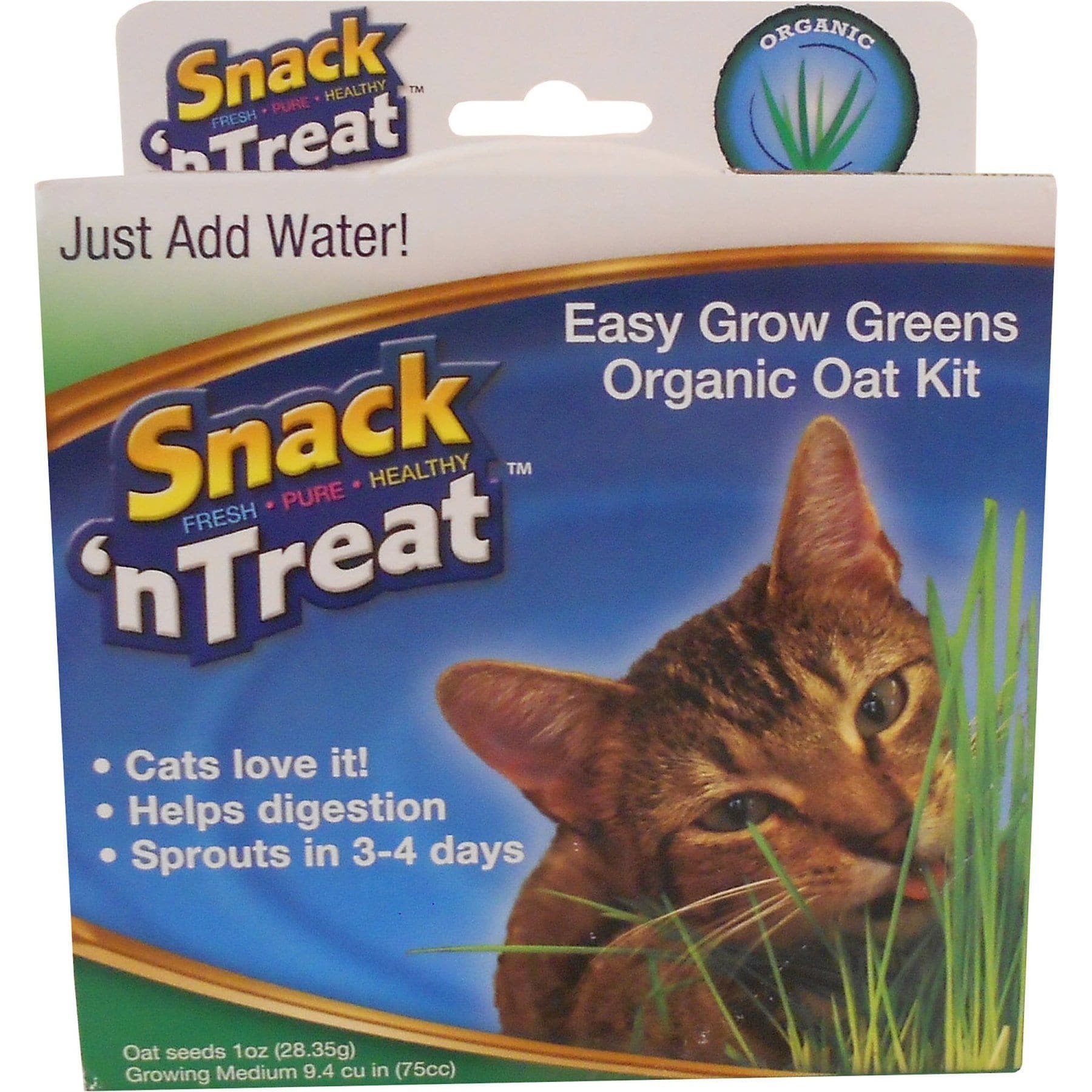
Grow a small tray of oat grass for your cat. Follow the kit instructions and keep ornamental plants out of reach.
Webvet may earn a commission when you click through to Chewy, at no extra cost to you.
Silver vine, Actinidia polygama, is the alternative worth trying when catnip does nothing. Our guide to catnip toys covers the product side of that decision.
- Keep catnip separate from the cereal-grass chewing tray. Stop access and ask your veterinarian for advice if your cat develops vomiting, diarrhea, or an unusual response after eating it.
- Silver vine is sold as sticks, powder and as a living plant, and the response rate differs from catnip.
- Neither is a deterrent. They redirect attention, they do not repel a cat from anything.
Outdoor and garden plants safe for cats

Outdoor plants safe for cats include sunflowers, zinnias, petunias, snapdragons, camellias, roses, garden marigold, true bamboo and the safe kitchen herbs. The dangerous half of a garden is a shorter list than most owners expect, and most of it is bulbs and shrubs.
- Sunflower (Helianthus annuus)
- Zinnia and petunia, the two easiest safe bedding flowers
- Snapdragon (Antirrhinum majus)
- Garden marigold (Calendula officinalis), not Tagetes
- Rose (Rosa species), with thorns stripped anywhere a cat brushes past
- Camellia (Camellia japonica)
- Check catmint by botanical name: catnip (Nepeta cataria) has an ASPCA toxic listing and is not interchangeable with cat grass.
- True bamboo (Bambusa species) and ornamental grasses
- Basil, rosemary, thyme, sage and dill in the herb bed
- A container of cat grass on the patio, which works outdoors exactly as it does indoors
The dangerous half is short enough to memorize, and it is worth memorizing if your cat has access to a yard.
- Lilies and daylilies. The same emergency outdoors as indoors, and they are a common border planting.
- Sago palm. Landscaping in warm climates and a houseplant everywhere else. Every part is toxic and the seeds are the worst of it.
- Azalea and rhododendron. Grayanotoxins, in one of the most common garden hedges there is.
- Oleander, foxglove and lily of the valley. Cardiac toxins, all three.
- Yew. Evergreen hedging, and among the most dangerous plants in a temperate garden.
- Autumn crocus (Colchicum autumnale). Severe, and routinely mistaken for spring crocus.
- Spring bulbs. Daffodil, tulip and hyacinth bulbs are the concentrated part, and a digging cat finds them.
- Castor bean. Grown ornamentally in some regions and severely toxic.
- Hydrangea and chrysanthemum. Common border and container plants, both toxic to cats.
- Check the places a cat actually sits: the warm patio pots, the border it walks through, the shed where bulbs are stored.
- Fallen leaves, seed pods and prunings on the ground count as much as the living plant above them.
The garden also holds exposures that are not plants at all. Slug and snail bait, fertilizer, weedkiller and rodent bait injure far more cats than any ornamental shrub, and they belong with the rest of the household poison-proofing job.
If your cat goes outside, you cannot audit the neighborhood. Plant your own beds from the safe side, keep the emergency numbers somewhere you can find them at midnight, and treat sudden unexplained illness in an outdoor cat as worth a same-day call.
A balcony or a catio makes all of this easier rather than harder. Container planting means you choose every species within reach, which is a level of control no yard gives you.
Plants people assume are cat-safe that are not

Lavender surprises people most. It is sold as the calming plant for a home, it is attached to half the pet-adjacent product aisles, and the ASPCA lists it as toxic to cats. Commonly assumed safe is exactly the problem with it.
The realistic picture for a cat that chews a few leaves is vomiting, a lost appetite and a miserable day rather than a crisis. That is still not a plant for a room your cat lives in, and dried lavender and lavender oil are more concentrated than the living plant.
Eucalyptus follows the same logic and is easier to miss, because it usually arrives as greenery in a bouquet or as a bundle hung in a shower rather than as a plant you chose.
- Three of the four are listed because of concentrated essential oils, which is the same reason several kitchen herbs fail.
- Dried stems, potpourri and oils are more concentrated than the living plant, not gentler versions of it.
- A pleasant scent is not a safety signal, and neither is a calming reputation or a shelf in the wellness aisle.
Mint and catnip need separate botanical checks, but neither has the non-toxic verdict sometimes claimed for the whole mint family. The ASPCA lists culinary Mentha species and catnip (Nepeta cataria) as toxic, with different named compounds. Family resemblance is not a safety verdict.
Aloe is the one people defend hardest, because it lives in a human first-aid drawer. The ASPCA lists aloe vera as toxic to cats, and a plant that soothes a human burn is still a plant a cat should not be chewing.
Sago palm is the one to memorize. Cycas revoluta is not a palm at all. It is a cycad, and it is sold in the same aisle as the parlor palms and areca palms that are genuinely safe.
- Fronds. A sago palm's fronds are stiff, sharp and arranged in a whorl. A parlor or areca palm has soft arching fronds you can bend in your hand.
- Trunk. Sago palm has a thick shaggy trunk with a pineapple texture. True palms have a slender, smooth or ringed stem.
- Center. A mature sago produces a cone-like structure at the crown. Palms flower and fruit instead.
- Tag. Look for Cycas revoluta, king sago, queen sago or cardboard palm. All of them are cycads, and all of them are toxic.
It is among the most dangerous plants a cat or dog can eat. Every part is toxic and the seeds are the most concentrated, the toxic principle is cycasin, and veterinary sources describe liver failure among the outcomes.
There is no established safe amount for sago palm and no home management for it. Known ingestion is a same-day emergency whether or not your cat has a single symptom.
The four headline plants are not the whole list of things a reputation has carried too far.
- Jade plant (Crassula ovata). Toxic to cats, with vomiting and lethargy described.
- String of pearls (Senecio species). Toxic, and it sheds beads that get swallowed.
- Dracaena, including corn plant, marginata and lucky bamboo. Saponins.
- Rubber tree and fiddle leaf fig (Ficus species). Irritant sap.
- English ivy (Hedera helix). Saponins, and it is sold as a hanging plant.
- Peace lily and calla lily. Insoluble calcium oxalate crystals, and neither is a true lily.
- Kalanchoe. Cardiac glycosides, which makes it one of the more serious houseplants on this list.
- Shamrock plant (Oxalis species). Soluble oxalates.
- Snake plant and ZZ plant. Both fail the safe list despite their reputation as indestructible beginner plants.
- Hydrangea, chrysanthemum, begonia, peony and dahlia. Common, and every one of them is listed.
The pattern behind this whole section is that reputation travels faster than the database. A plant sold as calming, healing, air cleaning or beginner friendly picks up a halo it never earned from a toxicology entry.
Popular houseplants: the verdict on each
These are the plants readers ask about by name. Each verdict below is the short version: what the ASPCA entry says, what the plant actually does to a cat, and what that means for where you keep it.
Spider plant
Verdict: non-toxic to cats. Chlorophytum comosum sits on the ASPCA non-toxic list, which is why it is the plant most often recommended for a home with a cat in it.
It is also the plant cats chew most. The trailing plantlets move, and the movement is the attraction. A cat that strips one can still vomit from the volume, so a well-loved spider plant tends to look ragged.
You will read that spider plants are mildly hallucinogenic for cats. No primary veterinary source establishes such a compound, and the behavior is better explained by texture and movement. Treat it as a safe plant cats enjoy, not as a drug.
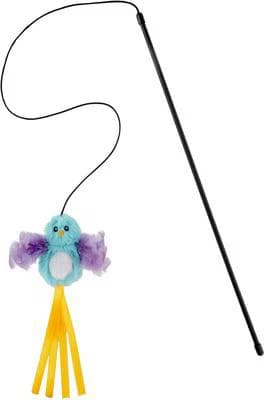
Make time for supervised play with a feathered wand. Put the toy away after each session.
Webvet may earn a commission when you click through to Chewy, at no extra cost to you.
Pothos and philodendron
Verdict: toxic to cats. Golden pothos (Epipremnum aureum) and the philodendrons contain insoluble calcium oxalate crystals in every part of the plant.
A cat that bites a leaf gets an immediate mouthful of microscopic needles. The picture is intense oral pain, drooling, pawing at the mouth and sometimes swelling of the lips and tongue. Swelling that affects swallowing or breathing is an emergency.
The pain usually stops a cat from eating much, which is why most cases resolve with veterinary supportive care. Call your vet rather than managing it at home, and keep both plants out of your cat's rooms rather than merely up high.
Monstera
Verdict: toxic to cats. Monstera deliciosa carries the same insoluble calcium oxalate crystals as pothos and philodendron, and it belongs to the same plant family.
The signs match too: sudden drooling, mouth pawing, vocalizing, reluctance to eat and occasional vomiting. The leaves are large enough for a determined cat to take a real bite, and swelling around the mouth deserves a same-day call.
Monstera is a floor plant in most homes, which puts those leaves at exactly cat height. If you keep it, it needs a room your cat does not use rather than a corner of the living room.
Snake plant and ZZ plant
Verdict: toxic to cats, both of them. Snake plant (Sansevieria trifasciata, reclassified as Dracaena trifasciata) contains saponins. ZZ plant (Zamioculcas zamiifolia) contains insoluble calcium oxalate crystals.
Neither is usually severe. Snake plant typically causes vomiting, diarrhea and drooling. ZZ plant causes mouth irritation and stomach upset, and its sap can irritate skin. Neither belongs on a safe list, and both get recommended constantly as beginner plants.
If you want the same upright architecture from the non-toxic side, a ponytail palm, a cast iron plant or a parlor palm gives you height and structure without the verdict.
Aloe vera
Verdict: toxic to cats. The ASPCA lists aloe as toxic, with saponins and anthraquinones named as the toxic principles. Those compounds concentrate in the latex layer just under the leaf skin.
Signs are vomiting, diarrhea, lethargy and occasionally a change in urine color. The human first-aid reputation does not transfer across species, and the plant on your windowsill is not a remedy your cat should be sampling.
Aloe is also usually potted in gritty soil with decorative stones on top, which hands a curious cat a second thing to swallow.
Popular flowers: the verdict on each
Cut flowers get their own section because the exposure works differently. A bouquet sits at nose height, it sheds onto the floor, and it arrives with a vase of water your cat can drink from.
Lilies

Verdict: emergency, and specific to cats. Cats are uniquely affected by this group: dogs that eat the same flowers generally get an upset stomach instead of kidney damage.
- Easter lily, tiger lily, stargazer, Asiatic, Oriental and Japanese show lilies, all Lilium species.
- Daylilies, Hemerocallis species, including the orange kind that grows along roadsides and in borders.
- Every part is involved: petals, leaves, stem, pollen and the water in the vase.
- Peace lily, calla lily and Peruvian lily are different plants with different, lesser problems.
No safe amount has been established, and no source publishes one. Veterinary sources describe kidney injury after exposures as small as grooming pollen off a coat or drinking vase water, which is why the standing advice is same-day treatment rather than watch and wait.
Early signs are vomiting, drooling, hiding and a lost appetite, and they can improve before kidney injury becomes obvious. An apparent recovery in the first hours is not reassurance, and it is the reason waiting for symptoms fails as a strategy here.
Peace lily and calla lily are not true lilies. They contain calcium oxalate crystals, they cause mouth pain rather than kidney injury, and they should still be kept away from your cat.
Orchids
Verdict: non-toxic to cats. The moth orchid, Phalaenopsis, is on the ASPCA non-toxic list, which makes it the most useful flowering houseplant for a home with a cat.
The plant is safe and the pot is where the risk sits. Orchids grow in bark chips and sphagnum moss, both of which a cat may chew or swallow, and orchid fertilizer is not something to have your cat licking off a leaf.
Keep the bark covered or the plant out of reach, and the worst outcome of a chewed orchid is usually a ruined orchid.
Roses
Verdict: non-toxic to cats. Rosa species sit on the ASPCA non-toxic list. The risk from a rose is mechanical rather than chemical.
Thorns cause mouth and paw injuries, and a cat that drags a stem out of a vase can scratch an eye. Strip the thorns from any stem your cat can reach, and pick fallen leaves up rather than leaving them on the floor.
- The floral preservative sachet is not food. Bin it as soon as the flowers are arranged.
- The vase water is not a drink, and rose water goes cloudy fast.
- Garden roses may carry insecticide or fungicide residue that the cut-flower trade does not use.
Plants that borrow the name are not all roses and do not share one verdict. Christmas rose (Helleborus) and desert rose (Adenium obesum) are toxic plants. Rose of Sharon is different again: the ASPCA lists Hibiscus syriacus as non-toxic to cats and dogs. Match the botanical name before deciding.
Tulips
Verdict: toxic to cats. Tulipa species contain tulipalin A and tulipalin B, and the concentration is highest in the bulb rather than the flower.
A cat that chews a cut stem or a petal usually gets drooling, vomiting and mouth irritation. A cat that digs up and eats a bulb, which happens during autumn planting and with bulbs stored in a garage, has a more serious exposure on its hands.
Daffodils and hyacinths follow the same pattern. If you force bulbs indoors over winter, the bowl needs to be somewhere your cat cannot reach at all, not just somewhere inconvenient.
Carnations
Verdict: mildly toxic to cats. Dianthus species are listed as toxic, with mild gastrointestinal signs and skin irritation described rather than anything systemic.
Carnations are the most common filler in a supermarket bouquet, which makes them the best example of why a binary safe list fails. They are not an emergency and they are not non-toxic, and a cat that chews them will most likely be uncomfortable rather than ill.
Keep carnations out of chewing reach. If your cat eats one, call for advice even if no signs have appeared; mild toxicity does not mean every exposure can be cleared at home.
The rest of what to keep away from your cat
This page is the safe side of the decision. The toxic side is long enough to need its own treatment, and these are the working summaries.
The toxic plant list
The plants behind the most serious feline poisonings make a short list worth knowing by name: true lilies and daylilies, sago palm, autumn crocus, oleander, foxglove, lily of the valley, yew and castor bean.
Below those sits a much larger group that causes mouth pain or stomach upset without usually threatening life. The calcium oxalate plants (pothos, philodendron, monstera, dieffenbachia, peace lily, calla lily), the saponin plants (snake plant, English ivy, dracaena), and the common flowering toxics such as hydrangea, chrysanthemum and begonia.
- Treat the first group as remove-from-the-home plants if you cannot guarantee separation.
- Treat the second group as move-and-manage plants.
- Treat any unidentified plant as unknown until you have the botanical name in front of you.
Flowers to keep out of the house
For bouquets specifically, reject true lilies and daylilies, tulips, daffodils, hyacinths, chrysanthemums, hydrangeas, peonies, dahlias, begonias, eucalyptus and asparagus fern. Check each stem by its botanical name: gerbera daisies and Gypsophila elegans baby's breath have different ASPCA verdicts from the toxic plants in that list.
That still leaves a generous arrangement. Roses, sunflowers, gerbera daisies, snapdragons, zinnias and orchids, with greenery chosen from the safe side rather than the default eucalyptus, is a full vase with nothing toxic in it.
Holiday and Christmas plants
Poinsettia has the worst reputation and the mildest reality. It irritates the mouth and stomach and rarely does more than that, which is close to the opposite of what most owners believe about it.
Mistletoe and holly deserve the caution poinsettia gets. Amaryllis at Christmas and Easter lilies in spring are the two that turn a decoration into a veterinary visit, and the lily is the one that is a true emergency.
- Real tree needles irritate the mouth and stomach and can lodge in the gut.
- Tree water holds preservatives, fertilizer and bacteria. Cover the base of the stand.
- Tinsel and ribbon are not plants, but they are the classic December foreign body in cats.
- Artificial trees are not chewable either. Swallowed plastic needles carry the same obstruction risk as any other swallowed plastic.
Dogs in the same home
Verdicts are species specific, and the database says so on every entry. A plant can be non-toxic to dogs and toxic to cats, so a mixed household has to read both lines rather than assuming one covers the other.
Lilies are the clearest example. They cause acute kidney injury in cats and generally only stomach upset in dogs. Sago palm runs the other way and is severe for both, and dogs typically eat far more of a plant than a cat does, which changes the picture for anything mildly toxic.
Do you have to get rid of a plant your cat can reach?
Not always. The honest answer runs in three tiers. Some plants leave the house, some can stay if they are genuinely out of reach, and some can stay exactly where they are once your cat has something better to chew.
| Risk tier | Plants | What to do |
|---|---|---|
| Tier 1: remove from the home | True lilies and daylilies, sago palm, oleander, autumn crocus, castor bean, yew, foxglove, lily of the valley | Rehome or dispose of the plant. No placement in a shared home is reliable enough. |
| Tier 2: move fully out of reach | Pothos, philodendron, monstera, dieffenbachia, snake plant, ZZ plant, aloe, jade, kalanchoe, dracaena, English ivy, peace lily | A closed room, a closed cabinet or a terrarium. Not a higher shelf in the same room. |
| Tier 3: keep and redirect | Non-toxic plants your cat chews: spider plant, ferns, palms, prayer plant, calathea | Add a cat grass tray, raise the plant off the shelf edge, and use a texture deterrent if needed. |
The tier that gets skipped is the middle one, because out of reach means something very different for a cat than it does for a toddler.
- No route. A high shelf is not out of reach when a chair, a bookcase or a countertop makes a staircase to it.
- No fall zone. Leaves, petals and pollen drop, and the floor is entirely within reach.
- No hanging basket over furniture. Cats jump up, not only along.
- A closed door, a closed terrarium or a glass cabinet is out of reach. Very little else reliably is.
- Vases count as plants. A cut stem on a mantelpiece with a vase your cat can drink from is not a controlled plant.
For a tier one plant, the plant goes. That is a hard sentence for someone who has grown a sago palm for years, and it is still the right call, because there is no arrangement of furniture that a determined cat cannot defeat eventually.
Rehoming is easier than throwing it out. A friend without pets, an office, a plant swap group or a neighbor will usually take a healthy plant, and nobody has to lose anything for you to solve the problem.
If the plant is your cat's chewing target rather than a poisoning risk, removal is not the answer at all. That is a redirection problem, and the next two sections solve it.
Do cats know to stay away from toxic plants?
No. Cats have no reliable instinct for which plants are poisonous. The lily poisonings reported to ASPCA Animal Poison Control and Pet Poison Helpline happen to cats that chewed a plant sitting in their own home, and indoor cats chew greenery out of curiosity, boredom, and a taste for the texture rather than any nutritional need. Treat every plant your cat can reach as a plant your cat will eventually taste, and choose from the safe list on that basis.
What to do if your cat eats a plant

Call a veterinarian. That is the entire first step, and it holds whether your cat chewed a leaf of something you cannot identify or swallowed a petal from a flower you know is toxic.
- Separate your cat from the plant, and take the plant or what is left of it out of the room.
- Look in your cat's mouth only if it is safe to do so, and remove visible plant material gently. Do not force it.
- Do not give milk, oil, salt, hydrogen peroxide or any other home remedy, and do not try to make your cat vomit.
- Identify the plant. Photograph the whole plant, a leaf and the label, and keep a sample in a bag to take with you.
- Call your veterinarian or one of the poison lines above, and describe the plant, roughly how much was eaten, and when.
- Ask whether to wipe pollen or sap off the coat before your cat grooms it off, and follow the instruction you are given.
- Go in the same day for any lily, any sago palm, any bulb, or any plant you cannot identify, even if your cat seems completely fine.
Some signs mean go now rather than call first.
- Repeated vomiting, or vomiting with blood in it.
- Drooling, pawing at the mouth, swollen lips or tongue, or trouble swallowing.
- Any difficulty breathing.
- Tremors, twitching, collapse or a seizure.
- Weakness, hiding, or a cat that will not stand up.
- Not urinating at all, or urinating far more than usual.
- Any known lily exposure, symptoms or no symptoms.
Have four things ready before you dial, because they change the advice you get.
- The plant, by botanical name if the label is still in the pot, or a clear photograph if it is not.
- Roughly how much was eaten, and which part: leaf, flower, stem, bulb or vase water.
- When it happened, as precisely as you can manage.
- Your cat's weight, age, and any medication or existing kidney, liver or heart condition.
What happens at the clinic depends entirely on the plant and the timing. Decontamination, bloodwork to check kidney and liver values, intravenous fluids and pain relief are the usual tools, and with lily exposure the speed of treatment matters most.
That is where this article stops. Post-ingestion emergency treatment is a subject of its own, and the useful preparation is knowing where your nearest emergency clinic is before the night you need it.
It is also an unbudgeted bill. Our guide to emergency vet cost covers what an after-hours toxicity visit involves, and a cat vomiting but acting normal covers the milder end, where you are still deciding between a call and a wait.
Safe swaps that keep your cat out of your plants
- 1Offer a tray of fresh cat grass as an optional chewing alternative. Keep toxic plants physically inaccessible even if your cat prefers the grass.
- 2Move toxic plants out of the room rather than up a shelf, because cats climb and shelves are a route rather than a barrier.
- 3Treat plant chewing as a behavior with a cause. A bored indoor cat will find the plant again.
- 4Never use essential oils as a deterrent. They are their own hazard for cats.
The goal is not a plant-free home. It is a home where the plants your cat can reach are the ones it is allowed to chew, which is a much easier thing to build than it sounds.
- Cat grass grown with an Imperial Cat Easy Grow Cat Oat Grass Kit in the room your cat actually chews in, replaced before it yellows.
- If you use catnip or silver vine for enrichment, supervise the response and ask your veterinarian about suitability; do not treat an enrichment product as permission for unlimited plant eating.
- One deliberately sacrificial safe plant, a spider plant for instance, placed where your cat can get to it.
Placement does the rest of the work.
- Toxic plants move to a room with a door that closes, not to a higher shelf in the same room.
- Trailing plants come back from the shelf edge, because the trailing part is the part cats bite.
- Cover soil with pebbles, mesh or a saucer if your cat digs or uses pots as a litter box.
- Keep vases in a closed room, and change the water daily.
- Sweep fallen leaves and petals daily through flowering season.
Deterrents work at the margin rather than as a plan.
- Texture deterrents such as foil or double-sided tape on the pot rim work for as long as they are there.
- If you try a commercial bitter spray, use it only on surfaces allowed by its label. Do not spray living leaves or stems unless that use is expressly permitted. A deterrent does not replace keeping a toxic plant inaccessible.
- Citrus peel is a folk remedy with mixed results, and it molds on damp soil.
- Essential oils, diffusers and homemade oil sprays are not a deterrent option in a cat home. They are a toxicity risk of their own.
Kittens and multi-cat homes need more of all of this. A kitten chews everything and has not learned where it is allowed to go, and in a multi-cat home one plant-eater is enough to make the whole room a problem.
Offer enrichment alongside physical exclusion: interactive play, a window perch, and a food puzzle give an indoor cat other activities. Cats differ in their interest in plants, so watch your own cat rather than relying on a spray or a play routine to prevent chewing.
Our guides to enrichment for bored indoor cats and catnip toys cover the behavioral half properly, and the poison-proofing guide covers the rest of the house once the plants are handled.
Cat-safe plant questions
Frequently Asked Questions
Are fake plants safe for cats?
Artificial plants remove the toxicity risk and add a different one. A swallowed silk or plastic leaf does not digest, and a strip of fabric or a wire stem is a classic linear foreign body, which is one of the more serious things a cat can swallow.
They also arrive with small parts: beads and stones in the weighted base, glued flowers and floral wire. If your cat chews plants, an artificial plant is not a safe substitute but a substitute hazard. Cat grass is an optional chewing alternative; keep toxic plants and artificial plants your cat chews inaccessible.
Can the water in a flower vase make my cat sick?
Yes. Vase water takes on compounds from whatever is standing in it, and lily vase water is the case veterinary sources single out: a cat that drinks it can be exposed even if it never touched the flower itself.
There is also the floral preservative sachet, and after a few days there is bacteria. Keep vases in a room your cat cannot enter, cover the opening when that is not possible, change the water daily, and never tip old vase water into a bowl or sink your cat drinks from.
Do the soil, fertilizer, and pesticides on a new plant matter?
Yes, and they are the blind spot in every safe-plant list, this one included. A plant can be non-toxic and still arrive carrying slow-release fertilizer granules, a systemic pesticide in the soil, or a recent foliar spray from the grower.
Keep a new plant out of reach while you confirm its identity and any treatment applied to it. Ask the seller for the product details, follow the treatment label, and ask your veterinarian about a possible exposure. A fixed waiting period or repotting alone does not establish safety. Cover accessible soil if your cat digs, and watch for mold on wet soil.
Do cat-safe air-purifying plants really clean indoor air?
Not in a way you will notice. The famous experiments were run in small sealed chambers, and later analyses of that data found that houseplants at normal household density have a negligible effect on indoor air compared with simply opening a window.
That does not make the plants worthless. It makes air purifying the wrong reason to choose one. Pick it because it is safe, not because it filters, and choose on the light you have and the plant you actually like.

Editor
The Webvet Editorial Team is the in-house group of pet-care editors and writers behind Webvet, operated by Smart Pet Collective. The team researches, writes, and maintains Webvet's pet health, behavior, and medication content. Every article follows a defined editorial process: research from reputable veterinary and scientific sources, careful drafting, mandatory review of medical content by a credentialed veterinarian, and dated publication. Health and medication articles are medically reviewed by a licensed veterinary professional before they go live and are kept current over time.
Veterinarian · BVMS MRCVS
Dr. Pippa Elliott, BVMS, MRCVS, is a veterinarian with nearly 30 years of experience in companion animal practice. Dr. Elliott earned her Bachelor of Veterinary Medicine and Surgery from the University of Glasgow. She was also designated a Member of the Royal College of Veterinary Surgeons. Married with 2 grown-up kids, Dr. Elliott has a naughty Puggle named Poggle, 3 cats and a bearded dragon.
Related reading

Is Pothos Toxic to Cats? Yes, and So Is Philodendron

Is Monstera Toxic to Cats? Symptoms and What to Do

Is Aloe Vera Toxic to Cats and Dogs? What to Do Now
