Cat Grass: Types, Benefits and When to Stop Offering It
Cat grass can offer a little indoor enrichment, but it is not essential or a digestive remedy. Learn what to buy, how to introduce it and when to remove the pot.

This article contains affiliate links. Webvet may earn a commission when you buy through them, at no extra cost to you.
Cat grass is usually young cereal grass grown for cats to nibble, such as wheat, oats or barley. It can be an enjoyable addition to an indoor cat's surroundings, but it is optional. A cat eating a complete, appropriate diet does not need a pot of grass to make that diet balanced.
The most useful buying decision is simple: choose an identified plant grown from seeds intended for this use, then watch what your cat actually does with it. Do not use grass to treat vomiting, constipation or hairballs, and do not assume any green plant on a windowsill is safe to chew.
What cat grass is and what it is not
Offer cat grass as optional enrichment, not medicine. Buy clearly identified seed or a grass kit, introduce a small supervised opportunity to nibble, and remove the pot if it becomes moldy or your cat repeatedly vomits after eating it.
“Cat grass” describes a use, not one botanical species. Wheat, oat, barley and rye grasses can all appear in products sold for cats. Check the seed or plant label rather than identifying a pot by its appearance alone. A seed blend should state what it contains.
Catnip is different. It is a separate herb associated with a scent response in some cats; cereal cat grass is generally offered for nibbling and exploration. A package displaying both terms may contain more than one product, so read what you are buying before sowing it.
An Imperial Cat Easy Grow Oat Grass Kit is an option when you want identified oat grass and a kit-specific growing method. Follow the included directions rather than copying water quantities from a different system.
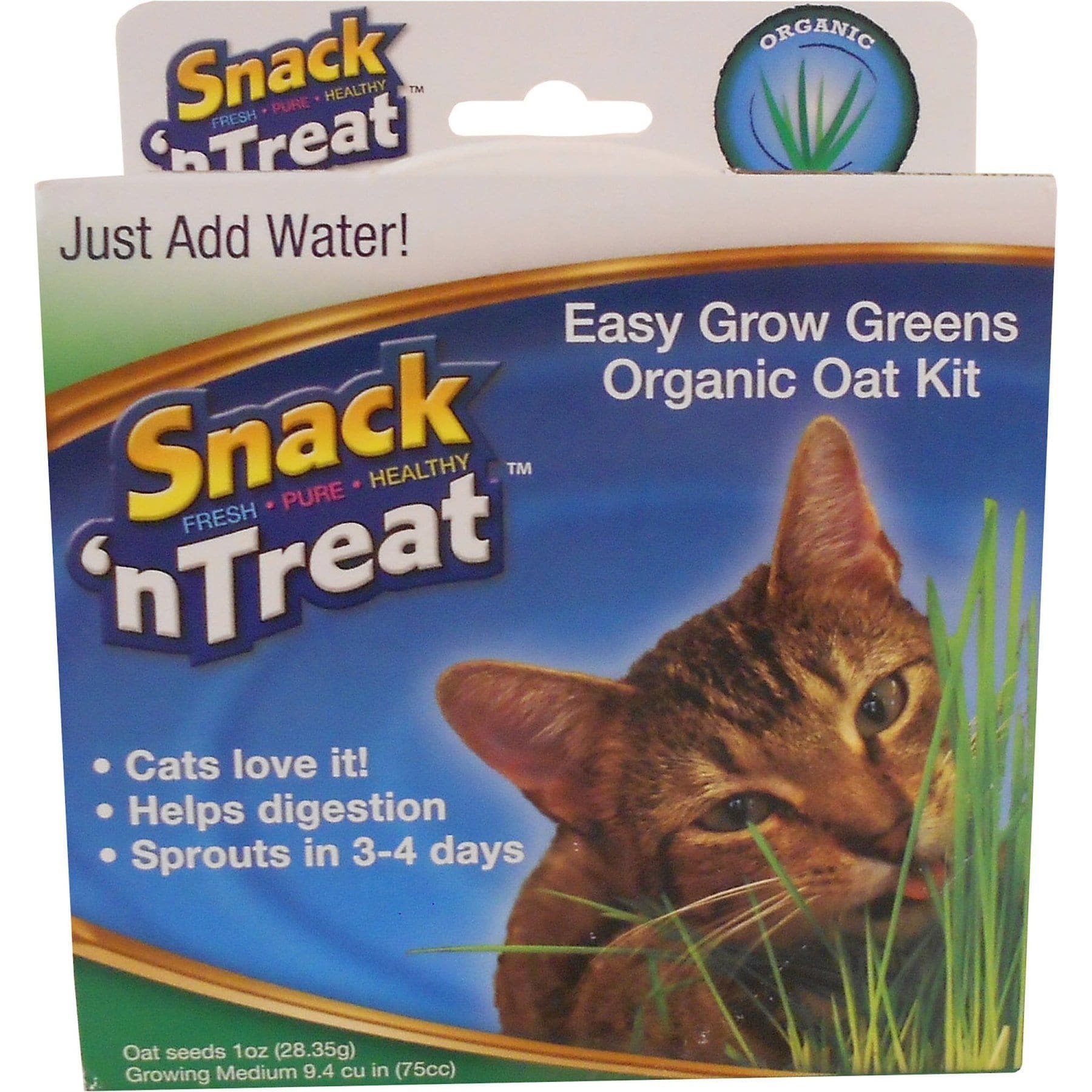
An oat-grass growing kit for starting a small indoor tray. Follow the kit’s watering and growing instructions.
Webvet may earn a commission when you click through to Chewy, at no extra cost to you.
- Pre-grown or ready-grown grass: available immediately if the plant is healthy and correctly identified.
- A growing kit: useful when you want matched seed, medium and instructions.
- Seed refills: useful when you already have a suitable container and know how to manage the medium.
- Unknown lawn or decorative grass: not interchangeable with a labeled indoor cat-grass product.
The surrounding plants matter too. Placing a grass pot beside an unsafe houseplant does not teach a cat which one to chew. Keep the grass in a deliberate location, away from decorative plants, cut flowers and treated garden material.
If you do not know a plant's identity, move it out of reach while you verify it.

For the sowing and watering sequence, use our separate guide to how to grow cat grass. This page focuses on deciding whether and what to offer.
That growing guide explains how to plant cat grass seeds, choose potting soil or a hydroponic cat-grass planter, and manage cat-grass growth and care. It covers seeds, pots, soil and soilless approaches, germination, watering, lifespan and replacement.
Check whether the label means wheatgrass
A hairball claim should not decide which grass to buy. Cat grass is optional enrichment; repeated retching or vomiting needs assessment rather than a promise that grass will clear hairballs.
Wheatgrass is one type of cat grass, not a synonym for every grass product. Oat, barley and rye seedlings may also be sold under the cat-grass label. When comparing a Pet Greens product with another kit, read the stated seed or plant identity and growing instructions rather than assuming the names describe identical contents.
Compare seed identity before comparing benefit claims
Use a label-first buying check: confirm the cereal species, intended pet-grass use and seed treatment information. An unknown decorative plant fails the identity check. A label promising hairball relief does not establish a medical treatment; choose an identified crop for enrichment and assess symptoms separately.
| Label | What it tells you | What it cannot establish |
|---|---|---|
| Single-species oat grass | The crop is identified as oats; easier to repeat the same planting | That oats will cure hairballs or suit every cat |
| Wheatgrass | One cereal grass, not the name for all cat grass | That it is interchangeable with catnip |
| Wheat/oat/rye/barley blend | Several identified grasses in one crop | Which individual grass your cat preferred |
| Organic or untreated seed | A production or treatment description to verify on the packet | That the pot, additives or every plant nearby is suitable |
If you want to learn what interests your cat, start with one identified product and note the response. Changing the seed blend, container and location simultaneously makes it difficult to know why the second pot attracted more interest. Preference is a useful observation; it is not a nutritional diagnosis.
The Frisco Natural Cat Grass Growing Kit is an existing kit option to consider when you want the components together. Match the listing and supplied directions to the exact kit before using it. Do not borrow watering quantities from another manufacturer's product; growing media and container sizes differ.
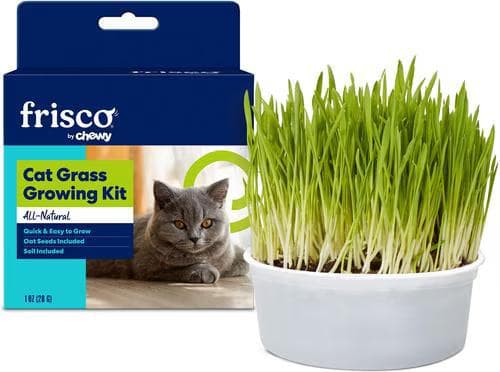
A complete grass-growing kit for starting a fresh pot using its matched directions.
Webvet may earn a commission when you click through to Chewy, at no extra cost to you.
The Cat Ladies identifies its standard blend as wheat, oats, rye and barley. Imperial Cat’s selected refill is oat grass. This makes a single-species refill and a mixed refill different repeat-purchase choices, even when both packages say “cat grass.”
Decide whether cat grass suits your cat
Some cats like the texture and the opportunity to investigate a plant. Others ignore it. There are theories about why cats eat grass, but an individual cat's nibbling does not establish a nutrient deficiency or a need to vomit.
VCA's grass-treat guidance describes grass as optional and advises considering the cat's medical situation. That is especially relevant for a cat with a prescribed diet, recurrent digestive signs, unusual eating behavior or a history of swallowing nonfood material. Ask the treating veterinarian before adding something you hope will change those signs.
Three questions before buying
- Is the cat otherwise well? New vomiting, appetite changes or reduced activity need attention on their own merits.
- Can you control the source? You should know the plant identity and whether the seed or plant has been treated.
- Can you maintain the pot? A wet, deteriorating tray left available indefinitely is a different exposure from fresh, inspected grass.

A secure catio is another kind of environmental experience, but neither a catio nor a grass pot replaces individual attention and normal veterinary care.
If you are trying grass because you think your indoor cat lacks stimulation, look at the whole day. Our bored-cat guide helps separate possible unmet needs from a new change in health or behavior. Adding another object is most useful when you know what opportunity it is meant to provide.
Choose a grass kit seeds or a ready-grown pot
Start with the label and instructions, then compare convenience. A photograph of lush growth does not tell you how much seed is supplied, whether the pot drains or whether replacements are available. Those details affect how easily you can produce another fresh batch.
Imperial Cat Easy Grow Oat Grass Seeds offer a seed-only option. Choose them when you already have an appropriate clean container and compatible growing medium; a seed packet is not a complete planting kit.
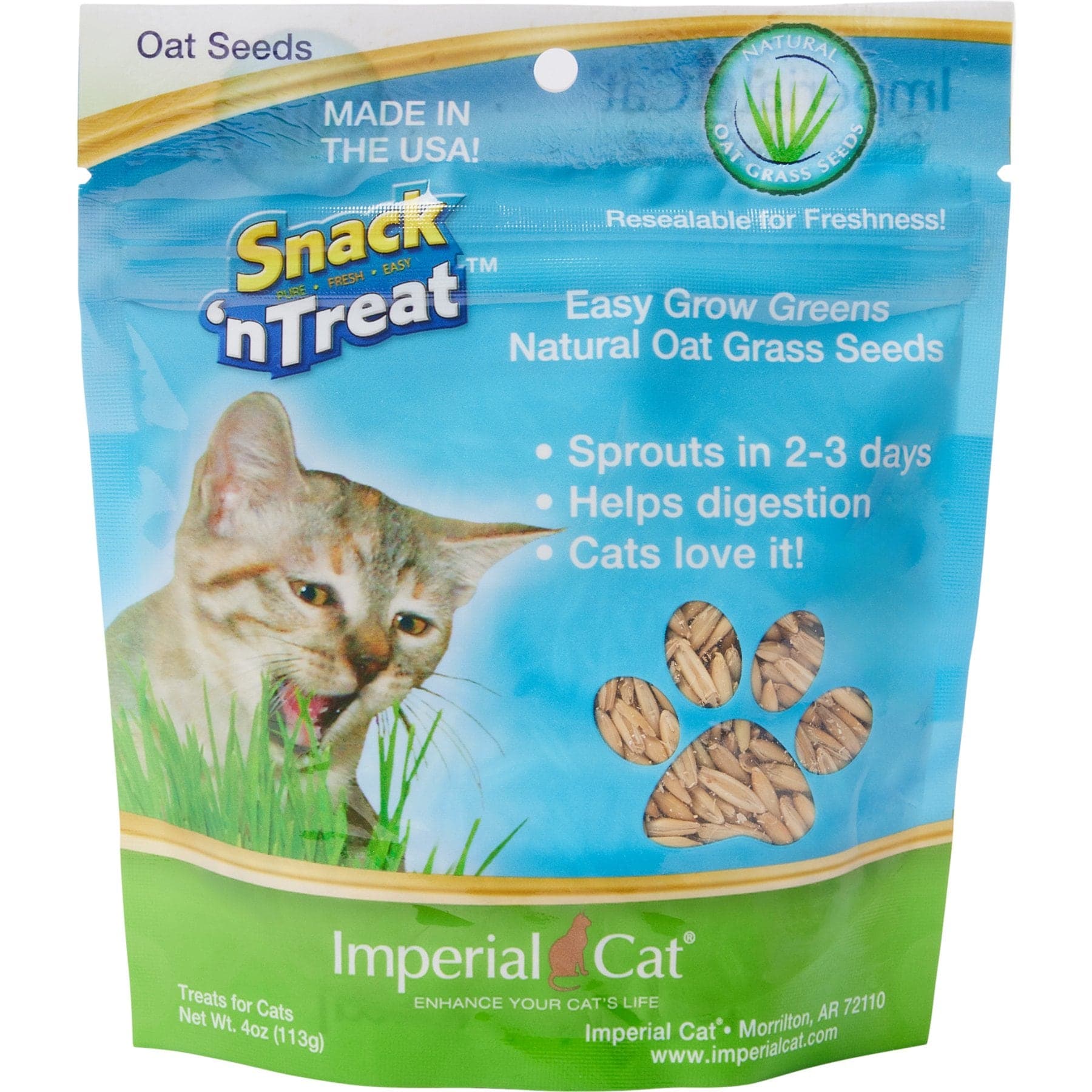
Oat-grass seeds for sowing a replacement tray. Use a suitable container and follow the seed-growing directions.
Webvet may earn a commission when you click through to Chewy, at no extra cost to you.
| Option | Suits this situation | Check before buying |
|---|---|---|
| Complete kit | First attempt or a simple repeatable setup | Seed identity, medium, container and directions |
| Seed refill | You already have a clean suitable pot | Intended use, storage directions and treatment information |
| Ready-grown pot | You want to offer grass now | Plant identity, freshness, odor and condition of the medium |
| Decorative planter plus seed | You want a stable reusable container | Drainage or a removable inner pot and safe access to the blades |
With a refill, keep the original packaging until the crop is finished.
- If the seed fails to sprout or you need to discuss an exposure, the product identity is more useful than a generic label saying “cat plant.” Store remaining seed as directed and separate it from garden products that are not intended for your cat's access.
- Choose a pot that is difficult to tip, without making the grass awkward to reach. A removable nursery pot inside a stable outer container can make inspection easier, but empty collected water rather than allowing the inner pot to stand in it. Avoid decorative stones or loose additions your cat may remove and swallow.
Compare the cost of a usable crop
Count complete plantings rather than comparing bag prices alone. A seed refill may require fresh medium; a ready-grown pot avoids germination time but needs immediate inspection and care. For a first attempt, a small complete kit can reduce leftover supplies if the cat ignores grass.
The Cat Ladies Grass Refill Kit is an option for starting a replacement crop. Check its supplied components and directions before pairing it with an existing planter. Remove the tired pot while the fresh batch establishes.
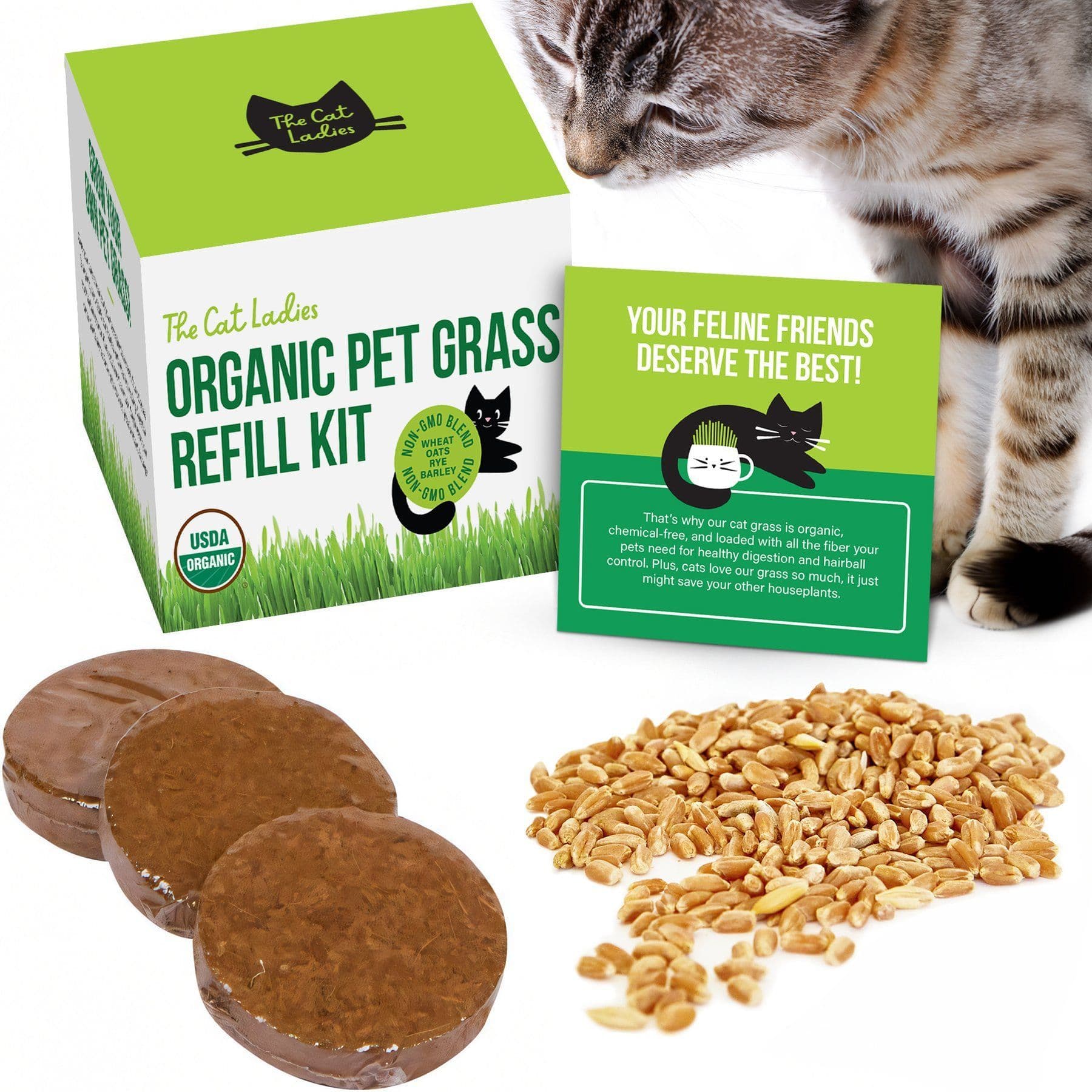
A pet-grass refill kit for starting another tray when an older planting needs replacing.
Webvet may earn a commission when you click through to Chewy, at no extra cost to you.
| Illustrative purchase | Calculation | What to include |
|---|---|---|
| $12 refill with three usable plantings | $4 per planting before extras | Any fresh medium or replacement container |
| $8 ready-grown pot | $8 for that usable crop | Condition when purchased and how soon it will be offered |
| Reusable planter | Spread its cost over actual successful crops | Do not assume every planting will be used |
These figures demonstrate comparison arithmetic, not current product prices. If your cat regularly pulls out roots or eats the medium, a cheaper refill does not solve the access problem. Remove the pot and reassess whether this activity suits them before ordering a larger supply.
Offer cat grass and know when to remove it
Begin by allowing your cat to investigate while you are present. Put the pot on a stable washable surface with room to step away. There is no need to push the blades toward the mouth or mix grass into food to create interest.
Watch whether the cat nibbles the blades, pulls up clumps, eats the medium or tries to overturn the pot. Those are different behaviors. A cat that digs through the container may need the pot removed, even if another cat uses the same setup neatly.
- Check the pot before each offering for deterioration or an unusual odor.
- Remove loose pieces and keep spilled medium from becoming a play surface.
- Stop access to grass that is visibly moldy or has decaying growth.
- Put the pot away if the cat repeatedly gulps large amounts or pulls out the root mat.
- Wash the container before starting a replacement crop.
Does cat grass make cats vomit?
Grass can be followed by vomiting in some cats, but it should not be offered to cause vomiting. Vomiting should not be the goal. If your cat throws up after chewing grass, remove the grass and observe the cat.
Repeated vomiting, an appetite change or other illness signs warrant veterinary advice. VCA's vomiting guidance identifies blood, lethargy, abdominal pain and suspected toxic or foreign-object ingestion as reasons for prompt care.
If an unknown plant may be involved, keep its label or a photograph available for the veterinarian.
Does cat grass help with hairballs?
Do not keep offering grass to “bring up” a hairball. Persistent retching or digestive signs need assessment; our hairball guide provides related context. Likewise, a sudden increase in plant chewing may call for a discussion of diet, environment and health rather than a larger planter. Household tension deserves its own attention through cat stress relief.
Questions about cat grass
Frequently Asked Questions
Is cat grass actually good for cats?
It may provide an enjoyable chewing and exploration opportunity for a cat that tolerates it. It is not essential nutrition or a proven remedy for a particular symptom. Judge it by the cat's interest and response, and stop if problems develop.
Do vets recommend cat grass?
Veterinary guidance includes grass as an optional enrichment choice, with advice tailored to the individual cat. That does not mean all cats need it or that it is appropriate for every medical condition. Ask your veterinarian when your cat has digestive problems or a prescribed diet.
Why do cats go crazy for cat grass?
Some cats find the plant's texture and movement interesting or enjoy nibbling it. Others show little interest. Enthusiasm alone does not show that a cat is missing nutrients, and it is not a reason to allow unlimited eating.
What can I give my cat instead of cat grass?
For enrichment, try an easy food puzzle using part of the usual ration, a supervised wand game, a scratcher or a comfortable viewing place. The best alternative depends on what your cat likes to do. You do not need to replace grass with another edible plant.
My cat threw up after eating cat grass. Is this normal?
Grass can be associated with vomiting, but repeated vomiting should not be dismissed as beneficial or normal for your cat. Remove the grass and seek veterinary advice if vomiting repeats or other illness signs appear. Suspected toxic-plant ingestion needs prompt advice.
How often is it okay for cats to eat grass?
There is no single schedule suitable for every cat. Offer a small supervised opportunity, observe the response and keep grass optional. A cat that vomits, overeats or eats the medium should not continue simply because a daily schedule was planned.
Is cat grass the same as catnip?
No. Cat grass usually means young cereal grass such as wheat or oats. Catnip is a different herb. Read the product label, especially when a kit or bundle includes both.

Editor
The Webvet Editorial Team is the in-house group of pet-care editors and writers behind Webvet, operated by Smart Pet Collective. The team researches, writes, and maintains Webvet's pet health, behavior, and medication content. Every article follows a defined editorial process: research from reputable veterinary and scientific sources, careful drafting, mandatory review of medical content by a credentialed veterinarian, and dated publication. Health and medication articles are medically reviewed by a licensed veterinary professional before they go live and are kept current over time.


