Is Monstera Toxic to Cats? Symptoms and What to Do
Monstera is on the ASPCA toxic plant list for cats. The insoluble calcium oxalate crystals in its leaves and stems burn the mouth on contact. Here is what to expect, what to do in the first minutes, and how to keep the plant safely.

BVMS MRCVS
Medically reviewed by Dr. Pippa Elliott, BVMS MRCVS · Last reviewed

This article contains affiliate links. Webvet may earn a commission when you buy through them, at no extra cost to you.
Is monstera toxic to cats?
Is monstera toxic to cats? Yes. The ASPCA Animal Poison Control toxic plant database lists Monstera deliciosa, the Swiss cheese plant, as toxic to cats and dogs. The toxic principle is insoluble calcium oxalates, and the injury it causes is a burning irritation in the mouth rather than a systemic poison.
The clinical signs that entry publishes are oral irritation, intense burning and irritation of the mouth, tongue and lips, excessive drooling, vomiting, and difficulty swallowing. Irritation begins on contact as the crystals only release when plant tissue is crushed by teeth.
- 1Monstera is on the ASPCA toxic plant list for cats. The named toxic principle is insoluble calcium oxalates.
- 2The main injury is mouth irritation. Drooling, mouth pain, pawing at the face, vomiting, and difficulty swallowing need veterinary assessment.
- 3Call your veterinarian or an animal poison control line after any bite, and never make your cat vomit at home.
- 4Keep the plant only if access can reliably be prevented. Barriers and optional chewing alternatives do not make the monstera non-toxic.
That combination is what makes monstera confusing. It is genuinely on the toxic list, so a chewed leaf deserves a phone call, but it does not sit in the same category as a true lily, which can cause acute kidney injury in cats. Both facts matter.
Here is what this guide settles, in order:
- What the crystals actually do to a cat, and which parts of the plant carry them.
- The symptoms to expect, and roughly how long they last.
- What to do in the first minutes, including exactly who to call.
- Which monstera varieties and lookalikes carry the same risk.
- How to keep the plant, and when giving it away is the honest answer.
If you are working through the whole house rather than one plant, our guide to poison-proofing your cat home covers the wider hazard list.
Why monstera hurts cats: insoluble calcium oxalate crystals
Monstera does not poison a cat the way a drug or a chemical does. Its leaves, stems, and sap hold bundles of needle-shaped calcium oxalate crystals called raphides, packed inside specialized cells throughout the plant tissue.
Those crystals are insoluble, which means they are not absorbed into the bloodstream and do not travel to the kidneys or liver. That is the difference between this plant and the toxins that cause organ failure.

A window perch gives your cat a dedicated resting spot. Install it as directed and keep it away from accessible plants.
Webvet may earn a commission when you click through to Chewy, at no extra cost to you.
When a cat bites down, that pressure ruptures the cells and fires the raphides into the soft tissue of the lips, tongue, gums, and throat. So the exposure depends on damage to the plant, not on contact with it:
- A cat that brushes past an intact leaf gets nothing. The crystals stay locked inside the plant.
- A cat that bites, chews, or shreds a leaf releases them immediately.
- Every part carries them: leaves, stems, petioles, aerial roots, and the sap that weeps from a cut.
- Cuttings rooting in a jar are the same tissue as the plant they came from.
Pet Poison Helpline describes the same mechanism for philodendron, the aroid cousin that carries identical crystals. Chewing releases them, and the result is irritation and pain in the lips, the mouth, and the throat.
The linked veterinary references do not give a household safe leaf count for monstera. Tell the veterinarian what was chewed, how much may be missing, and what your cat is doing; a number taken from another plant or animal cannot clear this exposure.
How bad it gets depends on the exposure and the cat. Chewing can cause drooling, a painful mouth, vomiting, and difficulty swallowing. The size of a missing leaf piece cannot tell you that an individual cat is safe or predict how long the signs will last.
Symptoms of monstera poisoning in cats

A cat that eats monstera can develop burning and drooling when chewing releases the crystals against mouth tissue. It may drop the leaf or stop eating. Do not use the speed or absence of visible signs to decide that a suspected exposure needs no veterinary advice.
The signs the ASPCA publishes for Monstera deliciosa are:
- Oral irritation, with intense burning and irritation of the mouth, tongue, and lips
- Excessive drooling, often foamy or stringy
- Vomiting
- Difficulty swallowing
Owners commonly notice the behavior that goes with all of that: pawing at the mouth, head shaking, lip smacking, hiding, and a cat who suddenly refuses food or water because swallowing hurts.
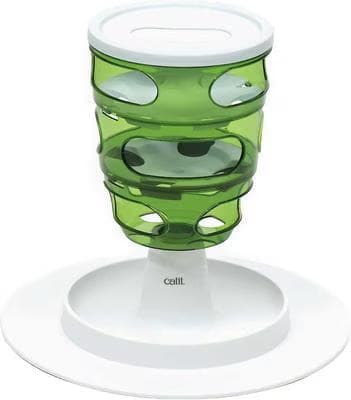
A food-tree puzzle adds an activity to everyday feeding. Introduce it gradually using part of your cat’s usual food allowance.
Webvet may earn a commission when you click through to Chewy, at no extra cost to you.
| Situation after exposure | What you may see | What to do |
|---|---|---|
| At the bite | Dropping the leaf, pawing at the mouth, head shaking, sudden drooling | Safely remove loose plant material, then call your vet or a poison control line |
| After the initial reaction | Drooling, lip smacking, reluctance to eat or drink, or vomiting | Watch swallowing and breathing while obtaining veterinary advice |
| During advised monitoring | Mouth soreness, picky eating, or a quieter cat than usual | Follow the individual plan and report changes; do not assume a recovery deadline |
| Signs persist or worsen | Continued drooling, refusal of food or water, pawing at the face, or vomiting | Contact the veterinarian again for reassessment |
| At any point | Swelling of the lips, tongue or throat, noisy or labored breathing, cannot swallow | Emergency. Go to a veterinarian or an emergency clinic now |
These signs are consistent with published descriptions of insoluble calcium oxalate exposure. The sources do not establish a universal hour-by-hour recovery course; your veterinarian decides the monitoring period and treatment for your cat.
A monstera leaf normally develops splits and holes as it grows. Ragged missing edges may suggest chewing, but the photograph and a damaged leaf cannot prove which animal bit it or how much was swallowed. A cat may also drool or vomit for another reason: show the veterinarian the plant, the damage, and any signs you have seen.
If you are not sure the signs are plant related, our guides to a cat throwing up and having diarrhea and a cat who stops eating cover the other common causes.
What to do right now if your cat chewed a monstera

If your cat ate a Monstera deliciosa leaf, stop further exposure and call your veterinarian or a poison control line. The same first step applies to a suspected bite of another monstera. The steps below explain what to do while getting professional advice; they are not a substitute for an individual assessment.
Many cats who take a small bite are managed at home on a veterinarian's advice, with soft food and close watching. That is a decision for the person on the phone, who knows your cat's age, size, and health history. It is not a call to make from a search result.
Cost is the reason people hesitate to call, so it is worth naming. An after-hours visit for a plant ingestion is one of the classic unexpected bills, and our guide to what an emergency vet visit costs sets out the realistic ranges.
If you are weighing whether cover would change that calculation, we also look at whether pet insurance is worth it for cats. Neither answer changes the first step, which is still the phone call.
Can monstera kill a cat?
Not in the way a true lily can. The primary veterinary sources describe monstera as an oral irritant, because insoluble calcium oxalates burn the tissue they touch and are not absorbed into the bloodstream to damage organs.
True lilies are the opposite case. Pet Poison Helpline warns that every part of a Lilium lily is toxic to cats, including the pollen and the vase water, and that ingestion can lead to acute kidney failure. That is a same-day emergency at any exposure.
The comparison is there to set urgency, not to reassure you. A monstera bite still causes real pain, and it can turn dangerous through swelling rather than through poisoning.
The linked sources do not establish a safe amount or a household dose threshold for monstera in cats. Do not use a leaf count or the absence of signs as a reason to skip veterinary advice.
Kittens, elderly cats, and cats with existing kidney, heart, or dental disease have less margin than a healthy adult. So does any cat who cannot keep water down. Call earlier rather than later in those cases.
Which monstera varieties are toxic to cats

The plant tag is where most of the confusion starts. The ASPCA database carries one entry for Monstera deliciosa, listed under both Swiss Cheese Plant and Cutleaf Philodendron, and no separate entry for the other monsteras sold in shops.
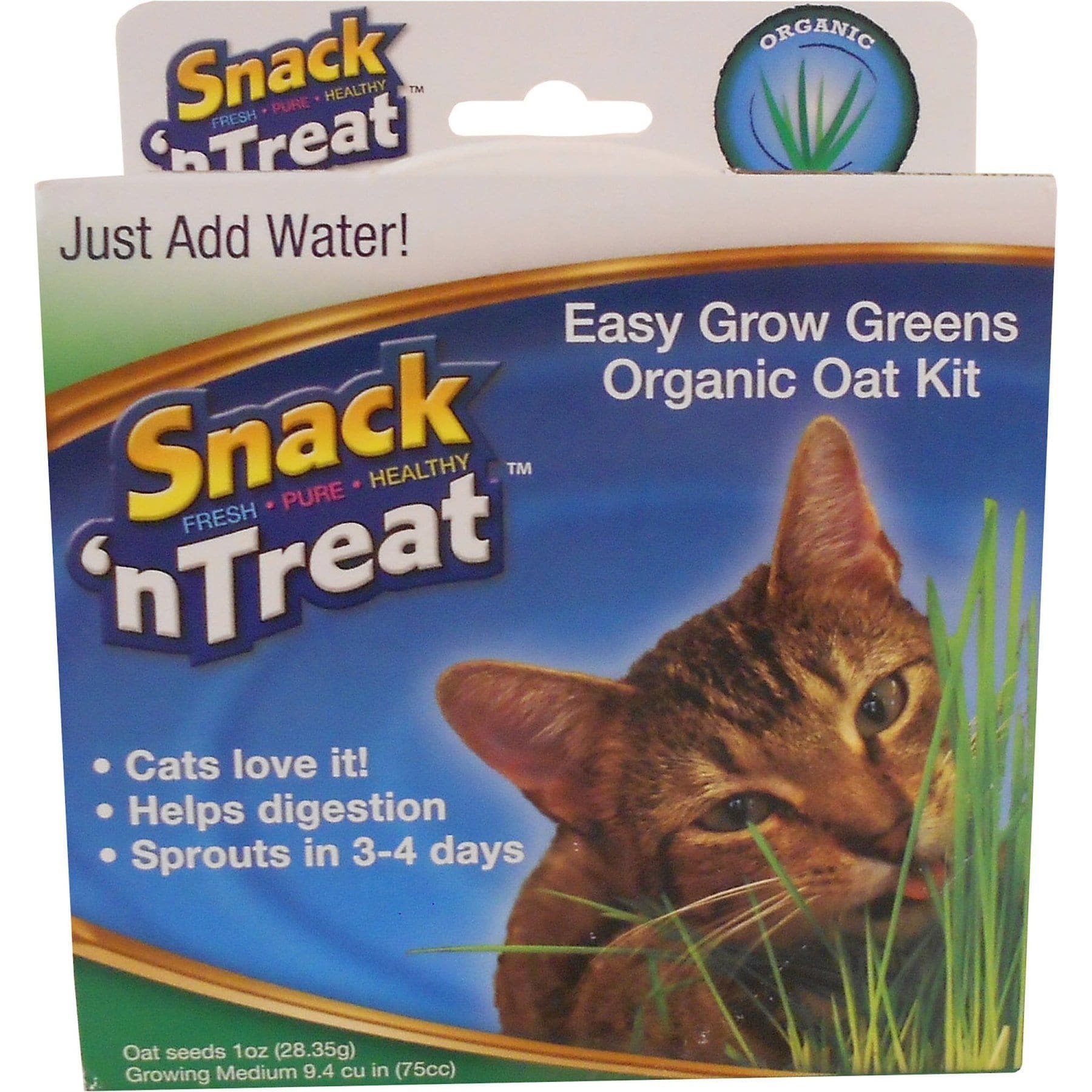
Grow a small tray of oat grass for your cat. Follow the kit instructions and keep ornamental plants out of reach.
Webvet may earn a commission when you click through to Chewy, at no extra cost to you.
That absence is not a clearance. Every plant in the genus Monstera belongs to the arum family, Araceae, and that family is defined by the same insoluble calcium oxalate crystals. Treat any monstera as toxic to cats.
| Plant as sold | Botanical name | In the ASPCA plant database? | What to assume around cats and dogs |
|---|---|---|---|
| Monstera deliciosa, Swiss cheese plant, ceriman | Monstera deliciosa | Yes, listed as toxic to cats and dogs | Toxic. Insoluble calcium oxalates |
| Cutleaf or split-leaf philodendron sold as a monstera | Monstera deliciosa | Yes, the same entry carries both common names | Toxic. Same plant, same crystals |
| Swiss cheese vine, monkey mask | Monstera adansonii | No entry under that name | Same genus and family. Treat as toxic |
| Monstera obliqua | Monstera obliqua | No entry under that name | Same genus and family. Treat as toxic |
| Thai Constellation, albo, aurea and other variegated forms | Monstera deliciosa | Yes, they are the same species | Toxic. Variegation changes leaf color, not chemistry |
| Monstera Peru, Monstera siltepecana | Monstera karstenianum, Monstera siltepecana | No entry under those names | Genuine Monstera species. Treat as toxic |
| Mini monstera, monstera minima, Monstera Ginny | Rhaphidophora tetrasperma | No entry under that name | A different genus in the same family. Keep away from cats, do not assume safe |
| Split-leaf philodendron sold as a true philodendron | Philodendron bipennifolium | Yes, listed as toxic to cats and dogs | Toxic. The same insoluble calcium oxalates |
Two rows deserve a closer look, because they are where owners get sent to the wrong entry.
Mini monstera is the other trap. Sold as monstera minima, Monstera Ginny, or Rhaphidophora tetrasperma, it is not a Monstera at all. It sits in a different genus, and the ASPCA database publishes no entry under that name.
That is a gap in the record, not a safety rating. It belongs to the same crystal-bearing plant family as monstera, philodendron, and pothos, so keep it away from cats rather than treating a missing entry as permission.
Variegation is the easy one. Thai Constellation, albo, aurea, and the other variegated forms are Monstera deliciosa with different pigment. The color of a leaf has nothing to do with the crystals inside it.
How to keep your monstera and your cat

You can keep the plant only if you can reliably prevent access to it, its fallen leaves, and its cuttings. A closed room or a secure enclosure may achieve that; enrichment is an addition to the barrier, not a replacement for it.
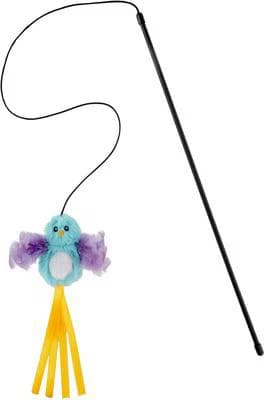
Make time for supervised play with a feathered wand. Put the toy away after each session.
Webvet may earn a commission when you click through to Chewy, at no extra cost to you.
- 1Height plus a barrier handles the average cat, but only if you also remove the furniture they would jump from.
- 2Redirect the behavior with cat grass instead of only defending the plant.
- 3Taste deterrents work on some cats and are ignored by others. Never rely on one alone.
- 4Rehoming the plant is the right call for a determined chewer, or a room with nowhere out of reach.
Where to put a monstera so your cat cannot reach it
Height alone is rarely enough. A healthy adult cat can clear several times its own body length from standing and will use anything nearby as a launch pad, so placement is really about the route, not the shelf.
- Put the plant in a room your cat does not have unsupervised access to. This is the only option that works on every cat.
- If it stays in a shared room, choose a spot with no adjacent furniture, bookcase, radiator cover, or windowsill to jump from.
- Hanging planters and tall stands work far better when nothing sits within a body length of the pot.
- Wall-mounted brackets beat freestanding shelves, which cats simply climb.
- Keep cuttings, propagation jars, and fallen leaves off counters and windowsills, because they carry the same crystals.
Be honest about your own cat. A climber who reaches the top of the kitchen cupboards will reach the plant, and for that cat a closed door is the only reliable answer.
Deterrents that actually work on cats
Deterrents are optional additions to physical exclusion. A cat may ignore them, so keep the plant inaccessible regardless of whether a deterrent appears to help.
- Use a taste deterrent only on the household surfaces allowed by its label. Do not apply it to living leaves or stems unless that exact use is explicitly labeled. It does not make a toxic plant safe.
- Texture barriers work on the approach rather than the plant. Aluminum foil, double-sided tape along a shelf edge, or large pebbles over the soil discourage jumping up and digging.
- Motion-activated deterrents that release a puff of air can stop a repeat offender, although many cats learn to avoid the sensor instead.
- Scent deterrents are unreliable, and some, including citrus oils and essential oils, cause their own problems for cats. Skip them.
Cat grass grown with an Imperial Cat Easy Grow Cat Oat Grass Kit gives your cat a separate plant to chew. Try it as part of an enrichment plan and watch how your cat responds. Keep the monstera inaccessible even if the grass seems more interesting.
Cat grass is a redirection, not a cure. It does not make a monstera safe, and no product on the market does. Use it alongside placement, never instead of it.
Do you have to get rid of your monstera?
You should get rid of or rehome your monstera if you cannot reliably keep your cat away from it. Keeping it depends on secure separation, your cat’s climbing and chewing habits, and whether there has already been an exposure. A high shelf alone is not a reliable barrier for a cat that can reach it.
Keep the plant when:
- You have a room, a bracket, or a hanging spot with no launch pad beside it.
- Your cat has shown no interest in plants beyond the occasional sniff.
- You can commit to keeping cuttings and dropped leaves off reachable surfaces.
Rehome the plant when:
- Your cat has already eaten it once, or eats other houseplants.
- You live in a studio or open-plan space with nowhere your cat cannot go.
- Your cat is a climber who treats every shelf as a walkway.
- Your cat has a health condition that makes vomiting or a mouth injury genuinely risky.
Giving the plant away is not a failure. A cat who has eaten one houseplant tends to try the next one, so swapping to something non-toxic removes the problem rather than managing it.
Cat-safe plants that give you the same look
For cat-safe plants with a tropical look, match the feature you liked about the monstera: a tall green shape, patterned foliage, or trailing growth. The non-toxic replacements below offer those different effects without assuming that a monstera lookalike is safe.
| What you liked about the monstera | Try this instead | ASPCA listing |
|---|---|---|
| Big architectural leaves | Areca palm (Dypsis lutescens) | Non-toxic to cats and dogs |
| A tall green shape in a corner | Parlor palm (Chamaedorea elegans) | Non-toxic to cats and dogs |
| Trailing growth on a shelf | Spider plant (Chlorophytum comosum) | Non-toxic to cats and dogs |
| Bold patterned foliage | Calathea and prayer plant (Calathea spp.) | Non-toxic to cats and dogs |
| Soft feathery texture | Boston fern (Nephrolepis exaltata) | Non-toxic to cats and dogs |
One qualifier belongs on every safe list, including this one. Non-toxic in the ASPCA database means no known systemic poisoning, not harmless. Any plant can cause vomiting, drooling, or an obstruction if a cat eats enough of it.
Soil, stems, and drainage stones are still choking and blockage risks, and a cat who eats plants compulsively needs a veterinary conversation rather than a different pot. We keep the full vet-checked list of cat-safe houseplants in a separate guide, because it is longer than a swap table can carry.
Other houseplants on the toxic list
Monstera is a toxic-list plant because of painful insoluble calcium oxalate irritation. The usual mechanism differs from plants that damage organs, but swallowing or breathing problems can still make an exposure urgent.
For scale, the plants most often behind calls to animal poison control include:
- True lilies, which can cause acute kidney injury in cats and are a same-day emergency
- Sago palm, which affects the liver and is dangerous in small amounts
- Dieffenbachia, philodendron, pothos, peace lily, and the other aroids that carry the same crystals as monstera
- Tulip and hyacinth bulbs, azalea, oleander, and autumn crocus
That is a summary rather than the full inventory, and our complete vet-reviewed list of plants toxic to cats carries the rest. For the household hazards that are not plants at all, start with poison-proofing your cat home.
Philodendron and pothos: the same crystals, a different plant
The three plants owners mix up most are monstera, philodendron, and pothos. They look alike on a shelf, they all belong to the arum family, and the ASPCA lists all three as toxic to cats with insoluble calcium oxalates as the toxic principle.
Golden pothos is Epipremnum aureum and heartleaf philodendron is Philodendron hederaceum. Both carry the same published signs as monstera: burning and irritation of the mouth, tongue and lips, drooling, vomiting, and difficulty swallowing.
In practice that means your response is identical. If you cannot tell which of the three your cat chewed, it does not change what happens next: clear the mouth, call, and watch the swallowing and the breathing. We cover pothos and philodendron in their own guide.
Is monstera toxic to dogs too?
Yes. The same ASPCA entry lists Monstera deliciosa as toxic to dogs as well as cats, with the same insoluble calcium oxalates and the same oral signs. A dog that chews a leaf gets the same burning mouth and heavy drooling.
If your dog ate a monstera plant or leaf, remove access and call your veterinarian with the plant identification, amount, time, body weight, and signs. Pot fragments, soil, and swallowed pieces add separate concerns. Do not induce vomiting or force water. Trouble breathing, mouth or throat swelling, or inability to swallow needs emergency care. The clinician can assess the mouth and provide pain relief or fluids when needed; there is no household leaf-count cutoff that clears the exposure. Our dog plant guide carries the wider list.
Monstera and cats: quick answers
Frequently Asked Questions
How long do monstera symptoms last in a cat?
Recovery time varies with the exposure and the injury to the mouth. The veterinary sources linked here describe the signs and treatment but do not provide a fixed recovery deadline that clears an individual cat.
Call for persistent or worsening drooling, mouth pain, or refusal of food or water, following the monitoring plan you were given. Swelling, inability to swallow, or any change in breathing is an emergency; do not wait for a time cutoff.
Can a cat be poisoned just by licking or brushing against a monstera?
Brushing past a monstera releases nothing. The crystals are locked inside the plant cells and only fire out when the tissue is crushed, which is why chewing is the exposure that matters. A single lick of an intact, undamaged leaf is very unlikely to cause a problem.
A cut stem, snapped leaf, or weeping sap is different because the tissue is damaged. If your cat licked a broken part, call your veterinarian with the exposure details and report any drooling or mouth pawing.
Is monstera fruit toxic to cats?
Treat it as toxic. Ripe Monstera deliciosa fruit is eaten by people in some countries, which is where the confusion comes from, and unripe fruit is well known to burn the human mouth for exactly the same reason the leaves burn a cat.
The ASPCA entry lists the plant without carving out the fruit, and no primary veterinary source clears any part of it for cats. A human food note is not a pet verdict, so do not offer the fruit to a cat, and treat a bite of it like a bite of leaf.
Do monstera cuttings and fallen leaves still hurt a cat?
Yes, and they are often the bigger risk in a plant-lover home. Cuttings rooting in a jar on a windowsill are the same tissue as the parent plant, sitting at exactly the height a cat can reach, and a cut stem weeps sap that already carries released crystals.
A dropped or dying leaf holds them too, because the crystals do not break down as a leaf yellows. Sweep fallen leaves the same day, keep propagation jars in a room your cat cannot get into, and pour the water out where your cat cannot drink it.

Editor
The Webvet Editorial Team is the in-house group of pet-care editors and writers behind Webvet, operated by Smart Pet Collective. The team researches, writes, and maintains Webvet's pet health, behavior, and medication content. Every article follows a defined editorial process: research from reputable veterinary and scientific sources, careful drafting, mandatory review of medical content by a credentialed veterinarian, and dated publication. Health and medication articles are medically reviewed by a licensed veterinary professional before they go live and are kept current over time.
Veterinarian · BVMS MRCVS
Dr. Pippa Elliott, BVMS, MRCVS, is a veterinarian with nearly 30 years of experience in companion animal practice. Dr. Elliott earned her Bachelor of Veterinary Medicine and Surgery from the University of Glasgow. She was also designated a Member of the Royal College of Veterinary Surgeons. Married with 2 grown-up kids, Dr. Elliott has a naughty Puggle named Poggle, 3 cats and a bearded dragon.
Related reading

Is Pothos Toxic to Cats? Yes, and So Is Philodendron

Is Aloe Vera Toxic to Cats and Dogs? What to Do Now

Are Christmas Trees Toxic to Cats? Poinsettia, Mistletoe, Holly
