Plants Toxic to Cats: The Vet-Reviewed List and Safe Swaps
Most plants toxic to cats cause a burning mouth and vomiting that pass within a day, but a short named group can kill. This vet-reviewed guide ranks them by urgency, names the toxic part of each, and gives safe swaps to grow instead.

BVMS MRCVS
Medically reviewed by Dr. Pippa Elliott, BVMS MRCVS · Last reviewed

This article contains affiliate links. Webvet may earn a commission when you buy through them, at no extra cost to you.
Plants toxic to cats cause different kinds of harm. Some irritate the mouth or stomach; others can damage organs or be fatal. True lilies require immediate veterinary care after an exposure, even before signs appear.
This guide sorts the plants toxic to cats into three urgency levels, names the part of each plant that actually carries the poison, and says when signs should appear. Every toxicity call here comes from a primary veterinary source rather than a plant-care site.
Two numbers are worth saving before you read another line: the ASPCA Animal Poison Control Center at (888) 426-4435 and Pet Poison Helpline at (855) 764-7661. Both answer 24 hours a day, and both charge a consultation fee.
Which plants are toxic to cats?
- 1Plant exposures vary: mouth pain, drooling, and vomiting can occur, and the plant identity determines the risk and response.
- 2A short named group is life-threatening: true lilies and daylilies, sago palm, oleander, azalea and rhododendron, autumn crocus, yew, foxglove, and lily of the valley.
- 3True lilies are the one to act on immediately. Any part of the plant, including the pollen and the vase water, can injure a cat's kidneys.
- 4Do not use an estimated small amount to dismiss exposure to an emergency-tier plant. Tell the veterinarian both the plant identity and the amount.
- 5Call a veterinarian or a poison control line before you do anything else, and never make your cat vomit at home.
Plants harmful for cats to eat include true lilies and daylilies, sago palm, oleander, azalea, autumn crocus, and many common houseplants. Some cause mouth irritation or stomach upset; others can injure organs. Identify the plant and call for advice after a suspected exposure rather than judging the risk from how well your cat looks.
Three urgency levels cover every plant named on this page, and each plant keeps its level everywhere it appears.
- Call a veterinarian now. Plants that can damage the kidneys, liver, or heart. Treatment works best before signs appear, so the call is not conditional on your cat looking unwell.
- Be seen today. Plants that cause more than mouth irritation: repeated vomiting, diarrhea, weakness, or an unsteady walk. A same-day exam decides whether your cat needs fluids or anti-nausea treatment.
- Monitor at home, after a phone call. Plants that irritate the mouth and stomach. Follow the monitoring plan given for your cat. Inability to swallow, continued vomiting, or refusal of water needs prompt veterinary reassessment.
These levels are a clearer arrangement of what the primary sources already publish about each toxin. They are not a clinical scale, and no veterinarian will recognize them by name on the phone.
| Plant | Toxic part | Toxin | What it does | Urgency |
|---|---|---|---|---|
| True lily (Lilium) and daylily (Hemerocallis) | All parts, plus pollen and vase water | Not identified | Acute kidney injury | Call a veterinarian now |
| Sago palm (Cycas revoluta) | All parts, seeds worst | Cycasin | Vomiting, then liver failure | Call a veterinarian now |
| Oleander (Nerium oleander) | All parts | Cardiac glycosides | Vomiting, abnormal heart rhythm | Call a veterinarian now |
| Azalea and rhododendron | Leaves and flowers | Grayanotoxins | Drooling, vomiting, weakness, collapse | Call a veterinarian now |
| Autumn crocus (Colchicum autumnale) | All parts, bulb worst | Colchicine | Severe stomach and intestinal signs, organ damage, often delayed | Call a veterinarian now |
| Yew (Taxus) | Needles, bark, seeds | Taxine alkaloids | Sudden heart rhythm failure | Call a veterinarian now |
| Foxglove (Digitalis purpurea) | All parts | Cardiac glycosides | Vomiting, abnormal heart rhythm | Call a veterinarian now |
| Lily of the valley (Convallaria majalis) | All parts | Cardiac glycosides | Vomiting, slowed heart rate | Call a veterinarian now |
| Castor bean (Ricinus communis) | Seeds above all | Ricin | Severe stomach and intestinal signs, collapse | Call a veterinarian now |
| Kalanchoe | Whole plant, flowers worst | Bufadienolides | Vomiting, diarrhea, heart rhythm changes | Be seen today |
| Cyclamen | Whole plant, tuber worst | Terpenoid saponins | Vomiting; heart rhythm changes after a large tuber ingestion | Be seen today |
| Tulip and daffodil | Bulb far more than bloom | Tulipalin A and B; lycorine | Drooling, vomiting, diarrhea; heart and breathing changes with bulbs | Be seen today |
| Chrysanthemum | Whole plant | Pyrethrins and sesquiterpene lactones | Drooling, vomiting, incoordination, skin irritation | Be seen today |
| Pothos, philodendron, monstera, peace lily, dieffenbachia | Leaves and sap | Insoluble calcium oxalate crystals | Immediate mouth pain, drooling, pawing at the mouth | Call for an individual plan; monitor only if advised |
| Snake plant, dracaena, yucca, English ivy | Leaves | Saponins | Drooling, vomiting, sometimes diarrhea | Call for an individual plan; monitor only if advised |
| Aloe vera | Latex beneath the leaf skin | Saponins and anthraquinones | Vomiting, diarrhea, lethargy | Monitor at home, after a call |
Do not use a household safe-dose cutoff for an emergency-tier plant. Veterinary references describe different toxins and exposures; they do not supply one number that clears an individual cat. The amount still matters to the clinician, so report what may have been swallowed without delaying the call.

A window perch gives your cat a dedicated resting spot. Install it as directed and keep it away from accessible plants.
Webvet may earn a commission when you click through to Chewy, at no extra cost to you.
A possible true-lily or daylily ingestion needs emergency veterinary advice even when the amount seems small, including pollen groomed off a coat. Do not wait for a particular dose or for signs to appear.
Plant status throughout this guide follows the ASPCA toxic and non-toxic plant database, with mechanisms and signs from Pet Poison Helpline and the Merck Veterinary Manual.
The toxin behind each tier
Each urgency level maps to the toxic principle the ASPCA plant database records for the plant, with what it does in the body taken from Pet Poison Helpline and the Merck Veterinary Manual.
- Call a veterinarian now: an unidentified nephrotoxin in true lilies and daylilies (acute kidney injury); cycasin in sago palm (liver failure); cardiac glycosides in oleander, foxglove, and lily of the valley (abnormal heart rhythm); grayanotoxins in azalea and rhododendron (drooling, weakness, collapse); colchicine in autumn crocus (multi-organ damage, often delayed); taxine alkaloids in yew (sudden cardiac failure); ricin in castor bean seeds (severe gut signs and collapse).
- Be seen today: bufadienolides in kalanchoe and terpenoid saponins in cyclamen (vomiting, then heart-rhythm changes after a large ingestion); tulipalin in tulips and lycorine in daffodils, both concentrated in the bulb (drooling, vomiting, breathing and heart changes); pyrethrins and sesquiterpene lactones in chrysanthemum (vomiting, incoordination, skin irritation).
- Call for an individual plan and monitor only if advised: insoluble calcium oxalate crystals in pothos, philodendron, monstera, peace lily, and dieffenbachia (immediate mouth pain and drooling); saponins in snake plant, dracaena, yucca, and English ivy (drooling, vomiting); saponins and anthraquinones in the latex of aloe vera (vomiting, diarrhea, lethargy).
The most dangerous plants for cats

The most dangerous plant for a cat is the true lily. Nothing else in an ordinary home destroys kidney tissue as quickly, and nothing else does it from a quantity as small as the pollen a cat licks off her own fur.
After lilies, the plants that can kill a cat sort by what they attack: the liver, the heart, or the cells that divide fastest in the body.
- Sago palm (Cycas revoluta) attacks the liver. Every part is toxic and the seeds carry the most cycasin. It is sold as an indoor palm across most of the country, which is exactly how it reaches living rooms.
- Oleander, foxglove, and lily of the valley attack the heart. All three carry cardiac glycosides, which change how the heart muscle contracts. Vomiting usually comes first, and a dangerous rhythm can follow.
- Yew (Taxus) also attacks the heart, through taxine alkaloids in the needles, bark, and seeds. It is a hedge plant, so outdoor cats meet it more often than indoor cats do.
- Azalea and rhododendron carry grayanotoxins in the leaves and flowers. Drooling and vomiting come first, with weakness, a slowed heart rate, and collapse in a serious exposure.
- Autumn crocus (Colchicum autumnale) carries colchicine, which damages fast-dividing cells throughout the body. Its signs can be delayed, so a cat who looks fine that evening has not been cleared.
- Castor bean (Ricinus communis) carries ricin, concentrated in the seed. It is grown as an ornamental, and the seeds are the part that matters.
- Kalanchoe and cyclamen sit just below this group. Kalanchoe carries bufadienolides that affect the heart, and cyclamen keeps its saponins in the tuber under the soil.
Two of these are routinely mistaken for something safer. Sago palm is not a palm at all, and the true palms sold as houseplants, areca, parlor, and ponytail, are not on the ASPCA toxic list.
Autumn crocus is likewise not the spring crocus that comes up in March, which causes far milder stomach upset. If you cannot tell which one you have, treat it as the dangerous one and call. That is the cheaper mistake.
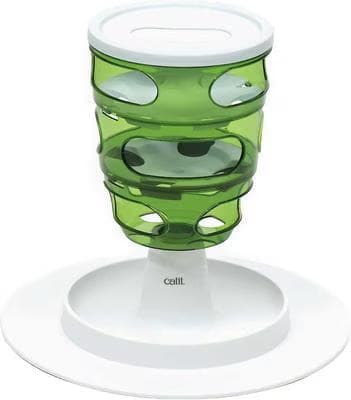
A food-tree puzzle adds an activity to everyday feeding. Introduce it gradually using part of your cat’s usual food allowance.
Webvet may earn a commission when you click through to Chewy, at no extra cost to you.
Lilies: the one plant that is a true emergency

The word lily on a florist tag is not a reliable guide, because several plants sold as lilies are not true lilies. Peace lily, calla lily, and Peruvian lily carry different toxins and cause mouth or stomach irritation rather than kidney failure.
That distinction does not make the call optional. If the plant might be a Lilium or a Hemerocallis, it is treated as one until a veterinarian or a poison control specialist says otherwise.
Kidney bloodwork and hospitalized fluid support are the standard veterinary response, and the window for them is short. Your veterinarian decides the plan. Your job is to call early enough that there is still a plan to make.
The most common toxic houseplants

Indoor plants poisonous to cats include pothos, philodendron, monstera, peace lily, and dieffenbachia. These aroids contain insoluble calcium oxalates that irritate the mouth when chewed. A green houseplant is not automatically safe, and homes with cats and dogs should check the botanical entry for both species.
Those crystals are needle-shaped. When a cat bites a leaf they embed in the lips, tongue, and throat and release immediately, which is why the reaction looks so dramatic within seconds.
It hurts, and it looks frightening, but it is rarely fatal. Most cats stop chewing after the first mouthful, which is the plant's own defense doing its job. The signs to expect:
- Sudden pawing at the mouth or face
- Heavy drooling, sometimes foamy
- Vocalizing, head shaking, or backing away from the plant
- Vomiting once or twice
- Reluctance to eat or drink for a few hours
Call your veterinarian even for this tier. Swelling of the lips, tongue, or throat is the uncommon complication that turns an irritation into an airway problem, and that needs to be examined rather than watched.
| Plant | Also sold as | Toxic part | What happens | Urgency |
|---|---|---|---|---|
| Pothos | Devil's ivy, money plant | Leaves, stems, sap | Immediate mouth pain, drooling, vomiting | Monitor at home, after a call |
| Philodendron (heartleaf, pink princess, birkin) | Sweetheart plant | Leaves and sap | Immediate mouth pain, drooling | Monitor at home, after a call |
| Monstera deliciosa | Swiss cheese plant, split-leaf philodendron | Leaves and sap | Immediate mouth pain, drooling | Monitor at home, after a call |
| Peace lily (Spathiphyllum) | Closet plant | Leaves and sap | Mouth pain, drooling, difficulty swallowing | Monitor at home, after a call |
| Dieffenbachia | Dumb cane | Sap above all | Intense mouth pain, swelling, difficulty swallowing | Call for an individual plan; monitor only if advised |
| ZZ plant (Zamioculcas zamiifolia) | Zanzibar gem | Whole plant | Mouth irritation, vomiting | Monitor at home, after a call |
| Elephant ear (Alocasia, Colocasia) | African mask plant | Leaves and sap | Mouth pain, drooling, swelling | Be seen today |
| Arrowhead plant (Syngonium) | Nephthytis, goosefoot | Leaves and sap | Mouth pain, drooling | Monitor at home, after a call |
| Anthurium | Flamingo flower | Leaves and flowers | Mouth pain, drooling | Monitor at home, after a call |
| Snake plant (Dracaena trifasciata) | Mother-in-law's tongue, sansevieria | Leaves | Nausea, vomiting, diarrhea | Monitor at home, after a call |
| Dracaena | Corn plant, dragon tree, mass cane, lucky bamboo | Leaves | Vomiting, sometimes with blood, and dilated pupils in cats | Call for an individual plan; monitor only if advised |
| Jade plant (Crassula ovata) | Money plant, friendship tree | Whole plant | Vomiting, lethargy, incoordination | Be seen today |
| Aloe vera | Medicine plant | Latex beneath the leaf skin | Vomiting, diarrhea, lethargy | Monitor at home, after a call |
| English ivy (Hedera helix) | Common ivy, branching ivy | Leaves more than berries | Drooling, vomiting, diarrhea, abdominal pain | Call for an individual plan; monitor only if advised |
| Rubber plant and fiddle leaf fig | Ficus elastica, Ficus lyrata | Milky sap | Mouth irritation, skin irritation, vomiting | Monitor at home, after a call |
| Umbrella plant (Schefflera) | Dwarf umbrella tree | Leaves | Mouth pain, drooling, vomiting | Monitor at home, after a call |
| String of pearls (Senecio) | String of beads | Leaves and sap | Vomiting, drooling, skin irritation | Be seen today |
| Wandering dude (Tradescantia) | Inch plant; also sold under the older name wandering Jew | Sap | Skin irritation, mouth irritation, vomiting | Monitor at home, after a call |
| Sago palm (Cycas revoluta) | King sago | Whole plant, seeds worst | Vomiting, then liver failure | Call a veterinarian now |
One entry on that table is not like the others. Sago palm is sold beside genuine houseplant palms, and it is the only plant there that can cause liver failure. If you own one and you also own a cat, removal is the only version of this advice that works.
Which parts of a plant are toxic, and does touching count?
Flowers and other toxic plants do not always have to be swallowed to harm a cat. Chewing can release mouth irritants, sap can affect skin, and lily pollen on fur can be swallowed during grooming. Drinking lily vase water is another ingestion route. Identify what contact occurred rather than assuming that no missing petal means no exposure.
Which part carries the poison changes the whole picture. A tulip bulb in a bag in the garage is a far bigger problem than a tulip bloom in a vase, because tulipalin concentrates in the bulb.
The same logic runs through the garden. Daffodil, hyacinth, and amaryllis all concentrate their alkaloids in the bulb. Sago palm concentrates cycasin in the seeds. Cyclamen keeps its saponins in the tuber below the soil line. Where the risk actually sits:
- Bulbs and tubers: tulip, daffodil, hyacinth, amaryllis, cyclamen, autumn crocus
- Seeds and nuts: sago palm, castor bean, yew
- Sap: dieffenbachia, ficus, euphorbia, wandering dude
- Pollen: true lilies and daylilies
- Green leaves and stems, not the ripe fruit: tomato and potato plants
- Every part at once: oleander, foxglove, lily of the valley, true lilies
Chewing carries a second risk that has nothing to do with toxins. Long fibrous leaves, palm fronds, and grass-like foliage can bunch up in the stomach or intestine, so a plant that is chemically harmless can still cause an obstruction that needs surgery.
Vomiting that keeps repeating, a cat who stops eating, or straining in the litter box without producing anything is the pattern to take seriously, whatever the plant turns out to have been.
Toxic garden and outdoor plants

Toxic garden plants for cats include lily of the valley, foxglove, oleander, yew, azalea, rhododendron, autumn crocus, hydrangea, hosta, peony, and the green parts of tomato and potato plants. Bulb beds are the highest-risk feature of most yards.
An outdoor cat meets far more plants than an indoor one, and you control almost none of them. Outdoors, recognition rather than removal is the practical skill. Sorted by urgency:
- Call a veterinarian now: lily of the valley, foxglove, oleander, yew, azalea, rhododendron, autumn crocus, castor bean, and any true lily or daylily in a border.
- Be seen today: tulip, daffodil, hyacinth, and amaryllis bulbs, plus chrysanthemum, kalanchoe, and cyclamen. For English ivy, call for an individual plan and monitor only if advised.
- Monitor at home after a call: hydrangea, hosta, peony, begonia, geranium, and the green leaves and stems of tomato and potato plants.
- Hydrangea is the one gardeners ask about most. Its leaves and flower buds contain a cyanogenic glycoside, and the usual result described by the ASPCA is vomiting, depression, and diarrhea rather than anything life-threatening.
- Vegetable beds surprise people too. Ripe tomatoes are not the issue. The green leaves and stems contain solanine, and potato foliage works the same way, so a cat chewing the plant rather than the fruit is what causes trouble.
The edible garden also raises a boundary this guide does not cross. Food toxins for cats, including chocolate, grapes, and onions, are a separate subject with a separate list, and the guide to whether cats can eat chocolate is the right place to start on those.
Sugar snap pea plants need to be distinguished from ornamental sweet peas. The edible pea is commonly labeled Pisum sativum (now also Lathyrus oleraceus); the ASPCA’s vegetable-garden advice permits peas as a moderate food treat, which is not a blanket clearance for every part of an unidentified garden plant. Ornamental sweet pea, Lathyrus odoratus, has a toxic listing for cats. Give the veterinarian the botanical label if your cat has chewed a pea plant. See the ornamental sweet-pea warning.
Toxic flowers and cut bouquets
Cut flowers deserve separate treatment, because a bouquet brings several species into the house at once and arrives already stripped of the tags that would let you identify them.
The short version: true lilies and daylilies are the emergency, tulip and daffodil stems are worth a same-day call, chrysanthemums cause drooling and vomiting, and carnations cause mild stomach upset and skin irritation. Roses, sunflowers, snapdragons, and orchids are not listed as toxic.
The vase water is part of the risk rather than a footnote. If an arrangement contains a lily, treat the water as contaminated and keep your cat away from it, and dispose of trimmings where she cannot reach them.
Are herbs like lavender and basil toxic to cats?
The ASPCA lists lavender, mint, oregano, and chamomile as toxic to cats; basil, rosemary, and dill have different verdicts. Chamomile flowers are not a cat-safe edible choice: the Anthemis nobilis entry describes contact dermatitis and gastrointestinal effects. Check each herb’s botanical name instead of applying one rule to culinary plants.
The surprise is usually lavender. It is sold as a calming plant for people and owners assume that transfers. The plant contains linalool and linalyl acetate, which irritate a cat's stomach when eaten.
- Listed as toxic: lavender, mint (Mentha species), oregano, chamomile, and tarragon. Expect drooling, vomiting, or diarrhea.
- Not listed as toxic: basil, rosemary, dill, thyme, and lemon balm. Any of them can still cause an upset stomach if a cat eats a lot.
- Catnip and cat grass differ: ASPCA lists catnip (Nepeta cataria) as toxic, with nepetalactone linked to vomiting, diarrhea, stimulation or sedation. Cereal-grass cat grass is a separate chewing option, usually grown from oat, wheat, barley, or rye seed.
The far bigger herb hazard is not the plant at all. Concentrated essential oils, lavender oil included, are handled poorly by cats, whose livers lack some of the enzymes that process them, and they cause serious illness through licking, spills, and diffusers.

Grow a small tray of oat grass for your cat. Follow the kit instructions and keep ornamental plants out of reach.
Webvet may earn a commission when you click through to Chewy, at no extra cost to you.
A lavender plant on a windowsill and a bottle of lavender oil are not the same risk. Pet Poison Helpline treats concentrated oils as a separate and more serious category, and so should you.
The plants cat owners ask about by name
A handful of plants generate most of the searching. Here is the verdict on each, and the reason behind it.
Are orchids toxic to cats?
No. The moth orchid (Phalaenopsis), the type sold in nearly every grocery store, is not listed as toxic to cats. Not listed as toxic does not mean edible: a cat who eats a lot of any plant can still vomit, and the bark or moss in the pot can upset a stomach on its own.
Are roses toxic to cats?
No. Roses are not listed as toxic to cats. The risks with roses are mechanical and chemical instead, because thorns can cut a mouth or a paw, and florist stems are often treated with preservatives or pesticides a cat should not lick.
Are tulips and other flower bulbs toxic to cats?
Yes, and the bulb is the part that matters. Tulips carry tulipalin A and B, concentrated in the bulb rather than the bloom, so a cat digging in a planting bed or a stored bag of bulbs meets a far larger dose than one nibbling a petal.
Daffodil, hyacinth, and amaryllis follow the same pattern with lycorine and related alkaloids. Any bulb ingestion is a same-day veterinary call.
Are snake plants toxic to cats?
Yes, mildly. Snake plant, also sold as mother-in-law's tongue, contains saponins and is listed as toxic to cats. Expect nausea, drooling, vomiting, or diarrhea rather than organ damage. Call your veterinarian, then watch her closely.
Are spider plants toxic to cats?
No. Spider plant (Chlorophytum comosum) is on the ASPCA non-toxic list. Cats are unusually drawn to it, and a cat who strips the foliage can still vomit, but the plant itself is not a poisoning risk.
Is pothos toxic to cats?
Yes. Pothos and its lookalike philodendron both carry insoluble calcium oxalate crystals, and both cause immediate mouth pain, drooling, and sometimes vomiting. This is the most common plant exposure in cat households. It is rarely fatal, but the pain is real and the call is still worth making.
Is monstera toxic to cats?
Yes, in the same way pothos is. Monstera deliciosa, sold as the Swiss cheese plant, carries the same insoluble calcium oxalate crystals in its leaves and sap. The result is immediate mouth pain and drooling rather than organ damage.
Is aloe vera toxic to cats?
Yes. Aloe is listed as toxic to cats because of saponins and anthraquinones in the yellow latex just under the leaf skin. Vomiting, diarrhea, and lethargy are the usual signs, and the medicinal reputation of the gel is exactly why owners do not suspect it.
Holiday plants: poinsettia, mistletoe, and the Christmas tree
Poinsettia has the worst reputation and the mildest reality. Its milky sap irritates the mouth and stomach, and the usual result is drooling or a single vomit rather than a poisoning.
Mistletoe and holly are the ones to watch in December. Both cause stomach and intestinal upset, and a large mistletoe ingestion can affect the heart. Fir and pine needles are irritants, the stagnant water in a tree stand is worth blocking off, and amaryllis bulbs are a genuine same-day call.
Quick verdicts for the other plants people ask about
These are the plants that come up constantly and rarely get a straight answer. Status follows the ASPCA plant database, where not listed as toxic means no known systemic poisoning rather than harmless.
| Plant | Verdict | Why | If your cat eats it |
|---|---|---|---|
| Succulents in general | Depends on the species | Echeveria, haworthia, and burro's tail are not listed as toxic; jade, kalanchoe, aloe, and euphorbia are | Identify the species first |
| ZZ plant | Toxic | Insoluble calcium oxalate crystals | Monitor at home, after a call |
| Jade plant | Toxic | Toxin not identified; causes vomiting, lethargy, incoordination | Be seen today |
| Dracaena, corn plant, dragon tree | Toxic | Saponins; vomiting, sometimes with blood, and dilated pupils in cats | Call for an individual plan; monitor only if advised |
| Lucky bamboo | Toxic | It is a Dracaena, not a bamboo | Call for an individual plan; monitor only if advised |
| True bamboo (Bambusa) | Not listed as toxic | No known systemic toxin | Watch for stomach upset |
| Prayer plant and calathea | Not listed as toxic | No known systemic toxin | Watch for stomach upset |
| Peperomia, pilea, polka dot plant, nerve plant | Not listed as toxic | No known systemic toxin | Watch for stomach upset |
| African violet | Not listed as toxic | No known systemic toxin | Watch for stomach upset |
| Boston fern and other true ferns | Not listed as toxic | No known systemic toxin | Watch for stomach upset |
| Asparagus fern | Toxic | Sapogenins, and it is not a true fern; the berries cause vomiting and diarrhea | Be seen today |
| Areca, parlor, ponytail, and bamboo palms | Not listed as toxic | Genuine palms, unlike sago palm | Watch for stomach upset |
| Air plants (Tillandsia) | Not listed as toxic | No known systemic toxin | Watch for stomach upset |
| Hoya, the wax plant | Not listed as toxic | No known systemic toxin | Watch for stomach upset |
| Money tree (Pachira aquatica) | Not listed as toxic | But the name money plant is also used for pothos and jade, which are toxic | Identify the species first |
| Croton | Toxic | Irritant sap | Be seen today |
| Cast iron plant | Not listed as toxic | No known systemic toxin | Watch for stomach upset |
| Christmas cactus | Not listed as toxic | Fibrous material can still upset a stomach | Watch for stomach upset |
| Bird of paradise (Strelitzia) | Toxic | Seeds and fruit; vomiting and drowsiness | Be seen today |
| Eucalyptus | Toxic | Essential oils; drooling, vomiting, weakness | Be seen today |
| Begonia, geranium, coleus, hosta, peony | Toxic | Vomiting, drooling, and mouth or skin irritation | Monitor at home, after a call |
| Sunflower, zinnia, petunia, snapdragon, impatiens | Not listed as toxic | No known systemic toxin | Watch for stomach upset |
| Catnip (Nepeta cataria) and cereal-grass cat grass | Different verdicts | ASPCA lists catnip as toxic; its nepetalactone can cause vomiting or diarrhea. Cat grass is a separate cereal-grass chewing option | Prevent further eating and seek advice if signs develop |
Three names on that table cause most of the confusion. Money plant, money tree, and lucky bamboo are common names shared by more than one species, and in each case at least one of those species is toxic.
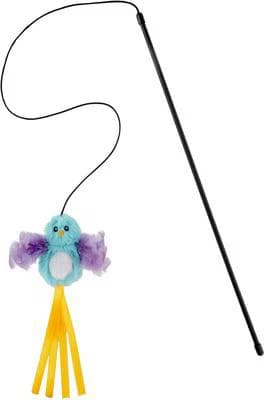
Make time for supervised play with a feathered wand. Put the toy away after each session.
Webvet may earn a commission when you click through to Chewy, at no extra cost to you.
When a common name is doing the work, the botanical name settles it. That is the single most useful habit for anyone keeping plants and cats in the same house.
How to identify a toxic plant in your home
The fastest way to identify a plant is to photograph the whole plant and one leaf close up, then search the ASPCA toxic and non-toxic plant database by common name and cross-check the botanical name it returns.
Plant identification apps are useful for narrowing down a candidate and unreliable as a final answer, especially between lookalikes. Use one to generate a name, then confirm that name against a veterinary source. The routine that pays off:
- Keep the nursery tag. Tape it to the underside of the pot instead of throwing it away, because the botanical name printed on it is what a poison control specialist will ask for.
- Photograph every plant you own once, in daylight, with a leaf and any flower or fruit in frame. A photo library beats memory during an emergency call.
- Search by botanical name rather than common name. Common names are shared across unrelated species, and that is where the dangerous mix-ups happen.
- Settle the sago palm question specifically. It is sold as a palm, it looks like a palm, and it is a cycad that can cause liver failure.
- Walk the whole house once, including the high shelf, the hanging basket, and the bathroom. The plant that gets chewed is usually the one nobody counted.
Then print or save the list you end up with. The moment you need it is the moment you will not want to be searching for it.
Veterinary references such as the VCA pet health library and the Cornell Feline Health Center are useful second checks when a plant database entry is ambiguous.
Symptoms of plant poisoning in cats

If your cat ate a plant and threw up, stop further exposure and call your veterinarian with the plant’s identity and the signs you have seen. Vomiting, drooling, mouth pawing, loss of appetite, and lethargy can accompany plant poisoning, but cannot identify the toxin on their own. Trouble breathing, collapse, or difficulty swallowing needs urgent care.
Timing carries information. A cat who reacts within seconds has almost certainly hit an irritant. A cat who seems fine for a day and then goes quiet may have met something far worse.
| Toxin group | Example plants | When signs usually start | What you see |
|---|---|---|---|
| Insoluble calcium oxalate | Pothos, philodendron, monstera, peace lily, dieffenbachia | Immediately, on contact with the mouth | Pawing at the mouth, drooling, vocalizing, refusing food |
| Saponins | Snake plant, dracaena, yucca, English ivy, aloe | Timing varies with the toxin, amount, and cat; do not wait for a predicted onset | Vomiting, diarrhea, drooling, lethargy |
| Grayanotoxins | Azalea, rhododendron | Timing varies with the toxin, amount, and cat; do not wait for a predicted onset | Drooling, vomiting, weakness, slowed heart rate |
| Cardiac glycosides | Oleander, foxglove, lily of the valley, kalanchoe | Timing varies with the toxin, amount, and cat; do not wait for a predicted onset | Vomiting, weakness, irregular or slow heartbeat, collapse |
| Bulb alkaloids | Tulip, daffodil, hyacinth, amaryllis | Timing varies with the toxin, amount, and cat; do not wait for a predicted onset | Drooling, vomiting, diarrhea, abdominal pain |
| Unidentified lily toxin | True lily, daylily | Vomiting and lethargy within hours, kidney signs over the first one to three days | Early vomiting, then changes in thirst and urination, then refusal to eat |
| Cycasin | Sago palm | Early gastrointestinal signs may precede later liver injury | Vomiting, diarrhea, then jaundice, bruising, and weakness |
| Colchicine | Autumn crocus | Can be delayed by hours to days | Severe vomiting and diarrhea, then organ and bone marrow effects |
Those onset windows follow the descriptions published by the ASPCA Animal Poison Control Center, Pet Poison Helpline, and the Merck Veterinary Manual. None of them is a guarantee, and a cat can fall outside a window in either direction.
The row that matters most is the lily row. Cats exposed to a true lily often vomit, then look better, and that apparent recovery is the most dangerous part of the whole picture.
Go now, regardless of which plant you suspect, if you see any of these:
- Difficulty breathing, or swelling of the face, lips, or tongue
- Repeated vomiting, or vomit containing blood
- Weakness, staggering, collapse, or a heartbeat that seems very fast or very slow
- Tremors, twitching, or a seizure
- No urine at all, or straining in the litter box
- Refusing food and water for more than a few hours
Vomiting has many causes besides plants. If you are not certain a plant was involved, the guide to why a cat throws up covers the wider set of possibilities.
What to do if your cat ate a toxic plant

If your cat ate a toxic plant, take the plant away, look in her mouth without forcing it open, and call your veterinarian or a poison control line before you do anything else. Do not try to make her vomit.
If your cat ate bell pepper plant leaves or another kitchen-garden plant, report the leaves or stems as well as any fruit eaten. A food that people or pets can eat does not establish the safety of every plant part, its pesticide treatment, or the potting mix. Use the same identification-and-call steps for an uncertain plant. ASPCA explains why garden parts and treatments need separate checks.
- 1Bag a cutting of the plant, ideally with a leaf and a flower, plus the nursery tag if you still have it.
- 2Take clear photos of the whole plant and one leaf close up, in case the sample gets damaged on the way.
- 3Write down how much you think was eaten and when, even if it is a rough guess.
- 4Have your cat's weight, age, medications, and health conditions ready for the call.
- 5Bag any vomit if your cat has already been sick, and bring it with you.
When you call, lead with three things:
- The plant. Read the botanical name off the tag if you have it, because poison control specialists work from that rather than from a description of the leaf.
- The time. Roughly when it happened, and whether your cat has vomited or drooled since.
- The cat. Weight, age, medications, and any existing health conditions.
Expect to be given a case number. Your veterinary clinic uses that number to speak with the toxicologist directly, and that consultation is what the fee buys.
If you cannot reach anyone and your cat is showing any of the go-now signs above, drive. An unnecessary emergency exam is a far better outcome than a delayed one.
Two things are worth knowing before that drive:
- What it may cost. Toxin ingestion is one of the most common unplanned emergency bills cat owners face, and knowing what emergency veterinary care costs in advance takes one decision out of a bad night.
- What happens there. Decontamination, bloodwork, and fluid therapy are decisions your veterinarian makes once the plant is identified. None of them has a home version, which is why this guide stops at the clinic door.
How to keep your cat away from toxic plants
Do cats know to stay away from toxic plants?
Cats do not reliably avoid toxic plants. They chew greenery out of curiosity, boredom, texture-seeking, and habit, and nothing about a plant's toxicity makes it taste like a warning.
Some cats ignore every plant in the house for years and then start on a new one. Prevention that depends on your cat's judgment is not prevention. The order of these steps matters, because the later ones only work on plants that were survivable to begin with.
- Remove the emergency-tier plants completely. Lilies, sago palm, oleander, and autumn crocus do not belong in a house with a cat at any height. This is the only step that is not a compromise.
- Move the rest out of reach, then check your assumptions. Height alone fails with most cats. A shelf works only if there is no route to it from a counter, a chair back, or a bookcase.
- Use physical barriers where you can. Closed rooms, glass cabinets, terrariums, and hanging baskets away from furniture do more than any spray.
- Make the pot boring. Large pebbles or a mesh cover over the soil stop digging, and they stop the litter-box behavior that starts with an open pot.
- Treat deterrents as an optional aid, not a barrier. Use a product only on the household surfaces its label permits, and keep your cat away from treated surfaces until the label says they are ready. Do not spray living leaves or stems unless the product specifically permits that use. Keep toxic plants physically inaccessible.
- Give the chewing somewhere to go. Cat grass grown with an Imperial Cat Easy Grow Cat Oat Grass Kit is one option to try while keeping toxic plants inaccessible. Offering an alternative does not make a toxic plant safe.
Offer other activities too. Interactive play, a window perch, and rotating toys can be part of your enrichment plan. Keep physical barriers in place regardless of whether your cat seems less interested in the plants.
Plants are one hazard among several in an ordinary home. The guide to poison-proofing your cat's home covers the cleaners, medications, and small objects sitting in the same room as the plant.
Safe swaps: what to grow instead

The table pairs toxic plants with safe replacements suited to the same location and growth habit. Hoya or Swedish ivy can replace trailing pothos on a shelf, while haworthia can replace aloe on a windowsill. Check the botanical identity of the replacement, then choose for the light and space you actually have.
Non-toxic here means the ASPCA does not list a known systemic poison for that plant. It does not mean harmless. Any cat who eats enough of any plant can vomit, and any long leaf can cause an obstruction.
| Remove this | Grow this instead | Why it works |
|---|---|---|
| Pothos or philodendron | Hoya, Swedish ivy, or spider plant | Same trailing habit for a shelf or hanging basket, and none of the three is listed as toxic |
| Monstera | Areca palm or parlor palm | Similar height and presence in a bright corner, and both are genuine non-toxic palms |
| Peace lily | Cast iron plant or calathea | Both tolerate low light, and neither is listed as toxic |
| Snake plant | Parlor palm or cast iron plant | Upright form that tolerates neglect, without the saponins |
| ZZ plant | Peperomia or haworthia | Small, forgiving, and not listed as toxic |
| Dieffenbachia | Prayer plant or calathea | Patterned foliage at a similar size, without the oxalate crystals |
| Aloe vera | Haworthia or echeveria | The same succulent look on the same windowsill, without the latex |
| Jade plant | Echeveria or burro's tail | Succulent form and low water needs, not listed as toxic |
| English ivy | Swedish ivy | Trailing green cover, not listed as toxic |
| Lilies in a vase | Roses, sunflowers, snapdragons, or orchids | None is listed as toxic, so the arrangement stops being an emergency |
| Tulip or daffodil bulbs in a bed | Sunflowers, zinnias, petunias, or snapdragons | Seasonal color with no bulb for a cat to dig up |
| Any plant your cat targets | A tray of cat grass | Redirects the chewing itself instead of moving the target |
Cat grass grown from oat, wheat, barley, or rye seed offers a separate chewing option. Try a supervised tray if your cat enjoys it, while keeping toxic plants inaccessible; interest in grass does not guarantee your cat will leave other plants alone.
Cat grass is not catnip. Supervise access, keep it fresh, and do not dismiss vomiting after chewing as automatically normal. Contact your veterinarian if vomiting continues, other signs develop, or the identity of the plant is uncertain.
If a cat suddenly starts eating plants after ignoring them for years, treat that as a change worth mentioning to your veterinarian rather than a habit to manage, because appetite and behavior changes have medical causes too.
The full list of cat-safe plants
This page is the toxic side of the question, and it names safe plants only where they replace something you are removing. The complete vetted list of cat-safe houseplants, flowers, and garden plants is a longer piece of work with its own qualifiers.
The qualifier worth repeating here is the important one. A plant that is not listed as toxic can still cause vomiting, diarrhea, or an obstruction if a cat eats enough of it. Non-toxic is a statement about poisoning, not a promise of safety.
What about dogs?
Many of these plants are toxic to dogs as well, but the list is not the same and neither is the picture. True lilies, the defining cat emergency, cause only mild stomach upset in dogs.
Dogs run into different problems. Sago palm and flower bulbs hurt them more because dogs dig and chew in larger quantities, and the dog toxin picture is dominated by foods that have no cat equivalent.
If you have both species, check each plant’s verdict for cats and for dogs. A cat-safe label alone does not clear a plant for a dog, and access to fallen leaves, bulbs, seeds, and potting materials also matters.
Toxic plant questions cat owners ask
Frequently Asked Questions
Are artificial and plastic plants safe for cats?
They remove the poisoning risk and introduce a different one. There is no plant toxin in a plastic leaf, so a fake plant is a genuine fix for a cat who chews a toxic species.
The problem is that swallowed plastic, silk, and wire do not digest. A strip of fabric leaf or a length of stem can lodge in the intestine and become an obstruction that needs surgery, and long stringy material is especially dangerous in cats.
If your cat chews rather than simply brushing past, a fake plant is not a safe substitute. A tray of cat grass is an optional chewing alternative; keep toxic plants and artificial plants your cat chews inaccessible.
How much of a toxic plant does it take to make a cat sick?
There is no single household safe-dose cutoff for the plants in this guide. Toxicity depends on the plant, the part involved, the amount, and the cat. Report the estimated amount to your veterinarian rather than using an online number to clear the exposure.
For true lilies, sago palm, oleander, azalea, and autumn crocus, call promptly even if the amount seems small. The plant identity and amount both matter to the clinician; pollen groomed off a coat can expose a cat to a true lily.
For the mouth-irritant plants the quantity matters more in practice, because most cats stop after one painful bite. Either way, the decision at home is the same: call, describe what happened, and let a veterinarian judge it.
What should I do if I do not know which plant my cat ate?
Work the problem from the plant rather than from memory. Photograph it from a few angles, including a leaf close up and any flower or fruit, and bag a cutting. Take the pot tag if it is still there, because the botanical name is what a specialist needs.
Then call the ASPCA Animal Poison Control Center at (888) 426-4435 or Pet Poison Helpline at (855) 764-7661. Their staff identify plants from descriptions and photographs every day, and identification is part of what the consultation fee covers.
If the plant is outdoors and unidentifiable, describe the location, the growth habit, and whether it had bulbs, berries, or milky sap, along with how much your cat could have reached. Do not wait for symptoms while you search, and do not induce vomiting while you decide.

Editor
The Webvet Editorial Team is the in-house group of pet-care editors and writers behind Webvet, operated by Smart Pet Collective. The team researches, writes, and maintains Webvet's pet health, behavior, and medication content. Every article follows a defined editorial process: research from reputable veterinary and scientific sources, careful drafting, mandatory review of medical content by a credentialed veterinarian, and dated publication. Health and medication articles are medically reviewed by a licensed veterinary professional before they go live and are kept current over time.
Veterinarian · BVMS MRCVS
Dr. Pippa Elliott, BVMS, MRCVS, is a veterinarian with nearly 30 years of experience in companion animal practice. Dr. Elliott earned her Bachelor of Veterinary Medicine and Surgery from the University of Glasgow. She was also designated a Member of the Royal College of Veterinary Surgeons. Married with 2 grown-up kids, Dr. Elliott has a naughty Puggle named Poggle, 3 cats and a bearded dragon.
Related reading

Is Pothos Toxic to Cats? Yes, and So Is Philodendron

Is Monstera Toxic to Cats? Symptoms and What to Do

Is Aloe Vera Toxic to Cats and Dogs? What to Do Now
