Are Christmas Trees Toxic to Cats? Poinsettia, Mistletoe, Holly
Christmas trees are not classified as toxic plants, but the stand water, poinsettia, mistletoe, holly, amaryllis, and a lily in a gift bouquet all rate differently. Here is the vet-reviewed verdict on each, plus the signs to watch and who to call.

BVMS MRCVS
Medically reviewed by Dr. Pippa Elliott, BVMS MRCVS · Last reviewed

This article contains affiliate links. Webvet may earn a commission when you buy through them, at no extra cost to you.
Are Christmas trees toxic to cats? They can cause problems if chewed. Pet Poison Helpline describes most common Christmas-tree ingestions as mildly irritating, rather than a major poisoning. The real tree risks are sharp needles, mildly irritating tree oils, and the bowl of water sitting in the stand.
The harder question is everything else that arrives in December. A poinsettia on the side table, mistletoe over the door, a holly wreath, a forced amaryllis bulb on the windowsill, a gift bouquet on the counter. Those plants carry very different verdicts, and one of them is a genuine emergency.
This guide rates each one against the same standard, using the ASPCA Animal Poison Control plant database, Pet Poison Helpline, and the Merck Veterinary Manual. The verdicts sit at the top. What to do sits under them.
Holiday plant verdicts at a glance
- 1The Christmas tree itself is a low-grade problem: a potential source of irritation from needles and sap, plus a stand reservoir a cat may drink from.
- 2Poinsettia is the most over-blamed plant of the season. ASPCA Animal Poison Control describes the poisoning as generally over-rated in toxicity, though the sap is still a real irritant.
- 3Mistletoe, holly, and amaryllis are the holiday plants that actually earn concern, and the amaryllis bulb concentrates the risk.
- 4A true lily in a holiday bouquet is the emergency. For a cat, suspected true-lily exposure requires an immediate veterinary call.
Use the plant verdict table to compare the risky part, expected signs and action. For identification, poinsettia bracts are the coloured leaf-like parts around its small flowers; mistletoe berries and holly leaves are shown in the photograph below. Confirm an unfamiliar plant by its label rather than relying only on colour or a holiday common name.
| Plant | Verdict | Part that carries the risk | Signs to expect | What to do |
|---|---|---|---|---|
| Fir, spruce, pine (cut tree) | Usually causes irritation rather than major toxicity | Needles, sap, tree oils | Drooling, mouth irritation, one or two vomits | Sweep needles, block the base, call if vomiting keeps going |
| Christmas tree stand water | Treat as contaminated water, not as a plant | Preservatives, fertiliser, additives, bacteria | Vomiting, diarrhoea, lethargy | Cover the reservoir; call if your pet drank from a treated stand |
| Norfolk Island pine (Araucaria heterophylla) | Non-toxic (ASPCA) | Plant material if chewed | Plant material may cause stomach upset | Prevent chewing; call your veterinarian if your pet is ill or the plant identity is uncertain |
| Poinsettia | Toxic but over-rated in toxicity (ASPCA) | Milky sap in stems and leaves | Drooling, mouth and stomach irritation, sometimes vomiting | Wipe sap off fur and mouth, watch, call if signs persist |
| American mistletoe | Toxic (Pet Poison Helpline) | Berries and leaves | Vomiting, diarrhoea; larger amounts add weakness and an unsteady gait | Call your vet or poison control now |
| American holly | Toxic (ASPCA) | Berries (saponins) plus spined leaves | Drooling, vomiting, diarrhoea, mouth injury, head shaking | Call your vet; check the mouth for cuts |
| Christmas cactus | Non-toxic (ASPCA) | No known toxin; bulk of plant material | Vomiting from volume, possible blockage | Keep it out of reach; call if vomiting repeats |
| Amaryllis and forced bulbs | Toxic (ASPCA) | Bulb above all, plus leaves and flowers | Drooling, vomiting, diarrhoea, belly pain, lethargy, tremors | Call your vet or poison control now |
| True lilies and daylilies | Toxic to cats, kidney failure possible (ASPCA) | Every part, including pollen and vase water | Vomiting, hiding, not eating, then kidney signs | Emergency. Call immediately after any cat exposure |
One label needs unpacking before you use it. Non-toxic in the ASPCA database means no known systemic poisoning. It does not mean harmless. Any plant a cat or dog eats can cause vomiting, drooling, or an obstruction, and a large mouthful of anything is worth a phone call.
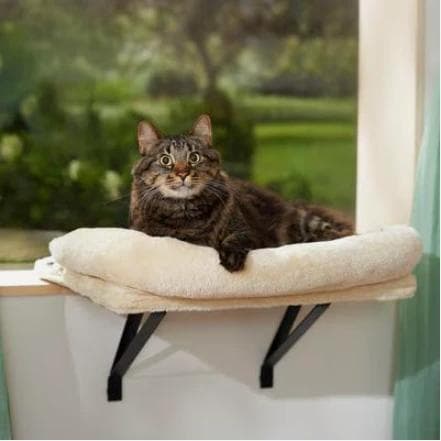
A window perch gives your cat a dedicated resting spot. Install it as directed and keep it away from accessible plants.
Webvet may earn a commission when you click through to Chewy, at no extra cost to you.
Are Christmas trees toxic to cats?

Common Christmas-tree needles and sap can irritate a cat's mouth and stomach. Check the exact species rather than treating absence from a plant database as a safety verdict. The ASPCA lists Norfolk Island pine as non-toxic. Use our cat toxic-plant guide to check other indoor plants by species.
That distinction changes what you watch for. A cat that has chewed fir needles is at risk of a scratched mouth, some drooling, an upset stomach, and, if enough needles go down, plant material that does not move through the gut. Do not use the plant category alone to decide whether a cat needs veterinary attention.
A real tree carries four separate hazards, and only one of them is chemical:
- Mechanical irritation. Conifer needles are stiff and pointed, and they scratch lips, gums, and the lining of the throat.
- Mild stomach upset. The natural oils in needles and sap irritate the stomach lining, which usually shows as drooling or a couple of vomits.
- Swallowed material. A mouthful of needles can act as a gastrointestinal foreign body, especially in a small cat or a committed chewer.
- Treatment residue. Farm-grown trees are sometimes treated before sale, which is one more reason to discourage chewing rather than tolerate it.
Fir, spruce, and pine: what the needles and the tree oils actually do
Conifer needles are not digested. They either pass through or they do not. Most cats that mouth a branch swallow nothing and lose interest, and most that swallow a few needles pass them uneventfully. The concern is volume, and the sign that matters is a swallowed mass that stops moving.
Tree oils are the other half of the answer. Resin in fir and pine irritates the stomach, which is why the classic presentation is drooling and one or two rounds of vomiting rather than anything dramatic. Veterinary references describe this as self-limiting gastrointestinal signs, meaning it settles without treatment in most pets.
Call your veterinarian if you see any of the following, because these separate a scratched mouth from a swallowed mass:
- Vomiting that repeats rather than settling after once or twice
- Your cat going off food, or drinking but not eating
- A belly that looks swollen, or that your cat does not want touched
- Retching that brings nothing up, which is not a cat to sleep on
Norfolk Island pine, Araucaria heterophylla, is sold as a small living Christmas tree. The ASPCA lists it under Australian Pine as non-toxic to cats, dogs and horses. That plant listing does not make its potting products safe or mean a pet should be allowed to chew it.
To identify a potentially poisonous pine-named plant, use the botanical name on its label rather than needle shape or the word pine alone. ASPCA lists Norfolk Island pine (Araucaria heterophylla) as non-toxic, but yew pine (Podocarpus macrophylla) as toxic to cats and dogs. These different verdicts are why an unidentified evergreen needs a species check. Keep it away from your pet while a nursery, veterinarian or poison-control service helps confirm the identity.
Why cats climb, chew, and drink from the tree
A cat seeing a Christmas tree for the first time may investigate a new climbing frame, hiding place or water source. Other cats keep their distance. Supervise the introduction and prevent access to needles, cords, decorations and the stand water; curiosity is not evidence that the setup is safe.
Each pull is worth naming, because each one maps onto a hazard:
- Height. A tree is a vertical vantage point in a room that usually offers none.
- Movement. Hanging ornaments swing, catch light, and behave like prey.
- Texture. Bark and branches are exactly what a cat wants to scratch and rub against.
- Water. The stand reservoir is a still, ground-level water source, and plenty of cats prefer drinking away from their own bowl.
- Cover. The skirt and the low branches make a den, which is why cats sleep under trees.
None of that is a behaviour problem to correct. It is a placement problem to manage, and the cat-proofing section below deals with it. It matters here because a cat that lives in the tree has repeated access to every hazard the tree carries, not a single chance encounter.
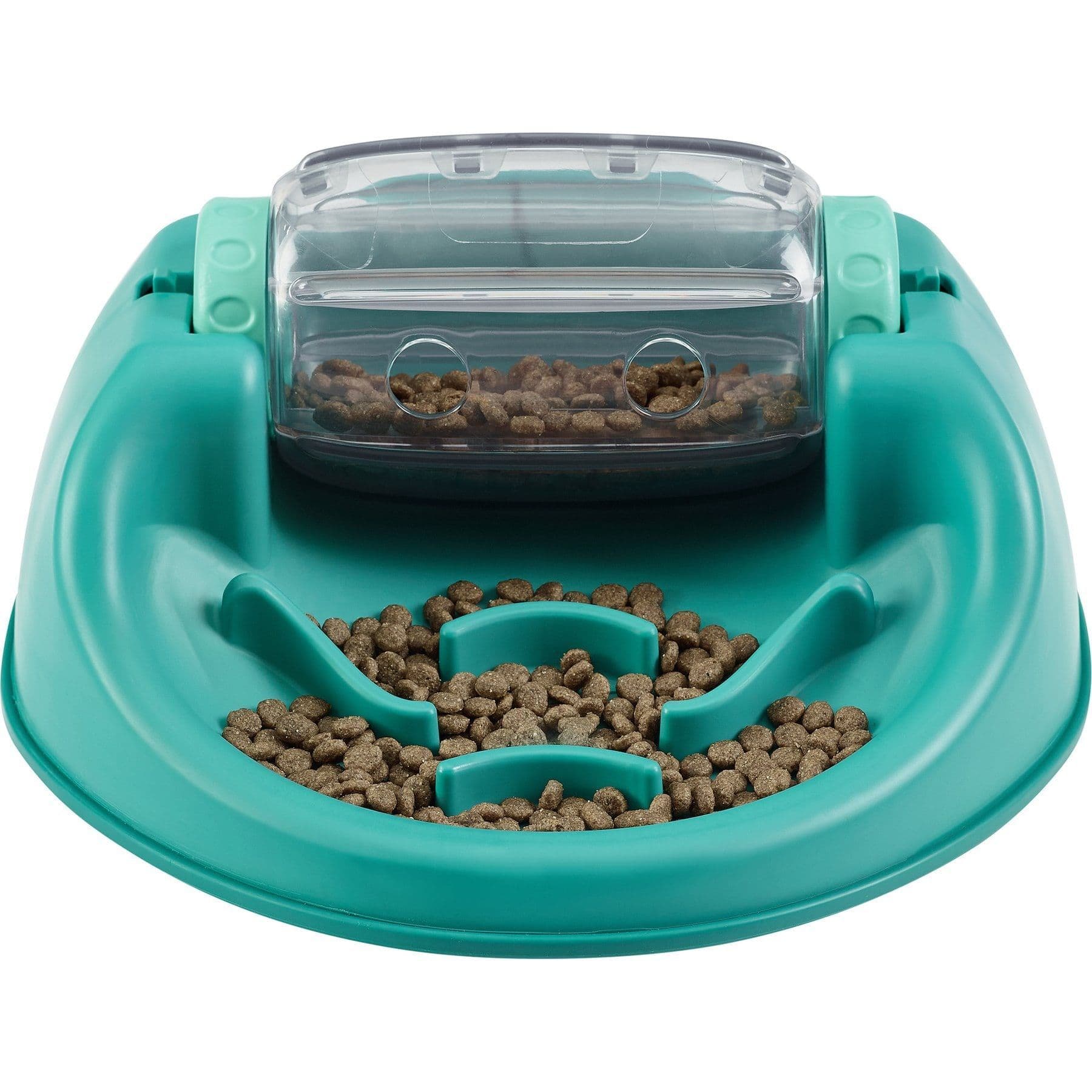
Use part of your dog’s normal food allowance in a supervised puzzle activity. Match the challenge to your dog.
Webvet may earn a commission when you click through to Chewy, at no extra cost to you.
Cats cannot tell a safe plant from a toxic one
No, cats do not know to avoid toxic plants, and the belief that they do is one of the more dangerous ideas in pet care. Cats are poisoned by lilies, amaryllis, and mistletoe every year in homes where the owner assumed the animal would simply leave the plant alone.
Some cats are put off by a bitter taste and stop after one bite, which is why so many exposures stay minor. That is taste and luck, not judgement. A cat that likes the texture of a leaf keeps going, and a bored indoor cat has plenty of new greenery to work with.
So place plants on the assumption that your cat will taste anything new, rather than on trust. The room-by-room version of that job, covering cleaning products and cords as well as greenery, is in our guide to how to poison-proof your cat’s home.
Christmas tree water and stand additives

The stand reservoir is the part of a real tree most likely to make a pet sick, and it is the part almost nobody looks at. It is an open bowl of water at cat and dog height that collects sap and needles, grows bacteria, and holds whatever you added to keep the tree fresh.
Four things end up in that water, and none of them belong in an animal:
- Commercial tree preservatives. Sold as tree food, usually sugars, an acidifier, and a biocide. The labels are not written with pets in mind, so treat any treated reservoir as contaminated.
- Fertiliser additives. Plant fertiliser in an open water bowl is a gastrointestinal irritant, and some formulations carry hazards beyond that.
- Home remedies. Aspirin, sugar, bleach, and vodka all circulate as tree-freshening tricks. Aspirin matters most, because cats clear salicylates far more slowly than people do.
- Stagnant water. Even plain water grows bacteria and yeast in a warm room over a fortnight, and dropped sap and needles feed the growth.
Plain, fresh, untreated water in a covered stand is the low-risk version of a real tree. A treated reservoir that a pet has already been drinking from is a phone call rather than a wait-and-see.
Watch for vomiting, diarrhoea, and lethargy over the following day. If your cat is bringing food back up more than once, our guide to cat vomiting causes sets out which patterns need a same-day appointment and which can wait for morning.
Artificial trees, flocking, and fake snow
If your cat has eaten part of an artificial Christmas tree, this is an ingestion question rather than a poisoning one. The needles on a fake tree are PVC and are not digestible, so a cat that strips and swallows them risks a gastrointestinal foreign body, not a toxic exposure.
Call your veterinarian and tell them roughly how much went in and how big the pieces were. A single chewed tip that was spat straight out is usually nothing. A swallowed strip of needles is worth the call. Either way, watch for:
- Vomiting or retching that keeps coming back
- Refusing food, or eating and then bringing it up
- Straining, or no stool for longer than usual
- A painful or swollen belly, or unusual lethargy
Flocking is the sprayed white coating that makes a tree look snow-dusted. Manufacturers generally describe it as non-toxic, but non-toxic there is a manufacturing term rather than a veterinary one. Flocking flakes off, and a cat that grooms it out of its coat swallows a synthetic powder with an adhesive in it.
The realistic risk from flocking and from aerosol fake snow is stomach upset, plus the same obstruction concern as the plastic needles if a pet eats a lot. That is the practical case for skipping a flocked tree in a house with a chewer. It is not a claim that flocking is a poison.
- No reservoir and no sap: an artificial tree removes two of the real tree hazards outright.
- Less stable: a fake tree is lighter and tips more easily under a climbing cat, so it needs anchoring more, not less.
- Still swallowable: plastic needles, tinsel strands, and flocking are all objects a pet can eat, so the base still wants a barrier.
Are poinsettias poisonous to cats and dogs?

Poinsettia, Euphorbia pulcherrima, is listed by ASPCA Animal Poison Control as toxic to dogs and cats, and the same entry describes the poisoning as generally over-rated in toxicity. Both halves are true. Reading only one of them is how owners end up either panicking or leaving the plant on the floor.
The reputation traces back to an early twentieth century case in which a poinsettia was blamed for a child’s death. The claim was never substantiated, and it has been repeated every December since. The plant is an irritant, not the killer the folklore describes.
What poinsettia poisoning actually looks like
If a cat eats a poinsettia, its sap can irritate the mouth and stomach, causing drooling or vomiting. The ASPCA describes the plant’s toxicity as generally over-rated, but that does not make it suitable to chew. Tell your veterinarian what the cat ate and what signs you have seen.
- Drooling, lip smacking, or pawing at the mouth
- Vomiting
- Diarrhoea in some pets
- Redness where sap touched skin, and eye irritation if it was rubbed in
- A change in appetite
Collapse, tremors, an unsteady gait or worsening signs need prompt veterinary attention. Do not assume a poinsettia explains them or try to identify the cause at home.
The cited ASPCA record does not provide a safe amount of poinsettia for a cat to eat. Report the amount and plant part if known, but do not wait for a leaf count or dose threshold before seeking advice.
Can you keep a poinsettia in a house with a cat?
Yes, if you can put it somewhere your cat genuinely cannot reach, and no if you cannot. That is a real condition rather than a polite one. A poinsettia on a side table, a mantel, or a low shelf is within reach of most cats.
- A closed room your cat does not go into is the only placement you can rely on.
- A high shelf is not out of reach for a climber, and a knocked-over pot spreads sap and soil across the floor where the cat walks.
- Wipe up any sap that lands on a surface, because a cat picks it up on a paw and then grooms it off.
- If your cat has any history of chewing plants, skip the poinsettia this year and enjoy someone else’s.
Mistletoe and holly berries

Mistletoe and holly berries are poisonous to cats and dogs. The common decorations pictured here can be distinguished by their berries and leaves, but appearance does not replace checking the botanical name:
- Mistletoe: pale white berries on soft, rounded leaves, usually hung high in a doorway.
- Holly: red berries on stiff, glossy leaves with sharp spines along the edges. The spines are the fastest tell.
American mistletoe (Phoradendron) and European mistletoe (Viscum album) are both toxic plants; identify which one your pet encountered rather than treating the names as interchangeable. Pet Poison Helpline describes gastrointestinal signs after small mistletoe ingestions and low blood pressure, an unsteady gait and collapse after larger exposures. Both berries and leaves matter.
Call your veterinarian after suspected mistletoe ingestion. Report the species if known, the possible amount and any signs; the cited guidance does not establish a safe berry count or an observation deadline for your pet.
American holly, Ilex opaca, is toxic in two ways at once. The berries contain saponins, which irritate the gut and produce drooling, vomiting, and diarrhoea. The leaves are stiff and spined, so a pet that chews one can cut its lips, gums, or tongue.
- Head shaking, lip smacking or pawing at the mouth can follow irritation or injury. These signs do not tell you the cause by themselves.
- Check inside the mouth in decent light if your pet will let you, and let your veterinarian look if you cannot see clearly.
- Sweep under a wreath or garland daily, because berries on the floor are the version a pet actually eats.
Both plants are more dangerous as decorations than as garden plants, because decorating puts them at pet height. A mistletoe sprig falls. A holly wreath hangs within reach of a dog and lands on the floor when the door slams.
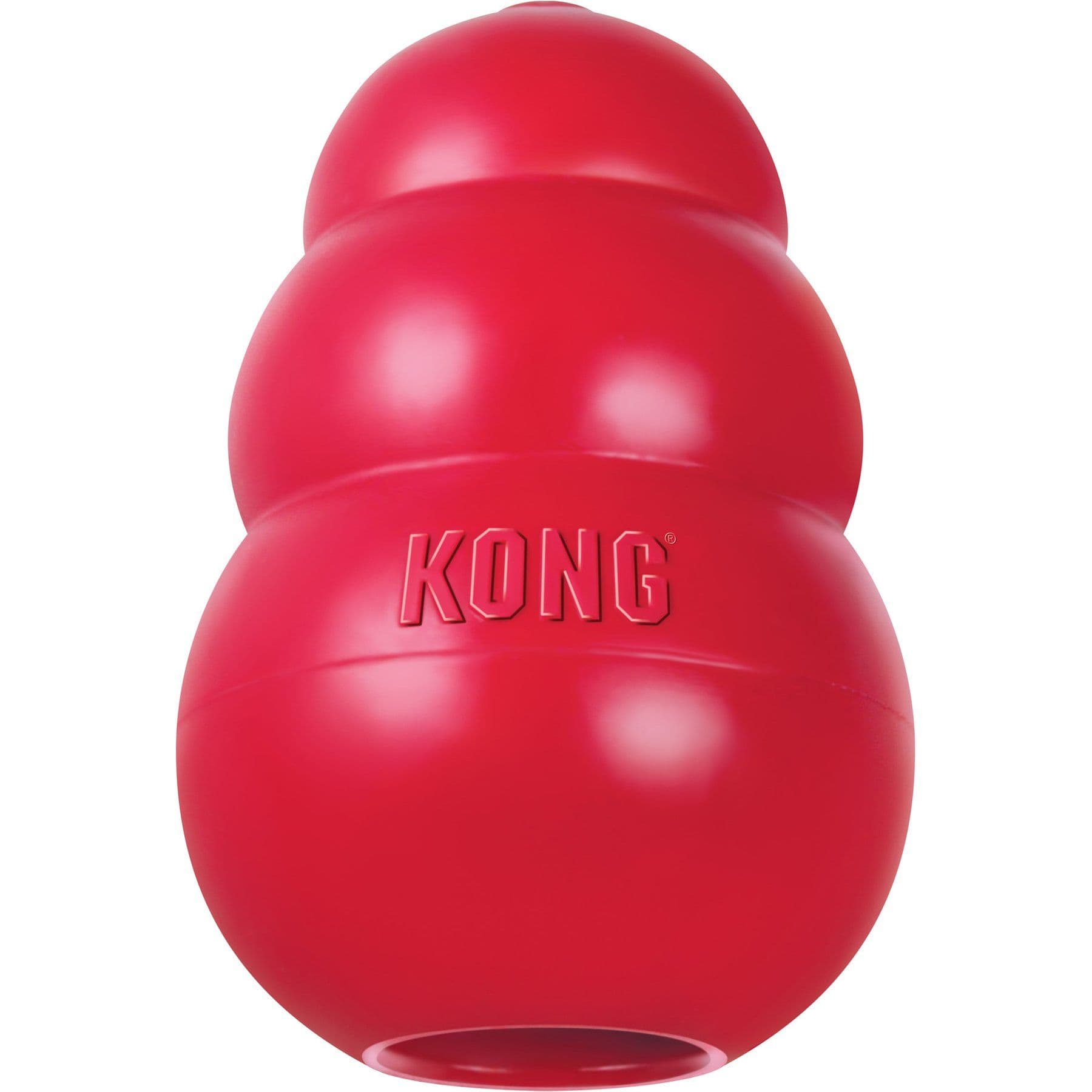
A rubber toy for supervised play and chewing. Choose the right size and strength for your dog and inspect it regularly.
Webvet may earn a commission when you click through to Chewy, at no extra cost to you.
Artificial mistletoe and artificial holly remove the toxicity question completely, and they are the swap most worth making if you have a chewer. They are still plastic, so they still belong out of reach of a dog that swallows things it should not.
Christmas cactus and amaryllis
These two arrive in the same shops in the same weeks, both in a decorative pot, and they land at opposite ends of the verdict scale. Getting them the right way round is worth more than any other identification on this page, because one is genuinely safe and the other genuinely is not.
Christmas cactus: safe, with one caveat
ASPCA lists Christmas cactus (Schlumbergera bridgesii) as non-toxic to cats and dogs. A Thanksgiving or zygo cactus label also needs its species checked: ASPCApro discusses Schlumbergera truncata and reports vomiting and diarrhea in dogs, with ataxia also reported in cats. A holiday name or non-toxic listing does not make the plant suitable to eat. Protect the plant, potting mix and added products from chewing.
The caveat is the one that applies to every non-toxic plant. Non-toxic means no known systemic poisoning, not harmless. Christmas cactus segments are thick and fleshy, a cat that eats several can vomit from the volume alone, and a large amount of any plant material can lodge somewhere it should not.
The name confusion is worth clearing up too. Mistletoe cactus, a Rhipsalis, is a different plant that borrowed a scary common name, and it is also listed as non-toxic. Real mistletoe, the sprig hanging in the doorway, is not. The cactus is safe; the doorway decoration is not.
Amaryllis: the holiday bulb people forget
No, amaryllis is not safe for cats. Hippeastrum is listed by ASPCA Animal Poison Control as toxic to dogs and cats. The toxic principles include lycorine and related phenanthridine alkaloids, and the reported signs are drooling, vomiting, diarrhoea, abdominal pain, lethargy, loss of appetite, and tremors.
The forced bulb kit is what makes amaryllis a December problem specifically. It sits on a windowsill in a shallow pot with the bulb half exposed, and the bulb concentrates the risk. A cat digging at the soil or a dog tipping the pot goes straight for the worst part of the plant.
So treat an amaryllis as a plant that lives behind a closed door, not one you place carefully. If your pet has chewed the bulb, or you find bite marks and cannot say when, call rather than watch. Paperwhites and other forced narcissus bulbs carry the same alkaloids and the same warning.
Holiday bouquets: lilies are the true emergency

A gift bouquet is the highest-consequence plant that enters a house in December, and it is the one nobody screens. True lilies, the Lilium species, and daylilies, Hemerocallis, can cause acute kidney injury in cats. This is not a stomach-upset plant. It requires immediate veterinary advice.
The species note matters and it is easy to get wrong. Lily-related kidney injury is a cat problem. Dogs that eat these lilies typically get gastrointestinal upset instead. That does not make a lily safe for a dog, but it does mean a cat and a lily is the combination that cannot wait for morning.
Every part of the plant counts, including the parts that look harmless. Petals, leaves, stem, pollen, and the water in the vase. A cat that brushes past a stem, picks up pollen on its coat, and grooms it off has had an exposure. So has a cat that drinks from the vase.
If you are asking which plant is the most poisonous for a cat, the lily family is the honest answer, and the reason is that kidney injury rather than anything dramatic in the first hour. That single question deserves its own emergency guide, and this December round-up flags it rather than trying to carry it.
Beyond lilies, the flowers worth screening out of a cut arrangement are tulips, hyacinths, and daffodils, all of which concentrate their irritants in the bulb, plus chrysanthemums, which turn up constantly as filler. Ranking every florist flower is a job for a dedicated bouquet guide rather than this one.
Check bouquets before allowing a cat access. If they contain true lilies, keep the entire arrangement and its water away from the cat; removing one stem does not establish that remaining pollen or water is safe. If you did not buy the flowers, ask the florist what is in the arrangement. The habit worth keeping in a cat household is simple. Every bouquet gets checked for lilies before it gets a vase.
Holiday plants and dogs
Yes, poinsettias are toxic to dogs, in exactly the same over-rated way they are toxic to cats. ASPCA Animal Poison Control lists the plant for both species, with the same irritant sap and the same mild, self-limiting signs. Every verdict on this page applies to dogs, with one structural difference.
Make time for supervised play with a feathered wand. Put the toy away after each session.
Webvet may earn a commission when you click through to Chewy, at no extra cost to you.
- 1A cat nibbles. A dog eats the whole plant, the pot, and sometimes the wrapping.
- 2That changes the dose, and dose is what separates a drooling episode from a serious one for mistletoe, holly, and amaryllis.
- 3So the threshold for calling is lower for a dog that has been alone with a plant, because you rarely know how much went in.
The plants that shift most between species are the volume-dependent ones. Mistletoe at a nibble is stomach upset; mistletoe at a mouthful is the low blood pressure and unsteady gait picture. An amaryllis bulb is a single object a dog can swallow whole, which a cat almost never does.
Two dog-specific hazards are worth naming on top of the plant list:
- Wreath hardware. Holly and conifer wreaths come with wire, floral picks, and ribbon, so a dog that eats a wreath is eating hardware as well as plant material.
- Tree water volume. A dog with access to the stand will drink far more of that reservoir than a cat will, which turns a mild contaminant into a meaningful dose.
Lilies run the other way. A dog that eats a lily usually gets gastrointestinal upset rather than kidney injury, which is why the emergency framing on this page is written for cats. Call anyway, but do not carry the cat rule across as though the two species were interchangeable.
The full year-round list of plants that are unsafe for dogs is a bigger subject than one December guide can carry properly, and this page deliberately stays on the greenery the holidays bring into the house.
If your pet eats a holiday plant: symptoms and first steps
Identify the plant, then look at your pet, in that order. The signs and timing depend on the plant, the amount and the animal. The exposures that do not follow that pattern are the ones that need a phone rather than a watchful evening.
| Plant group | What usually shows first | Timing and uncertainty | Watch or call |
|---|---|---|---|
| Conifer needles and sap | Drooling, mouth rubbing, one or two vomits | Do not use a fixed waiting period; seek advice based on the plant and exposure. | Watch; call if vomiting repeats or your pet stops eating |
| Tree stand water | Vomiting, diarrhoea, lethargy | Do not use a fixed waiting period; seek advice based on the plant and exposure. | Call if the stand was treated with anything |
| Poinsettia sap | Drooling, mouth irritation, sometimes one vomit | Do not use a fixed waiting period; seek advice based on the plant and exposure. | Watch; call if signs keep going or worsen |
| Holly berries and leaves | Drooling, vomiting, diarrhoea, head shaking, mouth pain | Do not use a fixed waiting period; seek advice based on the plant and exposure. | Call; check the mouth for cuts |
| Mistletoe | Vomiting and diarrhoea; larger amounts add weakness and an unsteady gait | Do not use a fixed waiting period; seek advice based on the plant and exposure. | Call now |
| Amaryllis and forced bulbs | Drooling, vomiting, diarrhoea, belly pain, lethargy, tremors | Do not use a fixed waiting period; seek advice based on the plant and exposure. | Call now, especially if the bulb was chewed |
| True lily or daylily, cats | Vomiting, hiding, not eating; kidney signs follow | Early signs within hours, kidney signs later | Emergency: call immediately; do not wait for signs |
| Artificial needles or flocking | Vomiting, retching, refusing food, straining | Do not use a fixed waiting period; seek advice based on the plant and exposure. | Call; obstruction signs can be delayed |
The cited sources do not provide a validated onset range for every plant in this table. The published true-lily timeline must not be applied to other holiday plants. Call with the plant name, the possible amount and time of exposure so the veterinarian or poison-control service can give advice for that case.
When to call, and who to call
Call straight away, without waiting for signs to appear, if any of the following is true:
- Your cat has had any exposure to a true lily or a daylily, including pollen on the coat or water from the vase.
- Your pet chewed mistletoe, holly berries, or any part of an amaryllis or other forced bulb.
- You cannot say how much went in, or your pet was alone with the plant for any length of time.
- Your pet is very young, very old, small, pregnant, or already has kidney, liver, or heart disease.
- You are seeing anything beyond drooling and a single vomit: tremors, weakness, an unsteady gait, collapse, breathing changes, repeated retching, a painful or swollen belly, or blood.
Ask your veterinarian whether observation at home is appropriate and how long to continue it. If they recommend it, keep the plant inaccessible, note changes in appetite, drinking and activity, and call back for persistent or worsening signs. A mild plant listing does not explain every sign a pet might develop.
Both hotlines charge a consultation fee, and that fee is the reason some owners hesitate to dial. A poison-control call costs far less than an emergency visit, and the case number they give you goes straight to your veterinarian if you do end up going in.
If cost is what is stopping you, it helps to know what an emergency vet visit costs before you are standing in a waiting room making the decision. An unexpected toxin visit is also the classic case for pet insurance, because it is precisely the bill nobody budgets for in December.
Cat-proofing the tree and safe swaps

Cat-proofing a Christmas tree is three jobs: make it stable, make the base uninteresting, and give the cat a better option. Deterrent sprays come last and are the most likely to backfire, which is why they belong after the physical work rather than instead of it.
- Anchor the top. Fishing line from the trunk to a wall hook or curtain rail turns a tipping tree into a leaning one.
- Use a wide, heavy stand. A weighted base is worth more than any deterrent, and a light artificial tree needs it more than a real one.
- Give it a boring week. Let the tree stand bare for a day or two before you decorate, so the novelty burns off while there is nothing fragile on it.
- Leave the bottom third plain. Fragile and small ornaments go high. Unbreakable ones go low, or nowhere.
- Cover the reservoir before the first branch is decorated, because it is much harder to reach afterwards.
A tree collar can help cover the water reservoir, but it does not stop a cat climbing the branches. Keep the tree secured and limit access; check that any collar still lets you inspect and refill the stand.
- Tape down light cords and unplug the tree when the room is empty. A chewed cord is a separate emergency from a chewed plant.
Choose a barrier suited to your pet. Cats can jump or climb over pens and gates, so use a closed room if a barrier does not reliably prevent access. A deterrent is not a substitute for keeping the tree secure and the reservoir covered.
Deterrent sprays and scents that keep cats off the tree
The honest answer to what you can spray on a Christmas tree to keep a cat away is that most popular recommendations are useless or unsafe. Citrus peel, vinegar, and cinnamon get suggested constantly and rarely hold. Essential-oil sprays do work on some cats, and they are the ones you must not use.
Do not scatter orange peel under the tree as a deterrent. The ASPCA lists orange skins as a potential problem for cats and dogs. Keep the tree inaccessible instead of adding plant material your pet might chew.
If a deterrent is the only thing standing between your cat and the tree, the tree is in the wrong place. Move it, gate it, or shrink it. A small tree on a table in a room you can close is a far better answer than a large one you are defending every evening.
Safe swaps that satisfy the same urge
A cat that chews a tree is usually a cat that wants to chew something. Removing the tree without replacing the behaviour just moves the problem onto the houseplants, which is why the swap matters more than the ban does.
Cat grass can offer an alternative chewing target, but it does not guarantee that a cat will leave the tree alone. A pot of cat grass grown with an Imperial Cat Easy Grow Cat Oat Grass Kit gives a cat something safe to bite, and putting it in another room pulls traffic away from the tree. Keep it in a heavy, spill-resistant planter, because a tipped pot of soil is its own evening.
| Instead of | Use this | Placement rule |
|---|---|---|
| Poinsettia on a low table | Christmas cactus, listed non-toxic by ASPCA | Any table, still out of reach of a determined chewer |
| Real mistletoe over the door | Artificial mistletoe | Hang high, and check the floor for dropped pieces |
| Holly wreath at pet height | Artificial holly or a berry-free evergreen wreath | On a door or wall above nose height |
| Amaryllis or forced bulb kit on the sill | Christmas cactus or a pot of cat grass | Bulbs live behind a closed door only |
| Lilies in a gift bouquet | Roses, orchids, or a lily-free arrangement | Choose a lily-free arrangement before it enters the home |
| Open tree stand reservoir | Covered stand or a skirt taped over the opening | Plain water only, never treated |
| Chewing the tree | Cat grass in a heavy planter | Put it in a different room from the tree |
| Fragile ornaments on low branches | Fabric, felt, or wood ornaments | Bottom third only, tied on rather than hooked |
For the wider question of which houseplant is worst for cats year-round, the usual answers are lilies first, then the aroids such as pothos, philodendron, and dieffenbachia, whose insoluble raphide oxalate crystals cause immediate mouth pain. That ranking belongs to a full houseplant guide; this page stays on December.
None of this requires giving up the tree. It requires deciding, before the decorations come out, which plants get to live at floor level in a house with an animal that tastes things. That decision is far easier to make in November than at eleven at night with a chewed leaf in your hand.
Once the holiday greenery is sorted, the rest of the house is the next job, and our room-by-room guide to how to poison-proof your cat’s home covers the cupboards, cords, and cleaning products that outlast the season.
Holiday plant questions from pet owners
Frequently Asked Questions
Is a real tree or an artificial tree safer for a cat?
Neither is automatically safer. They fail in different ways. A real tree brings shedding needles, sap, and a stand reservoir, and that reservoir is the one risk you can eliminate outright by covering it.
An artificial tree has no reservoir and no sap, but its needles are plastic, so a cat that strips and swallows a strip of them is an obstruction risk rather than a poisoning risk. Choose by the risk your household will actually manage. If you know you will not cover the reservoir, go artificial. If your cat swallows non-food objects, prevent access to either type and discuss that behavior with your veterinarian.
Are Christmas wreaths and garlands as risky as the tree?
Often more so, because a wreath can combine conifer, holly, and mistletoe in one object and it is usually hung within reach. A garland draped over a bannister or a mantelpiece puts berries at exactly the height a cat investigates and a dog can reach.
Wreaths also carry wire, floral picks, and ribbon, so a dog that eats one is eating hardware alongside plant material. Check what is actually in a mixed wreath before you hang it, keep berried greenery above nose height, and sweep up anything that drops onto the floor.
My cat chewed one poinsettia leaf. Do I need to call anyone?
Call your veterinarian or a poison-control service for advice about the amount eaten and any signs. Poinsettia sap usually causes mouth or stomach irritation, but a leaf count does not establish a safe exposure. Wipe any sap off the fur and the mouth area with a damp cloth so your cat does not groom more of it in, and move the plant out of reach.
If observation at home is advised, ask how long to continue it and when to call again. Report repeated vomiting, refusal to eat, a swollen or painful mouth, persistent or worsening signs, or sap in an eye promptly. Call rather than wait if your cat is very young, very old, or already unwell. Do not induce vomiting at home.
Are essential oil sprays safe to use as a Christmas tree deterrent?
No. Cats are especially sensitive to essential oils because they lack the liver enzyme that clears them efficiently, and Pet Poison Helpline documents pine oil as highly toxic. Tea tree, citrus, peppermint, wintergreen, cinnamon, and eucalyptus oils carry warnings too.
The risk is not limited to a cat drinking from a bottle. A cat picks oil up off a sprayed branch and swallows it while grooming, and a diffuser running in the same room delivers it with no contact at all. Use a physical barrier instead: a gate or pen around the base, foil or double-sided tape on the floor, and a stable, well-anchored tree.

Editor
The Webvet Editorial Team is the in-house group of pet-care editors and writers behind Webvet, operated by Smart Pet Collective. The team researches, writes, and maintains Webvet's pet health, behavior, and medication content. Every article follows a defined editorial process: research from reputable veterinary and scientific sources, careful drafting, mandatory review of medical content by a credentialed veterinarian, and dated publication. Health and medication articles are medically reviewed by a licensed veterinary professional before they go live and are kept current over time.
Veterinarian · BVMS MRCVS
Dr. Pippa Elliott, BVMS, MRCVS, is a veterinarian with nearly 30 years of experience in companion animal practice. Dr. Elliott earned her Bachelor of Veterinary Medicine and Surgery from the University of Glasgow. She was also designated a Member of the Royal College of Veterinary Surgeons. Married with 2 grown-up kids, Dr. Elliott has a naughty Puggle named Poggle, 3 cats and a bearded dragon.
Related reading

Is Pothos Toxic to Cats? Yes, and So Is Philodendron

Is Monstera Toxic to Cats? Symptoms and What to Do

Is Aloe Vera Toxic to Cats and Dogs? What to Do Now
