What Flowers Are Toxic to Cats? Bouquet Safety Guide
True lilies are the one cut flower that is a genuine emergency for a cat. This vet-reviewed guide names the toxic bouquet blooms and what each does, tiers them by urgency, lists cat-safe swaps, and gives the first steps if your cat chewed one.

BVMS MRCVS
Medically reviewed by Dr. Pippa Elliott, BVMS MRCVS · Last reviewed

This article contains affiliate links. Webvet may earn a commission when you buy through them, at no extra cost to you.
What flowers are toxic to cats? One answer cannot wait: true lilies. Every part of a Lilium or Hemerocallis lily is toxic to a cat, including the pollen and the vase water, and the damage lands on the kidneys.
If a lily is in your house and your cat has been anywhere near it, call a veterinarian now and read the rest of this afterward.
Past lilies, the list of flowers toxic to cats is long but far less frightening. Most blooms in a supermarket or florist bunch cause drooling, a burning mouth, vomiting, or diarrhea rather than organ damage.
- 1True lilies (Lilium) and daylilies (Hemerocallis) are the emergency. Any exposure in a cat, including licking pollen off a paw or drinking vase water, needs a veterinarian the same hour.
- 2Most other common bouquet flowers cause mouth irritation, drooling, vomiting, or diarrhea rather than organ failure, though they still warrant a call to your vet.
- 3A separate group is severe in its own right: autumn crocus, lily of the valley, oleander, foxglove, and azalea are heart, nerve, and multi-organ poisons, not simple stomach upsets.
- 4Roses, sunflowers, gerbera daisies, snapdragons, zinnias, and orchids sit on the ASPCA non-toxic list, which means no known systemic poisoning, not harmless.
- 5No primary veterinary source publishes a safe amount, a lethal dose, or a survival percentage for cut-flower exposure in cats, so this guide does not either.
What flowers are toxic to cats?

True lilies in the Lilium and Hemerocallis genera are the most dangerous flowers for a cat, because every part of the plant, pollen and vase water included, can destroy the kidneys.
Tulips, daffodils, hyacinths, chrysanthemums, carnations, hydrangeas, peonies, dahlias, irises, gladioli, begonias, cyclamen, lavender, and eucalyptus greenery are also listed as toxic to cats, mostly at the level of stomach upset.
Grouping them by what the toxin actually does is more useful than one flat list:
- Kidney damage. True lilies and daylilies only. No other cut flower on this page does this to a cat.
- Heart rhythm poisons. Lily of the valley, oleander, foxglove, and kalanchoe contain cardiac glycosides. Cyclamen can also cause abnormal heart rhythms after a large tuber ingestion, but its toxic compounds are terpenoid saponins.
- Whole-body cell poisons. Autumn crocus contains colchicine, and the ASPCA records bloody vomiting, shock, multi-organ damage, and bone marrow suppression.
- Mouth burners. Calla lily and peace lily carry insoluble calcium oxalate crystals, which cause immediate, intense burning of the mouth, tongue, and lips.
- Nerve and muscle poisons. Azalea and rhododendron contain grayanotoxin, and larkspur and delphinium contain diterpene alkaloids.
- Stomach irritants. Carnations, chrysanthemums, dahlias, peonies, hydrangeas, irises, gladioli, begonias, eucalyptus, and lavender produce drooling, vomiting, and diarrhea.
Readers usually want a number here: how many petals is too many. No primary veterinary source publishes a lethal dose, a milligram-per-kilogram threshold, or a survival percentage for cut-flower exposure in cats.
No safe amount has been established, which is why exposure rather than quantity is what triggers the call.
Cats are also uniquely exposed. They climb to counter height, chew narrow leaves, and groom every particle off their coat. A dog generally has to eat the flower. A cat only has to walk past it and then wash.
Toxic flowers for cats, bloom by bloom

The useful question is rarely whether a whole plant is toxic. It is which part of the flower carries the toxin, and what that toxin does once swallowed.
A daffodil bloom in a vase and a daffodil bulb in a bowl are not the same exposure. Treating them as one is how owners either panic over nothing or miss something real.

Every verdict below comes from the ASPCA toxic and non-toxic plant list for cats, cross-checked against Pet Poison Helpline and the Merck Veterinary Manual.
A window perch gives your cat a dedicated resting spot. Install it as directed and keep it away from accessible plants.
Webvet may earn a commission when you click through to Chewy, at no extra cost to you.
| Flower | Botanical name | Which parts are toxic | What it does to a cat |
|---|---|---|---|
| True lily | Lilium spp. | All parts, plus pollen and vase water | Kidney failure. The toxic principle is still unknown |
| Daylily | Hemerocallis spp. | All parts, plus pollen and vase water | Vomiting, loss of appetite, lethargy, kidney failure, death |
| Autumn crocus | Colchicum autumnale | All parts | Colchicine. Bloody vomiting, diarrhea, shock, multi-organ damage, bone marrow suppression |
| Lily of the valley | Convallaria majalis | All parts | Cardenolides. Vomiting, irregular heartbeat, low blood pressure, disorientation, seizures |
| Oleander | Nerium oleander | All parts | Cardiac glycosides. Drooling, abdominal pain, diarrhea, collapse, death |
| Foxglove | Digitalis purpurea | All parts | Cardiac glycosides. Cardiac arrhythmias, vomiting, weakness, cardiac failure |
| Azalea, rhododendron | Rhododendron spp. | All parts; flowers, leaves and nectar of most concern | Grayanotoxin. Vomiting, diarrhea, weakness, cardiac failure |
| Calla lily | Zantedeschia aethiopica | All parts | Insoluble calcium oxalates. Intense burning of mouth, tongue and lips, drooling, trouble swallowing |
| Peace lily | Spathiphyllum spp. | All parts | Insoluble calcium oxalates. The same immediate mouth burning as calla lily |
| Cyclamen | Cyclamen spp. | All parts, tubers worst | Terpenoid saponins. Drooling, vomiting, diarrhea; heart rhythm problems and seizures after large tuber ingestions |
| Kalanchoe | Kalanchoe spp. | All parts | Bufadienolides. Vomiting, diarrhea, and rarely an abnormal heart rhythm |
| Tulip | Tulipa spp. | All parts, bulb far worse | Tulipalin A and B. Vomiting, drooling, depression, diarrhea |
| Hyacinth | Hyacinthus orientalis | All parts, bulb worst | Narcissus-like alkaloids. Vomiting, diarrhea, dermatitis, allergic reactions |
| Daffodil, narcissus, paperwhite | Narcissus spp. | All parts, bulb most poisonous | Lycorine and other alkaloids. Vomiting, drooling, diarrhea; large amounts cause tremors and arrhythmias |
| Amaryllis | Hippeastrum spp. | All parts | Lycorine and others. Vomiting, drooling, diarrhea, abdominal pain, tremors |
| Chrysanthemum, mum, florist daisy | Chrysanthemum spp. | All parts | Pyrethrins and sesquiterpene lactones. Vomiting, diarrhea, drooling, incoordination, skin irritation |
| Carnation, pinks | Dianthus caryophyllus | All parts | An unidentified irritant. Mild stomach upset, mild dermatitis |
| Hydrangea | Hydrangea arborescens | All parts | Cyanogenic glycoside. Vomiting, diarrhea, depression. The ASPCA notes true cyanide poisoning is rare |
| Peony | Paeonia officinalis | All parts | Paeonol. Vomiting, diarrhea, depression |
| Dahlia | Dahlia spp. | All parts | Toxin unknown. Mild stomach upset, mild dermatitis |
| Iris | Iris spp. | All parts, rhizomes worst | Pentacyclic terpenoids. Drooling, vomiting, lethargy, diarrhea |
| Gladiolus | Gladiolus spp. | All parts, corms worst | Toxin unknown. Drooling, vomiting, lethargy, diarrhea |
| Begonia | Begonia spp. | All parts, underground tubers worst | Soluble calcium oxalates. Vomiting and drooling in cats |
| Ranunculus, buttercup | Ranunculus spp. | All parts | Protoanemonin. Vomiting, diarrhea, drooling, mouth ulcers, wobbly gait |
| Larkspur, delphinium | Delphinium spp. | All parts | Diterpene alkaloids that interfere with nerve and muscle function |
| Bird of paradise | Strelitzia reginae | Mainly the fruit and seeds | GI irritants. Mild nausea, vomiting, drowsiness |
| Eucalyptus greenery | Eucalyptus spp. | All parts | Eucalyptol. Drooling, vomiting, diarrhea, depression, weakness |
| Lavender | Lavandula angustifolia | All parts | Linalool and linalyl acetate. Nausea, vomiting, loss of appetite |
| Morning glory | Ipomoea spp. | All parts, seeds of most concern | Indole alkaloids. Vomiting; large amounts of seeds can cause hallucinations |
Two entries in that table are commonly overstated. Begonia carries soluble calcium oxalates rather than the insoluble crystals in calla and peace lily, and the ASPCA notes the most toxic part is underground, which a cut stem does not include.

Hydrangea contains a cyanogenic glycoside, but the ASPCA records that actual cyanide poisoning is rare and the usual outcome is gastrointestinal upset.
A food-tree puzzle adds an activity to everyday feeding. Introduce it gradually using part of your cat’s usual food allowance.
Webvet may earn a commission when you click through to Chewy, at no extra cost to you.

Absence from the table is not clearance either. Chamomile, yarrow, clematis, gardenia, and hellebore are all on the ASPCA toxic list for cats without being common bouquet blooms, and many florist stems appear on neither list at all.
- Passion flowers need a species check. NC State Extension flags Passiflora incarnata as a problem for cats and identifies cyanogenic glycosides in its leaves and stems. Do not treat a human use of passionflower or its ripe fruit as clearance for your cat to chew the plant. See the species entry.
- Some similar-looking stems have different verdicts. ASPCA lists star jasmine (Trachelospermum jasminoides), China aster (Callistephus chinensis), and globe thistle (Echinops species) as non-toxic to cats. A climbing jasmine or blue thistle label still needs that botanical match; do not transfer one species’ verdict to an unidentified lookalike. Check the exact ASPCA entry.
- Common wallflower (Erysimum cheiri) is not a confirmed cat-safe choice. A reliable cat-specific toxicity verdict is not established by the sources cited here, so keep this stem away from your cat and ask your veterinarian about the identified plant before using it in a bouquet. The RHS species profile confirms the botanical name.
Less familiar flowers need the same species check. Some have a published cat verdict; for others, a botanical profile identifies the plant without establishing that a cat can safely eat it.
| Flower label | Botanical identity | What the evidence supports |
|---|---|---|
| Pincushion flower | Leucospermum incisum | ASPCA lists this plant as non-toxic to cats. Scabiosa atropurpurea also goes by pincushion flower; this verdict does not cover it. |
| Hollyhock | Alcea rosea | ASPCA lists it as non-toxic to cats; keep chewing and fallen material under control. |
| Pale coneflower | Echinacea pallida | NC State reports no known toxic effects to cats for this species. Do not extend that statement to every plant sold as coneflower. |
| Lotus | Nelumbo nucifera | A cat-specific safety verdict was not established in the primary references checked. Do not add it to a cat-accessible arrangement on the strength of its human uses. |
| Garden cosmos | Cosmos bipinnatus | The botanical identity is established, but a cat-specific safety verdict was not. Choose a confirmed non-toxic substitute if you cannot get species-specific advice. |
| Dandelion | Taraxacum officinale | Human edibility does not establish safety for a cat. Without a verified cat-specific verdict, avoid offering it for chewing and ask about any ingestion. |
Species references: Pincushion flower; Hollyhock; Pale coneflower; Lotus; Garden cosmos; Dandelion. An unidentified stem stays out of the bouquet until its identity and cat-specific risk are resolved.
Mums are chrysanthemums and carry the toxic verdict in the table. If a florist calls a stem a pom, pom-pom, or disbud, ask whether it is a chrysanthemum before buying it for a cat home. Marigold also needs its species: Calendula officinalis is a non-toxic choice; Tagetes has a separate toxic listing. Allium flowers need caution as members of the onion genus, which ASPCA advises keeping away from pets. Read ASPCA’s Allium warning.
A flower verdict does not establish that jasmine oil is safe around cats or that chamomile is suitable for a cat’s eyes. ASPCA lists chamomile (Anthemis nobilis) as toxic. Do not put a homemade flower preparation in an eye or apply an unknown essential-oil product; ask your veterinarian about the exact preparation and the problem you are treating. See the chamomile entry.
The most dangerous flowers for cats

Which flowers are extremely toxic to cats? True lilies come first, and nothing else is close.
After them, the flowers that can do more than upset a stomach are autumn crocus, oleander, foxglove, lily of the valley, and azalea or rhododendron. These attack the heart, the nerves, or several organ systems at once rather than simply irritating the gut.
The other thing a flat toxic list never gives you is a sense of urgency per bloom. A chewed carnation petal and a licked lily stamen both end up described as toxic, which tells an owner nothing about whether to get in the car.
The tiers below place each named flower in exactly one bucket.
| What to do | Flowers in this tier | Why |
|---|---|---|
| Call an emergency clinic now | True lily (Lilium), daylily (Hemerocallis), autumn crocus, oleander, foxglove, lily of the valley | Kidney, heart, or multi-organ damage. Waiting for symptoms costs treatment time you cannot get back |
| Call your veterinarian or poison control now | Azalea and rhododendron, cyclamen, kalanchoe, amaryllis, bulbs of daffodil, tulip and hyacinth, calla lily, peace lily, ranunculus, larkspur | Heart-rhythm risk with larger amounts, or immediate mouth pain that may need pain relief and fluids |
| Call for advice; monitor at home only if advised | Carnation, chrysanthemum, dahlia, peony, hydrangea, iris and gladiolus blooms, begonia stems and leaves, eucalyptus, lavender, tulip and daffodil petals | These can cause gastrointestinal or contact irritation. The amount, plant identity, and cat’s condition determine the advice. |
Those tiers are a starting point for the phone call, not a substitute for it.
A cat with existing kidney disease, a very small kitten, or a cat that ate a large volume of any of these can move up a tier, and only a veterinarian who knows that cat can make the judgment.
Lilies: a true emergency, not an upset stomach
Merck is unambiguous that only lilies within Lilium and Hemerocallis are true lilies, that cats are highly sensitive while most other animals are not, and that true lilies damage the cells lining the kidney tubules. The mechanism is still unknown, which is one reason no meaningful dose figure exists.
The clinical picture runs in stages:
- Hours 1 to 3. Salivation, loss of appetite, lethargy, and vomiting.
- Hours 12 to 30. Increased urination, dehydration, continued vomiting, and deepening lethargy.
- Days 3 to 7. Weakness, collapse, and, in untreated cats, death.
The gap between those stages is what catches people out. A cat can vomit once, seem to settle, and look completely normal while kidney injury is already underway.
Merck describes an excellent prognosis when treatment begins early and a guarded to poor one once severe signs have arrived. The deciding factor is how fast the cat gets seen, not how bad it looks at hour two.
How to tell a true lily from a lookalike
Plenty of flowers carry lily in the name without being one. Merck lists these among the imposters:
- Peruvian lily, alstroemeria (Alstroemeria spp.)
- Peace lily (Spathiphyllum spp.)
- Calla lily (Zantedeschia spp.)
- Lily of the Nile, agapanthus (Agapanthus africanus)
- Amaryllis (Hippeastrum spp.)
- Sword lily, gladiolus (Gladiolus spp.)
- Fire lily (Clivia miniata), water lily, cobra lily, and blood lily
- Lily of the valley (Convallaria majalis)
Imposter does not mean safe. Lily of the valley is one of the most cardiotoxic plants on this page, calla and peace lily burn the mouth on contact, and amaryllis and gladiolus both cause vomiting and drooling.
The distinction is narrow and specific: those plants do not carry the kidney risk that Lilium and Hemerocallis do.
Identifying the stem in your hand comes down to a few visible features:
- True lily. A large trumpet or star-shaped bloom with six tepals and six prominent stamens, often shedding heavy orange or rust-colored pollen, on an upright stem with strap-like leaves running up it.
- Daylily. A similar six-part bloom rising from a fan of arching, grass-like leaves that all start at the base. Each individual flower opens for about a day.
- Peace lily. A single white sail wrapped around a knobbly upright spike, with broad, glossy dark green leaves. Not a six-petalled flower at all.
- Calla lily. A smooth, funnel-shaped bloom rolled around a yellow center spike, on a bare stem.
- Alstroemeria. Several small lily-shaped flowers clustered on one stem, with streaks and speckles in the throat.
If you cannot tell, photograph the stem and describe it on the phone. Poison control staff identify plants from descriptions every day, and guessing wrong in the reassuring direction is the expensive mistake.
Which bouquet and cut flowers are toxic to cats?
Avoid any bouquet containing true lilies or daylilies outright, and do not accept one on the assumption that you will keep it out of reach.
After lilies, the blooms most likely to turn up in a mixed arrangement and cause a problem are chrysanthemums, carnations, tulips, daffodils, hyacinths, hydrangeas, peonies, dahlias, irises, gladioli, and eucalyptus greenery.
Ranked by how often they actually appear in a supermarket or florist bunch:
- Chrysanthemum sprays and pompoms. The most common bulking flower in cheap bunches, and toxic.
- Carnations and mini carnations. Nearly as common, and also toxic, though mildly.
- Lilies, usually oriental or Asiatic. Frequent in premium, sympathy, and seasonal arrangements. The emergency case.
- Eucalyptus and other scented greenery. Sold as filler, and on the ASPCA toxic list.
- Tulips, daffodils, and hyacinths. Seasonal spring bunches, toxic but concentrated in the bulb rather than the stem.
- Hydrangea, peony, dahlia, and iris. Occasional feature blooms, all toxic at the stomach-upset level.
A cut stem is a smaller exposure than a whole plant for most of these, because the toxin sits underground. Lilies are the exception that breaks the rule, since the bloom, the pollen, and even the water are all part of the problem.
Roses
The ASPCA lists roses (Rosa species) as non-toxic to cats, dogs, and horses. The real hazards are mechanical rather than toxicological: thorns injure mouths and paws, and a cat that eats a mouthful of petals can still vomit.
Florist roses may also carry preservative or pesticide residue on the foliage, so rinse the stems before they go anywhere a cat can reach.
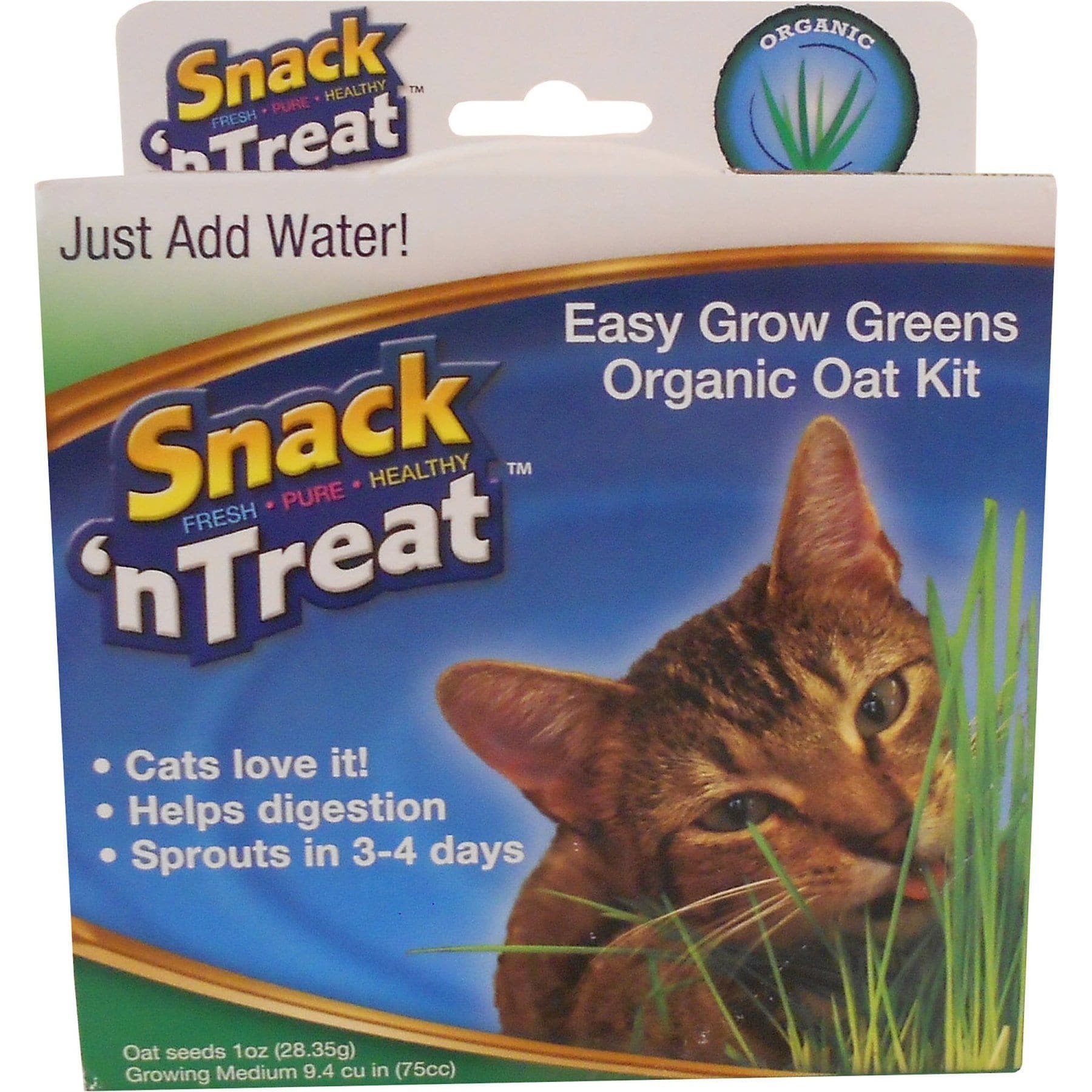
Grow a small tray of oat grass for your cat. Follow the kit instructions and keep ornamental plants out of reach.
Webvet may earn a commission when you click through to Chewy, at no extra cost to you.
Tulips, daffodils, and hyacinths
All three are on the ASPCA toxic list for cats, and all three concentrate their toxin in the bulb rather than the bloom. Tulips carry tulipalin A and B, daffodils carry lycorine, and hyacinths carry closely related alkaloids.
Pet Poison Helpline describes small amounts of leaf, stem, or flower producing mild nausea and vomiting, while bulb material causes persistent vomiting, appetite loss, diarrhea, drooling, and lethargy.
A forced bulb in a bowl of pebbles is a very different object from a cut tulip in a vase.
Carnations
Carnations are Dianthus caryophyllus; sweet William is a different species, Dianthus barbatus. The ASPCA carnation entry lists toxicity to cats through an unidentified irritant. The expected picture is mild: gastrointestinal signs plus mild dermatitis where the sap contacts skin.
They are worth recognizing precisely because they are so ordinary, filling out arrangements where nobody thinks to check them.
Orchids
Orchids are the reassuring entry. The ASPCA lists the Phalaenopsis or moth orchid, along with dozens of other orchid species, as non-toxic to dogs and cats, which covers the potted orchid most households own.
That does not mean a cat can eat one without vomiting, and the bark chips, the moss, and a top-heavy pot are separate hazards from the plant itself.
Do pollen, petals, and vase water count?

A cat does not have to eat a flower to be poisoned by one. Pet Poison Helpline states that all parts of lilies from the Lilium genus are toxic to cats in any amount, and names leaf, stem, flower, pollen, vase water, and rhizome specifically.
A cat that walks under a lily, picks up pollen on its coat, and grooms it off has ingested it just as surely as one that chewed a petal.
Ingestion and contact are different routes of exposure. Carnations and dahlias are associated with gastrointestinal signs and dermatitis, so sap on skin is not automatically harmless. Describe chewing and any skin or eye contact when you call.
Lilies are handled differently not out of caution for its own sake but because the exposure routes are genuinely different.
Grooming is what separates cats from dogs, and it shows up two ways:
- Anything on the coat ends up in the mouth. A cat spends a large share of its waking hours cleaning itself.
- Pollen leaves a mark. Yellow or rust-colored smudges on a chest, a shoulder, or a paw after a bouquet arrived are worth taking seriously rather than wiping off and forgetting.
One practical consequence: if you find lilies in an arrangement after the fact, do not wipe the cat down and call it handled.
Removing pollen helps, but it does not undo what has already been swallowed, and the phone call still needs to happen.
Symptoms of flower poisoning in cats and what to do now

Flower poisoning in cats usually announces itself as drooling, pawing at the mouth, vomiting, or a sudden refusal to eat. The trap is timing.
A cat that has swallowed a toxic bloom can look completely normal for hours, and with true lilies the most dangerous phase begins after the first signs have already come and gone. Do not use a household safe dose or an apparent lack of symptoms to clear an exposure; call your veterinarian for an individual assessment.
| When | What you may see | What it points to |
|---|---|---|
| Within minutes | Drooling, pawing at the mouth, head shaking, refusing food, a red or swollen mouth | The calcium oxalate group: calla lily, peace lily, and related plants that burn on contact |
| 1 to 3 hours | Drooling, loss of appetite, lethargy, vomiting | An early pattern described for true lily exposure; other flowers do not share one reliable onset time |
| Timing varies by plant and exposure | Vomiting, diarrhea, wobbliness, tremors, an irregular or racing heartbeat | The cardiac and neurologic group: lily of the valley, oleander, foxglove, azalea, cyclamen, kalanchoe |
| 12 to 30 hours | Increased urination, dehydration, continued vomiting, worsening lethargy | With true lilies, kidney injury developing. Merck describes this as the second phase after the early signs |
| 3 to 7 days | Weakness, collapse, little or no urine produced | Advanced kidney failure. Merck reports death in this window in untreated cats |
There is no home remedy for plant poisoning in a cat, and the popular ones are actively unhelpful:
- Milk does not dilute or neutralize a plant toxin.
- Oil does not coat the stomach, and it raises the risk of aspiration if the cat vomits.
- Salt is dangerous in its own right and can cause sodium poisoning.
- Hydrogen peroxide is sometimes used to make a dog vomit under veterinary instruction. It is not recommended in cats, and it is never a do-it-yourself step.
What helps is a veterinary team that can decontaminate safely, run bloodwork, and start intravenous fluids early when the kidneys are the concern.
Make time for supervised play with a feathered wand. Put the toy away after each session.
Webvet may earn a commission when you click through to Chewy, at no extra cost to you.
Waiting to see whether symptoms appear is the most common mistake made with lilies, and the most expensive. A normal-looking cat two hours after a lily exposure proves nothing, because the kidney phase has not started yet.
If you are not certain a plant is involved at all, two other guides cover the more ordinary causes:
- Why a cat is throwing up runs through the common reasons behind vomiting.
- A cat that is not eating and lethargic covers the cat that has gone quiet and stopped eating.
Neither replaces a phone call when a known toxic plant is in the house.
Treatment for a serious exposure means hospitalization and several days of intravenous fluids, and it arrives with no warning at all.
Knowing roughly what an emergency visit runs in your area is easier to absorb before you are standing at the desk than during. Our breakdown of emergency vet costs covers the usual ranges.
Cat-safe flowers to put in the vase instead

You can keep flowers with a cat. The ASPCA lists roses, sunflowers, gerbera daisies, snapdragons, zinnias, orchids, celosia, petunias, hibiscus, bachelor's buttons, baby's breath, and Peruvian lilies as non-toxic to cats.
That is enough range to build a full arrangement without a single stem from the toxic list.
Choose by species before color or season. Roses, gerberas, snapdragons and the other confirmed non-toxic options below offer different colors, but a purple or white bloom is not safe merely because a similar-looking flower is. The same stem-by-stem check applies to spring and Easter bouquets, summer arrangements, and fall or winter gifts; a seasonal label does not clear a mixed bunch.
Most people do not want a different bouquet so much as the same bouquet without the risk, so the table below pairs each toxic bloom with its closest safe substitute:
| Instead of this toxic bloom | Use this cat-safe substitute | Why it works |
|---|---|---|
| True lily or daylily | Alstroemeria, the Peruvian lily | The same lily-shaped flower and a long vase life. ASPCA lists it as non-toxic, and Merck names it an imposter lily with no kidney risk |
| Chrysanthemum or florist daisy | Gerbera daisy | The same round daisy face in stronger colors. ASPCA non-toxic to cats, dogs, and horses |
| Carnation used as filler | Celosia (cockscomb) or bachelor's buttons | Similar texture and bulk in a mixed bunch. Both on the ASPCA non-toxic list |
| Peony | A full cabbage or garden rose | Rosa species is on the ASPCA non-toxic list and gives the same layered, many-petalled head |
| Tulip | Snapdragon | An upright spring stem with the same vertical line. ASPCA lists Antirrhinum majus as non-toxic |
| Hydrangea | Hibiscus | A large open bloom carrying the same visual weight. ASPCA lists Hibiscus syriacus as non-toxic |
| Dahlia | Zinnia | The same dense, many-petalled summer bloom. ASPCA non-toxic |
| Eucalyptus greenery | Baby's breath (Gypsophila elegans) | Filler volume without the toxic verdict. ASPCA lists it as non-toxic while noting mild vomiting is still possible |
- Non-toxic is a toxicology verdict, not a safety verdict. It means no systemic poisoning has been recorded for that plant, not that a cat can eat it without consequence.
- The ASPCA's own baby's breath entry is filed as non-toxic and still notes that mild vomiting and diarrhea may be seen if a cat eats it.
- Judge a mixed bouquet by every stem. Roses with sunflowers, or with correctly identified baby’s breath (Gypsophila elegans), combine plants the ASPCA lists as non-toxic; thorns and stomach upset still matter. Roses mixed with carnations include a toxic flower, so the roses do not make that arrangement cat-safe. Check the foliage and other fillers as well.
Three hazards survive a clean toxicology verdict:
- Vomiting and diarrhea from plant fiber, which is ordinary cat behavior meeting an indigestible object.
- Choking and gut obstruction, particularly with long, stringy stems and leaves that a cat swallows rather than chews.
- A tipped vase. Heavy glass pulled off a shelf is an injury and a flood, not a poisoning, and it is the outcome nobody plans for.
So the safe list changes what goes in the vase, not where the vase goes. Keep the arrangement on a surface your cat does not use, change the water rather than letting it stagnate, and clear fallen petals and off-cuts.
A cat that chews flowers is usually a cat looking for greens rather than a cat looking for trouble.
Cat grass grown with an Imperial Cat Easy Grow Cat Oat Grass Kit, put somewhere the cat already spends time, takes most of the pressure off the arrangement. Cats tend to prefer the plant they are allowed to shred.
The full cat-safe plant list
This page covers cut flowers. The wider non-toxic inventory, meaning houseplants, foliage, herbs, and everything that lives in a room permanently rather than for a week in water, is a separate and much longer list.
The principle carries over unchanged: check the ASPCA non-toxic list for cats by name before the plant comes home, and assume nothing about a plant you cannot identify.
How to check a bouquet before you bring it home

Grocery store bouquets are the hardest to vet, because they are mixed, unlabeled, and usually built around whatever was cheap that week. No supermarket sells bunches that are reliably cat-safe, and none of them flag lilies on the sleeve.
The workable rule is to check the bunch rather than trust the shop, and to do it before it crosses the threshold.
The filler and the greenery are where this usually goes wrong, because a supermarket bunch is mostly not the flower pictured on the sleeve. Three things to look for:

- Eucalyptus and scented greenery. A standard filler choice, and on the ASPCA toxic list.
- Chrysanthemum sprays and pompoms. The default bulking flower in cheap bunches, and toxic.
- Fillers with a published verdict. ASPCA bouquet guidance includes lisianthus (Eustoma grandiflora), statice and other Limonium, stock (Matthiola incana), and freesias among its pet-safe choices. Purple statice still needs the botanical-name check: color does not change the identity of the plant. Match the name before using a florist’s label as a safety verdict.
- Wax flowers need an identity check. The ASPCA bouquet page names Etlingera cevuga; a different plant sold as waxflower does not inherit that verdict. Ask the florist for its botanical name and keep an unidentified stem away from your cat.
- Treat an unidentified stem as unknown rather than as safe. If a florist cannot tell you what something is, it does not go in a vase in a house with a cat. That single rule closes most of the gap a printed toxic list leaves open.
- Delivered bouquets deserve one extra step. They arrive without you choosing them, often on a day when nobody is thinking about the cat, and sympathy, Easter, and Mother's Day arrangements lean heavily on lilies. Open the box in a room the cat is shut out of, then check the stems. For a pet-friendly sympathy bouquet, ask the florist for a full stem list and no true lilies, then verify every filler before delivery.
- A Trader Joe’s or other supermarket bouquet is not automatically non-toxic to cats. Inventory and mixed arrangements vary: read the stem list, ask about unidentified fillers, and reject the bunch if you cannot identify every plant before it enters the cat’s space.
How to check any flower against the ASPCA list
- 1Search the ASPCA toxic and non-toxic plant list for cats by common name first, then by botanical name, because the florist name and the botanical name often differ.
- 2If the common name returns nothing, search the genus on its own. Ranunculus is filed under buttercup, and sweet William is filed under carnation.
- 3A flower that appears on neither list needs an identity check and further guidance. Treat it as unknown and keep it away from the cat rather than reading silence as safety.
The ASPCA Animal Poison Control Center publishes a searchable toxic and non-toxic plant list for cats, and it is the reference the rest of this page is built on.
It is also the list an AI answer or a florist will point you toward, usually without explaining how to actually use it on the stem in your hand.
Three habits make the lookup work:
- Try the florist name first. The list indexes common names heavily, including regional ones.
- Then try the botanical name. A plant tag or a reverse image search will give you one, and it usually succeeds where the common name failed.
- Then try the genus alone, before concluding the plant is absent from the list.
That last step catches people out constantly. Ranunculus is listed as Buttercup. Carnation and pinks appear under Dianthus caryophyllus; sweet William is Dianthus barbatus and needs its own species check. Mums and florist daisies sit under Chrysanthemum. Paperwhites are filed with Narcissus.
Searching the marketing name alone returns nothing for plants that are, in fact, listed.
When the database has no matching entry, check other ASPCA guidance or ask a veterinarian or poison control specialist about the exact species. A missing database result is not a toxicity verdict. Keep the stem out of the arrangement until its identity and safety are established.
Houseplants, holiday greenery, and the rest of the house
Cut flowers are one shelf of a bigger problem.
Houseplants and foliage are a separate and considerably longer inventory, and the plants that generate the most poison-control calls, including pothos, philodendron, dieffenbachia, and the aroid family generally, are foliage rather than flowers.
- Spider plants are non-toxic, but chewing can still cause an upset stomach. Our guide to spider plants explains the species-specific signs and next steps.
- Snake plants carry a saponin-related risk. Our guide to snake plants explains the species-specific signs and next steps.
- Monstera can cause painful calcium-oxalate irritation. Our guide to Monstera explains the species-specific signs and next steps.
- Aloe leaf exposure needs a different assessment from a purified product. Our guide to aloe explains the species-specific signs and next steps.
- Pothos and philodendron can also irritate the mouth when chewed. Our guide to pothos and philodendron explains the species-specific signs and next steps.
Seasonal greenery has its own list. Poinsettia, holly, mistletoe, and amaryllis all appear on the ASPCA toxic list for cats, and December brings all four into the house at once. The holiday guide also covers Christmas trees, needles, and stand water, which need a different assessment from a cut flower.
- Poinsettia has a worse reputation than it deserves. Merck groups it with the common gastrointestinal irritants, where mild to moderate upset is expected and the prognosis is excellent.
- Holly and mistletoe are the ones to be stricter about, and both are on the ASPCA toxic list for cats.
- Amaryllis carries lycorine, the same alkaloid group as daffodils, and causes vomiting, drooling, diarrhea, and tremors.
Beyond plants entirely, the household toxin list runs through cleaning products, human medication, essential oils, and antifreeze. Our guide to poison-proofing your cat's home covers that ground room by room.
Food toxicity is a separate subject and is not resolved here. If the question is about something from the kitchen rather than something in the vase, start with what happens when a cat eats chocolate and work outward.
Every plant named here, and the rest of the ASPCA toxic list, is ranked by how urgently a cat needs a veterinarian in our full guide to plants toxic to cats.
Bouquet and flower safety questions
Frequently Asked Questions
Are dried, preserved, or silk flowers safe for cats?
Drying a flower removes the water, not the toxin, so a dried lily, a dried hydrangea, or a dried eucalyptus stem deserves the same caution as the fresh version. Dried arrangements also sit out all year rather than for a week, which multiplies the opportunities.
Preserved stems add a second problem, because the glycerine and dyes used to preserve them were never intended to be eaten.
Silk and plastic flowers are not toxic in the plant sense at all. A cat that chews and swallows fabric, wire, or plastic leaves is still a foreign-body risk, and that is a surgical problem rather than a poisoning one.
Are bouquet fillers like wax flower and statice safe for cats?
Statice and other Limonium, lisianthus (Eustoma grandiflora), stock (Matthiola incana), and freesias appear in ASPCA pet-safe bouquet guidance. Waxflower still needs a botanical-name check: that page names Etlingera cevuga, which does not clear a different plant sold under the same common name. Even non-toxic flowers can cause stomach upset if eaten.
The fillers that do have verdicts split both ways. Baby's breath, celosia, and bachelor's buttons are listed as non-toxic, while carnations, chrysanthemum sprays, and eucalyptus greenery are listed as toxic.
Treat any filler stem you cannot identify as unknown, and keep it out of a vase your cat can reach.
What flowers are safe in a home with both a cat and a dog?
Apply the stricter of the two standards, which is usually the cat standard. True lilies are the clearest illustration: the ASPCA lists Lilium species as toxic to cats and non-toxic to dogs, so a bouquet that is genuinely fine for the dog can still be an emergency for the cat.
It does not always run in that direction, which is why each flower has to be checked against both species rather than assumed.
Roses, sunflowers, gerbera daisies, snapdragons, zinnias, orchids, and alstroemeria are all listed as non-toxic to cats and dogs, which makes them a practical shortlist for a two-species household.
If a bouquet is cat-safe, can I leave it where my cat can reach it?
Better not to. Non-toxic is a statement about poisoning, not about safety. A cat that eats a mouthful of non-toxic petals can still vomit, and a long stem or leaf swallowed rather than chewed can still cause an obstruction.
The vase is a separate hazard from the flowers in it. Heavy glass pulled off a shelf causes injuries and floods, and standing flower water is not something a cat should be drinking whatever is in it.
Keep even a fully cat-safe arrangement on a surface your cat does not use, change the water, and sweep fallen petals off the floor.

Editor
The Webvet Editorial Team is the in-house group of pet-care editors and writers behind Webvet, operated by Smart Pet Collective. The team researches, writes, and maintains Webvet's pet health, behavior, and medication content. Every article follows a defined editorial process: research from reputable veterinary and scientific sources, careful drafting, mandatory review of medical content by a credentialed veterinarian, and dated publication. Health and medication articles are medically reviewed by a licensed veterinary professional before they go live and are kept current over time.
Veterinarian · BVMS MRCVS
Dr. Pippa Elliott, BVMS, MRCVS, is a veterinarian with nearly 30 years of experience in companion animal practice. Dr. Elliott earned her Bachelor of Veterinary Medicine and Surgery from the University of Glasgow. She was also designated a Member of the Royal College of Veterinary Surgeons. Married with 2 grown-up kids, Dr. Elliott has a naughty Puggle named Poggle, 3 cats and a bearded dragon.
Related reading

Is Pothos Toxic to Cats? Yes, and So Is Philodendron

Is Monstera Toxic to Cats? Symptoms and What to Do

Is Aloe Vera Toxic to Cats and Dogs? What to Do Now
