Are Carnations Toxic to Cats? What the ASPCA Record Says
Carnations are toxic to cats, but only mildly. Here is the ASPCA Animal Poison Control record in full, the symptoms to expect after a chew, what to do in the first hour, and the flowers that are genuinely dangerous.

BVMS MRCVS
Medically reviewed by Dr. Pippa Elliott, BVMS MRCVS · Last reviewed

This article contains affiliate links. Webvet may earn a commission when you buy through them, at no extra cost to you.
Are carnations toxic to cats? Yes, but mildly. The ASPCA Animal Poison Control Center lists the carnation as harmful to dogs, cats, and horses, and records the expected signs as mild gastrointestinal upset and mild dermatitis. Call your veterinarian or poison control after suspected ingestion.
That is the whole verdict, and it is worth saying plainly, because the questions people ask about carnations and cats swing between panic and dismissal. Neither is right. Carnations sit at the mild end of the toxic-plant list, but the right response depends on the exposure and the individual cat.
This guide reproduces the ASPCA database record itself, walks through what actually happens after a cat eats part of a carnation, and gives you the first-hour steps with both poison-control numbers. It also distinguishes carnations from flowers that cause more severe poisoning.
Are carnations toxic to cats?
Carnations are toxic to cats, but only mildly. The ASPCA Animal Poison Control plant database records the carnation, Dianthus caryophyllus, as harmful to dogs, cats, and horses, with clinical signs listed as mild gastrointestinal signs and mild dermatitis. Cats can get sick from carnations, but this is an irritant rather than an organ poison.
- 1Carnations are mildly toxic to cats. The ASPCA lists them as harmful to dogs, cats, and horses.
- 2Expect drooling, a bout of vomiting, loose stool, or an itchy red muzzle rather than organ damage.
- 3No safe amount is established. The cited ASPCA record gives no dose threshold for Dianthus.
- 4Call your vet or a poison-control line if your cat keeps vomiting, stops eating, hides, or simply seems unwell.
- 5Carnations are not lilies. True lilies cause acute kidney injury in cats and are a genuine emergency.
Toxic is a category, not a severity rating. The ASPCA database sorts plants into toxic and non-toxic without grading how bad the toxic ones are, so a carnation and a true lily sit under the same one-word label while the outcomes are nothing alike.
That is why the record itself matters more than the label. Below is the carnation entry as the ASPCA publishes it, so you can check this page against the primary source rather than taking a paraphrase on trust.
| ASPCA record field | What the entry says |
|---|---|
| Common name | Carnation |
| Additional common names | Pinks, Wild Carnation, Sweet William |
| Scientific name | Dianthus caryophyllus |
| Family | Caryophyllaceae |
| Toxicity | Toxic to dogs, toxic to cats, toxic to horses |
| Toxic principle | Unknown irritant |
| Clinical signs | Mild gastrointestinal signs, mild dermatitis |
One field in that record does most of the work. The clinical signs are listed as mild, and mild is the ASPCA's word rather than a softening of ours. The severity label does not decide whether an individual cat needs care.

A window perch gives your cat a dedicated resting spot. Install it as directed and keep it away from accessible plants.
Webvet may earn a commission when you click through to Chewy, at no extra cost to you.
There is no published safe amount either. The cited ASPCA entry does not provide a dose threshold, lethal dose, or body-weight cutoff. Tell the clinician what was eaten and how much appears to be missing.
Which parts of a carnation are toxic, and what is in them
A carnation has finely fringed petals and narrow blue-green leaves along a jointed stem. Use these features to check the bouquet label, then verify the botanical name, Dianthus caryophyllus, against the ASPCA record; a similar-looking flower may need a different verdict.

Every part of the carnation carries the irritant. The ASPCA listing covers the plant, not one structure on it, so the petals, the leaves, the stem, and the sap are all included. There is no evidence that the flower head is safer than the foliage, or the other way around.
Are carnation flowers toxic to cats? Yes, on the same listing as the leaves. Are carnation leaves toxic to cats? Same answer. The whole-plant entry is what settles both.
Carving the plant into safe and unsafe parts is something no primary source supports. In practice that means four things to keep away from a cat:
- Petals and the flower head, which are what a cat usually reaches first in a vase.
- Leaves and the narrow blue-green foliage further down the stem.
- The stem itself, along with the sap that weeps from a fresh cut.
- Fallen debris on the floor or counter, which is the part most often missed during a cleanup.
What the ASPCA actually says the toxin is
The ASPCA records the toxic principle for carnation as an unknown irritant. That is the entire entry for that field. This identifies a limit of that database entry; it is not a claim to have surveyed all veterinary literature.
This matters, because the most repeated claim on this topic is not supported by its own source. Search carnation toxicity and you will be told the culprit is saponins, or triterpenoid saponins specifically, often in a summary that cites the ASPCA in the same breath. The ASPCA entry does not say that.
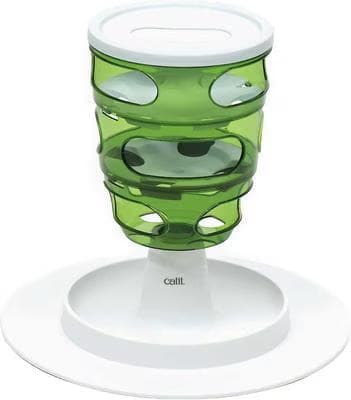
A food-tree puzzle adds an activity to everyday feeding. Introduce it gradually using part of your cat’s usual food allowance.
Webvet may earn a commission when you click through to Chewy, at no extra cost to you.
So we are not naming a compound, because the primary source does not name one. Unknown irritant is less satisfying than a chemical name, but it is the accurate answer. Here is what the record does describe about how the irritant behaves:
- Contact with the sap is what produces the mild dermatitis on the listing.
- Swallowing plant material is what produces the mild gastrointestinal signs.
- Both effects are local irritation, which is why nothing on the entry points at the kidneys, liver, or heart.
That pattern is consistent with a contact irritant, and it explains a common presentation: a cat that only mouthed a stem and spat it out often shows a red muzzle and a lot of drool, and nothing else at all.
On a page about what your cat just ate, a confident wrong answer is worse than an honest gap. That is why this guide stops where the ASPCA record stops.
What happens if a cat eats a carnation
If a cat eats a carnation, the ASPCA describes mild gastrointestinal signs and mild dermatitis. Report vomiting, diarrhea, drooling or skin irritation to your veterinarian; the record does not specify when signs begin.
The ASPCA carnation record gives no onset or recovery timetable. Ask your veterinarian how long to observe your cat and which changes should prompt another call. Signs to report include:
- Drooling or hypersalivation.
- Vomiting.
- Diarrhea or a softer stool.
- Pawing at the mouth, head shaking, or exaggerated lip smacking.
- Redness, swelling, or itchiness around the muzzle, lips, or paws.
- A change in appetite.
The ASPCA carnation record does not give an onset or recovery timetable. Call your veterinarian or poison control after suspected ingestion and follow their monitoring advice; do not use a 24-hour cutoff to delay that call.
Are cats allergic to carnations is a slightly different question, and the answer is that most reactions are irritation rather than true allergy. The ASPCA lists mild dermatitis for exactly this reason. A cat that rubs its face along cut stems can end up with a red, itchy muzzle without ever swallowing a thing.
| Situation | What you may see | What to do |
|---|---|---|
| After suspected ingestion | Signs may be absent | Call your veterinarian or poison control for advice. |
| Mild gastrointestinal signs | Stomach upset | Report the signs and follow the clinician's monitoring plan. |
| Mild dermatitis | Skin irritation | Report any skin contact as well as ingestion. |
| Worsening or persistent signs | Your cat remains unwell | Seek veterinary advice promptly; do not wait for a fixed deadline. |
The last row is the one that matters. Repeated vomiting, refusing food, hiding, or looking flat are not carnation-specific signs, and that is precisely why they are worth a call: they mean something is wrong, and the flower may not be the cause.
The ASPCA carnation entry gives no safe dose threshold. Tell your veterinarian how much may have been eaten, but do not use a guessed safe amount to decide that a cat with continuing signs needs no help.
Our guides on a cat that is vomiting but otherwise acting normal and a cat that stops eating and turns lethargic carry the full triage for both of those, because they keep coming up long after the bouquet has been thrown out.
What to do right now if your cat ate a carnation
Start by ending the exposure, then get a professional opinion before you do anything else. The first hour is about information, not intervention, and the two national poison-control lines exist precisely so that an owner does not have to guess at the kitchen counter.
It is better to know about the fees before you dial than to be surprised mid-call. The Pet Poison Helpline publishes an $89 per-incident fee that covers follow-up calls on the same case. The ASPCA states that a consultation fee applies without publishing a figure on its poison-control page.
The instruction not to induce vomiting is the part of this section that is not negotiable. Hydrogen peroxide, salt, and the other remedies circulating online can injure a cat's stomach, and cats tolerate induced vomiting badly even when it is done properly under veterinary supervision. That decision belongs to a professional, every time.
There is also no home remedy that neutralizes a plant irritant, and several popular ones make things worse. Skip all of the following:
- Hydrogen peroxide, salt, or mustard to force vomiting, all of which can injure the stomach lining.
- Milk, oil, butter, or bread, none of which neutralize an irritant.
- Force-feeding or syringing water into a nauseated cat, which risks getting liquid into the lungs.
- Waiting it out when your cat is already flat, hiding, or vomiting repeatedly.
An unexpected toxin call is the classic unplanned vet bill, and the bill is often the thing that makes an owner hesitate before phoning. If that is the hesitation, our guide to what an emergency vet visit costs sets the expectation, and pet insurance for cats is built around exactly this kind of out-of-nowhere expense.
Can cats be in the same room as carnations?
Smelling carnations alone is different from eating them or touching their sap. The ASPCA record describes gastrointestinal signs and dermatitis, not poisoning from fragrance. A safe arrangement still requires keeping the flowers, fallen debris and vase water out of reach; a curious cat can turn a sniff into contact or chewing.
The realistic risk in a shared room is not the flowers standing in water. It is whatever ends up within reach of a curious cat:
- Petals and leaves that drop onto the floor overnight.
- Leaves and trimmings left on the counter during arranging.
- The water in the vase, which collects sap and plant debris.
- Stems scattered when the cat knocks the whole vase over.
Whether you can have carnations around cats therefore comes down to your particular cat. One that ignores plants entirely can live alongside a bouquet for a week without incident. A determined chewer will find it, and for that cat the answer is placement rather than proximity.
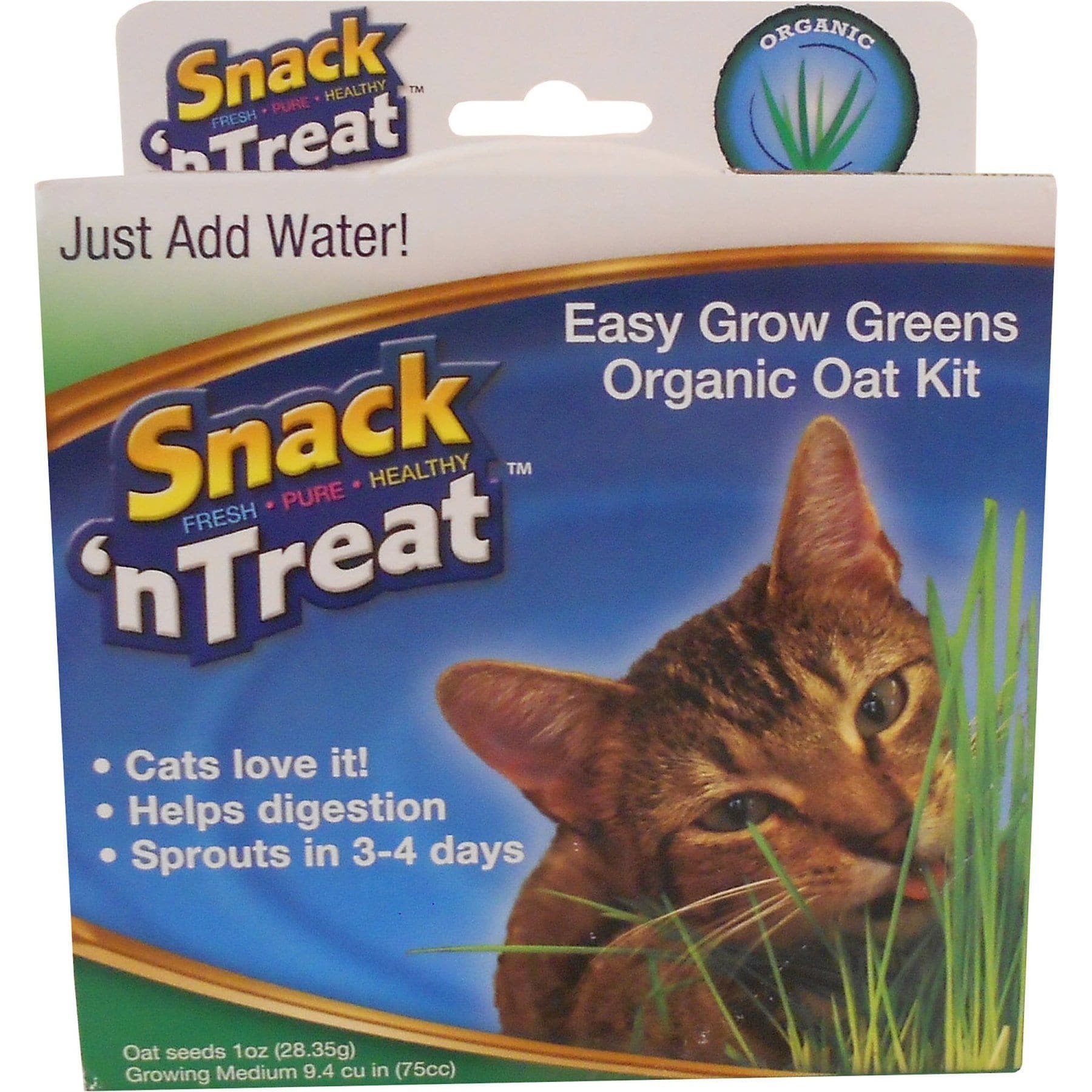
Grow a small tray of oat grass for your cat. Follow the kit instructions and keep ornamental plants out of reach.
Webvet may earn a commission when you click through to Chewy, at no extra cost to you.
The one genuine caution is that carnations rarely arrive alone. Mixed supermarket bouquets often pair them with lilies, and a true lily in the same arrangement changes the situation completely, including the water that everything is standing in.
Mini carnations, spray carnations, and every color

Mini carnations, spray carnations, and every petal shade fall under exactly the same verdict, because the ASPCA listing is not about the flower's size or its color. It sits at the level of the plant itself, Dianthus caryophyllus, and the florist's forms are all the same species dressed differently.
That single rule answers a whole shelf of questions at once. Are mini carnations toxic to cats, are spray carnations poisonous to cats, are red carnations toxic to cats, white, pink: same plant, same listing, same mild irritant, same expected signs. All of these are covered:
- Standard carnations, the single large bloom on one thick stem.
- Mini and spray carnations, several smaller heads branching off one stem.
- Every petal color, including the dyed and tipped stems sold around holidays.
- Sweet William and pinks, which are named on the same ASPCA record.
Dye is worth an extra sentence. Blue, green, and rainbow carnations are usually white flowers that have drawn food-grade floral dye up the stem, and the dye is not what the ASPCA listing describes. If your cat chews one, the plant verdict is what applies.
Where the variety does matter is identification. Mini and spray carnations look nothing like the single-bloom flower most people picture, so an owner can be reading a carnation page while holding something they have not actually identified.
The tells are the fringed petal edge, the swollen calyx just under the bloom, and the narrow blue-green leaves running up the stem.
Are carnations toxic to dogs and people?
Carnations are toxic to dogs as well, on the same ASPCA record. The entry covers dogs, cats, and horses together, with the same unknown irritant and the same mild gastrointestinal signs and mild dermatitis, so a dog that raids a bouquet gets the same watch-and-call response a cat does.
Dogs are simply more likely to eat a large volume in one go, which usually means more vomiting rather than a different kind of problem. The first-aid steps above apply unchanged, and both poison-control lines cover dogs. The single entry covers three species:
- Dogs: harmful, with the same mild gastrointestinal signs and mild dermatitis.
- Cats: harmful, on identical terms.
- Horses: harmful, which is why the record is worth reading in full rather than skimming for the word cat.
For people, carnations are not treated as a poisoning risk in the way they are listed for pets, but contact with the plant can irritate human skin. Contact dermatitis from Dianthus is a recognized problem for florists; that does not establish that someone arranging a single bunch cannot react.
One boundary is worth marking here. This is a plant and flower verdict, not a food one. If you arrived from a broader is-this-toxic search, food toxins such as chocolate work through completely different mechanisms and are covered on their own pages.
How to keep your cat out of the vase

Prevention with a determined cat is mostly geometry plus a substitute. Height on its own does not work, because a shelf your cat can reach in two hops is not out of reach, and a cat that wants greenery will keep looking until it finds something to chew.
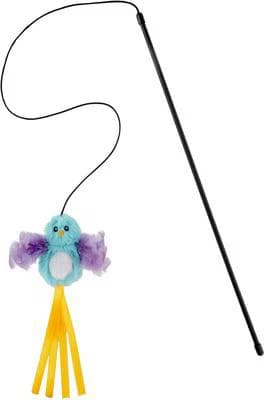
Make time for supervised play with a feathered wand. Put the toy away after each session.
Webvet may earn a commission when you click through to Chewy, at no extra cost to you.
Why cats like carnations is the same reason they like most cut flowers: the stems are fibrous, they move when touched, and a fresh bouquet is the most interesting new object in the room. That is also why removing the temptation works far better than telling your cat off.
Cat grass makes the rest of it stick. Cats eat grass for reasons still debated, but the behavior is normal, and kits such as the Imperial Cat Easy Grow Cat Oat Grass Kit grow cereal grass for cats to chew. Even then, a cat that gorges can bring it back up.
Dried catnip is not a dependable barrier between a cat and a bouquet. The ASPCA catnip entry notes that it can cause vomiting or diarrhea and can stimulate some cats while sedating others. Keep carnations physically inaccessible rather than relying on a catnip distraction.
If placement alone is not enough, a taste deterrent on the outside of the vase can add a second layer, though no spray is a substitute for putting the flowers where your cat genuinely cannot get to them.
Cat-safe flowers to put in the vase instead
If the simplest fix is to buy something different next time, several common bouquet flowers are listed by the ASPCA as non-toxic to cats. Non-toxic is a specific claim, though: it means no known systemic poisoning, not that the plant is harmless.
Any plant can still cause vomiting or drooling if a cat eats enough of it, and a swallowed stem can cause an obstruction no matter what the toxicity listing says. Non-toxic means the flower will not poison your cat. It does not mean you should let your cat eat it.
| Flower you were going to buy | ASPCA listing | Cat-safe substitute |
|---|---|---|
| Carnation (Dianthus caryophyllus) | Toxic, mild gastrointestinal signs and mild dermatitis | Rose (Rosa species), listed non-toxic to cats |
| Tulip (Tulipa species) | Toxic, tulipalin A and B, highest concentration in the bulb | Gerbera daisy (Gerbera jamesonii), listed non-toxic to cats |
| Daffodil (Narcissus species) | Toxic, lycorine and other alkaloids, bulb most poisonous | Sunflower (Helianthus), listed non-toxic to cats |
| Chrysanthemum (Chrysanthemum species) | Toxic, pyrethrins and other irritants | Zinnia (Zinnia species), listed non-toxic to cats |
| True lily (Lilium species) | Toxic, kidney failure and death possible in cats | Phalaenopsis orchid (Phalaenopsis species), listed non-toxic to cats |
Treat that table as a shortlist for the flower aisle rather than the full picture. Our safe-plant guide carries the complete vet-checked list of houseplants and flowers that are safe for cats, including the ones that are non-toxic on paper but still a bad idea around a committed chewer.
Our individual guides cover roses, orchids and spider plants, while the safe-plant guide covers a wider choice of replacements. Use the specific plant name rather than applying the carnation verdict to every stem in a bouquet.
For the complete vet-checked list across houseplants, flowers, herbs, and garden beds, see our guide to plants safe for cats.
Sunflowers are another non-toxic bouquet choice. Our flower guide compares them with other florist stems, including those that need to stay out of a cat household.
How carnations compare with other flowers
The reassurance in this article stops at the carnation. Several flowers that turn up in the very same bouquets sit in a different category entirely, and the difference is not one of degree. It is the difference between an upset stomach and organ failure.
That contrast is the thing to carry away from this page. A carnation exposure needs advice suited to the individual cat. A lily gets you a same-day veterinary visit, and the outcome depends heavily on how quickly that visit happens.
Several other florist staples also carry heavier listings than the carnation does:
| Plant or arrangement | Verdict for cats | What this means beside a carnation |
|---|---|---|
| Roses and carnations in one bouquet | Roses are non-toxic; carnations are mildly toxic | A rose does not make the carnation safe to chew. Check every stem and prevent access to thorns, debris and vase water. |
| Moth orchids (Phalaenopsis) | Non-toxic | Check the orchid species and any treatments; the carnation verdict does not transfer to the orchid. |
| Spider plants (Chlorophytum comosum) | Non-toxic | A leafy alternative, but eating plant material may still cause stomach upset. |
| Sunflowers | Non-toxic | A bouquet alternative that still needs to stay away from a cat that chews flowers. |
| Tulips | Toxic; highest concentration in the bulb | Report ingestion to your veterinarian and say which plant part was eaten. |
| True lilies and daylilies | Toxic; acute kidney injury risk | Call immediately after possible exposure, including pollen or vase water; do not wait for signs. |
| Peace lilies and calla lilies | Toxic; insoluble calcium oxalate irritation | These are not true lilies. Mouth pain and drooling still warrant veterinary advice. |
- Tulips (Tulipa species): toxic on tulipalin A and B, with the highest concentration in the bulb.
- Daffodils (Narcissus species): toxic on lycorine and other alkaloids, with the bulb the most poisonous part.
- Chrysanthemums (Chrysanthemum species): toxic on pyrethrins and other irritants, with incoordination possible alongside the vomiting.
Our bouquet safety guide covers the full list of flowers toxic to cats, and the lily guide carries that emergency in detail. If you want the household version rather than the flower version, our room-by-room guide to poison-proofing your cat's home is the place to start.
Every plant named here, and the rest of the ASPCA toxic list, is ranked by how urgently a cat needs a veterinarian in our full guide to plants toxic to cats.
The tulip guide explains why the bulb matters, while the lily guide separates kidney-toxic true lilies from peace and calla lilies. A common flower name does not establish the mechanism or urgency.
Carnations and cats: common questions
Frequently Asked Questions
Are carnations toxic to cats if they smell them?
No. Scent alone is not an exposure route for carnations. The ASPCA listing describes an irritant that has to be swallowed or make contact with skin, so smelling and swallowing are different exposures.
The only indirect risk is pollen landing on the coat and being groomed off later, which amounts to a very small ingestion rather than anything inhaled. If you are uncertain about contact or ingestion, ask your veterinarian.
Is the water in a carnation vase dangerous to my cat?
It is worth preventing. Vase water collects sap, dropped plant debris, and any floral preservative you added, and a cat drinking from the vase swallows all of it without ever touching a petal.
With carnations that usually means mild stomach upset rather than anything serious, but change the water daily, bin the preservative sachet as soon as the stems are in, and keep the vase somewhere your cat cannot drink from it.
Do carnations cause kidney failure in cats the way lilies do?
No. The ASPCA record for carnation lists only mild gastrointestinal signs and mild dermatitis, with nothing pointing at the kidneys.
True lilies are a completely different emergency: the ASPCA notes kidney failure and possible death in cats, and cats are the only species known to be affected. Never treat the two flowers the same way, in either direction.
Are Sweet William and pinks the same as carnations for toxicity?
Yes. The ASPCA records Pinks, Wild Carnation, and Sweet William as additional common names on the same carnation entry, all within the Dianthus genus.
If a florist sold you a stem under any of those names, the verdict on this page applies to it unchanged, including the mild gastrointestinal signs and the mild dermatitis.
The bottom line
Are carnations toxic to cats? Mildly, and the ASPCA record is the reason we can say that plainly rather than hedging. The listed signs are mild gastrointestinal upset and mild dermatitis; the record gives no recovery deadline.
Mild is not the same as ignore. A cat that keeps vomiting, refuses food, hides away, or simply seems unwell needs a veterinarian regardless of what the plant list says, because the flower may not be what is wrong. When you are not sure, both poison-control lines are open around the clock.
None of this replaces a conversation with the veterinarian who can actually examine your cat. If something feels off, make the call.

Editor
The Webvet Editorial Team is the in-house group of pet-care editors and writers behind Webvet, operated by Smart Pet Collective. The team researches, writes, and maintains Webvet's pet health, behavior, and medication content. Every article follows a defined editorial process: research from reputable veterinary and scientific sources, careful drafting, mandatory review of medical content by a credentialed veterinarian, and dated publication. Health and medication articles are medically reviewed by a licensed veterinary professional before they go live and are kept current over time.
Veterinarian · BVMS MRCVS
Dr. Pippa Elliott, BVMS, MRCVS, is a veterinarian with nearly 30 years of experience in companion animal practice. Dr. Elliott earned her Bachelor of Veterinary Medicine and Surgery from the University of Glasgow. She was also designated a Member of the Royal College of Veterinary Surgeons. Married with 2 grown-up kids, Dr. Elliott has a naughty Puggle named Poggle, 3 cats and a bearded dragon.
Related reading

Is Pothos Toxic to Cats? Yes, and So Is Philodendron

Is Monstera Toxic to Cats? Symptoms and What to Do

Is Aloe Vera Toxic to Cats and Dogs? What to Do Now
