Are Snake Plants Toxic to Cats? A Vet-Reviewed Answer
Snake plants are toxic to cats: the ASPCA lists Sansevieria trifasciata as toxic to cats and dogs, with saponins as the toxic principle. Here is what the signs look like, what to do in the first hour, and whether the plant has to go.

BVMS MRCVS
Medically reviewed by Dr. Pippa Elliott, BVMS MRCVS · Last reviewed

This article contains affiliate links. Webvet may earn a commission when you buy through them, at no extra cost to you.
Are snake plants toxic to cats? Yes. The ASPCA Animal Poison Control toxic plant database lists the snake plant, Sansevieria trifasciata, as toxic to cats and dogs, and names saponins as the toxic principle. Horses are not listed on that record.
That verdict does not make a chewed leaf a lily-scale emergency. Snake plant poisoning irritates the gut, and the ASPCA lists nausea, vomiting, and diarrhea as the clinical signs. It is still worth a phone call.
Below: the signs to watch for, what to do in the first hour, which cultivars the verdict covers, and how to decide whether the plant has to leave the room.
Are snake plants toxic to cats?
- 1Snake plants are toxic to cats on the ASPCA Animal Poison Control record, and toxic to dogs on the same record.
- 2The toxic principle is saponins. Pet Poison Helpline places them in the leaves and stems, so every part within reach counts.
- 3The usual outcome is a self-limiting stomach upset: nausea, vomiting, and diarrhea rather than organ failure.
- 4Call your vet, ASPCA Animal Poison Control on (888) 426-4435, or Pet Poison Helpline on (855) 764-7661 anyway.
- 5Never induce vomiting at home, and never give activated charcoal without veterinary direction.
Snake plants are toxic to cats. The ASPCA Animal Poison Control Center lists Sansevieria trifasciata as toxic to cats and dogs, with saponins as the toxic principle. The clinical signs on that record are nausea, vomiting, and diarrhea. Chewing the leaf irritates the gut rather than damaging an organ.
That verdict comes from a poison-control database rather than a plant retailer or a forum thread, and here the difference matters. The same ASPCA record lists three other names the plant is sold under:
- Mother-in-law's tongue, the older common name and still the most widely used.
- Golden bird's nest, usually applied to the short rosette forms.
- Good luck plant, a shop name rather than a botanical one.
The Pet Poison Helpline record for Sansevieria identifies the same species as Dracaena trifasciata and confirms saponins within its leaves and stems. It does not provide a separate assessment for every species sold as a snake plant.
That record also adds two signs the ASPCA entry does not carry, dilated pupils and a wobbly gait, and reports both specifically in cats. Keeping those separate from the gut signs is what tells you how urgent a case is.
Toxic on a poison-control record means a known poisoning risk, not a guaranteed severe outcome. The ASPCA and Pet Poison Helpline entries do not establish a safe amount or a dose separating a harmless nibble from a serious exposure.
What makes a snake plant toxic: saponins and the parts that carry them
The snake plant, also called mother-in-law's tongue or Sansevieria, is poisonous to cats. The ASPCA names saponins as the toxic principle, and Pet Poison Helpline places these compounds in the leaves and stems. The renamed Dracaena trifasciata is the same plant.
That defense is the whole mechanism here. Saponins irritate the tissue they touch, so the reported signs cluster in the mouth and the digestive tract: drooling first, then nausea, vomiting, and diarrhea. It is a local irritant reaction rather than a toxin aimed at one organ.

A window perch gives your cat a dedicated resting spot. Install it as directed and keep it away from accessible plants.
Webvet may earn a commission when you click through to Chewy, at no extra cost to you.
Pet Poison Helpline places the saponins within the leaves and stems. The practical consequence is worth stating plainly: there is no part of a snake plant you can leave in reach and call safe.
- The leaves are the main exposure. They are stiff upright blades sitting at exactly the height a cat investigates.
- The stems and the pale base of each blade carry the same saponins, per the Pet Poison Helpline record.
- A flower stalk, on the rare occasion an indoor plant produces one, grows out of those stems and has no separate record calling it safe.
- Cuttings, offsets, and trimmed leaf sections left on the floor are the exposure owners forget, and the easiest one to prevent.
The contrast with a true lily is the useful one. A lily can put a cat into kidney failure from pollen groomed off its coat, which is a systemic poisoning with a narrow window. A snake plant is doing something cruder and more contained.
That difference is real, and it is not permission to ignore an ingestion. Vomiting and diarrhea dehydrate a cat quickly, especially a kitten or an older cat.
A large piece of tough, fibrous leaf swallowed rather than shredded can also cause a mechanical problem in the gut that has nothing to do with the saponins at all.
Are all snake plant varieties toxic? Laurentii, zeylanica, cylindrica, and the rest

Do not treat a snake-plant variety as a safe choice for a cat that chews plants. Named cultivars of Dracaena trifasciata, including Laurentii, Hahnii and Moonshine, share that species listing. Other species and hybrids sold as snake plants need their botanical identity checked; the cited trifasciata records do not independently assess each one.
Two botanical names describe that plant, and both turn up on nursery labels. Sansevieria trifasciata was the accepted name for decades. Botanists have since moved the genus into Dracaena, so the same plant is now Dracaena trifasciata.
The ASPCA record still uses the Sansevieria name and files the plant under the family Agavaceae, which current classifications fold into Asparagaceae. Either name on a label means the same toxic plant.
| Cultivar or trade name | Botanical name on the label | Toxic to cats? |
|---|---|---|
| Snake plant, mother-in-law's tongue | Sansevieria trifasciata, now Dracaena trifasciata | Yes. Saponins, on the ASPCA record |
| Laurentii, the yellow-edged form | Sansevieria trifasciata 'Laurentii' | Yes. Same species |
| Zeylanica, dark cross-banded blades | Sansevieria zeylanica, now Dracaena zeylanica | Not independently assessed by the cited trifasciata entries. Keep inaccessible and ask a veterinary poison service about the exact plant. |
| Cylindrica, starfish, boncel spears | Sansevieria cylindrica, now Dracaena angolensis | Not independently assessed by the cited trifasciata entries. Keep inaccessible and ask a veterinary poison service about the exact plant. |
| Bird's nest, Hahnii, golden bird's nest | Sansevieria trifasciata 'Hahnii' | Yes. Same species |
| Moonshine, pale silver-green blades | Sansevieria trifasciata 'Moonshine' | Yes. Same species |
| Black Coral, Futura, Superba, Night Owl | Sansevieria trifasciata cultivars | Yes. Same species |
| Fernwood, thin arching spears | Sansevieria 'Fernwood', a Dracaena hybrid | Not independently assessed by the cited trifasciata entries. Keep inaccessible and ask a veterinary poison service about the exact plant. |
The table separates cultivars of the listed species from other snake-plant species and hybrids. A missing species-specific assessment is not a safety clearance, so keep an unverified plant away from a chewing cat.
The ASPCA names Sansevieria trifasciata and Pet Poison Helpline identifies Dracaena trifasciata, two names for the same plant. That species listing applies to its named cultivars; it should not be presented as a separate test of every species or hybrid sold under the snake-plant name.
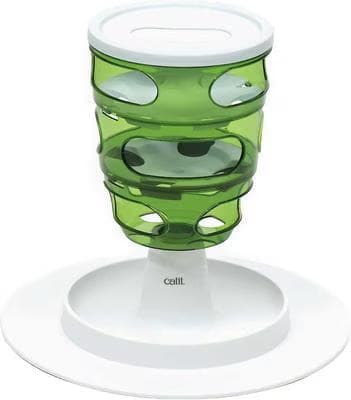
A food-tree puzzle adds an activity to everyday feeding. Introduce it gradually using part of your cat’s usual food allowance.
Webvet may earn a commission when you click through to Chewy, at no extra cost to you.
If you are not certain the plant is a snake plant at all, it is a distinctive thing to identify:
- Stiff, upright, sword-shaped leaves growing straight out of the soil with no woody stem or trunk.
- A leathery, almost plastic feel, much thicker and less floppy than a spider plant leaf.
- Cross-banding in dark and pale green, or a solid cream or yellow stripe down each edge.
- Round cylindrica spears rather than flat blades in some varieties, sometimes braided at the nursery.
Those cylindrica spears belong to Dracaena angolensis, a different species from Dracaena trifasciata. Their different shape matters for identification. Keep the plant inaccessible and report its botanical name after an exposure rather than assuming the trifasciata record is a species-specific assessment of it.
What happens if a cat eats a snake plant

Snake plant ingestion can cause gastrointestinal signs; the cited poison-control record does not provide a fixed onset or recovery window. The ASPCA record lists nausea, vomiting, and diarrhea. Pet Poison Helpline adds drooling, and reports dilated pupils and a wobbly gait specifically in cats.
Those two lists carry different urgency, which is why they are worth keeping apart. Vomiting and diarrhea after a chewed leaf are what a gut irritant does.
Excessive drooling that will not stop, dilated pupils, or an unsteady walk are less common. They are the point at which you stop watching and call your vet.
| Sign | Timing | What it should trigger |
|---|---|---|
| Drooling, lip-smacking, pawing at the mouth | No fixed onset window is given in the cited poison-control record. | Call your vet or a poison-control line |
| Nausea: refusing food, hiding, swallowing repeatedly | No fixed onset window is given in the cited poison-control record. | Call. Note how much plant is missing |
| Vomiting | No fixed onset window is given in the cited poison-control record. | Call. Keep a sample of the leaf |
| Diarrhea | No fixed onset window is given in the cited poison-control record. | Call. Watch water intake closely |
| Dilated pupils in normal room light (reported in cats) | No fixed onset window is given in the cited poison-control record. | Call your vet the same day |
| Wobbly or unsteady gait (reported in cats) | No fixed onset window is given in the cited poison-control record. | Call your vet now |
| Repeated vomiting, blood, collapse, breathing changes | No fixed onset window is given in the cited poison-control record. | Emergency clinic now. Do not wait |
No poison-control record publishes an exact onset window for this plant, so this table does not assign a recovery deadline. Any sign at all is a reason to pick up the phone.
Excessive drooling is often the first thing an owner actually sees, and it is easy to misread as a hairball on its way up. If you see it after a chewed leaf, treat the plant as the likely cause.
Signs that mean stop watching and get to a clinic:
- Vomiting that repeats more than two or three times, or vomit with blood in it.
- A cat that will not drink, or that has gone quiet and unresponsive in a corner.
- Dilated pupils in an ordinarily lit room, or a wobbly, drunk-looking walk.
- Trouble swallowing, persistent pawing at the mouth, or labored breathing.
- A kitten, a senior cat, or a cat with existing kidney or gut disease showing any sign at all.
Two of those signs turn up for a hundred reasons other than plants, which is why they have their own guides here: why a cat is throwing up and cat diarrhea and what to do about it.
If you cannot tell whether you are looking at a plant reaction or just a cat in a dim room, dilated pupils in cats explains what else that sign can mean and when it is an emergency.
Owners also routinely misjudge whether the cat chewed the plant at all. Genuine cat damage on a thick fibrous leaf shows as a crushed, ragged bite mark and a torn leaf edge, usually low down. Ordinary wear looks like a dry, papery brown tip.
How much snake plant is dangerous, and can it kill a cat?

The cited ASPCA and Pet Poison Helpline entries do not provide a lethal dose, a milligram-per-kilogram threshold, a safe number of leaves or a fatality rate for snake plants in cats. Do not use an unsourced numerical threshold to decide whether to call.
Tell the veterinarian whether the cat only licked a leaf, chewed and spat it out, or swallowed a piece. Those are different exposures, but the visible damage alone cannot tell you the absorbed dose or guarantee a mild outcome.
On whether it can kill a cat: the ASPCA record stops at nausea, vomiting, and diarrhea, and the Pet Poison Helpline record stops at drooling, vomiting, dilated pupils, and a wobbly gait. Neither describes organ failure or death.
That is calibration, not reassurance. A cat vomiting repeatedly for a day gets dehydrated, and dehydration is what actually harms a small animal. A large piece of swallowed leaf can also obstruct, which is a surgical problem rather than a toxic one.
Some cats are more exposed than others, and it is worth knowing which side yours falls on:
- Kittens: small body mass, indiscriminate chewing, and very little reserve if they vomit repeatedly.
- Senior cats and cats with kidney disease: fluid loss is harder to absorb and dehydration arrives faster.
- Cats with inflammatory bowel disease or a history of vomiting: a direct irritant lands on tissue that was already inflamed.
- Cats that gulp rather than shred: a long section of tough leaf is a physical hazard as much as a chemical one.
- Cats on daily medication: new vomiting changes whether that medication is absorbed, and your vet needs to know.
Checking a cat's pupils at home is genuinely useful and easy to get wrong, because pupil size tracks the light in the room. Look at your cat in normal room light rather than a dim corner or direct sun.
Compare against what its eyes usually look like at that hour. Two wide black pupils in an ordinarily lit room, in a cat that has just chewed a plant, is a same-day call.
What to do if your cat ate a snake plant
The fourth step is the one that matters most, because advice to make a cat vomit at home still circulates on pages ranking for this exact question. It is specifically wrong for cats.

Grow a small tray of oat grass for your cat. Follow the kit instructions and keep ornamental plants out of reach.
Webvet may earn a commission when you click through to Chewy, at no extra cost to you.
There is no safe over-the-counter emetic for a cat, and the attempt can add a chemical burn or an aspiration event on top of the original problem. Making a cat vomit is a clinic procedure with prescription drugs.
A poison-control call is short. Have these ready before you dial:
- Which plant it was, and a photograph of it if you have one.
- Roughly how much is missing, and whether the material was swallowed or spat out.
- When it happened, as precisely as you can manage.
- Your cat's weight, age, medications, and any existing kidney or gut disease.
The specialist will tell you whether this is a watch-at-home case or a come-in-now case. That triage is what the fee buys, and it is usually cheaper than an emergency visit made out of pure uncertainty.
If the answer is come in now, cost is what stalls people at the worst moment. It helps to know roughly what an emergency vet visit costs beforehand, and whether pet insurance is worth it for cats is a question better settled on a quiet evening than during one.
Deal with the plant before the cat returns to that space. Previous chewing shows that the cat can reach it; do not rely on the cat losing interest.
Are snake plants toxic to dogs and other pets?
Yes. The same ASPCA record that lists the snake plant as toxic to cats lists it as toxic to dogs, with the same toxic principle and the same clinical signs. The plant is not pet friendly in any household, whatever a shelf label says.
Two differences between the species are worth knowing:
- Dogs take larger mouthfuls, so a dog that chews a snake plant can swallow far more fibrous leaf in one go, which raises both the irritant dose and the obstruction risk.
- Cats are the species Pet Poison Helpline singles out for dilated pupils and a wobbly gait. Those two signs sit on the cat side of that record.
Horses do not appear on the ASPCA snake plant record. That is an absence rather than a clearance: the record carries no horse entry, which is not the same as the plant having been assessed and cleared.
The same caution applies to rabbits, birds, and reptiles. Those are separate clinical questions with separate sources, and this article does not answer them.
If a dog has eaten a snake plant, the sequence is identical: remove the plant, do not induce vomiting on your own initiative, and call your veterinarian, ASPCA Animal Poison Control on (888) 426-4435, or Pet Poison Helpline on (855) 764-7661.
Dog-safe replacements and plants to avoid
Dogs and cats do not share a toxic plant list, so a cat list read across to a dog household gets some plants wrong in both directions. Sago palm looms larger for dogs, while lilies, the worst plant in a cat household, are a lower-grade problem for a dog.
A dog home needs the dog-side list on its own terms rather than an inherited one. The ASPCA toxic and non-toxic plant database lets you check any individual plant by species before you buy it.
Use our guide to plants toxic to dogs for the dog-specific hazard list. Choose replacement plants by checking the botanical name and the dog's own listing, as well as the space and light available.
Can you keep a snake plant if you have a cat?
You can keep a snake plant if you have a cat, but only on two conditions: your cat is not a plant chewer, and the plant can go somewhere genuinely out of reach rather than merely high up.
That is a different answer from a flat yes and a different answer from get rid of it. Which one applies depends on your cat, not on the plant.
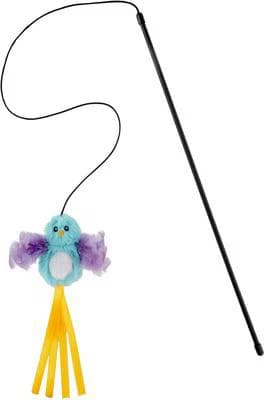
Make time for supervised play with a feathered wand. Put the toy away after each session.
Webvet may earn a commission when you click through to Chewy, at no extra cost to you.
- 1Has your cat ever chewed a plant, at any point, in any house? If yes, the snake plant goes.
- 2Is your cat a kitten or a senior? Kittens explore with their mouths and seniors have less reserve if they vomit, so both push toward rehoming the plant.
- 3Can the plant go somewhere genuinely out of reach, meaning behind a closed door rather than on a high shelf? If not, the plant goes.
- 4Does your cat have existing kidney or gastrointestinal disease? If so, do not accept any exposure risk at all.
- 5A bad answer on any single one of these settles it. Give the plant away, or move it to a room the cat never enters.
The argument that keeps unsafe plants in houses is the instinct argument, and it does not survive contact with the evidence. A cat that has ignored the plant for three years is evidence about the past, not a guarantee about next week.
Chewing behavior changes with boredom, a house move, a diet change, or nothing you can identify. The plant does not become less toxic while the cat is ignoring it.
It is worth being honest about what removal actually costs you. A snake plant is inexpensive, easy to give away, and one of the least emotionally loaded plants in most collections. If the checks above come out badly, this is a cheap problem to solve.
Where to keep a snake plant in a home with a cat

Height is not out of reach. A healthy adult cat clears a kitchen counter without effort and treats a chair back, a radiator cover, or a bookcase shelf as a staircase.
A high shelf in a room the cat uses is a destination, not a barrier, and most of the placement advice on this topic quietly assumes otherwise.
Placements that genuinely work:
- A room the cat has no access to, with the door kept shut as a habit rather than an intention.
- A bathroom, home office, or utility room the cat is excluded from, if the light suits the plant.
- An enclosed plant cabinet or glass case with a latching door.
- A windowsill behind a closed door, once you have checked the route in through a gap, a cat flap, or a door the cat has learned to open.
Placements that do not work, however confidently they are recommended:
- A high shelf or tall bookcase in a room the cat lives in.
- On top of a fridge or wardrobe reachable from a nearby counter or chair.
- A hanging planter within jumping range of a stair rail, sofa back, or windowsill.
- A corner behind furniture, which is not a barrier so much as a private chewing spot.
Deterrents are a supplement to moving the plant, never a substitute for it. Bitter sprays, foil or double-sided tape around the pot rim, and motion-triggered air deterrents reduce interest in some cats and are ignored completely by others.
None of them makes a toxic plant safe, and none should be the only thing standing between a determined cat and a leaf.
If you find fresh bite marks after relocating the plant, the negotiation is over. That placement failed, and the plant needs to leave the cat's territory rather than move one shelf higher.
Cat-safe plants to put in its place

The least painful way to settle the snake plant question is to swap it. A cat that chews plants is telling you it wants greenery, and plenty of houseplants with no known systemic toxicity for cats will fill the same corner in the same light.
One qualifier belongs on every safe plant list, including this one: non-toxic does not mean harmless. It means no known systemic poisoning.
Any plant can make a cat vomit or drool if it eats enough. A swallowed length of leaf or a mouthful of potting soil can cause a physical blockage that has nothing to do with toxicity.
Swaps the ASPCA lists as non-toxic to both cats and dogs, which suit the low-light corners a snake plant tends to occupy:
- Parlor palm, Chamaedorea elegans, the closest thing to an upright architectural replacement.
- Boston fern, Nephrolepis exaltata bostoniensis, happy in the humidity of a bathroom.
- Spider plant, Chlorophytum comosum, with the caveat below.
- Cat grass, such as oat grass grown with an Imperial Cat Easy Grow Cat Oat Grass Kit, the only item here the cat is actually meant to eat.
That is a starting point rather than a full inventory. A vetted cat-safe houseplant list runs to hundreds of entries, and the ASPCA toxic and non-toxic plant database is the right place to check a specific plant.
| What you want | Cat-safe starting point | Check before placing it |
|---|---|---|
| Tall indoor greenery or a tree-like shape | Parlor palm (Chamaedorea elegans) | Use the botanical name, allow for mature height, and choose a stable pot away from climbing routes. |
| A smaller leafy houseplant | Spider plant or Boston fern | Select light and humidity to suit the plant; non-toxic leaves are still not intended as a full meal. |
| A flowering indoor plant | Moth orchid (Phalaenopsis) | A source-listed non-toxic alternative; keep fertilizer and potting products inaccessible. |
| Outdoor planting | Camellia | Check the species, your climate and the space available; do not infer safety for every outdoor tree from a common name. |
| Greenery to chew | Cat grass from an identified untreated seed mix | Offer separately from display plants. Persistent compulsive chewing still warrants veterinary advice. |
Choosing a cat-friendly plant for its air-purifying reputation combines two different questions. The non-toxic plants above are alternatives to a snake plant, but ordinary houseplants should not be treated as an air-cleaning system: a published analysis of potted-plant studies found that typical building ventilation removes volatile chemicals much faster. Choose plants for the space, light and pet-safety listing rather than a promise to purify the room.
A pet friendly label on a nursery shelf is a marketing claim, not a poison-control verdict. Check the botanical name against the database before the plant comes home.
For a household with dogs as well as cats, the safe-plant guide discusses indoor choices and species checks. Match a replacement to its mature size and the available light, and check the dog listing too. An air-purifying sales claim does not establish that a plant is pet-safe.
Is a spider plant actually safer?
On the toxicity question, yes. The ASPCA lists the spider plant as non-toxic to cats and dogs rather than toxic, which is why it is the swap most often suggested when someone is trying to replace a snake plant.
It carries its own caveat. Cats are unusually drawn to chewing spider plants, so a cat that would nibble a snake plant occasionally may strip a spider plant enthusiastically, and eating a lot of any plant can still cause vomiting.
Safer is the right word for it. Harmless is not.
Other houseplants that are toxic to cats
The snake plant is a mid-tier entry on the toxic list, not a headline one. If you are auditing a whole house rather than one pot, start with the plants that damage organs rather than irritate a gut:
- True lilies and daylilies. The emergency of the group: any part, including pollen groomed off the coat, can cause kidney failure in cats. This one is a same-hour vet visit.
- Sago palm. Severe and liver-directed, with the seeds the most dangerous part of the plant.
- Aroids, meaning pothos, philodendron, monstera, and dieffenbachia. Insoluble calcium oxalate crystals cause immediate mouth pain, drooling, and swelling.
The ZZ plant (Zamioculcas) is also an aroid to keep away from a chewing cat. ASPCA explains that chewing releases irritating crystals into the mouth. For the broader comparison, see our guide to plants toxic to cats.
ZZ plants are not a safe choice for cats or dogs that chew leaves. ASPCA describes aroids as releasing irritating calcium oxalate crystals when bitten. A cat merely standing beside or brushing an intact plant has not had the same exposure as a cat that chews it; if sap reaches the mouth or eyes, or symptoms follow contact, ask your veterinarian what to do. Do not rub the plant on skin to test a poisonous-to-touch claim.
- Tulip and hyacinth bulbs. The bulb carries far more toxin than the flower, which makes potting-up season the risky part of the year.
- Aloe vera. Saponins again, plus anthraquinones, with vomiting, lethargy, and diarrhea on the ASPCA record.
That is a triage order rather than a complete list, and the complete list is long. Check any individual plant against the ASPCA database by name before deciding it is fine.
Common names overlap badly, and a plant sold under a friendly name is not necessarily the species you think it is. The botanical name on the label is the one that settles it.
Plants are also only one shelf of a household hazard audit. Medication, cleaning products, antifreeze, and a delivered bouquet with lilies in it all sit in the same category, and poison-proofing your cat's home works through them room by room. Food hazards are a separate subject with separate sources.
Snake plant questions cat owners ask
Four questions come up once the main verdict is settled, and each one is about an exposure route the sections above do not cover.
Frequently Asked Questions
Do cats know to stay away from toxic plants?
No, and this is the assumption most likely to keep a toxic plant in a house. There is no reliable feline instinct for detecting plant toxins. Cats are fussy eaters, which makes them look cautious, but fussiness is not toxin detection.
Bitter taste is not a reliable warning either. Plenty of toxic plants are not bitter, and plenty of cats chew things that are.
A cat that has ignored the plant for years is telling you about the past, not making a promise about next week. Boredom, a house move, or a diet change is enough to alter the behavior, and the plant stays exactly as toxic as it was.
Is a snake plant toxic to touch?
Not in the way people worry about. The saponins matter when they are swallowed, so brushing past the plant, stroking a leaf, or a cat rubbing its face along a blade is not a poisoning event for either of you.
The realistic risk from contact is indirect. Sap on a cat's coat gets groomed off and swallowed, and sap on your hands transfers to whatever you touch next.
Wash your hands after repotting or cutting a snake plant, wipe the cut end of any leaf you have pruned, and pick cuttings up off the floor. A discarded piece of leaf on the carpet is a far likelier exposure than the plant in its pot.
Are snake plant flowers toxic to cats?
Treat the flower stalk exactly like the leaves. The plant rarely blooms indoors, which is why almost nothing is written about it, and neither the ASPCA record nor the Pet Poison Helpline entry gives the flowers a separate verdict.
Both records name the plant as a whole, and Pet Poison Helpline places the saponins in the leaves and stems. A flower spike grows out of those stems, so there is no basis for treating it as the safe part.
If your snake plant does flower, the spike is fragrant and sticky, which makes a cat more likely to investigate it than a leaf, not less.
What happens if a cat only licks a snake plant instead of eating it?
A lick and a swallowed leaf can involve different amounts; neither gives an established safe dose. The exposure is genuinely different from a swallowed piece of leaf, because saponins irritate the tissue they contact.
Call your veterinarian or poison control for advice on the exposure. Report drooling, vomiting or diarrhea; follow the clinician's advice about monitoring.
If you cannot tell whether the cat licked the leaf or bit it, look for a crushed, ragged edge on the blade and treat it as a chew if you find one.

Editor
The Webvet Editorial Team is the in-house group of pet-care editors and writers behind Webvet, operated by Smart Pet Collective. The team researches, writes, and maintains Webvet's pet health, behavior, and medication content. Every article follows a defined editorial process: research from reputable veterinary and scientific sources, careful drafting, mandatory review of medical content by a credentialed veterinarian, and dated publication. Health and medication articles are medically reviewed by a licensed veterinary professional before they go live and are kept current over time.
Veterinarian · BVMS MRCVS
Dr. Pippa Elliott, BVMS, MRCVS, is a veterinarian with nearly 30 years of experience in companion animal practice. Dr. Elliott earned her Bachelor of Veterinary Medicine and Surgery from the University of Glasgow. She was also designated a Member of the Royal College of Veterinary Surgeons. Married with 2 grown-up kids, Dr. Elliott has a naughty Puggle named Poggle, 3 cats and a bearded dragon.
Related reading

Is Pothos Toxic to Cats? Yes, and So Is Philodendron

Is Monstera Toxic to Cats? Symptoms and What to Do

Is Aloe Vera Toxic to Cats and Dogs? What to Do Now
