Are Essential Oils Safe for Dogs? Toxic Oils and Safe Use
Essential oils are not reliably safe for dogs: concentrated oils that are swallowed, licked off the coat, or put on the skin can poison them. Here is which oils are most dangerous, how to diffuse with less risk, signs of poisoning, and what to do.

BVMS MRCVS
Medically reviewed by Dr. Pippa Elliott, BVMS MRCVS · Last reviewed

This article contains affiliate links. Webvet may earn a commission when you buy through them, at no extra cost to you.
The answer to "are essential oils safe for dogs" is that no essential oil is reliably safe for dogs. The Merck Veterinary Manual says oils are absorbed quickly through the gut, skin, lungs, and mucous membranes, so whole-body effects should be expected after an exposure.
Some exposures are riskier than others. Swallowing oil is the most dangerous route and breathing in a diffused scent the least, but no oil has been proven safe to diffuse, and concentrated oil should never go directly on a dog.
- 1No essential oil is proven safe for dogs, because the risk depends on concentration, exposure route, and dose.
- 2Lavender, chamomile, and frankincense each carry limits in veterinary references, and none is proven safe for dogs.
- 3Tea tree, pennyroyal, wintergreen, and pine oils cause the essential oil poisonings Pet Poison Helpline sees most often in dogs.
- 4The Merck Veterinary Manual says concentrated oils should never be applied directly to pets and diffusers should run under 30 minutes with pets kept out of the room.
- 5If your dog swallows, licks, or touches an essential oil, call your vet or a poison control line right away and do not induce vomiting.
Are Essential Oils Safe for Dogs?
Essential oils are not reliably safe for dogs: concentrated oils that are swallowed, licked off the coat, or put on the skin can poison them. Tea tree, pennyroyal, wintergreen, and pine oils cause the essential oil poisonings Pet Poison Helpline sees most often in dogs.
No essential oil is proven safe for dogs, because the danger depends on concentration, exposure route, and dose. Pet Poison Helpline says toxicity varies with the oil, route, dose, concentration, and chemical makeup, and high-concentration exposures are far more concerning. A "natural" or "pure" label does not lower that risk.
Merck says dogs are still at risk even though they lack the enzyme deficiency that makes cats so sensitive. Pet Poison Helpline ranks the exposure routes from highest to lowest risk:
- Swallowed, including oil licked off the coat
- On the skin or coat
- Breathed in from the air
If you use oils hoping for a calmer dog, a pheromone product is another option to raise with your vet. The ThunderEase Calming Pheromone Diffuser is a heated diffuser for dogs that uses a synthetic version of a nursing pheromone.
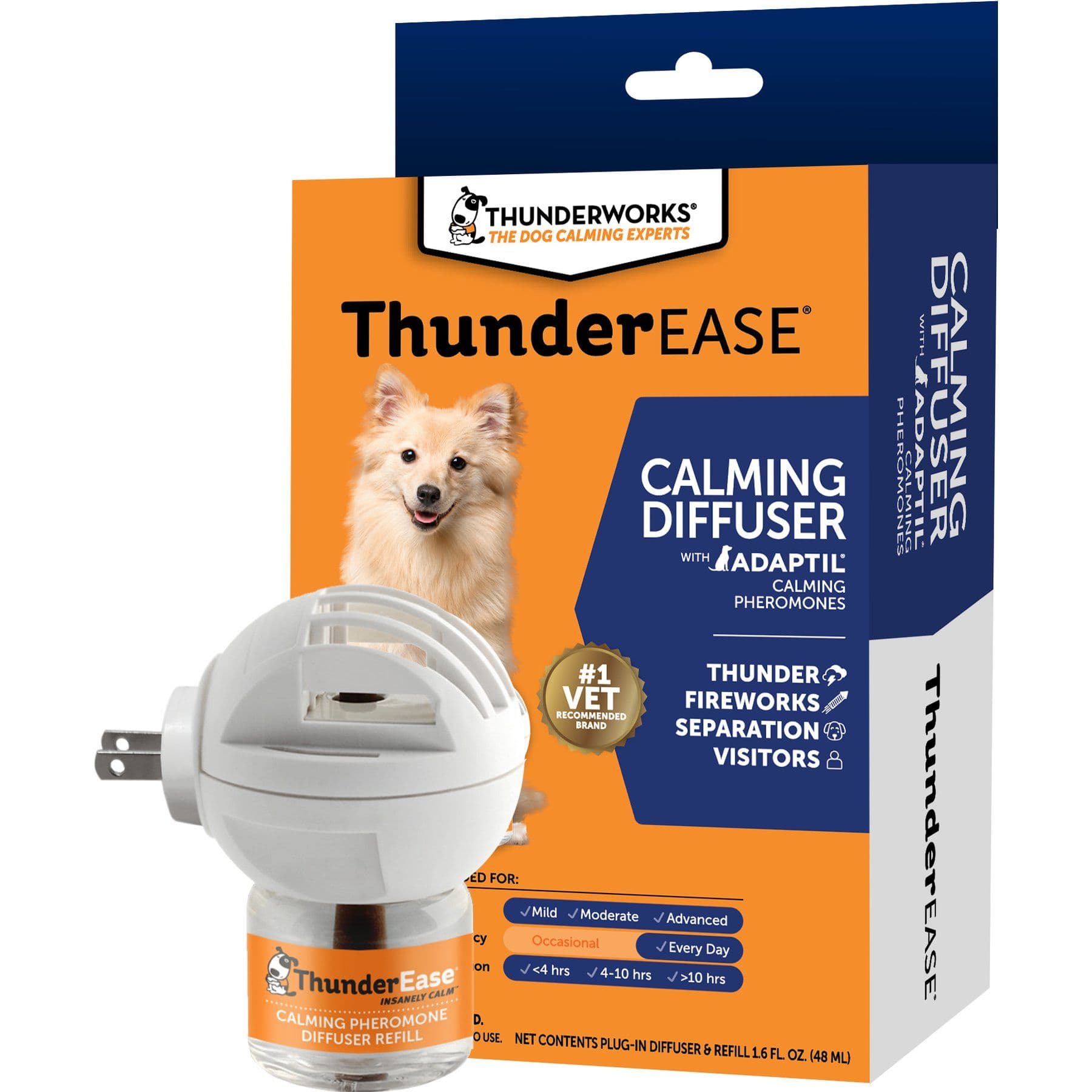
ThunderEase Calming Pheromone Diffuser is a heated diffuser for dogs that uses a synthetic version of a nursing pheromone.
Webvet may earn a commission when you click through to Chewy, at no extra cost to you.
What Essential Oils Are Safe for Dogs?
No essential oil is 100% safe for dogs, and veterinary references do not publish a list of safe oils. The ASPCA does not recommend using any essential oil where pets have access unless they are supervised or your veterinarian approves the oil.
Veterinary opinion on careful use is split. A 2025 review concludes oils may be used in companion animals with a low risk of adverse events when safe-use guidelines are followed, while Merck, the ASPCA, VCA, and Pet Poison Helpline are far more cautious.
Lavender, chamomile, and frankincense each come with clear limits in veterinary references, and none has been shown to be safe for dogs. ASPCA entries rate the lavender and chamomile plants rather than their oils, so read them as caution flags, not final verdicts:
- Lavender: The ASPCA lists the lavender plant as toxic to dogs, with nausea and vomiting, while a Pet Poison Helpline toxicologist's 2020 slides report no adverse events in two small dog studies.
- Chamomile: The ASPCA lists chamomile as toxic to dogs, with skin irritation, vomiting, diarrhea, and bleeding tendencies after long-term use.
- Frankincense: Veterinary references do not rate frankincense oil for dogs as either safe or toxic, so ask your vet before using it.
Lavender in a diffuser has little evidence behind it. A 2006 trial of 32 dogs with travel excitement found lavender scent in the car meant more resting and less moving and vocalizing, but it measured behavior, not safety. A 2009 study of undiluted lavender oil in 5 beagles called any calming effect equivocal.
If you were considering lavender for car rides, a wearable pheromone product is another option to ask your vet about. The ThunderEase Calming Pheromone Collar is a dog collar that releases a synthetic version of a nursing pheromone.
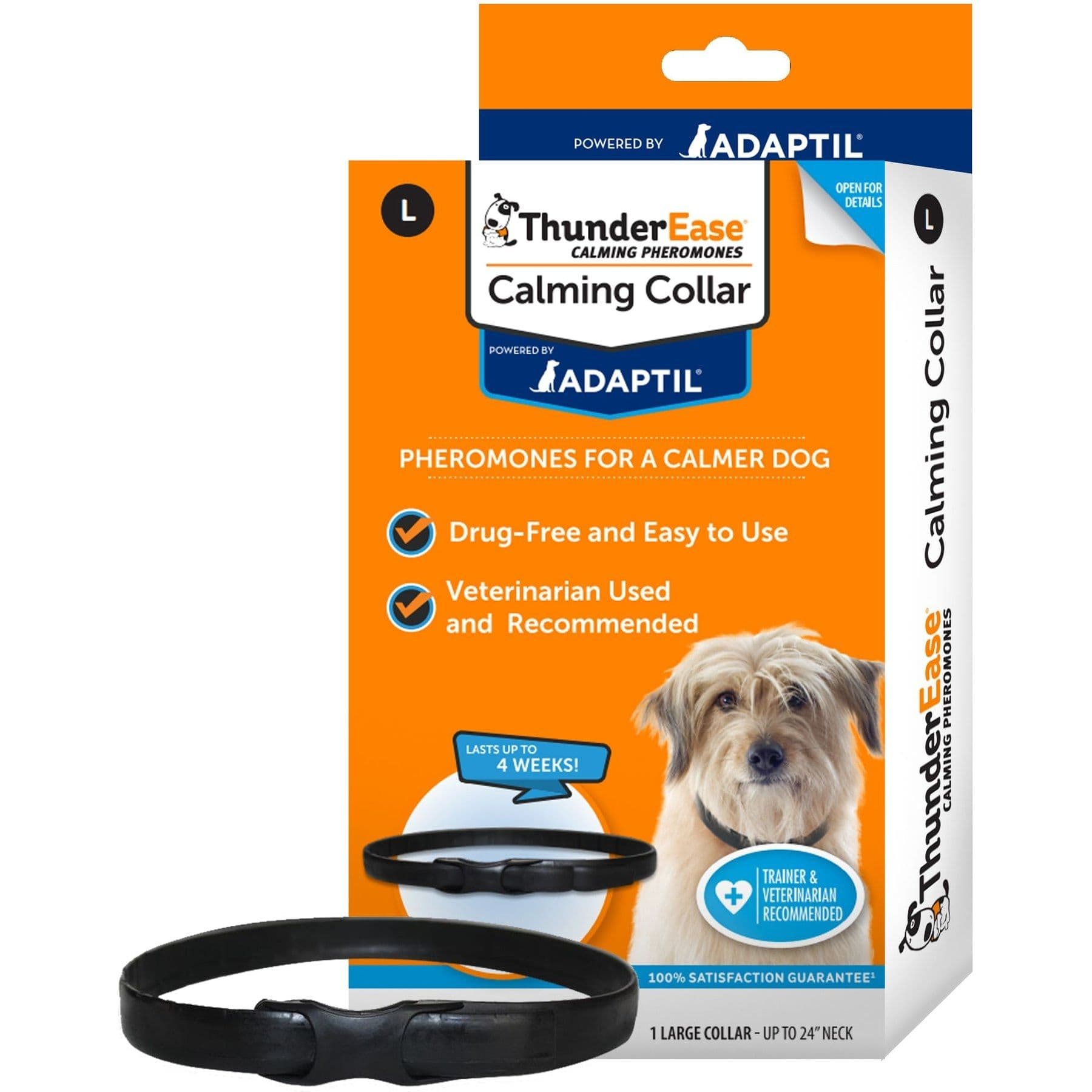
ThunderEase Calming Pheromone Collar is a dog collar that releases a synthetic version of a nursing pheromone.
Webvet may earn a commission when you click through to Chewy, at no extra cost to you.
Is It Safe to Diffuse Essential Oils Around Dogs?
Diffusing essential oils around dogs carries less risk than putting oil on them, but it is not safe by default. The Merck Veterinary Manual says the hazard depends on the type of diffuser.

For diffusers, the deciding factors are passive versus active, short sessions, ventilation, and an open exit. Merck says passive diffusers, such as reed diffusers and candles, release no oil droplets, so the main hazard is airway irritation unless one tips over. Active diffusers emit microdroplets that can settle on a dog's coat and be absorbed or licked off.
Merck and Pet Poison Helpline's toxicologist set these limits for any diffuser:
- Keep your dog out of the room while it runs, or at least make sure your dog can leave.
- Keep sessions under 30 minutes.
- Ventilate the room afterward, and never diffuse in a closed space.
- Use dilute oils, not concentrated ones.
- Stop if your dog gets a watery nose or eyes, drools, vomits, coughs, or wheezes.
The ASPCA is looser, saying a short session in a secured area your dog cannot reach is not likely to be an issue. It also warns that dogs smell far better than people, so a scent that seems light to you may overwhelm your dog.
Veterinary references do not rate any oil, including rosemary, lemon, orange, or eucalyptus, as safe for dogs to smell or breathe, so ask your vet first. Merck adds that inhaled oils are especially hazardous for animals with airborne allergies, chronic bronchitis, or regular secondhand smoke exposure.
Are there any essential oils safe to diffuse around dogs?
No essential oil is proven safe to diffuse around dogs. The only dog study of a diffused oil, the 2006 lavender car trial, measured behavior rather than safety. Whatever the oil, keep your dog out of the room or free to leave, run the diffuser under 30 minutes, and ventilate afterward.
If you want a diffuser made for dogs, a pheromone diffuser is another option to ask your vet about. The ThunderEase Calming Pheromone Diffuser uses a synthetic version of a nursing pheromone, and our dog calming diffuser guide compares the options.
Which Essential Oils Are Toxic to Dogs?
The essential oils most toxic to dogs include tea tree, pennyroyal, wintergreen, and pine, along with several others that veterinary lists treat differently.
Veterinary lists of oils toxic to dogs overlap but do not match. VCA Animal Hospitals names tea tree, pennyroyal, wintergreen, sweet birch, pine, cinnamon, citrus, peppermint, and ylang ylang, while Pet Poison Helpline's dog list names wintergreen, sweet birch, pine, cinnamon, pennyroyal, eucalyptus, and tea tree and puts citrus, ylang ylang, peppermint, and clove on its cat list only.
This essential oil risk table for dogs compares each oil's compound of concern, main danger, usual exposure, and next step.
| Oil | Compound of concern | Main danger | Usual exposure | What to do |
|---|---|---|---|---|
| Wintergreen, sweet birch | Methyl salicylate (wintergreen is 98% methyl salicylate) | Aspirin poisoning; Merck also lists both among oils that can cause seizures | Swallowed or on the skin | Call your vet or poison control now; give no home remedies |
| Pennyroyal | Pulegone | Liver failure; Merck also lists it among oils that can cause seizures | Put on the coat as a flea repellent, or swallowed | Wash it off with liquid dish soap and call your vet now |
| Tea tree (melaleuca) | Cyclic terpenes | Drooling, lethargy, weakness, wobbliness, tremors; Merck lists it as potentially liver-toxic | Put on the skin, sometimes licked off as well | Wash it off with liquid dish soap and call your vet now |
| Pine | Not named in veterinary references | Skin or stomach irritation, vomiting that may be bloody, drooling, weakness, wobbliness, possible kidney and liver effects | On the skin or swallowed | Wash the skin with dish soap; call your vet or poison control now |
| Citrus (lemon, orange, grapefruit) | Limonene (d-limonene) and linalool | VCA lists citrus oil for dogs, Pet Poison Helpline for cats only; ASPCA lists vomiting, diarrhea, and skin irritation | Dips and other products on the skin; peels and plant material | Wash the skin with dish soap; call your vet or poison control now |
| Cinnamon, cassia | Cinnamaldehyde; cinnamon also contains eugenol | Mouth and mucous-membrane irritation; Merck lists both as potentially liver-toxic | Swallowed or on the skin | Call your vet or poison control now |
| Clove | Eugenol | Mouth and mucous-membrane irritation; Texas A&M lists clove leaf oil, VCA's dog list does not | Swallowed or licked | Call your vet or poison control now |
| Oregano, thyme | Carvacrol and thymol | Mouth and mucous-membrane irritation; ASPCA lists the oregano plant as causing mild vomiting and diarrhea | Swallowed or licked | Call your vet or poison control now |
| Peppermint | Menthol (19 to 54%), plus pulegone (0.3 to 4.7%) | VCA lists it as poisonous to dogs; Pet Poison Helpline slides describe a fairly wide margin of safety, but massive doses may cause liver damage and seizures | Swallowed, licked off the coat, or on the skin | Call your vet or poison control now |
| Eucalyptus | Eucalyptol | Pet Poison Helpline lists it for dogs; ASPCA lists drooling, vomiting, diarrhea, and weakness; Merck lists seizures | Swallowed, on the skin, or inhaled | Call your vet or poison control now |
| Ylang ylang | Not named in veterinary references | VCA lists it as poisonous to dogs by mouth or skin; Pet Poison Helpline lists it for cats only | Swallowed or on the skin | Call your vet or poison control now |
| Cedar | Not named in veterinary references | Merck lists cedar among oils that can cause seizures; Texas A&M lists Western red cedar | Swallowed, on the skin, or inhaled | Call your vet or poison control now |
| Rosemary | Not named in veterinary references | ASPCA lists the rosemary plant as non-toxic; veterinary references do not rate the oil | Not described | Ask your vet before any use |
Veterinary references also flag these oils and plant-versus-oil differences:
- Lemongrass: The ASPCA lists the lemongrass plant as toxic to dogs, with stomach upset.
- Sage: Merck lists sage among the oils that can cause seizures.
- Cinnamon: The ASPCA lists the cinnamon plant, the spice, as non-toxic, but Merck lists cinnamon oil as potentially liver-toxic, because a concentrated oil is not the same as the plant.
- Rosemary and cedarwood: The ASPCA lists the rosemary plant as non-toxic but no reference rates rosemary oil, and Merck and Texas A&M both list cedar, so neither oil is rated safe.
The compound explains the danger. Merck says wintergreen and birch oils cause aspirin poisoning because they contain high levels of methyl salicylate, a form of aspirin, and Pet Poison Helpline's slides say 1 teaspoon of pure wintergreen oil equals 21.7 tablets of 325 mg aspirin.
Pennyroyal, used as a flea repellent, owes its liver toxicity to pulegone, and Pet Poison Helpline says it causes liver failure. In a 1992 case report, a dog treated for fleas with pennyroyal oil from a health food store vomited within 2 hours and died within 48 hours despite emergency treatment.
Citrus oils are built on limonene and linalool. In a 1995 case report, a dog developed a severe skin reaction and a blood-clotting disorder 24 hours after a d-limonene insecticidal dip and died. A 1995 review adds that poisoning from plant-derived insecticides and skin products is uncommon and usually follows stronger-than-label concentrations.

Essential oils are one of many household poisons. Foods carry their own risks, explained in onion toxicity in dogs and what to do if your dog ate grapes, and so do houseplants, listed in plants toxic to dogs. A printed pet first aid reference at home keeps general guidance on household toxins in one place.
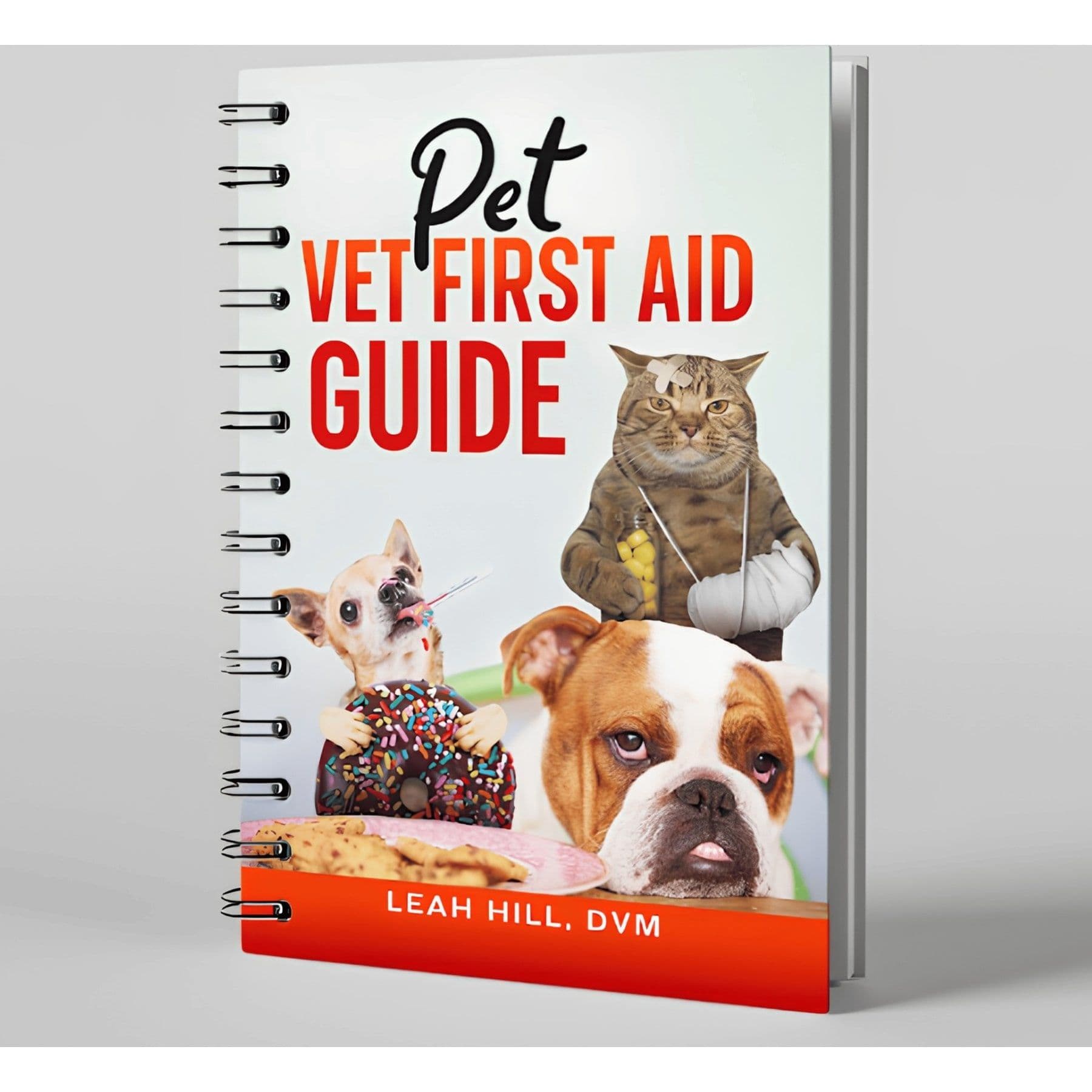
Pet Vet First Aid Guide is a spiral-bound pet first aid handbook written by a veterinarian.
Webvet may earn a commission when you click through to Chewy, at no extra cost to you.
Is Peppermint Oil Safe for Dogs?
Peppermint oil is not safe for dogs: VCA Animal Hospitals says oils such as tea tree, peppermint, and citrus are toxic to dogs when swallowed or put on the skin.
Concentrated peppermint harms dogs through its chemistry. Pet Poison Helpline's slides put peppermint oil at 19 to 54 percent menthol and 0.3 to 4.7 percent pulegone, the liver-toxic compound in pennyroyal, and say massive doses may cause liver damage and seizures.
Menthol irritates the mouth and digestive tract, and Pet Poison Helpline says signs of menthol poisoning often show up within an hour:
- Vomiting or diarrhea
- A stomach ache
- Lethargy or loss of muscle control
Veterinary references disagree on how dangerous peppermint is. The same Pet Poison Helpline slides describe a fairly wide margin of safety, and Cornell's toxin list marks peppermint oil as toxic to cats only, while VCA lists it as poisonous to dogs.
Veterinary references do not compare mint-flavored dog treats with peppermint oil. Pet Poison Helpline's mint warning centers on xylitol in sugar-free gum, candy, and toothpaste, so check treat labels and ask your vet.
What happens if dogs smell peppermint oil?
Veterinary references do not describe a dog's reaction to peppermint scent specifically. Pet Poison Helpline says strong fragrances can cause a watery nose or eyes, a burning nose or throat, drooling or vomiting, and coughing or wheezing. No reference sets a dilution that makes peppermint safe to smell, so let your dog leave the room.
Is Tea Tree Oil Safe for Dogs?
Tea tree oil is not safe for dogs: Cornell's toxin list calls it highly toxic both by mouth and on the skin, and Merck says it has been the most commonly reported essential oil poisoning in pets.
Diluted products are different. Pet Poison Helpline says pet shampoos and other products with less than 1 to 2% tea tree oil are generally considered non-toxic when used as labeled, while higher concentrations are toxic. Veterinary references give no safe home dilution, so do not mix your own.
If you would rather keep tea tree out of the bath entirely, an unscented shampoo is a simple swap. The TropiClean OxyMed Hypo-Allergenic Oatmeal Shampoo, Unscented is an oatmeal shampoo that TropiClean describes as a gentle cleanser for pets with allergies and sensitive skin; for more choices, see dog shampoo for itchy skin.
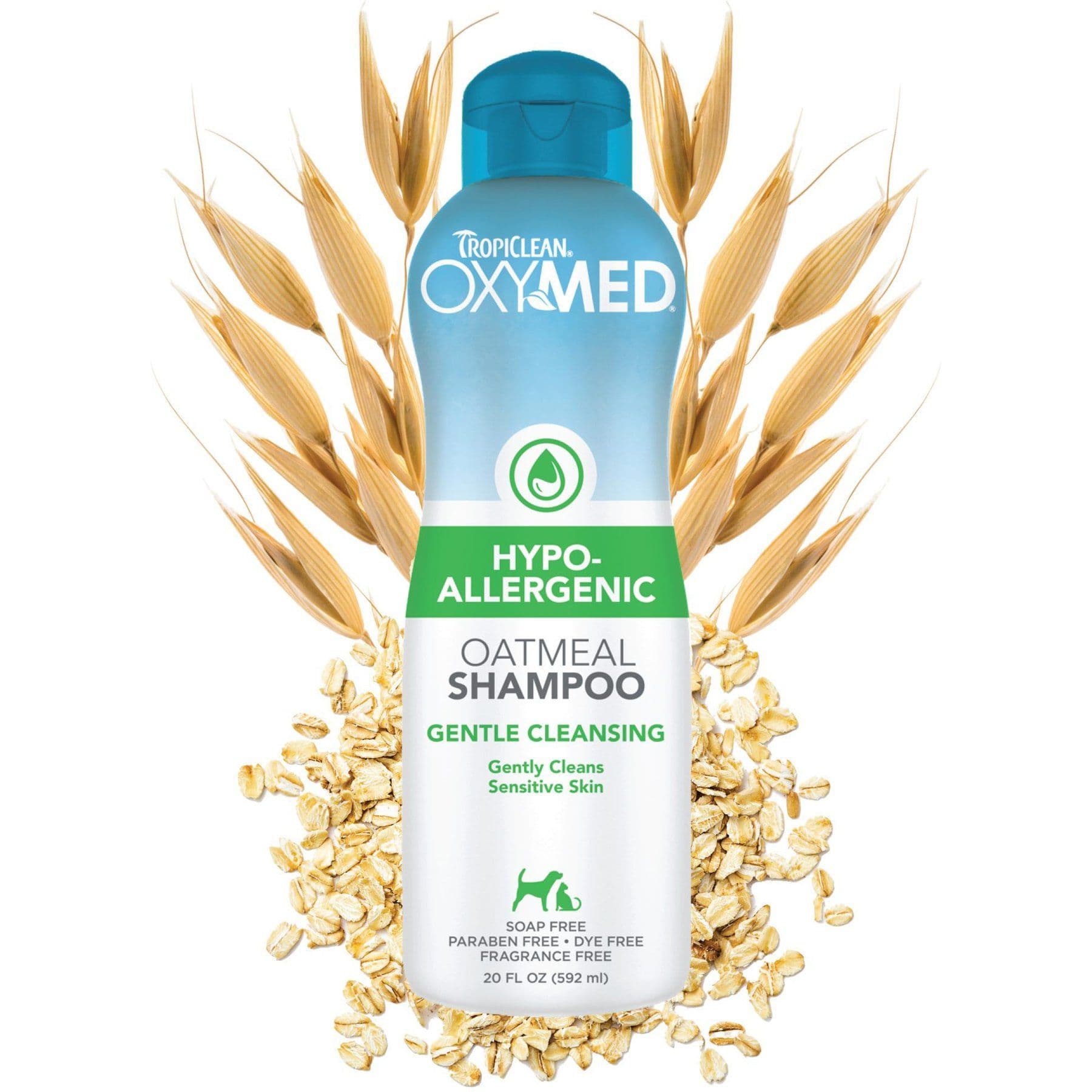
TropiClean OxyMed Hypo-Allergenic Oatmeal Shampoo is an unscented oatmeal shampoo for dogs and cats.
Webvet may earn a commission when you click through to Chewy, at no extra cost to you.
Tea tree oil poisoning most often follows skin application of the concentrated oil, not shampoos that contain tea tree. A 2014 JAVMA study of ASPCA Animal Poison Control Center data on 337 dogs and 106 cats exposed to 100% tea tree oil found:
- The oil was used on purpose in 89% of cases, in amounts from 0.1 to 85 mL.
- Exposure was skin only in 50%, skin and mouth in 30%, and mouth only in 15%.
- Signs began within 2 to 12 hours and lasted up to 72 hours.
- The most common signs were drooling, lethargy, weakness, wobbliness, and tremors.
The ASPCA says concentrated tea tree oil may cause problems with only seven or eight drops, and Pet Poison Helpline says these exposures need veterinary care, with signs lasting up to 4 days even with aggressive treatment.
Can You Put Essential Oils on Your Dog?
No. The Merck Veterinary Manual says concentrated essential oils should never be applied directly to pets, and the ASPCA, warning that 100% oils can harm dogs that walk through them or get them on their coat, advises avoiding direct application completely.
Oils on the skin or coat get absorbed or licked off. Merck says oils are absorbed rapidly through the skin, VCA says only a few licks or a small amount on the skin could be harmful and oil on the fur may be swallowed, and Pet Poison Helpline's slides note that injured or inflamed skin absorbs more.
Veterinary references do not name any essential oil as safe for repelling or killing fleas or ticks on dogs. Pet Poison Helpline says using oils for flea and tick prevention can prove dangerous, and a 2012 study found significant adverse effects from plant-derived flea products even when used as labeled. Consider these instead:
- Fleas and ticks: Compare the options in flea collar for dogs and the safest flea treatment for dogs, and ask your vet.
- Calming: A pheromone collar is another option to ask your vet about; the ThunderEase Calming Pheromone Collar releases a synthetic version of a nursing pheromone.
- Itchy or sore skin, including hot spots: A vet exam to find the cause.
Lemon oil on the skin is no exception: the ASPCA's lemon plant entry names its essential oils and psoralens as toxic, with possible skin irritation among the signs.
A Texas A&M professor has said oil, if applied at all, belongs at the base of the neck where the dog cannot reach it, but Merck, the ASPCA, VCA, and Pet Poison Helpline advise against it.
How to Use Essential Oils Safely Around Dogs
To use essential oils more safely around dogs, keep them diluted, stored out of reach, and off your dog, and ask your vet first.

Pet Poison Helpline's slides recommend consulting a veterinarian who knows essential oils, especially for pets with health problems or on medication. Merck's prevention advice comes down to four rules:
- Use diluted rather than concentrated oils; veterinary references give no dilution percentage that is safe for dogs.
- Avoid oils known to be toxic to dogs.
- Never apply concentrated oil directly to your dog.
- Prevent your dog from swallowing oil.
Safe storage means closed cabinets, cleaning spills, and washing your hands after use. VCA says to keep oils out of a dog's reach and never leave open bottles or simmering potpourri unattended, and it names leaking or overturned containers as one way dogs get exposed.
Veterinary references give no step-by-step spill cleanup, so keep your dog away from a spill, and if your dog walked through or licked it, wash the oil off with liquid dish soap and call your vet or poison control right away. Texas A&M advises not letting your pet lick your skin after you apply oil, so wash your hands before handling your dog.
Puppies, seniors, and dogs with liver disease or breathing problems are at higher risk. VCA says many oil compounds are processed by the liver, so puppies and dogs with liver disease are more sensitive; Pet Poison Helpline's slides add senior animals, and the ASPCA says dogs with breathing problems may do best with no diffuser at all.
How can I make my house smell good without harming my pets?
Start by skipping the products tied to pet poisonings: VCA Animal Hospitals says liquid potpourri, fragrance oils, and plug-in air fresheners can cause vomiting, drooling, mouth and gut ulcers, fever, and lethargy. Veterinary references do not name a pet-safe air freshener, and Merck advises ventilating a room after diffusing any scent.
Oils used around the house for other jobs carry the same risks. Veterinary references do not rate any oil, including peppermint, as a mouse repellent that is safe for dogs; for rodents, see pet safe pest control, and for indoor marking, see urine marking behavior in dogs.
Signs of Essential Oil Poisoning in Dogs
Signs of essential oil poisoning in dogs include drooling, vomiting, wobbliness, tremors, and breathing trouble. The Merck Veterinary Manual says signs develop within minutes to hours from any route, and Pet Poison Helpline says they usually appear within 6 to 8 hours with most oils. VCA lists these signs:
- A scent of oil on the coat, skin, breath, or vomit
- Drooling, or pawing at the mouth or face
- Vomiting
- Difficulty walking, an uncoordinated gait, or weakness
- Muscle tremors
- Difficulty breathing
- Redness or burns on the lips, gums, tongue, or skin
- Lethargy
Severe cases can bring seizures, a slow heart rate, low body temperature, rear-leg paralysis, and liver failure, sometimes with kidney failure, Pet Poison Helpline says. Mild cases resolve within a few hours, but severe cases can take 3 to 7 days. Seizures, collapse, or breathing trouble need a vet right away; see seizures in dogs.
If you smell oil on your dog's coat or breath, treat it as an exposure and call your vet or poison control right away; for drooling with no known exposure, see excessive dog drooling.
What to Do If Your Dog Is Exposed to Essential Oils
If your dog is exposed to essential oils, get your dog into fresh air, wash any oil off the skin with liquid dish soap, call a vet or poison control right away, and do not induce vomiting. VCA says to call immediately, because the sooner treatment starts, the better the outcome.
- Move your dog away from the oil and into fresh air, and check that your dog is breathing and acting normally.
- Wash oil off the skin or fur right away with liquid dish soap (dishwashing detergent).
- Call your vet, Pet Poison Helpline at (855) 764-7661, or the ASPCA Animal Poison Control Center at (888) 426-4435; both answer 24 hours a day.
- Do not induce vomiting, and do not give activated charcoal or any home antidote.
- Seal the product packaging in a container and bring it to the clinic.
Inducing vomiting can make things worse. Because oils are thick, Pet Poison Helpline says a dog can draw oil into its lungs when vomiting it back up, which can lead to aspiration pneumonia, and Merck warns against inducing vomiting for the same reason.
Pet Poison Helpline charges a $99 per-incident fee that includes follow-up consultations, and the ASPCA says a consultation fee may apply. Pet Poison Helpline's guidance for vets allows home monitoring of minor exposures in dogs with no signs, but that is a call for your vet or a poison expert, so phone first.
There is no antidote for essential oil poisoning, but VCA says most dogs survive with early intervention and supportive treatment.

Essential Oils and Dogs FAQs
Frequently Asked Questions
Can I spray peppermint oil in my house if I have a dog?
It is best not to: the ASPCA does not recommend using any essential oil where pets have access unless they are supervised or your vet approves it.
Merck notes that airborne droplets from active diffusers collect on a pet's coat to be absorbed or licked off, and a spray puts droplets in the air too. Licked-up menthol irritates the mouth and gut, Pet Poison Helpline says.
Are natural or pure essential oils safer for dogs?
No. Pure essential oil is the concentrated, undiluted form, and Merck says the higher the concentration, the greater the risk to the animal. Pet Poison Helpline's slides add that plant extracts are not standardized: they vary with the plant variety, the part used, growing conditions, and harvest, so "natural" does not mean consistent or mild.
Are candles with essential oils safe for dogs?
Not entirely: Merck treats a scented candle as a passive diffuser whose main hazard is airway irritation, and the bigger risk is the candle itself. VCA and Pet Poison Helpline say the main concern when a dog eats a scented candle is the wax forming a blockage in the gut, not the scent, and Pet Poison Helpline says severe cases may need surgery.
A lit flame is the other hazard: the ASPCA warns that wagging tails can knock candles over, burning a pet or starting a fire.
Can essential oils help hot spots on dogs?
No. Veterinary references do not recommend essential oils for hot spots. VCA explains that licking a hot spot irritates nerve endings and drives more itching and licking, so oil put on one is likely to be licked off and swallowed. VCA's treatment starts with stopping the self-trauma and finding the cause, so have your vet look at it.
Can I give my dog oil of oregano?
No, not on your own. Veterinary references do not evaluate oil of oregano supplements for dogs, and a Texas A&M veterinary professor advises never giving essential oils by mouth or in food. The ASPCA lists the oregano plant as a stomach and intestinal irritant that causes mild vomiting and diarrhea, so ask your vet before giving any oregano product.

Editor
The Webvet Editorial Team is the in-house group of pet-care editors and writers behind Webvet, operated by Smart Pet Collective. The team researches, writes, and maintains Webvet's pet health, behavior, and medication content. Every article follows a defined editorial process: research from reputable veterinary and scientific sources, careful drafting, mandatory review of medical content by a credentialed veterinarian, and dated publication. Health and medication articles are medically reviewed by a licensed veterinary professional before they go live and are kept current over time.
Veterinarian · BVMS MRCVS
Dr. Pippa Elliott, BVMS, MRCVS, is a veterinarian with nearly 30 years of experience in companion animal practice. Dr. Elliott earned her Bachelor of Veterinary Medicine and Surgery from the University of Glasgow. She was also designated a Member of the Royal College of Veterinary Surgeons. Married with 2 grown-up kids, Dr. Elliott has a naughty Puggle named Poggle, 3 cats and a bearded dragon.
Related reading

Cat Proof Christmas Tree: Vet-Reviewed Safety Steps, Deterrents, and Cat-Safe Tree Options

Dog Ate Grapes or Raisins? Signs of Poisoning and What to Do

Onion Toxicity in Dogs: Garlic, Chives, Leeks, and What to Do
