Dog Calming Diffuser: Do Pheromones Work and Are They Safe?
Learn how dog calming diffusers work, which behaviors pheromones may help, how to run a safe measurable trial, and when anxiety requires veterinary treatment.

BVMS MRCVS

This article contains affiliate links. Webvet may earn a commission when you buy through them, at no extra cost to you.
A dog calming diffuser releases a synthetic version of a canine appeasing pheromone into one room. Some dogs may show a modest improvement in selected stress behaviors, but the evidence is mixed and the device is not a sedative, cure, or substitute for diagnosis and training. A useful trial needs safe placement, a clear target behavior, a baseline, and a stop date.
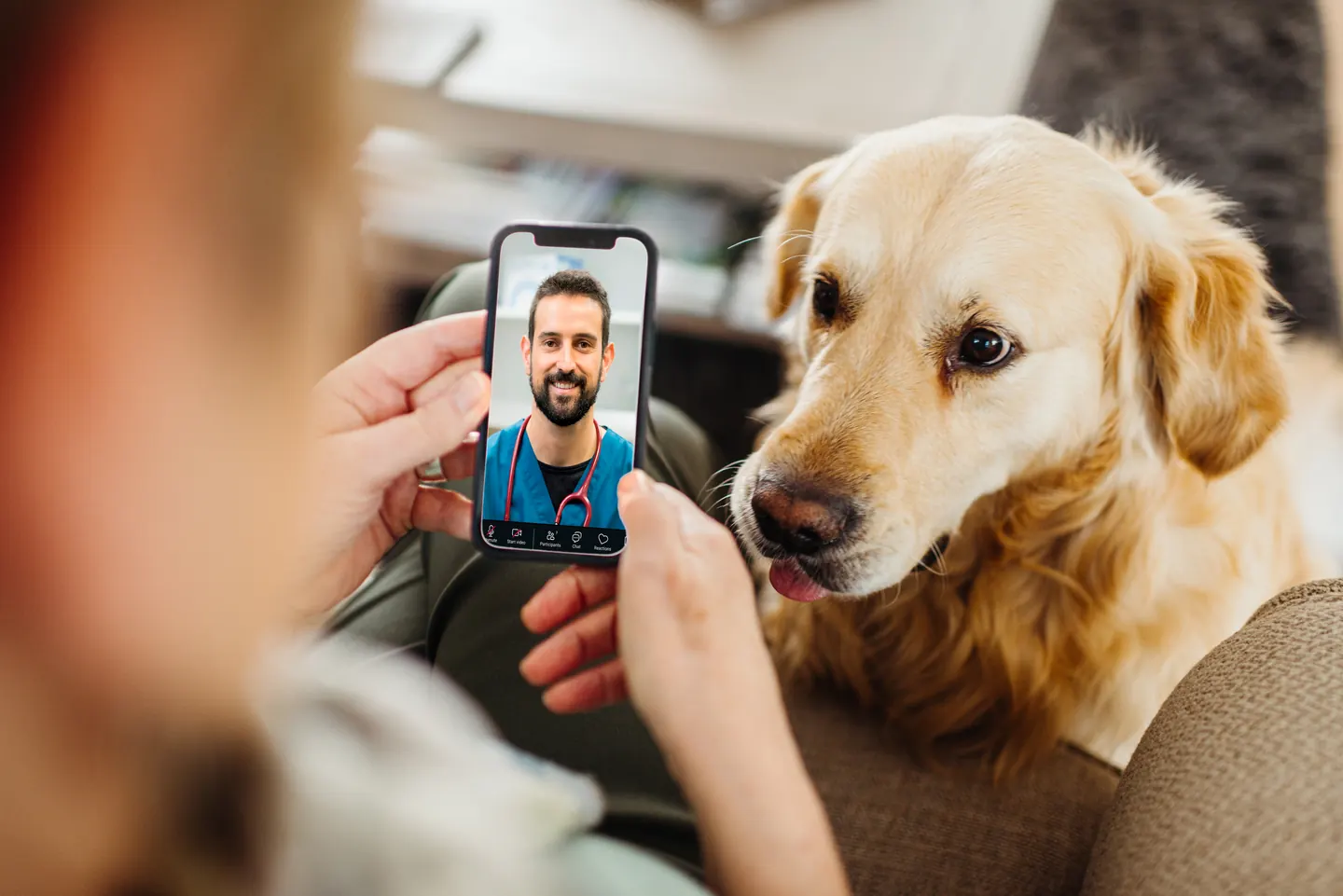
 Sponsored
Want a vet's help with your dog's anxiety or behavior?
Talk to a licensed vet at Dutch over video, often the same day. They can recommend treatment and prescribe it when it's appropriate.
Use code Pets60
Plans start at $12/month · covers up to 5 pets
- Licensed vets in most states
- Rx for 150+ conditions
- 4.7 on Trustpilot
Do Dog Calming Diffusers Really Work?
Dog calming diffusers can help some dogs, but effects tend to be variable and supportive rather than dramatic. Research has examined canine appeasing pheromone in settings such as homes, shelters, veterinary clinics, travel, and puppy adjustment. Differences in study design, sample size, outcome measures, and other treatments make it difficult to promise a result for an individual dog.
- 1A diffuser is a supportive adjunct, not a substitute for veterinary evaluation when anxiety is sudden, severe, worsening, or unexplained.
- 2Pheromone diffusers are intended to send a species-specific chemical signal, not fragrance the room or medicate the dog.
- 3Study results vary by setting, product, behavior, and research quality, so no diffuser works for every dog.
- 4Plug the unit into an open outlet in the room the dog actually uses, following the exact label and fire-safety instructions.
- 5Measure relaxed behavior before and during the trial. Quietness alone does not prove less fear.
- 6Panic, self-injury, aggression, sudden anxiety, pain, or nighttime confusion needs veterinary care.
A concrete example: ADAPTIL Calm Home Diffuser
ADAPTIL Calm Home Diffuser is a canine pheromone plug-in. According to ADAPTIL’s US instructions, one unit covers up to 700 square feet, a refill lasts up to 30 days and the diffuser head should be replaced after six months. Use a compatible refill and keep the unit running continuously. These are manufacturer operating directions, not guaranteed clinical outcomes.
| Setup or trial question | ADAPTIL Calm Home guidance |
|---|---|
| Where does it go? | Open outlet in the room the dog uses; leave 5 feet clear above it |
| How quickly does it disperse? | Allow up to 24 hours; install 2–3 days before a predictable event |
| When to assess benefit? | Manufacturer recommends at least 30 days of continuous use |
| How much space? | Up to 700 square feet; walls and separate floors may require another unit |
| What should I buy? | Starter kit includes the device; a refill alone needs a compatible head |
Room coverage is not whole-home coverage. For example, a unit in a downstairs living room is poorly placed for a dog spending the night behind a closed upstairs bedroom door. Start with the room where the target behavior actually occurs, check safe outlet clearance, and compare the dog’s behavior there.
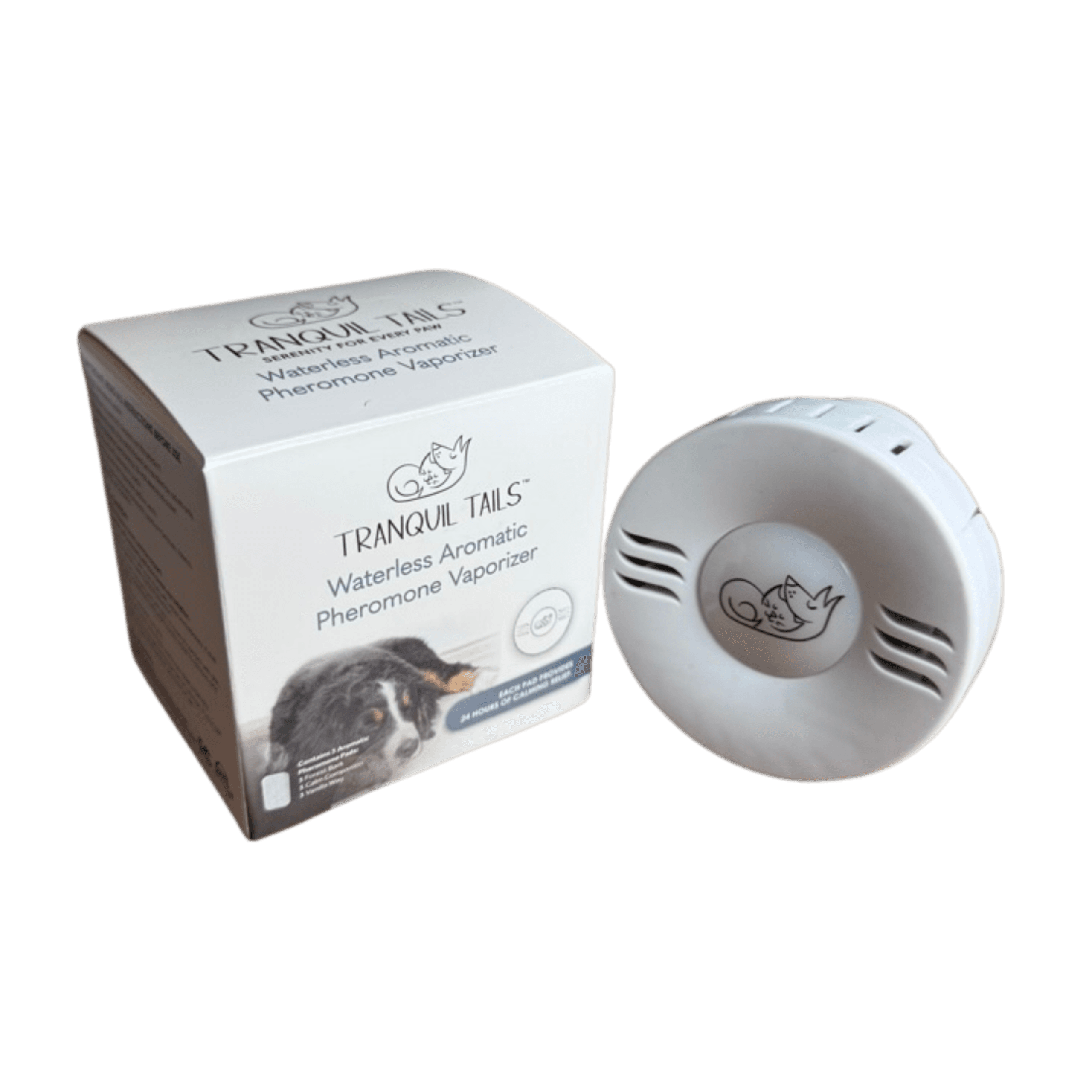
A room-based option for dogs. The standard kit includes scented pads; compatible unscented pads are sold separately. Follow this device's own directions.
Webvet may earn a commission when you click through to Chewy, at no extra cost to you.
The honest answer is a bounded trial. Decide what behavior should change, keep the environment as stable as practical, and compare the same observations before and after installation.
Useful outcomes include:
- settles within a shorter period
- spends more time resting with loose muscles
- pants, paces, hides, or scans less
- recovers more quickly after a mild trigger
- accepts food and can participate in reward-based training
What a diffuser cannot do
A diffuser cannot diagnose why a dog is anxious. It does not treat pain, urinary urgency, respiratory disease, cognitive dysfunction, or neurologic disease. It cannot make flooding humane, prevent every noise reaction, or replace a plan for severe separation distress.
Do not judge success only by barking. A dog can freeze or remain still while fearful. Observe posture, breathing, movement, food response, recovery, and engagement with familiar people.
Read anxiety relief for dogs when the trigger or diagnosis is unclear. If distress occurs specifically during absence, use the separation anxiety in dogs guide.
Which dogs may be reasonable candidates?
A diffuser may be considered for mild household adjustment, low-level environmental stress, a new home, changes between familiar pets, or as one environmental layer during a reward-based treatment plan. It is most reasonable when the dog can still eat, rest, respond, and recover.
It should not delay care for:
- sudden or severe behavior change
- escape injury or self-trauma
- aggression with bite risk
- collapse, breathing difficulty, or repeated vomiting
- disorientation, circling, staring, or seizures
- persistent nighttime pacing or house soiling
- inability to settle despite removal from the trigger
How Dog Pheromone Diffusers Work
Pheromones are chemical signals detected by members of the same species. Commercial canine diffusers use a synthetic analogue intended to resemble the appeasing signal associated with a nursing mother dog. The product is designed to influence emotional communication, not to produce an odor people need to notice.
Dogs detect these pheromone signals even when a person notices no smell. An ADAPTIL collar and a diffuser deliver a canine signal in different ways. Puppy products, travel sprays and household plug-ins each have their own instructions; they should not be treated as interchangeable dog calming devices.
The plug-in warms a liquid reservoir and disperses it into the surrounding air. Coverage is limited by room size, airflow, furniture, walls, doors, and placement. It does not travel reliably through an entire multi-level home.
| Seven-day baseline and trial scorecard question | Observable behavior to collect | Decision |
|---|---|---|
| Is the dog in the diffuser room during the target event? | Room use, doors, airflow, and time near the outlet | Move the setup only according to label guidance; a device in an unused room cannot be evaluated |
| What is the baseline? | Seven days of settling, pacing, panting, hiding, food response, and recovery | Do not start with only a memory of a “bad week” |
| Is behavior meaningfully different? | Compare the same event and same observable measures | Continue only if benefit is useful and adverse effects or safety issues are absent |
| Did another variable change? | Training, medication, visitors, storms, exercise, and schedule | Avoid crediting the diffuser when several interventions changed together |
| Is distress still severe? | Panic, self-injury, aggression, inability to eat, or prolonged recovery | Contact a veterinarian and do not extend the product trial instead of treatment |

What the evidence can and cannot show
Research does not establish that a dog calming diffuser reliably treats an anxiety disorder. Some studies report improvement, but study settings, delivery formats and outcome measures differ. A favorable result with a pheromone collar during training cannot automatically be applied to a plug-in used for severe distress at home.
A review of noise-fear treatments found that only 28.8% of 316 surveyed owners who had tried pheromone products considered them effective. That was an owner questionnaire, not a randomized diffuser trial: it cannot establish how much improvement the product caused. It helps explain why a product trial should be optional and measured while appropriate behavior treatment continues.
Evidence should be read with these questions:
- was the study randomized and blinded?
- was there a placebo diffuser?
- were outcomes measured by owners, clinicians, video, or a validated scale?
- did all dogs receive the same training or management?
- was the exact commercial formulation identified?
- was the change statistically significant and meaningful to daily life?
The AKC overview of calming diffusers and sprays discusses intended use and limits. Veterinary guidance from Small Door Veterinary similarly presents pheromones as a supportive tool rather than a complete treatment.
Are pheromones the same as essential oils?
No. A dog pheromone diffuser is not an essential-oil diffuser, fragrance warmer, or aromatherapy device. Essential oils have different ingredients and safety concerns. Do not add essential oils, fragrance, or another liquid to a pheromone unit.
Dogs, cats, birds, and people with respiratory sensitivity share the home's air. Ask the veterinarian about any household-specific concern and follow the labeled species and device instructions.
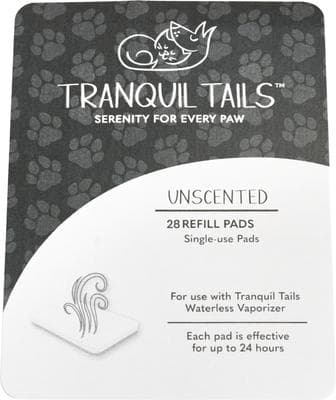
Unscented replacement pads for a compatible Tranquil Tails diffuser, sold separately. These are diffuser pads, not a spray refill or starter kit.
Webvet may earn a commission when you click through to Chewy, at no extra cost to you.
How to Use a Dog Calming Diffuser Safely
Read the package instructions for the exact unit and refill. Do not mix brands or use a refill in an incompatible warmer. Check the room size and replacement interval on the label rather than assuming all plug-ins are equivalent.
Compare dog calming devices by where the dog will use them. A room diffuser stays in one place; a pheromone collar moves with the dog. Check the exact device, compatible refill, coverage and replacement interval before starting a trial.

Choose the right room
Place the diffuser where the dog spends time during the target problem. For a dog that rests in the living room during visitors, a unit in a closed bedroom offers little relevant exposure. For a dog with absence distress, room placement does not replace a treatment plan.
Avoid outlets:
- behind furniture
- under shelves, curtains, or cabinets
- near open windows or strong ventilation
- where bedding or fabric touches the warmer
- where a dog can chew, lick, knock, or urinate on the device
- on a damaged outlet or overloaded extension setup
Do not cover the unit. Keep it upright and use only the electrical arrangement permitted by the manufacturer.
Allow a defined evaluation period
Use a defined trial rather than buying refills indefinitely. For ADAPTIL Calm Home, assess the manufacturer’s 30-day continuous-use trial against your baseline. Review sooner if distress worsens. If your dog is still panicking or cannot sleep, eat or cope with absence, contact the veterinarian instead of extending the trial.
Before installation, record seven comparable days when practical:
- trigger and intensity
- time to settle
- minutes spent pacing or panting
- hiding or exit focus
- food acceptance
- sleep and recovery
- training session performance
During the trial, keep the same measures. Decide in advance when the veterinarian or behavior professional will review the log. If there is no meaningful benefit, do not keep buying refills solely because stopping feels like giving up.
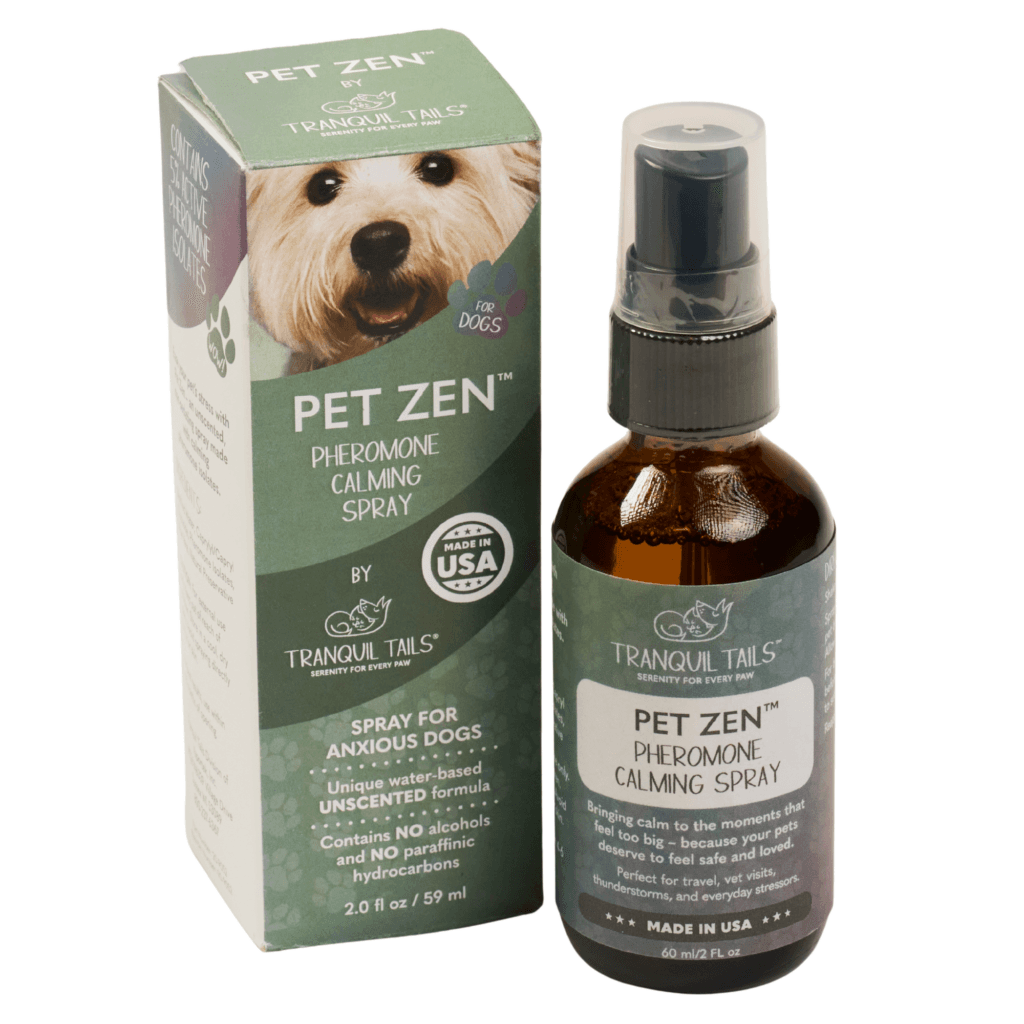
An unscented surface spray for dog bedding or carriers. Follow the label and let surfaces dry before use; never spray directly on your dog.
Webvet may earn a commission when you click through to Chewy, at no extra cost to you.
Possible safety problems
Pheromone products are generally intended to be low-risk when used according to the label, but the electrical warmer and liquid container still require ordinary safety. Stop using a unit that is cracked, leaking, unusually hot, discolored, or associated with an electrical smell.
Contact a veterinarian for suspected ingestion, skin or eye exposure with symptoms, coughing, breathing change, vomiting, marked agitation, or another unexpected reaction. Preserve the package and product information.
Multi-pet homes
Use only species-appropriate products. A canine pheromone product is not a cat treatment, and a cat pheromone product is not a dog treatment. A diffuser also cannot solve resource conflict, unsafe introductions, guarding, or bullying by itself.
Provide each pet with access to food, water, rest, elimination, and retreat without being blocked. If conflict includes stalking, fighting, injury, or chronic hiding, seek professional assessment.
 Sponsored
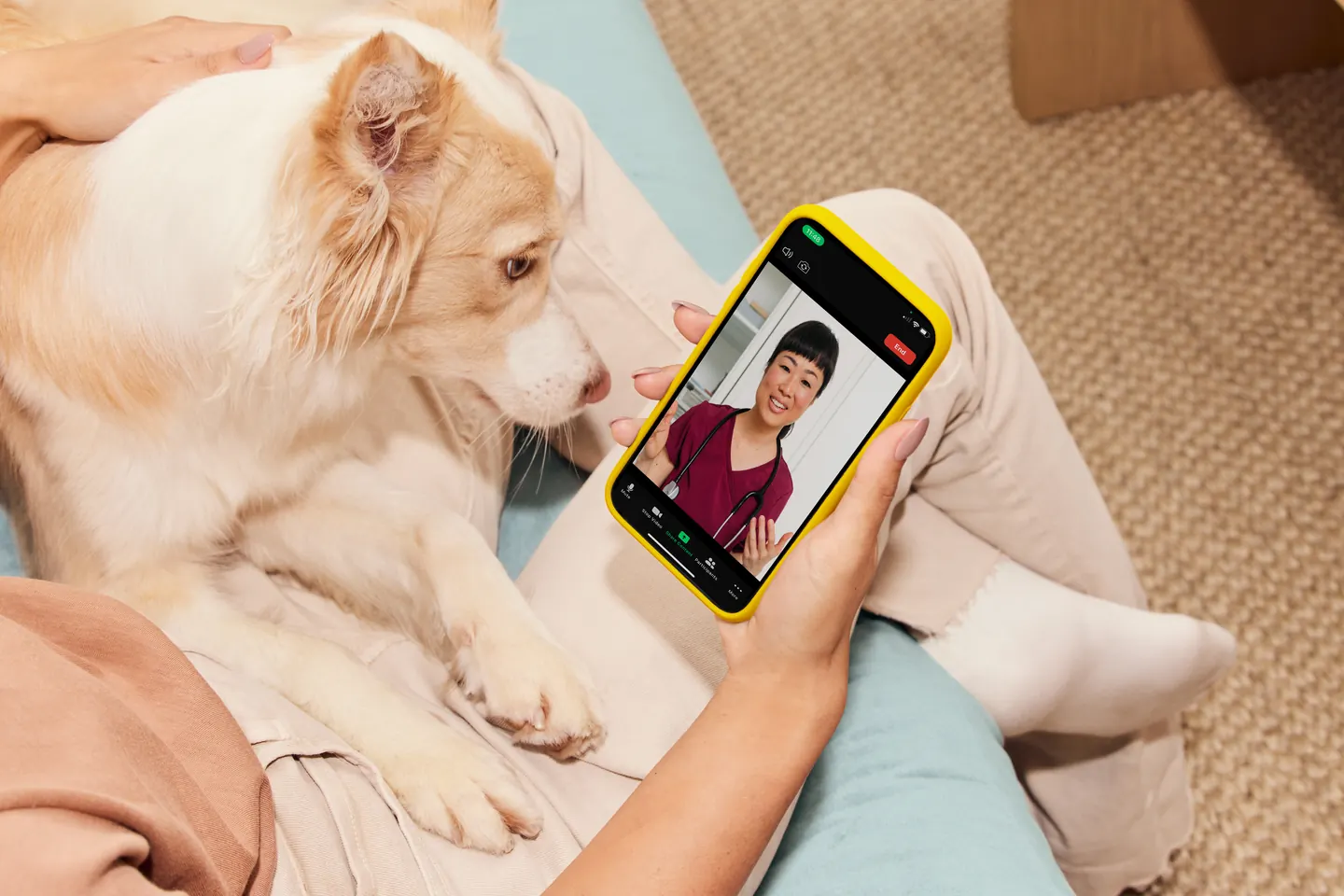
Vet care that's always there
Unlimited video calls and messaging with licensed vets for less than a typical vet visit. One membership covers up to five pets.
Use code Pets60
Plans start at $12/month · covers up to 5 pets
- Licensed vets in most states
- Rx for 150+ conditions
- 4.7 on Trustpilot
When a Diffuser Is Not Enough
Anxiety treatment starts with the cause. A dog with pain may need analgesia. A dog with separation anxiety needs absence management and graduated departures. A dog with noise phobia may need an event plan and prescription support. A senior dog with nighttime confusion needs a medical and cognitive evaluation.
Lists of dog calming products and natural remedies for dog anxiety combine items with different jobs, evidence, and risks. General advice on how to calm an anxious dog should begin with medical status, trigger, severity, and treatment goal before comparing formats.
Clear boundaries distinguish low-risk environmental support from medical diagnosis and behavior treatment. Products should be used as adjuncts rather than cures because a diffuser cannot diagnose pain, resolve panic, or teach a coping skill by itself. Reward-based methods should proceed without flooding or punishment: keep exposure below the dog's fear threshold, reinforce voluntary calm behavior, and stop before distress escalates. The diffuser is useful only if it safely supports the veterinary treatment plan or behavior modification that addresses the cause.
Compare support options by job
Environmental tools have different jobs:
- diffuser: passive room-based pheromone exposure
- comfortable bed: predictable resting surface after pain and mobility needs are addressed
- camera: observation and documentation, not treatment
- white noise or curtains: reduction of specific outside triggers
- calming chew: ingredient-based adjunct with product-specific evidence and interactions
- prescription medication: veterinarian-selected treatment for a diagnosed pattern
- behavior modification: changes emotional response and coping through structured practice
No option should be marketed as the universally “best” calming aid. The right combination depends on diagnosis, severity, safety, and what the dog can learn.
A room-based option for dogs. The standard kit includes scented pads; compatible unscented pads are sold separately. Follow this device's own directions.
Webvet may earn a commission when you click through to Chewy, at no extra cost to you.
- For readers comparing a non-diffuser daily adjunct, Purina Calming Care is a powder format with a longer evaluation period and a different job from passive room exposure.
- For occasional-stress support in a chew format, Zesty Paws Calming Bites provide an exact current label to compare for ingredients, calories, and weight-based directions.
- A FurHaven calming-style dog bed can add a familiar voluntary rest surface outside the diffuser's airflow path. In a multi-pet home, preserve more than one retreat option so no animal can block access.
For supplement decisions, see calming chews for dogs. Do not start multiple products at once because it becomes harder to identify benefit, adverse effects, or interactions.
When to involve a veterinary behaviorist
Ask for advanced behavior help when the dog has self-injury, serious aggression, extremely short panic thresholds, multiple fear disorders, poor response to an initial plan, or medical complexity. A board-certified veterinary behaviorist can diagnose behavior disorders, prescribe medication, and coordinate behavior modification.
A qualified reward-based trainer may help implement a plan, but should not diagnose medical disease or direct prescription changes. The AVSAB position statements explain why reward-based methods are preferred and aversive methods should not be used for fear and anxiety. Use reward-based methods without flooding or punishment.
Dog Calming Diffuser Questions
Frequently Asked Questions
Do calming diffusers for dogs really work?
Calming diffusers really work for some dogs as a modest environmental support, while others show no meaningful change. Evidence varies by product, setting, behavior, and study quality, so use a seven-day baseline and trial scorecard rather than relying on memory. A realistic expectation is a modest observable behavior change, such as shorter pacing, faster settling, continued food acceptance, or quicker recovery after a mild trigger. A diffuser cannot diagnose medical causes or replace veterinary care, behavior modification, or an appropriate veterinary treatment plan.
What is the best calming diffuser for dogs?
There is no proven best calming diffuser for every dog. Choose a canine-specific product with clear labeling, compatible refills, room-coverage instructions, electrical-safety directions, and accessible manufacturer support. Then ask whether room-based pheromone exposure actually fits the dog's trigger and location. A realistic expectation is that the best practical choice can be used safely and evaluated against a defined observable behavior, not that it will cure every form of anxiety. Severe, generalized, or sudden anxiety requires veterinary evaluation rather than a stronger marketing claim.
What calming diffuser do vets recommend?
The calming diffuser vets recommend, when one fits the case, is generally a recognized canine appeasing pheromone product with clear labeling and safe room-placement instructions. The recommendation depends on the behavior, room, other pets, health history, and broader veterinary treatment plan rather than a universal brand ranking. A veterinarian may instead prioritize pain treatment, medication, reward-based behavior modification, or environmental management when those better match the cause. Bring the exact product and a baseline log so the veterinary care team can judge fit and identify an observable behavior for the trial.
How long does a dog calming diffuser take to work?
How long a dog calming diffuser takes to work varies, and several days of correct use may be needed before a household can compare it fairly with baseline behavior. There is no reliable universal onset time. The unit must be placed and used according to its label, and the dog must spend time in the coverage area during the target situation. Use a defined evaluation period rather than expecting an immediate rescue effect, and compare the same observable behavior change across baseline and trial days. Contact the veterinarian sooner if anxiety is severe, worsening, or accompanied by medical signs.
The bottom line on a diffuser trial
A diffuser is reasonable only when its passive room coverage matches the dog's actual setting and the household can measure a defined behavior. It should be easy to stop if it provides no benefit. The trial should never replace pain assessment, veterinary behavior care, or graduated training.
Use the device exactly as labeled, keep the electrical area clear, and review the baseline against the trial record. Continue because the dog shows a useful observable change, not because the refill schedule creates momentum.
Common reasons a trial cannot be interpreted
A trial becomes unclear when the dog rarely enters the coverage area, the unit is blocked, the trigger does not occur during the trial, or several interventions begin together. Weather, visitors, illness, medication changes, exercise, and household schedules can also change behavior independently.
Mark the trial inconclusive when:
- the baseline covered unusually severe or unusually quiet days
- the diffuser moved between rooms
- a new prescription or supplement started at the same time
- the family also changed curtains, sound, sitter, or training intensity
- the dog developed pain or another medical sign
- observations rely only on memory
An inconclusive result is not a failure and not evidence that the product works. If another trial is reasonable, simplify it and keep the dog's welfare first.

What to tell the veterinarian
Bring the exact product, room placement, start date, baseline, and behavior record. Note whether the dog was alone or with people, whether a known trigger occurred, and whether medication or supplements changed. This lets the veterinarian decide whether continued use is harmless, irrelevant, or distracting from a more appropriate treatment.
Diffuser versus collar or spray
Pheromone formats are not interchangeable in daily use. A diffuser provides passive exposure in a defined room. A collar moves with the dog but depends on correct fit and product instructions. A spray is applied to an approved surface or setting and usually has separate timing and reapplication directions. Never spray a product directly on a dog unless the exact label says to do so.
Choose the format by the location and pattern:
- room-based household adjustment may fit a diffuser trial
- stress across several locations may prompt discussion of another format
- travel or a carrier may require a labeled situational setup
- severe or generalized anxiety needs treatment beyond format selection
For a trigger-specific travel plan rather than a room-based trial, Petful's guide to dog car anxiety explains how to identify and address distress associated with vehicle travel.
Do not use several pheromone formats at once to create a stronger dose. More exposure is not proven to create more benefit and makes the trial harder to interpret.
If the dog avoids the room
A dog that begins avoiding the diffuser room needs attention. The cause may be unrelated, such as sound, heat, slippery flooring, pain, or conflict with another pet. It could also be a placement or electrical issue.
Unplug the unit if it is damaged, leaking, unusually hot, or associated with odor or symptoms. Check the environment and contact the manufacturer or veterinarian as appropriate. Do not carry or confine the dog in the room to force exposure.
Using a camera during the trial
A camera can show whether the dog rests, paces, watches an exit, or reacts to sounds when people are absent. Position it to show the dog's whole body and the relevant room, not only the diffuser. Review a short, consistent period from baseline and trial days.
An INSTACHEW pet camera is one exact device option for documenting whether pacing, vocalizing, or resting changes during a defined diffuser trial.
Do not speak through the camera unless that intervention is part of a professional plan. A voice from the device can startle some dogs or change the behavior being measured. Camera alerts are evidence tools, not proof that the diffuser caused the observed change.
How to compare diffuser products without overclaiming
Compare canine-specific products by the exact pheromone analogue, labeled room coverage, refill duration, electrical instructions, and access to manufacturer support. A larger package or stronger marketing phrase does not establish stronger behavioral benefit. Reviews from other households cannot predict whether a different dog, trigger, room, and treatment plan will respond.
Before purchase, confirm:
- the warmer and refill are designed to work together
- the product is labeled for dogs
- the outlet and room meet placement instructions
- the dog spends meaningful time in the coverage area
- refills can be obtained for the planned trial period
- the company provides lot and safety contact information
- the household can observe behavior before and during use
Do not compare products by fragrance because a pheromone need not have a human-detectable smell. Do not add fragrance or essential oil. If the household needs units in more than one room, first verify that the behavior actually occurs in both rooms and that broader veterinary or behavior treatment is not being postponed.
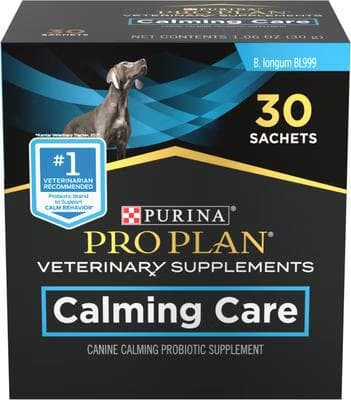
Probiotic supplement formulated to help dogs maintain calm behavior, with the BL999 strain. Liver-flavored powder in 30 daily sachets.
Webvet may earn a commission when you click through to Chewy, at no extra cost to you.
At the end of the trial, write one of three decisions: useful benefit with no safety concern, no meaningful benefit, or result cannot be interpreted because another variable changed. That final category is common and is a reason to repeat a cleaner trial only if the veterinarian or behavior professional believes the product still fits.

Editor
The Webvet Editorial Team is the in-house group of pet-care editors and writers behind Webvet, operated by Smart Pet Collective. The team researches, writes, and maintains Webvet's pet health, behavior, and medication content. Every article follows a defined editorial process: research from reputable veterinary and scientific sources, careful drafting, mandatory review of medical content by a credentialed veterinarian, and dated publication. Health and medication articles are medically reviewed by a licensed veterinary professional before they go live and are kept current over time.
Veterinarian · BVMS MRCVS
Dr. Pippa Elliott, BVMS, MRCVS, is a veterinarian with nearly 30 years of experience in companion animal practice. Dr. Elliott earned her Bachelor of Veterinary Medicine and Surgery from the University of Glasgow. She was also designated a Member of the Royal College of Veterinary Surgeons. Married with 2 grown-up kids, Dr. Elliott has a naughty Puggle named Poggle, 3 cats and a bearded dragon.
Related reading

Best Muzzle for Dogs: Basket, Soft, and Training Picks Sized for Comfort

Best Dog Anxiety Vests: ThunderShirt and Calming Wraps Compared

Best Dog Door for Sliding Glass Door Setups: Panel Inserts That Fit Without Cutting
