Best Dog Anxiety Vests: ThunderShirt and Calming Wraps Compared
A dog anxiety vest applies steady, gentle pressure that helps some dogs settle during storms and fireworks and does nothing for others. Here is what the evidence says, when a vest is worth trying, how to size one, and six Chewy picks.

BVMS MRCVS

This article contains affiliate links. Webvet may earn a commission when you buy through them, at no extra cost to you.
A dog anxiety vest is a snug wrap that applies steady, gentle pressure around your dog's chest and torso. The honest answer on whether one helps: some dogs seem to settle in a vest, the published evidence is weak, and the risk of trying a well-fitted one is low.
Use a dog anxiety vest as one part of a plan, not the whole plan. Size it from the brand's own chart, introduce it while your dog is calm, and see your veterinarian first if the fear is severe, happens most days, or shows up when your dog is left alone.
| Product | Best fit | Format | Key detail | Main tradeoff |
|---|---|---|---|---|
| Thundershirt Heather Grey Anxiety Solution for Dogs, XL, 65 to 110 lbs | Large dogs with mild storm or fireworks fear | Classic wraparound pressure shirt | XL fits 65 to 110 lbs; lightweight, machine-washable, breathable | Popular claims come from customer surveys, not trials |
| ThunderShirt Polo Anxiety Vest for Dogs, Camo, X-Small | Small dogs | Polo-style pressure shirt | X-Small fits 8 to 14 lbs | Different construction and fitting steps from the Classic |
| Kuoser Adjustable Anxiety Relief Wrap Vest for Dogs, Black, Medium | Budget trial for medium dogs | Hook-and-loop wrap with high neck | Medium fits a 20 to 24.4 in chest; machine washable | No measuring instructions; fabric described only as breathable and elastic |
| NANAKI Anxiety Calming Dog Hoodie, Blue, Large | Dogs bothered by noise that accept a hood | Pressure hoodie with ear coverage | 2-in-1 design: ear-covering hood plus gentle body pressure | Material, size chart, and care not confirmed |
| CozyVest 3-in-1 Anxiety Music & Essential Oil Aromatherapy Dog Calming Vest, Gray, Medium | Storm and fireworks nights for medium dogs | Pressure vest with music player and scent | Medium fits 26 to 40 lbs and a 21 to 25 in chest; 90% cotton | Music and scent features are untested; essential oils need a vet check |
| ThunderShirt Classic Anxiety & Calming Vest, Heather Grey, Medium + ThunderWunders Melatonin Dog Chews | Storm-season starter kit for medium dogs | Classic shirt plus calming chews | Chews given about 30 minutes before a stressor | Melatonin amount per chew is not stated by the maker |
 Sponsored
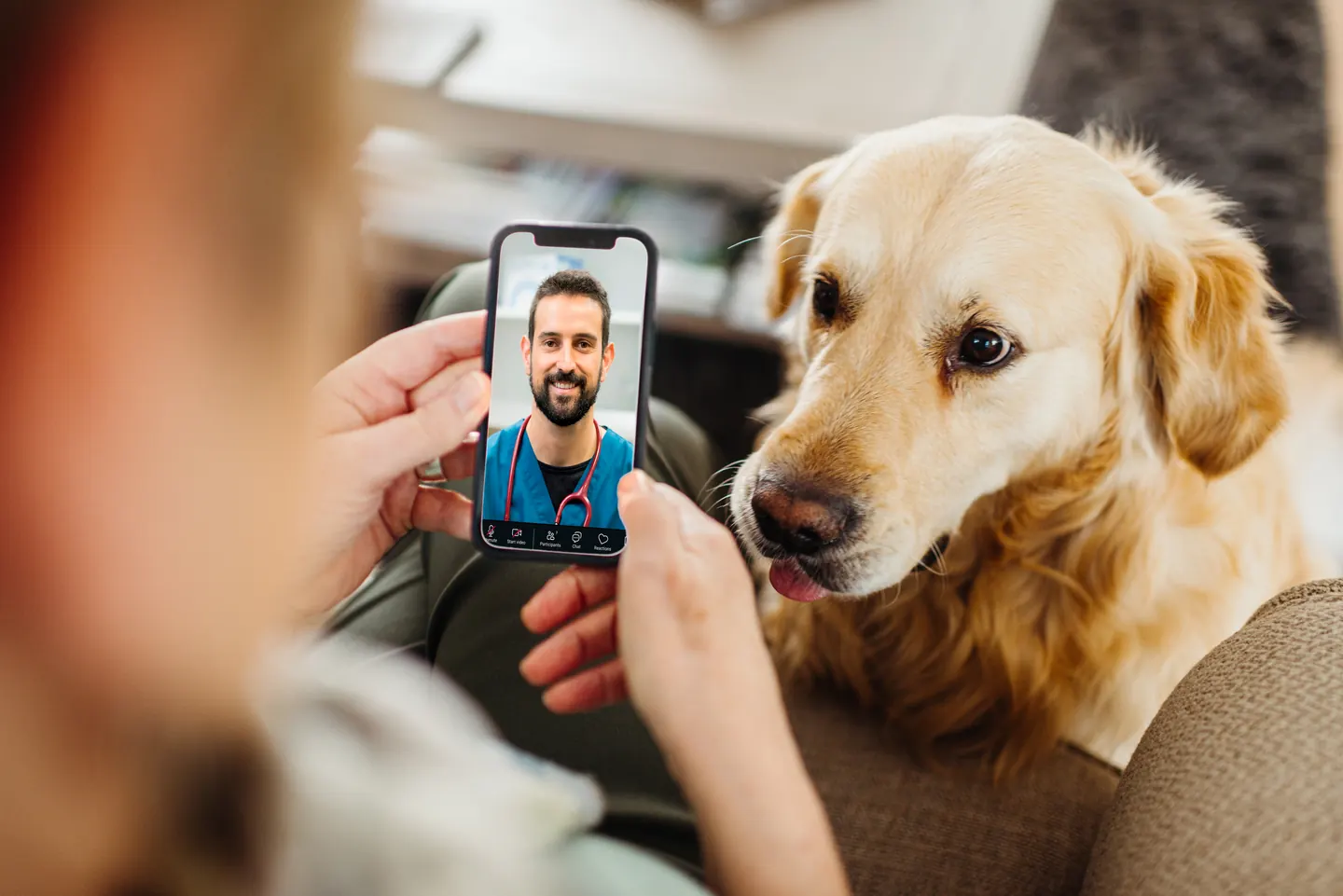
Want a vet's help with your dog's anxiety or behavior?
Talk to a licensed vet at Dutch over video, often the same day. They can recommend treatment and prescribe it when it's appropriate.
Use code Pets60
Plans start at $12/month · covers up to 5 pets
- Licensed vets in most states
- Rx for 150+ conditions
- 4.7 on Trustpilot
Do anxiety vests work for dogs? What the evidence actually shows
Pressure vests have been studied, but not often and not well. A 2024 systematic review from the NC State College of Veterinary Medicine, published in Animals, screened 229 studies of compression wraps for anxiety in dogs. Only four met its inclusion criteria.

The review's conclusion is blunt: the authors found weak and limited evidence that pressure wraps reduce signs of anxiety, and rated their confidence as low because of moderate-to-high risk of bias and inconsistent findings. The same review found no adverse effects reported across the included trials.
- 1The evidence for pressure vests is weak and limited: a 2024 review of the trials rated confidence in them as low.
- 2The idea is steady, swaddle-like pressure, and no study can predict which dog will respond.
- 3No adverse effects were reported in the reviewed trials, so a well-fitted vest is a low-risk thing to try.
- 4Size by the brand's own chart, check chest girth, and aim for snug, even pressure.
- 5Separation anxiety, severe fear, and anxiety on most days need a veterinarian, with a vest as an add-on at most.
Do anxiety vests work for dogs?
They help some dogs some of the time. The Veterinary Evidence summary from RCVS Knowledge advises owners not to expect a vest to fully relieve or prevent anxiety, and notes it may have no benefit at all. With no adverse effects reported, a vest is a reasonable first try for mild, predictable fear.
The four trials that made the cut point in different directions:
- King et al. 2014, separation or generalized anxiety: the randomized ThunderShirt trial split 90 dogs into tight vest, loose vest, and no vest groups of 30. Dogs wearing the vest tightly had a smaller rise in average heart rate, and control dogs oriented toward the door more often. Maximum heart rate did not differ when all dogs were considered, nobody involved was blinded, and the study was self-funded.
- Cottam, Dodman, and Ha 2013, thunderstorm phobia: an open-label study of the Anxiety Wrap with 18 dogs completing all phases and no control group. The mean Thunderstorm Anxiety Score at the fifth use was 47% lower, but the wrap's maker funded the study and owners reported on their own dogs without blinding.
- Fish et al. 2017, simulated thunderstorms: a randomized, placebo-controlled study of 16 Labrador retrievers. The vest group's heart rate was 8% lower and its anxiety score fell 34%.
- Pekkin et al. 2016, noise phobia: a double-blinded test of a pressure vest that found no clear therapeutic effect, even though the vest's manufacturer funded it.
The placebo effect matters here because owners often do the scoring. Veterinary Evidence flags the Cottam study as high risk for placebo effect and bias, since owners knew their dogs wore the wrap. The one double-blinded trial found no clear effect, which is why the overall picture stays modest.
Marketing runs well ahead of that evidence. ThunderShirt says 80% of its users see improvement, a figure from a customer survey, not a controlled study. It also cites a 2011 survey of veterinarians and calls itself the number one vet recommended solution. Neither claim points to a published trial.
What this means for your dog depends on why your dog is anxious. Situations differ in how closely they match what was studied, and in how much a vest alone can be expected to do.
| Situation | Closest evidence | Is a vest alone reasonable? | See the vet first when |
|---|---|---|---|
| Thunderstorms | Fish 2017 positive; Cottam 2013 positive but uncontrolled; Pekkin 2016 no clear effect | Yes, for mild fear, as a first try | Fear is extreme or phobic, or the dog tries to escape |
| Fireworks | Same noise-phobia trials; no fireworks-specific trial | Yes, for mild fear, with a safe retreat | The dog freezes, cowers, or tries to escape despite the vest |
| Car rides | No trial found; travel use is a manufacturer claim | Only as a low-stakes experiment | Signs could be motion sickness, a separate physical problem |
| Vet visits | No trial found | Possibly, for mild worry | Stress keeps the team from completing an exam; ask about pre-visit medication |
| Separation anxiety | King 2014: modest heart-rate change, unblinded | No, a supplement at most | Always; it needs a behavior modification program and possibly medication |
| Generalized anxiety | King 2014: modest heart-rate change, unblinded | No, a supplement at most | Always; frequent anxious behavior warrants a prompt vet visit |
The more the fear looks like an occasional, predictable noise event, the more reasonable a vest is as a first try. The more it looks like a standing condition, such as separation anxiety or anxiety most days, the more a vest becomes an add-on to veterinary care.
Weak evidence is not proof that vests never help. It means the studies are too few, too small, or too open to bias to say how often they help. Given the low risk reported, a time-limited trial is a fair test, as long as it does not delay a vet visit the dog needs.
Our picks: the best dog anxiety vests
Every dog anxiety vest here applies pressure by wrapping the body, and each suits a different dog or situation. We chose them from published product specifications and the research on pressure wraps, not from hands-on testing, using four criteria:
- Adjustable, even pressure: a wrap or hook-and-loop closure you can snug across the chest, because the only randomized ThunderShirt trial found its heart-rate benefit in tightly worn vests.
- A usable size chart: sizing by weight, chest girth, or both, with options for small and large dogs.
- Washability: machine washable where the maker says so, since a vest worn often gets dirty.
- Honest claims: we discount survey figures and vet-recommended slogans that cite no study.
Customer reviews and manufacturer surveys tell you how owners felt, not what a controlled study measured. Judge each vest on fit, adjustability, and whether you can return it if your dog does not respond. None of the trials tested a homemade wrap, so with a DIY version the fit and pressure are guesswork.
Whichever vest you choose, run a fair trial. Introduce it on calm days first, then use it for the same kind of event several times, noting the signs each time. If nothing changes, a vest is unlikely to be the missing piece, and that is the time to talk with your vet.
ThunderShirt Heather Grey Anxiety Solution for Dogs: best overall pressure vest
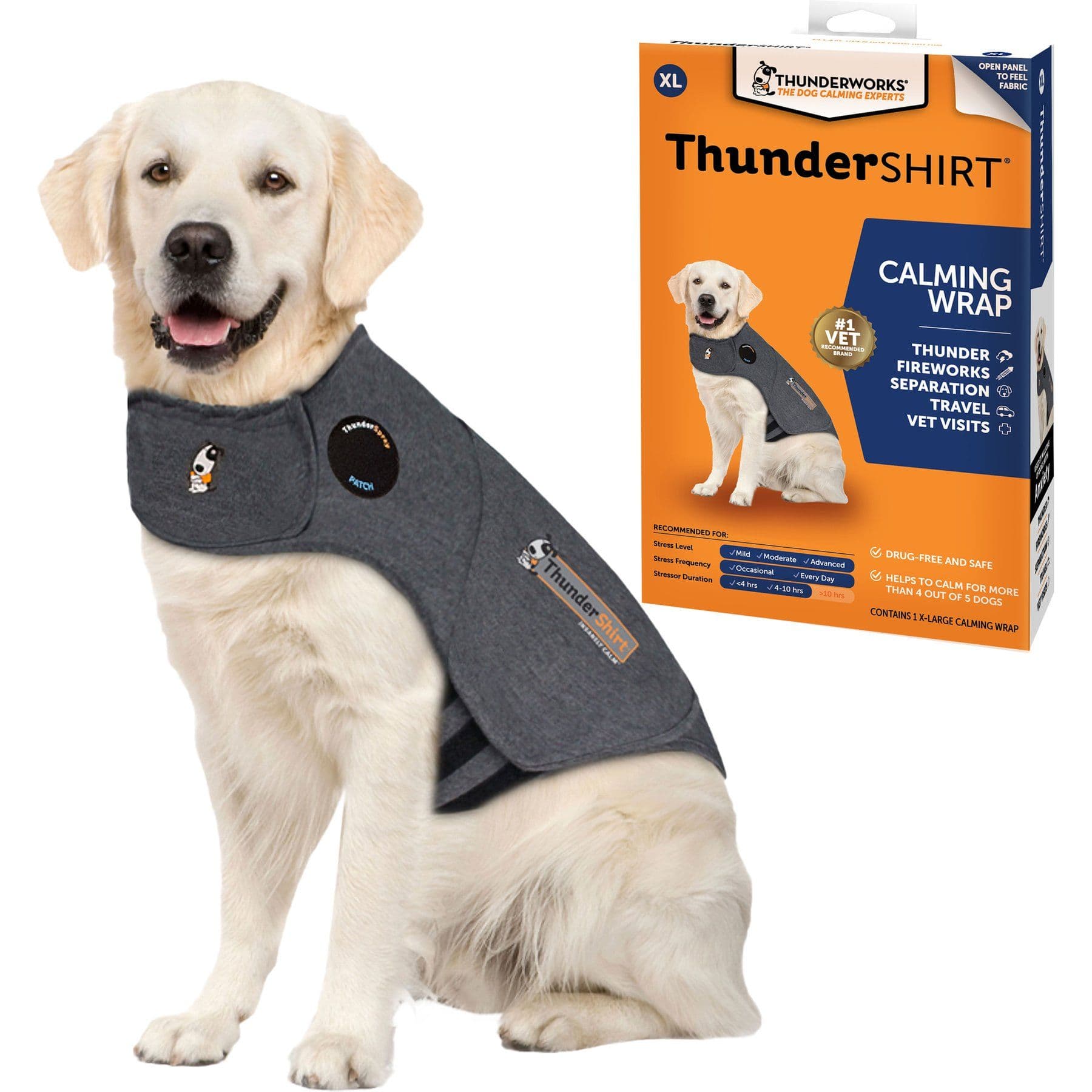
The original ThunderShirt pressure wrap in heather grey, sized for 65 to 110 pound dogs, with an adjustable fit.
Webvet may earn a commission when you click through to Chewy, at no extra cost to you.
This is the ThunderShirt Classic wrap, from the brand tested in King 2014, the only randomized ThunderShirt trial. That does not make it proven. The size shown is XL, for dogs of 65 to 110 pounds, and ThunderShirt sells its shirts in smaller weight-based sizes too.
- Key facts: the manufacturer describes its shirts as lightweight, machine-washable, and breathable.
- Price: Chewy listed this size at $47.19 when we checked in October 2026, and ThunderShirt listed the vest at $49.99 on its own site.
- Who it suits: a large dog with mild storm or fireworks fear.
- The tradeoff: the listing's figure of over 80% of dogs improving comes from surveys of over two thousand customers, not from a trial, so treat it as marketing.
ThunderShirt Polo Anxiety Vest for Dogs: best for small dogs
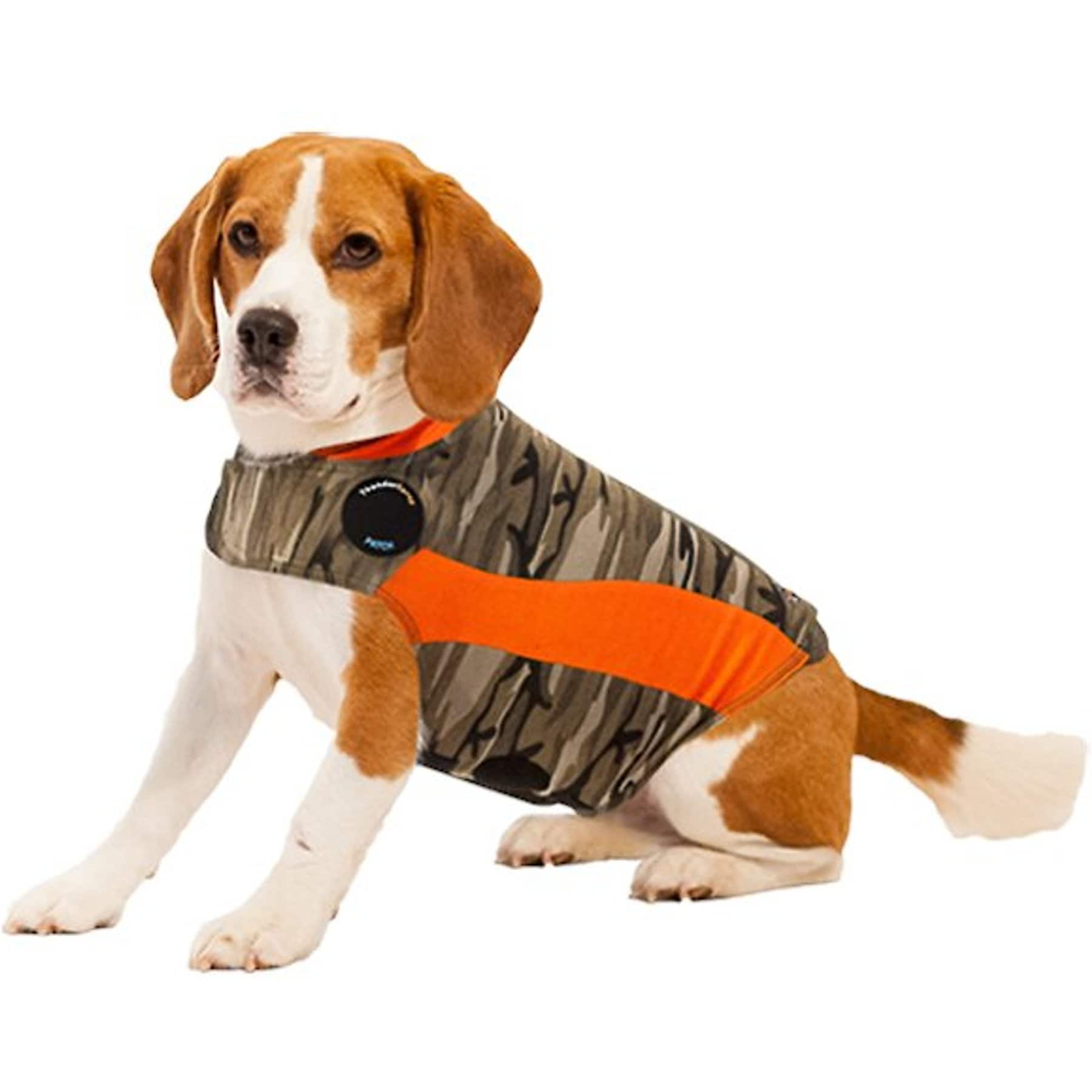
Polo-style ThunderShirt for small dogs that looks like a shirt while applying gentle, constant pressure.
Webvet may earn a commission when you click through to Chewy, at no extra cost to you.
The Polo is ThunderShirt's polo-shirt style. ThunderShirt notes that its Polo and Breeze styles are constructed differently from the Classic and Sport, so follow the Polo's own fitting steps rather than the Classic's.
- Key facts: the X-Small covers dogs of 8 to 14 pounds on ThunderShirt's weight chart.
- Price: Chewy listed it at $44.99 when we checked in October 2026.
- Who it suits: small dogs whose owners prefer a shirt-style garment.
- The tradeoff: no study we found tested the Polo construction on its own, and its fitting differs from the better-known Classic.
Kuoser Adjustable Anxiety Relief Wrap Vest for Dogs: best budget wrap
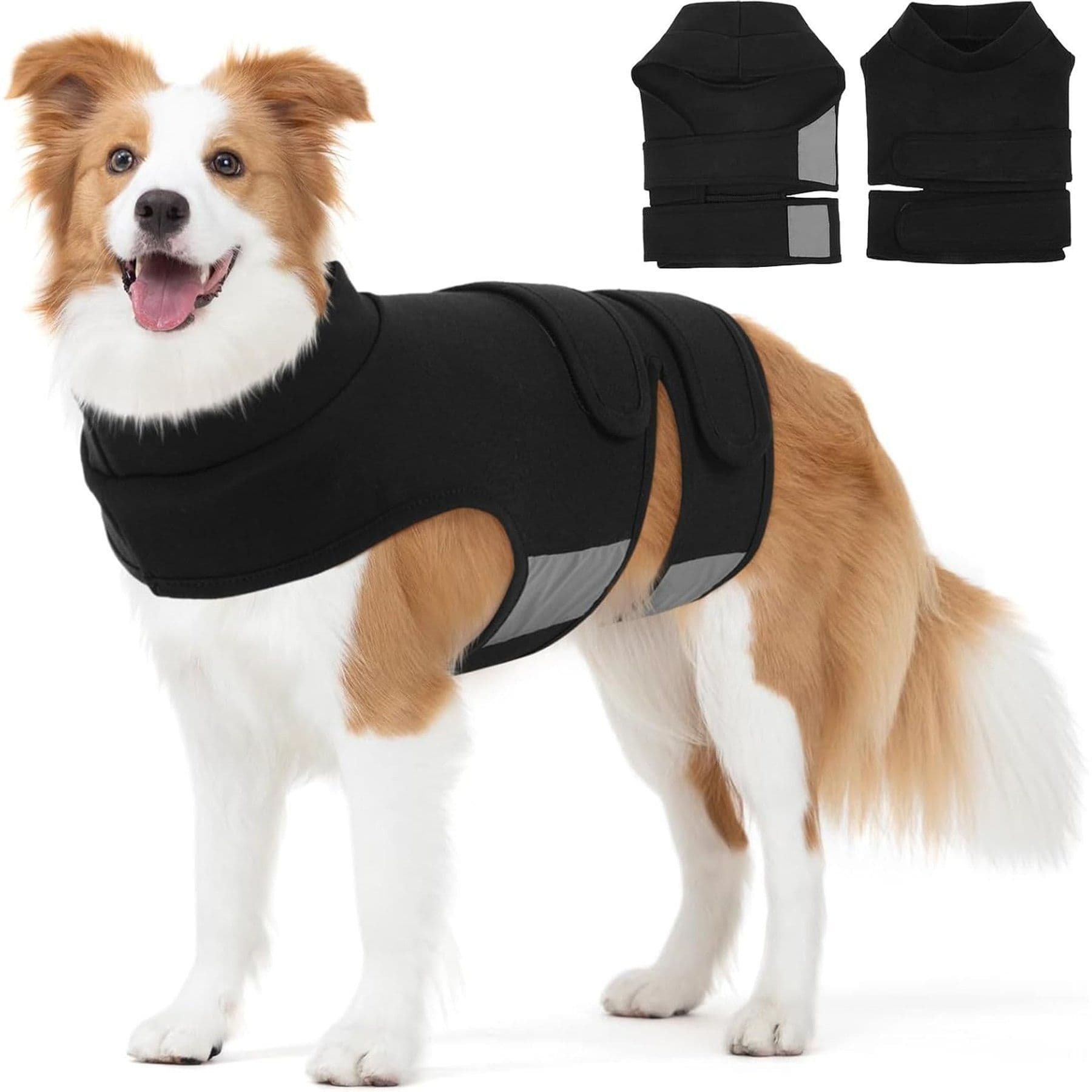
Adjustable hook-and-loop pressure wrap for medium dogs, a lower-cost way to test whether pressure helps.
Webvet may earn a commission when you click through to Chewy, at no extra cost to you.
Since no one can predict which dog will respond, a lower-cost wrap is a sensible way to run a trial. According to the Chewy listing, the Kuoser uses a snug, high-neck wrap design that applies gentle, constant pressure.
- Key facts: adjustable hook-and-loop closures that wrap around the body, and the maker says you can toss it in the washing machine when it gets dirty.
- Sizing: chest girth only. The Medium fits a 20 to 24.4 inch chest and the Large fits 24.4 to 29.5 inches.
- Price: Chewy listed the Medium at $30.99 when we checked in October 2026, and Kuoser listed it at $26.99 on its own site.
- The tradeoff: the maker's page gives no measuring instructions and describes the fabric only as breathable, elastic material.
NANAKI Anxiety Calming Dog Hoodie: best calming hoodie
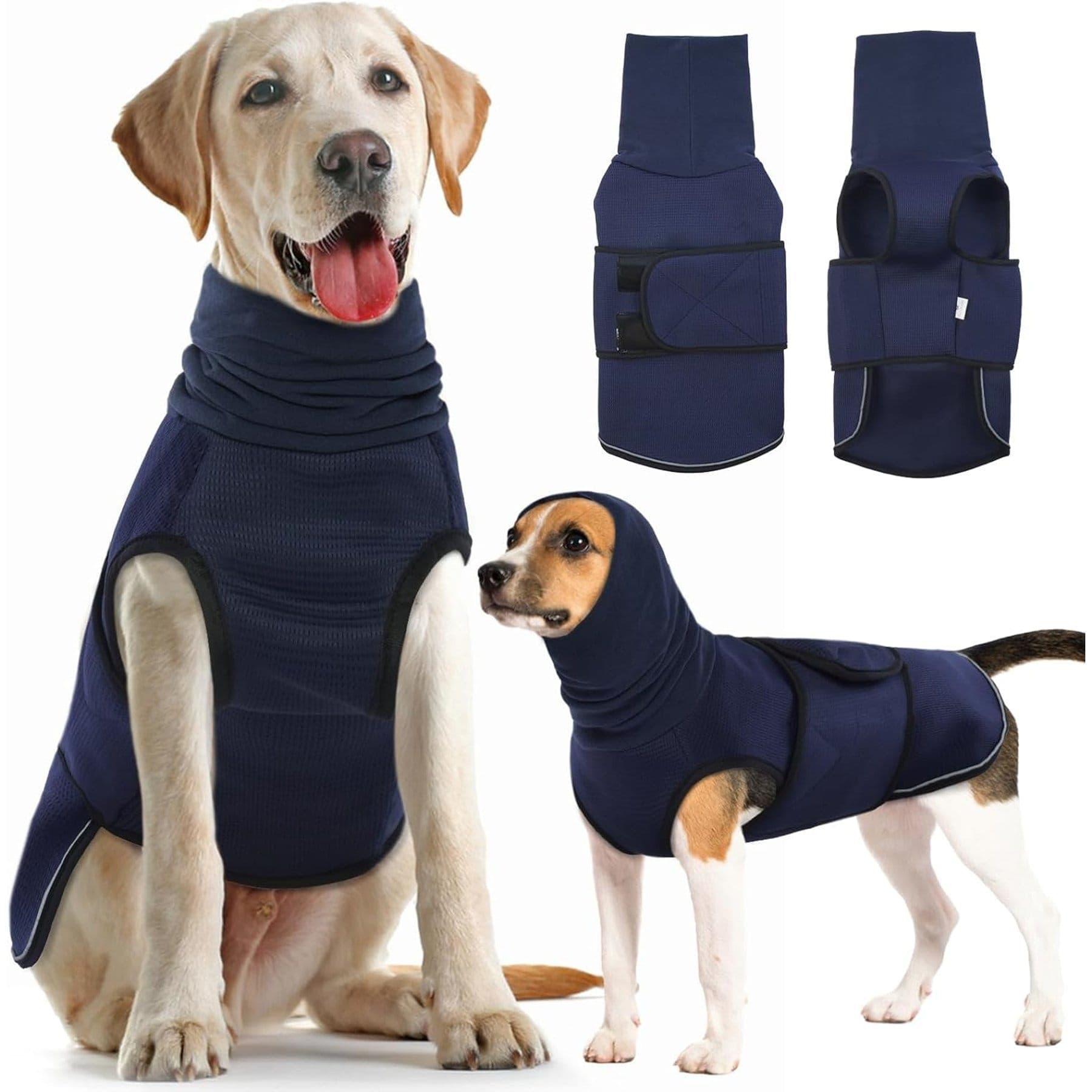
Calming hoodie with gentle body pressure and full ear coverage for large dogs bothered by noise.
Webvet may earn a commission when you click through to Chewy, at no extra cost to you.
The NANAKI is a 2-in-1 design: a hood that covers the ears, which the listing pitches for noise anxiety and fear, plus gentle pressure from the body of the hoodie.
- Who it suits: dogs bothered by noise that will accept a hood over the ears.
- Before you buy: the listing reminds owners to measure for fit. We could not confirm the material, size chart, or care instructions, so measure your dog and check the listing's sizing before ordering.
- Price: Chewy listed the Large at $28.99 when we checked in October 2026.
- The tradeoff: no veterinary source we found evaluates ear coverage for noise fear, so the hood is an untested extra.
CozyVest 3-in-1 Anxiety Music & Essential Oil Aromatherapy Dog Calming Vest: best multi-sensory vest
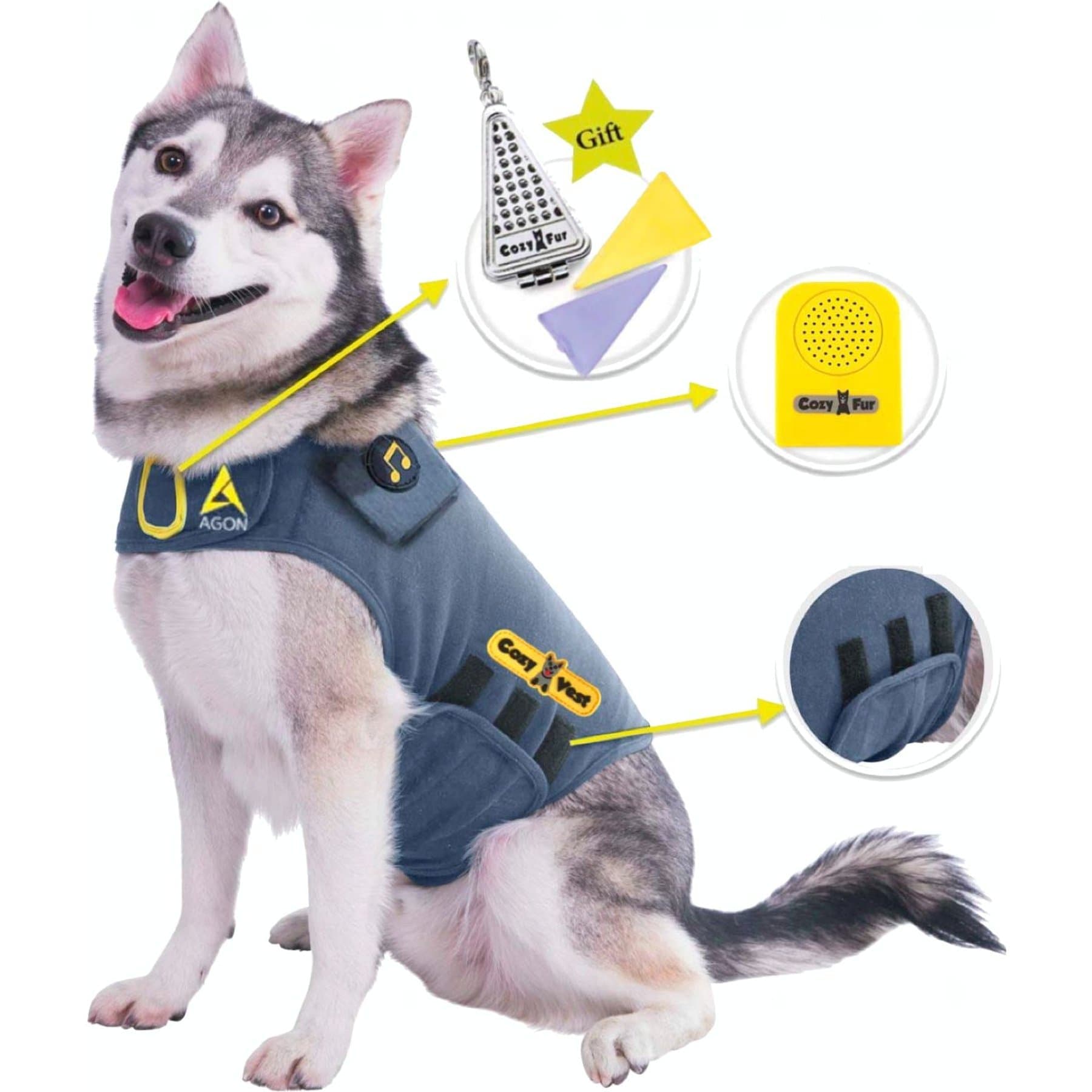
Pressure vest with a built-in lullaby player plus lavender and chamomile scent for storm and fireworks nights.
Webvet may earn a commission when you click through to Chewy, at no extra cost to you.
The CozyVest aims at three senses: touch through gentle pressure, hearing through a lullaby music player, and smell through essential oils. The player has a 2, 5, or 10 hour repeat timer, and the vest ships with one lavender and one chamomile oil. It is 90% cotton and 10% nylon and machine washable.
- Sizing: weight and chest girth. The Medium fits 26 to 40 pounds and a 21 to 25 inch chest, and the Large fits 41 to 64 pounds and a 25 to 30 inch chest.
- Care: the maker says to wash in cold water with regular detergent and to fasten the hook-and-loop first.
- Price: Chewy listed the Medium at $39.99 when we checked in October 2026, and CozyVest listed it at $29.99 on sale.
- The tradeoff: its promise of the best relief for thunder, fireworks, and separation anxiety cites no study, and no primary source evaluates music or aromatherapy built into a vest.
- Scent safety: VCA Animal Hospitals says many essential oils are toxic to dogs through ingestion or skin exposure. CozyVest gives no oil safety guidance, so ask your veterinarian before using the scents and keep the oils out of reach.
ThunderShirt Classic Anxiety & Calming Vest with ThunderWunders Melatonin Chews: best storm-season starter bundle
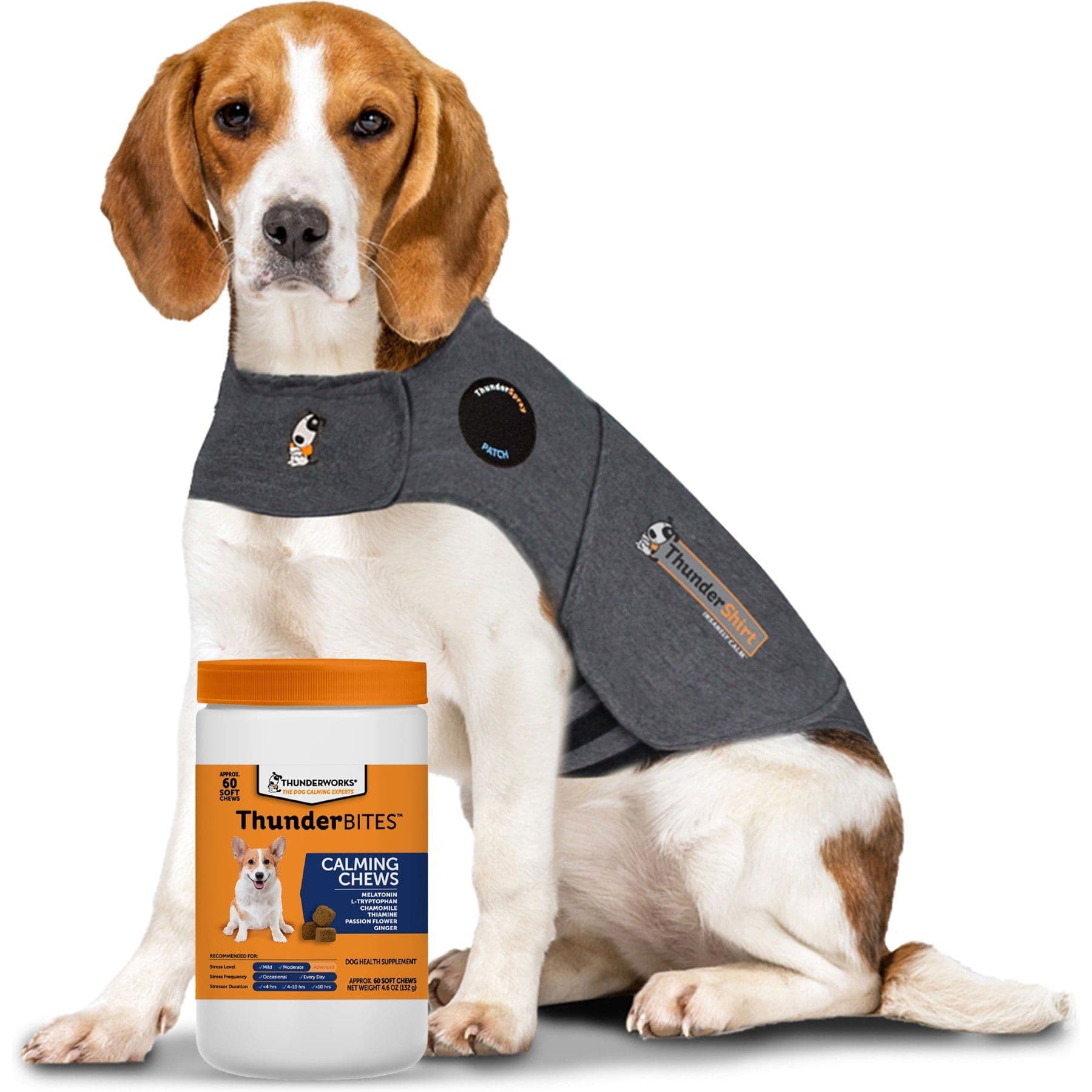
ThunderShirt Classic in Medium paired with ThunderWunders melatonin chews as a storm-season starter kit.
Webvet may earn a commission when you click through to Chewy, at no extra cost to you.
This bundle pairs a ThunderShirt Classic in Medium with ThunderWunders chews, which the maker markets with thiamine, L-tryptophan, and melatonin and says to give about 30 minutes before a stressful event. The listing names fireworks, thunder, separation, travel, vet visits, and grooming as uses.
- Who it suits: owners of medium dogs who want a vest and a chew on hand for predictable storm nights.
- Price: Chewy listed the bundle at $56.03 when we checked in October 2026.
- What is missing: the manufacturer's page does not state how much melatonin is in each chew.
- The tradeoff: VCA lists sleepiness, weight gain, and fertility changes as melatonin side effects and calls your veterinarian the best source on supplement safety, so clear the chews with your vet first.
 Sponsored
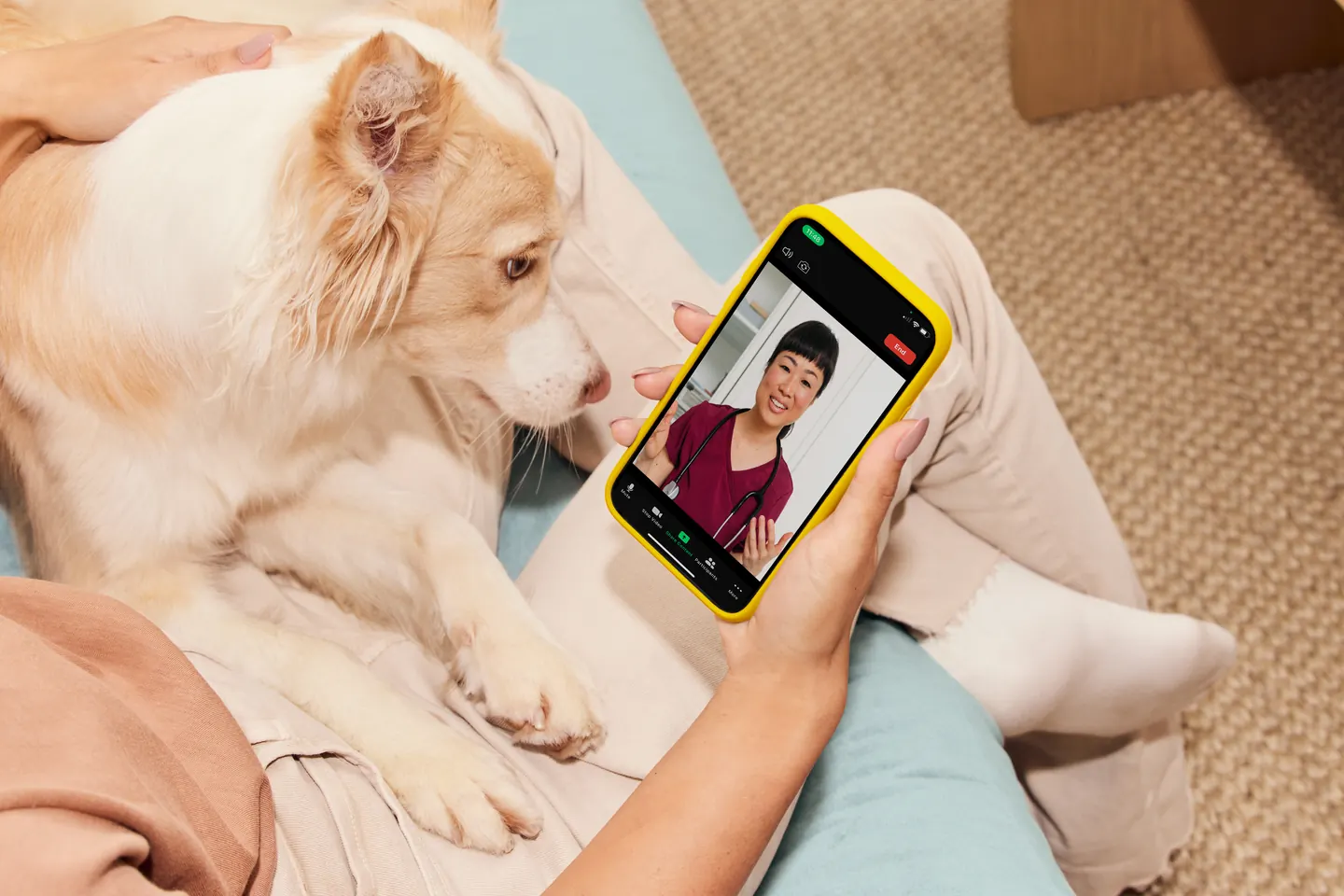
Vet care that's always there
Unlimited video calls and messaging with licensed vets for less than a typical vet visit. One membership covers up to five pets.
Use code Pets60
Plans start at $12/month · covers up to 5 pets
- Licensed vets in most states
- Rx for 150+ conditions
- 4.7 on Trustpilot
How a pressure vest works and which dogs tend to respond
The theory behind every pressure wrap is deep pressure: steady, even contact across the body that some dogs find settling. Fear Free Happy Homes describes the ThunderShirt as applying gentle, constant pressure similar to swaddling an infant, and describes the Anxiety Wrap as combining acupressure with maintained pressure.
How that pressure might calm a dog is still a hypothesis. ThunderShirt says constant pressure can help reduce an elevated heart rate, but cites no studies on its page, and only one trial, King 2014, measured heart rate with a ThunderShirt.
The Merck Veterinary Manual says only that some dogs benefit from clothing that applies gentle compression, without giving a mechanism or a response rate.
Pressure wraps versus weighted vests
A weighted vest is a different idea from a pressure wrap. The trials in the NC State review tested compression wraps, not added weight, so the evidence does not tell you whether a weighted vest helps anxiety. If you want the type with research behind it, choose a snug, adjustable compression wrap.
Size is rarely the obstacle. ThunderShirt's range runs from a size for dogs under 8 pounds up to its XL for 65 to 110 pounds, so for small and large dogs alike the question is fit.
No primary source identifies which individual dogs respond. What the research does show is who was studied:
- Separation or generalized anxiety: the 90 dogs in the King 2014 ThunderShirt trial.
- Thunderstorm phobia: the dogs in the Cottam 2013 Anxiety Wrap study.
- Noise phobia: the dogs in the Pekkin 2016 double-blinded vest study.
- Simulated thunderstorms: the 16 Labrador retrievers in Fish 2017.
Noise is where most owners start. In a Scientific Reports survey of 13,700 Finnish pet dogs, noise sensitivity was the most common anxiety-related trait, at 32%. That makes storms and fireworks the situations many owners will be planning for.
To judge whether your dog responds, watch behavior, as the studies did. King's team compared how often dogs oriented toward the door. At home, compare the same anxiety signs across several similar events, with and without the vest. Since response cannot be predicted, buy with a return window.
The intensity of the fear matters too. Merck separates ordinary fear from a phobia, which it defines as a marked, persistent fear that is irrational, out of proportion to the threat, and always maladaptive. Phobic dogs are the ones most likely to need more than a vest.
Sizing and fitting an anxiety vest so the pressure is even
Pressure only helps if it is even, and even pressure starts with the right size. Brands size in different ways, so a size letter means little on its own:
- ThunderShirt: sizes by weight on its own site. The ThunderShirt Polo Anxiety Vest for Dogs, Camo, X-Small fits 8 to 14 pounds, the Small fits 15 to 25 pounds, and the XL fits 65 to 110 pounds. Check the chest chart for the exact style when you order.
- CozyVest: sizes by weight and chest girth. The CozyVest 3-in-1 Anxiety Music & Essential Oil Aromatherapy Dog Calming Vest, Gray, Medium fits 26 to 40 pounds and a 21 to 25 inch chest, and the Large fits 41 to 64 pounds and a 25 to 30 inch chest.
- Kuoser: sizes by chest girth only. The Kuoser Adjustable Anxiety Relief Wrap Vest for Dogs, Black, Medium fits a 20 to 24.4 inch chest, the Large fits 24.4 to 29.5 inches, and the page gives no measuring instructions.
Notice the overlap. A dog with a 25 inch chest sits at the line between CozyVest's Medium and Large and close to the line between Kuoser's Medium and Large. Weight and chest girth do not always line up, so measure both before you choose a size.
Take extra care with ThunderShirt's largest size. The Thundershirt Heather Grey Anxiety Solution for Dogs, XL, 65 to 110 lbs covers a 45 pound weight range, so two dogs in the same size can have very different chests.

Use this sizing checklist before and after you order:
- Measure your dog's chest girth with a soft tape and note it alongside your dog's current weight.
- Compare both numbers with the chart for the exact product and style, not a general chart.
- If your dog falls near a size line, check which measurement that brand sizes by and weigh it most heavily.
- Put the vest on following that style's own instructions, since ThunderShirt's Polo fits differently from its Classic.
- Check that the panels lie flat and wrap evenly, with no gaps or bunching around the chest.
- On a male dog, make sure the belly strap does not cover or press on the genitals or prepuce. If it rubs, remove the shirt; ThunderShirt suggests trying a smaller size.
Neither CozyVest nor ThunderShirt gives a tightness measurement. CozyVest says its wrap adjusts for the right amount of pressure, and ThunderShirt says a properly sized and fitted shirt should be very comfortable. Aim for snug and even rather than loose, and recheck the fit after the first few wears.
How long to leave a vest on and how to introduce it
A vest works best when it already means something good before the storm arrives. That is habituation: letting your dog get used to the vest in calm moments. ThunderShirt recommends pairing the shirt with treats and practicing a few times in a familiar setting when your pet is calm.
A simple introduction looks like this:
- Show your dog the vest and reward calm interest with a treat.
- Put it on briefly in a quiet, familiar room, reward, and take it off.
- Repeat on consecutive days, lengthening the wear a little each time.
- Only then rely on it before a predictable stressor such as a forecast storm.
If your dog shows the fear signs VCA describes, such as freezing or cowering, while wearing the vest during practice, shorten the session and go back a step. The goal is a vest your dog accepts calmly before you ever ask it to help in a storm.
How long should a dog wear an anxiety vest?
ThunderShirt advises removing the shirt every one to two hours for the first few uses to check fit and comfort, and removing it at least twice a day during extended use.
The maker frames the shirt as suited to stressors lasting under 4 hours up to 10 hours. That is the manufacturer's guidance; no veterinary source gives a maximum wear time in hours.
Can dogs sleep in their ThunderShirt?
ThunderShirt says the shirt can be left on for extended periods depending on the issue, but no veterinary source addresses whether dogs should sleep in a vest. If you try it, supervise and remove it at the maker's twice-daily checks. For nighttime restlessness, our guide to dog anxiety at night covers the wider causes.
Whatever the duration, take the vest off when it stops being comfortable. Watch for these signs:
- Rubbing or pressure points: especially a belly strap pressing on a male dog's genitals.
- Overheating: Cornell University College of Veterinary Medicine defines heatstroke as a body temperature of 105 degrees F or higher, against a normal 100.5 to 102.5 degrees F.
- Heatstroke signs: Cornell lists heavy panting, drooling, vomiting, diarrhea, weakness, and collapse. Remove the vest, cool your dog safely and immediately, and get to a veterinary hospital.
Anxiety vests versus other calming options: when to add a vet visit
A vest is an add-on, not a treatment plan. VCA Animal Hospitals says behavior modification and medication are the regular treatments for firework and thunderstorm fears, and calls anxiety wraps such as the ThunderShirt worth trying within a plan that includes training.
Medication alone is not the answer either. Merck says only concurrent behavior modification can establish new neural pathways, so even a dog on prescription medicine still needs training.

What do vets recommend for dog anxiety?
Vets start by ruling out a medical cause. Tufts Cummings School of Veterinary Medicine says pain, itching, illness, and discomfort can all lower a dog's threshold for anxiety, and that dogs with frequent anxious behavior should see a veterinarian as soon as possible.
From there, the plan is behavior modification plus, when needed, medication or supplements. Our overview of anxiety relief for dogs covers that full plan, and our guide to dog anxiety meds explains the prescription options.
What can I use instead of a ThunderShirt?
The alternatives work in different ways and carry different levels of evidence:
- Another pressure wrap: a lower-cost wrap such as the Kuoser Adjustable Anxiety Relief Wrap Vest for Dogs, Black, Medium relies on the same gentle, constant pressure, so it is a cheaper way to test whether pressure helps your dog.
- Pheromones: in a placebo-controlled study of 24 beagles published in Veterinary Record, a dog-appeasing pheromone collar reduced fear and anxiety scores during recorded thunder. The manufacturer funded it, and the authors called for more research. Our dog calming diffuser guide covers plug-in options.
- Calming chews: VCA says melatonin is used in dogs for sleep and behavior disorders. It warns that human melatonin products may contain xylitol, which is toxic to dogs, so choose dog-formulated calming chews for dogs and check with your vet.
- Prescription gel: Fear Free says Sileo takes 30 to 60 minutes to take full effect and lasts two to three hours.
- Prescription tablets: on May 6, 2026, the FDA approved Tessie (tasipimidine), the first treatment approved for both noise aversion and separation anxiety in dogs. It is prescription-only.
The tradeoffs come down to evidence, access, and risk. A vest is drug-free with no adverse effects reported, but weak evidence. Pheromone products and calming chews have limited evidence of their own. Medication has the strongest role in severe fear, and VCA says storm-phobia drugs should only be given under veterinary supervision.
Many dogs do best with a combination: a vest and a safe retreat for mild storm worry, or a vest alongside medication and a training plan for a phobic dog. Your veterinarian is the one to decide which mix fits.
To make that visit useful, bring notes on recent episodes: what triggered them, which signs you saw, how long they lasted, and whether the vest or anything else changed them. That record helps your vet separate occasional fear from a pattern that needs a treatment plan.
Using a vest for fireworks, storms, car rides, and the vet
Noise is the classic use. Merck says the most common noise phobia is fear of thunderstorms, with fear of fireworks and other loud noises also common. Fear Free Happy Homes lists snug garments such as ThunderShirts as one tool alongside pheromones, supplements, behavior modification, and medication.
Whatever the situation, read your dog's body language to judge whether the vest is helping. Signs of fear and anxiety to watch for:
- From Tufts: panting, pacing, trembling, drooling, withdrawing from the owner, or hiding.
- From VCA, during noise: freezing, panting, cowering, trying to escape, or refusing to go on a walk.
- Shaking: our guide to dog shaking, scared, and anxiety explains what trembling can mean.

For storms and fireworks, set the routine up before the noise starts:
- Put the vest on early, before a forecast storm or a fireworks night, once your dog already accepts it from calm-day practice.
- Create a haven your dog can retreat to when afraid; VCA notes severe storm phobias also respond to a dark, curtained room.
- Start desensitization in the off-season, when VCA says fireworks and storms are unlikely. A vest alone on the night of an event is a stopgap.
Car rides and vet visits
Car rides are less certain. No primary veterinary source we found tests a pressure vest for car travel; ThunderShirt lists travel among its recommended uses, which is a manufacturer claim. If your dog seems ill in the car, motion sickness is a separate, physical problem to raise with your vet.
Vet visits are worth preparing for because, as VCA explains, fear and stress can stop the veterinary team from completing a true assessment of your dog's health. How much a vest can do depends on the level of fear:
- Mild worry: a vest can ride along to the clinic, put on at home after the usual calm-day practice so it is familiar.
- Severe distress: a vest cannot replace pre-visit medication. VCA says these medications must reach full effect before the dog realizes a visit is coming, sometimes an hour or more ahead or even the night before.
- Medication questions: if your vet suggests a pre-visit medication, our guide to trazodone for dogs explains what to ask.
Separation anxiety is the use with the least evidence behind a vest. Merck lists the signs of separation anxiety as:
- Barking when left alone
- Pacing
- Eliminating indoors
- Destroying kennels, walls, or doors in confined dogs trying to reunite with their owners
Merck also notes substantial overlap between noise phobia and separation distress, so a dog afraid of storms may also struggle when left alone.
The King 2014 trial included dogs with separation anxiety and found only a modest heart-rate change, without blinding. A vest will not substitute for a training plan; our guide to separation anxiety in dogs walks through that plan.
Dog anxiety vest questions
Frequently Asked Questions
Which dog breed is most prone to anxiety?
No breed is universally the most anxious. In the Finnish survey of 13,700 dogs, noise sensitivity was most common in Lagotto Romagnolo, Wheaten Terrier, and mixed-breed dogs, and breeds differed widely on every anxiety trait, which the authors read as a strong genetic contribution.
The survey relied on owners who chose to take part, so treat breed as background and judge your dog as an individual by its own history.
Can a dog wear an anxiety vest in hot weather?
Yes, with care. ThunderShirt says overheating is not typically a concern except in extreme conditions such as 90 degrees F in the sun, which is a manufacturer claim, not independent testing.
Cornell flags short-muzzled breeds, older or overweight dogs, and thick-coated dogs as higher heatstroke risks, so for those dogs stick to short sessions and remove the vest at heavy panting. Never leave a dog in a parked car: ThunderShirt's own summer guidance warns a dog can start to overheat within 15 minutes.
How tight should a ThunderShirt be?
Snug and even, but comfortable. In the King trial, the heart-rate benefit showed up only in dogs wearing the ThunderShirt tightly, compared with a loose vest and no vest.
ThunderShirt does not publish a two-finger rule for its dog vest, but sliding two fingers under the edge of the wrap is a practical check: snug enough for steady contact, loose enough that your dog moves, sits, and lies down normally.
Can a puppy wear an anxiety vest?
There is no published minimum age for a pressure vest. ThunderShirt's smallest size is for dogs under 8 pounds, which is the practical lower limit, and a growing puppy will need you to resize the vest as it grows.
The American Veterinary Society of Animal Behavior warns that putting a puppy in stressful or overwhelming situations before it is ready can increase fear over time, so keep introductions short, gentle, and paired with treats.
Does an anxiety vest help with separation anxiety?
Not on its own. Tufts says dogs with separation anxiety need a program of behavior modification and may need anti-anxiety medication, so a vest is at most a supplement to a behavior plan.
VCA describes the training goal as a dog that learns to settle comfortably on cue, and notes that tranquilizers alone do not reduce anxiety. Merck lists fluoxetine as FDA approved for canine separation anxiety, used together with behavior modification.

Editor
The Webvet Editorial Team is the in-house group of pet-care editors and writers behind Webvet, operated by Smart Pet Collective. The team researches, writes, and maintains Webvet's pet health, behavior, and medication content. Every article follows a defined editorial process: research from reputable veterinary and scientific sources, careful drafting, mandatory review of medical content by a credentialed veterinarian, and dated publication. Health and medication articles are medically reviewed by a licensed veterinary professional before they go live and are kept current over time.
Veterinarian · BVMS MRCVS
Dr. Pippa Elliott, BVMS, MRCVS, is a veterinarian with nearly 30 years of experience in companion animal practice. Dr. Elliott earned her Bachelor of Veterinary Medicine and Surgery from the University of Glasgow. She was also designated a Member of the Royal College of Veterinary Surgeons. Married with 2 grown-up kids, Dr. Elliott has a naughty Puggle named Poggle, 3 cats and a bearded dragon.
Related reading

Best Muzzle for Dogs: Basket, Soft, and Training Picks Sized for Comfort

Best Dog Door for Sliding Glass Door Setups: Panel Inserts That Fit Without Cutting

Best Dog Doors: Wall, Door, and Microchip Options for Every Size of Dog
