Best Cat Doors: Interior, Exterior, and Microchip Picks a Vet Would Install
A cat door gives your cat access to a litter box room, a porch, or the yard without you playing doorman. Here is how to choose between interior, exterior, window, and microchip doors, how to size one, and the six Chewy picks we would install.

BVMS MRCVS

This article contains affiliate links. Webvet may earn a commission when you buy through them, at no extra cost to you.
A cat door solves a specific household problem: a dog raiding the litter box, a cat yowling at the back door, or a bedroom door you keep propping open at night. The right one depends on that problem first and on the product second.
Size the door by your cat's shoulder height and body width, then choose the lock. Chewy listed the six doors here at prices from $24.99 for a locking flap to $337.87 for an app-connected microchip door when we checked in October 2026. Specs come from each maker's or retailer's listing.
| Cat door | Best fit | Format | Key spec | Main tradeoff |
|---|---|---|---|---|
| PetSafe 4-Way Locking Microchip Entry Cat Door, White | Outdoor cat in a neighborhood with other cats or wildlife | Exterior microchip flap | Reads most 15-digit FDX-B chips, stores up to 40 cats | Needs 4 AA batteries; check your cat's chip type first |
| SureFlap Microchip Cat Door Connect | Owners who want to lock the door and set curfews from a phone | Exterior microchip flap with app | Remote lock and curfews through the Sure Petcare app | App needs a separately sold Hub; highest price here |
| Cat Mate 4-Way Locking Cat Flap with Door Liner, White | One small to average cat getting into a porch, garage, or yard | Plain 4-way locking flap | 145 by 145 mm flap, self-lining to 50 mm | Opens for any animal that fits when unlocked |
| PetSafe Durable Interior Cat Door, Up to 20-lbs, White | Keeping the dog out of a litter box room | Interior pass-through | Rated for cats up to 20 pounds | No published flap size; check the box before cutting |
| Ideal Pet Products Sash Window Flap Cat Door, 27-32 inches | Renters who cannot cut a door or wall | Aluminum sash window panel | Fits 27 to 32 inch aluminum sash windows | Measure carefully; one retailer sells this width as custom and final sale |
| Closer Pets Cat Mate Large Cat/Small Dog 4-Way Self Lining Door, White | Large cats, or a cat and a small dog sharing a door | Plain 4-way locking flap, large | 180 by 180 mm flap, up to 360 mm (14 inch) shoulder height | A small dog fits through it too |
 Sponsored
Want a vet's help with your cat's anxiety or behavior?
Talk to a licensed vet at Dutch over video, often the same day. They can recommend treatment and prescribe it when it's appropriate.
Use code Pets60
Plans start at $12/month · covers up to 5 pets
- Licensed vets in most states
- Rx for 150+ conditions
- 4.7 on Trustpilot
Why a cat door is worth it, and when it is not
Pick the cat door type by the problem: an interior door for litter box room access and a dog-free feeding spot, a microchip door for an outdoor cat in an area with other cats or wildlife, and a window panel for renters.

Then size it by shoulder height and the widest part of the body before comparing features. A door your cat cannot fit through comfortably will not get used.
- 1Interior doors keep the dog out of a litter box room or the cat's food; exterior flaps give outdoor access.
- 2Measure shoulder height and the widest part of the body before cutting, especially for a large cat.
- 3A microchip flap lets only registered cats in; a plain flap opens for any animal that fits.
- 4Renters can use a sash window panel instead of cutting a door or wall.
- 5Wait 2 to 3 weeks after adoption before giving a new cat outdoor access.
The AAFP position statement on indoor and outdoor lifestyle lists reduced risk of injury, poisoning, and exposure to wildlife, predators, and infectious and parasitic agents as benefits of indoor-only living. It also lists better emotional health, more activity, and environmental enrichment as benefits of outdoor access.
The same statement does not treat indoor life as risk-free. It names obesity, stress-associated disease, and feline idiopathic cystitis as indoor-only concerns, and temperature extremes and hazardous weather as indoor/outdoor ones. A cat door is a welfare tool, not only a convenience, but only when the door matches the risk you are trying to manage.
| Household problem | Door type that fits | Why it fits | Watch for |
|---|---|---|---|
| Dog eats from the litter box or cat food | Interior cat door into a litter box room | Cat-sized opening lets the cat in and helps keep the dog out | A small dog may fit a large flap |
| One cat needs yard or garage access | Exterior 4-way locking flap | Lock modes control in, out, both, or neither | Plain flaps admit any animal that fits |
| Neighborhood cats, raccoons, or other wildlife nearby | Microchip exterior door | Opens only for registered cats | Check chip compatibility before buying |
| Multi-cat home where cats have different rules | App-connected microchip door | Remote locking and curfews from a phone | Hub sold separately |
| Renting, cannot cut a door or wall | Sash window panel | Panel sits in the window opening | Measure the window width exactly |
| Large cat, or a cat and small dog share a door | Large 4-way flap sized by shoulder height | Rated by shoulder height, not weight | Larger opening admits larger animals |
Indoors, the usual job is a litter box room; outdoors, it is controlled access to the yard or garage. To keep the dog out of the cat's space, you need an interior door with an opening your cat fits through and your dog does not.
Wildlife is the reason a plain exterior flap deserves thought. The CDC rabies overview says more than 90 percent of reported animal rabies cases in the United States occur in wildlife, and that vaccination significantly reduces the risk to pets. The CDC page on raccoon roundworm notes the parasite can infect other animals, including dogs.
Where a cat door can go
A cat door does not have to go in the back door. The common spots, and what each one involves:
- Interior and bedroom doors: a cat door in an interior door lets a cat reach a bedroom, laundry room, or basement without you propping the door open all night.
- Back doors: a cat flap gives outdoor access. Check the door thickness and material, since metal doors can need a different fitting.
- The door to the garage: works when the garage is the cat's safe outdoor space.
- Glass doors: glass panels need a door built for glass. PetSafe's microchip door install guide includes a separate glass fitting and a metal-door fitting.
When a cat door is the wrong answer
A cat door is not the answer for every cat. Skip or delay it in these situations:
- An indoor-only cat that keeps bolting: a door makes escape easier. Read why your cat is trying to escape and address that first.
- A new cat or kitten: International Cat Care recommends waiting 2 to 3 weeks after adoption, and kittens should stay in until at least a week after primary vaccinations.
- Children and a pool: the PetSafe manual warns a child may use a pet door to reach hazards such as a pool on the other side.
- A dog-sized need: if the dog also needs the door, see our guide to the best dog doors instead of stretching a cat door to fit.
The makers of these doors do not publish an installation cost. If you are not cutting the opening yourself, budget for a handyman on top of the door.
Our picks: the best cat doors
PetSafe 4-Way Locking Microchip Entry Cat Door: best microchip door
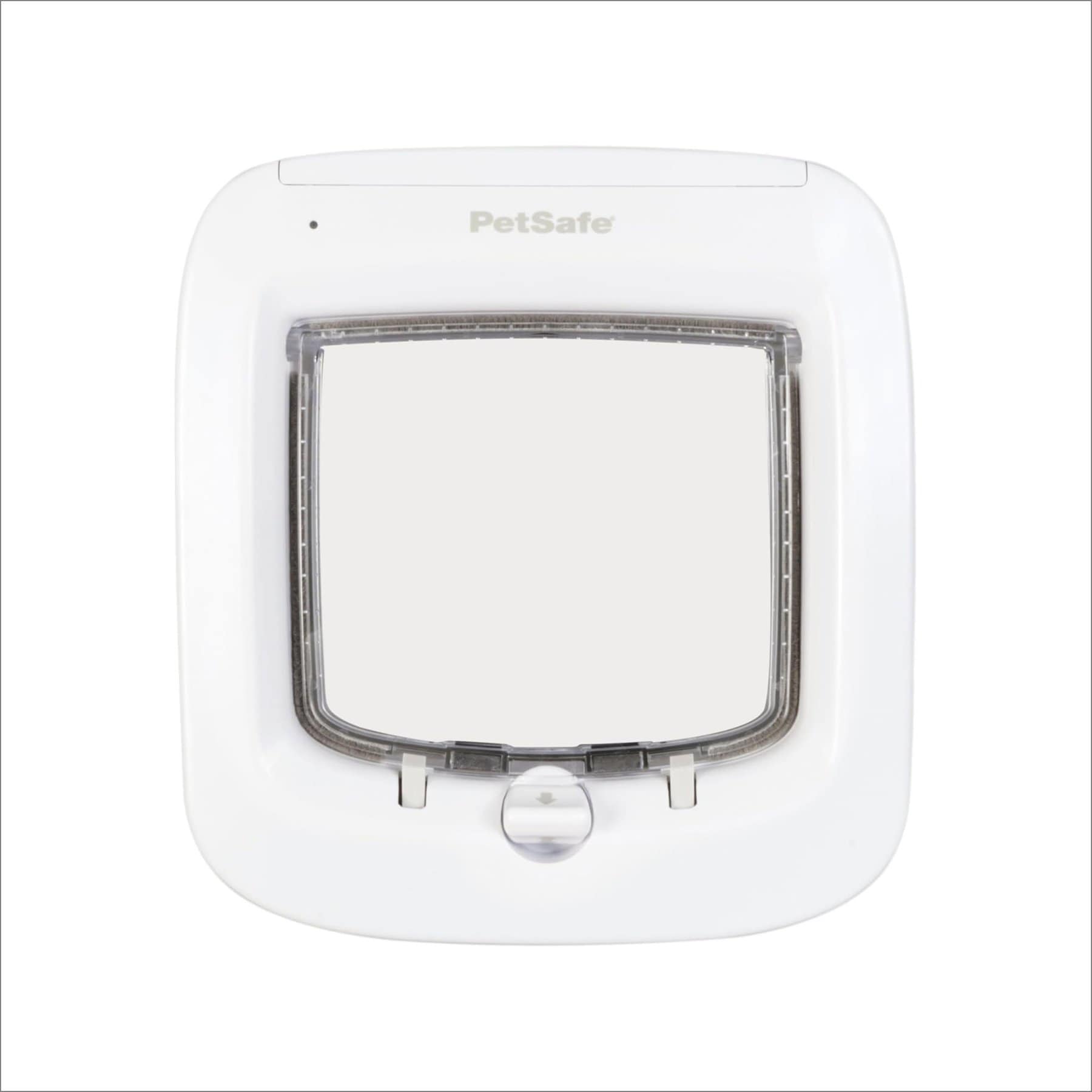
Opens only when it reads your cat's registered 15-digit microchip, with four lock settings.
Webvet may earn a commission when you click through to Chewy, at no extra cost to you.
This is the door for an outdoor cat in an area with other cats or wildlife. Chewy's listing says it only opens when it reads your cat's unique 15-digit microchip ID. The PetSafe quick start guide says it works with most 15-digit FDX-B pet microchips and stores up to 40 microchipped cats.
The specs that matter before buying:
- Flap size: 5.91 by 5.51 inches, with a rough cut-out of 6 7/8 by 6 11/16 inches, per the PetDoors.com listing.
- Lock settings: open, locked, in-only, and out-only.
- Power: 4 AA alkaline batteries, not included.
- Operating range: PetSafe says it only works properly between minus 13 F and 131 F outside temperature.
- Install depth: doors and walls up to 2.75 inches thick.
The tradeoff is compatibility. PetSafe strongly recommends programming the flap and testing it with your cat's own microchip first. No weight rating is listed, so size it by your cat's body, not by pounds. Chewy listed it at $107.99 in October 2026, between the plain flaps and the app-connected door.
SureFlap Microchip Cat Door Connect: best app-connected door
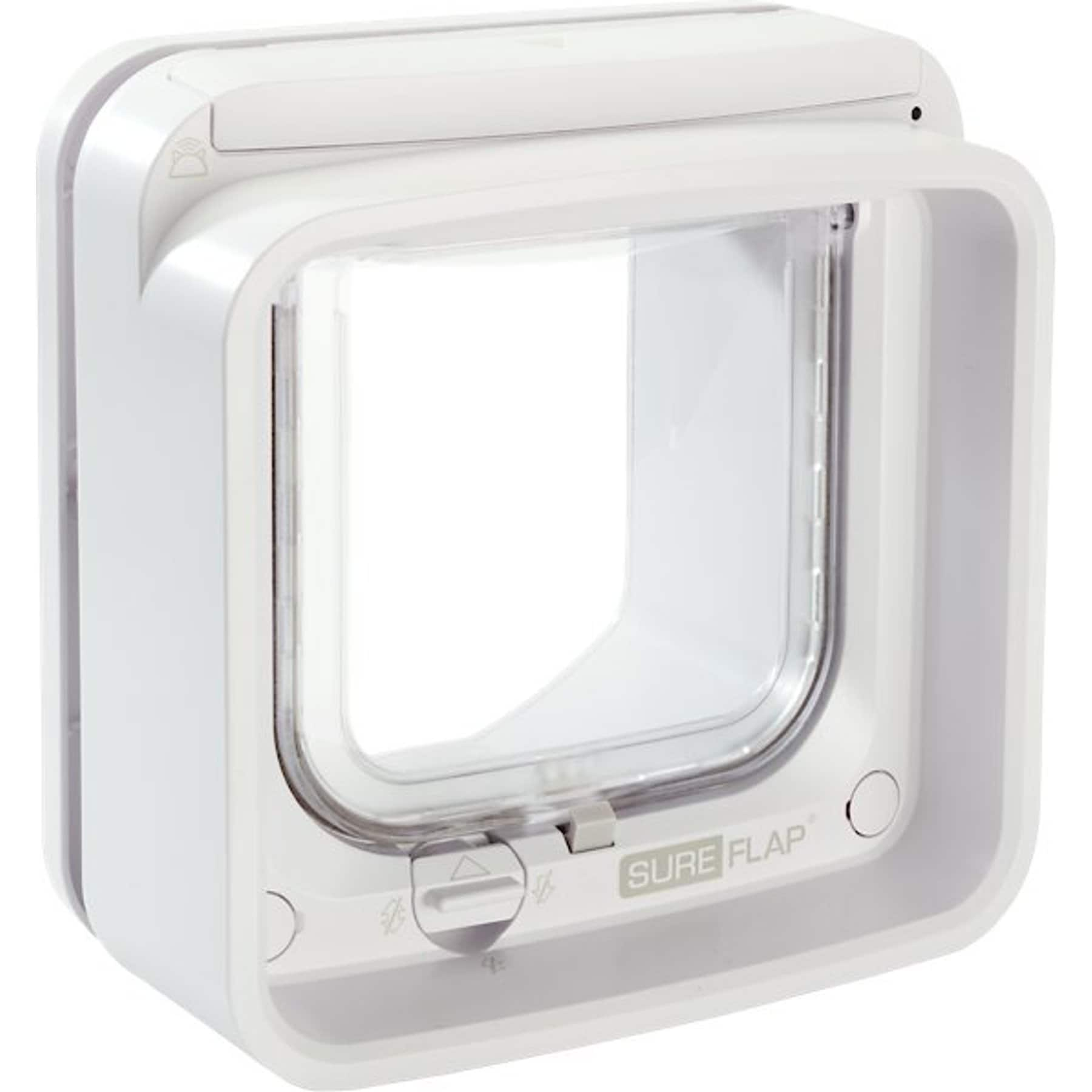
Microchip-reading flap you can lock, unlock, and put on a curfew from the Sure Petcare app.
Webvet may earn a commission when you click through to Chewy, at no extra cost to you.
Choose this when you want control from your phone. Sure Petcare says the app can remotely lock or unlock the door anytime and set curfews. Chewy's listing describes a double antenna that reads your cat's microchip to allow or deny access.
The details to know:
- Hub required: the app features need the SureFlap Connect Pet Door Hub, sold separately.
- Opening: the smallest opening is 142 by 120 mm, about 5.6 by 4.7 inches.
- Power: 4 AA batteries, not included, with up to 6 months of battery life.
- Depth: 70 mm tunnel depth and 78 mm front frame depth.
- Chip support: Sure Petcare says its products work with all common microchips.
The tradeoff is price and setup. Chewy listed it at $337.87 in October 2026, before the Hub, which is more than the other five picks combined.
No weight limit is stated, and the opening is smaller than the PetSafe flap's listed size, so measure a large cat carefully. It suits multi-cat homes that want curfews and remote locking.
Cat Mate 4-Way Locking Cat Flap with Door Liner: best budget exterior flap
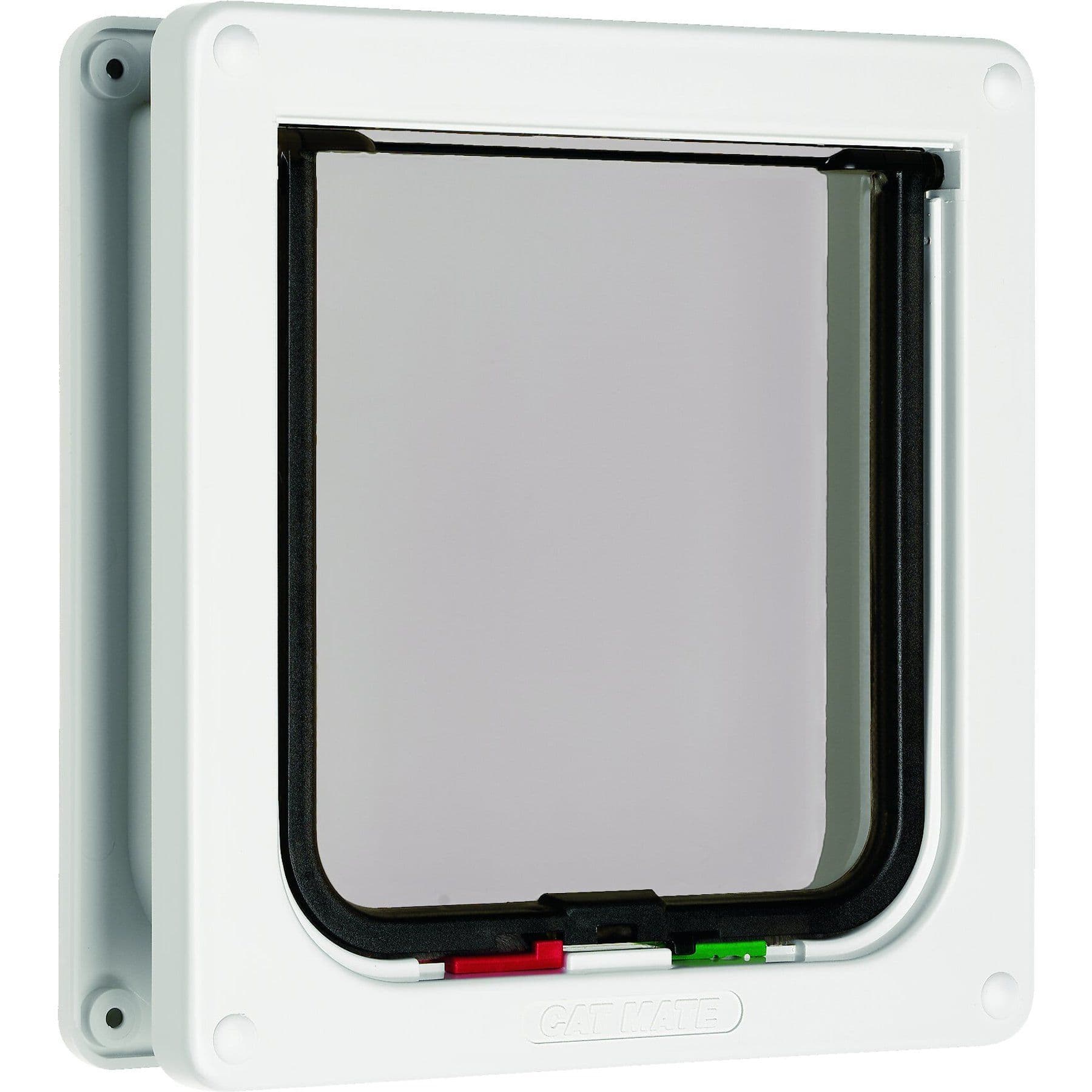
A low-cost 4-way locking flap with a trimmable liner for doors, panels, and walls.
Webvet may earn a commission when you click through to Chewy, at no extra cost to you.
This is the simple, inexpensive way to give one small to average cat access to a porch, garage, or yard. Closer Pets, the maker of Cat Mate, lists four modes: in and out, in only, out only, or locked.
What you get:
- Flap: 145 by 145 mm, about 5.7 inches square.
- Cut-out: 165 by 174 mm.
- Liner: self-lining up to 50 mm thick; Chewy's listing says the liner can be trimmed for a custom fit.
- Fit: Chewy describes it as suited to almost all doors, panels, and walls, with a transparent flap.
The tradeoff is that it reads nothing. When unlocked, it opens for any animal that fits, so it suits homes without visiting cats or wildlife pressure. Chewy listed it at $24.99 in October 2026, the lowest price among these picks.
PetSafe Durable Interior Cat Door: best interior door for a litter box room
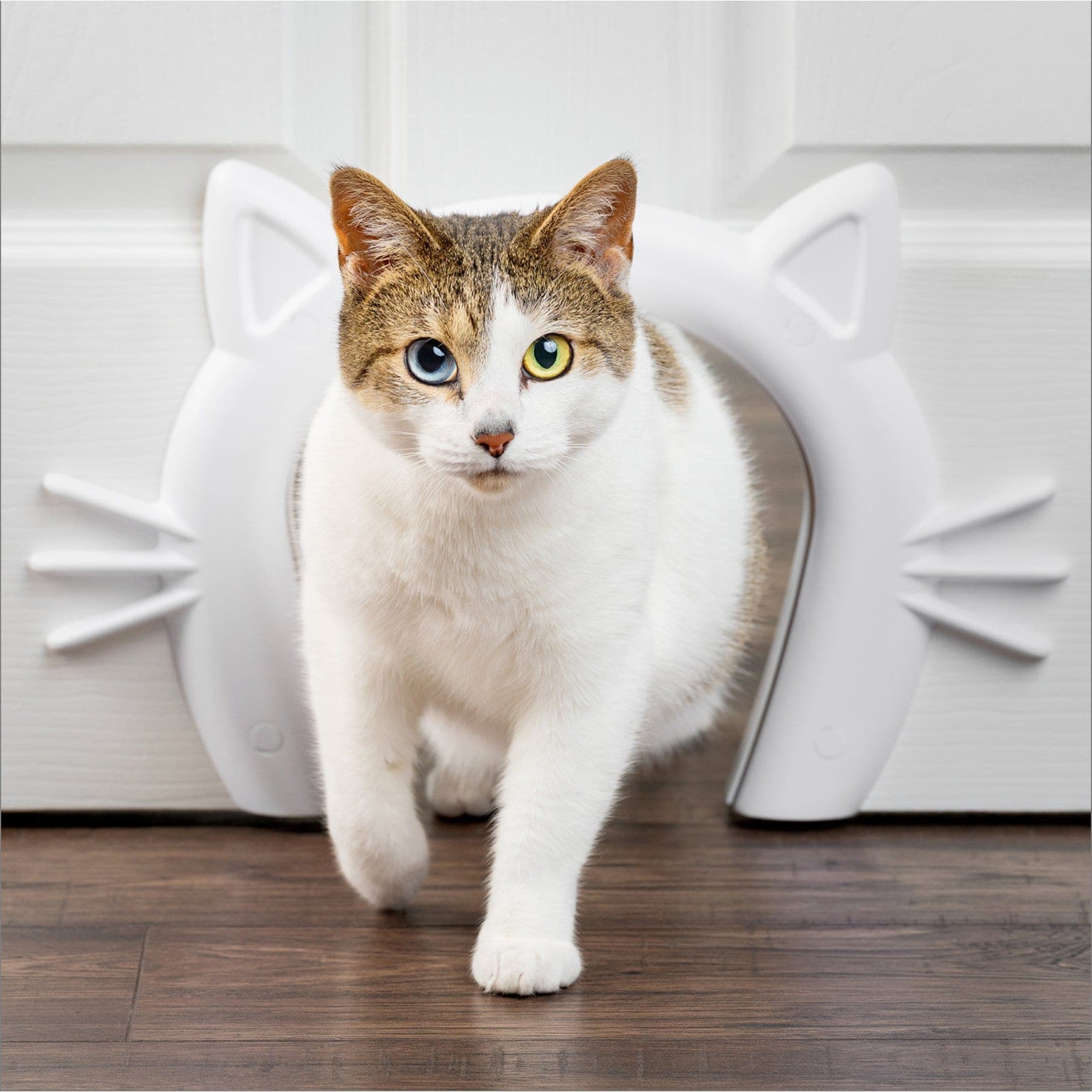
Interior pass-through for cats up to 20 pounds, made for blocking off litter box areas.
Webvet may earn a commission when you click through to Chewy, at no extra cost to you.
This is the door for keeping a dog out of the litter box room or away from the cat's food. Chewy's listing describes it as a choice for blocking off litter box areas or preventing dogs from sneaking cat food. The listing title rates it for cats up to 20 pounds.
How it compares:
- Weight rating: up to 20 pounds, versus 15 pounds for the 4-way locking interior door on the PetSafe site.
- Use: an interior pass-through for a room, not an exterior door.
- Price: listed at $31.95 on Chewy in October 2026.
The tradeoff is missing data. No flap size is published for this model, so check the dimensions on the box against your cat and your dog before cutting. An opening that fits a large cat may also fit a small dog.
Ideal Pet Products Sash Window Flap Cat Door: best window door for renters
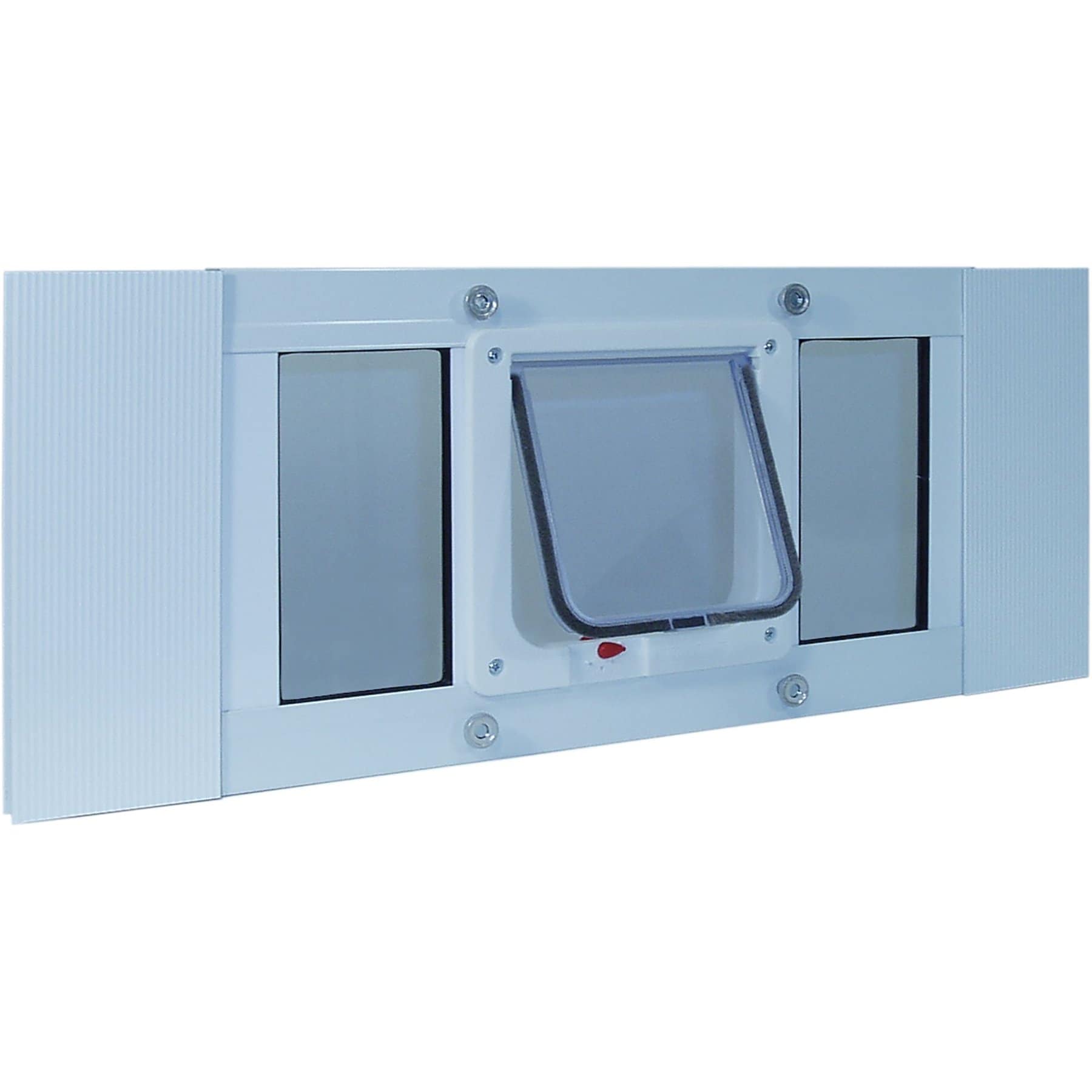
Aluminum flap panel for 27 to 32 inch sash windows, so renters can skip cutting a door.
Webvet may earn a commission when you click through to Chewy, at no extra cost to you.
This is the pick for renters, or anyone who cannot cut a door. Chewy's listing says it is designed for aluminum sash windows, made from aluminum, finished in white, and has a 10 3/4 inch flap. The panel sits in the window opening instead of in a door.
What to check:
- Width: sized for 27 to 32 inch aluminum sash windows.
- Flap options elsewhere: Home Depot lists the same window range with a Medium 7 by 11.25 inch flap and a Small 5 by 7 inch flap, so confirm which flap the listing ships.
- Return terms: one retailer lists this width range as custom and final sale.
The tradeoff is the measurement risk. Chewy listed it at $81.78 in October 2026, so a wrong width is an expensive mistake. Measure the window opening twice before ordering.
Closer Pets Cat Mate Large Cat/Small Dog 4-Way Self Lining Door: best for large cats
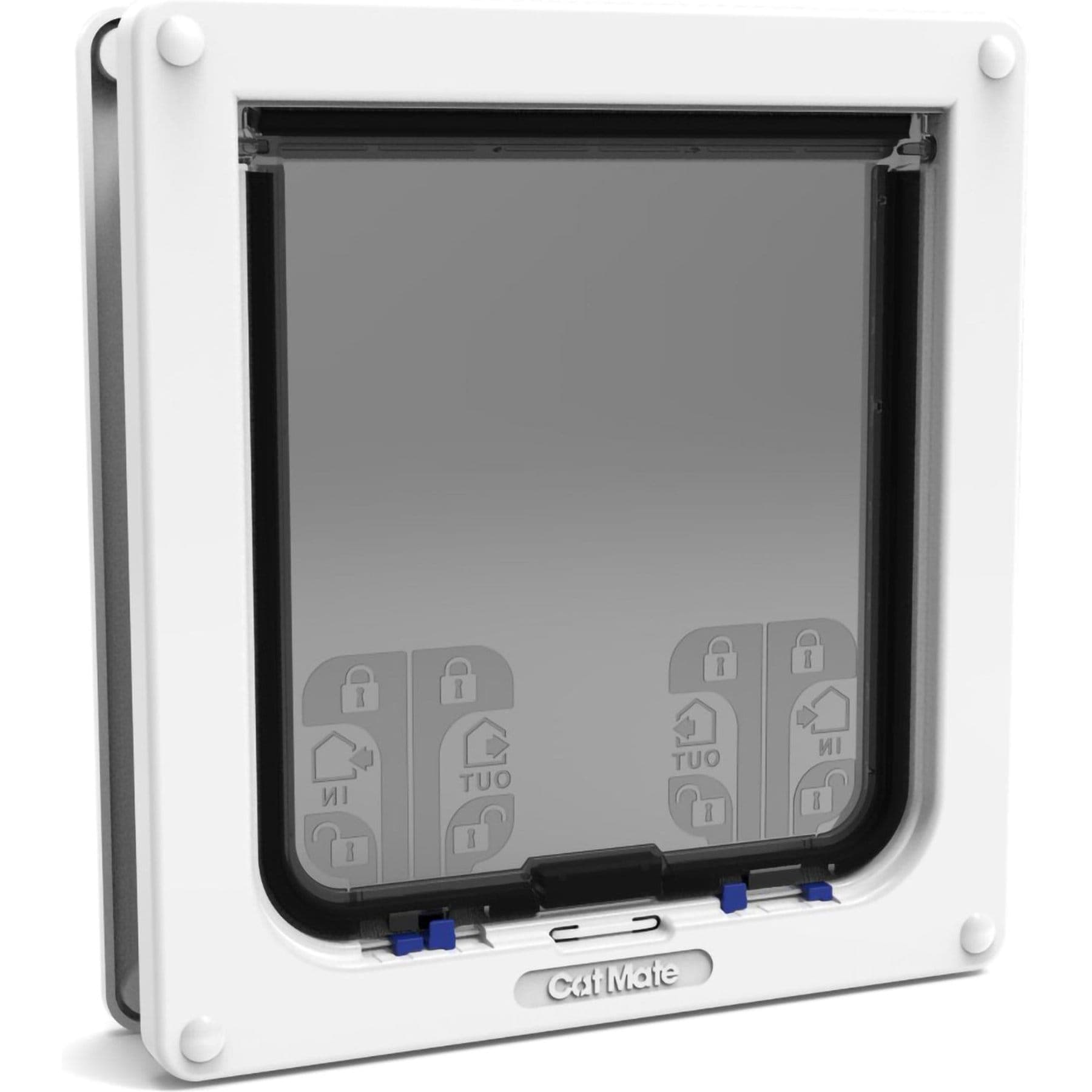
Oversized 4-way locking flap for large cats and small dogs up to 14 inches at the shoulder.
Webvet may earn a commission when you click through to Chewy, at no extra cost to you.
This is the door for a large cat, or a cat and a small dog sharing one door. Chewy's listing says it suits pets whose shoulder height does not exceed 14 inches, and Closer Pets gives the same limit as 360 mm.
The specs:
- Flap opening: 180 by 180 mm, about 7.1 inches square.
- Cut-out: 204 by 221 mm.
- Lock modes: in and out, in only, out only, or fully locked.
- Fit: self-lining up to 50 mm (2 inches) thick, for UPVC, metal, and wooden doors and walls.
The tradeoff is that the size cuts both ways. Closer Pets gives no weight figure, and an opening big enough for a small dog will not keep a small dog out. Closer Pets lists this design as model 221, so confirm the Chewy variant matches. Chewy listed it at $29.99 in October 2026.
SponsoredVet care that's always there
Unlimited video calls and messaging with licensed vets for less than a typical vet visit. One membership covers up to five pets.
Use code Pets60
Plans start at $12/month · covers up to 5 pets
- Licensed vets in most states
- Rx for 150+ conditions
- 4.7 on Trustpilot
Interior cat doors: litter box rooms, basements, and keeping the dog out
An interior cat door turns a laundry room, basement, or spare bathroom into a litter box room the dog cannot reach. That matters for the cat as much as the dog. The Ohio State Indoor Pet Initiative says cats need quiet and privacy when using the litter box.
The same Ohio State guidance shapes where the door goes:
- No ambushes: place the box so people and other animals cannot sneak up on the cat.
- Easy access: the cat should not have to climb over furniture or other animals to reach it.
- Away from the dog: a box near the dog's bed may get little use.
- Covered boxes: owners may use them to keep the dog out, which a separate room does more completely.
The dog side is about health and habit. The American Kennel Club, a breed registry rather than a veterinary body, says eating any feces can expose a dog to harmful bacteria and parasites. Its simplest fix is placing the litter box where the dog cannot access it.
The AKC also notes most dogs would have to eat a lot of litter before it caused a blockage. For a cat that prefers a covered setup, see our guide to litter box enclosures, which can sit inside the room the cat door opens into.
Before you cut an interior door, settle these points:
- Weight rating: the PetSafe Durable Interior Cat Door, Up to 20-lbs, White is rated for cats up to 20 pounds, which works when your dog is clearly bigger than your cat.
- Small dogs: an opening sized for a large cat may let a small dog through, so compare the cut-out to the dog's shoulder height.
- Template: PetSafe says its Cat Corridor interior door installs with the provided cutting template so the door fits properly; use the template from the box for whichever model you buy.
- Hollow-core door: read your model's instructions before drilling, since the makers do not publish hollow-core steps online.
Exterior cat flaps: locking modes, weather sealing, and sizing
An exterior cat flap goes in a back door, a door to the garage, or a wall. The three choices that matter are the lock, the size, and the frame depth. Everything else is secondary.

Locking modes
Three of these doors list a four-way lock: the PetSafe 4-Way Locking Microchip Entry Cat Door, White, the Cat Mate 4-Way Locking Cat Flap with Door Liner, White, and the Closer Pets Cat Mate Large Cat/Small Dog 4-Way Self Lining Door, White. The four settings work like this:
- In and out: free access both ways.
- In only: the cat can come home but not go back out, useful the evening before a vet visit.
- Out only: the cat can leave but nothing can push in.
- Locked: closed both ways, for nights or storms.
A plain flap, including one held shut with a magnetic flap closure, opens for any animal that pushes it when unlocked. The RSPCA says a microchip version means only your cat will come in. If raccoons or neighborhood cats visit, the lock schedule or a microchip reader is the real defense.
Sizing a cat flap
Size by the body, not the scale. No primary veterinary source publishes a flap-size formula, but manufacturers give useful anchors:
- Shoulder height: Closer Pets rates its large flap for large cats and small dogs up to 360 mm (14 inches) at the shoulder.
- Flap opening: 145 by 145 mm for the standard Cat Mate flap, 180 by 180 mm for the large one, and 5.91 by 5.51 inches for the PetSafe microchip door.
- Weight ratings: PetSafe rates interior doors by weight, 15 or 20 pounds depending on the model.
- Body width: Maine Coon Central, a non-veterinary owner guide, suggests measuring the widest part of the body, usually the chest or hips, and adding 1 to 2 inches.
Treat that last rule as a starting point, not a standard. For a large cat, measure shoulder height and the widest point, then compare both to the flap opening. The large Cat Mate flap fits a large cat and a small dog, which is the point and the risk.
Weather sealing, frames, and replacement flaps
None of these makers publish an insulation rating or weather-seal spec for these doors. PetSafe does publish an operating range for its microchip door: it works properly only between minus 13 F and 131 F outside.
Frame depth decides what door the flap fits:
- Cat Mate flaps: self-lining up to 50 mm (2 inches), for UPVC, metal, and wooden doors and walls.
- PetSafe microchip door: doors and walls up to 2.75 inches.
- PetSafe microchip door in a metal door: a separate template line and an installation adaptor.
The makers' pages do not say whether replacement flaps or parts are sold for these models, so ask the seller before you buy.
Microchip and app-connected cat doors: how they work and who needs one
A microchip cat door, often sold as a smart or electronic cat door, has a built-in microchip reader. When your registered cat approaches, the reader scans the chip under the skin and unlocks the flap. Any other animal pushes on a locked flap.

The chip itself is simple. VCA Animal Hospitals describes it as about the size of a grain of rice, inert until a scanner reads it, and mentions electronic pet doors with microchip sensors as one use.
Compatibility is where buyers go wrong. The WSAVA microchip FAQ explains the two standards behind pet chips:
- ISO 11784: sets the structure and information content of the animal RFID code.
- ISO 11785: sets the activation and response frequencies, the encoding format, and how scanner and chip interact.
PetSafe says the PetSafe 4-Way Locking Microchip Entry Cat Door, White works with most 15-digit FDX-B chips. Sure Petcare says its products, including the SureFlap Microchip Cat Door Connect, work with all common microchips, but it does not name ISO or FDX-B.
An older Ohio State fact sheet noted non-ISO 125 kHz chips were then predominant in the United States, so some cats may carry a chip a flap cannot read.
Collar-activated cat doors versus microchip doors
Before chip readers, selective flaps opened for a key or tag on the cat's collar. International Cat Care says newer cat flaps are activated by your cat's microchip, so no collar is needed, and calls microchipping the safest and most permanent ID.
International Cat Care's microchipping position statement recommends a chip conforming to the ISO Full Duplex standard. If your cat's chip is not readable, a collar-activated cat door is the fallback.
Who needs one
A microchip or app-connected door earns its price in a few situations:
- Visiting cats or wildlife: only registered cats get in.
- Multi-cat homes: PetSafe's door stores up to 40 cats, and the SureFlap Connect adds remote locking and curfews.
- Owners away from home: the Sure Petcare app can lock the door from anywhere, with the Hub.
Before installing a microchip door, program it and test it with your own cat's chip; PetSafe strongly recommends this for its flap. If a dog also needs a smart door, our explainer on electronic dog doors covers those systems.
Window and wall cat doors for renters and brick homes
When you cannot cut a door, a window or wall cat door is the workaround. Renters usually need a no-cut option; owners of brick homes or homes with metal or glass doors may prefer a wall install.
Window cat doors and inserts
A window cat door is a panel that fits the window opening, with the cat flap built into it. The Ideal Pet Products Sash Window Flap Cat Door, 27-32 inches is made for aluminum sash windows 27 to 32 inches wide. Before ordering a window insert, check these points:
- Direction: confirm whether your window slides vertically or horizontally and buy the insert made for that direction.
- Width: measure the opening exactly; one retailer sells this range as custom and final sale.
- Flap size: confirm which flap ships, since Home Depot lists the range with 5 by 7 and 7 by 11.25 inch flaps.
For the inside of the window, our guide to cat window perches covers sturdy options, and a window catio is a no-cut way to give an indoor cat fresh air without free roaming.
Sliding glass and screen doors
For a sliding glass door, the no-cut option is a panel insert that fits in the slider track beside the door, so the glass is not cut. Measure the track height before buying. Our guide to dog doors for sliding glass doors covers how these panels fit.
Glass doors that cannot take an insert need a door made for glass. PetSafe's microchip door install guide includes a separate glass fitting. Sure Petcare lists a 70 mm tunnel and 78 mm front frame depth for the Connect, which helps when judging a thin panel.
A flap in a screen door only works while the main door behind it is open, so it suits a porch or warm-weather setup, not overnight security.
Wall installs for brick and solid homes
A through-the-wall cat door avoids cutting the door entirely. PetSafe Support gives these wall steps for its microchip door:
- Confirm the wall is no more than 2.75 inches thick, the door's limit.
- Use a stud finder to locate and mark the studs before cutting.
- Follow the template line for a wall with or without metal.
- Drill the corner holes with a 12 mm drill bit.
- Do not cut the interior tunnel.
For a brick or masonry exterior wall, measure the full wall depth first. If it is thicker than the frame allows, the door will not fit, and cutting masonry is a job for a professional installer. The Cat Mate frames self-line to 50 mm for walls as well as doors.
Teaching a cat to use a cat door
Teach a cat door in stages, and get the timing right first: International Cat Care recommends waiting 2 to 3 weeks after bringing a cat home before letting it outside. Kittens should not go out until at least a week after completing their primary vaccinations.

The training sequence from Purina UK and the RSPCA:
- Prop the flap open securely so it cannot swing onto the cat.
- Lure your cat through with treats, from both sides.
- Never force your cat through the flap at any stage.
- Once your cat walks through confidently, start to close the flap a little at a time so the cat learns to push it.
- After short supervised outings, shake a pot of treats and reward your cat for coming back in.
For a microchip door, program and test it with your cat before training starts, so the flap opens on the first push. Keep outdoor access supervised until your cat reliably uses it.
The RSPCA suggests potted plants around the cat flap so it feels secure. For early supervised outings, a well-fitted harness gives you control; see our pick of the best cat harness options.
Cat door questions
Frequently Asked Questions
What size cat door do I need?
Measure your cat's shoulder height and the widest part of the body, then compare both to the flap opening. Closer Pets rates its large flap for a large cat or small dog up to 360 mm (14 inches) shoulder height, with a 180 by 180 mm flap.
Some interior doors use weight instead, rated for cats up to 15 or 20 pounds.
Can a cat door let other animals into the house?
Yes. A plain flap opens for any animal that fits when it is unlocked. A locking flap closes on a schedule you set, and the RSPCA says a microchip flap means only your cat will come in. Where raccoons or neighborhood cats visit, use the locked mode at night or choose a microchip door.
Do microchip cat doors work with every microchip?
No source confirms every chip works with every door. PetSafe's door reads most 15-digit FDX-B chips, and Sure Petcare says its doors read all common microchips. Some older US chips are non-ISO 125 kHz types. If your cat's chip will not register, a door that reads a collar tag is the alternative.
How do I install a cat door in a hollow interior door?
Use the cutting template that comes with the door to mark the opening at your cat's height. PetSafe's install guides work from a template and drill the corner holes with a 12 mm bit. PetSafe's online install guides do not cover hollow-core doors, so read your model's instructions before cutting.
Will my cat use a cat door with a flap?
Many cats learn with a gradual approach. Prop the flap open securely at first, and lure your cat through with treats from each side. Never push your cat through. Once it walks through easily, lower the flap a little at a time until your cat learns to push it open alone.

Editor
The Webvet Editorial Team is the in-house group of pet-care editors and writers behind Webvet, operated by Smart Pet Collective. The team researches, writes, and maintains Webvet's pet health, behavior, and medication content. Every article follows a defined editorial process: research from reputable veterinary and scientific sources, careful drafting, mandatory review of medical content by a credentialed veterinarian, and dated publication. Health and medication articles are medically reviewed by a licensed veterinary professional before they go live and are kept current over time.
Veterinarian · BVMS MRCVS
Dr. Pippa Elliott, BVMS, MRCVS, is a veterinarian with nearly 30 years of experience in companion animal practice. Dr. Elliott earned her Bachelor of Veterinary Medicine and Surgery from the University of Glasgow. She was also designated a Member of the Royal College of Veterinary Surgeons. Married with 2 grown-up kids, Dr. Elliott has a naughty Puggle named Poggle, 3 cats and a bearded dragon.
Related reading

Best Muzzle for Dogs: Basket, Soft, and Training Picks Sized for Comfort

Best Dog Anxiety Vests: ThunderShirt and Calming Wraps Compared

Best Dog Door for Sliding Glass Door Setups: Panel Inserts That Fit Without Cutting
