Dog Ate Grapes or Raisins? Signs of Poisoning and What to Do
If your dog ate grapes, raisins, Zante currants, or sultanas, call your vet or an animal poison control center now, even if your dog seems fine. No amount is known to be safe. Here is what to do, the signs and timeline, and how vets treat it.

BVMS MRCVS
Medically reviewed by Dr. Pippa Elliott, BVMS MRCVS · Last reviewed

This article contains affiliate links. Webvet may earn a commission when you buy through them, at no extra cost to you.
If your dog ate grapes, raisins, Zante currants, or sultanas, it is at risk of acute kidney injury: these fruits are toxic to dogs, and no amount is known to be safe. Cornell University College of Veterinary Medicine says to call your veterinarian or a pet poison control center immediately, since early action improves the odds of limiting kidney damage.
Many dogs that eat these fruits never get sick, yet VCA Animal Hospitals says there is currently no way to predict which dogs are more susceptible. That is why Cornell says any ingestion should be treated as potentially toxic, even in a dog that seems perfectly fine.
- 1If your dog ate grapes, raisins, Zante currants, or sultanas, call a vet or animal poison control right away, even without symptoms.
- 2There is no known safe amount of grapes or raisins, and a dog's size or past luck with grapes does not make an exposure safe.
- 3Vomiting is the most common early sign, usually within hours to a day, and kidney failure can develop within 24 to 72 hours without treatment.
- 4There is no antidote, so vets treat grape poisoning with induced vomiting, sometimes activated charcoal, IV fluids, and repeated kidney bloodwork.
- 5The outlook is generally good with prompt treatment and poor once a dog stops producing urine.
What to Do If Your Dog Ate Grapes or Raisins
Grapes, raisins, Zante currants, and sultanas can cause acute kidney injury in dogs with no known safe amount, so call your vet or an animal poison control center right away, before any symptoms appear.
Call a vet or animal poison control right away, even without symptoms, whether your dog just ate some grapes off the counter or found raisins in a snack an hour ago. Grape toxicity in dogs is not something to watch and wait on: Pet Poison Helpline says the internal damage can begin before any outward signs appear.
If your dog ate grapes or raisins, take these steps now:
- Call your veterinarian, the nearest emergency clinic, or a poison hotline right away, even if your dog seems normal.
- Be ready to share your dog's weight, what it ate, roughly how much, and when.
- Do not make your dog vomit unless your vet or poison control tells you to.
- Do not give home remedies or wait to see whether signs develop.
- Follow the advice you are given, which often means going in so a vet can induce vomiting and check kidney bloodwork.
Cornell lists two 24/7 animal poison control hotlines that can advise you on grape poisoning in dogs:
- ASPCA Animal Poison Control Center: (888) 426-4435. The ASPCA says its line is staffed 24 hours a day, 365 days a year, and that a consultation fee may apply.
- Pet Poison Helpline: (855) 764-7661. Pet Poison Helpline charges a $99 incident fee, which it says includes follow-up consultations for the duration of the case.
Do not induce vomiting at home unless a vet or poison control says to. Pet Poison Helpline warns that home attempts can cause harm and should never be tried without consulting a veterinarian or its experts. If you are told to, follow their directions exactly; WebVet's guide on how to make a dog throw up covers that situation.
There is no home remedy for a dog that ate grapes. Cornell says there is no specific antidote, and nothing you can give your dog at home takes the place of decontamination by a veterinarian, so the phone call is the step that matters.
My dog ate 3 grapes. What should I do?
Call your vet or a poison control line now, even if your dog seems normal. Three grapes is not a known safe amount: an ASPCA veterinarian notes that some dogs eat a handful of grapes and are fine, while others get sick after just one grape. Your vet may ask you to come in so vomiting can be induced.
What to do if a dog ate one raisin?
Treat one raisin the same way as a handful: call your vet or a poison hotline right away. Pet Poison Helpline says there is no established safe amount, and that toxicity has been reported after very small quantities in some dogs, while other dogs appear less sensitive. Nobody can tell in advance which group your dog is in.
Hidden Sources of Grapes and Raisins
Grapes and raisins hide in many everyday foods, and hidden sources such as trail mix, baked goods, cereal, holiday foods, trash, and compost are how many dogs find them. VCA lists cereal, trail mix, raisin paste in granola bars, baked goods, chocolate assortments, and some jams, and has also seen poisoning after dogs ate grape pressings from wineries.

Trash and compost are easy to overlook. VCA advises making sure your dog cannot reach fruit thrown into the trash bin or compost, and Cornell says to secure both. A can with a fitted lid, such as the Behrens Galvanized Steel Trash Can with Lid, is one way to store kitchen scraps.
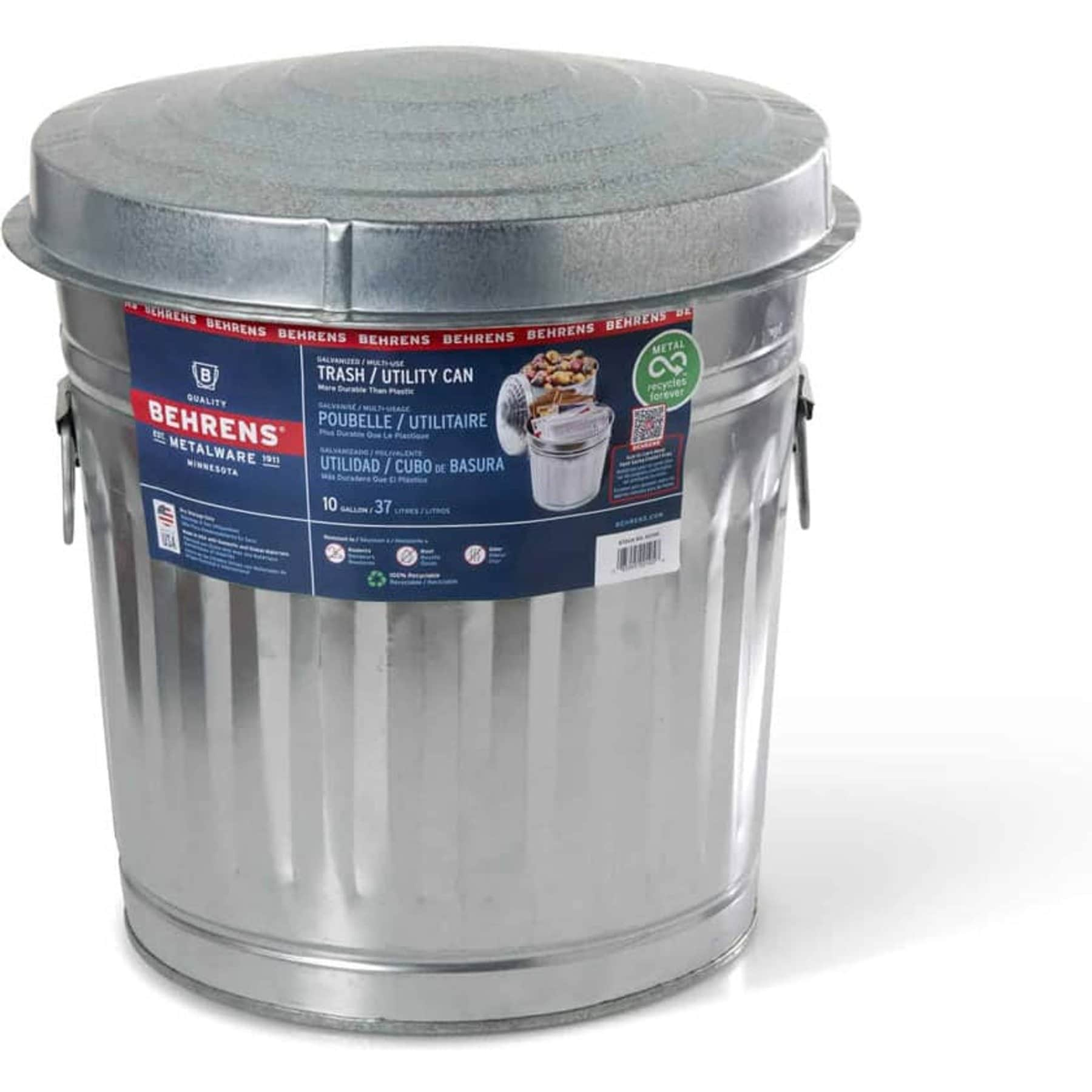
The Behrens Galvanized Steel Trash Can with Lid is a 10-gallon steel can with a fitted lid.
Webvet may earn a commission when you click through to Chewy, at no extra cost to you.
Pet Poison Helpline says products that contain raisins are just as dangerous as the fruit, and a 2016 review in Frontiers in Veterinary Science notes the fruit can be eaten cooked. Between them, they name these common culprits:
- Raisin bread, oatmeal raisin cookies, scones, and malt loaf
- Trail mix, granola, granola bars, snack bars, and children's snacks
- Fruitcake, mince pies, hot cross buns, Christmas pudding, and other holiday baking
- Baked goods made with dried Zante currants
Because so many of these are snacks people share, the safest habit is to give your dog its own treats instead. VCA lists blueberries among foods that are safe and often enjoyed by dogs, and WebVet's guide to healthy dog treats has more ideas. Pupford Train Blueberry Natural Freeze-Dried Dog Treats are freeze-dried dog training treats.
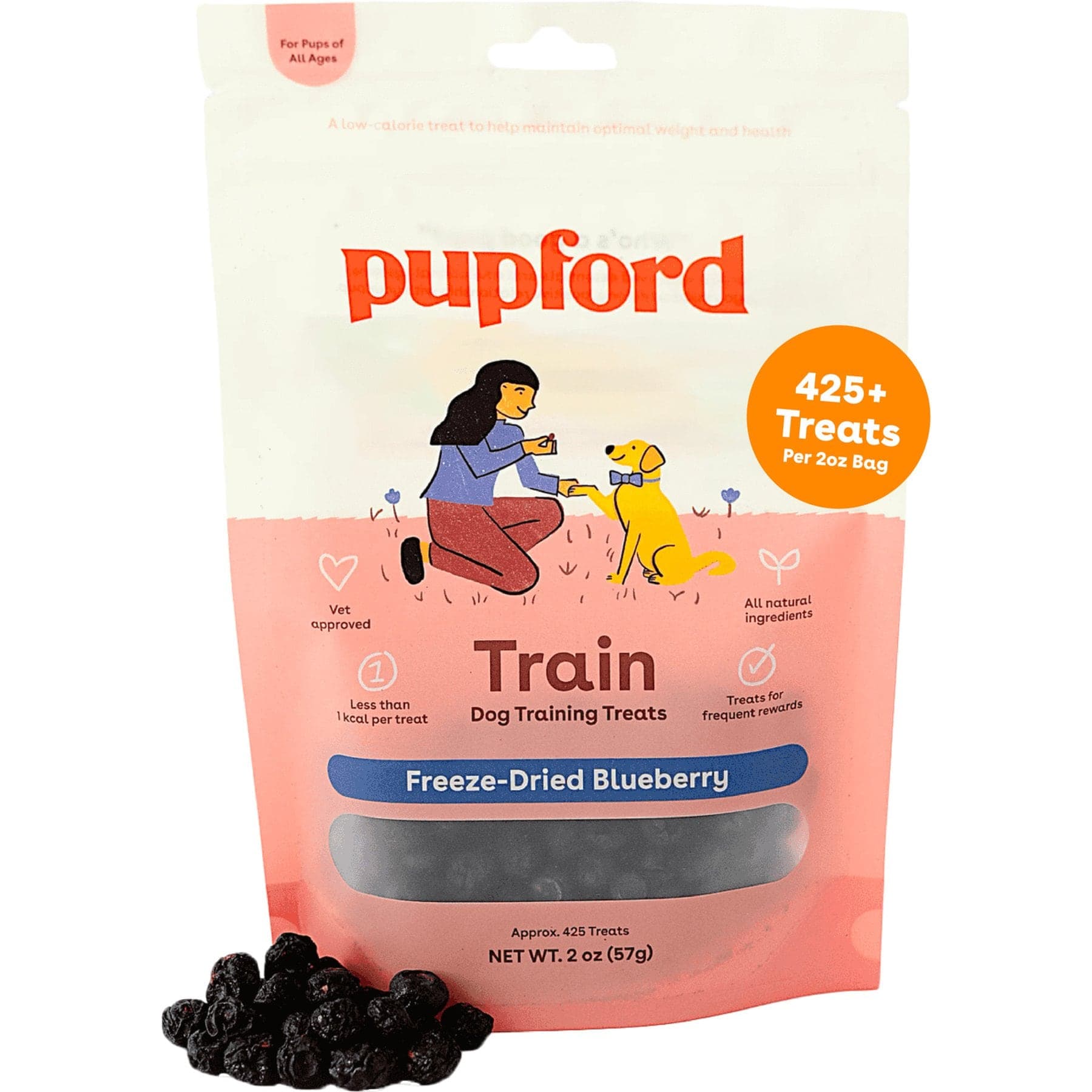
Pupford Train Blueberry Natural Freeze-Dried Dog Treats are freeze-dried dog training treats.
Webvet may earn a commission when you click through to Chewy, at no extra cost to you.
Why Are Grapes and Raisins Toxic to Dogs?
Tartaric acid is the leading explanation for the toxicity of grapes and raisins in dogs. The ASPCA says tartaric acid is speculated to be the toxic component and that dogs are not able to process it, so eating grapes or raisins can lead to kidney damage.
The case for tartaric acid rests on several lines of evidence:
- Matching cases: ASPCApro reports that dogs that ate cream of tartar or tamarind developed kidney injury consistent with grape and raisin poisoning, making tartaric acid the common denominator. A 2022 case report in the Journal of Veterinary Emergency and Critical Care identifies it as the likely toxic component.
- A proposed mechanism: The Merck Veterinary Manual explains that dogs excrete organic acids poorly because they lack transporters other species have, so tartaric acid builds up in the cells of the kidney tubules.
- Laboratory support: A 2023 study on cell lines, not live dogs, found tartaric acid was toxic to canine kidney cells but not human ones.
- Cornell's view: Cornell says tartaric acid and its salt, potassium bitartrate, are the most likely cause, though the exact cause is not entirely known.
- Remaining doubt: VCA still calls the cause uncertain, which is why it treats any exposure to grapes, raisins, or Zante currants as a cause for concern.
Every grape variety, along with raisins, Zante currants, and sultanas, can cause kidney injury. VCA reports poisoning after dogs ate seedless or seeded, commercial or homegrown, red or green, and organic or non-organic grapes and raisins. No grape variety, including Concord, muscadine, or wild grapes, is known to be safe for dogs.
Currants need a closer look. Cornell describes sultanas as a type of white grape and Zante currants as a type of raisin, and VCA says Vitis currants such as Zante currants can cause kidney failure. Ribes currants, which are related to gooseberries, do not cause kidney damage, according to VCA.
Grape toxicity is not a myth; veterinary case series document kidney failure and deaths in dogs after eating grapes or raisins. Grapes eaten off the vine count too, since Pet Poison Helpline says even organic, pesticide-free grapes grown in home gardens can result in toxicity.
How Many Grapes Are Toxic to a Dog?
No one knows exactly how many grapes are toxic to a dog, and there is no known safe amount of grapes or raisins. VCA says there is no well-established toxic dose and no way to predict which dogs are more susceptible; Cornell says any ingestion should be treated as potentially toxic.
The one published rule of thumb is a risk flag, not a safe limit. The Merck Veterinary Manual says more than one grape or raisin per 4.5 kg (10 lb) of body weight may contain enough tartaric acid to pose a risk to the kidneys, and notes that tartaric acid content varies.
Case reports show why counting grapes is unreliable:
- Kidney failure has followed as few as four to five grapes in an 8.2 kg (about 18 lb) dog, according to the 2016 Frontiers review.
- Other dogs have stayed free of symptoms after eating up to 1 kg of raisins, and a 2022 Dutch Poisons Information Center study concludes that no dose-response relationship appears to be present.
That spread is why grape toxicity cannot be judged by counting, and why a dog that ate a bunch of grapes and seemed fine proves nothing about the next dog, or the next time. A single grape is still a reason to call: no chart can say in advance whether one grape will harm a particular dog.
How many grapes can a 30 lb dog eat?
None. No amount of grapes is known to be safe for a 30 lb dog or a dog of any size. Pet Poison Helpline says larger dogs generally need to eat more grapes than smaller dogs, but a lot depends on the individual animal, so size offers no guarantee. If your dog ate any, call now.
What happens if a dog eats half a grape?
Nobody can say in advance. Veterinary references give no figure for half a grape, and Cornell says it is impossible to predict which dog will be affected or how much fruit will cause illness, so any ingestion of grapes should be considered serious. Treat half a grape like a whole one and call your vet or poison control.
How many raisins are toxic to a 70 lb dog?
No raisin count is known to be safe for a 70 lb dog. In ASPCA cases studied by Eubig and colleagues (2005) and tabulated in the Frontiers review, raisin doses in affected dogs ranged from 2.8 to 36.4 g per kg of body weight, based on 24 dogs. Those are doses seen in sick dogs, not safe limits.
How to Keep Grapes and Raisins Away From Your Dog
The way to keep grapes away from dogs at home is to store grapes, raisins, and every food that contains them where your dog cannot reach, and never to share them. Cornell, VCA, and Pet Poison Helpline agree on the core steps below.

- Never feed grapes, raisins, sultanas, Zante currants, or foods containing them to your dog.
- Store them in sealed containers in high cabinets, and never leave them on counters, tables, or in fruit bowls.
- Keep trash bins and compost secured so your dog cannot reach discarded fruit.
- Remove grape vines from areas where your dog has access.
- Ask family and guests not to share any food that may contain grapes, raisins, or Zante currants.
When food is out during cooking or holiday gatherings, a gate across the kitchen doorway adds one more layer between your dog and the counter. The KidCo Retractable Safeway Mesh Mounted Dog & Cat Gate is a retractable mesh gate.

The KidCo Retractable Safeway Mesh Mounted Dog & Cat Gate is a retractable mesh gate.
Webvet may earn a commission when you click through to Chewy, at no extra cost to you.
Being ready for everyday accidents is part of a safe home, too. A general pet first aid kit, such as the Kurgo Pet First Aid Kit, holds supplies like gauze, bandages, and tweezers for cuts and scrapes; it is not a treatment for poisoning.

The Kurgo Pet First Aid Kit is a pet first aid kit stocked with gauze, bandages, and tweezers.
Webvet may earn a commission when you click through to Chewy, at no extra cost to you.
Whether dogs can eat grapes or raisins as an occasional treat has a short answer, no; WebVet's guides to can dogs eat grapes and can dogs eat raisins cover it in full. WebVet's guides to onion toxicity in dogs and antifreeze poisoning in dogs cover two other household dangers.
Symptoms of Grape Poisoning in Dogs
Early signs of grape poisoning in dogs include vomiting, diarrhea, lethargy, and loss of appetite, and vomiting is the most common. Cornell says these signs of grape toxicity in dogs often appear within 6 to 24 hours of eating the fruit, although some dogs show nothing early on.
Acute kidney injury signs include increased thirst and little or no urine, and they can follow over the next one to three days. Pet Poison Helpline calls decreased or absent urination a particularly serious warning sign that the kidneys may be failing. Any of these signs after a dog ate grapes or raisins needs a vet right away.

What are the first signs of grape poisoning in dogs?
Vomiting is usually the first sign. The Merck Veterinary Manual says most affected dogs vomit or have diarrhea within 6 to 12 hours of eating the fruit. Cornell lists these early signs:
- Vomiting, the most common sign
- Diarrhea
- Loss of appetite
- Dehydration
- Abdominal pain or swelling
- Excessive drooling
- Lethargy
A dog that ate grapes and threw up, or has diarrhea, may be showing early signs of the poisoning, so call your vet now rather than assuming the danger has passed. WebVet's guides to dog vomiting and diarrhea and lethargy in dogs explain those signs in other settings.
What happens if a dog ingests raisins?
A dog that eats raisins faces the same poisoning as with grapes: stomach upset first, then, in some dogs, acute kidney injury. Cornell says signs may progress over one to three days to include:
- Increased thirst and urination
- Weakness or incoordination
- Swelling of the limbs
- Trembling, tremors, or seizures
- Inability to urinate
VCA adds ammonia-smelling breath, continued stomach upset, abdominal pain, dehydration, and lethargy that keeps getting worse. Severe cases can affect the brain: in a 2020 study of 15 dogs with severe kidney injury from grapes or raisins, 11 (73%) had marked neurologic signs. Seizures, collapse, or a dog that stops urinating needs a vet right away.
Increased thirst has many possible causes, which WebVet's guide to a dog drinking a lot of water explains. After a dog has eaten grapes or raisins, new thirst is a reason to call your vet right away.
Grape Poisoning Timeline: When Signs Appear
Grape poisoning unfolds over hours to days: stomach signs usually begin within hours to a day of eating, and kidney failure can develop within 24 to 72 hours. That window is why a dog that ate grapes but seems fine, or has no symptoms yet, still needs a vet.
This grape poisoning timeline table matches each stage of grape poisoning, by time since eating, to what is happening in the kidneys, the signs an owner may see, and what the vet does at that point. The timings come from Merck, Cornell, VCA, Pet Poison Helpline, and published case studies, and individual dogs vary.
| Time since eating | What is happening | Signs you may see | What the vet does |
|---|---|---|---|
| 0 to 4 hours | Fruit is usually still in the stomach, and kidney blood values may still be normal | Often none | Induces vomiting, which removed fruit in 98% of dogs when done under 4 hours in Dutch data, and may give activated charcoal |
| 4 to 12 hours | Fruit can still be in the stomach, and vomiting often starts in this window | Vomiting, then possibly diarrhea, drooling, or lethargy | Can still induce vomiting (fruit removed in 83% of dogs at 4 to 12 hours in Dutch data) and starts IV fluids if diarrhea appears within 12 hours |
| 12 to 24 hours | Lab signs of kidney injury can appear as early as 12 to 24 hours | Vomiting or diarrhea, loss of appetite, abdominal pain, dehydration | Runs kidney bloodwork and starts or continues IV fluid therapy |
| 24 to 72 hours | Kidney values such as creatinine and urea rise in dogs with injury, and kidney failure can develop | Increased thirst and urination, weakness, ammonia-smelling breath, less urine | Continues IV fluids for at least 48 hours and rechecks kidney values, electrolytes, urine output, and blood pressure |
| Once urine stops | The kidneys have failed and make little or no urine | Little or no urine, tremors, seizures, severe lethargy | Considers peritoneal dialysis or hemodialysis, usually only at specialty or university hospitals; the outlook is guarded even then |
How long until grape toxicity shows up in dogs?
Most dogs that react show signs within hours to a day, but veterinary sources give different windows:
- 2 to 6 hours for vomiting, according to veterinary toxicologist Patricia Talcott in dvm360 conference proceedings
- 6 to 12 hours for vomiting or diarrhea in most affected dogs, according to the Merck Veterinary Manual
- 6 to 24 hours for early signs, according to Cornell, though some dogs show none early on
- 12 to 24 hours for vomiting or diarrhea, according to VCA, with more severe signs at 24 to 48 hours
- Within a few hours, or delayed up to 24 hours, according to Pet Poison Helpline
If your dog ate grapes yesterday or several days ago and was never checked, call your vet now. In dogs that develop kidney injury, blood markers such as creatinine and urea are present 24 to 48 hours after eating, according to the Dutch study, so bloodwork can show whether the kidneys were affected.
How long do grapes stay in a dog's system?
Fruit can stay in the stomach for hours. Cornell says it may remain visible in vomit up to 12 hours after eating, and a UK study of 606 dogs found fruit in vomit more than 12 hours after ingestion. Veterinary references give no time for the toxin itself to clear, so vets rely on bloodwork.
How long after eating raisins is my dog in the clear?
Only your vet can tell you, after repeat bloodwork. Blood values may be normal in the first few hours, so Cornell says repeat testing may be recommended over two to three days, and Merck says kidney failure can develop within 24 to 72 hours. A dog that looks fine on day one is not yet in the clear.
How Vets Treat Grape and Raisin Poisoning
Vets treat grape and raisin poisoning with decontamination and supportive care, because Cornell says there is no specific antidote. Vet treatment can include induced vomiting, activated charcoal, IV fluids, and kidney bloodwork, adjusted to how long ago your dog ate the fruit and whether signs have started.
A dog that ate grapes but seems fine still needs treatment. The Merck Veterinary Manual recommends prompt decontamination for dogs that remain clinically normal, and a 2026 UK analysis of 31,425 probable canine cases found decontamination was the strongest predictor of survival.
Treatment usually follows these steps:
- Induced vomiting. For a recent ingestion with no signs, your vet will induce vomiting, which Cornell says may still work hours later because fruit can linger in the stomach. In the Dutch Poisons Information Center data, vet-induced vomiting removed fruit in 98% of dogs when done under 4 hours after eating and 83% at 4 to 12 hours.
- Activated charcoal. Sources disagree here. The Frontiers review recommends repeated doses after a recent ingestion, and Pet Poison Helpline describes medical-grade activated charcoal to bind remaining toxins, while Merck says its efficacy is unknown. Your vet decides whether to use it.
- IV fluid therapy. Cornell describes hospitalization for IV fluids and close monitoring for at least two days. Merck recommends a minimum of 48 hours after a large ingestion or early diarrhea, and the Frontiers review recommends 48 to 72 hours.
- Kidney bloodwork and monitoring. Vets recheck kidney values, electrolytes, urine output, and blood pressure, and the Frontiers review advises monitoring kidney function for at least 72 hours.
- Dialysis for severe cases. Merck says dogs that stop producing urine are unlikely to survive without peritoneal dialysis or hemodialysis, and even then the outlook is guarded; Cornell notes hemodialysis is usually available only at certain specialty or university hospitals.
Leave inducing vomiting to the clinic unless you are told otherwise. Pet Poison Helpline says vets use medications that are safer and more controlled than home methods.

How to reverse grape toxicity in dogs?
Grape toxicity cannot be reversed with an antidote, because none exists. Instead, Cornell says treatment removes any remaining fruit to prevent further absorption and supports the dog with IV fluids and close monitoring. The sooner that decontamination starts, the better.
Hospital care often means at least two days of IV fluids and monitoring, so it can help to know what emergency vet costs can look like.
Survival Rate and Prognosis
Most dogs survive grape or raisin exposure, and the prognosis is good with prompt treatment, poor once urine output stops. VCA says a dog that receives prompt decontamination and treatment before symptoms develop generally has a good prognosis, while a dog whose kidneys have failed and that no longer produces urine has a poor one.
What is the survival rate of a dog eating grapes?
The survival rate of a dog eating grapes is high overall: in the 2026 UK analysis of 31,425 probable canine cases, 0.9% of dogs died. Other findings add context:
- All 606 dogs in the UK emergency-clinic study survived to discharge.
- In the Dutch Poisons Information Center data, 1 of 95 dogs (1%) developed acute kidney injury.
- In the 2026 UK analysis, fresh fruit carried higher mortality than processed fruit, with a relative risk of 3.47 in dogs.
The pet owner version of the Merck Veterinary Manual says survival is unlikely if a dog produces no urine. In an ASPCA case series of 43 dogs that already had kidney damage, Eubig and colleagues found 53% survived.
Delay is what the ASPCA links to the worst outcome. Its Animal Poison Control Center received 3,722 grape and raisin cases in 2016, and only one ended in death: the dog that died had not seen a vet until three days after eating the fruit.
Can dogs recover from raisin toxicity?
Yes, many dogs recover, but kidney damage can last. In the 2005 ASPCA series, 15 of the 23 survivors had complete resolution of signs and kidney values. In the 2020 study of 15 dogs with severe kidney injury, 8 survived and 5 recovered fully from neurologic signs, and VCA notes survivors may develop chronic kidney disease.
Will my dog be fine after one grape?
Many dogs are fine after one grape, but no one can promise it for yours. In the Dutch data, 82 of 95 dogs (86.3%) never showed symptoms, yet VCA says there is no way to predict which dogs are more susceptible. Call your vet or poison control after even one grape so they can decide on decontamination.
Dog Ate Grapes FAQs
Frequently Asked Questions
Will one grape hurt a 70 pound dog?
It might, and weight alone cannot rule it out, so call your vet or animal poison control. Veterinary references do not report what a single grape does to a large dog, but size is no shield: the 2026 UK analysis found that higher body weight was associated with higher mortality in dogs.
The Dutch study also describes a 34 kg (about 75 lb) dog that ate 25 grapes and had a markedly raised creatinine, a kidney value, when it was seen 7 days later.
Can a small raisin hurt a dog?
Yes. Pet Poison Helpline calls raisins especially hazardous because they are a dried, concentrated form of grape. Gram for gram, raisins have caused poisoning at much lower doses than fresh grapes in the ASPCA case data reviewed in Frontiers, and no amount is known to be safe, so call even for one small raisin.
Can a dog recover from poisoning on its own?
Not reliably: many exposed dogs never develop kidney injury, but no one can tell in advance which ones will, and Pet Poison Helpline warns that without treatment the progression can be fatal within a few days. Dogs that do develop kidney injury need IV fluids and monitoring in a hospital, which cannot be done at home, so call your vet or poison control right away.
Is cream of tartar toxic to dogs?
Yes, it can be. ASPCApro says cream of tartar is a form of tartaric acid, and ASPCA Animal Poison Control case reports describe dogs that developed vomiting and acute kidney injury after eating cream of tartar or tamarind.
In the six cream of tartar and tamarind cases in the 2022 report, where decontamination was not performed and treatment was delayed, two dogs stopped producing urine and four were euthanized. Veterinary references give no safe amount of cream of tartar for dogs, so call poison control if your dog eats it.
Are grape juice and grape jelly toxic to dogs?
They have not been linked to poisoning in the veterinary literature, but check with poison control rather than assuming they are safe. Cornell says grape juice, jelly, and grape seed oil have not been associated with toxicosis, likely because processing removes or reduces tartaric acid, and VCA agrees for grape juice and jellies made from grape juice concentrate.
A Pet Poison Helpline page, however, lists grape juice among the grape products that can cause kidney failure, so call either way.
Is there a home remedy for a dog that ate grapes?
No. There is no home remedy for grape poisoning, and Pet Poison Helpline says not to rely on home remedies. Do not give hydrogen peroxide or try to make your dog vomit on your own: a Pet Poison Helpline veterinary toxicologist warns that too much peroxide can cause significant damage to the esophagus, stomach, and intestines.
Call your vet or poison control, and induce vomiting at home only if they tell you to and walk you through it.
Can a grape toxicity calculator tell me if my dog is safe?
No. No calculator can tell you that a dose is safe, because VCA says there is currently no way to predict which dogs are more susceptible. ASPCApro reports that the tartaric acid content of grapes varies from 0.35% to 2%, which makes predicting toxicity difficult, and Merck's rule of thumb by body weight is a risk flag rather than a safe limit.
My dog eats grapes all the time and seems fine. Is that safe?
No. Pet Poison Helpline says some dogs do seem less sensitive, but the reason for that difference in sensitivity is not understood, and a dog that appeared unaffected once could still develop severe toxicity after a later exposure. Talcott notes that in most documented poisonings, the dog had eaten grapes or raisins before with no apparent ill effects, and Cornell adds that tartaric acid levels vary with a grape's ripeness.
My dog threw up the grapes. Does he still need a vet?
Yes. Call your vet or animal poison control right away, because vomiting is the most common early sign of the poisoning itself, according to Cornell, not a sign that the danger has passed. Your vet may recommend bloodwork to check kidney values, and because those values can look normal in the first few hours, Cornell says repeat testing over two to three days may be recommended.
Are raisins in cookies, bread, or trail mix still toxic to dogs?
Yes. Pet Poison Helpline says raisins baked into bread are still considered toxic, and veterinary references do not describe baking or cooking as making them safe. Processed foods are actually the more common exposure: in the 2026 UK analysis, dogs ate processed fruit in 61.6% of cases and fresh fruit in 31.2%.

Editor
The Webvet Editorial Team is the in-house group of pet-care editors and writers behind Webvet, operated by Smart Pet Collective. The team researches, writes, and maintains Webvet's pet health, behavior, and medication content. Every article follows a defined editorial process: research from reputable veterinary and scientific sources, careful drafting, mandatory review of medical content by a credentialed veterinarian, and dated publication. Health and medication articles are medically reviewed by a licensed veterinary professional before they go live and are kept current over time.
Veterinarian · BVMS MRCVS
Dr. Pippa Elliott, BVMS, MRCVS, is a veterinarian with nearly 30 years of experience in companion animal practice. Dr. Elliott earned her Bachelor of Veterinary Medicine and Surgery from the University of Glasgow. She was also designated a Member of the Royal College of Veterinary Surgeons. Married with 2 grown-up kids, Dr. Elliott has a naughty Puggle named Poggle, 3 cats and a bearded dragon.
Related reading

Cat Proof Christmas Tree: Vet-Reviewed Safety Steps, Deterrents, and Cat-Safe Tree Options

Onion Toxicity in Dogs: Garlic, Chives, Leeks, and What to Do

Are Essential Oils Safe for Dogs? Toxic Oils and Safe Use
