
Can dogs eat grapes?
Toxic: do not feedDo not give dogs grapes or raisins. Risk is unpredictable, so call a veterinarian or animal poison service promptly after any known exposure.


Medically reviewed by Dr. Athena Gaffud, DVM · Last reviewed
- 1No. Grapes, raisins, currants, and sultanas are toxic to dogs and can cause sudden acute kidney failure.
- 2There is no known safe amount. A single grape or raisin has made some dogs seriously ill, while others seem unaffected, and you cannot tell in advance which dog you have.
- 3Any exposure is a potential emergency. Call your vet or the Pet Poison Helpline (855-764-7661) right away and do not wait for symptoms to appear.
Grapes are one of the most dangerous everyday foods you can leave within a dog's reach. In every form, whether fresh red or green grapes, seeded or seedless, or raisins, currants, and sultanas, they can trigger acute kidney injury, meaning sudden kidney failure. Recent veterinary research points to tartaric acid as the likely culprit, which helps explain why grapes behave so unpredictably: tartaric acid levels vary with the grape's variety and ripeness, and individual dogs differ widely in how sensitive they are. Because of that, veterinarians do not recognise any amount as safe.

Treats should stay under 10% of your dog's daily calories. JustFoodForDogs makes the rest of it.
- Recipes developed by veterinary nutritionists
- Whole-food ingredients you can recognise
- Fresh meals delivered to your door
Webvet may earn a commission when you click through to JustFoodForDogs, at no extra cost to you.
Why are grapes toxic to dogs?
The exact cause of grape and raisin toxicosis is not fully settled. Tartaric acid and its salt, potassium bitartrate, are the leading proposed cause, and their concentration can vary among fruit. Dogs also differ in susceptibility, so there is no reliable owner-facing safe dose. Any known ingestion should be assessed promptly by a veterinarian or animal poison service.

Tartaric acid became the leading explanation after related exposures, including tamarind and cream of tartar, were linked with a similar pattern of kidney injury in dogs. The evidence still supports a proposed cause rather than a fully proven mechanism. Seedless or peeled grapes are not considered safe, because removing the seeds or skin does not remove the exposure represented by the grape itself.
My dog ate one grape: how much is dangerous?
There is no owner-facing number that can reliably rule out risk. Tartaric acid content and individual susceptibility vary, and an uneventful earlier exposure does not establish future safety. Do not use an online weight chart to decide that no action is needed. Contact a veterinarian or animal poison service with the product, amount, time, and your dog's weight so the case can be assessed.
It is worth being blunt about why the popular myth, that one grape is harmless or that only large amounts matter, is dangerous. That belief comes from the fact that many dogs do eat a grape or two and never get sick, so the exposure gets remembered as safe. But the dogs that do react can react hard, and the reaction is not proportional to a tidy dose you can look up. A small dog that eats a couple of raisins is receiving a large amount of toxin relative to its body weight, but even large dogs have suffered kidney failure from modest amounts. Treating any single grape as a non-event is a gamble against odds you cannot see, and the stakes are your dog's kidneys.
Body weight is useful to the veterinarian assessing an exposure, but it cannot establish that a particular number of grapes is safe. Tartaric acid content and individual susceptibility vary, and a previous uneventful exposure does not predict the next one. Report any known ingestion promptly and let a veterinarian or animal poison service determine the appropriate response.
So if your dog ate one grape and seems completely fine, that is genuinely good news, but it is not a reason to skip the phone call. Kidney damage does not announce itself immediately, and the window where treatment works best is early, often before any symptoms show. The safe assumption is always: any amount could be toxic, so contact a professional and let them make the call based on your dog's size and how much was eaten.

Which dogs are most at risk?
No breed, age, or size has been shown to be reliably protected. Amount and body weight help a veterinarian assess dose, while existing kidney disease, hydration, age, and symptoms may affect management. No dog should be described as likely to tolerate a serving, and dogs that scavenge food have greater practical exposure risk.
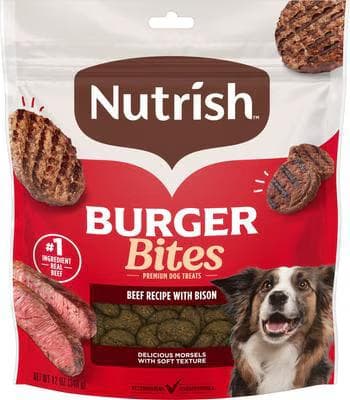
This is an optional dog treat. Review its current label, ingredients, calories, and feeding directions, and count it within the total daily extras.
Webvet may earn a commission when you click through to Chewy, at no extra cost to you.
Fresh grapes and dried grape products are hazardous
Fresh grapes, raisins, sultanas, true dried currants, and foods that contain pieces or paste made from those fruits can represent an exposure. Product details matter. Juice, wine, grape-seed extract, grape-vine leaves, and jelly made from grape-juice concentrate do not appear to cause the same grape toxicosis, although wine remains unsafe because alcohol is independently toxic.
| Form | What owners should know |
|---|---|
| Fresh grapes | Red, green, seeded, and seedless grapes are all implicated in canine renal toxicosis. |
| Raisins, sultanas, true dried currants | These dried grape products are implicated and should not be fed. |
| Foods containing grapes or raisins | Baked goods, trail mix, cereal bars, and raisin paste require ingredient-specific exposure assessment. |
| Juice, wine, and grape-juice-concentrate jelly | These do not appear to cause grape toxicosis, but wine is independently unsafe because of alcohol. |
Raisins, sultanas, and true dried currants are dried grapes, and foods containing them remain important exposure sources. If a dog gets into baked goods or a mixed product, report the exact ingredients and largest plausible amount. Do not treat every grape-derived liquid or preserve as equivalent: VCA reports that grape juice, wine, jelly made from grape-juice concentrate, grape-seed extract, and grape-vine leaves do not appear to cause grape toxicosis. Wine is still dangerous because it contains alcohol.
Symptoms of grape poisoning in dogs
Signs usually begin within 6 to 24 hours of eating grapes, though the most serious kidney effects can take longer to appear. This is roughly how it progresses if untreated:
| Time after eating | What you may see |
|---|---|
| 2 to 6 hours | Vomiting, sometimes with grape pieces; diarrhea; drooling |
| 6 to 24 hours | Lethargy and weakness, loss of appetite, belly pain, increased thirst |
| 24 to 72 hours | Acute kidney failure: increased then reduced or absent urination, bad breath, dehydration, potentially fatal without treatment |
The trap with this timeline is that the early signs are vague and easy to dismiss. Vomiting and a bit of diarrhea look like an ordinary upset stomach, and a dog that is quieter than usual can be written off as tired. The dangerous phase is what comes next, out of sight: as the kidneys are injured they first pour out large volumes of urine and the dog drinks constantly to keep up, and then, as the kidneys fail, urine production falls off and can stop altogether. Once a dog stops producing urine, the outlook becomes grave, because that is the point at which the kidneys have effectively shut down. Other late signs include a chemical or ammonia smell to the breath, mouth ulcers, worsening weakness, tremors, and in severe cases collapse. The whole point of acting before symptoms appear is that by the time these changes are obvious, a great deal of kidney damage has already been done.

What to do if your dog ate grapes
- Call for help immediately by calling your vet, an emergency clinic, or a pet poison line (855-764-7661 or 888-426-4435). Every hour matters.
- Note what and how much was eaten, and when: the type (fresh vs raisins), your best estimate of the amount, and the time. Bring the packaging if there is any.
- Do not induce vomiting on your own unless a professional tells you to and walks you through it. Doing it wrong can cause harm.
- Follow the professional's triage instructions. Depending on the product, amount, timing, symptoms, and patient, a veterinarian may recommend decontamination, testing, fluids, monitoring, or another plan.
A few things not to do while you arrange help: do not give salt, mustard, hydrogen peroxide, or any home remedy to make your dog vomit unless a poison line or vet has told you to and is guiding you, because the wrong technique can cause its own injuries, and inducing vomiting is pointless or harmful in a dog that is already unwell. Do not wait until morning, do not wait for the weekend to pass, and do not decide to watch and see. The reason speed matters is simple: if the toxin is still in the stomach, it can be removed before it is absorbed, and if it has been absorbed, intravenous fluids started early can help the kidneys clear it before they are permanently damaged. Both of those advantages are lost with time.
How vets treat grape toxicity
Treatment is selected by the veterinarian after assessing the product, amount, timing, clinical signs, and kidney status. Recent ingestion may prompt decontamination in an appropriate patient, but Merck notes that activated charcoal efficacy is unknown. Aggressive intravenous fluid diuresis is generally reserved for a large ingestion or early clinical signs, with bloodwork and urine monitoring tailored to the case. Prognosis becomes more guarded once kidney failure and reduced urine production develop.
There is no universal treatment sequence for every exposure. The veterinarian may induce vomiting after a recent ingestion when it is safe to do so, while activated charcoal has uncertain benefit for grape and raisin toxicosis. Fluid rate and duration, bloodwork, urine monitoring, anti-nausea medication, and other supportive measures depend on the amount eaten and the patient's findings. Owners should not use a fixed charcoal or 48-hour fluid protocol to self-triage.
Prognosis hinges almost entirely on timing. Dogs that are decontaminated and put on fluids before their kidney values rise have an excellent chance of a full recovery, and many go home after a couple of days with normal follow-up bloodwork. Once the kidneys have already begun to fail and urine output has dropped, the picture is much more serious: these dogs need longer, more intensive hospitalisation, and some do not survive. In the worst cases, where the kidneys have stopped producing urine despite fluids, the only remaining options are dialysis at a specialist referral hospital, which is expensive and not widely available, or humane euthanasia. That stark gap between the early and late outcomes is the single most important reason not to wait, because the same dog can have a routine recovery or a life-threatening crisis depending only on how quickly it was treated.

How to prevent grape poisoning
Prevention is entirely within your control, and because there is no safe dose, the goal is simply zero exposure. Keep grapes and raisins in closed containers or the fridge rather than in a fruit bowl on the counter, and treat trail mix, granola bars, raisin bread, and holiday baking such as fruitcake and mince pies as off-limits foods you store out of reach. Be especially careful around the people most likely to share without thinking: children who want to give the dog a snack, and guests who do not know grapes are dangerous. Clean up dropped grapes immediately, and if you have grapevines in the garden, fence them off or supervise your dog around them. It is also worth teaching a reliable leave it and drop it cue, so that when your dog does find something on a walk or under the table, you have a way to stop it swallowing before it becomes an emergency. And make sure everyone in the household, including babysitters and dog walkers, knows the rule, because one well-meaning person handing over a raisin cookie is all it takes.
Safe fruits dogs can eat instead
The good news is that plenty of fruits make genuinely healthy treats. If your dog loves fruit, reach for blueberries, watermelon (seeds and rind removed), apple slices (no core or seeds), or banana in small amounts. These give your dog the sweet, juicy treat it is after without any of the risk, and they make an easy swap when you want to share. As with any treat, keep fruit to no more than about 10% of your dog's daily calories, introduce a new food in a small amount to be sure it agrees with your dog, and always remove pits, cores, seeds, and rinds first.
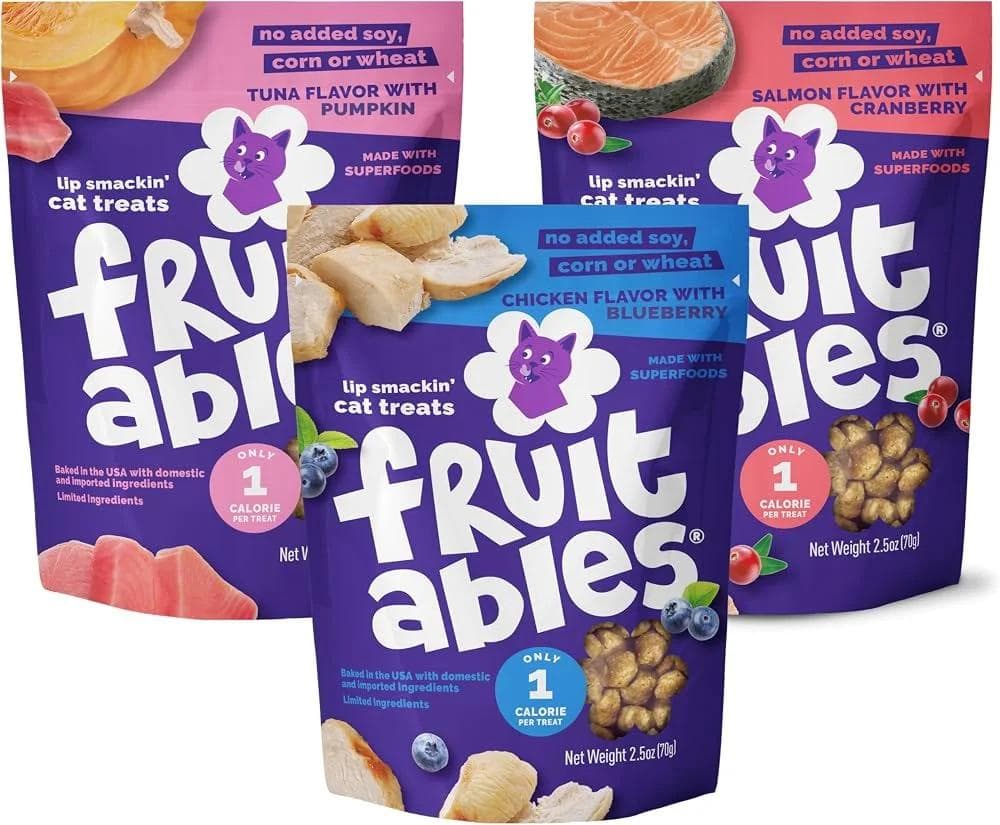
This is an optional dog treat. Review its current label, ingredients, calories, and feeding directions, and count it within the total daily extras.
Webvet may earn a commission when you click through to Chewy, at no extra cost to you.
Frequently Asked Questions
What happens if my dog eats one grape?
There is no reliable owner-facing safe number. Any known grape exposure warrants prompt advice because tartaric acid content and individual susceptibility vary. Tell the veterinarian or animal poison service the amount, timing, product, and your dog's weight even if your dog appears normal.
Can dogs eat 1 or 2 grapes safely?
No amount is considered safe. Some dogs tolerate a few grapes and others are harmed by one, and you cannot predict which. Treat any amount as a possible poisoning and get professional advice.
How do I save a dog who ate grapes?
Call a veterinarian or animal poison service promptly and report what was eaten, how much, and when. Do not induce vomiting unless directed. Decontamination, laboratory testing, fluids, and monitoring are case-specific; activated charcoal has uncertain efficacy and a fixed 48-hour fluid protocol does not apply to every patient.
Can one grape kill a dog?
Severe kidney injury can be fatal, and susceptibility is unpredictable. Merck does not establish a documented single-grape fatality rule, and susceptibility remains unpredictable; seek prompt professional assessment after any known exposure rather than trying to predict the outcome at home.
Are grapes and raisins equally toxic?
Both are toxic, but raisins are dried and concentrated, so a smaller volume of raisins can carry more toxin than the same volume of fresh grapes. Currants and sultanas carry the same risk.
My dog ate grapes and seems fine, is that okay?
Seeming fine early does not mean your dog is in the clear, because kidney injury can take a day or more to show. Call your vet or a pet poison line now. The safest and most treatable window is before symptoms start.
Are seedless or peeled grapes safer for dogs?
No. Seedless, peeled, and organic grapes are still grapes and should not be fed. Removing seeds or skin does not establish safety, but the exact toxic cause should not be described as proven to be distributed throughout the flesh and juice.
What if my dog drank grape juice or wine?
Do not assume every grape-derived product causes grape toxicosis. VCA reports that grape juice, wine, jelly made from grape-juice concentrate, grape-seed extract, and grape-vine leaves do not appear to cause this syndrome. Wine remains unsafe because alcohol is independently toxic. Call with the exact product, ingredients, amount, and symptoms so the whole exposure can be assessed.
How long does it take a dog to recover from grape poisoning?
Dogs treated early, before kidney values rise, often go home within a couple of days and recover fully. Dogs that have already developed kidney failure need longer, more intensive care, and some do not survive. Timing is the single biggest factor in the outcome, which is why the immediate phone call matters so much.

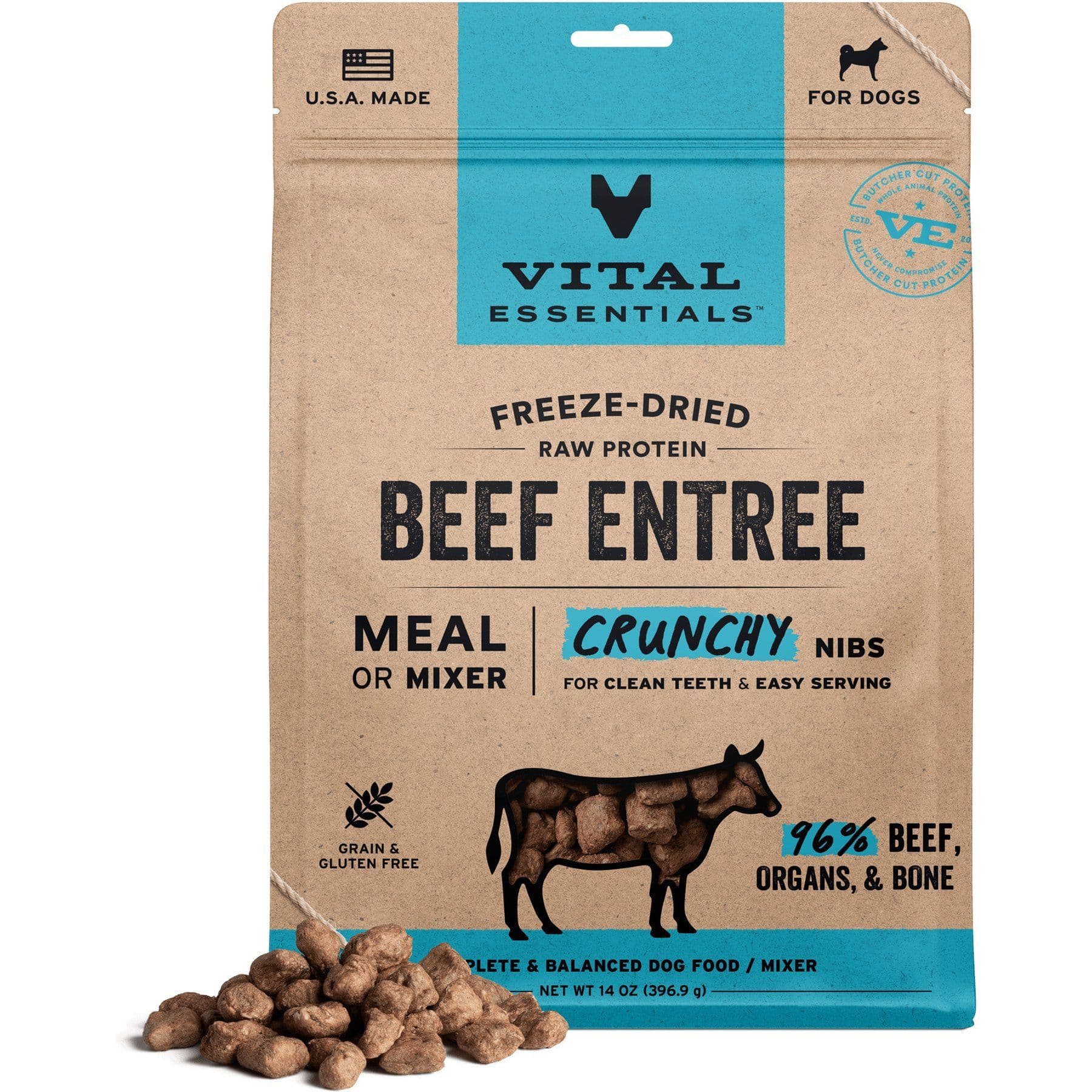
This is an optional dog treat. Review its current label, ingredients, calories, and feeding directions, and count it within the total daily extras.
Webvet may earn a commission when you click through to Chewy, at no extra cost to you.
Safe alternatives
More fruits for dogs
Sources
- Merck Veterinary Manual: Grape, Raisin, and Tamarind Toxicosis in Dogs
Supports unpredictable canine renal risk, proposed tartaric acid causation, and clinician-directed treatment whose intensity depends on the exposure and patient.
- VCA: Grape, Raisin, and Currant Poisoning in Dogs
Supports immediate professional consultation and distinguishes implicated grapes and raisins from products such as grape juice, wine, and grape-juice-concentrate jelly that do not appear to cause grape toxicosis.
- ASPCA: People Foods to Avoid Feeding Your Pets
Supports keeping grapes and raisins away from dogs and contacting animal poison control after exposure.
Reviewed by Dr. Athena Gaffud, DVM
General guidance based on credible veterinary sources; not a diagnosis or a substitute for your veterinarian. If your pet ate something toxic or is unwell, contact your vet or a pet poison line right away.