
Can dogs eat blueberries?
SafePlain washed blueberries are generally non-toxic to dogs, but use the dog's calorie plan rather than a fixed berry count.


Medically reviewed by Dr. Athena Gaffud, DVM · Last reviewed
Can Dogs Eat Blueberries?
Plain, ripe blueberries are generally non-toxic to dogs and may fit as an occasional treat when their calories are included in the full diet. They are not a necessary supplement, a treatment, or automatically the best choice for puppies, senior dogs, dogs with excess weight, or any other group. Suitability depends on the individual dog and the rest of the diet.
- 1Assess blueberries by its exact form, amount, added ingredients, and the individual dog.
- 2A treat portion of blueberries must fit the complete diet and the dog's remaining calorie allowance.
- 3Prepare blueberries plainly and choose a size and texture suited to how this dog eats.
- 4Blueberries risks depend on product form, amount, texture, and the individual dog.
- 5Call for persistent illness, swallowing trouble, a possible foreign body, or a hazardous co-ingredient.

Treats should stay under 10% of your dog's daily calories. JustFoodForDogs makes the rest of it.
- Recipes developed by veterinary nutritionists
- Whole-food ingredients you can recognise
- Fresh meals delivered to your door
Webvet may earn a commission when you click through to JustFoodForDogs, at no extra cost to you.
Are Blueberries Safe for Dogs?
A small exposure to plain washed blueberries is usually a food-tolerance question rather than a poisoning emergency. Muffins, pancakes, yogurt, jam, trail mix, and flavored supplements are mixed products, not plain blueberries. Review the entire recipe for xylitol, chocolate, raisins, high-fat batter, dairy, and added sugar. Blueberries should not replace treatment for urinary disease, diarrhea, inflammation, or cognitive change; those concerns require their own veterinary plan. Larger unfamiliar amounts may cause nonspecific vomiting, loose stool, or gas in some dogs, but available veterinary guidance establishes no berry count at which those signs begin. For mixed products containing blueberries, keep the package and report every ingredient, amount, time, dog's weight, history, and signs.


This is an optional dog treat. Review its current label, ingredients, calories, and feeding directions, and count it within the total daily extras.
Webvet may earn a commission when you click through to Chewy, at no extra cost to you.
Blueberries contain carbohydrate, fiber, vitamins, minerals, and anthocyanin pigments. Include berries dispensed during training in the same daily treat total as chews and food-filled toys. Frozen enrichment can slow eating for some dogs, but it does not create a separate calorie allowance. That is composition, not proof of a clinical benefit from a few berries. A treat portion does not establish improved immunity, cognition, gut health, hydration, inflammation, weight loss, or healthy aging in a dog already eating a complete diet. This food adds optional calories and nutrients, but the complete dog food remains responsible for meeting dietary requirements.
There is no evidence-based universal berry count or puppy table. Use the calories in the actual berries, the dog's daily energy allowance, and the calories from every other extra. A qualitative small taste may be reasonable when exact calorie information is unavailable, but it is not a precise dose.
Use the calories in blueberries and the individual dog's remaining treat allowance; body weight alone is not a serving chart.
How to Portion Blueberries
Wash cultivated berries, discard moldy or spoiled fruit, and serve them plain. Fresh, frozen, dried, freeze-dried, and baked blueberries differ in firmness, moisture, and calorie concentration. A frozen berry may be an awkward gulp for one dog and manageable for another, so match the form to chewing behavior and supervise. Wash fresh fruit and discard moldy or fermented berries rather than using appearance alone to judge the whole container. Fresh or thawed berries can be cut or mashed when that better suits the dog's chewing behavior. Frozen berries are firmer and should be evaluated for the individual dog's size and tendency to gulp rather than treated as automatically safe or dangerous. A whole blueberry may be manageable for one dog and a choking concern for another. Halving or mashing changes texture but cannot remove every choking risk. Supervise eating, choose a form the dog can handle, and seek urgent help for breathing difficulty or persistent choking signs.

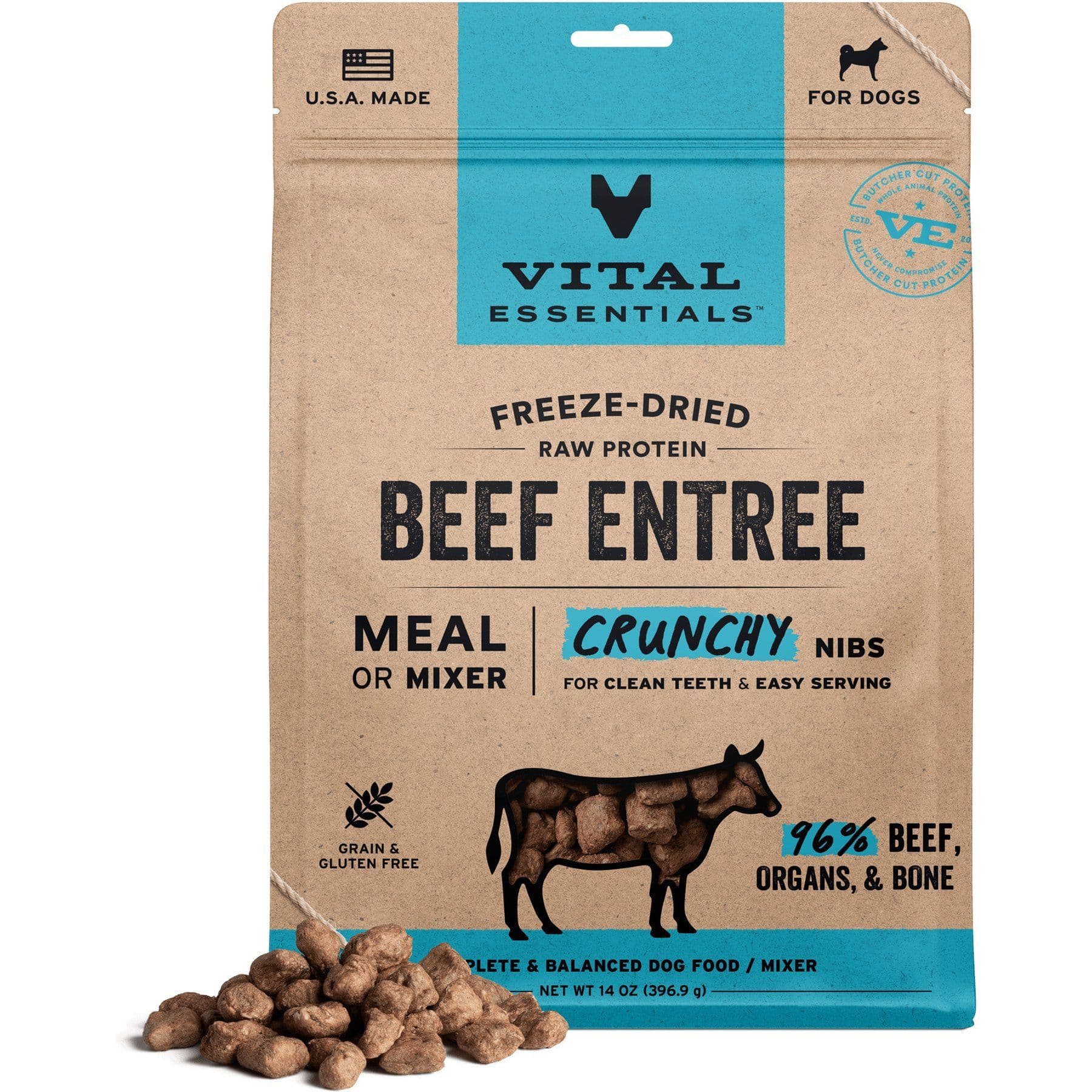
This is an optional dog treat. Review its current label, ingredients, calories, and feeding directions, and count it within the total daily extras.
Webvet may earn a commission when you click through to Chewy, at no extra cost to you.
| Decision point | Evidence-based guidance |
|---|---|
| Plain food | Assess plain blueberries by form, amount, tolerance, and the individual dog. |
| Portion | Use the individual calorie allowance, not a fixed piece or spoon table |
| Preparation | Serve it plain and choose a manageable size and texture. |
| Mixed product | Read every ingredient and keep the package or recipe for advice. |
The usual concerns are excess calories, gastrointestinal intolerance, unsuitable texture, or a mixed product with another ingredient. A plain berry is not a predictable obstruction, and a brief episode of gas is not evidence of toxicity. Repeated vomiting, abdominal pain, inability to keep water down, or marked lethargy warrants veterinary advice.
How to Prepare Blueberries
Muffins, pancakes, yogurt, jam, trail mix, and baked goods must be assessed from the complete recipe. Check the complete ingredient list for xylitol, raisins, chocolate or cocoa, alcohol, and other hazards. Xylitol is not assumed to be present; the label or recipe determines the exposure.
Dogs with diabetes, obesity, gastrointestinal disease, food allergy evaluation, or a veterinary therapeutic diet need an individualized plan. Those diagnoses do not create a universal blueberry prohibition or ideal-candidate label. The treating team can decide whether the fruit's calories and carbohydrate fit the intended diet. For plain blueberries, call a veterinarian when the dog has persistent or severe signs, swallowed a concerning package or object, or ate an amount that cannot be assessed at home. For a mixed product, use the exact ingredients and quantity for triage and contact a veterinarian or animal poison service promptly if a toxic co-ingredient is possible. Related guidance: yogurt.

Risks and When to Call
Puppies need complete growth nutrition, and older dogs may have medical or calorie restrictions. Dogs working on weight reduction still need a nutritionally adequate calorie plan. None of these facts proves that blueberries are especially beneficial or supplies a fixed serving for the group.
If this food does not fit the plan, choose another veterinarian-approved treat and count it within the same calorie allowance.
Choosing Other Treats
Blueberries can be an optional plain treat, not a shortcut to antioxidant, immune, brain, digestive, hydration, or weight-control outcomes. Count their calories, prepare their texture for the individual dog, and judge mixed recipes by every ingredient. The practical decision is individualized: confirm the exact food, use a manageable texture, keep extras within the calorie plan, and watch the actual dog rather than a fixed schedule. Contact a veterinarian for persistent vomiting or diarrhea, marked lethargy, pain, breathing or swallowing trouble, inability to pass stool or urine, neurologic signs, or any ingredient-specific toxicology concern. Related guidance: Bananas; watermelon.


This is an optional dog treat. Review its current label, ingredients, calories, and feeding directions, and count it within the total daily extras.
Webvet may earn a commission when you click through to Chewy, at no extra cost to you.
Frequently Asked Questions
Are plain blueberries toxic to dogs?
Plain washed blueberries are generally non-toxic to dogs, but use the dog's calorie plan rather than a fixed berry count.
What amount of blueberries can a dog have?
There is no universal blueberries serving. Use the food's calories and the individual dog's remaining treat allowance.
How should blueberries be prepared?
Serve blueberries plainly and choose a size, texture, and form suited to how this dog eats.
Do blueberries provide a health benefit?
Blueberries contain carbohydrate, fiber, vitamins, minerals, and anthocyanin pigments. That is composition, not proof of a clinical benefit from a few berries. A treat portion does not establish improved immunity, cognition, gut health, hydration, inflammation, weight loss, or healthy aging in a dog already eating a complete diet.
When should an owner call a veterinarian?
Call with the exact form of blueberries, amount, time, package, medical history, and signs; urgent symptoms need prompt care.
More safe treats
More fruits for dogs
Sources
- Merck Veterinary Manual: Overview of Nutrition in Small Animals
Supports complete and balanced feeding and patient-specific nutrition; it does not establish clinical benefit from a treat portion.
- WSAVA: Feeding Treats to Your Dog
Supports keeping dog treats within about 10% of daily calories and calculating portions from individual energy needs.
- Merck Veterinary Manual: Gastrointestinal Obstruction in Small Animals
Supports patient-specific foreign-body assessment and urgent evaluation when obstruction signs develop.
- ASPCA: People Foods to Avoid Feeding Your Pets
Supports checking sweetened, baked, or mixed blueberry products for separate ingredients that may be hazardous to dogs.
Reviewed by Dr. Athena Gaffud, DVM
General guidance based on credible veterinary sources; not a diagnosis or a substitute for your veterinarian. If your pet ate something toxic or is unwell, contact your vet or a pet poison line right away.