How to Make a Dog Throw Up Safely: Hydrogen Peroxide Dose by Weight and When Not To
Inducing vomiting at home is only safe in specific situations, with 3% hydrogen peroxide at the right dose and after a call to the vet or poison control. Here is the dose by weight, the method, and the cases where you must not try.

BVMS MRCVS
Medically reviewed by Dr. Pippa Elliott, BVMS MRCVS · Last reviewed

This article contains affiliate links. Webvet may earn a commission when you buy through them, at no extra cost to you.
Before you learn how to make a dog throw up, call first. Your vet, the Pet Poison Helpline at (855) 764-7661, or ASPCA Animal Poison Control at (888) 426-4435 will tell you whether vomiting is safe for what your dog swallowed.
If they say yes, the only home option is 3% hydrogen peroxide, given once by weight, with at most one repeat dose. Knowing how to make a dog throw up also means knowing when not to: some swallowed items and some dogs are made worse by vomiting.

 Sponsored
Have a health question about your dog?
Talk to a licensed vet at Dutch over video or message, including nights and weekends.
Use code Pets60
Plans start at $12/month · covers up to 5 pets
- Licensed vets in most states
- Rx for 150+ conditions
- 4.7 on Trustpilot
Should you make your dog throw up? Call first
- 1Call the vet or poison control before inducing vomiting, every time.
- 2Use 3% hydrogen peroxide only, one teaspoon per five pounds as the household approximation, never more than 45 mL (3 tablespoons).
- 3Give one repeat dose 10 to 15 minutes later only if nothing came up, then stop.
- 4Never induce vomiting for sharp objects, corrosives, or petroleum products, or in a dog that is drowsy, seizing, or already vomiting.
- 5Head to the vet afterward with the packaging and the vomit.
The rule is simple: call first, then act. Even 3% hydrogen peroxide, the one home option, should wait until someone has heard what your dog ate.
Pet Poison Helpline says you should only attempt to induce vomiting under a veterinarian's guidance. VCA Animal Hospitals puts it more bluntly: never make a pet vomit after a toxin unless your vet advised it.
When you call, have these ready:
- What your dog swallowed, with the package or label if you have it
- How much, as best you can estimate
- How long ago it happened
- Your dog's weight and any health problems
The ASPCA Animal Poison Control Center is staffed 24/7, 365 days a year, and says a consultation fee may apply. Pet Poison Helpline's FAQ lists a one-time fee of $89 per incident, which covers follow-up calls. If a clinic visit follows, our guide to emergency vet cost explains what to expect.
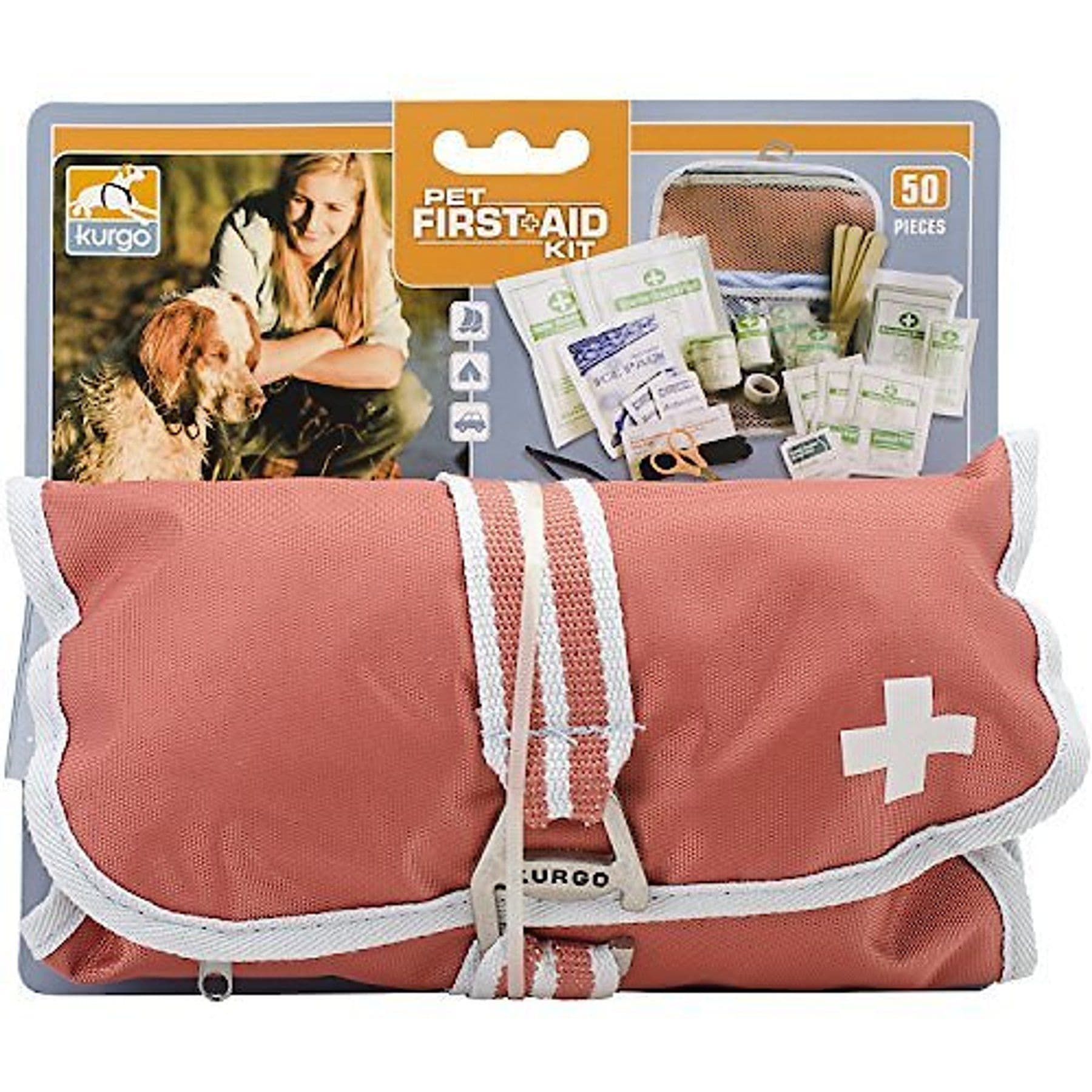
A dedicated pet first aid kit keeps supplies and emergency numbers together before you need them.
Webvet may earn a commission when you click through to Chewy, at no extra cost to you.
When you must NOT make a dog throw up
Doing this safely starts with this list. Home remedies and Reddit threads rarely mention it, but vomiting can push a dangerous item back up the throat or send stomach contents into the lungs. Pet Poison Helpline warns that inducing vomiting can cause aspiration pneumonia.
Never make a dog throw up in these situations:
- Corrosives: Pet Poison Helpline's veterinary guidance says patients who swallowed corrosive products should not have vomiting induced.
- Petroleum products and hydrocarbons: Pet Poison Helpline and Today's Veterinary Practice both rule these out because of the high risk of aspiration pneumonia.
- Sharp objects: Pet Poison Helpline's emesis page lists sharp objects among the reasons not to induce vomiting.
- Drowsy, unconscious, or seizing dogs: a dog that cannot swallow normally cannot protect its airway. The Merck Veterinary Manual says vomiting is contraindicated when the swallowing reflex is absent.
- Seizure history: Pet Poison Helpline calls inducing vomiting extremely dangerous in these dogs.
- Airway problems: megaesophagus, laryngeal paralysis, or sedation.
- Brachycephalic dogs: severe brachycephalic syndrome is on Pet Poison Helpline's contraindication list, so flat-faced breeds need a vet's call first.
- Dogs already vomiting: the stomach is already emptying, and more vomiting adds airway risk. Tell the poison line instead.
Some situations are not on the published lists but still deserve a call before anything else, such as a dog recovering from recent surgery. As general veterinary guidance, ask your vet whenever you are unsure.
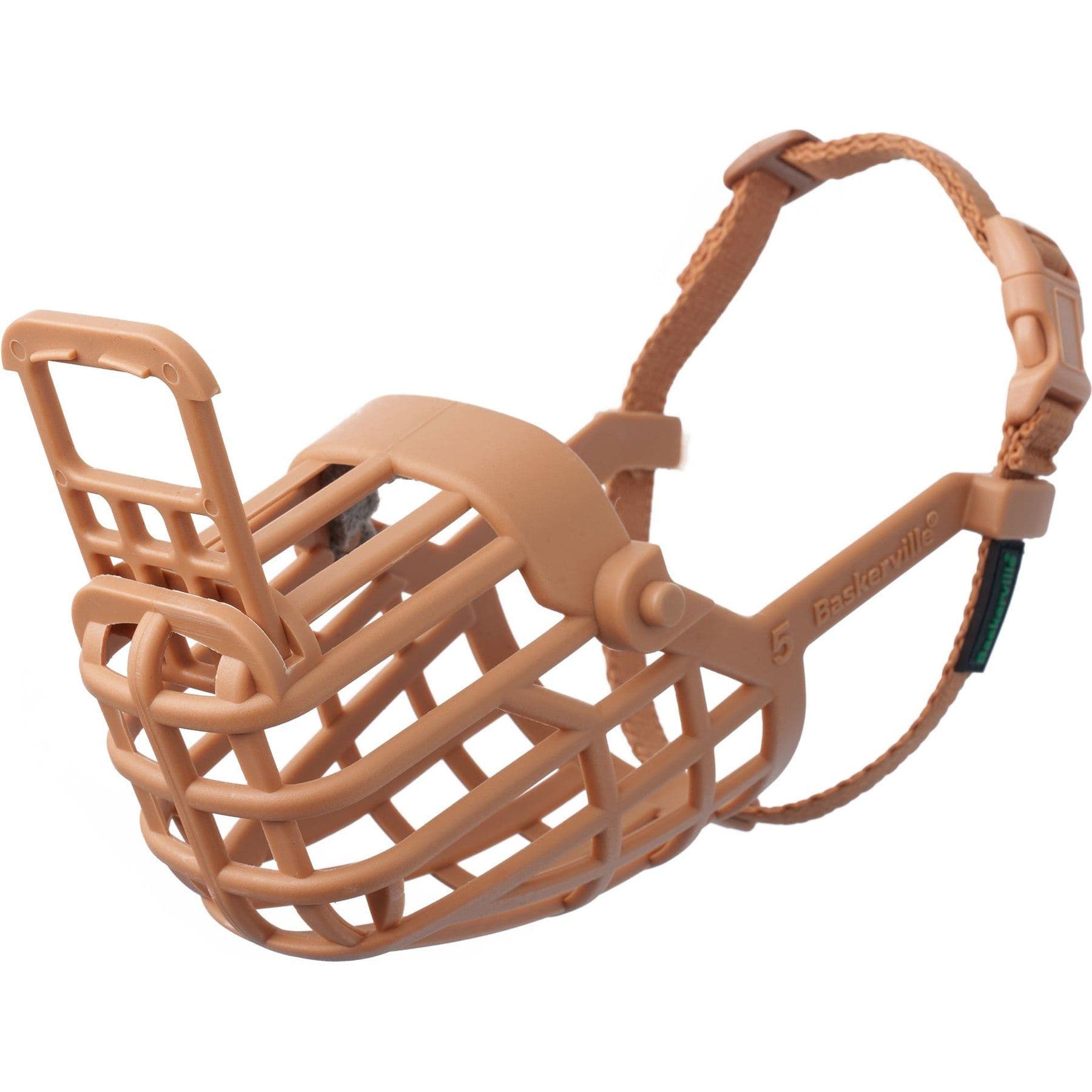
A basket muzzle that helps stop dogs from grabbing things on walks while still letting them pant.
Webvet may earn a commission when you click through to Chewy, at no extra cost to you.
Hydrogen peroxide dose for dogs by weight

How much peroxide to make a dog throw up depends on weight, and sources do not agree exactly. Today's Veterinary Practice gives 1 mL per pound (2.2 mL/kg) by mouth, with a maximum of 45 mL, or 3 tablespoons, per dog. The Merck Veterinary Manual gives a lower range of 1 to 2 mL/kg, also capped at 45 mL.
The rule you will see most often, one teaspoon per five pounds, comes from the American Kennel Club. One teaspoon is about 5 mL, so it lands close to the 1 mL per pound figure. Pet Poison Helpline gives no dose at all and tells owners to ask the vet for the correct amount.
| Dog's weight | Today's Veterinary Practice (1 mL per lb) | Merck (1 to 2 mL/kg) | Household approximation (AKC) |
|---|---|---|---|
| 5 lb | 5 mL | about 2.5 to 4.5 mL | 1 teaspoon |
| 10 lb | 10 mL | about 4.5 to 9 mL | 2 teaspoons, one teaspoon per 5 pounds |
| 20 lb | 20 mL | about 9 to 18 mL | 4 teaspoons |
| 30 lb | 30 mL | about 14 to 27 mL | 6 teaspoons (2 tablespoons) |
| 45 lb and over | 45 mL maximum | up to 45 mL | maximum of 3 tablespoons |
| No vomiting yet | One repeat dose after 10 to 15 minutes | Ask your vet | Do not give two doses at once |
| Do not use at all | Sharp objects, corrosives, petroleum products | Absent swallowing reflex | Drowsy, seizing, brachycephalic, already vomiting |
Use the do not induce checklist beside the dose table before you measure anything. Use only 3% hydrogen peroxide. Today's Veterinary Practice warns that overdosing, or using a more concentrated solution, can cause serious stomach injury.
What stimulates throwing up?
At home, the trigger is 3% hydrogen peroxide swallowed into the stomach, which irritates it enough to bring food back up. That irritation is also the risk: ASPCA Pro lists gastritis, and with overdose, GI ulceration or air embolus. VCA adds esophageal irritation and stomach ulcers. At the clinic, vets use drugs such as apomorphine or ropinirole instead.
If your dog didn't throw up after hydrogen peroxide, Today's Veterinary Practice allows one second dose 10 to 15 minutes after the first, only if nothing came up. VCA says never give two doses at once. If the second dose fails, stop and go to the vet; Pet Poison Helpline warns that too much peroxide can damage the esophagus, stomach, and intestines.

A probiotic and prebiotic supplement to discuss with your vet for digestive support.
Webvet may earn a commission when you click through to Chewy, at no extra cost to you.
Many people search for how to make a dog throw up without hydrogen peroxide, or how much salt to use. The answer is no salt at all. Today's Veterinary Practice warns that salt can cause severe hypernatremia, seizures, coma, and death. Without peroxide, the safe alternative is the vet's office.
 Sponsored
Vet care that's always there
Unlimited video calls and messaging with licensed vets for less than a typical vet visit. One membership covers up to five pets.
Use code Pets60
Plans start at $12/month · covers up to 5 pets
- Licensed vets in most states
- Rx for 150+ conditions
- 4.7 on Trustpilot
How to make a dog throw up step by step
What will make my dog vomit?
The only at-home product veterinary sources describe is 3% hydrogen peroxide, given by mouth after your vet or poison line approves it. VCA says to give it within 2 hours of the dog eating something, and that it works best with a little food in the stomach. Salt water, mustard, baking soda, and fingers are not safe substitutes.
If you have been told to go ahead, here is how to make a dog throw up at home:
- Confirm the go-ahead with your vet or a poison line, and note the dose they give you.
- Check the label says 3% hydrogen peroxide.
- Measure the dose by weight with an oral syringe or measuring spoon, never more than 45 mL.
- Give it slowly into the side of the mouth, letting your dog swallow between squirts.
- Walk your dog. ASPCA Pro notes that walking helps the peroxide work.
- Wait 10 to 15 minutes. If nothing comes up, give one repeat dose only if your vet agreed.
- Collect the vomit for your vet and keep your dog from eating it.
- Call your vet back and head in.

Keeping the poison numbers, an oral syringe, and a bottle of 3% peroxide in one place saves minutes when your dog has eaten something it should not have. A pet first aid kit is an easy place to store them.
Home remedies and shortcuts that do not work
There is no safe way to make a dog throw up naturally, fast, or quickly with household tricks. Readers ask about salt water, mustard, and baking soda as a home remedy. The Merck Veterinary Manual lists oral salt and syrup of ipecac as inappropriate, Today's Veterinary Practice calls dry mustard unreliable and not recommended, and no veterinary source we reviewed recommends baking soda.
Trying with your hands or fingers fails too. The ASPCA says a finger or object down the throat will not make a dog vomit, and it can injure the throat or get you bitten. If your dog is choking rather than poisoned, peroxide will not help; get emergency veterinary care.

An enzyme foam for lifting dog stains and odors from carpet and upholstery.
Webvet may earn a commission when you click through to Chewy, at no extra cost to you.
For something it ate that is not food, the decision belongs to your vet, who weighs size, shape, and timing:
- Plastic or fabric
- A tampon
- A rock or a scrunchie
- A corn cob
A hairball is not a reason to use peroxide. Readers in the UK or Australia should call their own vet or local poison service.
What to do after your dog vomits
Vomiting is not a cure. AKC notes that veterinary care may still be needed even if vomiting is successful, and VCA says not to delay going to the vet, where safer products exist. As general veterinary guidance, follow your vet's instructions even if your dog seems fine.
Bring these to the vet:
- The vomit sample, in a sealed bag or container
- The packaging, label, or the remains of what was eaten
- The time it happened and the amount of peroxide you gave
For a dog that keeps vomiting afterward, our guide to dog vomiting and diarrhea covers how to help and when it becomes urgent.
Recovery and cleanup at home
Once your vet clears your dog to come home, some owners ask whether a digestive supplement fits the recovery plan. Ask your vet before starting one.
Peroxide vomit on carpet or a dog bed is unpleasant to clean, and a lingering smell can draw your dog back to the spot. An enzyme foam handles the stain and odor once your dog is cared for.
Keep watching your dog for the rest of the day and call your vet with any new symptoms. Ask your vet when your dog can eat normally again.
What vets use to induce vomiting

What do vets use to induce vomiting?
Vets use apomorphine or ropinirole rather than peroxide. Today's Veterinary Practice describes intravenous apomorphine at 0.03 to 0.1 mg/kg as rapid, and Merck gives 0.04 mg/kg into the muscle or 0.03 mg/kg intravenously. The FDA approved Clevor, ropinirole eye drops, for inducing vomiting in dogs.
In the FDA field study of 100 dogs, 95 percent of dogs treated with Clevor vomited within 30 minutes. The drug should only be given by veterinary personnel, and ASPCA Pro notes it should not be used in pets with underlying eye disease.
The clinic also offers what home cannot:
- Prescription drugs that work faster and more predictably than peroxide
- Supervision by a veterinary team during and after vomiting
- Follow-up treatment if the toxin calls for it
The Merck Veterinary Manual adds that hydrogen peroxide, apomorphine, and ropinirole should not be used in cats, so none of the dog dosing here applies to a cat.
Making a dog throw up after chocolate, grapes, or a swallowed object
Timing matters for every item. Merck says inducing vomiting is generally of value within a few hours of exposure, and Pet Poison Helpline notes vets may be unable to induce vomiting more than two or six hours after ingestion, depending on the substance. Call before reaching for any home remedies.
Here is how the most common items fit:
- Chocolate: whether to make a dog throw up after eating chocolate depends on what and how much was eaten, and when. There is no safe way to do it naturally; call first and use peroxide only if told to.
- Grapes and raisins: after a dog eats grapes or raisins, call your vet or poison line right away for advice on inducing vomiting.
- Onion: call with the amount eaten and your dog's weight.
- Pills: after a dog eats pills, the drug and timing decide whether vomiting helps. Today's Veterinary Practice notes rapidly dissolving products leave only a 15 to 30 minute window.
- Rat poison: Today's Veterinary Practice says vomiting may be induced up to 4 hours after grain-based rodenticides.
- Chicken bones and other bones: sharp objects are on Pet Poison Helpline's do-not-induce list, so do not try to make your dog throw up a chicken bone without your vet.
- A sock, toy, or diaper: there is no natural way to make your dog throw up a sock or toy safely at home. Your vet decides, and our guide on what to do if your dog ate a diaper covers absorbent material.
- Antifreeze and other poisons: see antifreeze poisoning in dogs and call immediately.
As general veterinary guidance, vomiting may not bring up everything a dog ate, which is why the vet visit still matters after a chocolate, grape, or rat poison scare.
Once the emergency is over, preventing the next one is the better plan. For dogs that scavenge socks and bones on walks, a well-fitted basket muzzle like the Baskerville Classic Basket Muzzle blocks pickups while still letting your dog pant. Introduce it slowly with treats.
Habits at home help too. Keep socks, toys, and trash behind closed doors, and store medications and chocolate out of reach.
Questions about making a dog throw up
Frequently Asked Questions
Can salt and water stop vomiting?
No, and you should never use salt or salt water to make a dog vomit either. Today's Veterinary Practice and the ASPCA warn that large amounts of salt cause salt poisoning, with dangerously high blood sodium that may lead to seizures, coma, and death.
How much hydrogen peroxide do I give a dog to make it throw up?
Today's Veterinary Practice gives 1 mL of 3% hydrogen peroxide per pound, up to 45 mL, which is 3 tablespoons. The common household approximation from AKC is 1 teaspoon per 5 pounds with the same maximum. Confirm the dose with your vet first.
Can I make my dog throw up with my fingers?
No. The ASPCA says a finger down the throat will not make a dog vomit, and it can injure your dog's throat or lead to a bite. Never use fingers or objects; call your vet instead.
How long after eating something can you make a dog throw up?
VCA says hydrogen peroxide should be given within two hours of ingestion, and it works best with a little food in the stomach. Some substances allow a longer or shorter window, so call your vet or a poison line for the exact timing.
Veterinarian · BVMS MRCVS
Dr. Pippa Elliott, BVMS, MRCVS, is a veterinarian with nearly 30 years of experience in companion animal practice. Dr. Elliott earned her Bachelor of Veterinary Medicine and Surgery from the University of Glasgow. She was also designated a Member of the Royal College of Veterinary Surgeons. Married with 2 grown-up kids, Dr. Elliott has a naughty Puggle named Poggle, 3 cats and a bearded dragon.
Related reading

Seizures in Cats: Signs, Causes, What to Do, and Treatment

Dog Eye Swollen: Causes, First Aid, and When It Is an Emergency

Reverse Sneezing in Dogs: Causes, How to Stop an Episode, and When to Worry
