Activated Charcoal for Dogs: When Vets Use It and When It Is Risky
Activated charcoal is a clinic treatment vets use for some poisonings, not a home first-aid staple. What it binds and what it cannot, why you call poison control or your vet before giving anything, how vets decide the dose, and the risks.

BVMS MRCVS
Medically reviewed by Dr. Pippa Elliott, BVMS MRCVS · Last reviewed

This article contains affiliate links. Webvet may earn a commission when you buy through them, at no extra cost to you.
Activated charcoal for dogs: what vets use it for, and why you call before giving it
Activated charcoal for dogs is a treatment vets use for some swallowed poisons, not a home remedy to reach for first. It traps certain toxins in the gut, but it does not bind every poison. Given at home without guidance, it can cause aspiration into the lungs, a dangerous rise in blood sodium, and lost time.
So can you give your dog activated charcoal? Only when your vet, the ASPCA Animal Poison Control Center, or Pet Poison Helpline tells you to for that dog. These dogs must never get it at home:
- A dog that is drowsy, wobbly, seizing, or not fully alert
- A dog that is vomiting repeatedly, dehydrated, or in shock
- A dog that swallowed a caustic cleaner, an acid or alkali, or a petroleum product such as gasoline or lamp oil
- A dog that swallowed an object that could block or tear the gut
- A dog with kidney injury or a known allergy to charcoal
- 1Activated charcoal is a vet treatment for some swallowed poisons, not a first-aid staple for every case.
- 2Know what activated charcoal binds: many drugs, rodent baits, and insecticides held in the gut.
- 3Know the toxins it does not bind: xylitol, antifreeze, alcohols, salt, metals, caustics, and fuels.
- 4The first step is always a call to poison control or your vet, never a dose from a capsule bottle.
- 5Wrong use can cause aspiration pneumonia and high blood sodium, so the vet decides if, when, and how much.
VCA Animal Hospitals describes activated charcoal for pets as a non-drug product used to help manage poison ingestion in dogs and cats. The Merck Veterinary Manual adds the condition that matters most: vets should limit it to poisonings where its benefit is known.
That is why a phone call comes before any dry charcoal powder, capsule, or gel. Poison control specialists know which toxins charcoal holds, which it does not bind, and whether your dog's signs make it unsafe. They can also tell you whether the dog needs to be seen right now.

Charcoal works on what is still sitting in the stomach and intestines. Once a poison has been absorbed, charcoal cannot pull it back out of the blood. The decision is about speed, the exact substance, and the dog in front of the vet.
When you call, the specialist or vet will usually want the same core facts, so have them ready:
- What your dog swallowed, with the package, label, or plant if you have it
- Roughly how much, and how long ago
- Your dog's weight, age, and any health problems or medicines
- Any signs so far, such as vomiting, drooling, wobbliness, or tremors
Those answers, not a dose chart, decide whether activated charcoal for dogs belongs in the plan at all.

 Sponsored
Need a prescription or refill for your dog?
A licensed vet at Dutch can assess your dog over video and prescribe treatment when it's appropriate, delivered to your door.
Use code Pets60
Plans start at $12/month · covers up to 5 pets
- Licensed vets in most states
- Rx for 150+ conditions
- 4.7 on Trustpilot
What activated charcoal does in a dog's gut, and what it cannot bind
What is activated charcoal?
Activated charcoal is a highly porous charcoal that vets give by mouth to hold certain poisons in the gut. According to MSPCA-Angell, its internal pore structure gives commercial preparations a surface area of usually 1000 to 2000 square meters per gram, and that surface is where toxins stick.
The process is called adsorption: toxin molecules cling to the charcoal's surface. MSPCA-Angell explains that once a toxin in the gut adsorbs to charcoal, it is no longer available for absorption into the body. The charcoal itself is not absorbed at all, so everything given leaves in the feces, carrying the bound toxin with it.
So what is activated charcoal used for in dogs, and is it good for them? It is good for one well-supported use: poisoning. The Merck Veterinary Manual calls it the adsorbent of choice for gut decontamination when a toxicosis is suspected. Here is how its uses line up with the evidence:
- Supported: holding a binding toxin in the gut so it passes out in the stool, given by a vet
- Not supported: general detox, everyday digestion, gas, or bad breath
- Not possible: pulling a poison back out once it has been absorbed into the blood
There is also no natural substitute for activated charcoal for dogs that you can make at home. Pet Poison Helpline says plainly not to give any home antidotes.
Everyday tummy trouble is a different problem with different tools. For a dog with mild loose stool and no chance of poisoning, a vet may suggest Vetoquinol Pro-Pectalin Anti-Diarrheal Oral Gel Dog & Cat 30cc, a gel made with kaolin, pectin, and the beneficial bacterium Enterococcus faecium, listed at $21.59 on Chewy when checked in November 2026.
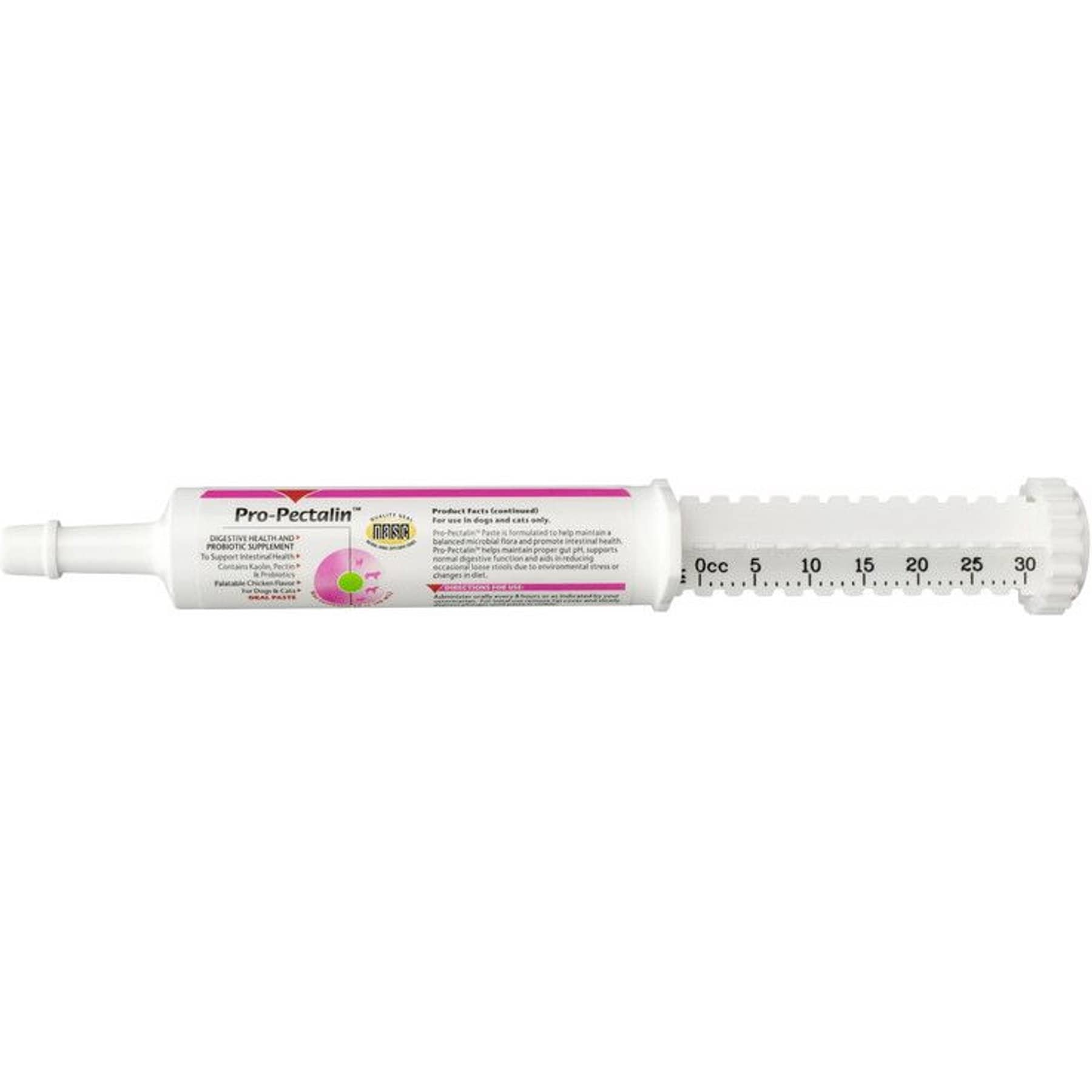
A pet-labeled kaolin and pectin gel a vet may suggest for mild diarrhea in a bright dog, not a poison treatment.
Webvet may earn a commission when you click through to Chewy, at no extra cost to you.
Pro-Pectalin is not a charcoal replacement for a poisoning. It is a tool for an otherwise healthy dog with a simple upset stomach, used when the vet agrees the cause is not toxic.
What toxins does activated charcoal remove?
Activated charcoal binds best to toxins that are non-polar and poorly water-soluble, according to the ASPCA Animal Poison Control Center. MSPCA-Angell lists these as binding well:
- Acetaminophen
- Anticoagulant rat and mouse baits
- Digoxin, a heart medicine
- Organophosphate and carbamate insecticides
- Pyrethrins and pyrethroids
- Salicylates, the aspirin family
- Strychnine
Just as important is what charcoal does not bind. The ASPCA states that acids, alkalis, alcohols, and metals such as lithium and iron do not bind well, so it is not recommended for them. MSPCA-Angell adds more to the poor-binder list:
- Ethylene glycol, the main ingredient in most antifreeze
- Xylitol, the sweetener in many sugar-free products
- Heavy metals such as lead, iron, and lithium
- Metaldehyde slug and snail bait
- Paraquat weed killer
- Petroleum distillates such as gasoline, kerosene, and lamp oil
- Salt poisoning from table salt, homemade playdough, or paintballs
When a dog swallows something on the poor-binder list, charcoal adds risk without benefit, and the vet moves straight to other treatment.
What kind of activated charcoal is best for dogs?
The best activated charcoal for dogs is the one a vet chooses and doses, usually a liquid suspension. MSPCA-Angell notes that human studies found suspensions significantly more effective than tablets or capsules. Some suspensions include sorbitol to speed charcoal through the gut, and clinics also keep plain charcoal with no additives for dogs that should not get sorbitol.
Charcoal also does nothing to rebuild the gut after an upset. VCA Animal Hospitals notes vets may prescribe probiotics for diarrhea. Purina Pro Plan Veterinary Diets FortiFlora Dog Supplement, 30 count is a probiotic powder Purina makes for dogs with diarrhea and gas, listed at $30.99 on Chewy when checked in November 2026.
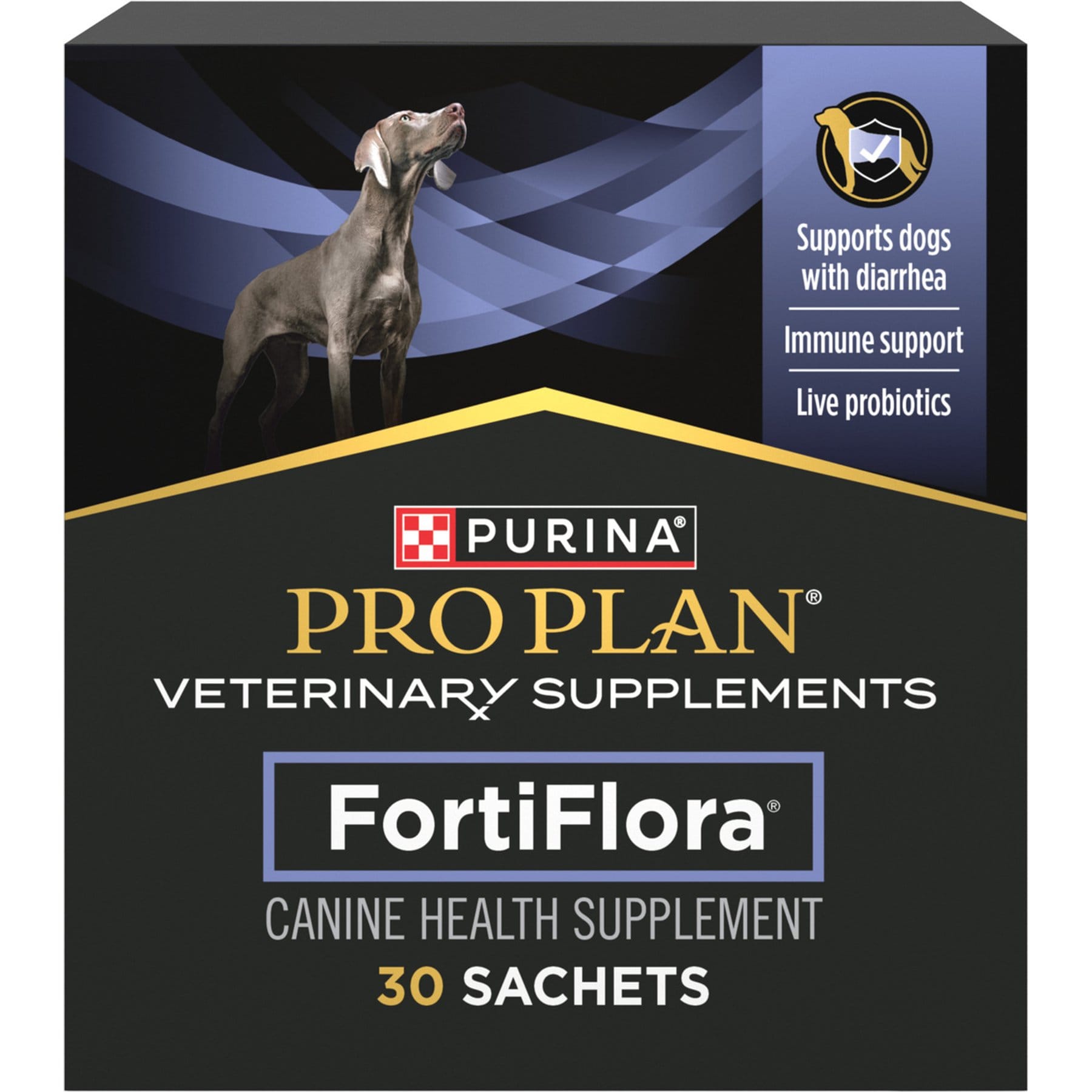
A probiotic powder a vet may suggest for gut support during routine diarrhea or gas, not for a poisoning.
Webvet may earn a commission when you click through to Chewy, at no extra cost to you.
A probiotic and charcoal do opposite jobs. Charcoal is a short emergency measure that sweeps a toxin out, while a probiotic adds live microorganisms over days. Neither replaces the other.
When vets give activated charcoal and when they skip it
Vets use activated charcoal when a stable, alert dog has swallowed a toxin that binds to it and is likely still in the gut, and they skip it for poisons it cannot bind, drowsy or seizing dogs, and possible blockages. Match what your dog ate to whether charcoal helps and the first step to take:
| What the dog ate | Does charcoal help? | Why | First step |
|---|---|---|---|
| Chocolate | Sometimes, one dose for a dangerous amount | Merck reserves it for potentially lethal amounts, and charcoal can raise sodium after chocolate | Call poison control or your vet now |
| Sugar-free gum or xylitol products | No | Charcoal does not bind xylitol appreciably | Call your vet or poison control now; blood sugar can drop within minutes |
| Antifreeze (ethylene glycol) | No | Charcoal does not bind ethylene glycol well, and it is absorbed within 1 to 4 hours | Go to an emergency clinic now and call on the way |
| Cannabis edibles or flower | Sometimes, only early in a dog with no signs | A sedated dog can inhale charcoal into the lungs | Call poison control or your vet now |
| Anticoagulant rat or mouse bait | Often | These baits bind well to charcoal | Call poison control and keep the package |
| Acetaminophen or aspirin | Often | Both bind well to charcoal | Call poison control or your vet now |
| Organophosphate or pyrethrin insecticides | Often | These bind well to charcoal | Call poison control and keep the label |
| Salt, playdough, or paintballs | No, and it may add harm | Charcoal does not bind salt and can push sodium higher | Call poison control or your vet now |
| Bleach, drain cleaner, acids, or alkalis | No | Charcoal does not bind caustics and is contraindicated | Call poison control; do not make the dog vomit |
| Gasoline, kerosene, or lamp oil | No | Charcoal does not bind fuels and aspiration risk is high | Call poison control; do not make the dog vomit |
| Iron or lithium pills | No | Charcoal does not bind these metals | Call poison control or your vet now |
| Slug and snail bait (metaldehyde) | No | Charcoal does not bind metaldehyde well | Go to an emergency clinic now |
| A sock, toy, or bone fragment | No | Charcoal is avoided with possible blockage and hides the view for endoscopy | Call your vet now |
| Unknown substance | Possibly | Vets may give it for an unknown toxin when nothing rules it out | Call poison control or your vet now |

Every row starts with the same step for a reason. Whether charcoal is a good idea depends on what was swallowed, how much, how long ago, and how the dog is doing. Only a vet or a poison control specialist can weigh those together.
An entry of often means charcoal is commonly part of a vet's treatment for that toxin. It is not a signal to give it at home, and a vet may still skip it for a dog that is unstable or already vomiting.
What does activated charcoal do for dogs?
Activated charcoal holds certain swallowed toxins inside the gut so they pass out in the stool instead of being absorbed. That is all it does for dogs: it reduces how much of a binding poison reaches the bloodstream. It does not neutralize a toxin already absorbed, it is not an antidote, and it does nothing for poisons it cannot bind.
Vets often weigh charcoal against making the dog vomit. The Merck Veterinary Manual explains that oral adsorbents such as charcoal are used when the toxic agent cannot be physically removed by vomiting or stomach lavage. The ASPCA adds that if vomiting or an antidote works well, charcoal may not be necessary.
Why charcoal is a clinic treatment
VCA Animal Hospitals states that pets that are not fully conscious should receive charcoal only from a veterinary professional. Around the dose itself, the veterinary sources describe several checks a clinic makes:
- Confirming the dog is stable and can protect its airway, which the ASPCA puts before any charcoal decision
- Checking blood sodium first as a baseline, as the ASPCA advises
- Choosing charcoal with or without sorbitol based on hydration and diarrhea
- Watching for wobbliness, tremors, or seizures in the hours afterwards, the signs of high sodium
The ASPCA notes these signs generally appear within four hours of the dose, and that a rise in sodium can matter even while the number is still within the normal range. That kind of monitoring needs a blood test, which is one more reason the dose belongs in a clinic.
How long does it take for activated charcoal to remove toxins?
Binding is fast once charcoal meets the toxin: MSPCA-Angell cites studies showing it takes about 30 minutes to reach equilibrium. VCA Animal Hospitals says the treatment should take effect within 1 to 2 hours of entering the gut. The bound toxin then leaves with the stool, which turns black.
Timing on the other end matters more. MSPCA-Angell notes the greatest benefit comes when charcoal is given within 1 hour of ingestion, and the ASPCA Animal Poison Control Center says it is best given while the toxin is still believed to be in the gut. The exact window depends on the toxin, its formulation, and the amount swallowed.
Some poisons move faster than any home plan. The Merck Veterinary Manual notes ethylene glycol reaches peak absorption within 1 to 4 hours, and Pet Poison Helpline warns xylitol can drop blood sugar within 10 to 15 minutes, which is why the first call cannot wait.
How vets decide
The ASPCA's guide for vets on using activated charcoal safely frames the decision as a short set of questions. A vet is more likely to give it when:
- The exposure is serious or potentially life-threatening
- The toxin is one that binds to charcoal
- The toxin is still likely to be in the gut
- The dog is stable, alert, and able to protect its airway
- Making the dog vomit, or a specific antidote, is not enough on its own
The same guidance, together with the Merck Veterinary Manual, lists the times vets skip it:
- The toxin does not bind, such as xylitol, antifreeze, alcohols, salt, metals, caustics, or fuels
- The dog is drowsy, seizing, or has lost its gag reflex, so aspiration pneumonia is a real risk
- The dog is severely dehydrated, in shock, or already has high sodium
- There is a possible blockage, perforation, or a planned endoscopy or surgery
- The gut has stopped moving (ileus), or vomiting is protracted
- Inducing vomiting or an antidote has already handled the problem
The ASPCA guidance puts stability first: a patient must be stabilized before anyone even considers whether to give charcoal.
The unknown-substance row works differently. MSPCA-Angell notes that when a poisoning is suspected but the toxin is unknown, charcoal is recommended as long as nothing rules it out, because it binds many toxins and has few side effects when used appropriately. That is still a decision made in the clinic, after the dog has been examined.
Swallowed objects are a special case. The ASPCA notes charcoal limits the view if an endoscopy may be needed to retrieve something from the stomach, and is best avoided if the stomach wall may be perforated.
Diarrhea, gas, and upset stomach
Activated charcoal for dogs with diarrhea, gas, or an upset stomach is not a treatment the veterinary sources support. The Merck Veterinary Manual limits it to poisonings with a known benefit and lists diarrhea among its own side effects at high doses.
Charcoal for a dog with gas or ordinary loose stool adds a sodium and dehydration risk with nothing proven in return. VCA Animal Hospitals advises consulting the vet when liquid stools persist for more than two days, and sooner when loose stool comes with any of these:
- Blood in the stool or severe, watery diarrhea
- Vomiting, weakness, or fever
- Belly pain, loss of appetite, or signs of dehydration
- Weight loss
Two infectious causes of diarrhea come up often, and charcoal treats neither:
- Parvo: parvovirus causes severe vomiting and diarrhea. The Merck Veterinary Manual says most of these dogs benefit from IV fluid therapy, and survival is best with aggressive hospital treatment. Severe dehydration and protracted vomiting are both reasons vets avoid charcoal.
- Giardia: the Merck Veterinary Manual names fenbendazole as the first-line drug for this parasite, with metronidazole as an option, both prescribed after a vet confirms the infection.
Giving charcoal for an upset stomach misses the point. An upset stomach is a symptom with many causes, and charcoal does not tell them apart. If it follows a possible exposure, call; if not, VCA notes vets may prescribe anti-diarrheal agents, dewormers, or probiotics depending on the cause.
For a bright, eating dog with a short bout of loose stool, a vet may suggest a short pause in food and then small, plain meals.
Pet foods built for this include KOHA Limited Ingredient Bland Diet Sensitive Stomach Chicken & Brown Rice with Pumpkin Dry Food Dog Food, 3.5-lb bag, a single-animal-protein recipe with chicken, brown rice, and pumpkin, listed at $22.99 on Chewy when checked in November 2026.
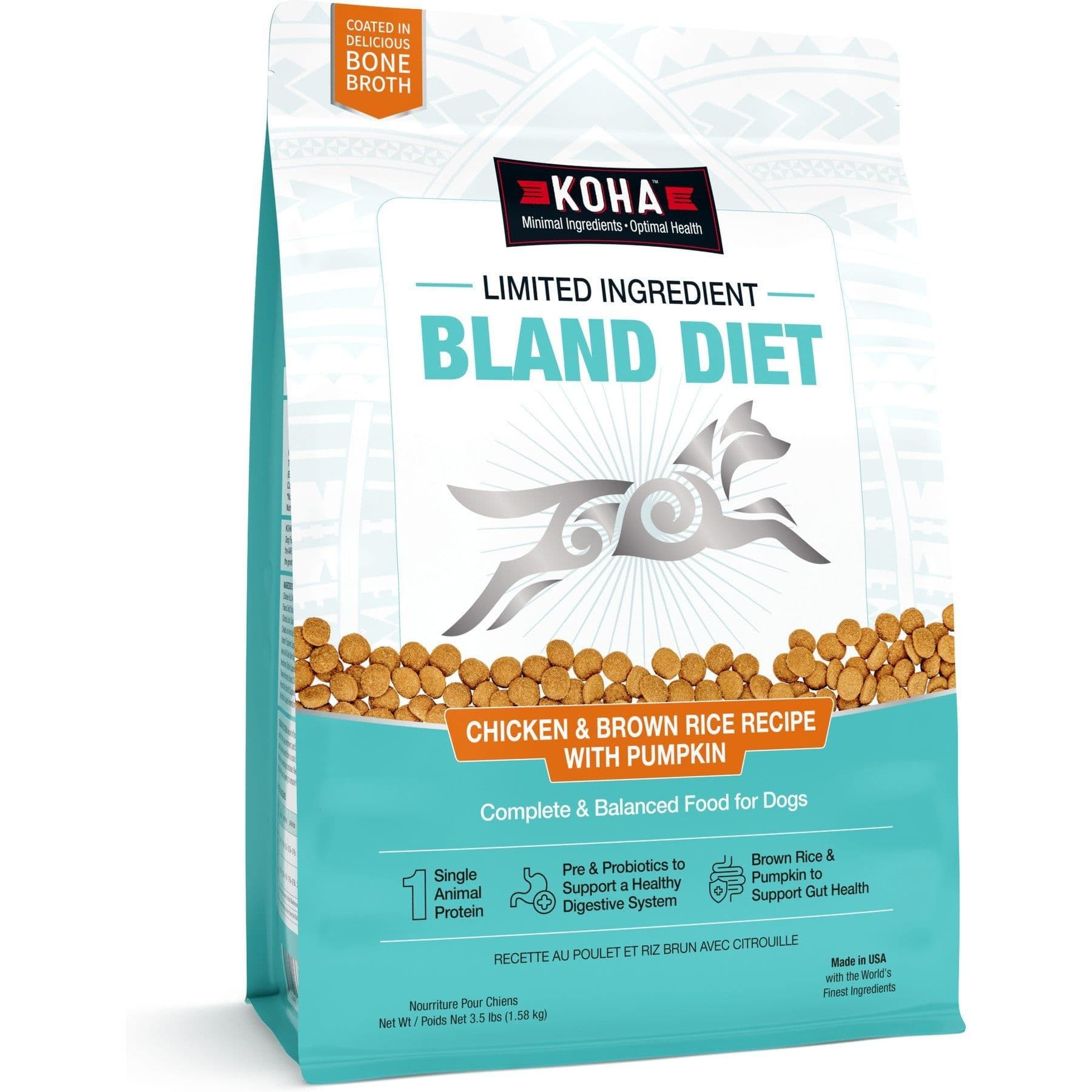
A chicken, brown rice, and pumpkin dry food for plain, gentle meals when the vet advises bland feeding.
Webvet may earn a commission when you click through to Chewy, at no extra cost to you.
KOHA's bland recipe is meant for short stretches of gentle feeding, and your vet can say how long to use it before returning to the usual food. For more on loose stool and its causes, see the WebVet guide to dog vomiting and diarrhea.
 Sponsored
Vet care that's always there
Unlimited video calls and messaging with licensed vets for less than a typical vet visit. One membership covers up to five pets.
Use code Pets60
Plans start at $12/month · covers up to 5 pets
- Licensed vets in most states
- Rx for 150+ conditions
- 4.7 on Trustpilot
How a vet decides the dose and form, and when a vet directs home use

How much activated charcoal a dog needs is set by a vet, by body weight in grams per kilogram. The Merck Veterinary Manual gives the usual activated charcoal dose for dogs as 1 to 2 g/kg by mouth, repeated every 4 to 6 hours when needed. That is a veterinarian's figure, not a home instruction.
The ASPCA Animal Poison Control Center tells vets to check the charcoal concentration of the actual product and dose by grams per kilogram rather than milliliters. Products differ in concentration, so the same volume of two gels or suspensions can hold different amounts of charcoal.
That is why no activated charcoal dosage chart for dogs, whether by weight, per pound, or per kilogram, is safe for owners to follow. A chart cannot account for the toxin, the time since ingestion, or the dog's hydration, kidneys, and alertness, and each of those decides whether the dog should get charcoal at all.
Why 260 mg and 520 mg capsules and tablets fall short
Pills and capsules sold for people are a poor fit. The ASPCA notes that capsules typically contain 250 mg of charcoal, so label doses of 1 to 2 capsules are well below an appropriate dose for a toxicologic emergency. The same gap applies to 260 mg and 520 mg pills, which each hold a fraction of a gram.
Tablets and capsules have a second problem: MSPCA-Angell notes human studies found liquid suspensions significantly more effective. So when owners ask how many mg of activated charcoal a dog needs, the honest answer is that vets work in grams per kilogram, and a few activated charcoal tablets or capsules rarely come close.
Forms vets use: suspension, gel, paste, granules, and powder
Activated charcoal comes as capsules, gel, granules, powder, suspension, or tablets, according to MSPCA-Angell. VCA Animal Hospitals lists the forms given to pets as a pre-made suspension, a paste, and granules that can be mixed with food.
- Suspension (liquid): the usual clinic form, sometimes combined with sorbitol
- Gel or paste: ready-made oral products given by mouth
- Granules: mixed into a small amount of food when a dog will eat it
- Powder: VCA warns it moves through the air easily and is a respiratory irritant for people and pets
- Capsules and tablets: low strength per unit, and less effective than liquids in human studies
Activated charcoal with sorbitol for dogs is a common clinic choice. The Merck Veterinary Manual explains that sorbitol, an osmotic cathartic, speeds the bound toxin out of the gut. The ASPCA guidance generally recommends it with the first dose, and avoids it in dogs that are dehydrated or already have diarrhea.
How a vet gives it
Many dogs eat charcoal willingly when it is mixed with a little food. MSPCA-Angell notes food can be added to encourage voluntary eating, and a 2013 study it cites found only small changes in how well the charcoal bound. Dogs that refuse it may be dosed by syringe, and MSPCA-Angell cautions that syringe feeding risks aspiration.
Charcoal also stains fur, bedding, and clothes black. A pet first aid kit at home is for the everyday scrapes and small injuries that have nothing to do with charcoal.
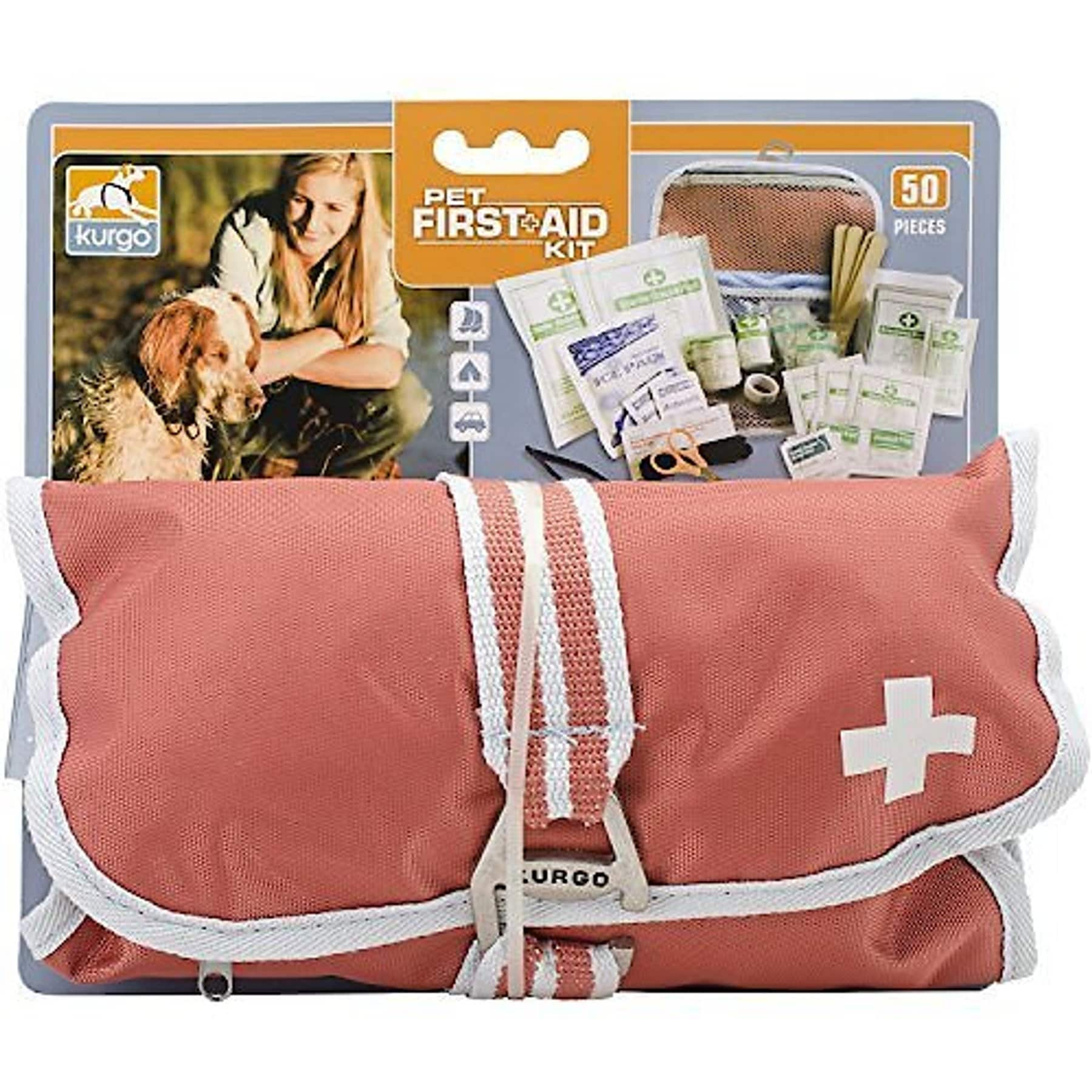
A 50-piece pet first aid kit to keep at home or in the car for everyday scrapes, cuts, and minor injuries.
Webvet may earn a commission when you click through to Chewy, at no extra cost to you.
How often should a dog be activated charcoal?
A single dose is common, and only a vet decides whether a repeat is needed. The Merck Veterinary Manual describes repeat dosing every 6 to 8 hours for 24 hours for toxins that recycle between the liver and gut, called enterohepatic recirculation. Each extra dose raises the sodium risk, so vets monitor these dogs.
Charcoal is never a daily or routine supplement. There is no veterinary source supporting regular doses for detox, digestion, or prevention.
When a vet or poison control directs home use
In some cases, a vet or a poison control specialist may decide a dog is safe to treat at home and name a pet-labeled oral charcoal product.
One example is Durvet Activated Charcoal Dog Gel, 30-mL, a ready-to-use oral gel containing bone charcoal, attapulgite clay, and electrolytes, listed at $12.99 on Chewy when checked in November 2026. It belongs in the plan only when a vet or a poison control service directs it for that dog.
If you are given home directions, follow them exactly. VCA Animal Hospitals advises following your veterinarian's directions and measuring liquid forms carefully. VCA also states that pets that are not fully conscious should receive charcoal only from a veterinary professional.
Poison emergency: call ASPCA Animal Poison Control, Pet Poison Helpline, or your vet first
For a dog poisoning, activated charcoal is only one possible step, and poison control comes first because the right treatment depends on the exact substance, and many common poisons are ones activated charcoal does not bind. Specialists at these services can say whether charcoal helps, whether your dog needs to vomit under supervision, or whether to drive to a clinic now.
Both services answer around the clock:
- ASPCA Animal Poison Control Center: (888) 426-4435, available 24 hours a day, 365 days a year; the ASPCA notes a consultation fee may apply
- Pet Poison Helpline: (855) 764-7661, available 24/7; Pet Poison Helpline states a $99 per incident fee applies, with follow-up consultations included
- Your own vet or the nearest emergency clinic: call ahead so the team is ready when you arrive
What to do in the first minutes
Pet Poison Helpline and VCA Animal Hospitals give the same core steps for a poisoning emergency:
- Move your dog away from the substance.
- Check that your dog is breathing and acting normally.
- Do not give any home antidotes, including charcoal, unless told to.
- Do not induce vomiting unless a vet or poison control tells you to.
- Call poison control, your vet, or an emergency clinic.
- Put the product package in a sealed plastic bag and take it with you, as VCA Animal Hospitals advises, so the clinic can identify it.
Activated charcoal and hydrogen peroxide for dogs
Hydrogen peroxide and activated charcoal are separate steps, and neither belongs in a home plan unless directed. The Merck Veterinary Manual describes 3% hydrogen peroxide as a gastric irritant that makes dogs vomit, for dogs only and only when veterinary care is not available. Merck calls giving salt or syrup of ipecac inappropriate.
Vomiting is dangerous after some poisons. Merck states that inducing vomiting is contraindicated when the swallowing reflex is absent, the dog is not neurologically stable, or the substance is corrosive or a petroleum product. Poison control will tell you whether vomiting is safe for your dog before any peroxide comes out.
Chocolate
Activated charcoal for dogs that ate chocolate is a decision for the vet, not a home step. Pet Poison Helpline explains that chocolate contains theobromine and caffeine. The Merck Veterinary Manual says a single low dose should only be considered for potentially lethal chocolate exposures, and notes that high sodium has occurred after charcoal.
Merck adds that vets consider inducing vomiting within about 2 hours of chocolate ingestion, and that signs usually appear within 6 to 12 hours. A dog that seems fine shortly after eating chocolate can still become ill later, which is why the call happens straight away.
Xylitol and cannabis
Xylitol is a poor fit for charcoal. The Merck Veterinary Manual states activated charcoal does not appreciably bind xylitol and is not recommended. Pet Poison Helpline warns xylitol can cause life-threatening low blood sugar within 10 to 15 minutes, so the dog needs a vet, not charcoal.
Activated charcoal for dogs that ate weed is a narrow, early option. The Merck Veterinary Manual says decontamination may be considered within 1 hour, in dogs with no signs. The Cornell Riney Canine Health Center warns that dogs already showing signs should not be given charcoal because they may aspirate it.
Antifreeze, plants, onions, grapes, and snake bites
Antifreeze is an emergency where charcoal plays no useful part. The Merck Veterinary Manual says charcoal is not likely to decrease absorption of ethylene glycol, which peaks in 1 to 4 hours. WebVet's guide to antifreeze poisoning in dogs covers the signs and the antidote window.
Other common exposures have their own guides on WebVet:
- Dog ate grapes for grape and raisin ingestion
- Onion toxicity in dogs for onion, garlic, and related foods
- Plants toxic to dogs for houseplants and garden plants
Activated charcoal for snake bites in dogs does not fit how charcoal works. VCA Animal Hospitals explains that charcoal binds poisons in the stomach and intestines, while venom enters through the bite wound. A bitten dog needs the nearest emergency clinic straight away.
The activated charcoal dosage for a dog poisoning is the same story in every one of these cases: the vet treating the dog sets it after the call, and it is never worked out at home from a package.
Activated charcoal side effects and risks: aspiration, high sodium, constipation, and black stool

Is activated charcoal safe for dogs? Yes, when a vet gives it to a stable dog for a toxin it binds; it is the standard gut decontaminant in the Merck Veterinary Manual. It becomes harmful when given at the wrong time, to the wrong dog, or for the wrong poison, and it can cause real harm. The main activated charcoal side effects in dogs are:
- Aspiration: charcoal inhaled into the lungs, which can cause aspiration pneumonia
- Hypernatremia: a dangerous rise in blood sodium
- Dehydration and low blood pressure, listed by VCA as serious but less common reactions when given as directed
- Vomiting, constipation, or diarrhea, which the Merck Veterinary Manual links to high doses
- Black stool, expected as the charcoal passes
What is a major side effect of activated charcoal?
Aspiration is the most dangerous side effect of activated charcoal in dogs, along with high blood sodium. The ASPCA Animal Poison Control Center states that charcoal should not be given to a dog with an altered mental state or one that cannot protect its airway, because of the risk of aspiration. Charcoal in the lungs can lead to aspiration pneumonia.
The aspiration risk is highest in a dog that is drowsy, seizing, or has lost its gag reflex, and when charcoal is given by syringe to a dog that refuses it.
High sodium (hypernatremia)
The Merck Veterinary Manual warns that hypernatremia is a risk with any activated charcoal dose, and that the risk rises with multiple doses. The ASPCA explains that charcoal appears to pull fluid from the body into the gut, which concentrates sodium in the blood.
The ASPCA lists the common signs as wobbliness (ataxia), tremors, and seizures, generally within four hours of the dose. Its risk factors include:
- Large doses or repeated doses
- Dehydration before or during treatment
- Poisons that draw water into the gut, including large amounts of chocolate, candy, or sugar
- Sodium-rich exposures such as salt or baking soda
The ASPCA advises vets to check sodium before giving charcoal as a baseline. A 2025 case report in the Canadian Veterinary Journal describes a 7-year-old Corgi treated after eating chocolate brownies whose sodium rose quickly after charcoal. She developed neurologic signs and was discharged 57 hours after admission.
How common this is remains debated. A 2025 retrospective study in Frontiers in Veterinary Science of 96 dogs given a single dose found none developed hypernatremia. The same paper cites an earlier study in nine healthy dogs given 2 g/kg with sorbitol, where two did. A companion study of 97 dogs given repeat doses also found none.
The fair reading is that hypernatremia is uncommon in dogs treated and monitored in a clinic, and serious when it happens. That is one more reason the sodium check and the decision stay with the vet.
Constipation and black stool
Black stool after charcoal is expected. VCA Animal Hospitals notes charcoal can cause black stools, and MSPCA-Angell explains that all of it leaves in the feces. Constipation is listed by both VCA and Merck as a possible effect, and VCA states charcoal should not be used in dogs with an intestinal blockage or a slowed gut.
Activated charcoal for dogs with kidney disease
Kidney problems change the plan. VCA Animal Hospitals lists acute kidney injury among the conditions where charcoal should not be used. MSPCA-Angell adds that cathartics such as sorbitol are not recommended in young patients or in dogs with dehydration, severe vomiting or diarrhea, or pre-existing kidney disease.
A dog with kidney failure needs a vet to weigh any charcoal against its hydration and sodium.
What should you not mix with activated charcoal?
Do not mix activated charcoal with home remedies or add anything to it without your vet's direction. Never pair it with salt or syrup of ipecac to cause vomiting, which the Merck Veterinary Manual calls inappropriate. Charcoal with sorbitol should not go to a dehydrated dog or one with diarrhea, and repeat doses are never stacked at home.
After the emergency: recovery, bland feeding, and a ready first aid kit

Recovery after a poisoning depends on what the dog swallowed and how quickly care started. VCA Animal Hospitals notes that dogs with few signs that get prompt, aggressive care generally have a good prognosis, and that treatment can include antidotes and supportive care alongside decontamination.
Some poisons need follow-up after discharge. After a xylitol exposure, for example, the Merck Veterinary Manual advises checking liver enzymes every 24 hours for at least 72 hours. For milder cannabis exposures, the Cornell Riney Canine Health Center notes a vet may recommend monitoring at home until the dog has fully recovered.
What to watch for at home
Ask the clinic what is normal for your dog's poison, and call back about anything new. Common points to watch after charcoal treatment include:
- Black stool, which is expected
- Constipation, straining, or no stool at all
- Wobbliness, tremors, or seizures, which can signal high sodium
- Vomiting, coughing, or fast breathing, which can follow aspiration
- Any return of the signs the poison first caused
Bland feeding and water
The stomach often needs a gentle restart. VCA Animal Hospitals notes vets may advise withholding food for a short time or feeding small amounts of a veterinary diet for gut problems, and stresses always providing easy access to water. The WebVet guide to a bland diet for dogs explains how to build plain meals and when to switch back.
If your vet prefers a ready-made option, the KOHA bland recipe uses chicken, brown rice, and pumpkin. For gut support, a vet may suggest FortiFlora or Nutramax Proviable Probiotics & Prebiotics Digestive Health Supplement for Dogs & Cats, 30 count, a multi-strain probiotic with prebiotics listed at $19.97 on Chewy when checked in November 2026.
Keep a first aid kit and the numbers ready
A stocked kit covers the small injuries that never need charcoal. The Kurgo Pet First Aid Kit is a 50-piece kit listed at $32.99 on Chewy when checked in November 2026. The Pet Vet First Aid Guide-Spiral Bound, a 174-page handbook by veterinarian Dr. Leah Hill covering toxicities, CPR, and wound care, is listed at $24.99.
Prevention matters as much as the kit. Store cleaners, medicines, sugar-free gum, and antifreeze where your dog cannot reach them, and keep plants and baits out of reach too.
Preparation also saves minutes. Keep your vet's number, the nearest emergency clinic, the ASPCA Animal Poison Control Center, and Pet Poison Helpline saved in your phone and written on a card in your first aid kit. A kit or guide supports you while you get help; it never replaces that call.
Activated charcoal for dogs questions
Frequently Asked Questions
Can I give my dog activated charcoal at home?
Only if your vet or a poison control service tells you to for that specific dog. Call the ASPCA Animal Poison Control Center, Pet Poison Helpline, or your vet first, because many poisons are not bound by charcoal and some dogs are at risk of inhaling it. If home use is approved, they will name the product and the amount.
Is activated charcoal safe for dogs?
It is generally safe when a vet gives it to a stable, alert dog for a toxin it binds. The serious risks are aspiration into the lungs and a rise in blood sodium, both more likely in drowsy, dehydrated, or repeatedly dosed dogs. Your vet checks for those risks before treatment and watches for them afterwards.
Does activated charcoal help a dog with diarrhea?
No. Veterinary sources reserve charcoal for poisonings, and diarrhea is one of its possible side effects. Diarrhea that lasts more than two days, contains blood, or comes with vomiting or weakness needs a vet visit. For a mild case in a bright dog, ask your vet about a bland diet or a probiotic.
Can activated charcoal help a dog that ate chocolate?
Sometimes, but only as a vet's decision for a dangerous amount. Call poison control or your vet as soon as you find the wrapper, with your dog's weight and the type and amount of chocolate. They will judge the risk, and a vet may induce vomiting or give a single charcoal dose while watching sodium.
What kind of activated charcoal do vets use for dogs?
Vets mostly use a veterinary liquid suspension of activated charcoal, dosed by weight, sometimes combined with sorbitol to speed it through the gut. They keep plain charcoal for dogs that should not have sorbitol, such as dehydrated dogs or those with diarrhea. Human capsules are far too weak for a poisoning.
Veterinarian · BVMS MRCVS
Dr. Pippa Elliott, BVMS, MRCVS, is a veterinarian with nearly 30 years of experience in companion animal practice. Dr. Elliott earned her Bachelor of Veterinary Medicine and Surgery from the University of Glasgow. She was also designated a Member of the Royal College of Veterinary Surgeons. Married with 2 grown-up kids, Dr. Elliott has a naughty Puggle named Poggle, 3 cats and a bearded dragon.


