Gentamicin Spray for Dogs: Uses, How to Apply It, and Safety
Gentamicin spray is a prescription antibiotic and steroid skin spray that vets use for infected skin and hot spots in dogs. This guide covers what it treats, how the course is set, how to apply it, side effects, and when to call the vet.

BVMS MRCVS
Medically reviewed by Dr. Pippa Elliott, BVMS MRCVS · Last reviewed

Drug facts
Gentamicin Spray (GentaCalm, Gentaved, GenOne, Gentocin)· Gentamicin sulfate with betamethasone valerate topical spray
A prescription topical spray for dogs that combines the antibiotic gentamicin with the steroid betamethasone valerate. It is labeled for infected superficial skin lesions caused by susceptible bacteria, including infected hot spots, at two sprays 2 to 4 times daily for 7 days as the vet directs.
Treats

 Sponsored
Is Gentamicin Spray (GentaCalm, Gentaved, GenOne, Gentocin) right for your dog?
A licensed vet at Dutch can assess your dog over video and prescribe treatment when it's appropriate, delivered to your door.
Use code Pets60
Plans start at $12/month · covers up to 5 pets
- Licensed vets in most states
- Rx for 150+ conditions
- 4.7 on Trustpilot
Gentamicin spray for dogs: what it treats, prescription status, and whether today is a vet day
Gentamicin spray for dogs is a prescription topical spray that combines gentamicin sulfate, an aminoglycoside antibiotic, with betamethasone valerate, a steroid. Vets prescribe it for infected skin, including many hot spots. It is sold as GentaCalm, Gentaved, GenOne, and generic gentamicin sulfate topical spray, and the original brand was Gentocin.
The GentaVed label on DailyMed says federal law restricts it to use by or on the order of a licensed veterinarian, for topical use in dogs only. So today is a vet day if the spot is red, wet, or spreading: the Cornell Riney Canine Health Center says a sore more than 24 hours old is likely infected.
- 1The spray treats infected superficial skin lesions in dogs caused by bacteria that gentamicin kills, which includes many infected hot spots.
- 2The label range for how often the vet directs it is 2 to 4 times daily for 7 days, two presses of the sprayer each time.
- 3It is a prescription product for dogs only, and the vet examines the skin before prescribing it.
- 4Clip and clean the spot first, then keep the dog from licking the sprayed skin.
- 5Ears and eyes need their own products unless the vet says otherwise.

Each mL of the spray contains gentamicin sulfate equivalent to 0.57 mg gentamicin base and betamethasone valerate equivalent to 0.284 mg betamethasone, in a base that includes 163 mg isopropyl alcohol, according to the same label. Gentamicin is an aminoglycoside antibiotic, and betamethasone valerate is a synthetic glucocorticoid that calms inflammation and itch.
Gentamicin comes in several forms for dogs, but the topical spray is the one made for skin. The FDA's Freedom of Information summary for ANADA 200-415 names Gentocin Topical Spray as the pioneer product, approved in 1985, and confirms the generic gentamicin sulfate spray carries the same active ingredients at the same concentration.
Because the sprays are FDA-approved animal drugs for dogs, a vet who prescribes one for a dog's skin is using it on label, not extra-label. The common versions share one formula:
- Gentocin Topical Spray, the original brand, NADA 132-338.
- GentaVed, approved under ANADA 200-416.
- GenOne, approved under ANADA 200-415.
- GentaCalm, the Dechra brand.
That makes the generic a practical choice once a vet has written the script. Chewy Pharmacy fills the Gentamicin / Betamethasone 60-mL Topical Spray for Dogs only with a veterinarian's prescription, and it is the same two-drug combination as the brand sprays.
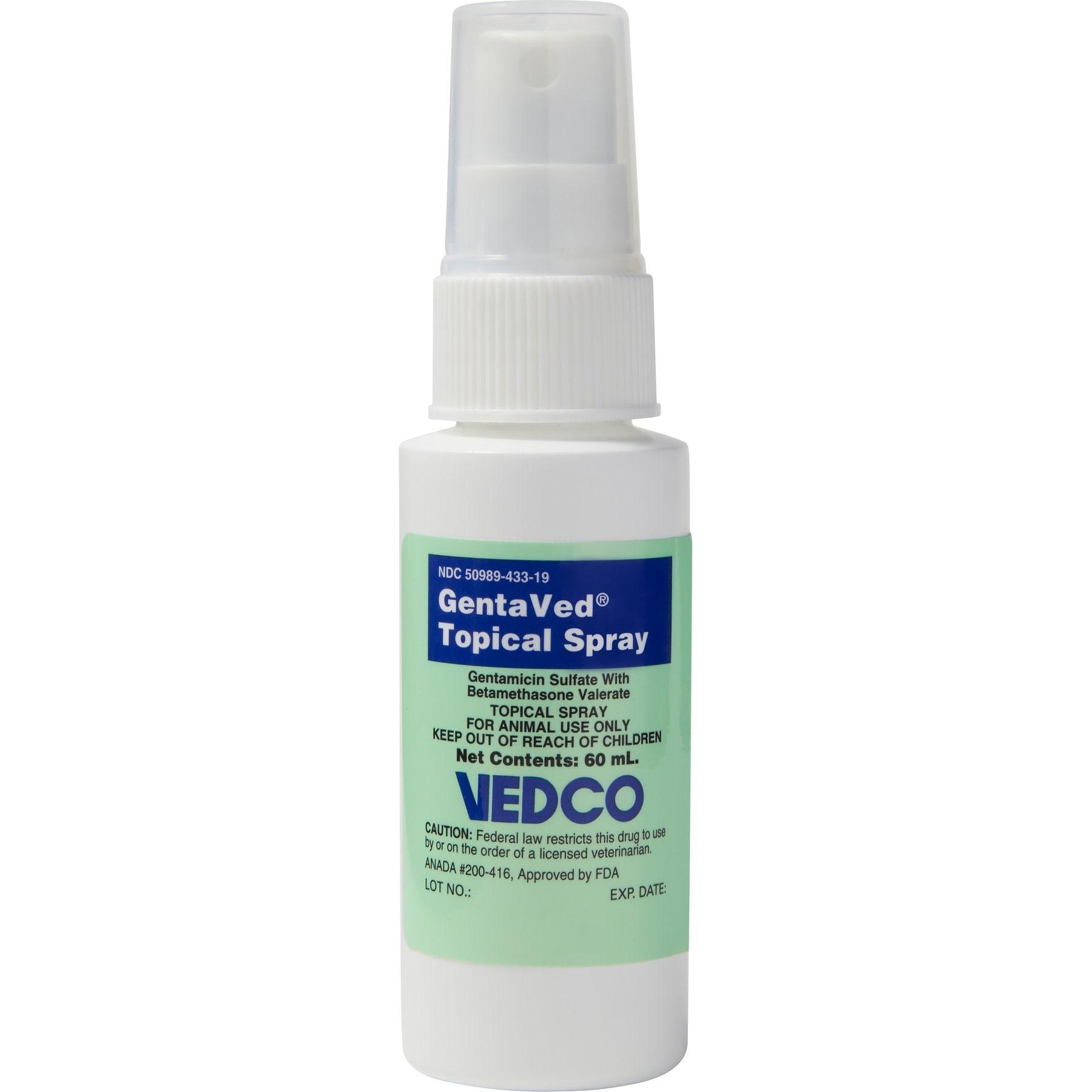
A generic gentamicin and betamethasone skin spray that Chewy Pharmacy fills once your vet sends a prescription.
Webvet may earn a commission when you click through to Chewy, at no extra cost to you.
Is gentamicin spray safe for dogs?
Yes, when it is used on a dog's skin for the course the vet sets. The GentaVed label reports the spray was well tolerated in an abraded skin study in dogs, with no treatment-related skin changes, and the systemic effects seen were dose related and considered reversible. The risk rises with use beyond 7 days, heavy licking, and use in an ear with a damaged eardrum.
Gentamicin spray dosage for dogs: how often and how long
The label directions for gentamicin spray in dogs are two presses of the sprayer, 2 to 4 times daily for 7 days, and the vet sets the exact schedule within that range. Here are the label directions your vet works within:
| Use | What the label states | Form |
|---|---|---|
| Infected superficial lesion, such as an infected hot spot | 2 to 4 times daily for 7 days | Topical spray, dogs only |
| Each application | Hold the bottle upright 3 to 6 inches from the lesion and press the sprayer head twice | Spray, 0.7 mL per press |
| Before treatment | Remove excessive hair and clean the lesion and the area around it | Clipping and cleaning |
| Past 7 days | May delay wound healing; dogs treated longer should be monitored closely | Vet decision only |
| Licking | Avoid ingestion; keep the dog off the sprayed skin | Collar or wrap the vet approves |
The label gives one fixed application, two presses, not a dose by body weight. The vet chooses how many times a day, within 2 to 4, and whether the course stops at 7 days. Give exactly what the vet prescribed, and never change or stop the course without the vet.
The 7-day limit matters. The GenOne label on DailyMed carries the same directions and the same caution that the recommended dose beyond 7 days may delay wound healing. If the vet extends the course, the label says the dog should be monitored closely, which usually means a recheck.
Before leaving the clinic, settle these points with the vet so the course runs as intended:
- How many times a day to spray, within the label's 2 to 4.
- How many days, and the date of any recheck.
- Whether to clip and clean at home or have the clinic do it.
- Which cleanser to use and how to block licking.
The label explains why a longer course is watched. In the abraded skin study, the systemic effects linked to treatment were changes in the adrenal glands, liver, and kidney, which were dose related, typical of corticosteroid therapy, and considered reversible once treatment stopped.
GentaCalm is the Dechra brand of the same combination, labeled for the same skin infections in dogs. Chewy Pharmacy fills Gentacalm Topical Spray (gentamicin sulfate with betamethasone valerate) 60mL only with a veterinarian's prescription, and the label directions match the generic sprays.
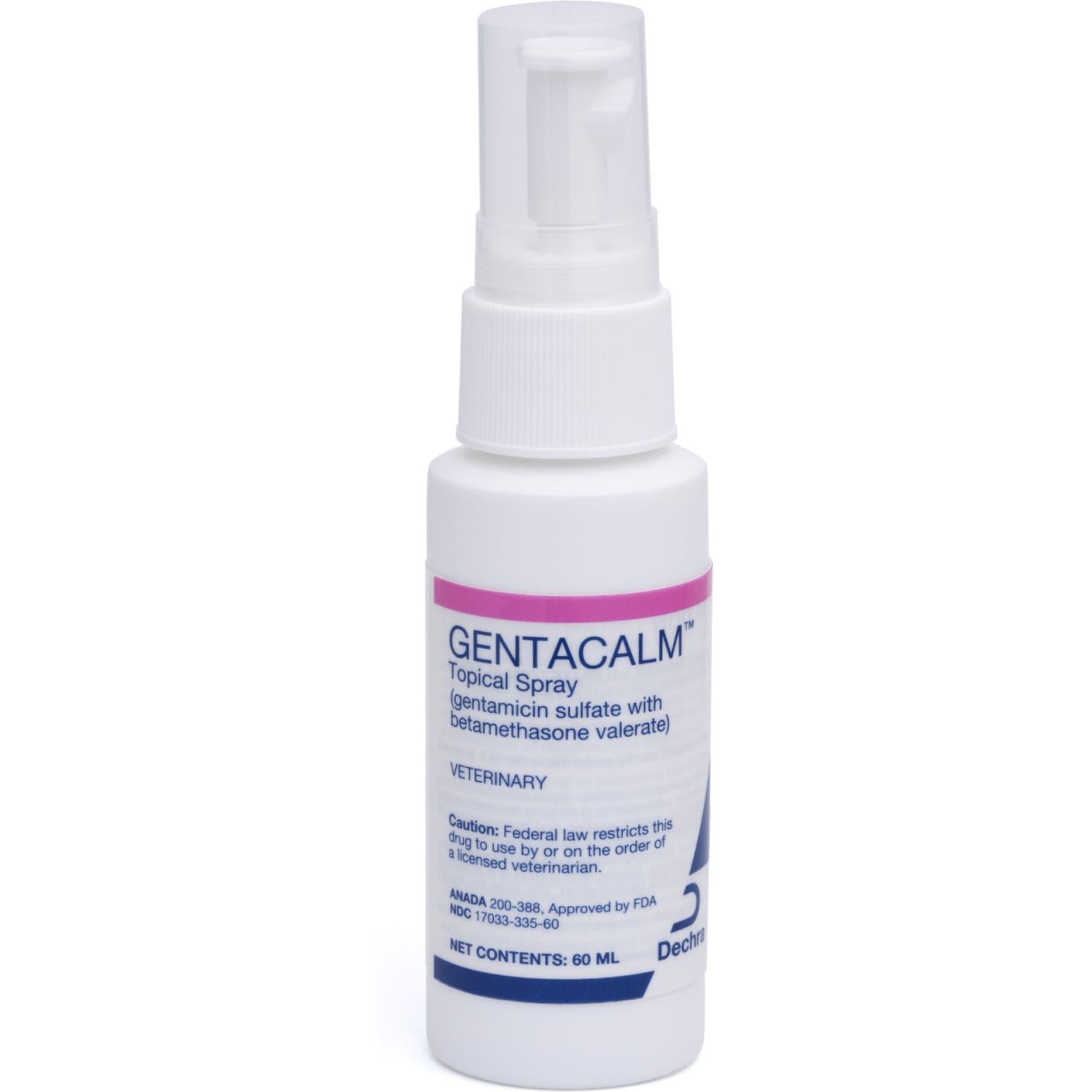
The Dechra brand of gentamicin and betamethasone spray, filled by Chewy Pharmacy with a vet's prescription.
Webvet may earn a commission when you click through to Chewy, at no extra cost to you.
The label also says the bacteria's antibiotic susceptibility should be determined before use. The vet decides how much testing a given spot needs, such as a skin sample under the microscope or a culture, and a spot that comes back or does not respond to a course is a strong reason for one.
A few label details shape how the vet writes the instructions:
- Each press releases 0.7 mL, so the two-press application is a set amount, not something to increase on a bad day.
- Treatment starts after excess hair is removed and the lesion and the skin next to it are cleaned.
- The course is 7 days on the label, and anything longer is a vet decision with closer monitoring.
What gentamicin spray is used for: hot spots and infected skin
Gentamicin spray is used in dogs to treat infected superficial skin lesions caused by bacteria susceptible to gentamicin, most often infected hot spots, as the label of every gentamicin sulfate with betamethasone valerate spray states. The label says gentamicin kills a wide range of gram-positive and gram-negative bacteria from canine skin, including Staphylococcus, Streptococcus, and Pseudomonas aeruginosa, while betamethasone adds anti-inflammatory and anti-itch activity.
The most common reason a dog goes home with gentamicin betamethasone spray is a hot spot. The Merck Veterinary Manual classes acute moist dermatitis, the medical name for hot spots on dogs, as a surface pyoderma. Vets also call it pyotraumatic dermatitis, because the dog's own licking and chewing drive the damage.

Hot spots rarely start on their own. Cornell names allergies and external parasites such as fleas as primary causes, and the Merck flea allergy chapter explains that self-trauma from itching can lead to hot spots that need extra treatment. Cornell adds that ear infections, often from wet ears after swimming, can lead to hot spots under the ear.
Coat type matters as well. Cornell says hot spots are most common in dogs with long or thick coats, that dogs with drop ears or a hairy coat are most likely to develop them, and that anal gland infections can also set off licking and chewing that ends in a hot spot.
That is why the spray treats the spot but not the reason it appeared. GentaCalm and the generic sprays are used for the same skin infections, and common uses include:
- Infected hot spots, including those on the lower back, tail base, and thighs where flea allergy itch concentrates, and under the ears.
- Small patches of superficial bacterial skin infection, such as an infected rash.
- Itchy, inflamed infected skin where the steroid's anti-itch action helps break the scratch cycle.
A spot that a dog keeps licking for weeks, usually on a lower leg, may be something different. A lick granuloma is a deeper, long-running problem that a short course of spray does not fix.
How vets decide between the spray and other options
Merck's view differs from the spray label in emphasis. Merck says topical therapy should be the sole treatment for surface or superficial pyoderma in most cases, at a time when methicillin-resistant and multidrug-resistant Staphylococcus have made infections harder to treat. The tools it describes include:
- A single topical antiseptic for acute moist dermatitis and localized superficial pyoderma.
- Medicated bathing 2–3 times weekly with 10–15 minutes of contact time when infection is widespread.
- Skin cytology to tell bacteria from Malassezia yeast.
- Culture and susceptibility testing for dogs with a long antibiotic history or a poor response to first-line treatment.
For dogs whose hot spots keep returning, the vet looks at the trigger behind them. Merck names allergies such as atopic dermatitis, food allergy, and flea bite allergy among the most common triggers of superficial pyoderma in dogs, and lists inappropriate use of glucocorticoids or other immunosuppressive therapy as a reason infections recur.
Some skin infections need more than a spray. For deep infection between the toes, called interdigital furunculosis, Merck lists anti-inflammatory glucocorticoids or immunomodulators such as modified cyclosporine among the treatments. Some owners also ask the vet whether a skin and coat supplement such as Native Pet Omega 3 Fish Oil Supplement To Support Skin & Coat Health for Dog, 8-oz bottle fits the plan; it is sold over the counter and does not replace the prescribed spray or the vet exam.
Gentamicin and dog ear infections
GentaCalm, Gentaved, and the other sprays are labeled for skin, not ears. Ear drops for a dog with an ear infection are separate otic products, and the Merck chapter on otitis externa notes that most prescription ear products combine an antimicrobial, an antifungal, and a glucocorticoid. Putting gentamicin spray in dog ears is a decision only the vet makes after checking the eardrum.
The two problems can overlap, since Cornell notes that ear infections can lead to hot spots under the ear. In that case the skin below the ear and the ear canal may need different products. Merck says the vet should confirm the eardrum is intact and take samples before any cleaning, which is why ear medication starts at the clinic.
 Sponsored
Vet care that's always there
Unlimited video calls and messaging with licensed vets for less than a typical vet visit. One membership covers up to five pets.
Use code Pets60
Plans start at $12/month · covers up to 5 pets
- Licensed vets in most states
- Rx for 150+ conditions
- 4.7 on Trustpilot
Stopping licking and cleaning the spot before each spray
Licking is the other half of hot spot care. Cornell says licking and chewing increase inflammation, spread the sore, and delay healing, and the spray label says to avoid ingestion. A soft collar such as the CP Basics Inflatable Dog Collar, Medium keeps the dog's mouth off a neck, flank, or leg spot; it does not replace the prescribed spray or the vet exam.
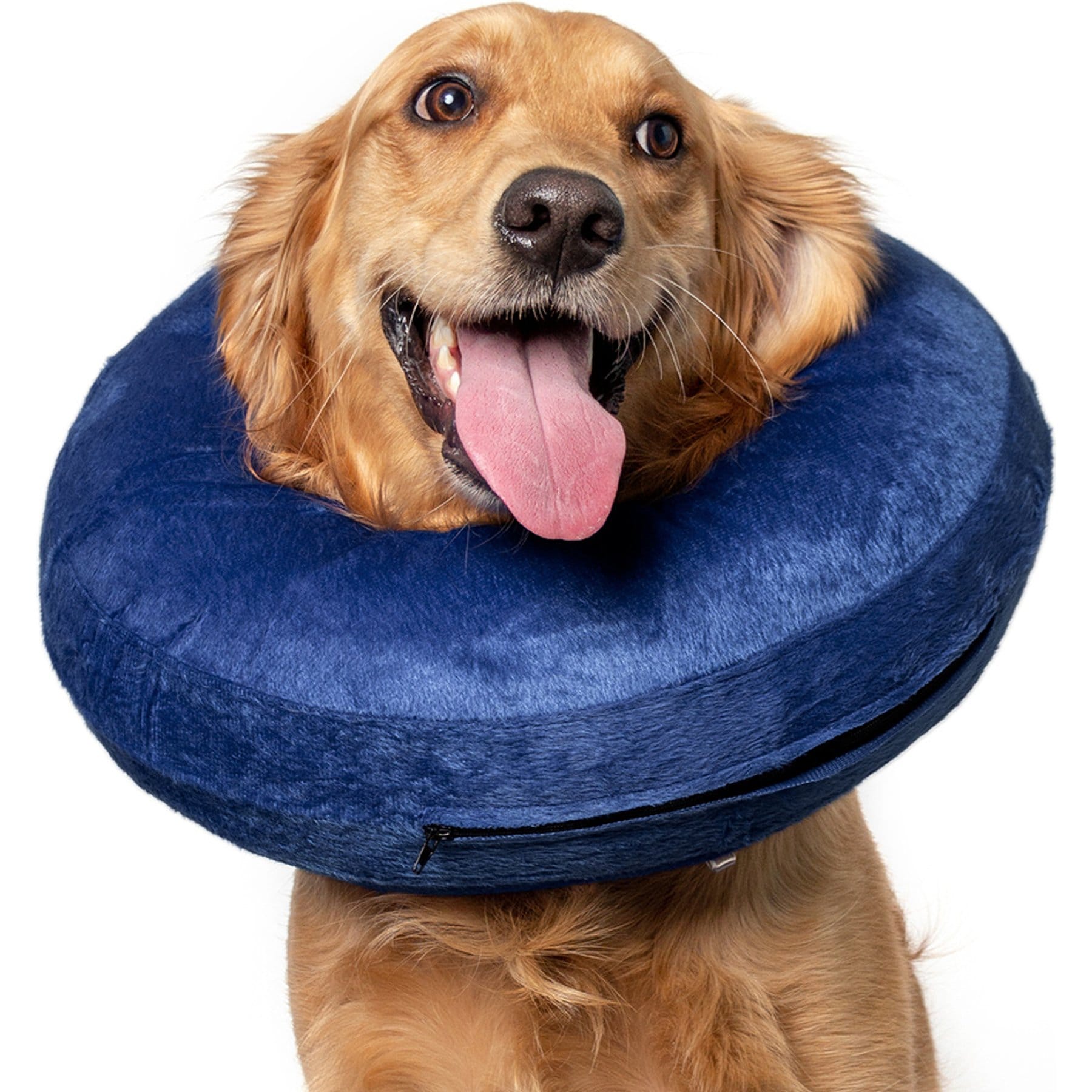
A soft inflatable collar that helps keep a dog's tongue off a treated hot spot while the spray works.
Webvet may earn a commission when you click through to Chewy, at no extra cost to you.
Cornell recommends an Elizabethan collar or a light wrap over the area, and says a soft donut collar works if it keeps the spot away from the dog's tongue. The right choice depends on where the spot is and the size of the dog:
- A soft inflatable collar suits many neck, shoulder, and body spots on a calm dog.
- A firmer cone such as the Barpor Protective Recovery Cone Dog Collar, Large can work better for a large dog that reaches a flank or leg.
- A bitter deterrent such as NaturVet Bitter Yuck! No Chew Training Spray for Dogs & Cats, 8-fl oz bottle goes only on bandage edges or nearby coat, never on the treated or broken skin, and works alongside a collar rather than instead of one.
- A light wrap suits some leg spots, if the vet approves it.
None of these over-the-counter barriers replaces the prescribed spray or the vet exam. Preparing the spot comes before each spray. The label says to remove excessive hair and clean the lesion and the area next to it before treatment, and Cornell explains why the hair matters: matted areas hold moisture next to the skin, which keeps the sore wet and infected.
For the cleaning itself, Cornell suggests gently cleaning the surface with a mild soap or an antibacterial cleaner such as chlorhexidine. Merck describes chlorhexidine at 2 to 4 percent as an antiseptic that kills bacteria, and the vet names the cleanser and strength that suit the spot.
Pre-moistened wipes make that step easier at home, especially on a squirming dog. Pet MD Chlorhexidine Antiseptic Dog & Cat Wipes, 70 count are an over-the-counter cleaning option; they do not replace the prescribed spray or the vet exam, and the vet should confirm they suit your dog's spot.
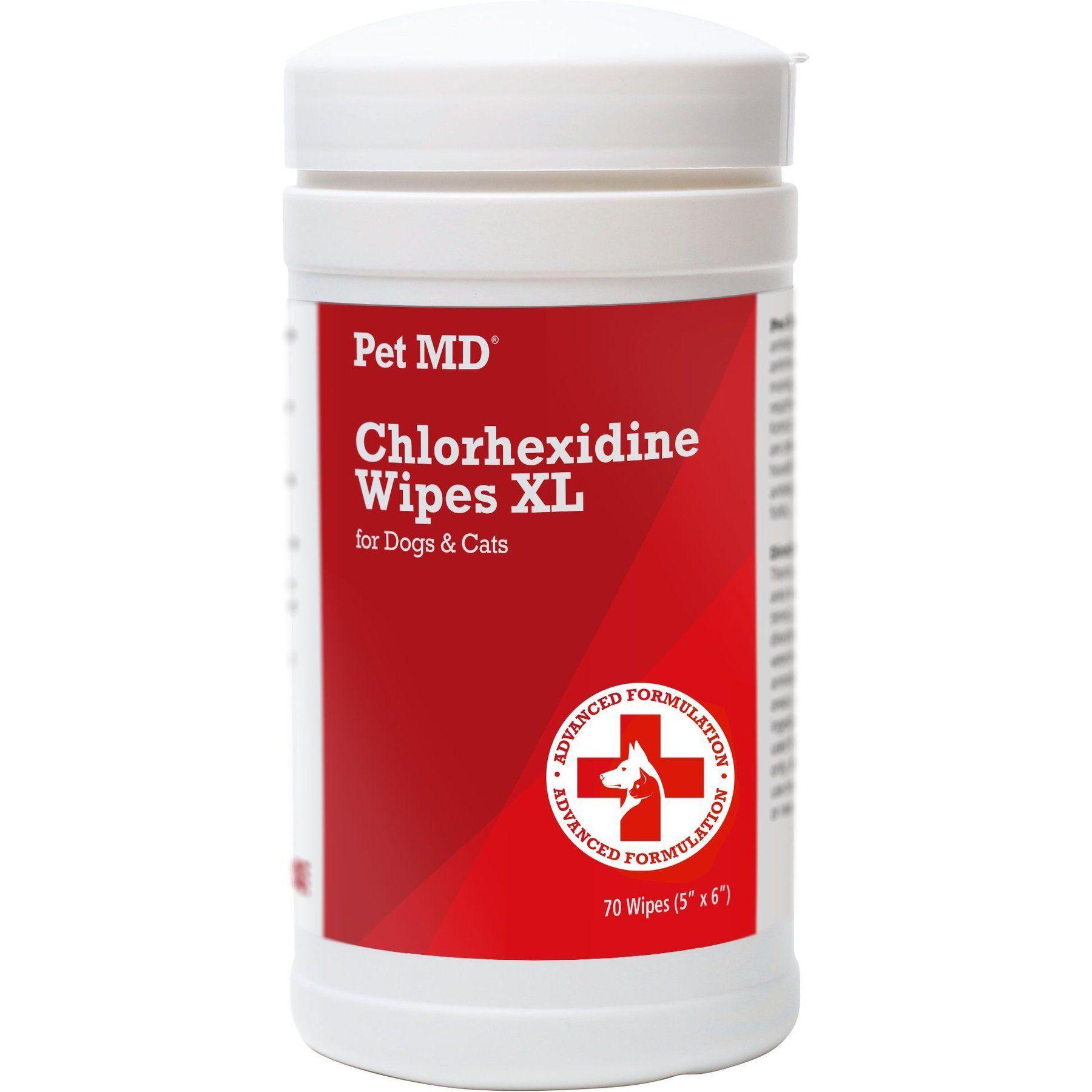
Chlorhexidine wipes for cleaning the area before each spray when your vet directs that step.
Webvet may earn a commission when you click through to Chewy, at no extra cost to you.
Gentamicin spray side effects in dogs
Most side effects of gentamicin spray in dogs come from the steroid half of the spray. The label's side effects section, repeated on the Dechra GentaCalm page, lists effects seen with synthetic corticosteroids in dogs:
- SAP and SGPT (ALT) liver enzyme elevations on blood tests.
- Weight loss and anorexia (poor appetite).
- Polydipsia and polyuria (drinking and urinating more).
- Vomiting and diarrhea, occasionally bloody, observed in dogs.
The label notes that the enzyme, weight, appetite, and thirst changes followed parenteral or systemic steroid use, meaning injections or tablets, rather than the spray itself. Cushing's syndrome has been reported with prolonged or repeated steroid therapy, and prolonged use or overdose may cause immunosuppressive effects, so the label keeps the standard course to 7 days.
GentaCalm causes the same side effects as the generic sprays, because the active ingredients are the same. The other label caution is overgrowth: topical antibiotics may let non-susceptible bacteria, fungi, or yeasts take over. When yeast is the problem, the vet switches to an antifungal such as clotrimazole or ketoconazole.
Suspected side effects can be reported to the manufacturer on the label or to the FDA at 1-888-FDA-VETS, the number printed on the GentaVed label.
When to stop gentamicin spray and call the vet now

The label's instruction for an allergic reaction is plain: if hypersensitivity to any of the components occurs, discontinue treatment and institute appropriate therapy. Call the vet the same day for any of these:
- Swelling or new redness around the sprayed skin after an application, which can mean a reaction to an ingredient.
- A spot that spreads, oozes more, feels hotter, or is not healing, which Cornell lists as signs of infection.
- Decreased hearing, head tilt, or vertigo after any gentamicin product in or near the ear, which Merck says means stopping the medication until the dog is examined.
- Swallowed spray followed by the steroid overdose signs the label lists: sodium retention, potassium loss, fluid retention, weight gain, increased thirst, or increased urination.
Who should not get gentamicin spray: ears, eyes, cats, and other drugs

The labels and Merck name several situations where the spray is the wrong choice or needs extra care:
- Dogs allergic to gentamicin, betamethasone, or any other ingredient.
- Ears, unless the vet has checked the eardrum. Merck says aminoglycosides should not be given topically into the ear unless the tympanic membrane is intact, and gentamicin has among the greatest potential of the group to damage hearing and balance.
- Eyes. The spray is not an eye product.
- Cats. The labels say dogs only, and Merck notes cats are particularly sensitive to the toxic balance effects of aminoglycosides.
- Pregnant dogs. Dechra says to use GentaCalm with caution in pregnant dogs, because corticosteroids late in pregnancy may trigger early labor and have produced cleft palate in puppies.
Other medicines matter too. The label says dogs on, or recently off, systemic steroids such as prednisone may need extra steroid support in stressful situations, and Merck notes that furosemide increases aminoglycoside ear toxicity. Tell the vet about every medicine.
Why ears need a different plan: the vet examines the canal and the eardrum first, which no owner can do at home. The dog ear infection treatment guide covers how vets choose and apply ear medication. The human-safety cautions on the GenOne label are short: not for use in humans, and keep out of reach of children.
Can I give my dog gentamicin eye drops?
Only if your vet prescribes an eye product, and never the skin spray. Gentocin Durafilm, a gentamicin and betamethasone ophthalmic solution, is labeled for external eye infections and inflammation in dogs, and its label says corticosteroids are contraindicated in the initial treatment of corneal ulcers. Human gentamicin eye ointment is a prescription drug for people, used in dogs only on a vet's order.
Can dogs lick gentamicin spray?
No, a dog should not lick it. The label says to avoid ingestion, because swallowing it gives the dog both the antibiotic and the steroid, and it lists steroid overdose signs to watch for if ingestion happens. Repeated licking also wipes the drug off the skin, and Cornell notes that licking spreads the sore and delays healing.
How to apply gentamicin spray, keep your dog off it, and what it costs

To apply gentamicin spray, clip and clean the spot, hold the bottle upright 3 to 6 inches away, press the sprayer twice, and then keep the dog from licking. The full sequence, following the label and the Cornell guidance:
- Clip. Remove excess hair over and around the spot; Cornell says dogs with long coats may benefit from having the area clipped. If the spot is too sore to touch, ask the vet to clip it.
- Clean. Gently clean the lesion and the skin around it, as the label directs, using the cleanser your vet recommends; dog wound care basics apply.
- Spray. Hold the bottle upright 3 to 6 inches away and press twice, at the times of day the vet set.
- Block licking. Use a collar or light wrap, as Cornell advises, until the spot is healed.
- Recheck. Go back on the date the vet set, so the vet can confirm the spot has healed or adjust the plan if it has spread.
Store the bottle upright and out of reach of children, as the labels direct. Keep the collar on between applications, not only while spraying, because a dog that reaches the spot will lick off each dose. A collar such as the CP Basics Inflatable Dog Collar, Medium does not replace the prescribed spray.
What it costs and where to get it
The Gentamicin / Betamethasone 60-mL Topical Spray for Dogs generic was listed at $6.49 on Chewy when checked in November 2026, and Gentacalm Topical Spray (gentamicin sulfate with betamethasone valerate) 60mL was listed at $13.58 on Chewy when checked in November 2026. The GentaVed label lists 60 mL, 120 mL, and 240 mL bottles; the vet picks the size.
Gentamicin spray is not sold over the counter: every label restricts it to use by or on the order of a licensed veterinarian, so a pharmacy fills it only with a vet prescription. The label details, dogs only, skin only, and a 7-day course, apply to every brand.
Can you buy gentamicin cream over the counter?
No, not in the US. Human gentamicin sulfate cream 0.1% carries an Rx only label on DailyMed, for external use and not for the eyes. The dog sprays are prescription products too, and a human cream on a dog is extra-label use that only a vet should direct.
What can I put on my dog's paw so he stops licking it?
A physical barrier works best: Cornell recommends an Elizabethan collar or a light wrap, and a soft donut collar if it keeps the tongue away. Nothing medicated should go on the paw without the vet, because constant paw licking usually has a cause such as allergies or parasites that needs treating.
Natural remedies, anti-lick creams, and paw sprays help only once the cause is known, and a collar stays the most dependable barrier while a hot spot heals. More on how to prevent unwanted dog licking and on why a dog keeps licking its paws is in WebVet's licking guides.
Gentamicin spray questions
Frequently Asked Questions
Does gentamicin spray work on hot spots?
Yes, for a hot spot with a bacterial infection, which is what the spray is labeled to treat. It works best after you clip the hair and clean the skin, and when the dog cannot lick the area. If the hot spot keeps coming back, the vet looks for the allergy or flea problem behind it.
Can gentamicin spray be used in a dog's ears?
Only if the vet says so. The spray is labeled for skin, and Merck warns that aminoglycosides such as gentamicin should not go into the ear unless the eardrum is intact. Ear infections are usually treated with an otic product chosen after an otoscope exam of the ear.
Can you get gentamicin spray without a vet prescription?
No. Every gentamicin and betamethasone spray for dogs is labeled for use by or on the order of a licensed veterinarian, so a prescription is required. The veterinarian also confirms the spot is a bacterial skin infection and not yeast, mange, or a deeper problem.
What is GentaCalm spray used for?
GentaCalm is Dechra's gentamicin and betamethasone spray, used for a superficial skin infection in dogs caused by bacteria that gentamicin kills. Infected hot spots are the most common reason vets prescribe it, and the same label directions apply as for the generics.
Is gentamicin betamethasone spray a steroid?
Partly. It contains betamethasone valerate, a synthetic glucocorticoid steroid, combined with the antibiotic gentamicin. The steroid calms itch and inflammation, and the label lists steroid side effects, including Cushing's syndrome with prolonged or repeated steroid therapy.
Is Gentocin spray the same as gentamicin spray?
Yes, in content. Gentocin Topical Spray was the original brand name, approved in 1985, and the FDA summary for the generic confirms the same active ingredients at the same concentration. Gentaved, GenOne, and GentaCalm carry the same formula under other names.
Does gentamicin spray need to be refrigerated?
No. The storage directions on the label are room temperature, upright. Labels differ slightly: GentaVed says 20 to 25°C (68 to 77°F) with brief excursions between 15 and 30°C, while GenOne says 2 to 30°C (36 to 86°F). Follow the label on your bottle.
Can gentamicin spray go on an open wound?
Only on the infected superficial lesion your veterinarian has examined. The spray is labeled for skin surface infections, not deep or fresh wounds, and the label warns that use beyond 7 days may delay wound healing. A deep cut, bite, or puncture needs the vet first.
Is gentamicin spray or mupirocin better for a dog's skin infection?
Neither is better for every dog. Mupirocin ointment, sold as Muricin, is a prescription product for canine bacterial skin infections, applied twice a day for no more than 30 days. Gentamicin spray adds a steroid for itch, so the vet chooses based on the infection and the dog.
Veterinarian · BVMS MRCVS
Dr. Pippa Elliott, BVMS, MRCVS, is a veterinarian with nearly 30 years of experience in companion animal practice. Dr. Elliott earned her Bachelor of Veterinary Medicine and Surgery from the University of Glasgow. She was also designated a Member of the Royal College of Veterinary Surgeons. Married with 2 grown-up kids, Dr. Elliott has a naughty Puggle named Poggle, 3 cats and a bearded dragon.


