Ketoconazole for Dogs: Uses, Dosage, and Side Effects
Ketoconazole is a prescription antifungal that vets use extra-label in dogs for yeast and fungal skin infections. This guide covers tablet dosing by weight, shampoos and wipes, liver side effects, and when to stop and call the vet.

BVMS MRCVS
Medically reviewed by Dr. Pippa Elliott, BVMS MRCVS · Last reviewed

Drug facts
Ketoconazole· ketoconazole
Ketoconazole is a prescription azole antifungal tablet that vets use extra-label in dogs for Malassezia yeast skin infections, ringworm, and sometimes pituitary-dependent Cushing's disease. The vet sets the dose by body weight, it is given with food, and liver enzymes are monitored on long courses.
Treats

 Sponsored
Is Ketoconazole right for your dog?
A licensed vet at Dutch can assess your dog over video and prescribe treatment when it's appropriate, delivered to your door.
Use code Pets60
Plans start at $12/month · covers up to 5 pets
- Licensed vets in most states
- Rx for 150+ conditions
- 4.7 on Trustpilot
Ketoconazole for dogs: what it treats, prescription status, and whether today is a vet day
Ketoconazole for dogs is a prescription azole antifungal tablet that vets use extra-label for yeast and fungal skin infections, including ringworm, and sometimes Cushing's disease. A dog with an undiagnosed skin problem needs a vet visit first, and a dog already on the drug with yellow gums or vomiting needs a call today.
What does ketoconazole do for dogs? It attacks the fungal cell membrane. VCA Animal Hospitals describes ketoconazole (brand name Nizoral) as an antifungal whose use in dogs is "off label" or "extra label". The Merck Veterinary Manual says ketoconazole works the same way as itraconazole, which blocks the making of ergosterol, a main membrane lipid of fungi.
Your veterinarian sets the tablet dose by your dog's weight and watches the liver during treatment. The tablets are a human drug. The ketoconazole tablet label describes 200 mg tablets marked Rx only. Medicated pet shampoos, sprays, and wipes that pair ketoconazole with chlorhexidine are a different, topical product, and some are sold over the counter.
- 1Ketoconazole is a prescription azole antifungal tablet that vets use extra-label in dogs.
- 2What ketoconazole treats in dogs: Malassezia yeast skin infections, ringworm, and sometimes Cushing's disease.
- 3Tablet dosing by weight band is worked out by your vet in mg per kg; the label gives no dog chart.
- 4Give each dose with food, and expect liver blood tests on a long course.
- 5Yellow gums, skin, or eyes, repeated vomiting, or refusing food mean calling the vet the same day.
Is today a vet day? Book an appointment if your dog has greasy, red, scaly, smelly, or itchy skin, or patchy hair loss, and has no diagnosis yet. The University of Illinois College of Veterinary Medicine notes that yeast dermatitis is diagnosed from the signs plus cytology, a skin sample viewed under the microscope.
If your dog already takes ketoconazole, the call is more urgent. Yellowing of the skin or gums, severe vomiting, or loss of appetite can signal liver trouble, and VCA advises contacting your veterinarian immediately about anything unusual.

Can I get ketoconazole for my dog without a vet's prescription?
No, not the tablets. Some chlorhexidine and ketoconazole shampoos, sprays, and wipes for pets are sold over the counter, but DailyMed lists one such shampoo as an animal drug whose labeling FDA has not approved, so a skin problem still needs a diagnosis first. The tablet label reads Rx only, so a pharmacy fills it only with a veterinarian's prescription.
Ketoconazole tablets for dogs are the same 200 mg tablets people take. Ketoconazole (Generic) Tablets, 200-mg, 30 tablets are one generic pack, listed at $20.40 on Chewy when checked in November 2026, and Chewy Pharmacy fills them only with a veterinarian's prescription.
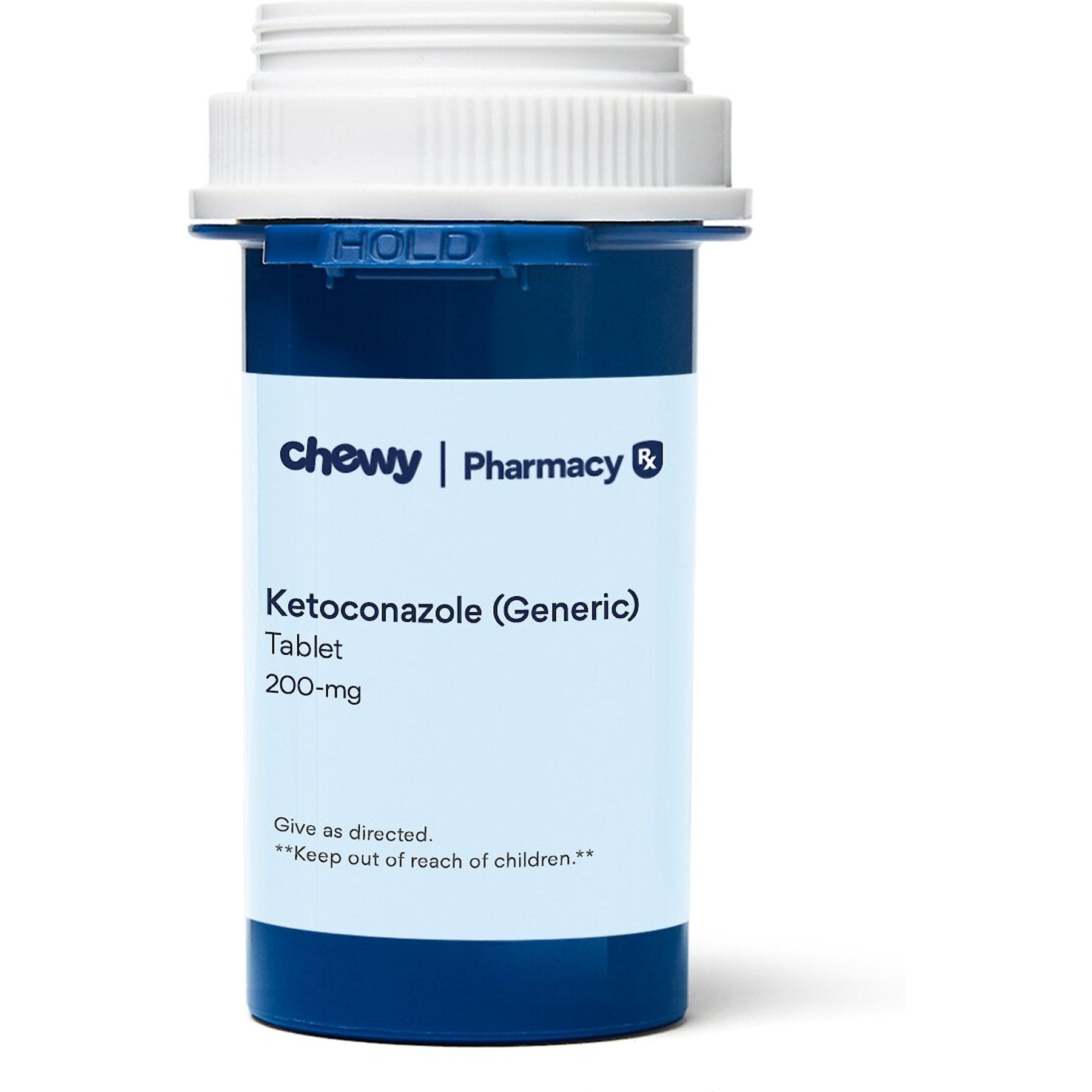
A generic 200 mg ketoconazole tablet pack, filled only against your veterinarian's prescription.
Webvet may earn a commission when you click through to Chewy, at no extra cost to you.
Ketoconazole dosage for dogs by weight
Ketoconazole dosage for dogs is worked out by your vet from body weight in mg per kg. There is no dog label, so every figure below is a veterinary reference range for extra-label use, and the references give no dosage chart by pounds. No weight band gets its own tablet count: your vet calculates the exact dose from your dog's weight, diagnosis, and liver health.
| Indication | Weight band | What the named reference states | Form |
|---|---|---|---|
| Malassezia yeast skin infection | Every weight band; the vet calculates the dose from body weight | Merck Veterinary Manual: 10 mg/kg by mouth every 24 hours for 3 weeks | 200 mg tablet, human drug used extra-label |
| Ringworm (dermatophytosis) | Every weight band; Merck does not name a species for this figure | Merck pharmacology chapter: 10 mg/kg by mouth every 24 hours for 4–8 weeks | Tablet, extra-label |
| Ringworm (dermatophytosis) | Larger dogs; Merck gives no weight cutoff | Merck dermatophytosis chapter: 5 mg/kg every 24 hours | Tablet, extra-label |
| General antifungal dosing | Every weight band; Merck's table does not name a species | Merck antifungal dosage table: 10 mg/kg by mouth every 24 hours, or 20 mg/kg by mouth every 48 hours | Tablet, extra-label |
| Pituitary-dependent Cushing's disease | Every weight band | Merck: 10 mg/kg by mouth every 24 hours for life; may be increased to 15 mg/kg every 24 hours if cortisol is not controlled after 10 days | Tablet, extra-label |
| Doses that do not suit a whole 200 mg tablet | Any weight band where the vet prefers a liquid | VCA: may be compounded into an oral liquid | Compounded oral liquid |
The two Merck chapters disagree on ringworm. The pharmacology chapter gives 10 mg/kg, while the dermatophytosis chapter gives 5 mg/kg for larger dogs. Neither figure is a dose to give at home; they show the range vets work within.
Ketoconazole 200 mg tablets for dogs
The label states each tablet contains 200 mg ketoconazole, and that strength is a human tablet size, not a dog dose. The human label caps people at 200 mg to 400 mg daily. A dog's dose depends on body weight, so your vet works out the number of tablets, or has the dose compounded into a liquid when tablets do not fit.
Ketoconazole pills absorb best in an acidic stomach. Merck notes it "requires an acidic environment for optimal absorption", and VCA advises giving each dose with food, ideally a high-fat food such as cheese or cream cheese. Food can also ease appetite loss, a common side effect.
Many owners hide the tablet in a treat. Greenies Pill Pockets Cheese Flavor Natural Dog Treats, Tablet Size, 30 count are cheese-flavored treats with a built-in pouch that holds most small tablets. A treat pouch helps the dog swallow the dose; it does not replace the prescribed tablet or change what the vet ordered.
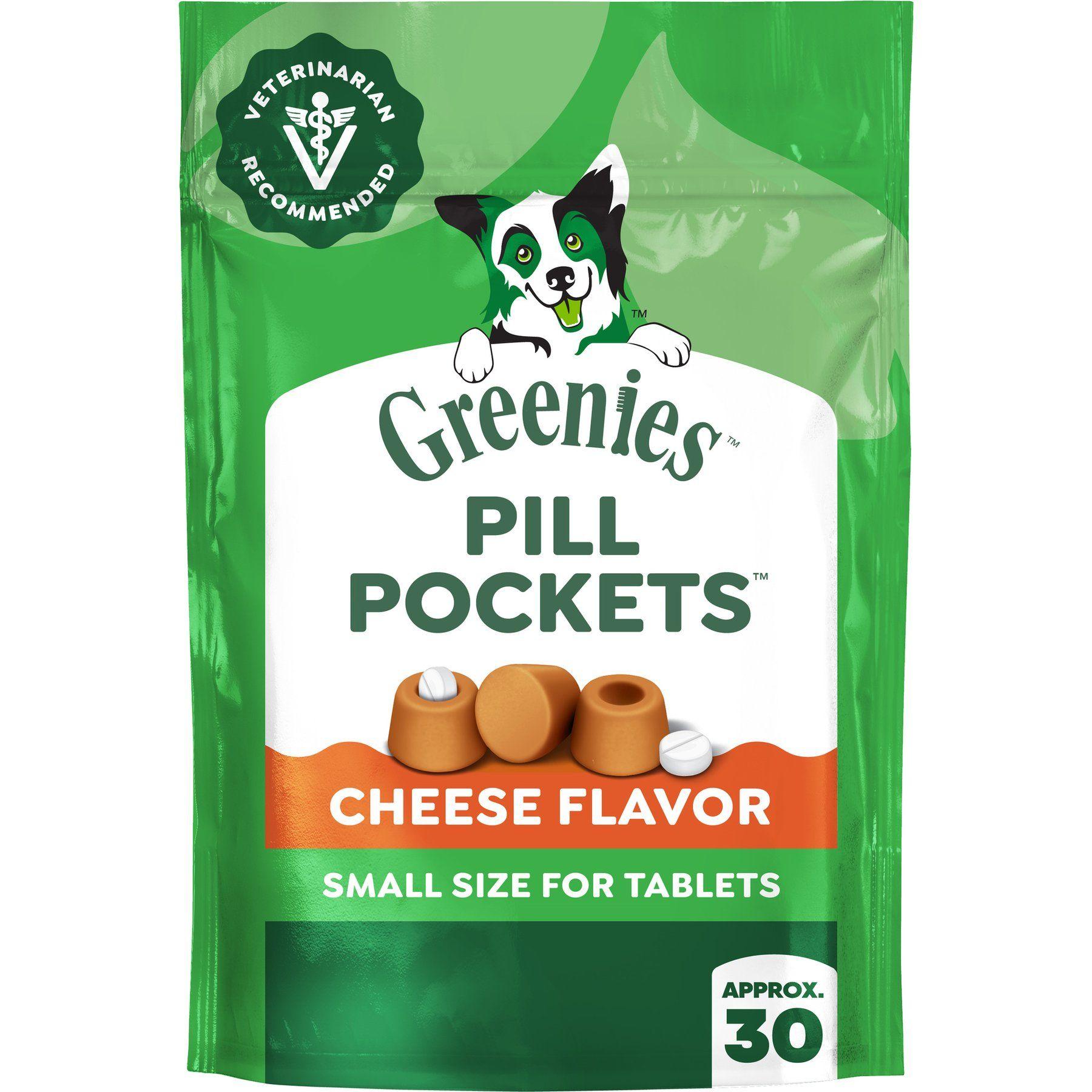
A cheese-flavored treat pouch that hides a small tablet so each prescribed dose goes down with food.
Webvet may earn a commission when you click through to Chewy, at no extra cost to you.
Is ketoconazole available in oral tablets for dogs?
Yes. Ketoconazole comes as an oral tablet, and VCA notes it may also be compounded into an oral liquid. The tablets sold in the US are a 200 mg human product that vets prescribe extra-label for dogs. A pharmacy dispenses them only with a veterinarian's prescription.
Give exactly what your vet prescribed, at the times prescribed. Never change the dose, split it differently, or stop early without talking to the vet first, even if the skin looks better.

What ketoconazole is used for in dogs: yeast, ringworm, and Cushing's disease
Ketoconazole treats four main situations in dogs. Each one has a different goal and a different treatment length:
- Yeast skin infection caused by Malassezia pachydermatis, often linked to itchy, allergic skin
- Yeast in the ears, alongside prescription ear medication
- Ringworm (dermatophytosis), together with medicated baths or rinses
- Pituitary-dependent Cushing's disease, where it lowers cortisol production
Yeast infection and itchy skin. Malassezia yeasts are commensal organisms, meaning they live on normal skin. The University of Illinois notes that yeast dermatitis in dogs is "frequently associated with allergic dermatitis" and shows as redness, scaling, and greasy discharge. Merck states ketoconazole is active against Malassezia pachydermatis.
That link to allergy matters: ketoconazole targets the yeast, while the allergy behind the itchy skin needs its own plan. How long a dog can live with a fungal infection depends on the cause; WebVet's guide to yeast infection in dogs covers that outlook and long-term management.
Ears. Ketoconazole for dogs' ears is usually one part of treating an ear infection. The Merck Veterinary Manual on otitis externa makes three points that shape the plan:
- Malassezia pachydermatis can live in low numbers in healthy dog ears.
- The eardrum should be checked before any topical ear treatment.
- Systemic antifungals such as ketoconazole may be helpful in dogs.
Read more about dog ear yeast infection and the ear exam that comes first.
Ringworm. Ketoconazole treatment for ringworm in dogs is only half the job. The Merck Veterinary Manual on dermatophytosis makes these points:
- Tablets clear active infection inside the hair follicles.
- Topical therapy "is required in addition" to disinfect the coat.
- Resolution takes 6–12 weeks, and dogs are treated until a negative fungal culture or PCR test.
- Ringworm resolves on its own in otherwise healthy animals, but treatment shortens it.
- Ringworm is zoonotic, so it can spread to people.
See WebVet's guide to ringworm in dogs for the full treatment plan.
Cushing's disease. Merck notes that ketoconazole "inhibits cortisol synthesis" and has been used for pituitary-dependent Cushing's in dogs. It is not the approved choice: the FDA states Vetoryl (trilostane) is the only drug it has approved for both pituitary- and adrenal-dependent Cushing's in dogs. More on Cushing's disease in dogs.
Lowering a cyclosporine dose. VCA adds a less obvious use: ketoconazole slows the elimination of cyclosporine, so vets sometimes pair the two on purpose to reduce the dose of the more expensive drug, especially in large dogs.
How quickly does ketoconazole work in dogs?
Most dogs show gradual improvement within a few days, but full effects take a few weeks, according to VCA Animal Hospitals. The course usually runs longer than the visible improvement: Merck lists 3 weeks for yeast and 4–8 weeks for ringworm, so finish the course your vet sets.
Ketoconazole side effects in dogs and liver monitoring
Is ketoconazole safe for dogs? It is safe enough for vets to prescribe with monitoring, but Merck describes it as having "increased toxicity" compared with itraconazole. Giving each dose with food may reduce appetite loss, Merck notes. The liver is the organ vets watch most closely.
What side effects does ketoconazole have on dogs?
The most common side effects are poor appetite, vomiting, diarrhea, and weight loss, according to VCA Animal Hospitals. The tablet side effects reported by VCA and Merck include:
- Lack of appetite, vomiting, diarrhea, and weight loss
- Itching, hair loss, and a reversible lightening of the coat (Merck)
- Liver toxicity, which may cause severe vomiting, appetite loss, and yellowing of the skin and gums
- Suppressed cortisol and testosterone, seen on bloodwork
- Rarely, low platelet counts and a change in coat color
- Possible cataracts with long-term use
If your dog's stomach is upset, call your vet before adding anything, because vomiting, diarrhea, or appetite loss on this drug can be an early liver or low-cortisol sign.
Topical forms carry far less risk. The Merck Veterinary Manual on human topical agents says topical ketoconazole, clotrimazole, and miconazole have minimal oral absorption and limited risk of systemic poisoning, though licking or swallowing them can upset the stomach.

Because topical forms carry less risk, medicated shampoo often does part of the work. Merck states a shampoo containing 2% chlorhexidine and 2% miconazole is effective for ringworm. MiconaHex+Triz Shampoo for Dogs, Cats & Horses, 8-fl oz bottle is a miconazole and chlorhexidine shampoo formulated for skin conditions responsive to miconazole and chlorhexidine. It is an over-the-counter product that does not replace the prescribed treatment or the vet exam.
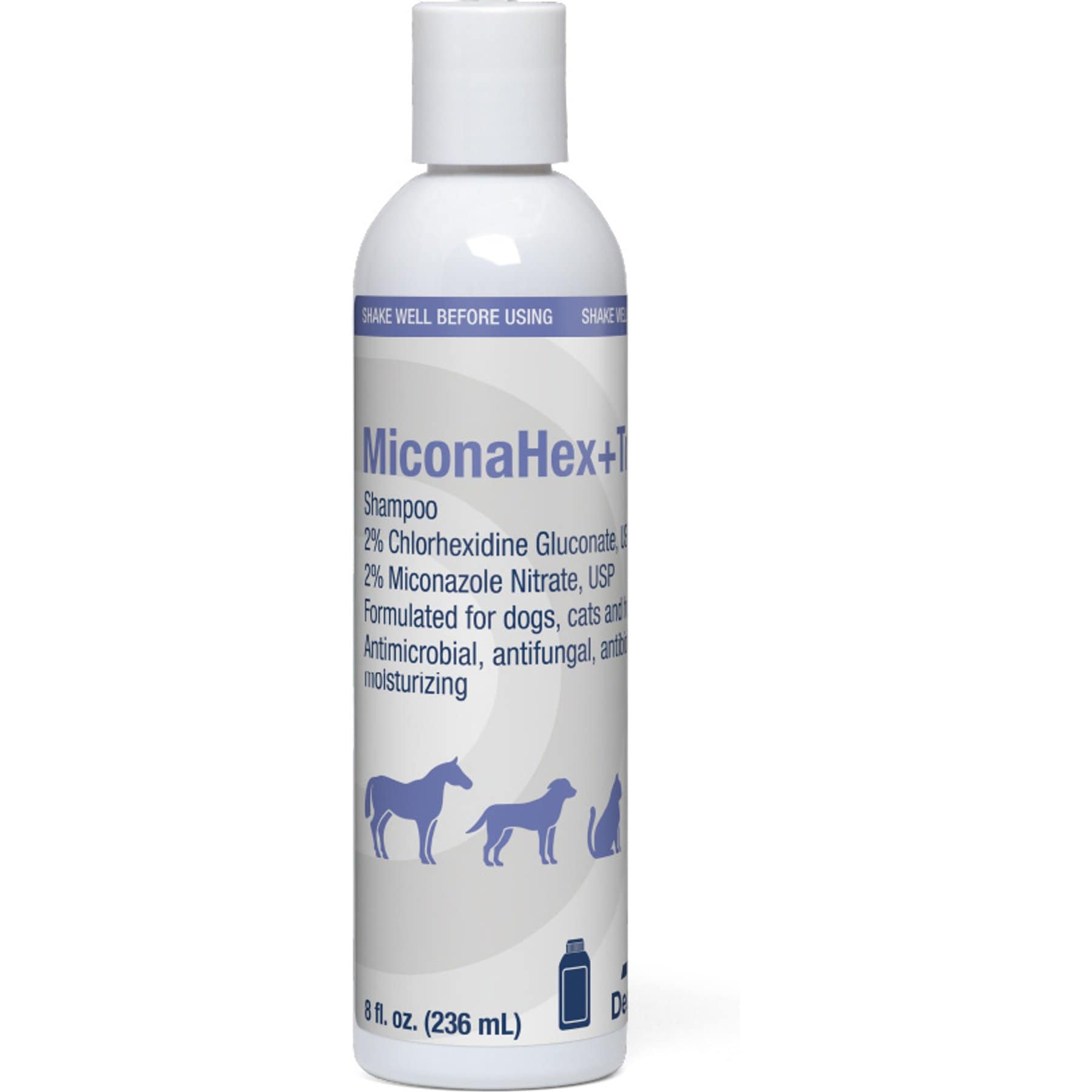
A miconazole and chlorhexidine shampoo a vet may pair with tablets for yeasty or fungal skin.
Webvet may earn a commission when you click through to Chewy, at no extra cost to you.
How long can a dog be on ketoconazole?
A dog can stay on ketoconazole from about 3 weeks to life, depending on the condition, as long as monitoring stays on track. Merck gives these lengths:
- Yeast (Malassezia): about 3 weeks
- Ringworm: 4–8 weeks, continued until a negative fungal culture or PCR test
- Cushing's disease: for life, with cortisol checked because the dose may be raised if cortisol is not controlled after 10 days
VCA advises checking liver enzymes every two to three months for the first six months of long-term use, then twice yearly.
Liver monitoring on a long course is not optional. Merck reports cholangiohepatitis and raised liver enzymes with ketoconazole, and VCA adds a complete blood count focused on platelets. If a test comes back high, WebVet's guide to elevated liver enzymes in dogs explains what vets look at next.
On a long course, medicated wipes are another topical form a vet may add. Happy Jack KetoHexidine Dog, Cat & Horse Wipes with Chlorhexidine & Ketoconazole, 50 count combine chlorhexidine and ketoconazole for wiping paws, skin folds, and small areas between baths. They are an over-the-counter product that does not replace the prescribed treatment or the vet exam.
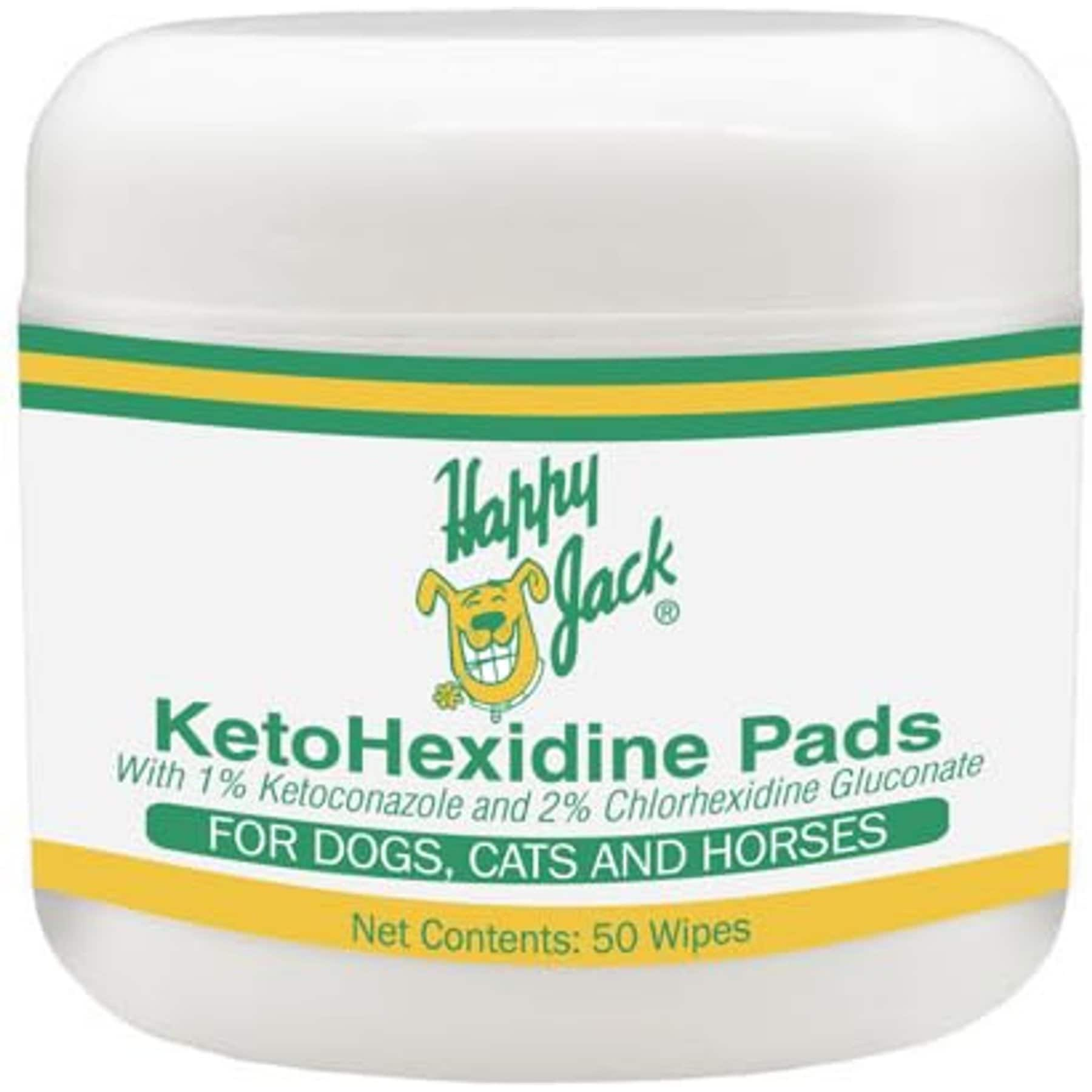
Chlorhexidine and ketoconazole wipes for paws and skin folds between baths, used as your vet directs.
Webvet may earn a commission when you click through to Chewy, at no extra cost to you.
Ketoconazole shampoo and cream are generally safe for dogs when used as directed; the main problems are skin irritation and stomach upset from licking.
 Sponsored
Vet care that's always there
Unlimited video calls and messaging with licensed vets for less than a typical vet visit. One membership covers up to five pets.
Use code Pets60
Plans start at $12/month · covers up to 5 pets
- Licensed vets in most states
- Rx for 150+ conditions
- 4.7 on Trustpilot
When to stop ketoconazole and call the vet now
Signs to stop the drug today and phone the vet before giving another dose:
- Yellowing of the skin, gums, or eyes (jaundice)
- Severe or repeated vomiting
- Loss of appetite
- Lethargy, weakness, vomiting, or diarrhea that could point to low cortisol
- Collapse or sudden severe weakness, which needs emergency care now
- Any suspected overdose, such as a dog that chewed open the bottle
Ketoconazole can suppress cortisol, and VCA asks owners to watch closely for signs of low cortisol. The Merck Veterinary Manual on Addison disease lists lethargy, appetite loss, vomiting, and diarrhea as typical signs, and says a dog in an addisonian crisis "should be treated on an emergent basis".
For a suspected overdose or reaction, VCA says to call your veterinary office immediately and, if it is closed, follow its directions to an emergency facility. Bring the tablet bottle so the team can see the strength and the number missing.

Liver injury from oral ketoconazole can be serious. The human tablet label carries a boxed warning for "serious hepatotoxicity, including cases with a fatal outcome or requiring liver transplantation" in people. That is why vets check bloodwork and why early signs deserve a same-day call.
A sudden decline on this drug is frightening. A dog that becomes gravely ill during treatment needs an emergency vet now; take the tablet bottle with you. If your dog has died, tell your vet and share the dose and timing so the vet can look into what happened.
Drug interactions and dogs that should not take ketoconazole
The drugs that interact with ketoconazole are many, because it blocks a liver enzyme family called cytochrome P450. The human label calls it "a potent CYP3A4 inhibitor and a P-glycoprotein inhibitor", which means it can raise blood levels of other medicines cleared the same way. Tell your vet about every medicine, supplement, and herbal product your dog takes.
VCA Animal Hospitals lists these, among others, as drugs to use with caution alongside ketoconazole:
- Antacids, H2 blockers, and proton-pump inhibitors, which lower stomach acid that ketoconazole needs for absorption
- Corticosteroids such as prednisone
- Cyclosporine (Atopica)
- Ivermectin and praziquantel
- Benzodiazepines, tramadol, trazodone, and fluoxetine
- Macrolide antibiotics and ciprofloxacin
- Cisapride, antiarrhythmics, and calcium-channel blockers
- Other drugs that can harm the liver
Ketoconazole and prednisone. Corticosteroids such as prednisone appear on the VCA caution list, and ketoconazole itself lowers cortisol production. A dog on both needs a vet plan for dosing and monitoring rather than two separate prescriptions run side by side.
Ketoconazole and cyclosporine (Atopica). This pairing is the best-known interaction. The Atopica product information from the UK Veterinary Medicines Directorate states ketoconazole at 5–10 mg/kg can raise cyclosporine blood concentration in dogs up to five-fold. It advises the vet to consider doubling the cyclosporine interval in a dog on daily dosing. See cyclosporine for dogs.
Dogs that should not take ketoconazole, or need extra care, according to VCA:
- Dogs allergic to ketoconazole should not take it
- Pregnant dogs only for a life-threatening infection
- Dogs with liver disease or low platelet counts
- Dogs going through serious illness, surgery, or trauma
- Breeding dogs, because it can cause temporary infertility
- Nursing mothers, because the drug passes into milk
Cats are a separate concern in a multi-pet home. Merck notes cats "appear to be more sensitive to ketoconazole", so never share a dog's tablets with a cat.
How to give ketoconazole, shampoo and wipe forms, cost, and alternatives
Giving the tablets. Give ketoconazole tablets with food, on the schedule your vet sets. VCA's directions are simple:
- Give each dose with food, ideally a high-fat food.
- If a dose is missed, give it when you remember, then continue the regular schedule.
- If the next dose is nearly due, skip the missed one, and never give two doses at once.
- Store the tablets at room temperature in a dry place protected from moisture.
A soft treat pouch such as Greenies Pill Pockets Cheese Flavor Natural Dog Treats, Tablet Size, 30 count, listed at $11.99 on Chewy when checked in November 2026, hides a tablet and provides a little food at the same time. WebVet compares options in its guide to the best pill pockets for dogs.
For a dog that picks the tablet out, the Dee Pet Piller for Dogs & Cats, 1 count holds a tablet in a chamber and uses a plunger to give it by mouth; it is listed at $6.90 on Chewy when checked in November 2026. Follow the tablet with food so it is not given on an empty stomach.
Choosing tablets, shampoo, or wipes. Oral tablets versus medicated shampoo is not an either-or choice for every dog. The forms do different jobs, and your vet matches them to the infection:
- Ringworm: tablets plus a medicated shampoo or rinse, because Merck says topical therapy is required in addition to systemic treatment
- Yeast skin infection: medicated shampoo, with tablets added when the vet judges the skin needs it
- Small patches, paws, and skin folds: wipes or sprays between baths
- Yeast in the ears: a vet ear exam and prescription ear medication first; shampoos are not for ears
- Cushing's disease, or lowering a cyclosporine dose: tablets only
Using a chlorhexidine and ketoconazole dog shampoo. The Dermanel chlorhexidine 2% and ketoconazole 1% shampoo label on DailyMed gives this technique:
- Wet the coat with warm water and work the shampoo into a lather.
- Leave it on for 5 to 10 minutes of contact time.
- Rinse thoroughly with clean water, then repeat.
- Keep it out of the eyes and mucous membranes, and do not use it in the ears.
- Stop and consult your veterinarian if skin irritation develops or increases.
That label suggests 2 to 3 times a week for 4 weeks, then weekly, or as your vet directs. The University of Illinois notes shampoos for yeast are typically used once or twice weekly and wipes, sprays, or creams every 12 to 24 hours. Follow your vet's schedule where the two differ.
Shampoo and wipe choices. The best ketoconazole shampoo for dogs is the one your vet picks for the diagnosed infection. DailyMed lists a pet chlorhexidine and ketoconazole spray and shampoo, plus human 2% ketoconazole cream and foam (mousse) products. An over-the-counter pet shampoo does not replace the prescribed treatment or the vet exam.
For mixed yeast and bacterial skin, a vet may choose a chlorhexidine shampoo such as Douxo S3 PYO Antiseptic Antifungal Chlorhexidine Dog & Cat Shampoo, 6.7-oz bottle, listed at $25.99 on Chewy when checked in November 2026.

Where a miconazole shampoo fits better, MiconaHex+Triz Shampoo for Dogs, Cats & Horses, 8-fl oz bottle is listed at $32.01 on Chewy when checked in November 2026. For paws and folds, Happy Jack KetoHexidine Dog, Cat & Horse Wipes with Chlorhexidine & Ketoconazole, 50 count are listed at $15.99 on Chewy when checked in November 2026. Both are over-the-counter products that do not replace the prescribed treatment or the vet exam.
Cost. Generic 200 mg tablets are listed at $20.40 for 30 on Chewy when checked in November 2026. The total cost of a course depends on your dog's weight, the length of treatment, and the liver blood tests a long course needs.
Alternatives. Other drugs and products your vet may weigh:
- Miconazole: a topical azole found in shampoos such as the 2% chlorhexidine and 2% miconazole shampoo Merck names, so the choice between the two usually comes down to tablet versus topical use
- Clotrimazole: another topical azole; see clotrimazole for dogs
- Itraconazole, fluconazole, and terbinafine: oral antifungals your vet may choose instead of ketoconazole
- Gentamicin spray for dogs: a different drug for a different job, so check the active ingredients on any skin spray
Can I put ketoconazole cream on a dog?
Only if your vet recommends it for that spot. Ketoconazole 2% cream is a human product, and Merck notes topical azoles are poorly absorbed if swallowed but can cause stomach upset. Use it only on the spot your vet names, and keep your dog from licking it.
What is a good tablet for treating a dog fungal infection?
Itraconazole is the oral antifungal Merck rates more highly, though ketoconazole still has a place. Merck states ketoconazole has "lower potency, increased toxicity, and a narrower spectrum of activity than itraconazole", and that itraconazole does not alter hormone levels. Fluconazole and terbinafine are other choices; your vet picks one based on the organism and your dog's liver.
Ketoconazole questions
Frequently Asked Questions
Is ketoconazole cream safe for dogs?
Ketoconazole cream is low risk when a vet has advised it, because Merck notes topical azoles have minimal oral absorption. The main problem is licking: a dog that licks the cream off can get an upset stomach. Distract your dog until the cream has soaked in, and ask your vet about a pet-formulated product instead.
Is ketoconazole shampoo safe for dogs?
Yes, a pet ketoconazole shampoo is generally safe when used as labeled. The Dermanel shampoo label calls for a contact time of 5 to 10 minutes before rinsing, and warns to keep it away from the eyes and out of the ears. Stop and call your vet if the skin becomes more irritated.
How many days does a dog take ketoconazole tablets?
It depends on the infection. Merck lists 3 weeks for Malassezia yeast and 4–8 weeks for ringworm, with ringworm treated until a negative fungal culture or PCR test. Cushing's treatment can be lifelong. Your vet will usually book a recheck before deciding to stop, so keep giving tablets until that visit.
Is ketoconazole or fluconazole better for dogs?
Neither is better for every dog. Merck notes fluconazole works much like ketoconazole but does not affect hormone production, though it has the highest minimum inhibitory concentration against ringworm fungi, meaning more drug is needed to stop them. Merck also names itraconazole for small dogs with ringworm. Ketoconazole stays useful when a vet wants its effect on cortisol or cyclosporine.
Can a dog take ketoconazole with cyclosporine?
Yes, but only under a vet's plan. Ketoconazole raises cyclosporine blood levels, up to five-fold according to the Atopica product information, and vets sometimes use that effect deliberately to lower the cyclosporine dose. Never add one drug to the other at home, because the cyclosporine dose or interval usually has to change.
Veterinarian · BVMS MRCVS
Dr. Pippa Elliott, BVMS, MRCVS, is a veterinarian with nearly 30 years of experience in companion animal practice. Dr. Elliott earned her Bachelor of Veterinary Medicine and Surgery from the University of Glasgow. She was also designated a Member of the Royal College of Veterinary Surgeons. Married with 2 grown-up kids, Dr. Elliott has a naughty Puggle named Poggle, 3 cats and a bearded dragon.


