Clotrimazole for Dogs: Uses for Ears and Skin, and Safety
Clotrimazole is an antifungal found in drugstore creams and in prescription dog ear medicines. This guide covers what it treats in dogs, when a vet exam comes first, side effects, licking risk, and how to apply it.

BVMS MRCVS
Medically reviewed by Dr. Pippa Elliott, BVMS MRCVS · Last reviewed

Drug facts
Clotrimazole for Dogs· Clotrimazole
Clotrimazole is an azole antifungal used for yeast and fungal infections of a dog's ears and skin. It is found in prescription dog ear products such as Otomax and Mometamax and in human over-the-counter 1% creams that vets sometimes use extra-label. Ear problems and spreading skin lesions need a vet exam first.
Treats

 Sponsored
Is Clotrimazole for Dogs right for your dog?
A licensed vet at Dutch can assess your dog over video and prescribe treatment when it's appropriate, delivered to your door.
Use code Pets60
Plans start at $12/month · covers up to 5 pets
- Licensed vets in most states
- Rx for 150+ conditions
- 4.7 on Trustpilot
Clotrimazole for dogs: what it treats, prescription status, and whether today is a vet day
Clotrimazole for dogs is an azole antifungal used against yeast and fungal skin and ear infections. It shows up in two very different places: drugstore creams made for people, which vets sometimes use extra-label on dogs, and prescription dog ear medicines that combine it with an antibiotic and a steroid.
Can you use clotrimazole on your dog? Sometimes, with your vet's direction. A sore, smelly, or head-shaking ear, or a skin patch that is spreading, needs a vet exam before any antifungal goes on it. At home, the main risk is your dog licking the product off.
- 1What clotrimazole treats in dogs: yeast such as Malassezia and some fungal skin infections, in the ears and on the skin.
- 2Label strengths by product form: dog ear products contain 10 mg clotrimazole per gram; drugstore creams and solutions are clotrimazole 1%.
- 3Dog ear products containing clotrimazole are prescription only, and the vet checks the eardrum first.
- 4Human creams are over-the-counter for people and become extra-label when used on a dog.
- 5Stop and call the vet for swelling, hives, a head tilt, loss of balance, or sudden hearing loss.

The drugstore side is mostly clotrimazole 1% cream, sold as Lotrimin AF and store brands. The DailyMed Lotrimin cream label is a human over-the-counter label for athlete's foot, jock itch, and ringworm in people. That is where most owners buy clotrimazole for dogs, but the label says nothing about dogs.
Using a human drug on a pet is extra-label use. The FDA says any extralabel use of an approved human drug must be by or on the lawful order of a veterinarian. So the cream may be fine for a small, vet-confirmed yeasty patch, but the vet decides.
Today is a vet day, not a drugstore day, if your dog has any of these:
- An ear that is painful, smelly, red, or making your dog shake or tilt the head
- Round, crusty, or hairless patches that are spreading, which could be ringworm
- A problem that came back after it was treated before
On the prescription side, the best-known product is Otomax, an ear ointment that pairs clotrimazole with gentamicin and betamethasone. The DailyMed Otomax label records it as approved by FDA under NADA 140-896, and federal law restricts it to use by or on the order of a licensed veterinarian. Chewy Pharmacy fills it only with a veterinarian's prescription.
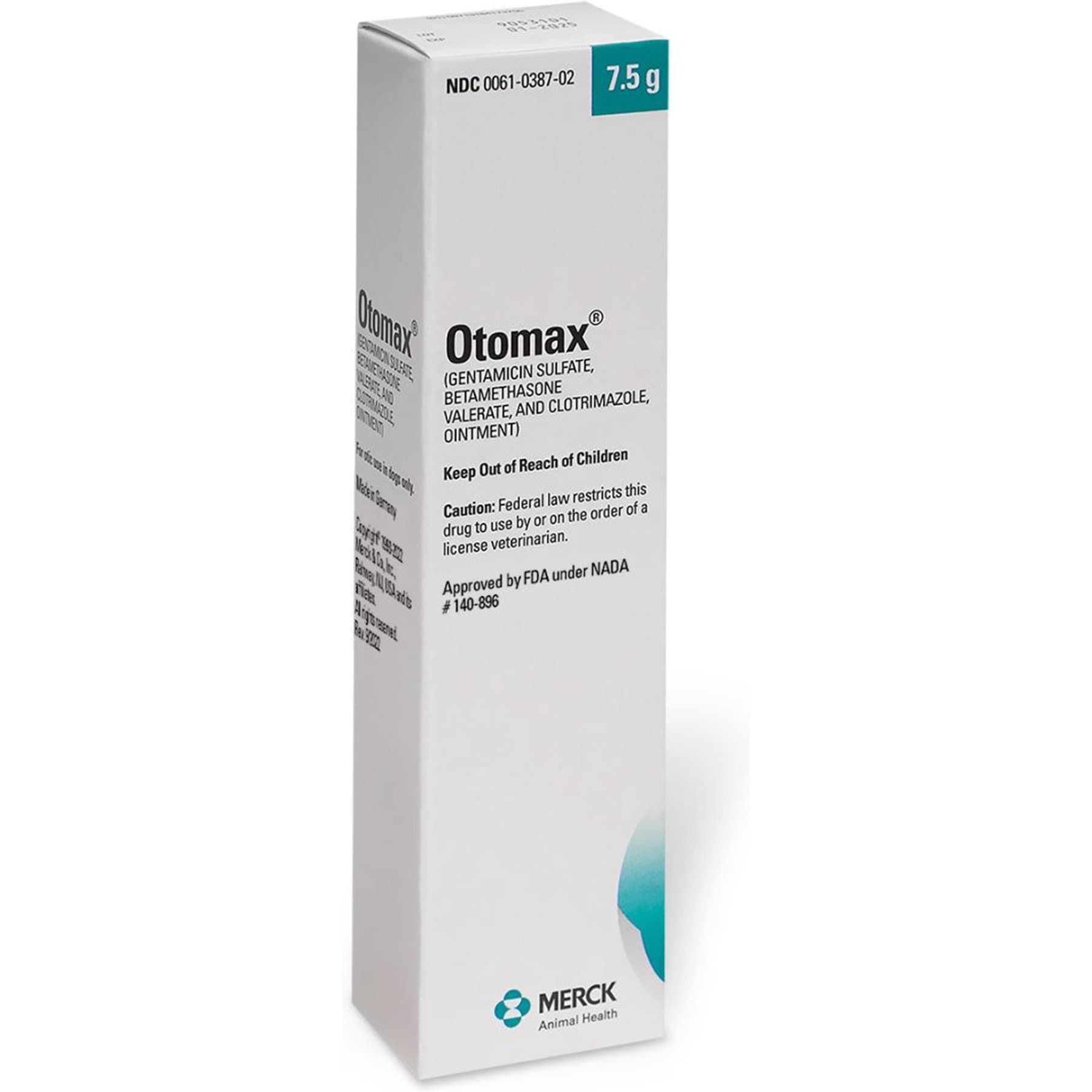
A dog-only prescription ear ointment that pairs clotrimazole with gentamicin and betamethasone for vet-diagnosed ear infections.
Webvet may earn a commission when you click through to Chewy, at no extra cost to you.
Clotrimazole vs miconazole for dogs is a common question. The Merck Veterinary Manual lists clotrimazole and miconazole together as effective multiple-dose antifungals for ear infections and does not rank one above the other. In practice, the choice comes down to the product: which body site it is made for and what else it contains.
Is clotrimazole 1% solution available over-the-counter for ear infections?
Not as a labeled ear treatment. Human clotrimazole 1% solution is over-the-counter for athlete's foot, jock itch, and ringworm in people, and its DailyMed label does not mention ears. A veterinary 1% solution from Vetoquinol is sold over the counter for skin, but DailyMed lists it as an unapproved drug. The FDA-approved ear products with clotrimazole are prescription only.
Is clotrimazole a strong antifungal?
It is broad, though not guaranteed. The Otomax label calls clotrimazole a broad-spectrum antifungal agent with activity against Malassezia pachydermatis and Trichophyton, one of the dermatophytes behind ringworm. Merck adds a fair caution: the clinical response to local antifungal agents is unpredictable, and resistance to many available drugs is common. That is why a vet confirms the organism first.
Clotrimazole dosage for dogs: creams, solutions, and ear products by label
There is no single clotrimazole dosage for dogs: each product label sets its own, and your vet sets the dose. Dog ear products are dosed by drop count and body weight after an ear exam, and the vet chooses the exact amount, frequency, and length of any extra-label cream course. Give exactly what your vet prescribed, and never change or stop it without checking with them, except for the stop-now signs below.
The two dog ear products differ in one practical way. Mometamax is labeled once daily and Otomax twice daily, both for 7 consecutive days, according to the DailyMed Mometamax label and the Otomax label. Like Otomax, Mometamax is prescription only, and Chewy Pharmacy fills it only with a veterinarian's prescription. WebVet's guide to Mometamax for dogs covers it in depth.
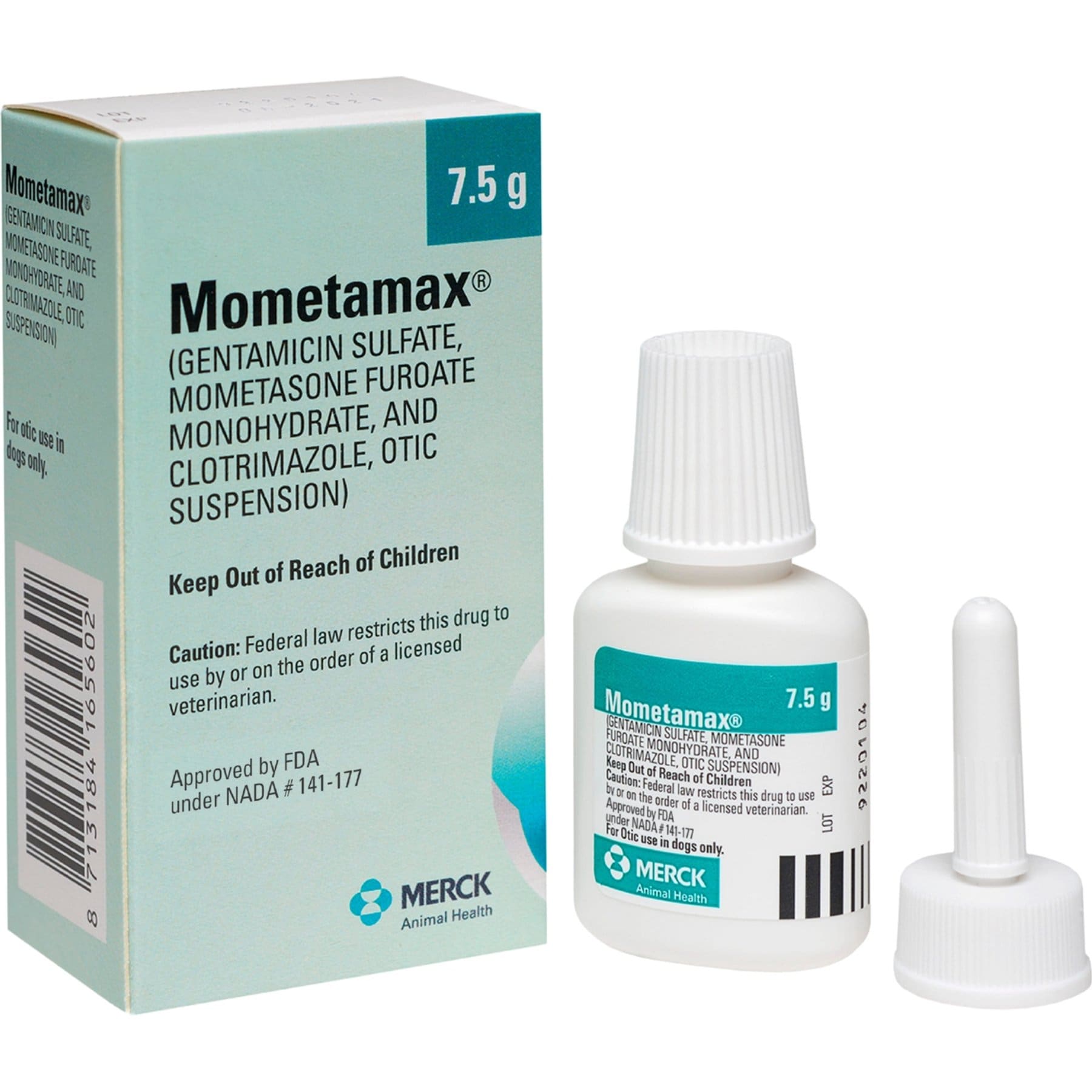
A once-daily prescription ear suspension for dogs that combines clotrimazole, gentamicin, and mometasone.
Webvet may earn a commission when you click through to Chewy, at no extra cost to you.
Each product's site, form, prescription status, and label directions are set out here, so you can see the label range your vet works within for your dog's weight.
| Product | Site | Form and strength | Prescription status | What the label directs |
|---|---|---|---|---|
| Otomax | Ear canal, dogs only | Ointment: gentamicin 3 mg, betamethasone 1 mg, clotrimazole 10 mg per gram | FDA-approved for dogs, prescription only | Ear exam to confirm an intact eardrum; clean and dry the ear; 4 drops twice daily under 30 lbs, 8 drops twice daily at 30 lbs or more (7.5 g and 15 g tube); 7 consecutive days |
| Mometamax | Ear canal, dogs only | Suspension: gentamicin 3 mg, mometasone 1 mg, clotrimazole 10 mg per gram | FDA-approved for dogs, prescription only | Ear exam to verify the eardrum is intact; clean and dry the canal; 4 drops once daily under 30 lbs, 8 drops once daily at 30 lbs or more (7.5 g, 15 g, 30 g bottles); 7 consecutive days |
| Vetoquinol clotrimazole 1% solution | Skin of dogs and cats | Solution, clotrimazole 1% | Over-the-counter animal product, unapproved drug | Clean and dry the area; thin layer morning and evening or as the vet directs; see the vet if not better in 2 weeks |
| Lotrimin AF and store-brand clotrimazole 1% cream | Human skin label | Cream, clotrimazole 1% | Human over-the-counter; extra-label on dogs | Human directions: thin layer twice daily; no dog dose on the label |
| Clotrimazole and betamethasone dipropionate cream | Human skin label | Cream: clotrimazole 10 mg, betamethasone dipropionate 0.64 mg per gram | Human prescription drug; extra-label on dogs | Labeled for people 17 years and older; strong steroid; no dog dose on the label |
For clotrimazole ear drops for dogs, the labeled choices are these prescription ointments and suspensions; the dose for the ears comes from the label drop counts above, which the vet prescribes by weight. The 7.5-g Otomax (Gentamicin / Betamethasone / Clotrimazole) Otic Ointment for Dogs is listed at $30.99 on Chewy when checked in November 2026. More detail is in WebVet's Otomax for dogs guide.
Clotrimazole cream for dogs, including on ears, paws, or a yeast infection on the skin, has no dog dose on any label. The human cream label directs a thin layer twice daily in people. A vet who uses it on a dog sets the amount and duration, and the ear canal itself is a job for the prescription ear products.
Other forms need a careful label check:
- Solution: clotrimazole solution for dogs is the Vetoquinol 1% skin solution; human 1% solution is labeled for people's skin only, and neither label covers clotrimazole solution for dogs' ears.
- Clotrimazole and betamethasone dipropionate cream: a human prescription drug whose label warns it can cause reversible suppression of the body's own steroid production, so it is used on dogs only on a vet's order.
- Spray: the Lotrimin AF antifungal spray on DailyMed contains miconazole nitrate 2%, not clotrimazole.
- Powder and dusting powder: the Lotrimin AF powders listed on DailyMed also contain miconazole nitrate, so a clotrimazole dusting powder is not what most of these packages hold.
- Shampoo: vet references point to chlorhexidine and miconazole shampoos for dogs rather than a clotrimazole shampoo.
- Other ear drops: the gentamicin, mometasone, and clotrimazole combination also appears under other names, such as Mometavet and Motazol, on DailyMed.
Course length depends on the product. The dog ear labels run 7 consecutive days, and the Mometamax bottle should be used within 28 days of first use. The human cream label runs 4 weeks in people for ringworm and athlete's foot, while the Vetoquinol skin solution sets a 2-week check.
What clotrimazole is used for in dogs: ear, skin, paw, and ringworm infections
Clotrimazole works against two groups of organisms in dogs: the yeast Malassezia, which normally lives on skin and in ears, and dermatophytes, the fungi that cause ringworm. Where it is used decides the product. Ear infections call for a prescription ear product, while a small skin patch may suit a cream.

Clotrimazole for dogs' ears means treating otitis externa, the medical name for an outer ear infection. Merck says yeast (Malassezia, Candida) is the most common cause of otitis externa in dogs, and the Otomax label names Malassezia pachydermatis in its indication. See WebVet's guides to dog ear infection and dog ear yeast infection.
The vet's ear exam matters because, as the Merck Veterinary Manual puts it, cytological evaluation is key for proper treatment selection. Ear infections also tend to come back when an underlying cause, such as allergy, is not addressed. Merck lists these signs of otitis externa:
- Head shaking
- Itching
- Pain
- A bad smell
- Redness, sores, or swelling
What type of infection does clotrimazole treat?
Clotrimazole treats fungal infections: yeast infections caused by Malassezia and, as part of a wider plan, ringworm caused by dermatophytes such as Microsporum and Trichophyton. In dog ear products it handles the yeast, while gentamicin covers bacteria and the steroid calms inflammation. It does not treat bacterial infections on its own.
Clotrimazole for dogs' skin and paws targets Malassezia dermatitis, a yeasty, greasy, itchy skin problem. The University of Illinois College of Veterinary Medicine lists clotrimazole among the topical azoles used for it and notes that, on paws, brown discoloration of the claw and between-toe hair is often seen. WebVet covers the wider picture in yeast infection in dogs and pododermatitis in dogs.
 Sponsored
Vet care that's always there
Unlimited video calls and messaging with licensed vets for less than a typical vet visit. One membership covers up to five pets.
Use code Pets60
Plans start at $12/month · covers up to 5 pets
- Licensed vets in most states
- Rx for 150+ conditions
- 4.7 on Trustpilot
Can I put clotrimazole on my dog for yeast?
Yes, for skin yeast, if your vet agrees. Illinois CVM notes that topical azoles, including clotrimazole, can be the only treatment for focal or generalized Malassezia dermatitis, with creams, sprays, or wipes typically applied every 12 to 24 hours. Yeast is often driven by allergy, so the vet confirms it with cytology and looks for the trigger.
Illinois CVM lists sprays alongside creams, and a miconazole and chlorhexidine spray is one option for larger areas. MiconaHex+Triz Spray is formulated for skin conditions responsive to miconazole and/or chlorhexidine. It does not replace a vet exam or any treatment your vet prescribes.
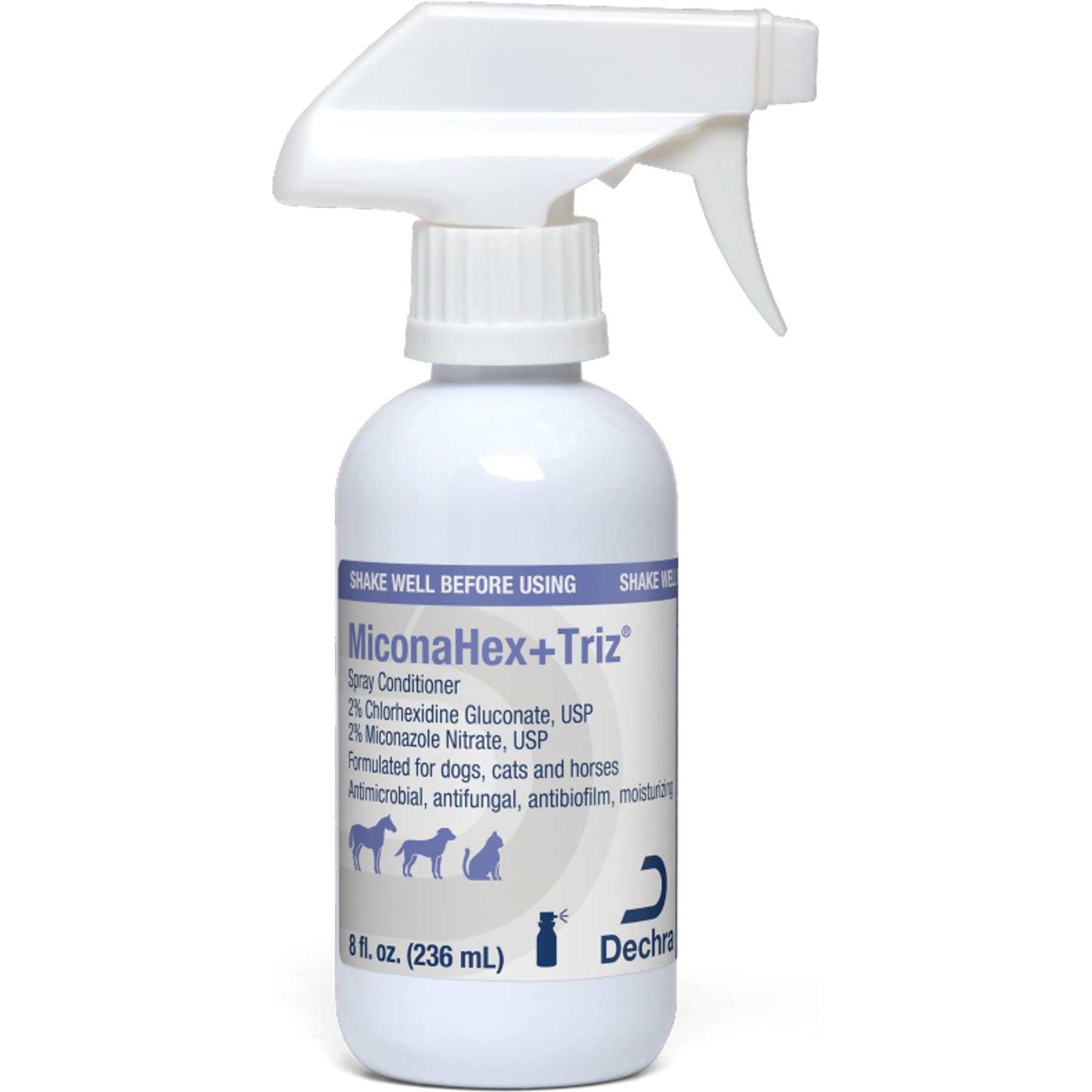
A miconazole and chlorhexidine skin spray vets may suggest for yeasty skin once the cause has been confirmed.
Webvet may earn a commission when you click through to Chewy, at no extra cost to you.
Can clotrimazole be used to treat ringworm?
Only as one part of the plan. Merck explains that for ringworm, topical therapy is needed in addition to oral antifungal treatment, using whole-body lime sulfur or enilconazole rinses or a 2% chlorhexidine and 2% miconazole shampoo. Focal products such as clotrimazole ear preparations help in hard-to-treat spots, not alone.
Ringworm is zoonotic, meaning people in the home can catch it, and Merck says dogs are treated until a negative fungal culture or PCR test confirms cure. Merck adds that spread of infection and reinfection make superficial fungal infections harder to control, so spot-treating one patch with a drugstore cream can leave the rest of the coat infected. WebVet's ringworm in dogs treatment guide walks through the full plan.
For yeasty skin, shampoos often run alongside a cream. Illinois CVM says chlorhexidine works best combined with azole agents for synergistic activity, with shampoos used about once or twice weekly. Douxo S3 PYO shampoo is a chlorhexidine antiseptic shampoo used in dogs with skin infections; it supports, but does not replace, the treatment your vet prescribes.
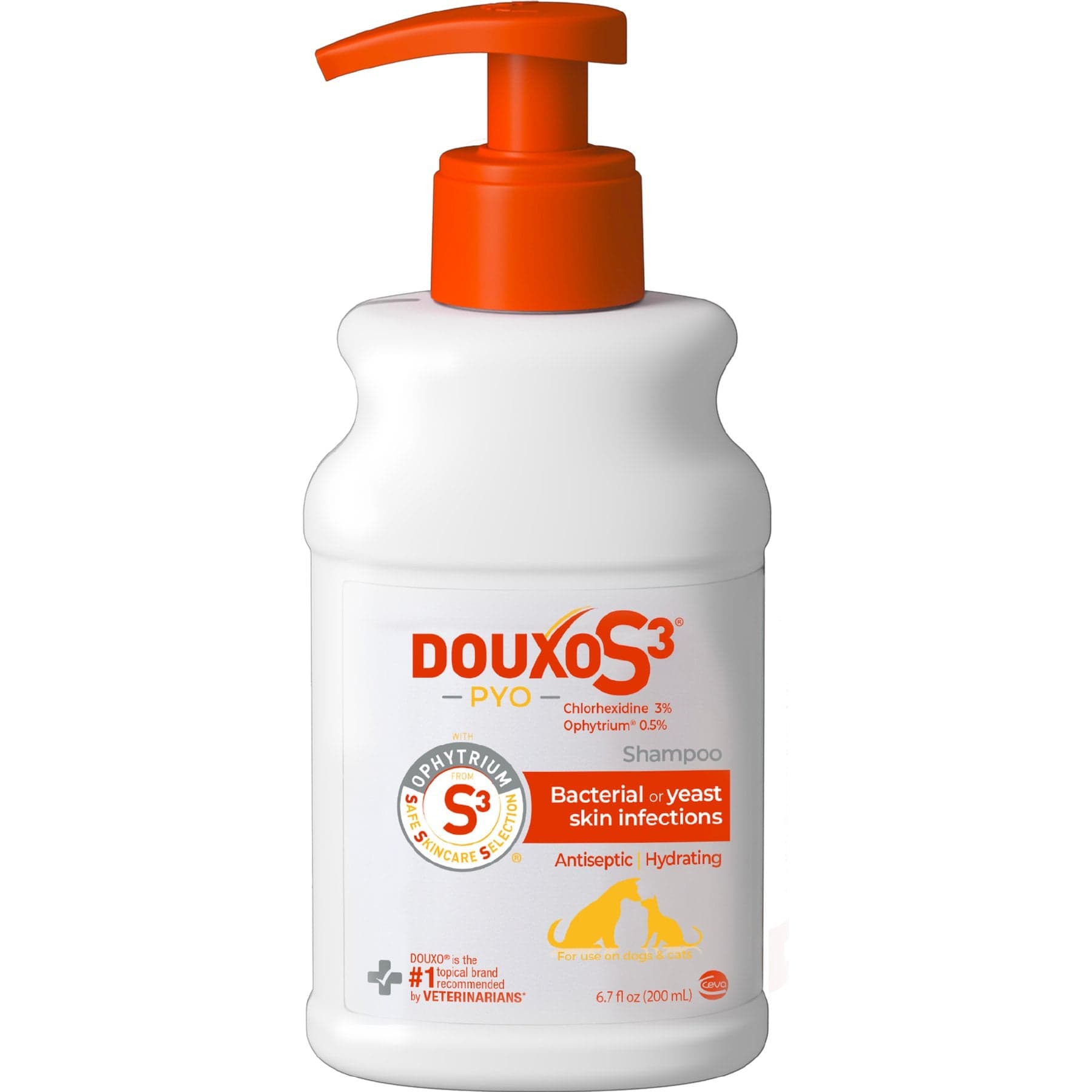
A chlorhexidine antiseptic shampoo used alongside vet-directed antifungal care for yeasty or infected skin.
Webvet may earn a commission when you click through to Chewy, at no extra cost to you.
Clotrimazole side effects in dogs
Side effects from clotrimazole itself are usually local and mild. The Mometamax label lists reactions reported occasionally in people using clotrimazole, and these are the same kinds of signs to watch for on a dog's skin.

- Redness (erythema)
- Stinging
- Blistering or peeling
- Swelling (edema)
- Itching or hives (urticaria)
- General skin irritation
The ear combination products carry their own effects from the antibiotic and steroid. Both labels note deafness or partial hearing loss in a small number of sensitive dogs, such as older dogs, and add that the hearing deficit is usually temporary. In Mometamax field studies, ataxia, proprioceptive deficits, and increased water consumption were seen in less than 1% of 164 dogs.
A second Mometamax field study, using twice-daily treatment, found inflammation of the ear flap and diarrhea in less than 1% of 141 dogs.
What happens if you apply too much clotrimazole?
Extra cream mostly means more for your dog to lick, which can upset the stomach. The cream and solution labels direct a thin layer. With the steroid ear products, the risk is overuse: the Otomax label warns that recommended doses beyond 7 days may delay wound healing, and prolonged use or overdosage may suppress the immune system.
When to stop clotrimazole and call the vet now
Both dog ear product labels give the same instruction: if hearing or vestibular dysfunction is noted during treatment, discontinue use immediately and flush the ear canal with a nonototoxic solution. That flushing is a vet task. Merck adds that the medication should be discontinued until the pet can be evaluated.
Other signs that mean stop and phone the vet:
- Skin irritation that appears or worsens where the product goes on; the Vetoquinol label says to stop and consult your veterinarian
- Product in the eye; that label says to flush immediately with water
- Vomiting or diarrhea after licking that is more than mild
- An ear that becomes more painful, swollen, or smelly during treatment
- Increased thirst, urination, or weight gain during a steroid ear product course, which the labels list as signs of steroid overdosage
Licking risk, interactions, and dogs that should not get clotrimazole
Is clotrimazole safe for dogs? On skin and paws, the risk from the drug itself is low. The Merck Veterinary Manual says topical antifungals such as clotrimazole have minimal oral absorption and present limited risk of systemic toxicosis. That makes a plain clotrimazole cream reasonably safe for dog skin when a vet has chosen it.

Licking is still the practical problem, because licked-off cream does not treat anything. A cone or soft collar keeps the tongue away while the medicine works; the CP Basics Inflatable Dog Collar, Medium is one option, and WebVet's dog cone guide compares styles.
For interactions, the Otomax and Mometamax labels say concomitant use of drugs known to induce ototoxicity should be avoided. No other interactions are listed for the topical products. Tell your vet about every medicine, shampoo, and supplement your dog gets, including other ear or skin products.
Is clotrimazole safe for dogs' ears? Only in an approved ear product, and only after the vet has examined the canal. The labels say not to use these products in dogs with known perforation of eardrums, because medicine reaching the middle ear can harm hearing and balance.
When should you not use clotrimazole?
Do not use it without a vet in an ear, on a spreading or ringworm-like patch, or in these dogs:
- Dogs with a known or suspected ruptured eardrum (ear products)
- Dogs that have reacted to clotrimazole or any other ingredient
- Pregnant dogs, for the steroid ear products; the labels report cleft palate and early birth with corticosteroids in pregnancy
- Cats, for Otomax and Mometamax, which are labeled for dogs only
What to avoid when using clotrimazole?
Avoid the eyes, ear canals without a vet's go-ahead, and licking. Also avoid:
- Thick layers; a thin layer is what the labels direct
- Combination creams you have not read; Merck advises checking the label for every active ingredient
- Bandaging over steroid creams, which the human label warns against unless directed
- Stopping early because the spot looks better
- Running past 7 days on a steroid ear product unless the vet extends it
How to apply clotrimazole to a dog's skin or ears, and what to do if it is not working
To apply clotrimazole to a dog, clean and dry the skin or ear first, use only the amount and schedule your vet or the product label sets, and keep your dog from licking it. If it is not working, your vet rechecks before anything changes.

For ears, the Otomax label says the external ear should be thoroughly cleaned and dried before treatment, using suitable nonirritating solutions. Ask your vet which cleaner to use and when; Virbac Epi-Otic Neutral-pH Advanced Dogs & Cats Ear Cleaner, 4-fl oz bottle is one option, listed at $13.59 on Chewy when checked in November 2026. A cleaner never replaces the ear exam.
- Hold the ear flap up to straighten the canal.
- Instill the number of drops your vet prescribed.
- Massage the base of the ear; the label says this spreads the medication.
- Shake suspension bottles well before each use, as the Mometamax label directs.
Between treatments, some vets add an antiseptic wipe for paws and skin folds, such as Douxo S3 PYO Antiseptic Antifungal Chlorhexidine Dog & Cat Wipes 30 count. For larger yeasty areas they may pick MiconaHex+Triz Spray for Dogs & Cats, 8-fl oz bottle or Douxo S3 PYO Antiseptic Antifungal Chlorhexidine Dog & Cat Shampoo, 6.7-oz bottle. These support, and do not replace, prescribed treatment.
How to use clotrimazole cream?
Clean and dry the skin, clip long hair if your vet advises (Merck says clipping fully exposes the lesions), then apply a thin layer only where your vet showed you, on the schedule they set. Rub it in, keep your dog from licking, wash your hands, and finish the whole course.
If it is not working, do not switch products on your own. The Vetoquinol label says to consult your veterinarian if results are not satisfactory within 2 weeks. Merck notes that ear infections return when the primary cause, such as allergy, is not addressed, and that rechecks use repeat cytology. Depending on what the recheck shows, your vet may:
- Recheck the ear or skin with repeat cytology, as Merck describes
- Move to an oral antifungal, such as those in WebVet's ketoconazole for dogs guide
- Switch to a different topical for mixed infections, such as gentamicin spray for dogs
Clotrimazole questions
Frequently Asked Questions
Is clotrimazole safe for dogs?
Plain clotrimazole is low risk on dog skin because very little is absorbed if swallowed, according to Merck. The real issues are licking, which removes the medicine and can upset the stomach, and putting the wrong product in an ear. A veterinarian should confirm the problem is fungal before you use it.
Can I use clotrimazole on my dog's paws?
Yes, if your vet confirms yeast on the paws. Yeast between the toes often shows as brown-stained fur and greasy, itchy skin, and it is frequently tied to allergies. Paws are easy to lick, so a cone helps the cream stay on long enough to work.
Can I put clotrimazole in my dog's ears?
Only in a prescription ear product after an ear exam. The dog ear labels require the vet to verify that the eardrum is intact, because medicine past a torn eardrum can affect hearing and balance. Human cream and solution labels do not cover ear canals.
Is clotrimazole and betamethasone cream safe for dogs?
It is a human prescription cream, and its betamethasone dipropionate is a potent steroid, so it is used on dogs only when a vet prescribes it. Repeated licking or long use raises the steroid exposure. The dog ear product Otomax uses a different form, betamethasone valerate.
Is clotrimazole or miconazole better for dogs?
Neither is clearly better. Merck lists both as effective antifungal options for ear infections, and Illinois CVM names both among topical azoles for yeasty skin. Miconazole is the azole in the chlorhexidine shampoos Merck names, while clotrimazole is the azole in the prescription ear products Otomax and Mometamax.
Can I use clotrimazole powder on my dog?
Check the box first: many antifungal powders sold under the Lotrimin AF name contain miconazole, not clotrimazole. Any powder a dog can reach is likely to be licked off, and licking defeats the treatment. Ask your vet whether a cream, wipe, or spray suits the area better.
Is there a clotrimazole shampoo for dogs?
Vet references do not point to a clotrimazole shampoo for dogs. For yeast and ringworm, they name chlorhexidine and miconazole shampoos, which pair an antiseptic with an antifungal. Your vet chooses the shampoo and how often to bathe, usually alongside other treatment.
Can I use a clotrimazole spray on my dog?
Read the label: the Lotrimin AF antifungal spray listed on DailyMed contains miconazole nitrate, not clotrimazole, and it is a flammable human product. Veterinary skin sprays exist for dogs, and a veterinarian can say which one fits the problem.
Where can I buy clotrimazole for dogs?
Clotrimazole 1% cream is sold in any drugstore as a human over-the-counter product, and a veterinary 1% skin solution is sold over the counter too. Dog ear products containing clotrimazole, such as Otomax and Mometamax, need a prescription from your vet and can be filled by a pharmacy.
Veterinarian · BVMS MRCVS
Dr. Pippa Elliott, BVMS, MRCVS, is a veterinarian with nearly 30 years of experience in companion animal practice. Dr. Elliott earned her Bachelor of Veterinary Medicine and Surgery from the University of Glasgow. She was also designated a Member of the Royal College of Veterinary Surgeons. Married with 2 grown-up kids, Dr. Elliott has a naughty Puggle named Poggle, 3 cats and a bearded dragon.


