Otomax for Dogs: Uses, Dosage, and Side Effects
Otomax is a prescription ear ointment that vets use for bacterial and yeast ear infections in dogs. This guide covers label dosing by dog size, how to apply it, side effects, ruptured eardrum cautions, and what to do if the ear is not improving.

BVMS MRCVS
Medically reviewed by Dr. Pippa Elliott, BVMS MRCVS · Last reviewed

Drug facts
Otomax (gentamicin sulfate, betamethasone valerate, and clotrimazole ointment)· Otomax
Otomax is an FDA-approved prescription ear ointment for dogs combining gentamicin, betamethasone, and clotrimazole. It treats acute and chronic otitis externa linked to Malassezia yeast and gentamicin-susceptible bacteria, given twice daily for 7 days after a vet confirms the eardrum is intact.
Treats

 Sponsored
Is Otomax (gentamicin sulfate, betamethasone valerate, and clotrimazole ointment) right for your dog?
A licensed vet at Dutch can assess your dog over video and prescribe treatment when it's appropriate, delivered to your door.
Use code Pets60
Plans start at $12/month · covers up to 5 pets
- Licensed vets in most states
- Rx for 150+ conditions
- 4.7 on Trustpilot
Otomax for dogs: what it treats, prescription status, and whether today is a vet day
Otomax for dogs is a prescription ear ointment that combines an antibiotic (gentamicin sulfate), a steroid (betamethasone valerate), and an antifungal (clotrimazole). The FDA-approved Otomax label on DailyMed indicates it for outer ear infections in dogs linked to yeast, bacteria, or both.
Federal law restricts Otomax to use by or on the order of a licensed veterinarian, so a red, smelly, itchy, or painful ear makes today a vet day. The label says the vet confirms the eardrum is intact before the ointment goes in, then sets the dose by dog size.
- 1On what Otomax treats: outer ear infections (otitis externa) in dogs linked to Malassezia yeast, bacteria susceptible to gentamicin, or both.
- 2On label dosing by dog size: the label gives one drop count for dogs under 30 lbs and a larger one for dogs 30 lbs or more, twice daily for 7 days.
- 3Before the first dose: a veterinarian checks that the eardrum is intact, because the label rules out dogs with a known eardrum perforation.
- 4During the course: any hearing loss, head tilt, or loss of balance means stopping the ointment and calling the vet that day.
Otomax is often called ear drops because it goes into the ear canal one drop at a time, but it is not a suspension. The label calls it an otic ointment, for use in dogs' ears only, supplied in tubes and plastic bottles.

One of the sizes the label lists is the Otomax 15-g Otic Ointment for Dogs. It is a prescription product: Chewy Pharmacy fills it only with a veterinarian's prescription, after the vet has examined the ear.
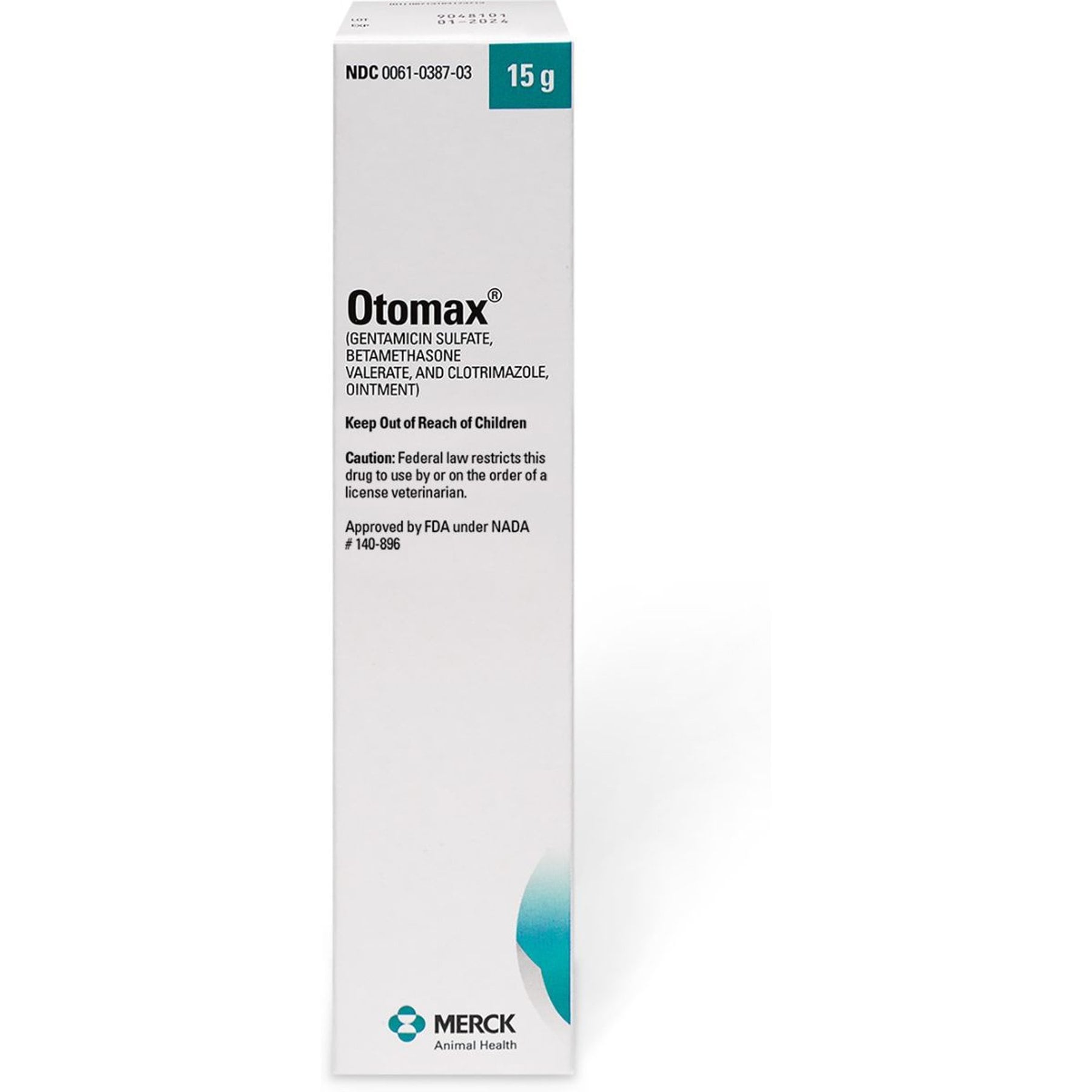
The 15-g size of the Otomax ear ointment, filled only against a veterinarian's prescription after an ear exam.
Webvet may earn a commission when you click through to Chewy, at no extra cost to you.
Can I buy Otomax for my dog's ears without a vet prescription?
No. The Otomax label states that federal law restricts the drug to use by or on the order of a licensed veterinarian. The FDA Freedom of Information summary for Otomax explains why: professional expertise is needed to diagnose the infection and its organisms, and to confirm the tympanic membrane is intact before the first dose.
Can I treat my dog's ear infection without going to the vet?
Not safely. The Merck Veterinary Manual says diagnosis rests on history, an otoscope exam, and cytology, that treatment depends on the specific diagnosis, and that the underlying cause must be addressed to prevent recurrence. Products sold without a prescription cannot answer those questions; the WebVet guide to dog ear drops explains what over-the-counter options can and cannot do.
Otomax dosage for dogs by weight
Otomax dosage for dogs is set on the label by dog size and by the container, given twice daily. Your veterinarian prescribes the exact number of drops, which ears to treat, and how long to continue, after checking the eardrum. The eardrum is often hidden by discharge, so the vet may need to clean or flush the canal first, and Merck notes that a painful ear may need sedation before it can be seen.
Here is the label-range Otomax dosing by dog size that your vet works within after the ear exam; it is not an instruction to start treatment at home.
| Dog size | What the label states | Form | Course and recheck |
|---|---|---|---|
| Under 30 lbs | 4 drops twice daily into the ear canal | 7.5 g or 15 g tube; 15 g or 30 g bottle | 7 consecutive days; recheck as your vet schedules |
| Under 30 lbs | 2 drops twice daily into the ear canal | 215 g bottle | 7 consecutive days; recheck as your vet schedules |
| 30 lbs or more | 8 drops twice daily into the ear canal | 7.5 g or 15 g tube; 15 g or 30 g bottle | 7 consecutive days; recheck as your vet schedules |
| 30 lbs or more | 4 drops twice daily into the ear canal | 215 g bottle | 7 consecutive days; recheck as your vet schedules |
The 1993 FDA approval summary words the weight cutoff differently: 4 drops for dogs weighing 30 pounds or less and 8 drops for dogs over 30 pounds, where the current label uses under 30 lbs and 30 lbs or more. For a dog right at 30 lbs, the vet decides.
The label also directs that the outer ear be thoroughly cleaned and dried before treatment, with debris and crusted discharge removed using a suitable nonirritating solution and excess hair clipped.
Merck notes that a neutral-pH cleaner lessens pain in inflamed ears. Virbac Epi-Otic Neutral-pH Advanced Dogs & Cats Ear Cleaner, 4-fl oz bottle, with 0.2% salicylic acid, is one a vet may name for that step. Use it only after your vet confirms the eardrum is intact; it does not replace the prescribed ointment.
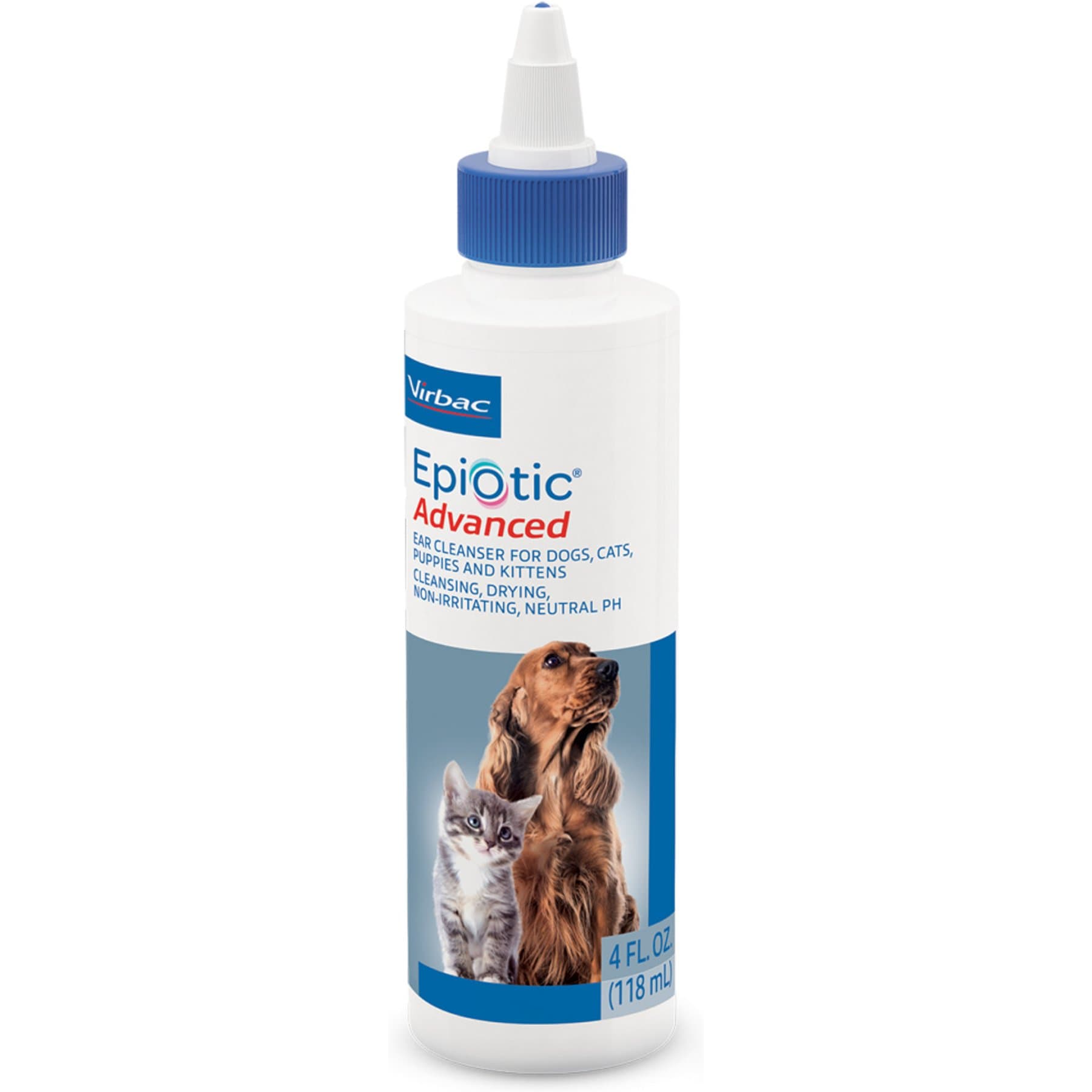
A neutral-pH ear cleaner a vet may name for cleaning before each dose once the eardrum is confirmed intact.
Webvet may earn a commission when you click through to Chewy, at no extra cost to you.
Give exactly the number of drops your vet prescribed, in the ears they named, for the whole course. Do not change the dose or stop early without asking the vet. Merck points out that many owners stop when the ear looks better but before the infection has actually resolved.
How long should a dog use Otomax?
The label course is 7 consecutive days, and the label warns that giving recommended doses beyond 7 days may delay wound healing. Merck advises an exam and ear cytology weekly to every other week until no infection remains, about 2 to 4 weeks in most acute cases, so the vet decides at each recheck whether the ear needs more treatment.

Otomax comes in 7.5 g and 15 g tubes and in 15 g, 30 g, and 215 g bottles, and the label says to shake the bottles well before use. The Otomax 15-g Otic Ointment for Dogs was listed at $49.99 on Chewy when checked in November 2026, and Chewy Pharmacy fills it only with a veterinarian's prescription.
What Otomax is used for: bacterial and yeast ear infections in dogs
What is Otomax for dogs used for? The label indicates it for acute and chronic otitis externa in dogs associated with the yeast Malassezia pachydermatis, bacteria susceptible to gentamicin, or both. Merck defines otitis externa as inflammation of the outer ear canal, running from the base of the ear flap to the tympanic membrane.
Otomax ingredients, per gram of ointment, in a mineral oil-based system:
- Gentamicin sulfate, equivalent to 3 mg gentamicin base: an aminoglycoside antibiotic that the label lists as active against Staphylococcus aureus, other Staphylococcus species, Pseudomonas aeruginosa, Proteus species, and Escherichia coli from dogs' ears.
- Betamethasone valerate, equivalent to 1 mg betamethasone: a corticosteroid with anti-inflammatory and anti-itch activity in the ear canal.
- Clotrimazole, 10 mg: a broad-spectrum antifungal that works against yeasts, including Malassezia pachydermatis.
The FDA approval data back the combination. In the clinical field study, 58 dogs with both bacteria and Malassezia in the ear met the entry criteria, and Otomax controlled the signs of otitis externa as well as the comparison product, Panolog Ointment. The summary also records only moderate efficacy against some gram-positive cocci, including some Staphylococcus species.
That is one reason the label asks vets to identify the organisms first, by a microscope roll smear or a culture, and to check antibiotic susceptibility. Merck adds that infections with gram-negative rod-shaped bacteria, such as Pseudomonas, may need an aminoglycoside or a fluoroquinolone, which shapes the vet's dog ear infection treatment plan.
Otomax treats the infection, not the reason it started. Merck lists primary causes and predisposing factors that change the ear and let bacteria or yeast take over:
- allergies, including food reactions and atopic dermatitis
- ear mites and other parasites
- hormone disease such as hypothyroidism
- foreign bodies lodged in the canal
- excess moisture, narrow canals, or heavy, hairy ears
Ear discharge is one of the signs Merck lists, and Merck recommends checking the discharge under the microscope for ear mites. The WebVet guide to dog ear infection covers what different discharge can mean, and the dog ear yeast infection guide covers Malassezia flare-ups.
For dogs with repeat infections, Merck notes that preventive otic astringents may reduce bacterial or fungal flare-ups in moist ear canals. MalAcetic Otic Cleanser for Dogs & Cats, 4-fl oz bottle, an acetic and boric acid cleanser, is one a vet may name for maintenance once the infection clears. It is a formulated cleanser used on a healed ear, unlike the home vinegar mixes Merck warns against. It does not replace Otomax or the exam.
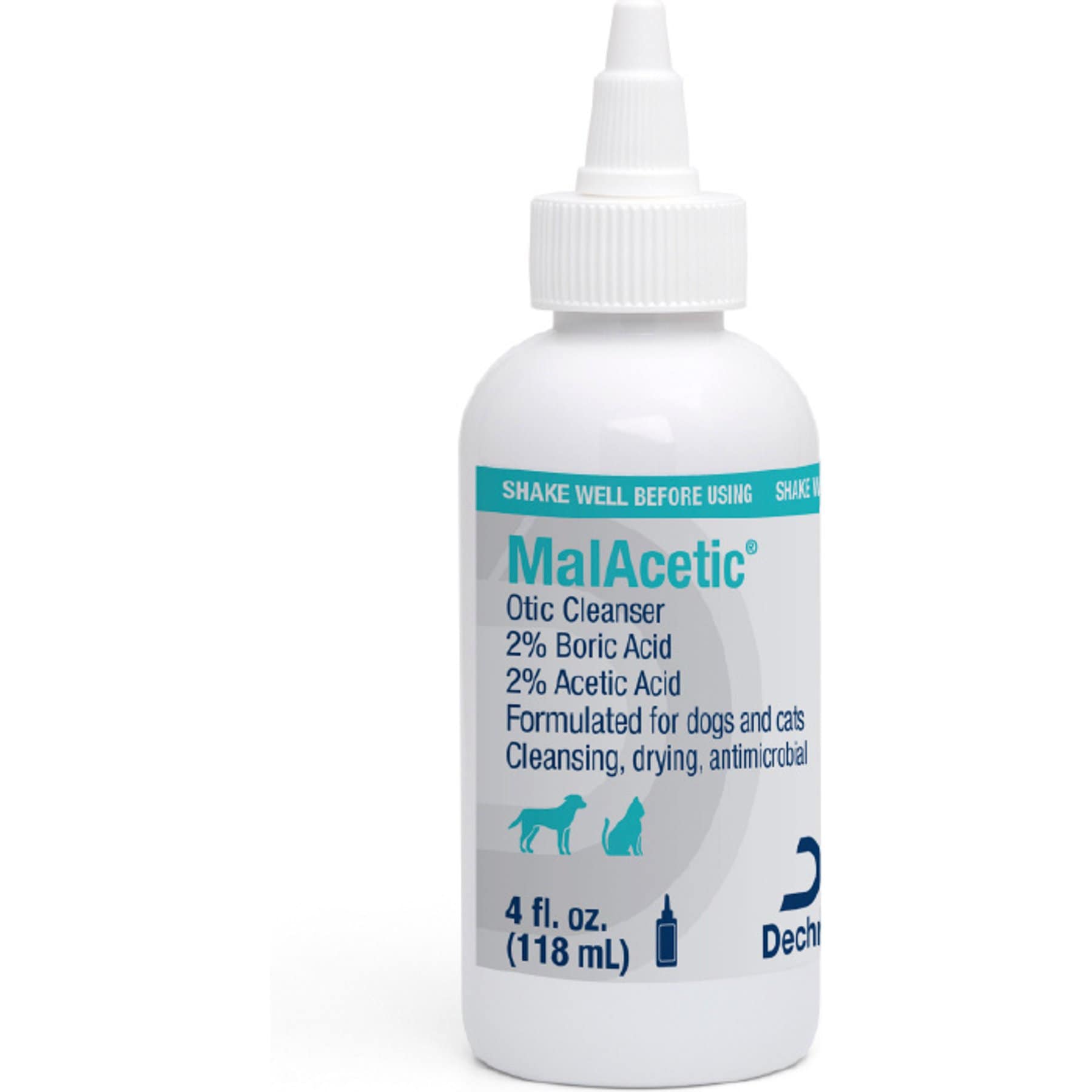
An acetic and boric acid ear cleanser a vet may name for maintenance once an ear infection has cleared.
Webvet may earn a commission when you click through to Chewy, at no extra cost to you.
Otomax side effects in dogs
Otomax side effects in dogs are mostly local to the ear, and the label also lists effects tied to each ingredient. The FDA approval summary describes Otomax as well tolerated: in its target animal safety study, dogs given 1, 3, or 5 times the label drop count twice daily for 21 days tolerated it well.
What are the side effects of Otomax?
The side effects reported in the FDA field study were local: discomfort during cleaning or medication, redness of the ear flap and skin, bumps on the ear flap, and scratching and snorting, in 8 Otomax cases. The label separately warns of usually temporary hearing loss in a small number of sensitive dogs.
The label's side effect section breaks the risks down by ingredient:
- Gentamicin: poorly absorbed through skin, but the label says aminoglycosides can cause reversible or irreversible balance, hearing, and kidney toxicity, with extra risk from prolonged use on raw skin or in dogs with kidney problems.
- Betamethasone: systemic steroid use in dogs has been linked to raised liver enzymes, weight loss, poor appetite, more thirst and urination, and vomiting or diarrhea; Cushing's syndrome has been reported with prolonged or repeated steroid therapy.
- Clotrimazole: in people, occasional redness, stinging, blistering, peeling, swelling, itching, and hives.

The Merck Veterinary Manual's pet owner guide to outer ear disorders adds that some ear ointments irritate the inner, hairless side of the ear flap 1 to 7 days after starting. It notes that switching to another ointment rarely helps, because many share similar ingredients.
Merck notes that head shaking and ear scratching are the usual trigger for an aural hematoma, a blood-filled swelling of the ear flap. A swollen, puffy ear flap needs a vet visit.
Some dogs rub or paw at a medicated ear during the course, and a vet may suggest a recovery collar. The Supet Inflatable Dog Recovery Cone Collar is an inflatable style sold as a barrier against licking and biting; it will not stop head shaking, so ask your vet whether a collar, and which style, suits your dog. It does not replace the prescribed ointment or the vet exam.
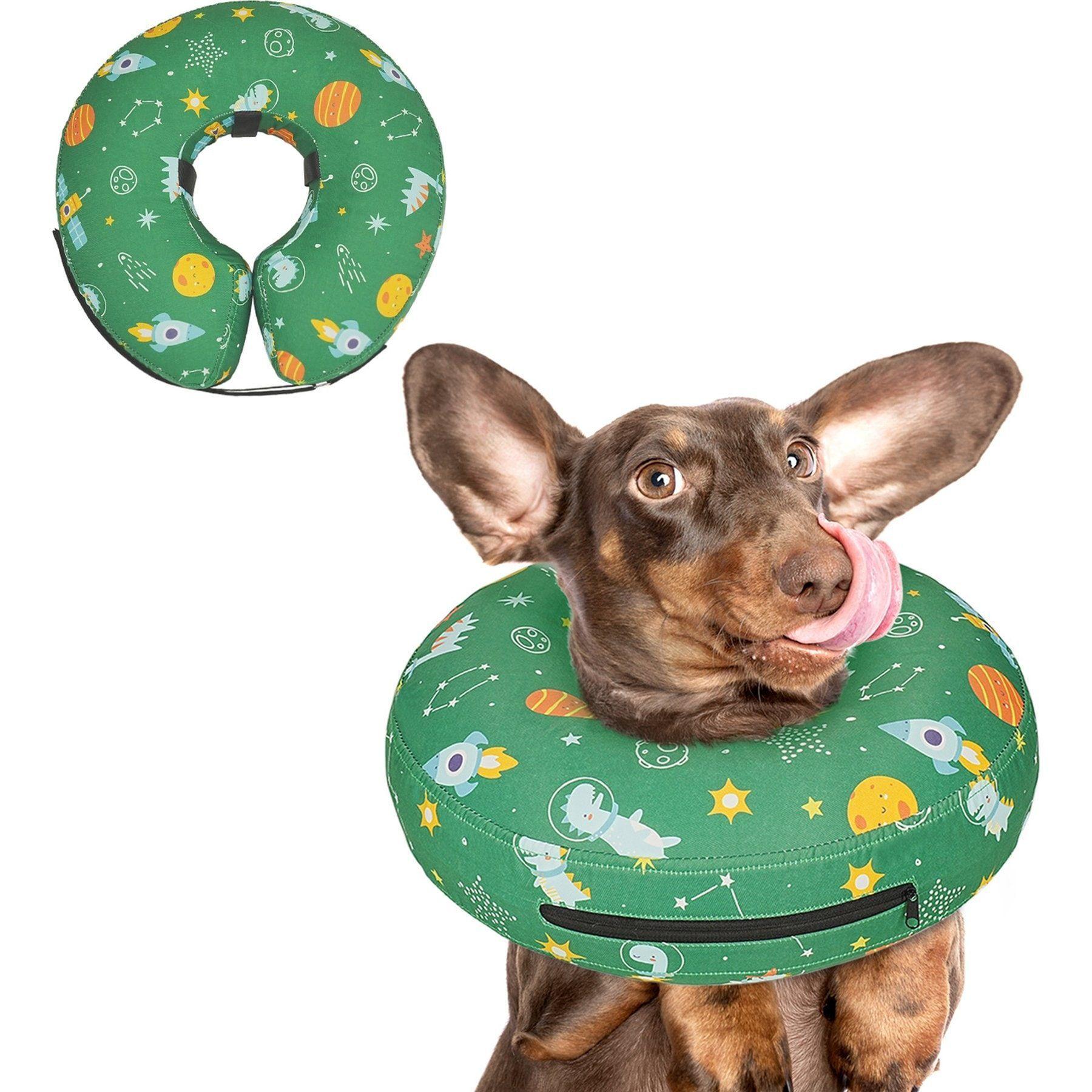
An inflatable recovery collar some vets suggest for a dog that rubs or paws at a treated ear; it does not stop head shaking and does not replace the prescribed ointment.
Webvet may earn a commission when you click through to Chewy, at no extra cost to you.
The label reports a wide safety margin at the recommended dose in dogs. In the FDA safety study, the only treatment-related findings were less ear swelling and vomiting in the 5X group after 5 to 6 days, both typical steroid responses.
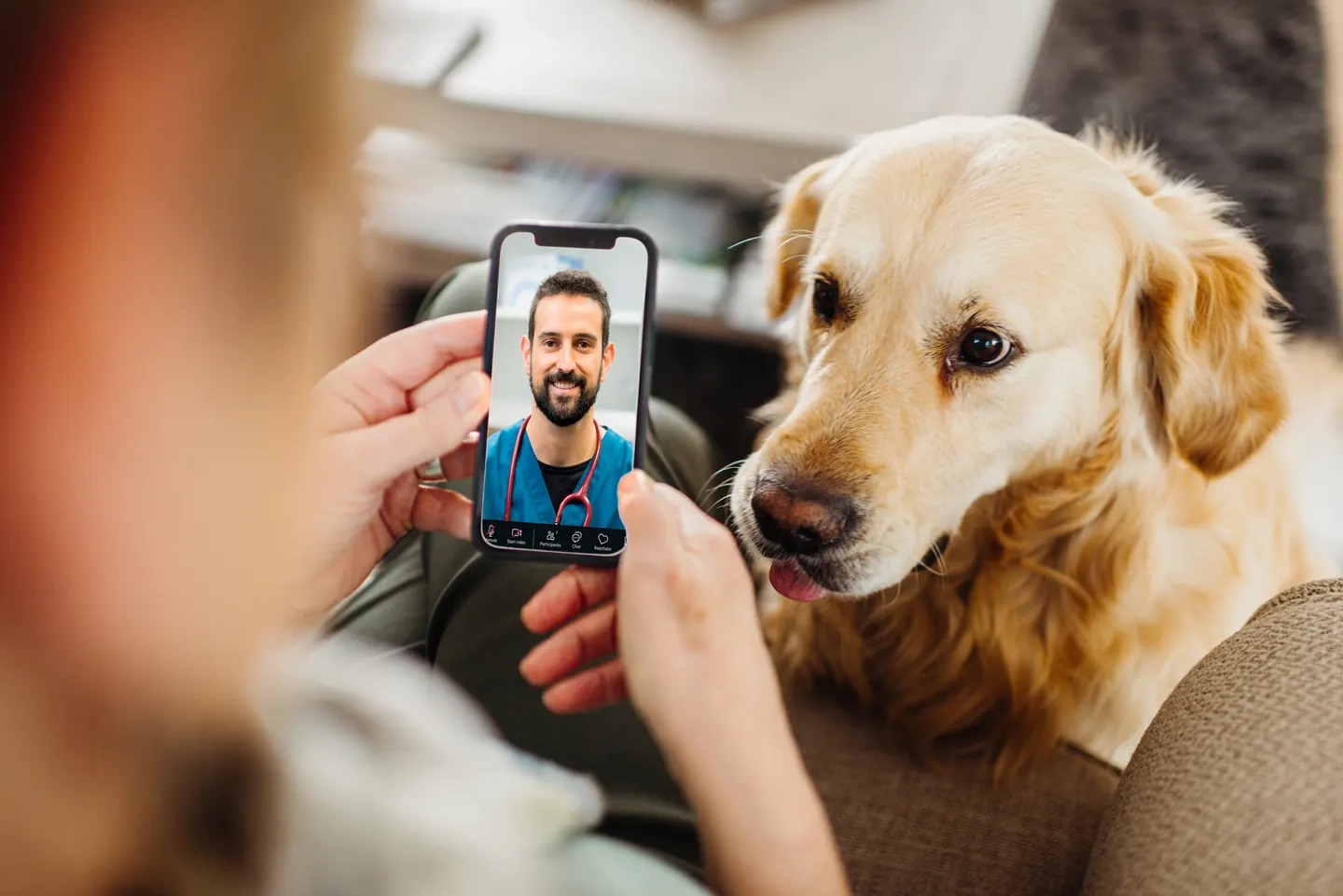 Sponsored
Vet care that's always there
Unlimited video calls and messaging with licensed vets for less than a typical vet visit. One membership covers up to five pets.
Use code Pets60
Plans start at $12/month · covers up to 5 pets
- Licensed vets in most states
- Rx for 150+ conditions
- 4.7 on Trustpilot
When to stop Otomax and call the vet now
The label warns that Otomax has been associated with deafness or partial hearing loss in a small number of sensitive dogs, older dogs being the example it gives, and that the hearing deficit is usually temporary. Merck adds that when the eardrum cannot be seen, owners should watch for decreased hearing, head tilt, and vertigo.
Stop the ointment and call your vet now for any of these:
- your dog no longer responds to sounds it used to hear, or seems deaf in the treated ear
- head tilt, vertigo, stumbling, or loss of balance after starting the drops
- new redness, swelling, bumps, or sores on the ear flap, which can mean a reaction to an ingredient (the label says to stop if hypersensitivity develops)
- an ear that is getting worse, not better, which can mean organisms the ointment does not cover
- your dog ingested Otomax, for example by chewing the tube

On ingestion, the label is direct: avoid it, because systemic reactions have followed oral ingestion of some topical steroid products. The label lists the usual signs of steroid overdosage as sodium retention, potassium loss, fluid retention, weight gain, increased thirst, and increased urination.
If your dog swallowed ointment, call your vet with the tube or bottle in hand so they can see the product and roughly how much is missing.
Ruptured eardrums, interactions, and dogs that should not get Otomax
The eardrum matters because it separates the outer ear canal from the middle and inner ear. The label says to examine the canal before instilling any medication to be certain the tympanic membrane is not ruptured, so infection is not carried into the middle ear and the cochlea and balance organs are not damaged by prolonged contact.
Merck explains the risk: aminoglycosides like gentamicin can harm hearing, and that risk is greater if the tympanic membrane is not intact, which is why the vet confirms the eardrum before the first dose.
Otomax is not a fit for every dog. Based on the label, a vet will avoid it or weigh it carefully for:
- dogs with a known perforated eardrum
- dogs with a past reaction to gentamicin, betamethasone, clotrimazole, or the ointment base
- dogs already on other drugs known to cause ototoxicity, which the label says to avoid using together
- pregnant dogs, because steroids given in pregnancy have caused cleft palate and other defects in puppies and can trigger early labor in the last trimester
- dogs with kidney disease, given gentamicin's kidney risk with prolonged use on raw skin
- dogs already taking steroids or recently taken off them, which the vet needs to know about
Is Otomax safe for dogs when used as labeled? The FDA approval summary concluded it is safe and effective under its labeled conditions of use, and its safety study found it well tolerated even at 5 times the dose. Tell your vet about every other medication and supplement your dog takes.
The label covers the ear canal only. Putting Otomax on paws, in eyes, or on other skin is extralabel use, a decision only a veterinarian can make, and the label gives no directions for those sites.
What does Otomax do for cats?
Nothing on its label: Otomax is labeled for otic use in dogs only. Ear infections are common in cats too, per Merck, but using Otomax in a cat would be extralabel use, which FDA allows only on a veterinarian's order within a valid veterinarian-client-patient relationship.
How to apply Otomax, what to do if it is not working, and generic options
Otomax for dogs directions come from the label and the vet who examined the ear. Merck recommends a first ear cleaning at the clinic with the owner watching, a good time to ask how to use Otomax for dogs' ears. The WebVet guide on how to clean dog ears covers cleaning technique and whether hydrogen peroxide belongs in an infected ear.
How to apply Otomax ointment for dogs, following the label instructions:
- Clean and dry the outer ear the way your vet showed you, using the cleaner they named.
- If your dog's Otomax came in a bottle, shake it well; the label says this for the 15 g, 30 g, and 215 g bottles.
- Lift the ear flap and place the number of drops your vet prescribed into the ear canal.
- Gently massage the base of the ear so the ointment spreads through the canal, as the label directs.
- Repeat twice daily for the full course your vet set, even if the ear looks better.

For wiping ointment residue off the outer ear flap, not the canal, Petkin Fingertip Ear Wipes Dog & Cat Grooming Wipes, 100 count were listed at $16.50 on Chewy when checked in November 2026. A cleaner such as Epi-Otic was listed at $13.59. Neither replaces the prescribed ointment or the vet exam.
What to do if the ear is not improving: book the recheck your vet asks for, and call sooner if any of these apply:
- the ear still smells, itches, or produces discharge at the end of the course
- your dog still shakes its head or resents having the ear touched
- signs come back soon after the last dose
- your dog has had several ear infections in a year
If the ear still does not resolve after those rechecks, vets consider a middle ear infection; Merck notes resistant methicillin-resistant Staphylococcus pseudintermedius and Pseudomonas aeruginosa make some ears hard to clear.
Where to buy Otomax for dogs: only through your vet or a pharmacy filling your vet's prescription. It is not sold over the counter, and a seller offering Otomax ointment for dogs without a vet prescription ignores the label's federal restriction.
Like any medicine, Otomax can expire, so check the printed date before starting a course with an old tube.
What are some alternatives to Otomax for dogs?
Several prescription ear medications can stand in for Otomax when a vet chooses them. Merck notes that most prescription ear products combine an antimicrobial, an antifungal, and a steroid, and that vets choose among them using cytology results. Alternatives to Otomax for dogs include Mometamax for dogs, Posatex for dogs, Easotic for dogs, and Claro for dogs, plus a generic Otomax.
On cost, 15-g Mometamax Otic Suspension for Dogs was listed at $53.99 and Posatex 15-g Otic Suspension for Dogs at $68.99 on Chewy when checked in November 2026. Both are prescription ear medications, and Chewy Pharmacy fills them only with a veterinarian's prescription.
The generic Otomax option is Tri-Otic Ointment, which FDA approved through an abbreviated application naming Otomax as the pioneer product. Its FDA summary lists the same three ingredients at the same strengths per gram, and it is also dispensed by prescription only.
Will a dog's ear infection heal itself?
Rarely, and waiting carries risk. Merck says the primary cause must be identified and treated, and that ongoing inflammation brings changes such as a narrowed canal, a ruptured eardrum, or middle ear disease, which can become severe. Merck also warns against irritating home remedies such as vinegar dilutions; the WebVet guide to dog ear infection home remedies covers what to avoid.
Otomax questions
Frequently Asked Questions
Does Otomax expire?
Yes. Use it only before the expiration date printed on the tube or bottle. FDA warns that expired medicines can be less effective because of changes in chemical composition or strength, and that sub-potent antibiotics can fail to treat infections and promote antibiotic resistance.
For storage, the label says to keep Otomax between 2 and 25 degrees C (36 and 77 degrees F) and to shake the bottles well before use. Do not reuse a leftover tube for a new ear problem without a fresh exam, since the eardrum check comes before every course.
Is there a generic version of Otomax?
Yes. Tri-Otic Ointment is an FDA-approved generic with the same gentamicin, betamethasone, and clotrimazole strengths as Otomax. Like the brand, it needs a prescription from a veterinarian, and your vet can tell you whether the generic suits your dog's ear.
Can Otomax be used on a dog's paws?
Otomax is not labeled for paws. The label limits it to otic use in dogs, so applying it to paws is extra-label use that only a veterinarian can direct. The label also notes that steroids absorb more through inflamed skin and says to avoid ingestion, and dogs lick their paws, so ask your vet what suits a paw problem.
Can Otomax cause hearing loss in dogs?
Yes, in a small number of sensitive dogs, and the label names older dogs as an example. The hearing loss is usually temporary. The risk rises if medicine reaches the inner ear through a damaged eardrum, which is why the vet checks the eardrum before the first dose and why any hearing change means stopping and calling the vet.
Can you put Otomax in a dog's eyes?
No. Otomax is an ear ointment, not an ophthalmic product, and its label gives no directions for use in the eyes. Using it there would be a route the label does not list, which FDA treats as extralabel use that only a veterinarian can direct. If Otomax gets into your dog's eyes by accident, call your vet for advice.
Veterinarian · BVMS MRCVS
Dr. Pippa Elliott, BVMS, MRCVS, is a veterinarian with nearly 30 years of experience in companion animal practice. Dr. Elliott earned her Bachelor of Veterinary Medicine and Surgery from the University of Glasgow. She was also designated a Member of the Royal College of Veterinary Surgeons. Married with 2 grown-up kids, Dr. Elliott has a naughty Puggle named Poggle, 3 cats and a bearded dragon.


