Easotic for Dogs: How the Ear Pump Works, Dosage, and Side Effects
Easotic is a prescription ear suspension that vets use for yeast and bacterial ear infections in dogs. This guide covers the label dose and course, how to use the pump, side effects, eardrum cautions, and what to do if the ear is not improving.

BVMS MRCVS
Medically reviewed by Dr. Pippa Elliott, BVMS MRCVS · Last reviewed

Drug facts
Easotic (hydrocortisone aceponate, miconazole nitrate, gentamicin sulfate) Otic Suspension· Easotic
Easotic is an FDA-approved prescription ear suspension for dogs from Virbac that treats otitis externa linked to Malassezia pachydermatis yeast and Staphylococcus pseudintermedius bacteria. A metered pump delivers 1 mL per ear once daily for 5 days after a vet confirms the eardrum is intact.
Treats

 Sponsored
Is Easotic (hydrocortisone aceponate, miconazole nitrate, gentamicin sulfate) Otic Suspension right for your dog?
A licensed vet at Dutch can assess your dog over video and prescribe treatment when it's appropriate, delivered to your door.
Use code Pets60
Plans start at $12/month · covers up to 5 pets
- Licensed vets in most states
- Rx for 150+ conditions
- 4.7 on Trustpilot
Easotic for dogs: what it treats, prescription status, and whether today is a vet day
Easotic for dogs is a prescription otic suspension from Virbac that treats outer ear infections (otitis externa) linked to yeast and bacteria. It combines a steroid, an antifungal, and an antibiotic in a metered pump bottle, and a vet needs to examine the ear and check the eardrum before the first dose.
The Easotic label on DailyMed states that federal law restricts the drug to use by or on the order of a licensed veterinarian. If your dog is shaking its head, scratching an ear, or has a smelly discharge, today is a vet day: the vet sets the course once the ear canal has been examined.
- 1Here is what Easotic treats: outer ear infections in dogs linked to Malassezia yeast and Staphylococcus pseudintermedius bacteria.
- 2The label dose per ear is 1 mL, a single pump, once a day for 5 days.
- 3The vet confirms the eardrum is intact first, because the label rules out use with a known perforation.
- 4Stop the drops and call the vet if hearing loss or balance problems appear during the course.
Owners often call it Easotic ear drops, but the product is an ear suspension in a semi-liquid petroleum jelly base. It is FDA-approved for dogs only, under NADA 141-330. Other dog ear drops work differently, so one bottle is not a stand-in for another.

The FDA Freedom of Information summary explains why there are no home-use directions: professional expertise is required to properly diagnose otitis externa and prescribe the right treatment. The Merck Veterinary Manual notes that a vet typically looks into the canal with an otoscope and may take a swab to check for bacteria, yeast, or parasites.
Virbac supplies Easotic as a 10 mL pump canister that holds ten 1 mL doses. Chewy Pharmacy fills it only with a veterinarian's prescription, so the ear exam comes first.
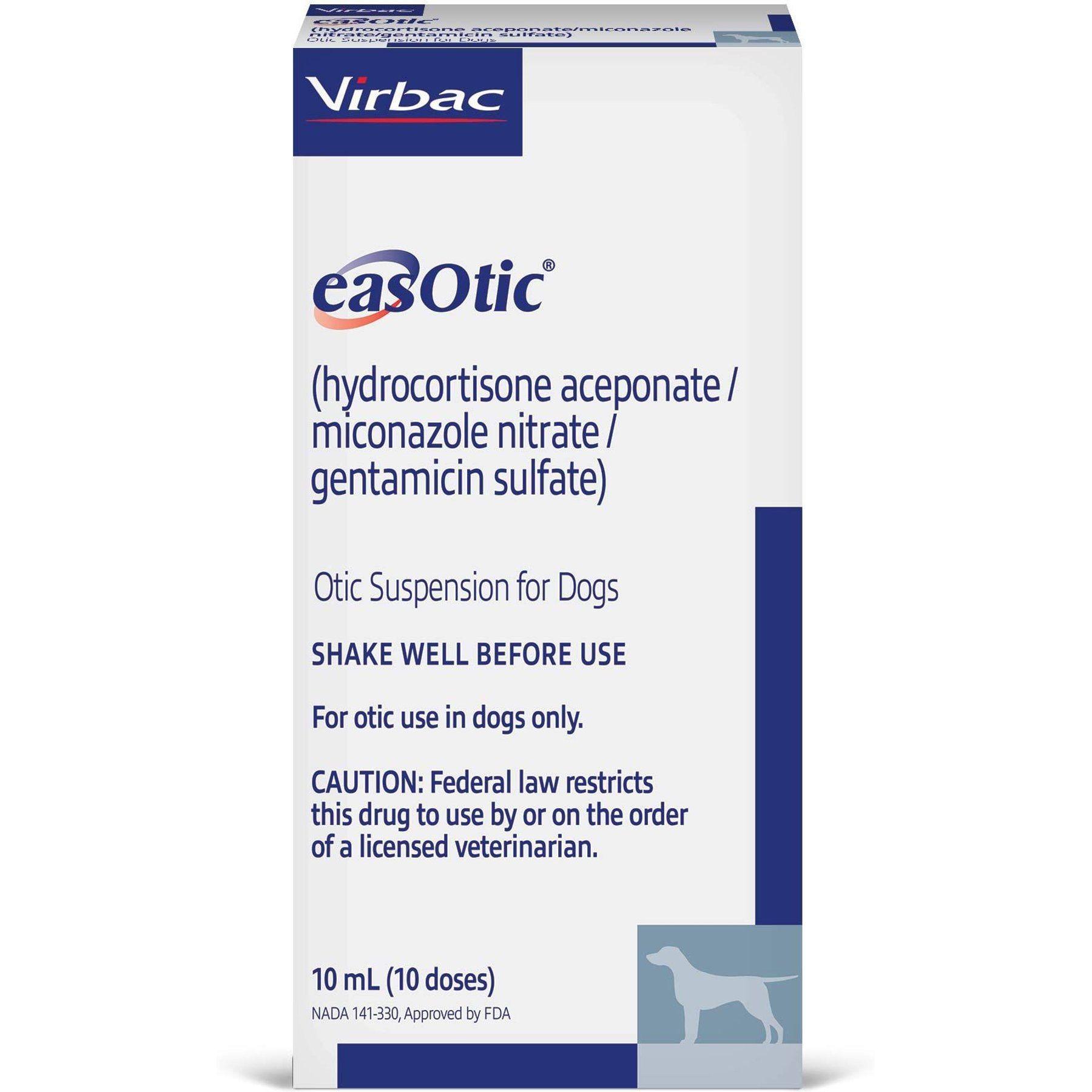
Prescription Easotic pump canister holding ten 1 mL doses, filled only on your vet's prescription after an ear exam.
Webvet may earn a commission when you click through to Chewy, at no extra cost to you.
Easotic dosage for dogs and how long the course lasts
The Easotic dosage for dogs on the label is 1 mL, a single pump, in each affected ear once a day for 5 days. Your vet decides which ears to treat and for how long, and you give exactly what the vet prescribed.
| Ear | What the label states | Course length | Pump handling |
|---|---|---|---|
| Each affected ear | 1 mL (a single pump) once per day | 5 days | Shake well before each use, then insert the soft cannula into the external ear canal |
| New canister, first use | Press firmly on the pump several times until the nozzle fills with a full dose | Before the first dose only | Priming is done once; after that, one pump delivers 1 mL |
| Before the course starts | Verify that the tympanic membrane is intact | Exam before day 1 | No dose until the vet has checked the eardrum |
| Canister contents | Ten 1 mL doses | Not stated as a set number of days | One pump per ear per day |
| Storage | 20–25 C (68–77 F), excursions 15–30 C (59–86 F) | For the whole course | Wash hands after each use |
The label gives no weight chart. In the FDA field study, every treated dog received the same 1 mL dose once daily, and the dogs ranged from 5.1 to 171.9 lbs and from 1 year, 2 months to 15 years, 10 months old, according to the FDA summary.
When both ears are infected, both are treated each day. Your vet works out whether one Easotic (hydrocortisone aceponate, miconazole nitrate, gentamicin sulfate) Otic Suspension for Dogs, 10-mL canister covers the course, and Chewy Pharmacy fills it only with that veterinarian's prescription.
The Easotic label itself contains no cleaning step. The Merck Veterinary Manual explains that discharge or wax can inactivate ear medication, so vets usually clean and dry the ear before treatment, and owners who clean at home should wait a few minutes before placing the medication. Before the first pump, check that:
- The vet has examined the ear and confirmed the eardrum is intact.
- Any cleaning the vet asked for is done, and a few minutes have passed since.
- The canister has been shaken, and a new canister has been primed.
Virbac Epi-Otic Advanced is a neutral-pH ear cleaner containing 0.2% salicylic acid. Merck's professional chapter favors a neutral pH to lessen pain in inflamed ears. Use a cleaner only if your vet asks for cleaning and has confirmed the eardrum is intact; it does not replace Easotic or the exam.
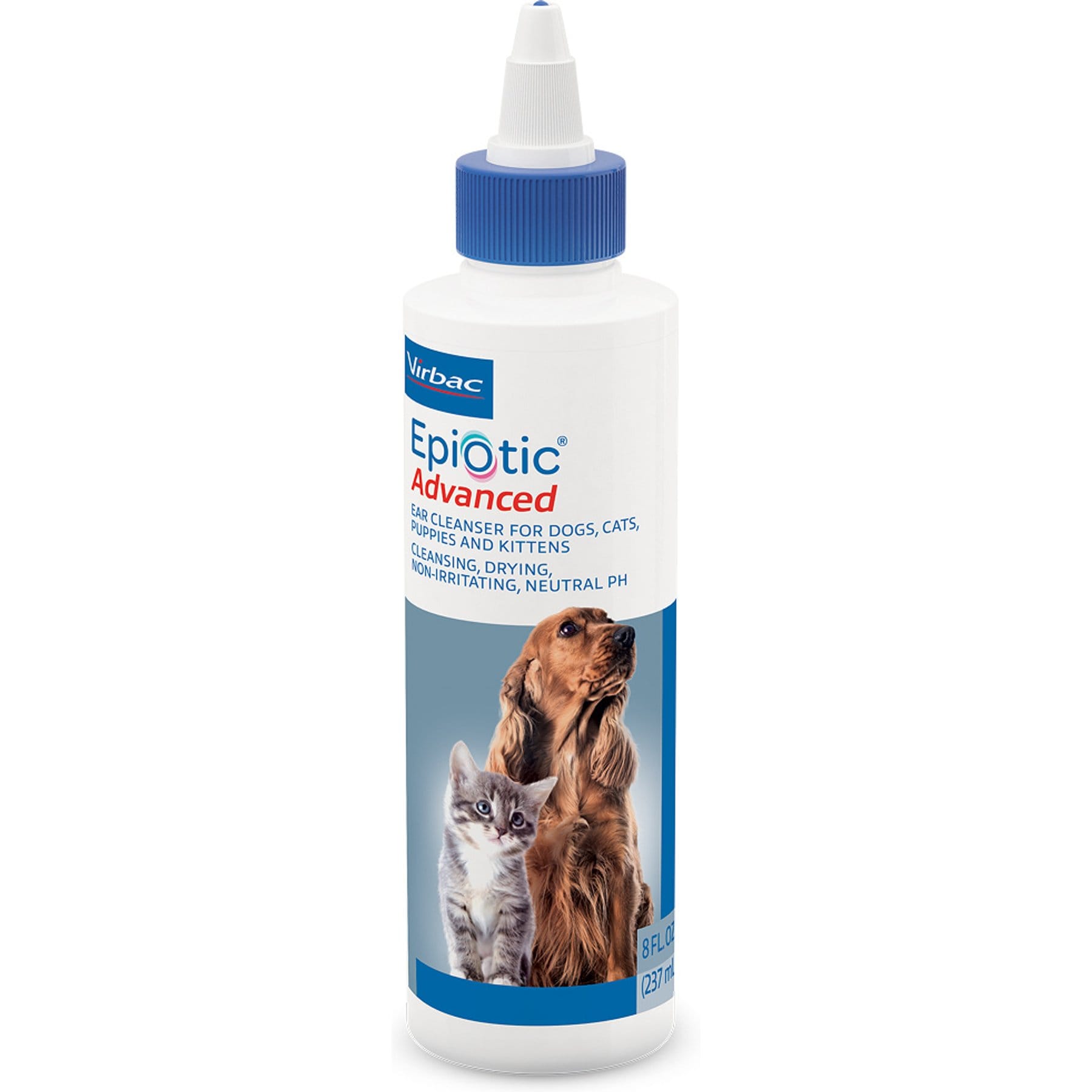
Neutral-pH ear cleaner for use only when your vet asks you to clean the ear and has confirmed the eardrum is intact.
Webvet may earn a commission when you click through to Chewy, at no extra cost to you.
Give every dose the vet prescribed, and never change the amount or stop early without the vet. Merck points out that many owners stop when the ear looks better but before the infection has resolved.
Think about who gives the doses, too. The label says people with known or suspected sensitivity to hydrocortisone, aminoglycoside antibiotics, or azole antifungals should not handle Easotic, so another household member may need to take over the pump.
How long can you use EasOtic for?
The label course is 5 days: 1 mL in each affected ear once a day. Any longer or repeated course is the vet's decision after a recheck, because the label's safety data come from short use.
In the FDA safety study, Beagles received Easotic for 15 consecutive days, three times the labeled course length. Ear canal reactions appeared in every treated group, and cortisol results showed the steroid was absorbed. The label adds that long-term topical ear steroids have been linked with adrenal suppression and iatrogenic Cushing's disease.
What Easotic is used for: yeast and bacterial ear infections in dogs
Easotic is used for otitis externa, an infection and inflammation of the outer ear canal, when it involves the yeast Malassezia pachydermatis or the bacterium Staphylococcus pseudintermedius. Those two organisms are the only ones named in the indication. Here are the suspension details and ingredients from the current label:
- Hydrocortisone aceponate, 1.11 mg/mL: a glucocorticoid steroid with anti-inflammatory effects.
- Miconazole nitrate, 17.4 mg/mL: an imidazole antifungal aimed at yeast.
- Gentamicin sulfate, 1.5 mg/mL of gentamicin: an aminoglycoside antibiotic aimed at bacteria.
- A semi-liquid petroleum jelly base that carries the three ingredients.
One figure differs between sources. The 2011 FDA summary lists miconazole nitrate at 15.1 mg/mL, while the current 2024 DailyMed label lists 17.4 mg/mL. The current label is the one that ships with the product.
Each antimicrobial has its own job. Laboratory testing in the FDA summary found gentamicin active against Staphylococcus pseudintermedius and Pseudomonas aeruginosa isolates and miconazole active against Malassezia pachydermatis, with no interference between them, and the FDA concluded that both active ingredients are essential to cover the organisms in canine ear infections.

In the FDA field study, 157 dogs with otitis externa were evaluated: 104 received Easotic and 53 received a placebo. Vets scored six signs: malodor, discharge, itch, redness, swelling, and pain. The label reports that 68.5% of Easotic dogs were successfully treated, compared with 21.8% of placebo dogs.
Pseudomonas aeruginosa, which Merck calls a frustrating and difficult cause of ear infections, is not in the Easotic indication. The FDA study found it in 2 successful cases and 3 failures. Merck advises that the ear product be chosen from cytology or culture results, which is why the vet often takes a swab before deciding.
An ear infection often has a cause behind it. Merck lists these, and warns that unless every cause is treated, the condition often returns:
- Parasites such as ear mites.
- Objects stuck in the ear canal.
- Allergies.
- Bacterial or yeast infection.
- Middle ear infection.
That is why dog ear infection treatment often goes beyond one bottle, including a dog ear yeast infection that keeps coming back.
Some owners hope a mild ear will settle without treatment. Merck advises prompt veterinary attention when ear changes appear, and the WebVet dog ear infection guide covers whether an infection can clear by itself.
Can you get rid of a dog's ear infection without antibiotics?
Sometimes, yes. Merck notes that yeast otitis typically responds well to topical therapy with an antifungal and a steroid, so a pure yeast infection may not need an antibiotic. The choice depends on what the vet sees under the microscope, and Easotic itself contains the antibiotic gentamicin.
What does not work is a kitchen cure. Merck warns against irritating home remedies such as vinegar mixtures, which can worsen swelling and secretions and raise infection risk. The WebVet guide to dog ear infection home remedies explains which home steps are safe while you wait for the appointment.
Easotic side effects in dogs
Easotic side effects were uncommon in the trials behind its approval. In the U.S. field study, the label reports no adverse reactions in 145 dogs that received Easotic. Side effects have still been reported since the drug went on sale in other countries.
The label says reports of hearing loss and redness where the drug is applied have come in from foreign markets. In most reported cases, both were transient and resolved once Easotic was stopped. The FDA summary puts suspected reactions in European data from 2008 to 2010 at approximately 0.006%.

Higher and longer dosing showed more. In the 15-day safety study, ear canal and inner ear flap reactions, including redness, small bumps (papules), and ulceration, appeared in all Easotic groups. All three ingredients were absorbed into the body, and the label notes absorption may be greater in inflamed ears.
Some dogs paw at or rub a treated ear. Tell your vet if it keeps happening, because it can mean the ear is still sore or is reacting to the medication. If the vet wants the ear protected from rubbing, ask which collar type to use: the CP Basics Inflatable Collar is a velvety inflatable collar made as a less bulky option than a plastic cone, but an inflatable collar does not block a hind paw from the ear the way a cone does. It is not a treatment and does not replace the prescribed course or the recheck.
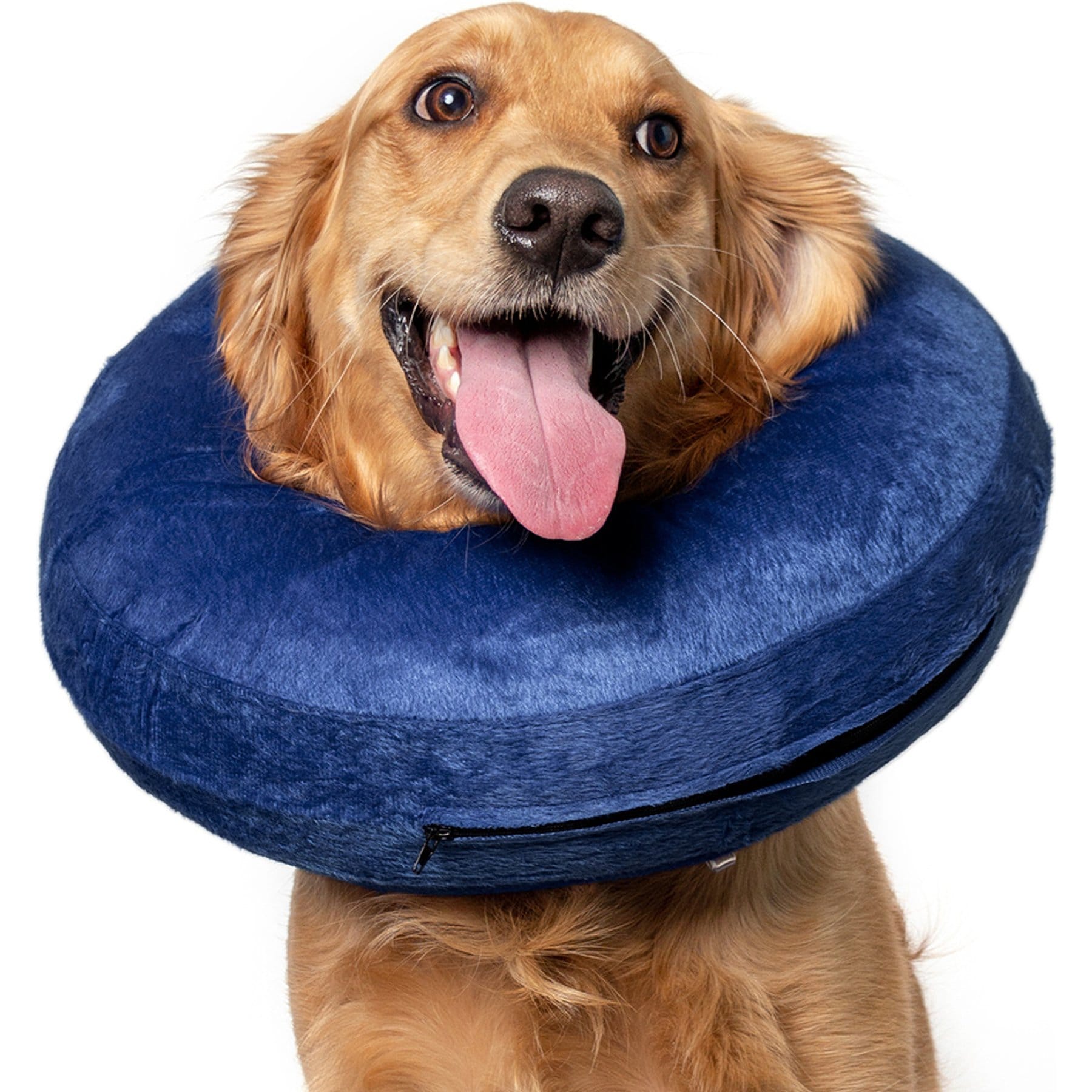
Inflatable recovery collar to use only if your vet recommends one; it does not shield the ear from a hind paw and does not treat infection.
Webvet may earn a commission when you click through to Chewy, at no extra cost to you.
What are the possible side effects of EasOtic® in dogs?
The possible side effects of EasOtic in dogs listed on the label are hearing loss and redness at the application site, both usually temporary and resolving after the drug is stopped. The 15-day safety study, run at 1 to 5 times the label dose, also recorded ear canal redness, bumps, and ulceration.
Because the steroid is absorbed, the label also flags effects beyond the ear in safety-study dogs:
- Lower cortisol results, consistent with adrenal suppression.
- Raised liver enzymes (AST and ALP) at 3 and 5 times the dose.
- Raised cholesterol, total protein, and albumin from the labeled dose upward.
Tell your vet about any reaction at the recheck, even a mild one. Suspected side effects can also be reported to Virbac AH at 1-800-338-3659 or to the FDA at 1-888-FDA-VETS, the numbers printed on the label.
If some suspension ends up on the fur of the outer ear flap after a dose, a gentle wipe is enough. Veterinary Formula Clinical Care Ear Therapy Wipes are alcohol-free wipes; use them on the outer ear flap only, never inside the canal, and they do not replace the prescribed Easotic course.

Alcohol-free wipes for cleaning residue from the outer ear flap only, never inside the treated canal.
Webvet may earn a commission when you click through to Chewy, at no extra cost to you.
Keep the recheck appointment even when the ear looks better. Merck notes that dogs with bacterial and yeast ear infections usually need repeated checkups until no infection shows.
 Sponsored
Vet care that's always there
Unlimited video calls and messaging with licensed vets for less than a typical vet visit. One membership covers up to five pets.
Use code Pets60
Plans start at $12/month · covers up to 5 pets
- Licensed vets in most states
- Rx for 150+ conditions
- 4.7 on Trustpilot
When to stop Easotic and call the vet now
The serious side effects to watch for are hearing and balance changes. The label explains that gentamicin, as an aminoglycoside antibiotic, belongs to a drug class associated with ototoxicity (damage to the inner ear), vestibular dysfunction, and kidney toxicity. Merck lists the signs owners should watch for.
Stop the ear suspension and call the vet now if you see:
- Decreased hearing, such as no longer reacting to sounds your dog usually notices.
- A new head tilt after starting the drops.
- Vertigo or other signs of balance trouble.
- Worsening redness, sores, or ulcers in the ear canal or on the inner ear flap.
- A dog that has swallowed the product, since the label says it must not be given by mouth.

Merck's guidance is that if such signs occur, the medication should be discontinued until the pet can be evaluated. Do not restart the remaining doses without the vet's go-ahead.
People need care too. The label says to wash accidental skin contact with soap and water, avoid the eyes, and contact a physician immediately if a person swallows the product.
Can EasOtic cause hearing loss in dogs?
Yes, EasOtic can cause hearing loss in dogs, although it is rare. The label lists hearing loss among foreign market reports and says most cases were transient and resolved after the drug was stopped. The risk is higher when the eardrum is damaged, which is why the vet checks it first.
Ruptured eardrums, interactions, and Easotic versus Mometamax
The label rules out Easotic in dogs with a known perforated tympanic membrane. With a damaged eardrum, the drug can harm the hearing and balance structures or carry infection into the middle or inner ear. The Mometamax label carries the same eardrum rule.
Merck explains that many ear medications, especially aminoglycosides like gentamicin, are riskier when the eardrum is not intact. Cleaners matter too: with a ruptured eardrum, detergent cleaners and DSS are contraindicated, which is one reason to follow the WebVet how to clean dog ears steps only with the vet's say-so.
Tell your vet about the following before the course starts:
- Other medicines that can affect hearing: the label says to avoid potentially ototoxic drugs at the same time.
- Liver or kidney disease, where the label advises caution.
- Breeding, pregnancy, or nursing, where safe use has not been evaluated.
- Past reactions to steroids, azole antifungals, or aminoglycosides, which are contraindications.
- Long-term steroid use, given the adrenal suppression warning.
The vet picks among prescription ear medications using the cytology result, the eardrum, and how easy daily dosing will be at home. Switching from Easotic to another drug is the vet's call, made for a reason such as a Pseudomonas result or a dog that will not tolerate daily drops.
Easotic versus Mometamax comes down to ingredients and routine, according to each product's DailyMed label:
- Ingredients: Easotic pairs gentamicin with hydrocortisone aceponate and miconazole; Mometamax pairs gentamicin with mometasone and clotrimazole.
- Dose: Easotic is one 1 mL pump per ear once daily for 5 days; Mometamax is given in drops by weight once daily for 7 days.
- Preparation: the Mometamax label says to clean and dry the canal first; the Easotic label has no cleaning step.
- Bacteria named on the label: Mometamax lists Pseudomonas among others; Easotic names Staphylococcus pseudintermedius.
Mometamax for dogs has its own page, and its label on DailyMed sets the drop counts. The 15-g Mometamax Otic Suspension for Dogs is listed at $53.99 on Chewy when checked in November 2026 and is filled only with a veterinarian's prescription.
Unlike Easotic, Osurnia for dogs is applied by vet staff: one tube per affected ear, repeated in 7 days, per its DailyMed label, so the clinic usually supplies and applies it. The Osurnia (florfenicol, terbinafine, betamethasone acetate) Otic Gel for Dogs, 1-mL, 1 tube is listed at $18.40 on Chewy when checked in November 2026 and needs a veterinarian's prescription.
Otomax for dogs (gentamicin, betamethasone, clotrimazole) and Posatex for dogs (orbifloxacin, mometasone, posaconazole) are other prescription ear options with their own labels.
How to use the Easotic pump, what to do if it is not working, and cost
To use Easotic for dogs, shake the canister, place the soft tip just inside the ear canal, and press the pump once in each ear your vet prescribed. These steps follow the label and the ear-medicating handout from the Washington State University Veterinary Teaching Hospital; the amount is always the one pump per ear your vet prescribed.
- Shake the canister well. Prime a new one by pressing the pump firmly all the way down several times until the nozzle fills.
- Hold the ear flap up and stretch it away from the head, which straightens the bend in the canal.
- Carefully insert the soft cannula into the opening of the external ear canal without forcing it deep.
- Press the pump once, fully, for the single prescribed dose.
- Massage the base of the ear to spread the suspension along the canal.
- Wipe the outer flap if needed, never using cotton swabs in the canal, and wash your hands.

How do you give an unwilling dog ear drops?
Use a secure hold, ideally with a helper. The WSU handout suggests that if a dog is too wiggly, you lay it on its side, hold the leg near the elbow, and keep your elbow on the neck so the head stays down while the other hand lifts the ear flap.
If the ear is too painful to touch, tell the vet. Merck notes that very painful ears may need sedation or several days of anti-inflammatory steroids before they can be examined, and WSU notes vets may examine under sedation when a dog will not allow handling while awake.
How fast does Easotic work for dogs?
The label gives no onset time in hours or days. In the FDA field study, vets rechecked dogs on Day 1, Days 3-5, Days 12-15, and Days 26-30, and success was judged at Day 28, so the full effect is measured weeks after the 5-day course ends.
If the ear is not improving, do not add pumps on your own. Merck notes that bacterial and yeast ear infections often need rechecks for 2–4 weeks until no infection shows, and that an ear that will not resolve may mean a middle ear infection. Bring these to the recheck:
- Which ears you treated, on which days, and any missed dose.
- Whether smell, discharge, and scratching are better, the same, or worse.
- Any change in hearing or balance, even if it settled.
- The canister itself.
Easotic is not sold over the counter. The FDA summary records it as prescription only, so a seller offering it without a vet prescription is not following the label. No retail listing can tell you whether your dog's eardrum is intact.
On price, the Easotic Otic Suspension 10-mL canister is listed at $38.99 on Chewy when checked in November 2026. You can buy Easotic for your dog from Chewy Pharmacy or your clinic, and either one fills it only with a veterinarian's prescription.
Once the ear has cleared, your vet may suggest a maintenance cleaner. The Nolvasan Otic Cleansing Solution, 4-fl oz bottle and the Virbac Epi-Otic Neutral-pH Advanced Dogs & Cats Ear Cleaner, 8-fl oz bottle are cleaners, not treatments, and they do not replace the prescribed course or the recheck exam.
Easotic questions
Frequently Asked Questions
How do you use the Easotic pump?
Shake it, prime a new canister until the nozzle fills, then place the soft tip just inside the ear canal and press the pump once, all the way down. One press delivers the full 1 mL label dose, so there is nothing to count or measure. Massage the base of the ear afterward.
Can you get Easotic without a vet prescription?
No. Federal law restricts Easotic to use by or on the order of a licensed veterinarian, and FDA lists it as a prescription-only drug. The veterinarian needs to see the eardrum and identify the infection before it is used.
Is Easotic the same as Mometamax?
No. Both treat outer ear infections in dogs and both contain gentamicin, but the other ingredients differ: Easotic uses hydrocortisone aceponate and miconazole, while Mometamax uses mometasone and clotrimazole. Mometamax is dosed in drops by weight for 7 days, while Easotic is one pump per ear for 5 days.
What is in Easotic?
Easotic contains three active ingredients: hydrocortisone aceponate (a steroid), miconazole nitrate (an antifungal), and gentamicin sulfate (an antibiotic). The only inactive ingredient is a semi-liquid petroleum jelly that carries them. The current label strengths are 1.11 mg/mL, 17.4 mg/mL, and 1.5 mg/mL respectively.
What is Easotic used for in dogs?
Easotic is used for otitis externa in dogs, an outer ear infection, when it is associated with yeast (Malassezia pachydermatis) or Staphylococcus pseudintermedius bacteria. It is approved for dogs only, and the vet confirms the type of infection and an intact eardrum before prescribing it.
Veterinarian · BVMS MRCVS
Dr. Pippa Elliott, BVMS, MRCVS, is a veterinarian with nearly 30 years of experience in companion animal practice. Dr. Elliott earned her Bachelor of Veterinary Medicine and Surgery from the University of Glasgow. She was also designated a Member of the Royal College of Veterinary Surgeons. Married with 2 grown-up kids, Dr. Elliott has a naughty Puggle named Poggle, 3 cats and a bearded dragon.


