Dog Ear Drops: Prescription, OTC, and Cleaner Differences
A practical guide to prescription dog ear drops, OTC solutions, and cleaners, with exact-label distinctions and the questions to ask your veterinary team.

BVMS MRCVS
Medically reviewed by Dr. Pippa Elliott, BVMS MRCVS · Last reviewed

This article contains affiliate links. Webvet may earn a commission when you buy through them, at no extra cost to you.
Dog ear drops can mean prescription medicine, an over-the-counter ear solution, or a cleaner. Those products do different jobs. The right choice depends on what is causing the problem, whether the eardrum is intact, and what else is already in the ear. A bottle that helped another dog may be unsuitable for yours.
For a painful, smelly, swollen, or discharging ear, arrange a veterinary assessment before choosing drops. This guide explains the product categories and the questions that help you follow an individual plan. It does not provide prescription doses or replace the instructions attached to your dog’s medicine.
- 1Start with a veterinary diagnosis, then confirm the exact product and formulation.
- 2Antibiotics, antifungals, steroids, parasite treatments, and cleaners have different purposes.
- 3Cleaning instructions are product-specific; extra cleaning can interfere with some treatments.
- 4Call the clinic about new hearing changes, head tilt, balance problems, or worsening pain.
Choose dog ear drops by their purpose
The drops you can put in your dog’s ears should match the diagnosed problem and the exact product instructions.
“Medicated” does not tell you whether a bottle contains an antibiotic, antifungal, steroid, or cleaning ingredient. Nor does “best” identify a universally suitable option for dog ear infections. Start by asking what the medicine is meant to do, then match that answer to the label.
| Product class | Main role | Limit to understand |
|---|---|---|
| Prescription infection medicine | Treat susceptible bacteria, yeast, or both as diagnosed | Different active ingredients and formulations are not interchangeable |
| Anti-inflammatory ingredient | Reduce inflammation; may be combined with other treatment | A steroid alone does not identify or remove the cause |
| OTC enzyme-based ear solution | Product-specific nonprescription ear care | Not a substitute for examining a painful or recurrent ear problem |
| Routine cleanser | Remove wax or debris when appropriate | Does not replace prescribed infection medication |
| Medicated flush | Cleaning plus particular antimicrobial ingredients | Must fit the eardrum assessment and treatment schedule |
| Ear-mite treatment | Target confirmed parasites | Ordinary antibiotic or yeast drops may not kill mites |
Think of the label as a precise identity, not simply a brand name. Two bottles from the same company may contain different ingredients or hydrocortisone strengths. One may be a rinse and another a leave-in solution. If the clinic recommends a product verbally, ask for its full name, strength, and bottle size before shopping. A photograph of the recommended label can help prevent a mix-up.
- Ask whether the goal is treating infection, controlling inflammation, treating parasites, or routine cleaning.
- Confirm which ear needs treatment; do not assume both ears have the same findings.
- Tell the clinic about every ear product you have used recently, including an old prescription.
When comparing labels, separate three questions: what is in the bottle, what the manufacturer says it is for, and what your veterinarian wants you to use it for now. Those answers may overlap, but they are not identical. A broad label claim does not tell you whether the dog has the condition named on the package, and a familiar ingredient does not establish the right concentration or formulation.
- Product identity: match the complete name, active ingredients, and stated strength to the recommendation.
- Intended use: distinguish a canal cleaner from an infection medicine or a product meant only for external skin.
- Individual instructions: confirm any restrictions linked to the dog’s examination, current medicine, or planned recheck.
Drops marketed for itchy, smelly ears also cannot determine whether itching comes from allergy, infection, or another cause. An allergy plan and an ear-infection plan may both be needed. Similarly, dog ear drops for mites should be selected for confirmed parasites rather than dark wax alone. Our guide to ear mites in dogs explains that separate problem.
OTC ear drops and the exact Zymox formula
Over-the-counter dog ear drops are available without a prescription, but that does not establish that they suit an unexamined ear infection.
OTC access describes how a product is sold. It does not establish the cause of the symptoms, eardrum integrity, or compatibility with another medicine. Ask the veterinarian whether an OTC option has a role in your dog’s plan before replacing prescribed treatment.
For example, Zymox Plus Advanced Formula with 1% hydrocortisone is the exact enzyme-based formulation shown here. The manufacturer’s product range also includes hydrocortisone-free products, a 0.5% hydrocortisone Ear Solution, and separate ear cleansers. These are distinct formulations. A recommendation for “Zymox” should be clarified rather than translated into whichever bottle is easiest to find.
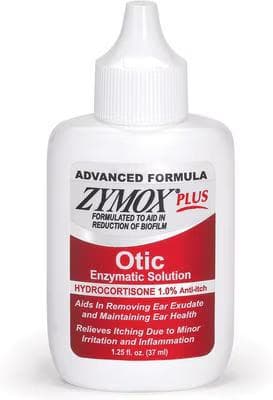
Webvet may earn a commission when you click through to Chewy, at no extra cost to you.

Hydrocortisone is a corticosteroid used for inflammation and itching. A higher percentage is not a simple ranking of overall suitability, and hydrocortisone-free does not mean that the product is appropriate for every ear. Have the clinic confirm whether a steroid-containing product fits your dog’s condition, other treatment, and relevant medical history. Avoid choosing solely by the strongest-looking label.
- Keep the full formulation name with the care instructions; do not rely on cap color or a familiar logo.
- Check whether the bottle is an ear solution, a cleanser, or a different skin product.
- Read the restrictions on other ear preparations before adding a cleaner or second medication.
Zymox’s ear-care guidance says other ear preparations used before or during its Ear Solution course can interfere with enzyme activity. This is a useful example of why a general “clean first” routine is unreliable. If you have already cleaned the ear or used another medicine, contact the clinic about the exact products and timing instead of layering treatments. The same advice does not automatically apply to every other brand.
 $65 · no membership
Have a health question about your dog?
A licensed vet can assess your dog over video and prescribe online when it's appropriate.
 Talk to a vet
- Licensed vets
- All 50 states
- same-day Rx
Webvet may earn a commission if you book.
Ear cleaners are a separate part of the plan
Dog ear cleaner drops and medicated ear drops can look similar on a shelf.
A cleaner may help remove wax and debris, while a prescribed medicine has a defined treatment purpose. Some ear flushes also contain antimicrobial ingredients. That overlap makes the exact formulation and planned sequence more useful than a simple “cleaner versus drops” label. Do not buy several bottles and assume using them together will improve treatment.
Dechra TrizULTRA + Keto Flush is one medicated-flush example to discuss if the veterinarian specifically recommends it. Dechra’s product detailer identifies ketoconazole in a TrizEDTA formulation. It is not the same product as a plain routine cleaner or a prescription combination gel. Confirm its role before adding it to any treatment already underway, particularly when the clinic has told you to leave the ear alone.
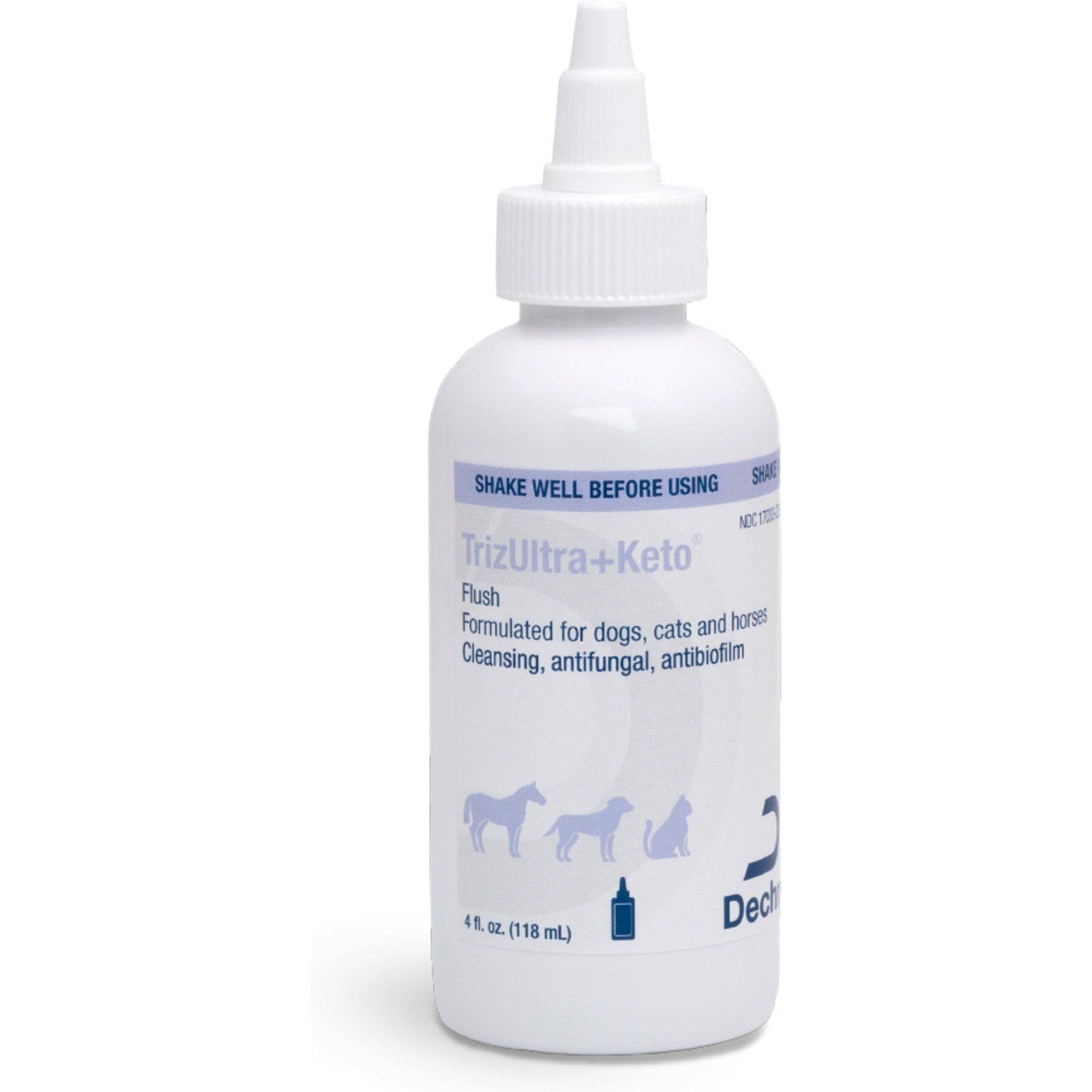
A ketoconazole-containing ear flush to discuss with your veterinarian when routine cleaning is not enough. Use only as directed for your dog.
Webvet may earn a commission when you click through to Chewy, at no extra cost to you.
When a product is described as antifungal, ask what that means in the current plan: a supportive flush, the selected treatment, or something to avoid during another product’s contact period. The ingredient word alone cannot answer that question. Keep the original instructions so that everyone caring for the dog follows the same sequence. A household member trying to “help” with an extra rinse can unintentionally change the plan.
It can help to put only the currently approved ear-care supplies in one place and store older bottles separately. This is an organizational step, not an instruction to combine the products kept together. If the written plan lists a cleaner and medicine, ask which is used first and what interval, if any, the clinician wants between them. Do not derive that interval from a different brand’s website.
- Use the exact cleaner the clinic recommends and only on the agreed schedule.
- Ask whether cleaning is allowed during treatment, after treatment, or only at the recheck.
- Keep shampoo, skin sprays, and surface-cleaning wipes out of the ear canal unless specifically directed for that use.
Vetnique OticBliss Advanced Vet Strength Anti-Bacterial and Anti-Fungal Ear Flush is a chlorhexidine-and-ketoconazole flush. The manufacturer page identifies that formulation. It is different from OticBliss ear drops with other active ingredients, so a shared brand name is not enough. The card below refers to the flush, not a substitute prescription or the brand’s separate hydrocortisone drop product.
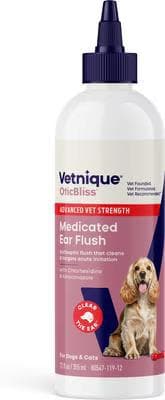
Vet-strength medicated ear flush that clears wax, debris, and odor while its antibacterial and antifungal formula targets the yeast and bacteria behind ear infections. For dogs and cats.
Webvet may earn a commission when you click through to Chewy, at no extra cost to you.
Virbac Epi-Otic Advanced Ear Cleanser is a routine-cleanser example. Virbac describes its use for ear cleaning and before certain ear treatments. A clinician’s specific instructions still control whether cleaning is appropriate today. A dog already treated with a long-acting gel may have a different rule from a dog using an at-home liquid medicine. For broader routine-cleaner selection, see our dog ear cleaner guide.
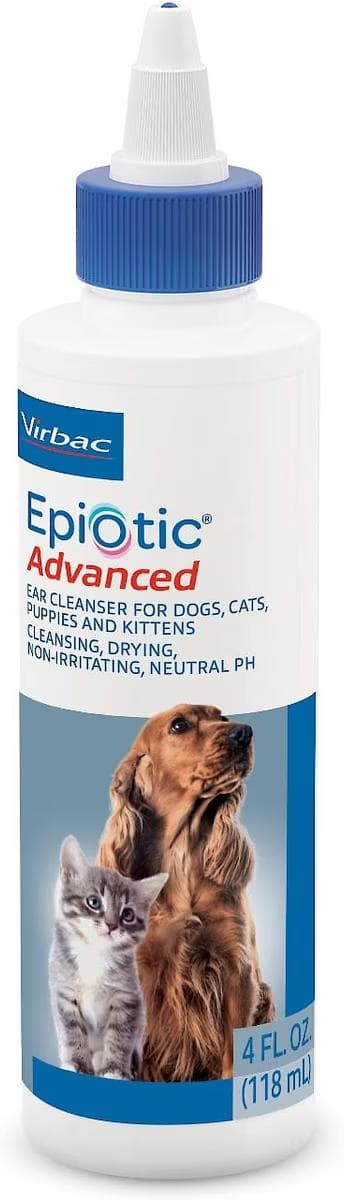
Webvet may earn a commission when you click through to Chewy, at no extra cost to you.
Prescription ear drops target the diagnosed problem
Prescription dog ear drops may contain antibiotics and antifungals together, sometimes with an anti-inflammatory steroid. Antibiotic or antibacterial ingredients address susceptible bacteria; antifungal ingredients address yeast or fungi. Neither word makes the product a treatment for every possible ear problem. Your veterinarian selects the combination after examining the ear and assessing the material in the canal.
For a yeast ear infection, an appropriate antifungal treatment addresses the yeast. Antibiotics alone do not serve that purpose. Conversely, a yeast-only product does not automatically cover a bacterial infection. A dog can have more than one contributor at once, which is another reason the smell or color of discharge cannot reliably select the medication. Avoid changing products based on an online description of similar-looking ears.
- 1An antibiotic is not automatically necessary for a yeast-only problem.
- 2A steroid can help inflammation but is not an all-purpose infection treatment.
- 3The medicine’s formulation, safety restrictions, and contact time matter alongside its ingredients.
Two prescription gel examples make the distinction concrete. Osurnia’s current DailyMed label lists florfenicol, terbinafine, and betamethasone acetate and identifies susceptible bacterial and yeast-associated otitis externa. FDA’s DuOtic approval describes terbinafine with betamethasone acetate for susceptible yeast-only otitis externa; DuOtic contains no antibiotic. These examples explain different product roles, not a recommendation to choose between them without a veterinarian.
If your prescription lists a different combination, ask the clinic which ingredient addresses each finding and whether any other ear product should be stopped. Do not convert a familiar ingredient into a homemade equivalent, use human antibiotic ear drops, or reuse another pet’s prescription. The full formulation and the patient’s ear examination matter. A medicine prescribed previously for the same dog also requires confirmation before restarting it for a new episode.
Long-acting gels have product-specific cleaning rules
Some prescription ear medicines are administered by a veterinary professional and stay in the canal after the visit.
“Long-acting” does not always mean a single appointment, and it does not mean that normal cleaning should continue. Before leaving the clinic, ask which product was given, whether another administration is scheduled, and when cleaning or swimming can resume. Write those answers down with the product name.

| Exact example | Who administers it | Cleaning or follow-up distinction |
|---|---|---|
| Osurnia | Veterinary professional | Repeat professional administration after 7 days; no ear-canal cleaning for 45 days after the initial administration |
| DuOtic | Veterinary professional | Two administrations 7 days apart; no ear-canal cleaning for 45 days after the initial administration |
| Zymox Ear Solution range | Only under the plan appropriate to the exact formulation | Manufacturer warns against other ear preparations before or during the course |
| Other prescribed products | Depends on the exact label | Do not borrow the schedule or cleaning rule from a different product |
The Osurnia label calls for checking that the eardrum is intact before each administration. Its cleaning restriction protects contact between the gel and canal. FDA describes the same 45-day no-clean interval for DuOtic after its initial administration. These are label-specific examples, not instructions to leave every infected ear uncleaned for that period. If discharge or discomfort worsens during a no-clean interval, call the clinic instead of flushing the ear yourself.
- Check that the written follow-up date matches the product actually given.
- Tell another veterinary practice about a long-acting gel before any new ear procedure.
- Ask the original clinic before using leftover cleaner, wipes inside the canal, or another drop product.
Long-acting options may be worth discussing when daily treatment is difficult, but suitability depends on the examination and individual product restrictions. Explain practical problems honestly: perhaps the dog becomes frightened, a caregiver cannot safely handle the ear, or the work schedule makes the prescribed routine difficult. That information helps the clinic choose a workable plan; it is not a reason to change the medicine or administration schedule independently.
If the take-home sheet and the bottle appear to disagree, pause and ask the prescribing clinic to reconcile them. Give the full product name and describe the exact conflicting instructions. For instance, “clean daily” on a general handout may not fit a product-specific no-clean period. Clear written instructions are especially useful when a boarding facility, dog sitter, or second household will care for the dog during treatment.
Get the ear checked before choosing drops
You cannot reliably treat a suspected ear infection without veterinary assessment simply by selecting an OTC bottle. Merck Veterinary Manual explains that an otoscope examination and assessment of ear material help identify causes and guide care. The canal may be too painful or obstructed for a comfortable awake examination. The veterinarian can decide how to examine and clean it safely rather than asking you to force the process at home.
Dogs of any breed can have ear infections. There is no breed label that makes one drop universally correct. VCA’s ear-infection guidance notes that dogs with large, floppy or hairy ears, including Cocker Spaniels and Poodles, may be more prone. Individual ear anatomy and underlying disease still matter more to product selection than a breed-based shopping recommendation.
- Arrange prompt care for pain, swelling, discharge, strong odor, repeated scratching, or persistent head shaking.
- Seek urgent veterinary advice for head tilt, loss of balance, marked hearing changes, or severe pain.
- Tell the clinic about previous ear trouble, allergies, recent swimming, and every product already applied.
Do not test a new bottle to see whether it stops the smell before making the appointment.
Brief improvement cannot confirm the underlying cause or show that the ear is fully recovered. Likewise, a visible outer flap that looks fairly normal does not tell you what is happening deeper in the canal. Bring the packaging or clear label photographs of recent products so the clinician can assess what has already been used.
Home care follows the prescribed plan
The useful way to treat an ear infection at home is to carry out the plan made after the examination. Confirm the exact medicine, which ear to treat, the label’s amount and schedule, any cleaning instructions, and the recheck appointment. Our dog ear infection treatment guide covers the wider diagnosis and recovery pathway. Home treatment should support that pathway rather than replace it with a new OTC experiment.

- 1Keep the exact bottle and written instructions together.
- 2Record the cleaning schedule, including any period when cleaning is prohibited.
- 3Keep the recheck appointment even when the dog seems more comfortable.
- 4Contact the clinic if treatment cannot be given safely or the symptoms change.
How long dog ear drops take to work depends on the diagnosed problem, product, and condition of the canal. Ask the clinic when it expects comfort to improve and when it needs to examine the ear again. Those are different milestones: less scratching does not prove that treatment is complete. Contact the clinic if improvement is slower than its stated expectation or symptoms worsen; do not switch products or extend treatment on your own.
Ask the veterinary team to demonstrate the technique for your dog and the specific dispenser. Different products are handled differently, so a generic video should not overrule the label. If the dog resists, cries, snaps, or seems more painful, stop and contact the clinic about safer handling, pain control, or another suitable option. Do not hold the dog down and continue despite escalating distress.
A short record can make follow-up more useful: note when the medicine was given, whether cleaning occurred, and what changed afterward. Report a new hearing problem, head tilt, imbalance, unusual eye symptoms, or worsening irritation promptly. Provide the exact product name and timing. Do not automatically add more drops because the dog shook its head, or double the next application after a missed one; ask for product-specific advice.
- Note comfort changes separately from the scheduled end of treatment.
- Use the clinic’s expected response window rather than a universal online timeline.
A new sign after treatment deserves a call even when you are unsure whether the drops caused it. Describe the observation rather than making a diagnosis: when the dog stopped responding to familiar sounds, started tilting its head, vomited, or developed diarrhea. The clinic can judge the urgency and whether the treatment needs reassessment. Do not test another dose to confirm a suspected reaction or independently restart a medicine that was stopped.
- Check expiry and storage instructions on the actual bottle, and ask before using any old prescription.
- Keep products out of reach and contact a veterinarian promptly after accidental ingestion or an unexpected exposure.
- Ask when to call if improvement is slower than expected; keep the planned recheck instead of judging recovery by odor alone.
For future purchases, the most useful comparison is whether the product is the exact one on the current plan. A larger bottle, stronger percentage, or product promoted for many conditions is not automatically better value for this dog. Buying an unneeded second preparation can create conflicting instructions. Clarify the plan first, then purchase the correct formulation and use it for the agreed purpose.
More questions about ear drops
Frequently Asked Questions
Can hydrogen peroxide cure an ear infection in dogs?
No. Hydrogen peroxide is not an appropriate cure for a suspected dog ear infection and may irritate an already inflamed canal. Do not put peroxide, alcohol, or a homemade vinegar mixture into a sore ear. Ask the veterinary team which product, if any, is suitable before the appointment. A pet ear cleanser also needs to fit the examination findings and any medicine already in the canal.
What can be mistaken for an ear infection in dogs?
Allergic inflammation, ear mites, a trapped grass seed or other foreign material, and growths can produce overlapping ear signs. These problems can also occur alongside infection, so this is not always an either-or distinction. Scratching, odor, and dark debris do not identify the cause or the appropriate drops. A veterinary examination and, when indicated, microscopic examination of ear material help guide treatment.
Will Benadryl help a dog's ear infection?
Benadryl does not replace treatment for a bacterial or yeast ear infection and will not remove a foreign body or kill ear mites. Do not add a human antihistamine or pain medicine without veterinary advice. If allergy contributes to repeated ear trouble, the veterinarian can build an appropriate allergy plan alongside treatment of the current ear problem.
$65 · no membershipHave a health question about your dog?
A licensed vet can assess your dog over video and prescribe online when it's appropriate.
Talk to a vet- Licensed vets
- All 50 states
- same-day Rx
Webvet may earn a commission if you book.
Veterinarian · BVMS MRCVS
Dr. Pippa Elliott, BVMS, MRCVS, is a veterinarian with nearly 30 years of experience in companion animal practice. Dr. Elliott earned her Bachelor of Veterinary Medicine and Surgery from the University of Glasgow. She was also designated a Member of the Royal College of Veterinary Surgeons. Married with 2 grown-up kids, Dr. Elliott has a naughty Puggle named Poggle, 3 cats and a bearded dragon.


