How Often to Clean Dog Ears: Timing and Peroxide Safety
Learn how often healthy dog ears need cleaning, why infection treatment changes the schedule, how to avoid overcleaning, and why peroxide is unsuitable for routine ear care.

BVMS MRCVS
Medically reviewed by Dr. Pippa Elliott, BVMS MRCVS · Last reviewed

This article contains affiliate links. Webvet may earn a commission when you buy through them, at no extra cost to you.
How often to clean dog ears depends on the ear, not a universal weekly calendar. Healthy ears may need no cleaning. A dog with recurring wax, swimming-related problems or an active infection may need an individual schedule from the veterinarian. Checking an ear and putting cleaner into it are different actions, and doing the first regularly does not mean you should always do the second.
Hydrogen peroxide is not a shortcut to a cleaner ear. It can irritate delicate tissue, particularly when the canal is already inflamed. The useful routine combines observation, an appropriate product when needed, and a clear reason to stop and seek advice.
- 1Healthy ears may need no cleaning; a product label is not a reason to start a daily routine.
- 2During treatment, follow the written cleaning schedule for the exact medicine in use.
- 3Avoid hydrogen peroxide and alcohol in an improvised ear-cleaning solution.
- 4Pain, odor or persistent discharge changes the decision from routine grooming to veterinary assessment.
 Sponsored
Have a health question about your dog?
Talk to a licensed vet at Dutch over video or message, including nights and weekends.
Use code Pets60
Plans start at $12/month · covers up to 5 pets
- Licensed vets in most states
- Rx for 150+ conditions
- 4.7 on Trustpilot
How often healthy dog ears need cleaning
Clean a healthy ear when there is a reason, such as visible dirt or a maintenance plan for a dog prone to problems. There is no single correct interval for every dog, and overcleaning can irritate an otherwise healthy ear. PDSA’s veterinary guidance notes that many dogs do not need regular cleaning at all. Familiarize yourself with your dog’s comfortable, normal ear rather than treating a calendar reminder as an instruction to flush it.
| Ear situation | Cleaning decision | What sets the timing |
|---|---|---|
| Comfortable, healthy ear without excess dirt | Observe; cleaning may be unnecessary. | Changes from your dog’s normal appearance or the veterinarian’s advice. |
| Repeated wax buildup in an otherwise assessed ear | Use the selected maintenance routine. | How quickly material returns and whether cleaning remains comfortable. |
| A dog with ear problems after swimming | Ask about cleaning and drying after water exposure. | The individual history, product and condition of the ear. |
| An ear receiving treatment | Follow the specific written schedule, including any no-cleaning period. | The medicine’s instructions and the prescribing clinic. |
| Painful, smelly, inflamed or discharging ear | Arrange assessment before starting or increasing cleaning. | Clinical findings, not a stronger household rinse. |
Virbac Epi-Otic Advanced is one formulated routine cleanser to discuss when your dog actually needs a cleaner. Virbac describes its cleansing role. Owning a bottle does not establish that it belongs in a healthy ear every day. Ask the clinic to write the intended use alongside the product name so another person in the household does not turn occasional care into daily treatment.
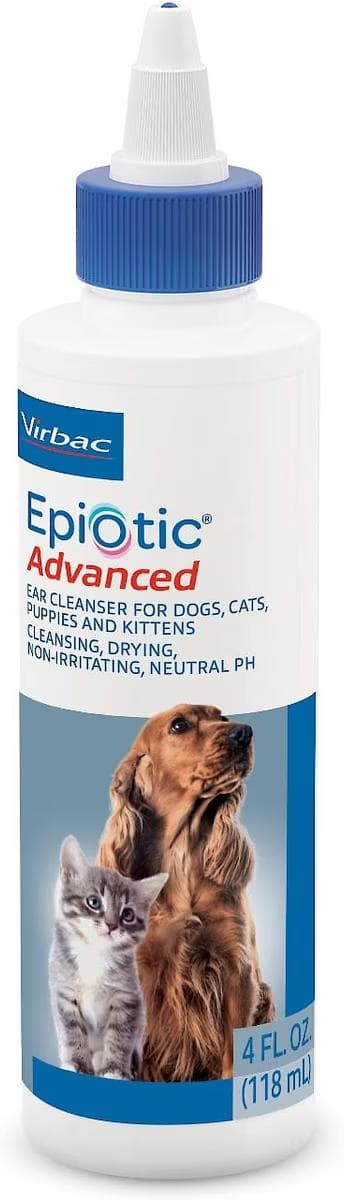
Webvet may earn a commission when you click through to Chewy, at no extra cost to you.
Weekly, monthly, or only when needed?
Some dogs need regular maintenance; others stay comfortable without it. Cornell describes different schedules for treatment and maintenance, with maintenance sometimes every one to two weeks. That is an example, not a rule for your dog. A golden retriever’s breed name, floppy ears or frequent baths cannot by itself determine the interval. Discuss the history of wax and infections as well as water exposure.
If the ears stay clean and comfortable between planned sessions, ask whether the interval can be lengthened.
If material returns quickly, do not simply shorten it indefinitely. The dog may need reassessment for an underlying problem rather than an increasingly demanding grooming routine.
Check the ear before deciding to clean

Look for a change from normal before using any product. An ear that is comfortable to touch, has no unusual smell and has no excess material may need nothing beyond observation.
Lift the flap gently if your dog accepts that handling. You can inspect accessible skin, but you cannot see the whole canal or establish the condition of the eardrum from this check.
- Notice whether one ear looks or smells different from the other.
- Watch for head shaking, scratching or pulling away when the ear is touched.
- Look for swelling, redness, discharge or a sudden increase in material.
- Pause if the dog seems uncomfortable, even when the outside does not look dramatic.
Floppy ears are not inherently bad or diseased, but a covering flap can make inspection less straightforward. Checking is an opportunity to notice a problem early, not a requirement to make both ears look identical. Do not probe for something you cannot see or scrape at a spot that might be sore. If your dog has never tolerated ear handling, ask the veterinary team to demonstrate an appropriate examination and cleaning approach before trying a full session at home.
Match the cleanser to the job
Routine liquid cleansers, medicated cleaning preparations and outer-ear wipes are different tools. Product names such as “therapy” or “advanced” do not identify what your dog needs. Our dog ear cleaner guide explains how to compare the purpose, ingredients and application. Take the actual bottle or a clear label photograph to the clinic if you are unsure how it fits your dog’s care.

Veterinary Formula Clinical Care Ear Therapy liquid is a separate formulation from a plain routine rinse. The manufacturer lists its active ingredients, including ketoconazole. Ask whether those ingredients fit your dog’s ear findings and current medication. A label that permits frequent use does not mean a dog with normal ears benefits from frequent applications, or that an unexamined infection has been diagnosed.
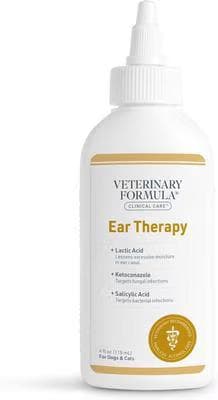
A medicated ear cleaner with lactic acid, ketoconazole, and salicylic acid that flushes debris and targets the yeast and bacteria behind ear infections. For dogs and cats.
Webvet may earn a commission when you click through to Chewy, at no extra cost to you.
The same principle applies to product combinations. Tell the clinic about everything already used, including a groomer’s product.
Changing cleanser, wipes and medication at the same time can make it difficult to work out why an ear became irritated. Choose the planned product and frequency, then record the response rather than trying to build a stronger routine from several bottles.
Skin products and ear flushes are different
MiconaHex+Triz mousse and wipes are skin products, not interchangeable instructions for an ear cleaner or ear flush. Dechra describes these formats for skin support. Do not turn a skin-use direction into a daily ear-cleaning schedule. Our yeast ear-cleaner guide explains that format distinction. Confirm the exact bottle or tub, intended body site and application with the clinic, especially if a medicated product is already in the ear.
 Sponsored
Vet care that's always there
Unlimited video calls and messaging with licensed vets for less than a typical vet visit. One membership covers up to five pets.
Use code Pets60
Plans start at $12/month · covers up to 5 pets
- Licensed vets in most states
- Rx for 150+ conditions
- 4.7 on Trustpilot
An infected ear needs its own schedule
How often to clean dog ears with a yeast or bacterial infection depends on the prescribed treatment.
The schedule may be more frequent for a time, delayed until pain settles, or suspended while a medicine remains in the canal. “Clean before every dose” is not safe as a universal instruction. Ask which ear to clean, the exact product, the interval and when to stop.
A concrete example is the prescription yeast treatment DuOtic: the FDA describes a 45-day no-cleaning period after the first administration. Other products have different directions. Likewise, a TrizULTRA + Keto flush or an Epi-Otic cleanser does not supply one schedule that can be applied to every medicine. The prescribing team needs to reconcile the instructions.
| Situation | Next action |
|---|---|
| Cleaning hurts | Stop and ask whether pain or inflammation needs to improve first. |
| Cleaner and medicine instructions conflict | Call before the next cleaning. |
| A clinic product was left in the ear | Ask when cleaning is allowed again. |
| The ear looks better | Keep the recheck; appearance does not establish resolution. |
Do not respond to persistent wax by adding an extra daily flush between prescribed treatments. Tell the clinic when it reappeared and what symptoms remain. That information can distinguish a schedule that needs adjusting from a problem that requires another examination.
When cleaning is appropriate, use a gentle technique
Veterinary Formula Ear Therapy wipes are an option for approved wiping of accessible surfaces. The manufacturer’s wipe directions call for a fresh pad for each ear. Wiping a flap is different from cleaning the canal, and these wipes have active ingredients. Confirm that they fit the ear and treatment plan rather than adding them as an automatic extra step.

Alcohol-free ear wipes that gently clean and deodorize ears between deep cleanings, an easy maintenance step for itchy or smelly ears. 100 wipes, for dogs and cats.
Webvet may earn a commission when you click through to Chewy, at no extra cost to you.
Why hydrogen peroxide is not an ear-cleaning shortcut
Do not use hydrogen peroxide to clean your dog’s ears or treat suspected infection, yeast or mites. Fizzing does not measure a cleaner’s effectiveness or tell you that the underlying cause has been treated. The concern is irritation of the ear tissue, not an unsupported claim that bubbles prove an infection or that peroxide “feeds” mites. Cornell advises avoiding peroxide and alcohol in ear-cleaning solutions.
Diluting peroxide in water, mixing it with vinegar or using a cotton ball does not turn it into a proven safe routine for an inflamed canal.
The same caution applies to rubbing alcohol used to try to dry the ear. Choose a formulated product that the veterinarian considers appropriate, and check compatibility with any ear medicine already being used.
- Already applied peroxide? Stop adding products and tell the clinic the concentration, amount and timing.
- New pain, worsening irritation or unusual balance after an application? Seek prompt veterinary advice.
- Trying to remove dark material? Have the cause assessed instead of escalating to a stronger cleaner.
Do not counter one household ingredient with another or force water into the canal to rinse it out. Keep the product packaging available so the veterinary team can advise on the actual exposure.
Build a routine you can actually follow
A useful record separates looking at the ear from treating it. This matters when several people care for the same dog or a groomer cleans the ears between veterinary visits.
Write down what was used and whether the dog remained comfortable. The record should help the clinic adjust a plan, not encourage you to keep cleaning an ear that has become painful.
| Record | Useful detail |
|---|---|
| Check date | Normal for this dog, or a change in smell, comfort or visible material? |
| Cleaning date | Which ear, exact product, and who cleaned it? |
| Water exposure | Swimming, a bath, or another relevant event before a change? |
| Response | Comfort afterward and how soon material returned? |
| Next decision | Continue the agreed routine, or call because the ear changed? |
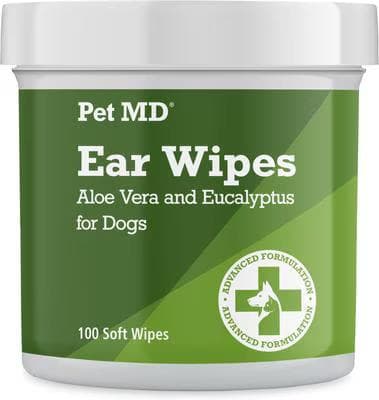
Pet MD Aloe & Eucalyptus Ear Wipes provide another outer-ear wiping option for suitable dogs over 12 weeks, according to the manufacturer. Their convenience is not a reason to wipe daily or insert a pad deep into the ear. If a different wipe or liquid already meets the planned need, adding this one is unnecessary.
Webvet may earn a commission when you click through to Chewy, at no extra cost to you.
Signs that need an examination
Getting treatment advice before cleaning
For an infected ear, ask the prescribing team whether cleaning is needed before or between applications and what to do if it hurts. The dog ear infection treatment guide explains why examination, the eardrum and the medicine determine these instructions. Do not copy another dog’s schedule or use a stronger flush because visible debris keeps returning.
Repeated wax may need a yeast assessment
Mites require parasite treatment
Why ingredients are not mite treatments
Coconut oil or peroxide does not provide a dependable treatment plan for an unexamined itchy ear. It cannot identify the parasite, account for other disease or establish that an infestation has cleared. The ear-mite home-remedies guide explains ingredient claims and what safe support can actually do while veterinary care is arranged. Do not turn a cleaning session into an experiment with a household oil.
Homemade mixtures do not solve the timing question
Home support has limits
Questions owners ask
Frequently Asked Questions
Should I clean the brown stuff out of my dog's ears?
A small amount of wax can be normal. Do not dig out brown material simply because of its color. If there is a sudden increase, odor, redness, discomfort or recurring buildup, seek veterinary assessment before starting or intensifying cleaning. Once the ear has been assessed and cleaning is appropriate, remove only the accessible material using the chosen product and gentle method. PDSA describes normal wax and concerning changes.

Editor
The Webvet Editorial Team is the in-house group of pet-care editors and writers behind Webvet, operated by Smart Pet Collective. The team researches, writes, and maintains Webvet's pet health, behavior, and medication content. Every article follows a defined editorial process: research from reputable veterinary and scientific sources, careful drafting, mandatory review of medical content by a credentialed veterinarian, and dated publication. Health and medication articles are medically reviewed by a licensed veterinary professional before they go live and are kept current over time.
Veterinarian · BVMS MRCVS
Dr. Pippa Elliott, BVMS, MRCVS, is a veterinarian with nearly 30 years of experience in companion animal practice. Dr. Elliott earned her Bachelor of Veterinary Medicine and Surgery from the University of Glasgow. She was also designated a Member of the Royal College of Veterinary Surgeons. Married with 2 grown-up kids, Dr. Elliott has a naughty Puggle named Poggle, 3 cats and a bearded dragon.
Related reading

Dog Muscle Spasms and Twitching: Causes, Symptoms, and When to Worry

Anemia in Dogs: Symptoms, Causes, Diagnosis, and Treatment

Seizures in Dogs: Types, Causes, What to Do, and Treatment
