Homemade Dog Ear Cleaner: Recipes and Safer Choices
Compare common homemade dog ear-cleaner recipes and their limitations. Learn why dilution cannot establish ear safety, what to do without a cleanser, and how to discuss commercial alternatives.

BVMS MRCVS
Medically reviewed by Dr. Pippa Elliott, BVMS MRCVS · Last reviewed

This article contains affiliate links. Webvet may earn a commission when you buy through them, at no extra cost to you.
A homemade dog ear cleaner may seem like an easy substitute when you have vinegar, peroxide, or oil at home. The difficulty is that an ingredient list or dilution ratio cannot tell you whether a mixture suits your dog’s ear canal, eardrum, or current medicine. For an ear that is painful, smelly, red, or producing new discharge, arrange veterinary advice before adding a homemade solution.
The table below compares commonly circulated recipes and what their ingredients do not establish. It is a description of those mixtures, not a set of instructions for putting them into your dog’s ears. If you simply ran out of an approved cleanser, call the clinic for a temporary plan rather than improvising a replacement.
Read Petful's veterinary safety guide to homemade dog ear cleaners alongside the ingredient discussion below.
- 1A familiar dilution ratio does not establish safety in an inflamed ear or with an injured eardrum.
- 2Cleaning the accessible outer flap is different from putting liquid into the ear canal.
- 3Homemade cleaners do not replace treatment of a confirmed infection.
- 4If the prescribed cleaner is unavailable, call the clinic before substituting another product.
 Sponsored
Have a health question about your dog?
Talk to a licensed vet at Dutch over video or message, including nights and weekends.
Use code Pets60
Plans start at $12/month · covers up to 5 pets
- Licensed vets in most states
- Rx for 150+ conditions
- 4.7 on Trustpilot
Common homemade dog ear cleaner recipes compared
Internet recipes often reuse the same few ingredients but give different proportions, storage advice, and claims.
That variation matters. Two mixtures called a natural ear wash may differ in acidity, alcohol content, concentration, or added fragrance. A reader cannot establish that they are interchangeable from the name of the main ingredient.
| Common recipe or ingredient | What the recipe usually describes | What it does not establish |
|---|---|---|
| Vinegar and water | Often described online as equal parts household vinegar and water | A tolerable acidity for this ear, an intact eardrum, or compatibility with medicine |
| Apple cider vinegar mixtures | A vinegar-based wash, sometimes with added oil or other ingredients | That apple cider vinegar is safer or that it treats confirmed yeast disease |
| Hydrogen peroxide mixtures | Peroxide alone or diluted with water | That fizzing means an infection is being treated; irritation remains a concern |
| Alcohol or witch hazel mixtures | A drying mixture; witch hazel preparations vary | That the formulation is alcohol-free or comfortable on inflamed tissue |
| Oil mixtures | Coconut, olive, mineral, or essential oils added to an ear-care recipe | A diagnosis, an effective infection treatment, or suitability inside the canal |
| Water or homemade salt water | A rinse without a formulated cleanser | Correct concentration, sterility, medicine compatibility, or treatment of the cause |
What homemade solution can I use to clean my dog's ears?
There is no universal homemade solution that can be recommended for an unexamined ear. DIY dog ear cleaning recipes, homemade ear flushes, and homemade ear wipes all leave the same questions unanswered: what is in the ear, is the eardrum intact, and does the mixture fit any treatment already underway? Ask the clinic for an exact temporary plan if the approved cleaner is unavailable.
This also applies to olive oil: there is no general instruction for putting olive oil into a dog’s ear that makes an unknown ear problem safe to manage. A homemade dog ear powder adds another uncertainty because loose material can remain in the canal. Do not improvise oil drops or powders when the clinic has not approved that exact preparation for your dog.
A canine ear wash home remedy is still an improvised mixture, even when a recipe uses veterinary-sounding language. There is no general frequency for applying apple cider vinegar to a dog’s ears: first establish whether that exact preparation belongs in the care plan at all. Repeating an unsuitable rinse less often does not turn it into an appropriate cleanser.
Compare ingredients before accepting a recipe claim
The table deliberately does not label a recipe safe simply because it is common. A dilution ratio cannot establish safety without the missing clinical information. It also does not standardize the starting ingredient: vinegar strength, witch hazel formulations, and household oils differ. Do not add an essential oil to a recipe or assume that doubling the water solves every irritation concern.
If the goal is routine maintenance, ask whether a formulated cleanser such as Virbac Epi-Otic Advanced fits your dog’s needs. Virbac identifies this product as a routine ear cleanser. That is a different decision from treating an active infection, and it still needs to fit any medicine already in the ear.
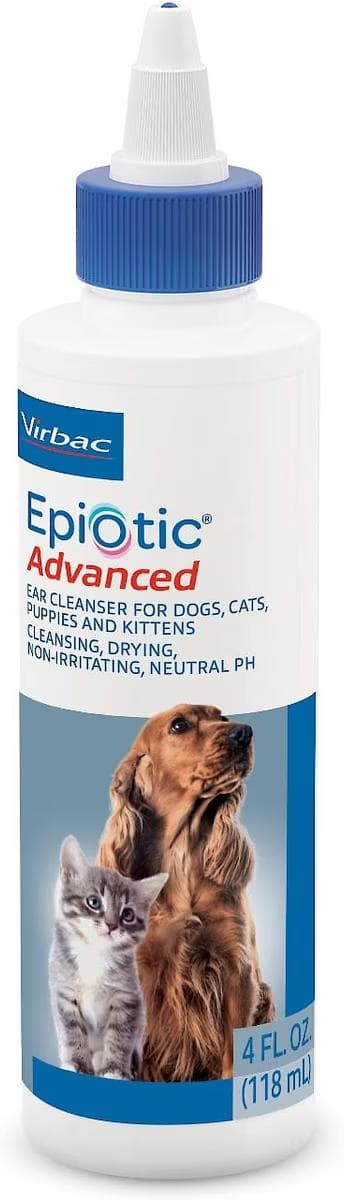
Webvet may earn a commission when you click through to Chewy, at no extra cost to you.
Why a familiar ingredient is not automatically ear-safe

Witch hazel and multicomponent mixtures
Witch hazel preparations are not all the same. Some include alcohol or other ingredients, so a recipe calling only for witch hazel does not identify the complete formulation.
Even an alcohol-free label cannot establish that witch hazel is appropriate inside a dog’s ear canal. Do not use it to treat an ear infection or assume that mixing it with apple cider vinegar creates a tested veterinary product.
Recipes sometimes add boric acid, gentian violet, baking soda, or lemon juice. The resulting mixture is not interchangeable with a manufactured ear preparation that happens to contain a similar ingredient. This guide provides no concentration or dosing instructions for those mixtures because ingredient familiarity does not establish ear safety. Take the original recipe and labels to the veterinarian if one has already been used.
Why the ear itself changes the decision
The inside of an ear is not the same surface as an unbroken patch of skin on the body. Inflammation, raw tissue, swelling, trapped debris, and an injured eardrum can change what is appropriate. An owner may be able to see the outer flap, but cannot establish the condition of the deeper canal and eardrum from that view.
This is why an ingredient concentration that sounds mild is not enough to clear a recipe. A painful reaction is also not proof that a solution is working. Stop if care causes pain and contact the clinic; do not keep using a mixture to see whether the ear becomes accustomed to it. Tell the veterinarian exactly what you used and when.
Peroxide, alcohol, and essential oils
Cornell’s ear-cleaning guidance advises avoiding cleaners containing alcohol or hydrogen peroxide in general. Peroxide bubbling does not show that yeast, bacteria, or the underlying cause has been controlled. Alcohol can be uncomfortable on inflamed tissue. Neither observation supports choosing a household chemical for a sore ear.
Tea tree oil and other essential oils are not interchangeable with the botanical ingredients in a finished pet product. Concentration and the complete formulation matter. Do not use a pet-product ingredient list as a recipe for recreating it at home, and do not assume that natural means nonirritating. If a dog licks a spilled mixture or seems unwell after exposure, contact a veterinarian and identify the exact ingredients.
- Keep the original ingredient container or a clear record of what was mixed.
- Tell the clinic whether the liquid went into the canal or only touched the outside.
- Report pain, balance changes, hearing changes, vomiting, or unusual behavior promptly.
- Do not add another liquid to try to neutralize or wash out the first one without instructions.
A drying claim does not explain the whole formula
Vet’s Best Ear Relief Wash & Dry illustrates the difference between a commercial formulation and a homemade mixture. It is a two-part kit with manufacturer instructions for its wash and drying products. If your veterinarian recommends that kit, use the specified product and directions instead of trying to reproduce its botanical components.
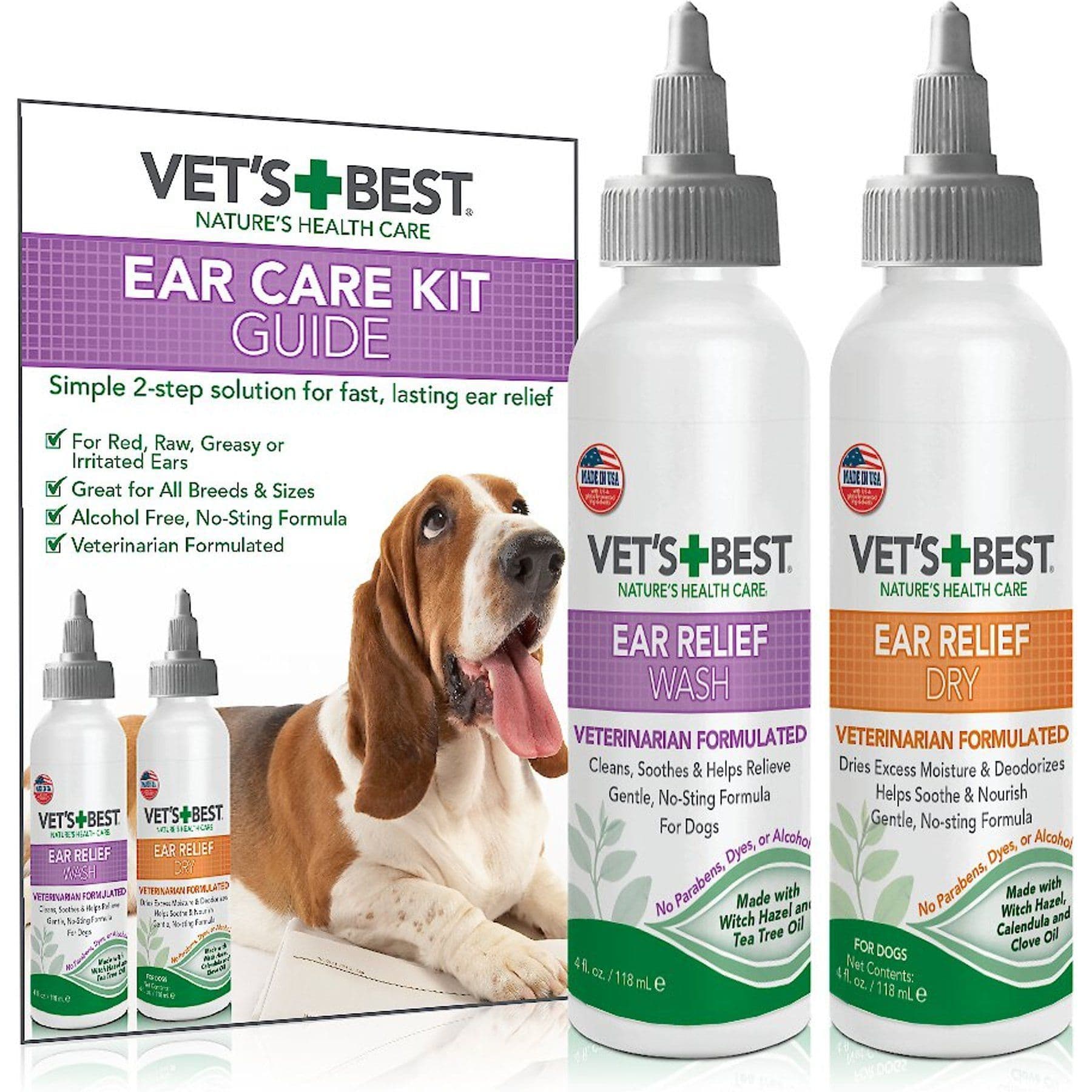
A two-step wash and drying formula for routine ear care. Follow both product labels and ask your veterinarian before use in painful ears.
Webvet may earn a commission when you click through to Chewy, at no extra cost to you.
Ask whether a drying step is appropriate for your dog’s actual ears. A dog after swimming, a dog with active otitis, and a dog with a retained ear medication may need different plans. A bottle sold for routine ear care should not be added automatically to the latter two situations. The word drying describes an intended job, not universal permission to apply it.
 Sponsored
Vet care that's always there
Unlimited video calls and messaging with licensed vets for less than a typical vet visit. One membership covers up to five pets.
Use code Pets60
Plans start at $12/month · covers up to 5 pets
- Licensed vets in most states
- Rx for 150+ conditions
- 4.7 on Trustpilot
What to use when you do not have dog ear cleaner
For owners considering home remedies, the best way to clean a dog’s ears starts with an approved plan. Cleaning naturally does not require a homemade ear rinse. When no cleaning solution is available, wait, obtain the correct product, and ask what gentle outer-flap care is appropriate meanwhile. Clean water and homemade saline are not automatic substitutes for a prescribed solution, especially when medication timing matters.
For the routine handling method once a product is approved, use the step-by-step cleaning guide. The frequency guide explains why normal ears and an active treatment course have different schedules. Neither guide changes the instructions for the exact product your clinic selected.
The best home solution may be to wait for the correct product and ask the clinic what to do meanwhile. That is especially true during an infection-treatment course. If cleaning was prescribed before a medicine, explain that you have run out and ask how the practice wants you to handle the next treatment. Do not silently replace the cleanser with vinegar, water, or another pet’s ear product.
- 1Do not substitute a household mixture into a prescribed ear-care routine.
- 2Call the clinic with the exact cleaner and medicine names.
- 3Ask whether the next cleaning should wait and when a replacement is needed.
- 4If the ear is painful or suddenly worse, describe that change when you call.
A little surface dirt on a comfortable outer flap is a different problem from brown gunk coming from the canal. Ask what gentle external wiping is appropriate for your dog. Avoid digging into the opening with cotton swabs, a finger wrapped in cloth, or improvised tools. If debris seems stuck deeper inside, the answer is not to push harder or add more liquid.

New brown discharge, a strong odor, or repeated scratching should prompt an examination rather than a search for a stronger wash. Color alone does not establish whether the material is normal wax, yeast-associated discharge, or another problem. If the veterinarian plans to collect a sample, cleaning immediately before the visit may remove material they want to inspect, so ask first.
For a clinician-approved routine, Veterinary Formula Clinical Care Ear Therapy is another commercial ear product to discuss by its exact label. A commercial option still has directions and limits; it is not automatically appropriate because a homemade mixture was unsuitable. Compare formulations in the vet-approved ear-cleaner guide and confirm the selected bottle with your practice.
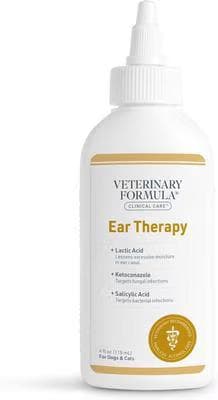
A medicated ear cleaner with lactic acid, ketoconazole, and salicylic acid that flushes debris and targets the yeast and bacteria behind ear infections. For dogs and cats.
Webvet may earn a commission when you click through to Chewy, at no extra cost to you.
Commercial alternatives are different formulations
The commercial ear-cleaner comparison distinguishes the exact selected formulations. It is useful when the clinic has identified the cleaning task and you need to confirm the right bottle; choosing a commercial label alone cannot resolve pain, an unknown eardrum, or incompatible medicines.
If you are moving away from a homemade recipe, decide what the new product is intended to accomplish.
Routine wax removal, clinician-directed debris removal during treatment, and long-term maintenance are separate jobs. Avoid selecting by smell, the word natural, or a promise that a solution kills everything. Start with the ear findings and the task your veterinarian has identified.
Dechra TrizULTRA + Keto is a specific ear cleanser containing ketoconazole and Tris-EDTA. Dechra’s description explains the intended formulation. It is an example of a product a clinician may select when those ingredients fit the case, not a homemade antifungal recipe or a reason to treat every brown ear discharge as yeast.
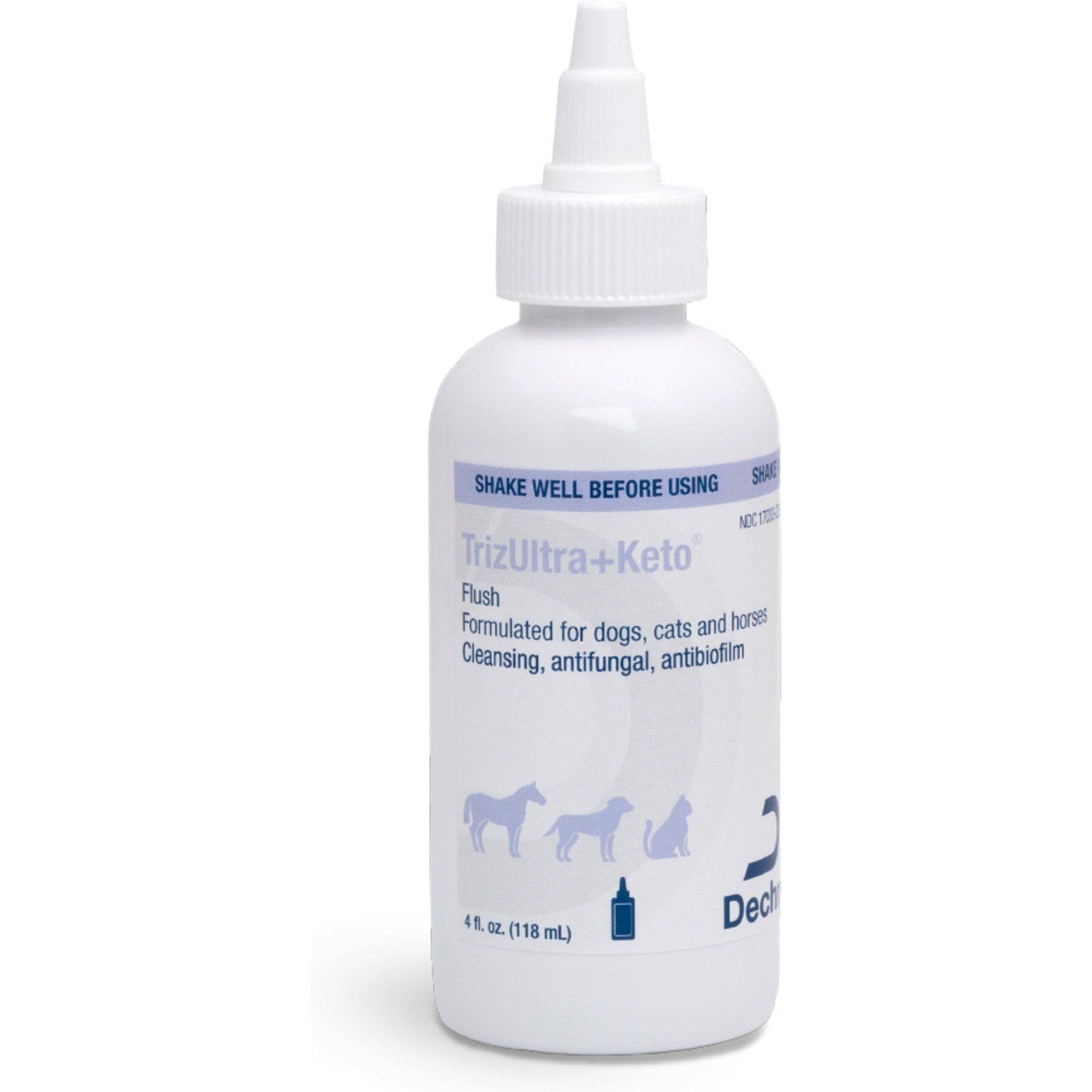
A ketoconazole-containing ear flush to discuss with your veterinarian when routine cleaning is not enough. Use only as directed for your dog.
Webvet may earn a commission when you click through to Chewy, at no extra cost to you.
Write down the full product name, how often to clean, and its timing relative to any medication. If an online general cleaning guide appears to conflict with the prescription label, ask the prescribing clinic to resolve the conflict. Some medicines need to remain in the ear undisturbed; more cleaning is not necessarily better care.
- Use the exact formulation that was recommended.
- Keep the nozzle clean and outside the canal opening.
- Do not dilute or combine the product unless its directions and your veterinarian explicitly call for that.
- Ask what improvement to expect and when the ear should be checked again.
Once home cleaning has been cleared, the dog ear-cleaning technique guide explains gentle handling and accessible-surface wiping. Stop if the dog appears painful or cannot tolerate the procedure. Ask the practice for a demonstration or a revised plan instead of relying on force or repeated attempts.
Homemade cleaners and suspected yeast infection
For the underlying diagnosis and treatment, see the clinical yeast-ear guide. If the concern is appearance rather than an established diagnosis, the symptom guide explains what ear photographs and discharge can and cannot tell you. Suspected parasites require the separate ear-mite care plan.
A homemade ear cleaner for yeast infection has two unanswered questions: is yeast actually part of the problem, and is the proposed mixture suitable for this ear?
An odor or dark discharge cannot answer either question. Veterinary examination and appropriate testing guide the diagnosis, while treatment and cleaning instructions depend on the findings.
Apple cider vinegar, coconut oil, and other natural mixtures should not be presented as established home cures for a dog’s fungal ear infection. Laboratory or ingredient-level claims do not show that an improvised mixture will safely treat a particular dog. The yeast-ear cleaner guide explains how a clinician can match an appropriate cleanser to a diagnosed treatment plan.
An ear problem needs a cause, not just a cleaner
For general dog ear infection causes, including the role of trapped moisture, start with the clinical overview. Swimmer’s ear and canker are descriptions people may use for ear trouble; neither tells you which household ingredient to choose. A new sore or wet ear needs assessment of the ear itself, particularly before adding another liquid.
If getting to the vet is difficult
Call the practice and describe the signs, their duration, and the practical barrier, whether that is cost, transport, or appointment availability. Ask how urgently your dog needs to be seen and what to avoid until then. Do not use an old antibiotic, a human ear drop, or a stronger homemade solution as a substitute for knowing the cause.
The dog ear infection treatment guide separates the examination, medication, cleaning, and cost questions. For ingredient-specific infection claims beyond cleaning, use the home-remedy guide. A household remedy being widely shared does not establish that it treats bacteria, yeast, parasites, or a lodged foreign object.
Questions about homemade ear cleaning
Frequently Asked Questions
Is it good to clean dogs' ears with vinegar?
Do not assume that vinegar is appropriate for your dog’s ear. Acidity can be uncomfortable on inflamed tissue, and a home dilution does not establish suitability when the eardrum or treatment plan is unknown. Ask your veterinarian for an exact cleanser recommendation. If you already used vinegar and the ear became painful, stop and tell the clinic what concentration was used.
Is hydrogen peroxide safe for dog ears?
Hydrogen peroxide is not a routine ear-cleaning substitute. It can irritate sensitive tissue, and a bubbling reaction does not identify or cure the cause of discharge. Use the cleaner recommended for the examined ear and check its compatibility with medication. Do not try to wash peroxide out with another household mixture unless a veterinarian specifically instructs you to do so.

Editor
The Webvet Editorial Team is the in-house group of pet-care editors and writers behind Webvet, operated by Smart Pet Collective. The team researches, writes, and maintains Webvet's pet health, behavior, and medication content. Every article follows a defined editorial process: research from reputable veterinary and scientific sources, careful drafting, mandatory review of medical content by a credentialed veterinarian, and dated publication. Health and medication articles are medically reviewed by a licensed veterinary professional before they go live and are kept current over time.
Veterinarian · BVMS MRCVS
Dr. Pippa Elliott, BVMS, MRCVS, is a veterinarian with nearly 30 years of experience in companion animal practice. Dr. Elliott earned her Bachelor of Veterinary Medicine and Surgery from the University of Glasgow. She was also designated a Member of the Royal College of Veterinary Surgeons. Married with 2 grown-up kids, Dr. Elliott has a naughty Puggle named Poggle, 3 cats and a bearded dragon.
Related reading

Dog Muscle Spasms and Twitching: Causes, Symptoms, and When to Worry

Anemia in Dogs: Symptoms, Causes, Diagnosis, and Treatment

Seizures in Dogs: Types, Causes, What to Do, and Treatment
