Dog Ear Cleaner for Yeast Infection: Vet-Led Choices
Understand what a dog ear cleaner can do for yeast-related disease, compare exact formulations, and match cleaning to medicine without confusing routine care with antifungal treatment.

BVMS MRCVS
Medically reviewed by Dr. Pippa Elliott, BVMS MRCVS · Last reviewed

This article contains affiliate links. Webvet may earn a commission when you buy through them, at no extra cost to you.
A dog ear cleaner for yeast infection should be chosen as part of the treatment plan for that ear. Cleaning may help remove debris, but it does not establish the diagnosis or replace every antifungal medicine. Some products are routine cleansers, others contain antimicrobial ingredients, and some ear treatments must remain in place without further cleaning.
If yeast has not been confirmed, arrange an examination before choosing an ear wash by smell, discharge color, or a product review. If your dog already has treatment, ask which cleanser is compatible and when cleaning is allowed. The most useful bottle is the one that fits those answers, not necessarily the one with the longest ingredient list.
- 1Ask whether yeast was confirmed and whether bacteria or another problem is also present.
- 2Match the exact formulation to the diagnosed ear and any prescribed medicine.
- 3Cleaning instructions differ: some retained medicines need a period with no cleaning.
- 4Check the full product name; MiconaHex+Triz skin products and TrizULTRA + Keto ear flush are different formulations.
 Sponsored
Have a health question about your dog?
Talk to a licensed vet at Dutch over video or message, including nights and weekends.
Use code Pets60
Plans start at $12/month · covers up to 5 pets
- Licensed vets in most states
- Rx for 150+ conditions
- 4.7 on Trustpilot
What a cleaner can do for a yeast-infected ear
Earwax, or cerumen, is not itself proof of disease. A pet-safe antiseptic solution also cannot be selected from those words alone: ask whether the actual formulation is intended for ears and fits the current findings.
Skin antiseptics and household disinfectants should not be repurposed as ear cleaners. The cleaning goal is removal of relevant debris within a diagnosed plan, not sterilizing the ear at home.
A cleaner can loosen and remove material that makes an ear uncomfortable or interferes with care. That is a useful job, but cleaning removes debris without establishing a cure. A cleaner-looking ear may still need antifungal treatment, control of inflammation, or a recheck. Ask what the clinician expects the cleaning step to accomplish in your dog’s case.
Cornell’s veterinary ear-care guidance explains that packed debris can obstruct examination and affect delivery of topical treatment. At the same time, a very painful or swollen ear may not be ready for home cleaning. The clinic may need to manage discomfort or perform the initial cleaning before asking you to continue care.

Before buying a cleanser, establish whether you are dealing with confirmed yeast or a suspicion based on appearance. Malassezia yeast, bacteria, parasites, and noninfectious inflammation can produce overlapping signs. The clinical dog ear yeast infection guide explains the role of an ear examination and cytology, including why photographs cannot choose the treatment.
Cleaning and treating are separate decisions
An antifungal ingredient in a cleanser is relevant information, but it does not tell you whether that product is enough for a particular infection. A veterinarian considers the organism, degree of inflammation, condition of the canal and eardrum, and ability to give treatment. Do not assume that a larger amount of cleaner can make up for missed medication or a difficult examination.
Dechra TrizULTRA + Keto is an example of a clinician-selected ear cleanser with ketoconazole and Tris-EDTA. Its role should be explained alongside the rest of the plan: whether it is being used during active treatment, afterward for maintenance, or for another identified purpose. Ask what change means you should call rather than continuing the same routine.
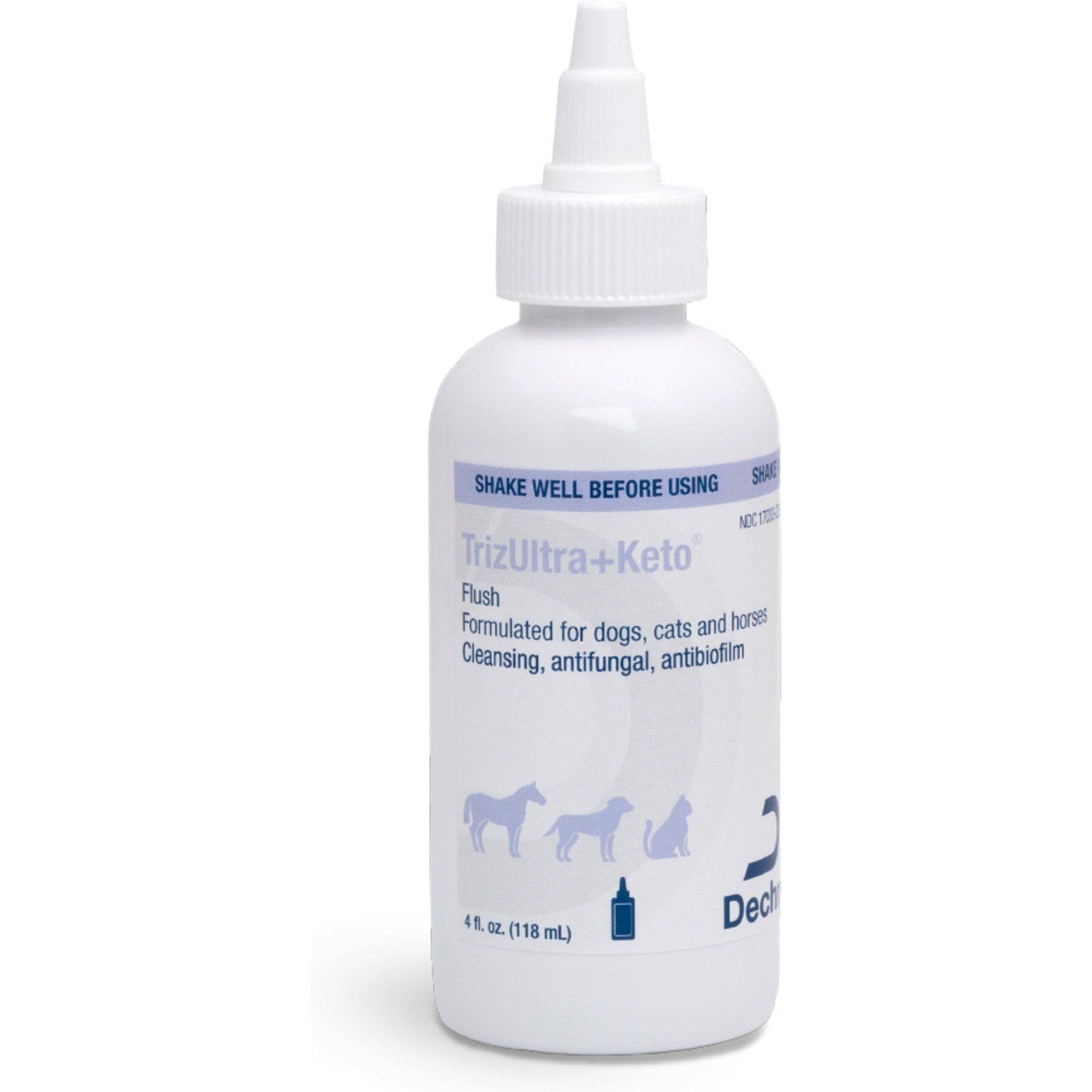
A ketoconazole-containing ear flush to discuss with your veterinarian when routine cleaning is not enough. Use only as directed for your dog.
Webvet may earn a commission when you click through to Chewy, at no extra cost to you.
Ingredients and formulations are not interchangeable
Read the full name and ingredient panel, including whether the container says ear cleanser, ear flush, ear solution, shampoo, spray, or wipe.
Similar product names can conceal a different intended site or active ingredient. A skin product is not converted into an ear flush by containing an ingredient that also appears in an ear product.
| Formulation | What to distinguish | Question for the clinic |
|---|---|---|
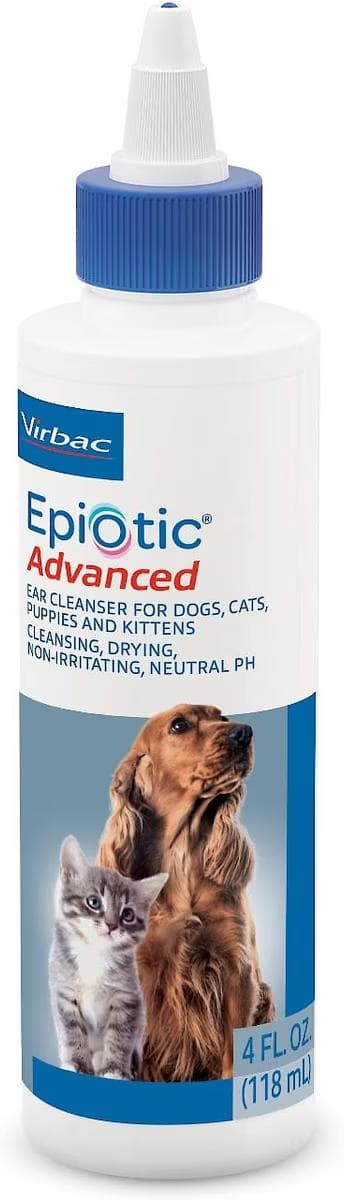
| Routine cleanser, such as Epi-Otic Advanced | A cleaning role does not establish treatment of confirmed yeast | Is routine cleansing enough, or is medication also needed? |
| Ketoconazole and Tris-EDTA ear cleanser, such as TrizULTRA + Keto | An ear-specific formulation with an antifungal ingredient | Does this formulation fit the findings and other treatment? |
| Chlorhexidine and ketoconazole flush, such as OticBliss Ear Flush | A medicated flush differs from the brand’s other ear drops | Is this exact flush compatible with the prescribed medicine? |
| Zymox Enzymatic Ear Cleanser | The cleanser differs from Zymox Ear Solution and Otic products | Is this a maintenance step after the current treatment is complete? |
| MiconaHex+Triz shampoo, spray, mousse, or skin wipes | These are skin-product forms, not substitutes for TrizULTRA + Keto ear flush | What exact product and body site did the veterinarian mean? |
Epi-Otic, Zymox, and salicylic acid
Compare the exact bottles: Zymox Enzymatic Ear Cleanser and Virbac EPIOTIC Advanced are cleansers. Zymox Plus, Ear Solution, and Otic products have different formulations and instructions. Neither the brand name nor a similar bottle establishes that two products are interchangeable. If your veterinarian prescribed a treatment, confirm its complete name before ordering a cleanser alongside it. Ask whether that treatment permits precleaning and whether the cleaner should be used on the same day; do not assume a routine from another bottle applies. Keep the packaging available when you call so the clinic can check the active ingredients, strength, and directions you actually received. This guide does not establish that either brand works better clinically. The useful comparison is whether a particular cleanser fits the examined ear and the prescribed treatment sequence.
Epi-Otic Advanced contains salicylic acid and is described by Virbac as a routine cleanser. Asking whether Epi-Otic kills yeast skips the more important clinical question: is cleansing sufficient for this ear, or is an antifungal medicine needed? The presence of an ingredient does not establish that the finished product will cure a confirmed infection on its own.
Ketoconazole, chlorhexidine, and Tris-EDTA
Dechra lists 0.15% ketoconazole and Tris-EDTA for TrizULTRA + Keto. Vetnique’s OticBliss Ear Flush description identifies chlorhexidine and ketoconazole. Those ingredient differences help explain why two bottles should not be treated as identical even when both are marketed for ear care.
Avoid ranking products simply by counting active ingredients or choosing a larger percentage. Concentration, the rest of the formula, the affected tissue, and the intended use all matter. The product with more ingredients is not automatically the better match. Ask the veterinarian what role the chosen ingredients have in the plan and whether they change the timing of other products.
Can I use MiconaHex+Triz in my dog’s ears?
Do not substitute MiconaHex+Triz skin products for an ear flush. Dechra’s MiconaHex+Triz range includes shampoo, spray, mousse, and wipes for skin care. TrizULTRA + Keto is a different ear cleanser. If you remember only the Triz part of the name, contact the practice and read back the full label before using it.
This distinction also matters when ordering a replacement online. Check the product type, active ingredients, and intended application site rather than relying on a thumbnail, matching label color, or search-result headline. Keep a record of the exact recommendation. If the product delivered differs, leave it unused until the clinic confirms what happened.
Comparing cleanser options with your veterinarian
The useful comparison starts with the treatment stage. During an active infection, the veterinarian may want a particular antimicrobial cleanser or may prohibit home cleaning for a time.
Once the ear is comfortable and the active problem is controlled, a different maintenance routine may be appropriate. An everyday cleanser and an infection-treatment product should not be described as interchangeable alternatives.
Vetnique OticBliss Anti-Bacterial and Anti-Fungal Ear Flush can be discussed when the clinician wants this specific chlorhexidine-and-ketoconazole formulation. Make sure the recommendation refers to the flush, not an OticBliss ear drop with different ingredients. Do not add it to a treatment course merely because a retail description mentions yeast.
Vet-strength medicated ear flush that clears wax, debris, and odor while its antibacterial and antifungal formula targets the yeast and bacteria behind ear infections. For dogs and cats.
Webvet may earn a commission when you click through to Chewy, at no extra cost to you.
- For an active problem: ask what was found on examination and testing.
- For a cleanser: ask what its exact job is within the plan.
- For another medicine: ask whether cleaning should happen before it, later, or not at all.
- For maintenance: ask when the current episode is considered controlled and what routine begins then.
A routine cleanser such as Virbac Epi-Otic Advanced may be useful in an appropriate maintenance or clinician-directed cleaning plan. Virbac describes its routine-cleansing purpose. A history of yeast does not mean the dog should receive the same antimicrobial formulation indefinitely without reassessment.
Webvet may earn a commission when you click through to Chewy, at no extra cost to you.
For a broader comparison of cleanser types, see the vet-approved dog ear-cleaner guide. Use that comparison to clarify the options your clinician considers appropriate. It cannot determine whether the present episode is yeast, which medication is required, or whether the eardrum can safely be assessed at home.
 Sponsored
Vet care that's always there
Unlimited video calls and messaging with licensed vets for less than a typical vet visit. One membership covers up to five pets.
Use code Pets60
Plans start at $12/month · covers up to 5 pets
- Licensed vets in most states
- Rx for 150+ conditions
- 4.7 on Trustpilot
Match cleaning to the prescribed ear medicine
Cleaning can disrupt a leave-in medicine. The instruction to clean before drops is therefore not a universal rule. Some products require a cleaned and dried canal before professional administration, then a defined period without cleaning afterward. Others have different instructions. Ask for a specific first cleaning date if you were told to leave the ear alone.
DuOtic provides a concrete example. Its official US label instructs owners not to clean the ear canal for 45 days after initial administration. That restriction belongs to this product’s treatment plan; do not transfer it to every other medicine or shorten it because the ear appears dirty. Call the prescribing clinic if you are concerned.
- 1Write down the medicine and cleanser names separately.
- 2Confirm whether cleaning is allowed now and, if not, the first cleaning date.
- 3Ask what to do if the ear becomes dirty, painful, or more irritated during a no-cleaning interval.
- 4Contact the prescribing clinic before changing the order, interval, or combination.

Zymox cleanser is different from Zymox ear treatment
Zymox Enzymatic Ear Cleanser is the routine cleanser in this comparison, not the hydrocortisone-containing Otic or Ear Solution products. The manufacturer’s ear-care guidance distinguishes these formulations and advises against other ear preparations before or during an Ear Solution course. Check the exact product rather than assuming that two bottles from the same brand should be used together.
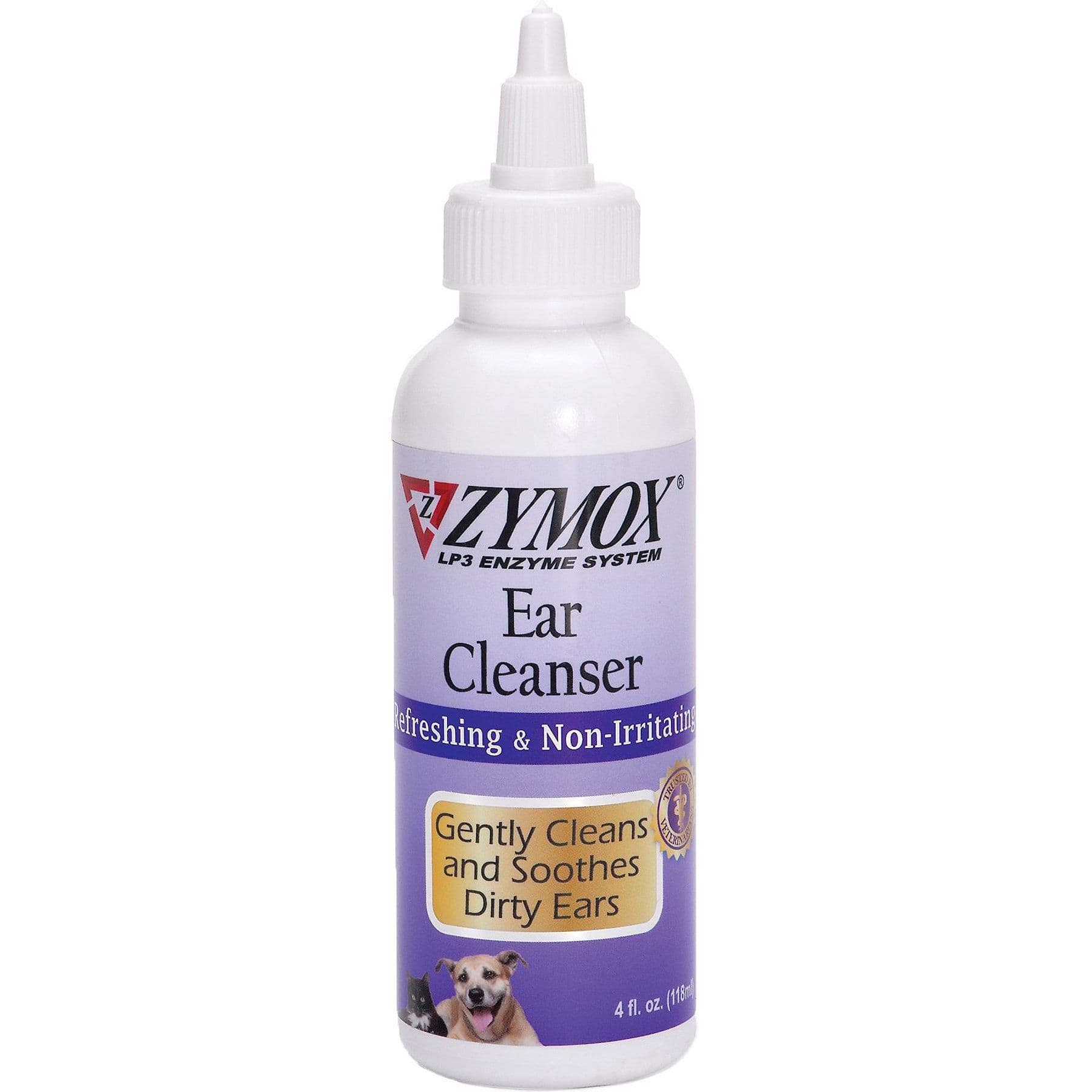
An ear cleanser for routine maintenance of non-infected ears. This is the cleanser, not the Zymox hydrocortisone treatment.
Webvet may earn a commission when you click through to Chewy, at no extra cost to you.
If you are unsure which Zymox product you have, compare the full label with the recommendation and contact the clinic. The word enzymatic alone does not identify the formulation or its schedule. A cleanser may be considered for maintenance after treatment, but an owner should not add it during a no-precleaning course to make the ear look cleaner.
If instructions seem to conflict
Read the clinic’s instructions and product label together before the first home session. If one says to clean and the other says not to, call rather than choosing whichever is easier. Mention every ear product being used, including a wipe, a drying solution, or a household mixture. The team cannot judge a combination it does not know about.
Also report practical problems. A dog that cannot tolerate handling, an owner who cannot safely give the treatment, or repeated missed doses may need a revised plan. Ask for help before repeatedly forcing the ear or compensating with a bigger quantity. A clear account of what actually happened is more useful than describing the treatment as completed when it could not be given.
How to clean a yeast-prone ear when your vet approves
If the veterinarian selects an antifungal ear wash or ear flush, ask them to demonstrate the technique with that exact bottle.
Flush can describe a product category; it is not permission to force liquid deeply into the canal. Follow the assigned frequency and stop if the ear is painful. More frequent cleaning can interfere with the plan rather than accelerating improvement.
Start only when the clinician has cleared home cleaning and specified the compatible product. Gather clean cotton or gauze and a towel, let the dog settle, and follow the demonstrated technique. Keep the bottle tip outside the canal and avoid forceful pressure. The step-by-step ear-cleaning guide explains the handling sequence without replacing your product-specific instructions.
- Use the specified cleanser and the amount or method the clinic demonstrated.
- Allow the dog to shake if that is part of the recommended routine, protecting nearby surfaces with a towel.
- Gently remove loosened material from accessible areas with fresh cotton or gauze.
- Stop if the ear is painful or the dog cannot tolerate care; contact the practice.
An ear wipe is not a tool for reaching deep into the canal, and wiping does not necessarily remove the material that interferes with treatment. Do not push swabs into the opening or try to scrape out a thick plug. If the canal seems blocked or the dog reacts painfully, ask whether the clinic needs to perform cleaning instead of repeating the procedure at home.
What should you see after cleaning?
A cotton pad may collect wax and discharge, but the appearance of that material does not measure how much yeast remains. Likewise, a cleaner surface is not proof that an infection is cured. Ask what changes in comfort, discharge, and scratching are expected, and keep the recheck that was recommended. A different smell alone should not determine when treatment stops.
Tell the clinic if cleaning immediately causes more pain, repeated head shaking, or a new reaction. Describe when it happens relative to the cleaner or medication. Sudden balance changes, a head tilt, marked hearing changes, or severe discomfort need prompt advice. Do not add another product to soothe a reaction without checking first.
When the canal is too uncomfortable to clean
A dog who cannot tolerate the prescribed cleaning needs a revised plan, not repeated restraint. In a swollen or painful ear, a veterinarian may need to control inflammation before home care is workable. Merck’s professional guidance on otitis describes this situation and the value of a clinic demonstration. It is a reason to report a failed attempt promptly rather than selecting a stronger cleaner.
Be specific when you call: did the dog resist before the bottle approached, when the flap moved, or after liquid entered? Was the cleaner applied, partly applied, or not applied at all? These observations help the practice understand what happened. They do not prove whether the problem is fear, pain, product irritation, or deeper disease, and you do not need to decide which explanation is correct before asking for help.
If cleaning has become impossible, ask what to do about the next scheduled medicine as well. The practice may want to demonstrate a different handling approach or examine the ear again. Do not quietly omit the cleanser while continuing a sequence that depended on it, and do not flush repeatedly to compensate for an earlier incomplete session. Keep track of what actually reached the ear so the clinician has an accurate history.
Keep the left and right ear instructions separate
One ear’s appearance does not establish what is happening in the other. Merck’s owner guide notes that otitis can involve one or both ears and that examination may include discharge sampling. Ask whether both ears were assessed and whether the same cleaning instructions apply to each. A darker-looking ear does not automatically need an extra dose of cleanser.
If the clinic gives different instructions, make a simple left-ear and right-ear record. Include the exact product, whether cleaning is currently permitted, the planned frequency, and the next review date. Use those headings from the dog’s perspective and confirm them during the demonstration. A shared note is more reliable than describing an ear as the bad one, especially when two people provide care or the symptoms change.
Keep that distinction when reporting progress. For example, say that the left ear tolerated its planned cleaning while the right ear became painful before cleaning started. Do not copy treatment to an unexamined ear, or assume that improvement on one side establishes recovery on both. This record supports the clinician’s decisions while keeping the owner’s job focused on following and reporting the agreed plan.
Natural, homemade, and no-vet options
Apple cider vinegar as an antifungal is an ingredient claim, not proof that a natural or homemade dog ear cleaning solution safely treats this dog’s yeast infection. Household mixtures may irritate an inflamed ear or interfere with existing medicine. The homemade dog ear-cleaner comparison explains why a recipe’s ratio does not establish suitability for the canal or eardrum.
Safe home care for a confirmed fungal ear infection means following the veterinary treatment plan, not identifying a home ingredient that supposedly kills all yeast.
If cost or access is the barrier, tell the clinic what you can manage and ask about the examination and initial testing costs. Do not choose an over-the-counter antibiotic simply because it is easier to obtain.
The dog ear infection treatment guide explains medicine, examination, recovery, and cost as separate decisions. The infection home-remedy guide addresses ingredient claims in more detail. Neither a review score nor a familiar natural ingredient can confirm the organism causing the current episode.
When yeast returns despite cleaning
What triggers yeast infection in dogs?
Yeast can overgrow when the environment in the ear changes. Allergic inflammation, moisture, and changes in the canal can contribute; some dogs have more than one underlying factor.
Recurrence therefore needs assessment of the dog and ear, not just a stronger cleanser. The veterinarian may repeat cytology and investigate why inflammation or the conditions favoring yeast keep returning.
Use the recheck to separate recurrence from incomplete response
If the question is which medicine to use, the infection treatment guide explains that separate decision. For a routine cleanser after the episode is controlled, use the general cleanser comparison and the cleaning-frequency guide. Keep the prescribed course and recheck plan unless the clinic changes them.
Recurrent yeast is a reason to look beyond the cleaning bottle. An underlying inflammatory problem, difficulty giving treatment, or a new change in the canal may need attention. The clinical yeast-ear guide covers these causes, diagnostic lookalikes, and why food claims cannot replace an ear examination. Do not assume every recurrence proves that the cleaner was too weak.
| What changed | What to report |
|---|---|
| Pain during cleaning | The product, timing, and whether the ear tolerated earlier sessions |
| Discharge returns quickly | How soon it returns and whether odor, scratching, or pain also returned |
| Treatment could not be given | Which doses or cleaning sessions were missed and why |
| Signs improved then returned | When treatment ended, when signs returned, and whether the recheck happened |
| New balance or hearing signs | Describe the change promptly; do not wait for the usual cleaning day |
Bring the actual bottles or their labels to a reassessment. A similarly named replacement, an added wipe, or a change in cleaning frequency can matter even when it seemed minor at home. Ask whether the examination or cytology changed the plan and whether maintenance should be different once this episode is controlled.

Prepare for the recheck without washing away useful information
Ask the practice whether to clean before the appointment and when to give any scheduled medicine. Veterinary samples are normally collected before the clinic cleans the ear, according to Merck’s diagnostic guidance. That does not create a universal instruction to stop a prescribed course for a fixed number of days. Get the timing for your dog’s appointment rather than borrowing a rule from another treatment plan.
Bring the bottles or clear photographs of the full labels, together with the care record. Include products used by a groomer and anything tried before the diagnosis. If a different bottle was supplied on a repeat order, mention the change even if the brand looked familiar. The full product name and formulation are more useful than reporting that an antifungal ear cleaner was used.
Write down the practical questions before the visit: should cleaning continue, should the product change, and what finding would justify another check? If odor improved but cleaning still hurts, report both observations. Avoid reducing the update to better or worse when there are specific changes the clinician can compare. Surface cleanliness is useful to record, but it is not a substitute for the examination and tests needed to assess recovery.
Separate the treatment course from the maintenance plan
Before leaving a recheck, ask for a clear transition point. The cleanser used alongside an active treatment may not be the one or the schedule needed afterward. Do not convert a temporary instruction into an indefinite daily routine simply because the bottle has some solution left. Likewise, an ear that looks cleaner is not a reason to stop prescribed medication without the clinician’s direction.
A useful maintenance handover identifies the product, the reason it is needed, the ear or ears involved, and the situation that should prompt a call. Ask specifically how swimming, bathing, grooming, or a return of discomfort affects that plan. The answer may be different for a dog with a history of recurrent disease than for a dog whose first episode followed a particular event.
Keep the previous course in the record instead of overwriting it. If the problem returns, a dated history shows which cleaner and medicine were used, what the dog tolerated, and when signs changed. That is more informative than cycling through several cleaners between appointments. The point of a maintenance routine is a repeatable plan that the clinician can reassess, not an escalating collection of antifungal products.
Food claims and yeast detoxes
Changing food is not an ear antifungal treatment. A veterinarian may investigate food-responsive disease or another allergy when ear inflammation recurs, but that is a separate diagnostic process.
Do not remove whole food groups or replace a complete diet because an online list says it will starve yeast. Discuss the history and any suspected food reactions with the clinician.
There is no established yeast-detox routine that takes the place of treating a confirmed ear problem. Supplements, restrictive menus, and a stronger wash can distract from the actual findings. If the dog also has skin, paw, digestive, or other signs, report them rather than assuming they all share the same cause. The pattern helps guide a proper work-up.
For product comparisons, see Petful's ear cleaner guide for dogs with yeast infections.
Questions about yeast and ear cleaners
Frequently Asked Questions
What not to feed a dog with a yeast infection?
There is no universal food blacklist that treats an ear yeast infection. Avoid foods your veterinarian has specifically excluded, especially during a prescribed diet trial, and keep the dog on an appropriate complete diet. A suspected food allergy needs its own plan. Do not substitute diet changes for the antifungal treatment or recheck recommended for the ear.
What foods starve yeast in dogs?
No food has been established as a way to starve yeast out of an infected dog’s ear. A dietary change may have a role if a veterinarian is investigating food-responsive inflammation, but it does not replace treatment of the current infection. Ask about the purpose of any proposed diet and what evidence will be used to judge whether it helped.
How do I detox my dog's yeast?
A yeast detox is not a substitute for veterinary diagnosis and treatment. Ask whether yeast was confirmed, what medicine and cleaning plan are appropriate, and when the response should be checked. If problems recur, investigate the underlying cause with the clinician instead of repeatedly adding supplements, household washes, or restrictive foods.

Editor
The Webvet Editorial Team is the in-house group of pet-care editors and writers behind Webvet, operated by Smart Pet Collective. The team researches, writes, and maintains Webvet's pet health, behavior, and medication content. Every article follows a defined editorial process: research from reputable veterinary and scientific sources, careful drafting, mandatory review of medical content by a credentialed veterinarian, and dated publication. Health and medication articles are medically reviewed by a licensed veterinary professional before they go live and are kept current over time.
Veterinarian · BVMS MRCVS
Dr. Pippa Elliott, BVMS, MRCVS, is a veterinarian with nearly 30 years of experience in companion animal practice. Dr. Elliott earned her Bachelor of Veterinary Medicine and Surgery from the University of Glasgow. She was also designated a Member of the Royal College of Veterinary Surgeons. Married with 2 grown-up kids, Dr. Elliott has a naughty Puggle named Poggle, 3 cats and a bearded dragon.
Related reading

Dog Muscle Spasms and Twitching: Causes, Symptoms, and When to Worry

Anemia in Dogs: Symptoms, Causes, Diagnosis, and Treatment

Seizures in Dogs: Types, Causes, What to Do, and Treatment
