Cyclosporine for Dogs: Uses, Dosage, Side Effects, and Cost
Cyclosporine (Atopica) is a prescription immune-modulating drug vets use for allergic skin disease, perianal fistulas, and some immune disorders in dogs. This guide covers dosing by weight, side effects, interactions, cost, and alternatives.

BVMS MRCVS
Medically reviewed by Dr. Pippa Elliott, BVMS MRCVS · Last reviewed

Drug facts
Cyclosporine (Atopica) for Dogs· Cyclosporine
Cyclosporine (Atopica) is a prescription calcineurin inhibitor FDA-approved to control atopic dermatitis in dogs weighing at least 4 lbs. Vets also use it extra-label for perianal fistulas, inflammatory bowel disease, and immune-mediated diseases. The label starts at 5 mg/kg once daily for 30 days, then tapers.

 Sponsored
Is Cyclosporine (Atopica) for Dogs right for your dog?
A licensed vet at Dutch can assess your dog over video and prescribe treatment when it's appropriate, delivered to your door.
Use code Pets60
Plans start at $12/month · covers up to 5 pets
- Licensed vets in most states
- Rx for 150+ conditions
- 4.7 on Trustpilot
Cyclosporine for dogs: what Atopica treats, prescription status, and whether today is a vet day
Cyclosporine for dogs, sold under the brand name Atopica and as generic modified capsules, is a prescription immunosuppressant. The Atopica package insert on DailyMed states that it is FDA-approved "for the control of atopic dermatitis in dogs weighing at least 4 lbs." Vets also use it extra-label for some immune diseases and perianal fistulas.
Atopica for dogs is not sold over the counter, the veterinarian sets the dose by body weight, and itch relief can take 4 to 6 weeks to build. Today is a vet day if your dog has never had a skin workup, if a prescribed course has stopped working, or if you see warning signs such as hives, facial swelling, bloody vomit, or yellowing of the skin.
- 1The label covers canine atopic dermatitis; vets also use it for perianal fistulas, IBD, and immune-mediated disease.
- 2The label starts at 5 mg/kg once daily for 30 days, matched to a capsule size by weight, then tapers.
- 3Improvement usually takes 4 to 6 weeks, so it is a long-term control drug, not a flare treatment.
- 4Stomach upset is the most common side effect; jaundice, new thirst, signs of infection, an allergic reaction, or bloody vomit need a call to the vet now.
Cyclosporine is a calcineurin inhibitor. A review of oral cyclosporine in dogs in the Journal of Veterinary Internal Medicine explains that it acts on T lymphocytes by cutting the production of signaling proteins such as interleukin-2. The Atopica label adds that it is "not a corticosteroid or an antihistamine," which is why it behaves differently from steroids or allergy pills.

Is there an over the counter version of cyclosporine?
No. There is no non-prescription cyclosporine for dogs in the United States. The federal regulation for veterinary cyclosporine (21 CFR 520.522) restricts both the capsules and the oral solution to use "by or on the order of a licensed veterinarian." Any site offering the drug without a vet prescription is selling outside that rule, and the drug needs an exam, a weight, and follow-up to be used safely.
The topical eye ointment form is a separate product for a different problem, covered in the guide to dry eye in dogs; this page covers the oral capsules.
A generic option is Cyclosporine (Generic) Modified Capsules, 50-mg, 30 capsules, a modified capsule form for dogs whose vet has chosen the 50 mg strength. Chewy Pharmacy fills it only with a veterinarian's prescription, and it is listed at $49.20 on Chewy when checked in November 2026.
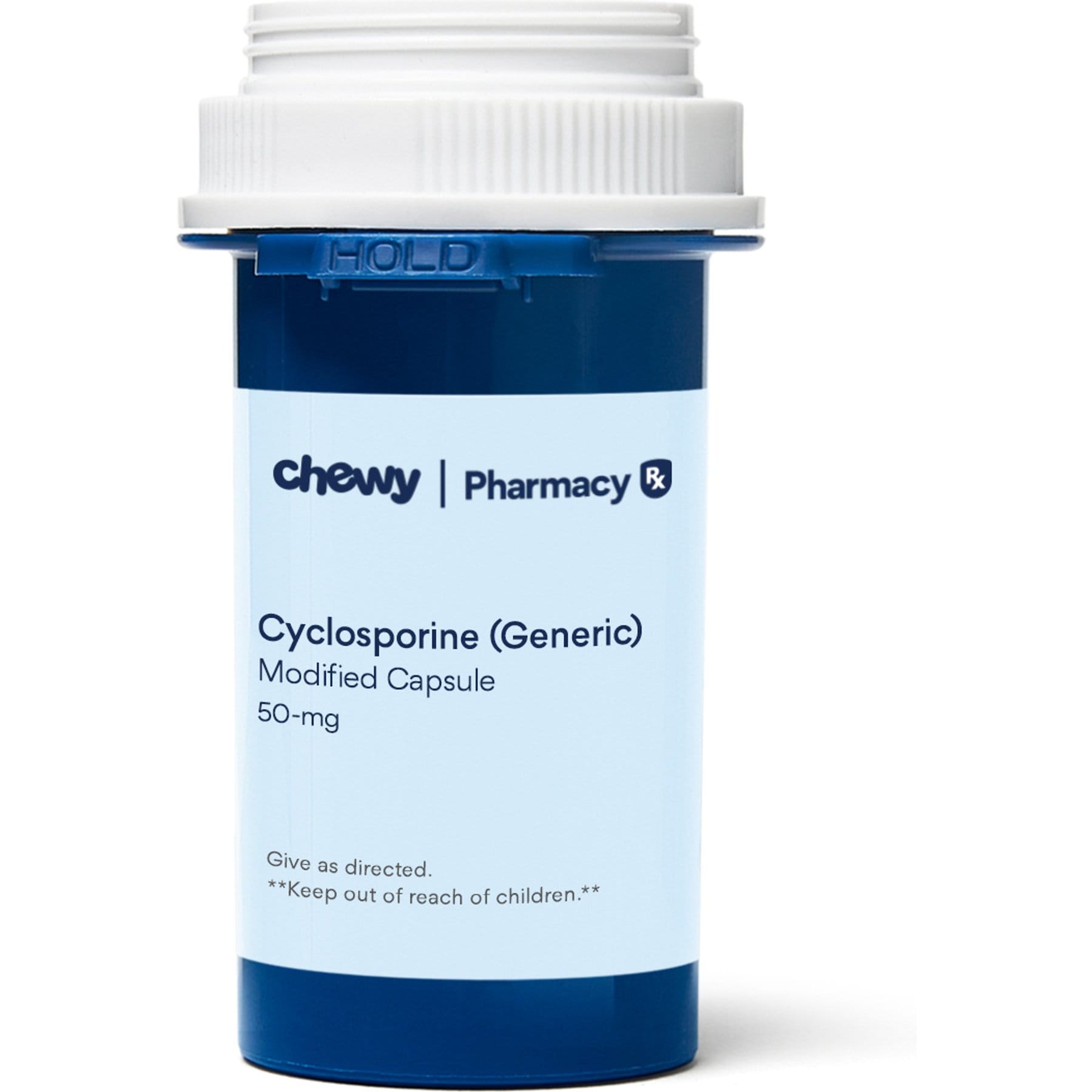
A generic modified cyclosporine capsule in the 50 mg strength, filled only on a veterinarian's prescription.
Webvet may earn a commission when you click through to Chewy, at no extra cost to you.
Cyclosporine dosage for dogs by weight
The label sets the oral dose at 5 mg/kg/day (3.3-6.7 mg/kg/day) as one daily dose for 30 days, and its dosing chart by weight matches each weight band to a capsule. Your vet calculates the exact dose and capsule combination for your dog; the figures below are what the label directs, not instructions to dose at home.
| Weight band (lb) | Weight band (kg) | Capsule the Atopica label lists at 5 mg/kg |
|---|---|---|
| 4 – 6.5 lbs | 2 – 2.9 kg | 10 mg capsule |
| 6.6 – 9 lbs | 3 – 3.9 kg | 2 x 10 mg capsules |
| 9.1 – 16 lbs | 4 – 7.9 kg | 25 mg capsule |
| 16.1 – 33 lbs | 8 – 14.9 kg | 50 mg capsule |
| 33.1 – 64 lbs | 15 – 28.9 kg | 100 mg capsule |
| 64.1 – 79 lbs | 29 – 35.9 kg | 100 mg capsule+50 mg capsule |
| 79.1 – 121 lbs | 36 – 55.9 kg | 2 x 100 mg capsules |
After the first 30 days, the label allows the vet to taper "by decreasing the frequency of dosing to every other day or twice weekly," down to the least frequent schedule that keeps the skin controlled. In the label field study, dogs whose itch and lesion scores improved by 50% or 75% moved to every other day or twice weekly dosing, and some dogs needed the dose adjusted up or down.
Atopica comes as modified soft gelatin capsules in 10 mg, 25 mg, 50 mg, and 100 mg strengths, so a 100 mg capsule covers the 33.1 to 64 lb weight band on the label. Modified means the capsule contents form a microemulsion in the gut, which the label describes as an oral form that "immediately forms a microemulsion in an aqueous environment."

Other uses run on different ranges. For perianal fistula, the Merck Veterinary Manual page on perianal fistula gives the range vets work within as 2–10 mg/kg every 12–24 hours, while Merck's immunomodulator chapter lists 7.5 mg/kg once daily. The two Merck pages differ, and the vet picks the plan.
The brand product is Atopica (Cyclosporine Modified) Capsules for Dogs, 50-mg, 30 capsules, the brand-name capsule the label describes. It is filled by Chewy Pharmacy only with a veterinarian's prescription and is listed at $127.84 on Chewy when checked in November 2026.
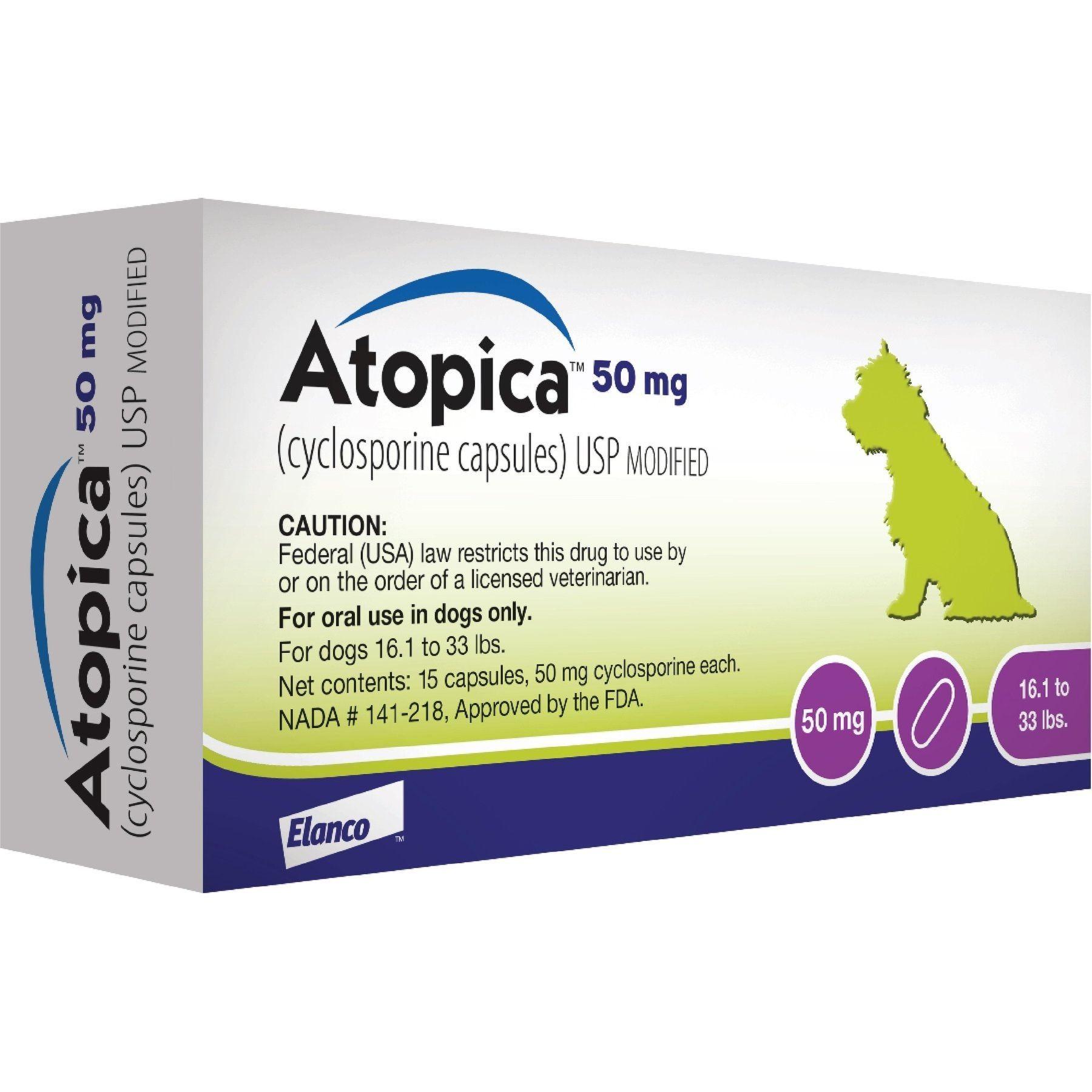
The brand Atopica modified capsule in the 50 mg strength, filled only with a veterinarian's prescription.
Webvet may earn a commission when you click through to Chewy, at no extra cost to you.
Give exactly the dose the vet prescribed, on the schedule they set, and never change or double it. Apart from the stop-and-call signs VCA lists, talk to the vet before stopping it. The label says a missed dose is given as soon as possible "without doubling," with dosing no more often than once daily.
What cyclosporine is used for in dogs: allergic skin disease, immune disorders, and perianal fistulas
The approved use in allergic dogs is canine atopic dermatitis, the itchy skin disease linked to environmental allergens. The JVIM review notes that atopy is the only condition in dogs for which the FDA has approved systemic cyclosporine, so every other use below is extra-label and decided case by case.
Extra-label uses with published support include:
- Perianal fistulas (anal furunculosis): Merck calls cyclosporine "the treatment of choice." The condition is most common in German Shepherd Dogs, complete healing usually takes 8–12 weeks, and relapse is common after stopping, so some dogs stay on it long term. In a controlled trial summarized in the JVIM review, all cyclosporine-treated dogs had improved by 4 weeks, 85% had complete resolution after 16 weeks, and disease recurred in 41% after treatment stopped.
- Inflammatory bowel disease (IBD): the JVIM review reports improvement in 12 of 14 dogs with steroid-refractory IBD given 10 weeks of cyclosporine alone, with fewer inflammatory T cells in follow-up gut biopsies. Merck lists it for steroid-refractory cases.
- Protein-losing enteropathy (PLE): a 2019 study of dogs with inflammatory PLE concluded cyclosporine is an adequate second-line immunosuppressant, while noting no study has compared it head to head with another second-line drug. An earlier report cited there found adding cyclosporine rescued 7 of 10 dogs from euthanasia.
- Immune-mediated hemolytic anemia (IMHA) and immune-mediated thrombocytopenia: the review lists cyclosporine as one component of treatment, with too few published cases to judge it objectively.
- Brain inflammation (meningoencephalomyelitis of unknown cause, including GME): cyclosporine is one drug used for aggressive immunosuppression in these meningitis-type diseases. In an early report, all 3 dogs with GME had complete resolution of signs, and in a later study of 10 dogs every dog had at least a partial initial response.
- Other autoimmune disease: Merck lists extra-label use for pemphigus and lupus, response in sebaceous adenitis, and use in combination for chronic hepatitis. Merck adds that some dogs with chronic hepatitis lost remission when switched from azathioprine to cyclosporine, while others started on cyclosporine responded well.
For life-threatening immune disease such as severe IMHA or a very low platelet count, the review warns that starting low and creeping up "is not recommended," and it strongly recommends blood cyclosporine monitoring. More on these conditions sits in the guide to autoimmune disease in dogs.
Chronic conditions that are not immediately life-threatening work differently. For atopic dermatitis, perianal fistulas, and mild IBD, the review says a standard, relatively low starting dose is often effective, blood levels are usually unnecessary, and remission of the disease is the main guide to whether treatment is working. For allergic skin, the Atopica label agrees that monitoring blood cyclosporine levels "is not an appropriate predictor of effectiveness."
How long does cyclosporine take to work for allergies?
Cyclosporine for dogs with allergies usually takes 4 to 6 weeks to show its effect, according to the Merck Veterinary Manual chapter on atopic dermatitis in dogs, and VCA Animal Hospitals says full effects can take up to six weeks.
In the label field study, 74% of dogs on Atopica improved in itch scores over the first 30 days, compared with 24% on placebo. Because Merck positions cyclosporine for long-term management rather than acute flares, the vet decides how to handle a bad flare during those first weeks.
Allergic skin disease is managed, not cured. The same Merck chapter states that it "cannot be cured" and needs lifelong management. The broader picture of triggers and workups is in the guide to dog skin allergies.

Bathing is part of most skin plans. Merck recommends weekly to biweekly baths, and for superficial skin infection it notes that a chlorhexidine product "will likely give the best results." Between baths, some vets suggest wipes such as Douxo S3 PYO Antiseptic Antifungal Chlorhexidine Dog & Cat Wipes 30 count, listed at $19.99 on Chewy when checked in November 2026, for paws and skin folds. Wipes do not replace the prescribed treatment or the vet exam.
A common shampoo in that role is Douxo S3 PYO Antiseptic Antifungal Chlorhexidine Dog & Cat Shampoo, 6.7-oz bottle, a chlorhexidine shampoo for dogs and cats, listed at $25.99 on Chewy when checked in November 2026. It is not a prescription item, and it does not replace the cyclosporine your vet prescribed or the skin exam.
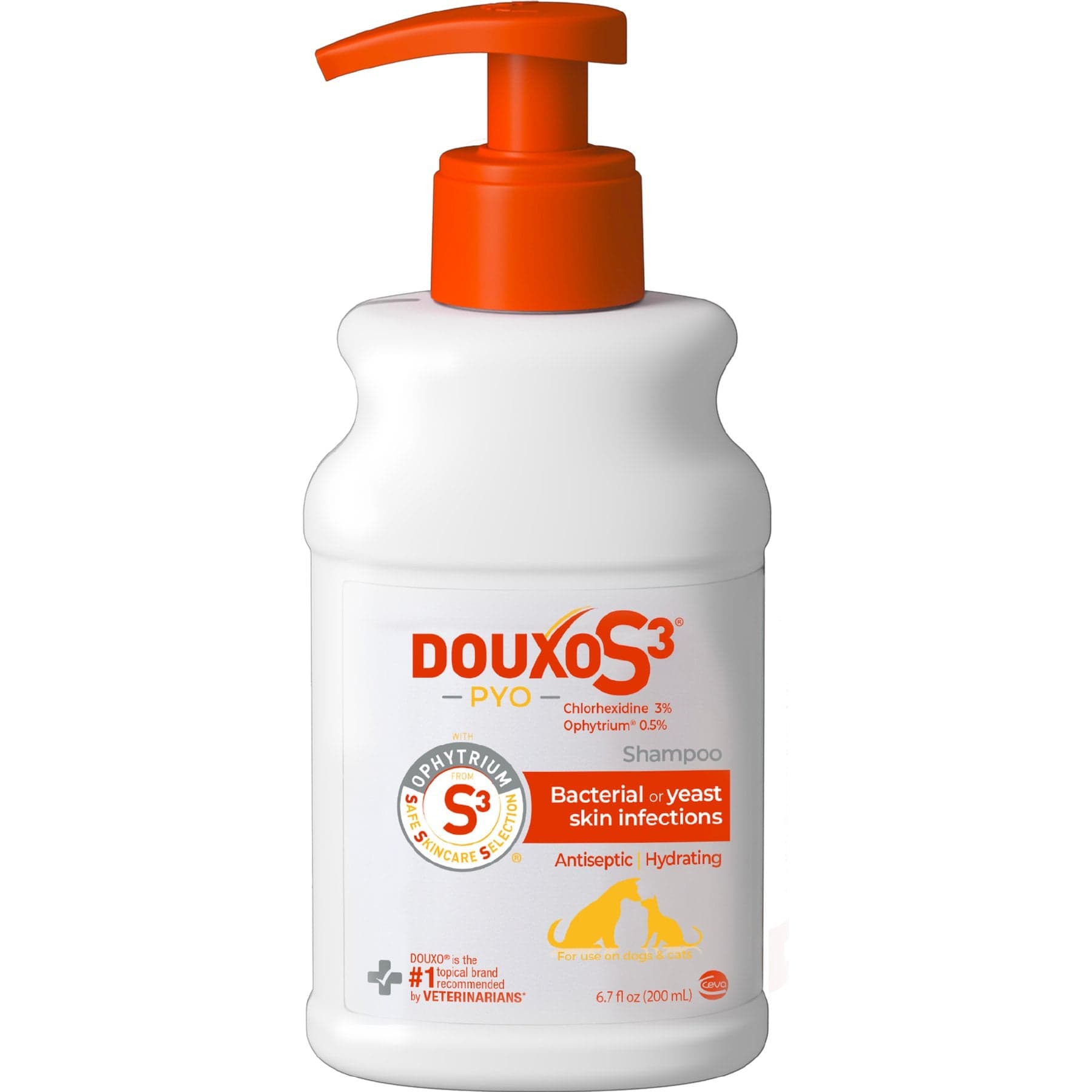
A chlorhexidine shampoo a vet may add to an allergic skin bathing routine alongside prescribed treatment.
Webvet may earn a commission when you click through to Chewy, at no extra cost to you.
In the label field study, dogs were not allowed antihistamines, corticosteroids, or medicated shampoos, so the itch results reflect cyclosporine on its own. Add-ons such as bathing and supplements sit outside that evidence and are chosen with the vet.
Ear flare-ups often travel with allergic skin. The Atopica label notes that otitis externa "commonly accompanies atopy," that ear infections present at the start did not clear without ear treatment, and that new ear cases occurred at a lower rate on Atopica than on placebo. Ears still need their own exam and treatment. If ear signs appear during treatment, the vet should check them, since persistent otitis externa was among the more common problems in the label study.
Fatty acid supplements are another add-on owners ask about. The Merck chapter on atopic dermatitis says:
- There is "no evidence of superior efficacy" for any one blend, dose, or ratio.
- Fatty acids take up to 2 months to work and do not help acute flares.
- Several studies show they can increase the efficacy of other medications given alongside them.
One option is Chew + Heal Omega Skin + Coat Dog Supplement, 120 count, which combines omega-3 and omega-6 fatty acids from salmon, fish, and flaxseed oils. It is listed at $21.99 on Chewy when checked in November 2026, does not replace the prescribed drug or the exam, and is worth clearing with your vet first. Any supplement given alongside cyclosporine belongs on the list of medicines the vet reviews for interactions.

An omega fatty acid chew to discuss with your vet as an add-on to an allergic skin plan.
Webvet may earn a commission when you click through to Chewy, at no extra cost to you.
Cyclosporine side effects in dogs, short term and long term
Stomach upset is the side effect most owners see. In the label field study of 265 dogs, the most frequent cyclosporine side effects in dogs were:
- Vomiting: 30.9%
- Diarrhea: 20.0%
- Persistent otitis externa: 6.8%
- Urinary tract infection: 3.8%
- Anorexia: 3.0%
- Lethargy, gingival hyperplasia, and lymphadenopathy: 2.3% each
The label says vomiting and diarrhea "spontaneously resolved with continued dosing" in most cases. In others, the study used brief dosing breaks, divided doses, or a small amount of food. Those changes are for your vet to make.
Owners asking about gut support in the first weeks sometimes discuss a probiotic such as Purina Pro Plan Veterinary Diets FortiFlora Dog Supplement, 30 count, listed at $30.99 on Chewy when checked in November 2026, with the vet; it does not replace the prescribed treatment or the vet exam.

 Sponsored
Vet care that's always there
Unlimited video calls and messaging with licensed vets for less than a typical vet visit. One membership covers up to five pets.
Use code Pets60
Plans start at $12/month · covers up to 5 pets
- Licensed vets in most states
- Rx for 150+ conditions
- 4.7 on Trustpilot
What are the potential side effects of taking cyclosporine?
The main Atopica side effects are vomiting, diarrhea, and reduced appetite, followed by ear and urinary infections, gum overgrowth, and lethargy. The label also lists swollen lymph nodes, and blood test changes such as raised creatinine in 7.8% of dogs. VCA Animal Hospitals adds that increased infection risk and cancers are rare.
Infections matter because cyclosporine dampens immunity. The JVIM review lists bacterial respiratory and urinary infections, pyoderma, and demodicosis among infections documented in treated dogs, and says vets should stay alert to infection even at low doses. A skin infection may need an antibiotic such as cephalexin alongside the plan.
What are the long-term effects of cyclosporine in dogs?
With long term use, the effects to watch are gum overgrowth (gingival hyperplasia), wart-like skin growths (papillomatosis), excess hair growth, raised blood sugar, and infections. The label says gingival hyperplasia "regressed with dose tapering," and Merck says papillomatosis generally decreases when the dose is lowered.
Post-approval reports on the label include lymphoma and mast cell tumors, though it is "unknown if these were preexisting." Diabetes has been reported, with West Highland White Terriers the most frequently reported breed. In a 52-week safety study at up to 9 times the dose, the label says findings "were shown to be reversible" during a 12-week recovery phase.
When to stop cyclosporine and call the vet now
VCA Animal Hospitals advises stopping the medication and contacting your vet for increased thirst or urination, jaundice, signs of infection, or lethargy. Most stomach upset settles, but some signs mean you call the clinic now rather than waiting for the next recheck. VCA Animal Hospitals advises: "If you suspect an overdose or an adverse reaction to the medication, call your veterinary office immediately."
These signs come from the reactions reported on the Atopica label after approval, which include:
- Urticaria (hives), anaphylaxis, and allergic edema
- Dyspnea (trouble breathing) and convulsion
- Hemorrhagic diarrhea, hematemesis (bloody vomit), and melena (black stool)
- Collapse
If diabetes signs appear, the label says the vet should consider "tapering or discontinuing the dose."
Drug interactions, including ketoconazole, and dogs that should not take cyclosporine
Cyclosporine is broken down by the liver's cytochrome P-450 enzymes, so drug interactions are a real concern. The label warns that azoles "(e.g. ketoconazole), may lead to increased plasma levels of cyclosporine," and Merck says such drugs "potentiate cyclosporine toxicity notably." Tell the vet about every medicine and supplement your dog takes.
Ketoconazole and cyclosporine are sometimes combined on purpose. The JVIM review reports ketoconazole can cut the cyclosporine dose by as much as 75%, and one perianal fistula study saved 36–71% on cost. It also calls for blood monitoring and checks for ketoconazole liver toxicity. More on that drug is in the guide to ketoconazole for dogs.
Other interactions to raise with the vet:
- Other azole antifungals such as fluconazole, which the review says can reduce the needed dose by 30 to 50%
- Many antibiotics and some gastrointestinal drugs, per VCA
- Live vaccines: the label recommends killed vaccines during treatment
- Grapefruit, which raised blood cyclosporine levels in dogs in the review
Dogs that should not take it, or need extra caution, per the label and VCA:
- Dogs with a history of cancer, or a hypersensitivity to cyclosporine
- Dogs under 6 months or under 4 lbs, where safety is not established
- Breeding, pregnant, or nursing dogs
- Dogs with kidney disease or diabetes
Dogs with liver disease need care too: the drug is cleared by liver enzymes, and the label lists elevated liver enzymes and hepatitis among post-approval reports.
Is cyclosporine a high risk medication?
Yes, it needs veterinary supervision. The label calls it "a systemic immunosuppressant that may increase the susceptibility to infection and the development of neoplasia." That said, the JVIM review notes most adverse effects are uncommon apart from stomach upset. Interactions and infection are the main risks, so the vet may recommend blood or urine tests, as VCA notes.
How to give cyclosporine, what it costs, and alternatives such as Apoquel and Cytopoint
How to give cyclosporine to dogs?
Give the capsule whole on an empty stomach, at least one hour before or two hours after a meal, as the label directs. VCA suggests waiting one to two hours before feeding. Wear gloves, do not open or break the capsule, and wash your hands afterward.
A few steps make dosing easier:
- Give it at the same time each day the vet has scheduled.
- Place the capsule at the back of the tongue, close the mouth, and stroke the throat.
- Wait the full interval before the meal.
- If a dose is missed, give it as soon as you remember; VCA says never give two doses at once.
- Store capsules in the original blister at 59° to 77°F (15-25°C).
If your vet approves a small treat, a pocket such as Greenies Pill Pockets Cheese Flavor Natural Dog Treats, Capsule Size, 30 count, listed at $10.96 on Chewy when checked in November 2026, can hide the capsule. It is food, so ask whether it fits the empty-stomach timing first; it does not replace the prescribed treatment.
For dogs that vomit after doses, VCA suggests a little food or freezing the capsules first. Freezing can change absorption, so agree it with the vet first.

An oral liquid also exists. The federal regulation lists an approved cyclosporine oral solution, USP (MODIFIED), at 100 mg per milliliter with conditions of use in dogs. Compounded versions are a different matter, with quality concerns the JVIM review describes.
How much does Atopica for dogs cost?
Atopica 50 mg capsules, 30 count, are listed at $127.84 on Chewy when checked in November 2026. The total cost depends on capsule strength, capsules per dose, and how far the vet tapers the schedule after 30 days.
Brand and generic capsules are both filled only with a veterinarian's prescription. A generic option, Cyclosporine (Generic) Modified Capsules, 50-mg, 30 capsules, is listed at $49.20 on Chewy for the same count when checked in November 2026. When choosing between brand and generic, the cheapest price is only the best price if the vet is happy with the product.
You can buy cyclosporine only through your vet or a pharmacy filling a vet's prescription. Compare equal strengths and counts, such as the Atopica (Cyclosporine Modified) Capsules for Dogs, 50-mg, 30 capsules against the generic.
Is there an alternative to cyclosporine for dogs?
Yes. For allergic itch, the main alternatives are oclacitinib (Apoquel) and lokivetmab (Cytopoint), both faster than cyclosporine. The Merck table of atopic dermatitis treatments compares them:
- Cyclosporine: daily capsule; "can take 4–6 wk" to improve; for long-term management, not acute flares.
- Apoquel (oclacitinib): tablet; works "within 24 h"; for dogs 12 months or older; contraindicated with serious infections or neoplasia.
- Cytopoint (lokivetmab): injection every 4–8 weeks; onset in 1–3 days; for flares and long-term control.
- Tacrolimus: a 0.1% topical ointment indicated for localized lesions, which appears safe for short-term use.
Owners comparing these options can find more detail in the guides to Apoquel for dogs, Cytopoint for dogs, and Apoquel alternatives for dogs. The wider list of what can be used in place of cyclosporine, including steroids and antihistamines, is in the guide to dog allergy medicine.
How long can a dog take cyclosporine?
Many dogs take it for months to years. Merck describes it as indicated for long-term management, and the JVIM review says treatment "typically is delivered long‐term," tapered to the lowest effective dose. Atopic dermatitis is lifelong, and perianal fistulas often relapse after stopping, so the vet tapers rather than stops abruptly.
Cyclosporine questions
Frequently Asked Questions
What does modified cyclosporine mean?
Modified cyclosporine is the microemulsion form, as in Atopica and generic modified capsules. The JVIM review explains that the older oil-based form (Sandimmune) has such variable absorption that it "is not recommended for oral use in dogs." The modified form gives more consistent absorption, with bioavailability improved by up to 50%.
Is generic cyclosporine as good as Atopica?
The FDA-approved veterinary generic has been shown bioequivalent to the approved reference capsule. The FDA Freedom of Information summary for ANADA 200-627, approved November 1, 2018, showed bioequivalence to the approved reference cyclosporine capsule at the 50 mg strength in 32 healthy fasted beagles. Human generics are different: the 2014 JVIM review, written before that approval, said their absorption in dogs may vary by 3-fold or more and preferred Atopica. Ask which generic your pharmacy dispenses.
Is cyclosporine better than Apoquel for dogs?
Neither is better for every dog. Apoquel relieves itch within 24 hours and suits flares, while cyclosporine takes 4 to 6 weeks and suits long-term control, per Merck. Infection history, age, cost, and how quickly relief is needed all shape which one the vet picks.
Is compounded cyclosporine safe for dogs?
Compounded cyclosporine carries real quality risk. The JVIM review found "marked variability in product quality and concentration" among compounded versions and strongly discourages them unless no FDA-approved capsule or solution meets the dog's needs. Approved capsules come in four strengths, and an approved oral solution exists, so compounding is rarely needed.
Does freezing cyclosporine capsules help with vomiting?
Sometimes. VCA lists freezing the capsules as one option for dogs that vomit on an empty stomach, and the JVIM review says giving it frozen "appears to decrease nausea in some dogs." The same review warns that freezing may alter absorption and reduce effect, so ask your vet before changing how you give it.
Veterinarian · BVMS MRCVS
Dr. Pippa Elliott, BVMS, MRCVS, is a veterinarian with nearly 30 years of experience in companion animal practice. Dr. Elliott earned her Bachelor of Veterinary Medicine and Surgery from the University of Glasgow. She was also designated a Member of the Royal College of Veterinary Surgeons. Married with 2 grown-up kids, Dr. Elliott has a naughty Puggle named Poggle, 3 cats and a bearded dragon.


