Dry Eye in Dogs: Symptoms, Drops & Daily Care
Dry eye (KCS) leaves a dog's eye under-lubricated, dull, and prone to painful ulcers. Here are the symptoms, vet treatments, costs, and daily at-home care that keep it controlled.

BVMS MRCVS
Medically reviewed by Dr. Pippa Elliott, BVMS MRCVS · Last reviewed

This article contains affiliate links. Webvet may earn a commission when you buy through them, at no extra cost to you.
WebVet may earn a commission from qualifying purchases made through links on this page, at no additional cost to you.
If your dog's eye looks dull, red, or coated in sticky mucus that keeps coming back, the cause may not be a simple infection. Dry eye in dogs, known medically as keratoconjunctivitis sicca (KCS), happens when the eye stops making enough tears to stay healthy.
It is one of the most common eye problems vets see, and the good news is that most dogs do well once it is diagnosed and treated. The catch: it is usually a lifelong condition that needs daily care.
- 1Dry eye (KCS) means the tear glands make too little of the watery tear film, leaving the surface of the eye dry, inflamed, and prone to damage.
- 2The classic clues are a dull-looking eye, redness, and thick, sticky, yellow-green discharge that returns within hours of wiping it away.
- 3A vet confirms it with a quick, painless Schirmer tear test that measures how much tear film the eye produces.
- 4Most dogs respond well to cyclosporine or tacrolimus eye drops, but treatment is typically lifelong, not a short course.
- 5Left untreated, dry eye can cause painful corneal ulcers, dark pigment over the eye, and vision loss.
- 6Any sudden severe pain, cloudiness, or a rapidly worsening eye needs same-day veterinary care.
 Sponsored
Have a health question about your dog?
Talk to a licensed vet at Dutch over video or message, including nights and weekends.
Use code Pets60
Plans start at $12/month · covers up to 5 pets
- Licensed vets in most states
- Rx for 150+ conditions
- 4.7 on Trustpilot
What Is Dry Eye (KCS) in Dogs?
Keratoconjunctivitis sicca in dogs literally means inflammation of the cornea and conjunctiva caused by dryness. A normal tear film has three layers: an oily layer, a watery layer, and a mucus layer. In most cases of dry eye, the glands that make the watery layer fail, so the remaining tears turn thick and sticky.

A boric acid rinse that flushes everyday dust and pollen from a dog's eyes and helps reduce the tear staining that follows chronic watering. Not a treatment for infection.
Webvet may earn a commission when you click through to Chewy, at no extra cost to you.
That watery layer does more than keep the eye wet. It flushes out debris, feeds oxygen and nutrients to the cornea, and carries infection-fighting proteins. Without it, the eye turns irritated, cloudy, and prone to ulcers, which is the thread running through every symptom and treatment below.
Most causes of KCS trace back to the immune system attacking the tear glands. Medication reactions, nerve damage, and certain infections can also trigger it, which is why the underlying cause changes how your vet treats the eye.
What Causes Dry Eye in Dogs?
The most common cause is the dog's own immune system mistakenly attacking and destroying the tear-producing glands. Several other triggers can reduce tear production too.
- Immune-mediated damage: the body attacks its own lacrimal (tear) glands. This is by far the most frequent cause.
- Drug-induced: certain medications, including some sulfa-based antibiotics and general anesthesia, can temporarily or permanently lower tear output.
- Congenital: a few dogs, often small breeds, are born with poorly developed tear glands.
- Nerve damage: injury to the nerves that signal tear production (sometimes after ear infections or trauma) can cause dry eye on one side.
- Other disease: hypothyroidism, diabetes, canine distemper, and removal of the third eyelid gland ("cherry eye") can all contribute.
Neurogenic Dry Eye: When Nerve Damage Is the Cause
One uncommon subtype is worth naming on its own, because it changes the prescription. Neurogenic dry eye in dogs happens when the nerve that signals the tear gland to work is damaged, often after inner-ear disease, head trauma, or middle-ear surgery. Tear production can drop away almost overnight.
- It usually affects one eye only, while immune-mediated KCS more often involves both.
- A dry, crusty nostril on the same side as the affected eye is the classic tell.
- Neurogenic KCS dog treatment centers on pilocarpine, given orally or topically, rather than the cyclosporine used for immune-mediated cases.
- Some dogs regain tear function once the underlying ear or nerve problem is treated, which is unusual for the immune-mediated form.
Records may word it either way: a KCS dry eye dog note and a dry eye diagnosis mean the same condition. Separating out the neurogenic subtype matters because an immune-calming drop will not stimulate a gland whose nerve supply has been cut off.
Symptoms: How to Spot Dry Eye Early
Catching dog dry eye symptoms early protects the cornea before lasting damage sets in. Because tear film loss is gradual, signs often creep up over weeks.
- A dull, lackluster surface instead of a bright, wet-looking eye.
- Thick, ropey, yellow-green mucus discharge that keeps returning.
- Redness of the white of the eye and the inner eyelids.
- Frequent blinking, squinting, or pawing at the face.
- Recurring "eye infections" that never fully clear up.
Is dry eye in dogs painful? Yes. A dry cornea is genuinely uncomfortable, causing a gritty, scratchy sensation similar to sand under a human eyelid, which is why affected dogs squint and rub. As an interim comfort measure while you arrange a vet visit, a gel lubricant such as Optixcare Eye Lube Plus can soothe the surface, but it does not treat the underlying disease. Persistent or recurring discharge should also be checked against our guide to dog eye discharge.

Breeds Most at Risk
Any dog can develop dry eye, but the breeds prone to dry eye stand out, largely because immune-mediated KCS runs in certain lines. These at-risk dogs deserve extra watching for early signs.
- Cocker Spaniel
- English Bulldog and French Bulldog
- Shih Tzu
- Pug
- Lhasa Apso
- West Highland White Terrier
- Cavalier King Charles Spaniel
- Pekingese and Boston Terrier
Flat-faced (brachycephalic) breeds with large, exposed eyes are especially vulnerable because more of the cornea sits in the drying airflow.
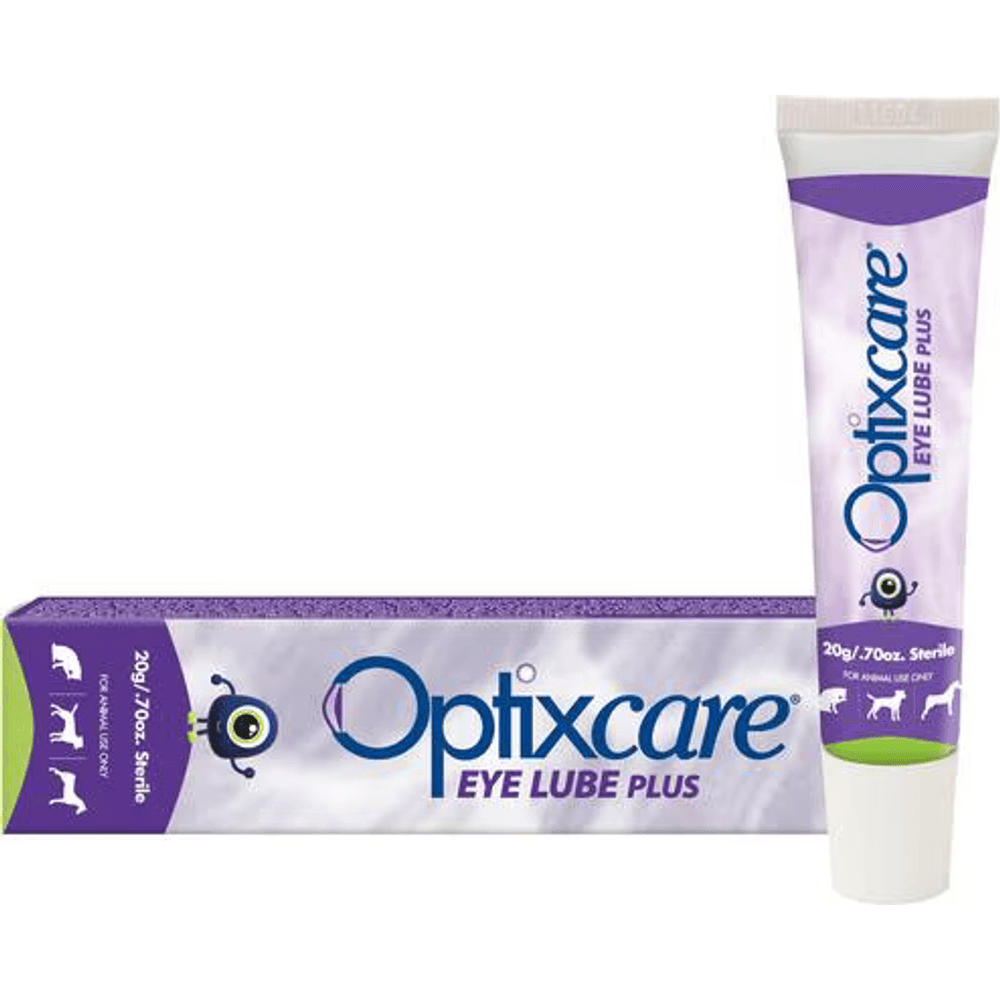
A sterile lubricating gel that soothes and moisturizes dry, irritated eyes and helps support the tear film in dogs and cats prone to dryness. A gentle, vet-shelf staple for everyday eye comfort.
Webvet may earn a commission when you click through to Chewy, at no extra cost to you.
Is Dry Eye in Dogs Hereditary or Contagious?
Two questions come up constantly, so here are the short answers. Is dry eye in dogs contagious? No. KCS is immune-mediated, nerve-related, or drug-induced rather than infectious, so it cannot spread to other dogs, to cats, or to you. Is dry eye in dogs hereditary? The predisposition often is.

- Multi-dog households do not need to separate an affected dog or split up bedding, bowls, and toys.
- Breeds prone to dry eye dogs inherit the tendency, not the disease itself, so a predisposed dog may never develop it.
- Dry eye in Shih Tzu dogs, Cocker Spaniels, West Highland White Terriers, and Bulldogs turns up often enough that affected lines are worth screening before a mating is repeated.
- Ask for a Schirmer tear test at annual exams once a predisposed dog reaches middle age, before any signs appear.
 Sponsored
Vet care that's always there
Unlimited video calls and messaging with licensed vets for less than a typical vet visit. One membership covers up to five pets.
Use code Pets60
Plans start at $12/month · covers up to 5 pets
- Licensed vets in most states
- Rx for 150+ conditions
- 4.7 on Trustpilot
How Vets Diagnose Dry Eye (Schirmer Tear Test)
The Schirmer tear test is the gold standard, and it is quick and painless. Your vet tucks a small, calibrated paper strip inside the lower eyelid for 60 seconds and measures how far tears travel up the strip.
- Normal: greater than 15 mm of wetting per minute.
- Borderline: 10 to 15 mm, interpreted alongside symptoms.
- Diagnostic for dry eye: under 10 mm with clinical signs.
- Severe: under 5 mm.
A basic eye exam with a Schirmer tear test in a dog typically costs about $50 to $150, depending on your region and whether extra dye tests are added to check for corneal ulcers. That reading sets the whole treatment plan, so it is money well spent.

Dry Eye vs. Similar Eye Conditions: How to Tell the Difference
What can be mistaken for dry eyes? Several everyday eye problems share the same redness and discharge, which is why owners often treat the wrong condition. The reliable way to separate them is the tear reading, but the pattern of signs offers strong clues.
Dry eye vs conjunctivitis in dogs is the most common mix-up: conjunctivitis is inflammation of the eyelid lining and can be caused BY dry eye, so the two overlap. Watery eyes and tear stains are the functional opposite (too many tears, not too few). While you sort out discharge, a pH-balanced rinse like Vetericyn Plus Antimicrobial Eye Wash can gently clean the area without stinging a dry surface.
| Condition | Tear film | Hallmark sign | Learn more |
|---|---|---|---|
| Dry eye (KCS) | Too little | Thick sticky mucus, dull eye | This guide |
| Conjunctivitis | Usually normal | Red inner lids, watery-to-pus discharge | Pink eye guide |
| Watery eye / epiphora | Too much | Overflow tearing, wet fur | Watery eyes guide |
| Tear stains | Excess tearing | Reddish-brown fur streaks | Tear stains guide |
| Corneal ulcer | Variable | Sudden pain, squinting, cloudiness | Corneal ulcer guide |
For the full work-up on each look-alike, see our deep dives on conjunctivitis (pink eye) in dogs, tear stains, and watery eyes. Redness with a suddenly painful, cloudy eye can also point to glaucoma or an eyelid rolling inward, covered in our entropion guide, both of which need prompt attention.
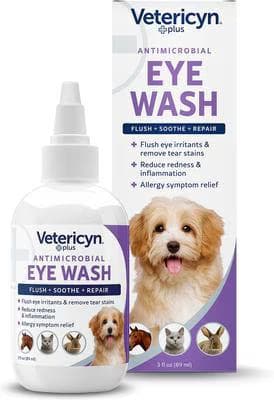
A sterile antimicrobial rinse that flushes irritants, pollen, and discharge out of the eye and helps lift tear stains. A sensible at-home first step for mild irritation, though it does not replace a vet exam for a painful eye.
Webvet may earn a commission when you click through to Chewy, at no extra cost to you.
Treatment Options: Drops, Medications & What They Cost
How do you treat dry eyes in dogs? The goal is to restart natural tear production and keep the surface lubricated. Most dog eye drops for dry eye fall into two groups: prescription tear-stimulating drops and over-the-counter lubricants.
The cornerstone of dog dry eye treatment is a tear-stimulating drop. Cyclosporine eye drops for dogs (often as the ointment Optimmune) and tacrolimus both calm the immune attack so the glands recover. Pilocarpine may help nerve-related cases, and lubricant drops keep the eye comfortable in between. If a secondary bacterial infection develops, a vet may add a short course of an antibiotic ointment such as Terramycin Ophthalmic Ointment.
| Drop type | How it works | Typical frequency | Best for |
|---|---|---|---|
| Cyclosporine (Rx) | Restarts tear production, reduces inflammation | Twice daily | Most immune-mediated KCS |
| Tacrolimus (Rx) | Similar immune-calming action, often stronger | Twice daily | Dogs that respond poorly to cyclosporine |
| Pilocarpine (Rx) | Stimulates tear nerves | As directed | Neurogenic (nerve-related) dry eye |
| Lubricant drops/gel (OTC) | Adds moisture, no tear stimulation | Several times daily | Comfort support alongside Rx |
So what can I give my dog for dry eye today? Only a vet can prescribe cyclosporine or tacrolimus, but over-the-counter lubricating drops such as Pet Drops Ultra Lubricant Eye Drops are a safe comfort bridge until you are seen. On cost, prescription cyclosporine ointment typically runs about $25 to $60 per tube, compounded tacrolimus around $30 to $60, and OTC lubricants roughly $10 to $25. Owners comparing the best eye drops for dogs dry eye care can see our full best dog eye drops roundup.

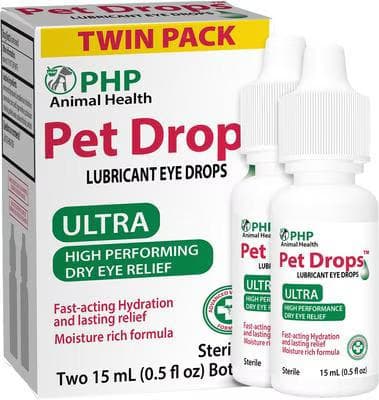
High-viscosity lubricant drops built for dry eye, giving faster hydration that lasts longer than a basic saline rinse. Twin pack of two 15-mL sterile bottles for dogs and cats.
Webvet may earn a commission when you click through to Chewy, at no extra cost to you.
At-Home Daily Care Routine
Learning how to treat dry eye in dogs at home comes down to consistency: the drops only work if they are given every day, on schedule. A calm routine makes application far easier for both of you.
- Wash your hands, then gently clean away crusts and discharge with a fresh damp cotton pad, wiping from the inner corner outward.
- Wait a minute so the surface is clean before medicating.
- Tilt the head up slightly, pull the lower lid down, and apply the prescribed drop or ointment without touching the tip to the eye.
- Follow with any lubricant drop your vet recommends.
- Reward with a treat every single time to build cooperation.
There is no proven dry eye in dogs home remedy that replaces prescription drops. Warm compresses and lubricants add comfort, but they do not restart tear production, so keep them as a supplement, never a substitute.

Over-the-Counter and Natural Options: What Actually Helps
Owners searching for over the counter medication for dry eye in dogs almost always land on lubricants, and that is the honest answer: no OTC or natural product restores tear production. Layered on top of prescribed drops, though, a few measures genuinely add comfort.
- Artificial tears for dogs, meaning plain lubricating drops or gels, rewet the surface between prescription doses.
- A warm, damp compress held over the closed eye for a minute softens crusted discharge before you wipe it away.
- Omega-3 fatty acid supplements support general ocular and skin health and are sometimes suggested by vets as an adjunct.
- Trimming the hair around the eyes cuts down on wicking, matting, and mechanical irritation.
When Medication Isn't Enough: Parotid Duct Transposition Surgery
A small share of dogs do not produce enough tears even on medication. For them, a surgery called parotid duct transposition in the dog can help. A veterinary ophthalmologist reroutes a salivary duct so saliva lubricates the eye in place of tears.
It is not a first choice, because saliva is a rougher substitute for tears and can leave mineral deposits, but it can save comfort and vision when drops fail. As a rough guide, dog dry eye surgery cost for parotid duct transposition typically ranges from about $1,500 to $3,000 or more with a specialist, similar in scale to other advanced eye procedures. For comparison, see our breakdown of dog eye ulcer surgery cost.
Left Untreated: Risks and Complications
What happens if dry eye in dogs is left untreated? The dryness steadily damages the cornea, and complications can threaten sight. This is why early diagnosis matters so much.
- Painful corneal ulcers that can rupture the eye in severe cases.
- Pigmentary keratitis: brown pigment spreads over the cornea and clouds vision.
- Chronic bacterial infections that keep flaring.
- Scarring and, in the worst cases, blindness.
Corneal ulceration is the complication that turns a manageable eye into an emergency, and it can develop fast on an unprotected surface. If your dog's eye becomes suddenly painful, cloudy, or held shut, read the warning signs in our guide to corneal ulcers in dogs and call your vet the same day.
Prognosis: Can Dogs Recover? How Long Does Treatment Take?
Can a dog recover from dry eyes? Most dogs do very well. The majority (often cited around 80 percent) respond to cyclosporine or tacrolimus with improved tear production and comfort, and many regain a normal-looking, healthy eye.
How long does dry eye last in dogs? The common immune-mediated form is a lifelong condition, not a temporary illness. You may see improvement within 3 to 8 weeks of starting drops, but stopping them almost always lets the dryness return within days to weeks, so treatment continues for life.
Is there a cure for dry eye in dogs? For the common immune-mediated form, no. The drops control the disease rather than reverse it, so a dog whose eye looks completely normal is well managed, not cured. The glands keep producing tears only while medication holds the immune attack in check.
Two situations are the exception:
- Drug-induced KCS: tear production sometimes recovers fully once the triggering medication is stopped, and those dogs can be truly cured.
- Neurogenic dry eye: some dogs regain tear function when the underlying ear or nerve problem is treated.
Only repeat Schirmer tear tests can confirm either outcome, so never stop prescribed drops on your own.
Living With a Dog With Dry Eye: Long-Term Management
Day-to-day life with a dry-eye dog settles into a manageable rhythm once the routine is set. The two pillars are giving the drops without fail and rechecking tear levels on schedule.
- Recheck Schirmer tear tests as your vet advises, often every few months at first, to confirm the drops are working.
- Watch for new squinting, cloudiness, or increased discharge, which can signal an ulcer or flare needing a prompt visit.
- Keep the face clean and the fur around the eyes trimmed.
A general vision-support supplement such as Ocu-GLO Vision Supplement may be suggested for long-term ocular health, though it does not replace prescription drops. Senior dogs with chronic KCS can also develop cloudiness worth monitoring, covered in our guide to cloudy eyes in senior dogs.
With consistent care, a dog with dry eye can live a full, comfortable, and happy life.
Keep a Backup Bottle of Artificial Tears on Hand
Running out of lubricant on a Sunday is the most common gap in an otherwise solid routine. Keeping a spare bottle of vet-approved artificial tears for dogs in the cupboard, plus one in the car or travel bag, means a flare never goes uncomforted while the pharmacy is shut.
Formulations differ in thickness and in how long they stay on the eye, so the best artificial tears for dogs depend on how often you can realistically dose. Our best dog eye drops roundup compares the OTC lubricants vets most often suggest alongside prescription treatment.
- Check expiry dates and discard opened bottles on the schedule printed on the label.
- Never pair an OTC lubricant with a prescription drop without asking your vet how to space the two.
- Bring every bottle you are using to recheck appointments so your vet can see the whole routine at once.
FAQ
How do you treat dry eyes in dogs?
A: Vets restart tear production and lubricate the surface. The mainstays are prescription cyclosporine or tacrolimus drops twice daily, often paired with over-the-counter lubricants. Pilocarpine suits nerve-related cases, and antibiotics are added for secondary infection. Treatment is usually lifelong.
What can I give my dog for dry eye?
A: Only a vet can prescribe the tear-stimulating drops (cyclosporine or tacrolimus) that treat the disease. Until your visit, an over-the-counter lubricating drop or gel eye lube safely adds comfort, but it will not restart tear production, so it is a bridge, not a cure.
How painful is dry eye in dogs?
A: It is genuinely uncomfortable. A dry cornea feels gritty and scratchy, like sand under an eyelid, which is why dogs squint, blink, and paw at the face. Pain usually eases within days once lubrication and tear-stimulating drops begin.
Can a dog recover from dry eyes?
A: Most dogs regain good comfort and vision with treatment, and the majority respond to cyclosporine or tacrolimus. A full cure is uncommon for the immune-mediated form, so recovery means well-controlled eyes on ongoing daily drops rather than stopping.
How long does dry eye last in dogs?
A: The common immune-mediated form is lifelong. Drops improve the eye within 3 to 8 weeks, but signs return within days to weeks if treatment stops. Nerve-related or drug-induced cases can sometimes resolve once the trigger is corrected.
What can be mistaken for dry eyes?
A: Conjunctivitis, watery eyes (epiphora), tear stains, corneal ulcers, and ordinary eye infections all share redness or discharge with dry eye. A Schirmer tear test settles it by measuring tear output, so any red or gunky eye that keeps recurring deserves that quick test.
What happens if dry eye in dogs is left untreated?
A: Untreated dry eye progressively damages the cornea, causing painful ulcers, brown pigment over the eye (pigmentary keratitis), chronic infection, scarring, and potentially blindness. Because the risk is sight-threatening, dry eye should always be actively managed, not ignored.
Is dry eye in dogs contagious?
No. Dry eye (KCS) is immune-mediated, nerve-related, or drug-induced rather than infectious, so it cannot spread to other dogs, cats, or people. The breed predisposition is inherited, which is why several dogs from one bloodline can develop it independently.
What is neurogenic dry eye in dogs?
Neurogenic KCS happens when the nerve supplying the tear gland is damaged, often after inner-ear disease, trauma, or ear surgery. It typically affects one eye and comes with a dry nostril on the same side. Neurogenic KCS dog treatment usually relies on pilocarpine rather than cyclosporine.
Can I use artificial tears for dogs instead of prescription drops?
No. Artificial tears lubricate the surface and ease discomfort, but they do not restart tear production. They belong on top of prescription cyclosporine or tacrolimus, and relying on them alone lets dry eye progress toward painful corneal ulcers.
Sources
- Merck Veterinary Manual, Eye and Ear (Ophthalmology)
- American College of Veterinary Ophthalmologists (ACVO)
- Cornell Riney Canine Health Center
- VCA Animal Hospitals, Know Your Pet
This article is educational and does not replace veterinary care. If your dog shows signs of dry eye or any painful eye, see your veterinarian promptly for diagnosis and a treatment plan.

Editor
The Webvet Editorial Team is the in-house group of pet-care editors and writers behind Webvet, operated by Smart Pet Collective. The team researches, writes, and maintains Webvet's pet health, behavior, and medication content. Every article follows a defined editorial process: research from reputable veterinary and scientific sources, careful drafting, mandatory review of medical content by a credentialed veterinarian, and dated publication. Health and medication articles are medically reviewed by a licensed veterinary professional before they go live and are kept current over time.
Veterinarian · BVMS MRCVS
Dr. Pippa Elliott, BVMS, MRCVS, is a veterinarian with nearly 30 years of experience in companion animal practice. Dr. Elliott earned her Bachelor of Veterinary Medicine and Surgery from the University of Glasgow. She was also designated a Member of the Royal College of Veterinary Surgeons. Married with 2 grown-up kids, Dr. Elliott has a naughty Puggle named Poggle, 3 cats and a bearded dragon.


