Conjunctivitis in Dogs (Pink Eye): Causes & Treatment
Conjunctivitis (pink eye) in dogs causes red, weepy, swollen eyes and is usually a symptom of allergies, irritants, or another eye problem. Learn the causes, contagion risk, cost to treat, home-vs-vet triage, and recovery timeline.

BVMS MRCVS
Medically reviewed by Dr. Pippa Elliott, BVMS MRCVS · Last reviewed

This article contains affiliate links. Webvet may earn a commission when you buy through them, at no extra cost to you.
WebVet may earn a commission from qualifying purchases made through links on this page, at no additional cost to you.
If your dog has a red, weepy, half-closed eye, you are almost certainly looking at some form of conjunctivitis in dogs, the pink-eye reaction that vets see more than nearly any other eye complaint. It is common, usually treatable, and rarely an emergency on its own.
The catch is that pink eye in dogs is often a symptom of something else, not a diagnosis by itself. Getting the underlying cause right is what separates a three-day nuisance from a problem that quietly threatens sight.
- 1Conjunctivitis is inflammation of the conjunctiva (the pink membrane lining the eyelids and white of the eye), not a single disease.
- 2The most common triggers in dogs are allergies, irritants, and problems secondary to another eye condition; primary bacterial infection is uncommon.
- 3Most canine conjunctivitis is not contagious to people; only certain infectious cases spread dog-to-dog.
- 4Redness plus severe pain, a cloudy cornea, or vision change is a same-day vet visit, not simple pink eye.
- 5Uncomplicated cases often clear in 3-7 days with the right cause-specific treatment; recurring cases point to an underlying problem.
 Sponsored
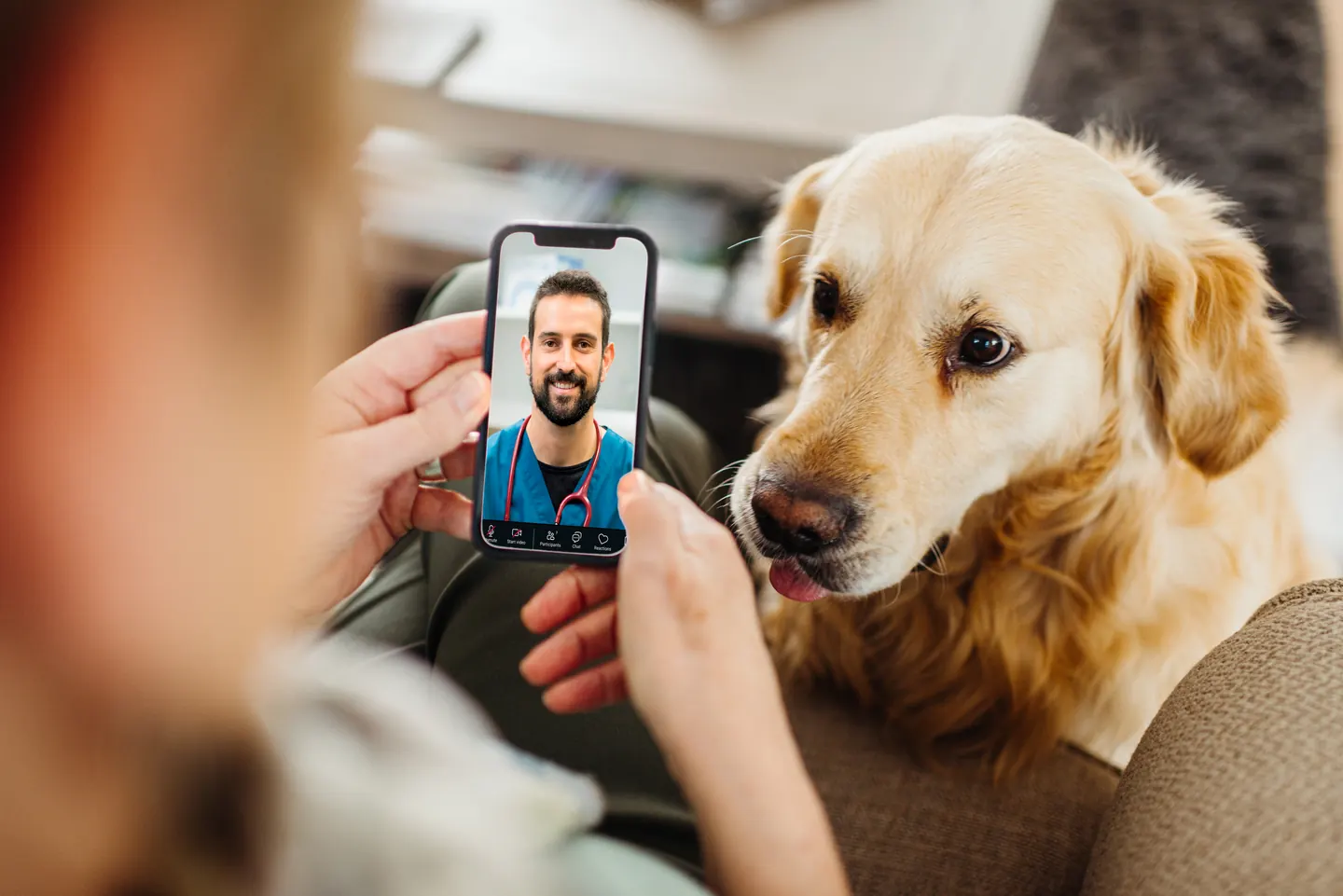
Have a health question about your dog?
Talk to a licensed vet at Dutch over video or message, including nights and weekends.
Use code Pets60
Plans start at $12/month · covers up to 5 pets
- Licensed vets in most states
- Rx for 150+ conditions
- 4.7 on Trustpilot
What Is Conjunctivitis (Pink Eye) in Dogs?
Conjunctivitis is inflammation of the conjunctiva, the thin mucous membrane that lines the inside of the eyelids and covers the white of the eye. When it is irritated, that membrane fills with blood and fluid, which is why the eye looks pink or red and puffy. "Pink eye" is simply the everyday name for the same thing.
It affects one or both eyes and ranges from a mild, self-limiting flare to a stubborn, recurring problem. According to the Merck Veterinary Manual, conjunctivitis in dogs is most often allergic or secondary to another disorder rather than a primary infection, which is a key difference from cats.
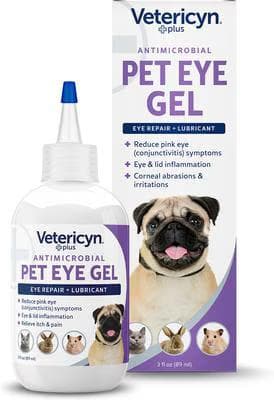
A lubricating antimicrobial gel that clings to the eye surface longer than a rinse, easing conjunctivitis symptoms, lid inflammation, and irritation from minor corneal abrasions. For dogs, cats, and small pets.
Webvet may earn a commission when you click through to Chewy, at no extra cost to you.
Because the conjunctiva sits on the outside of the eye, a dog eye infection or irritation here is usually visible and treatable. The important job is not naming the redness, it is finding out why the tissue is inflamed in the first place.
Symptoms & Signs of Canine Conjunctivitis
Dog conjunctivitis symptoms tend to appear together and are easy to spot once you know the pattern. The eye looks angry and the dog tells you it is uncomfortable.
- Redness: the white of the eye or the inner eyelid rim turns pink to deep red.
- Discharge: watery, mucky, or thick yellow-green fluid at the corner (see our guide to dog eye discharge for a full color-and-consistency breakdown).
- Swelling (chemosis): the membrane looks puffy or jelly-like and may bulge slightly.
- Squinting (blepharospasm): the dog holds the eye partly or fully closed.
- Rubbing or pawing: dogs drag the eye on furniture or paw at the face.
- Watery, weepy eyes: early cases can look like simple watery eyes before other signs build.

A gentle antimicrobial flush such as Vetericyn Plus Antimicrobial Eye Wash can rinse away discharge and debris while you arrange a vet visit, but flushing soothes the surface, it does not treat the cause. If your dog is in obvious pain, holding the eye shut, or the cornea looks hazy, skip home steps and call your vet.
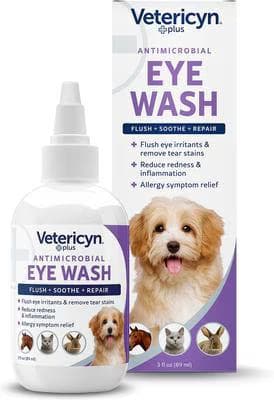
A sterile antimicrobial rinse that flushes irritants, pollen, and discharge out of the eye and helps lift tear stains. A sensible at-home first step for mild irritation, though it does not replace a vet exam for a painful eye.
Webvet may earn a commission when you click through to Chewy, at no extra cost to you.
What Looks Like Conjunctivitis But Isn't (Differential Triage)
This is the section every competitor scatters across five pages. Several serious eye problems start with a red, weepy eye that looks exactly like pink eye, so knowing what gets mistaken for conjunctivitis can protect your dog's sight.
- Corneal ulcer: a scratch or erosion on the clear surface of the eye. It is the single most common condition confused with conjunctivitis and needs different, sometimes urgent, care. Compare the two in our guides to corneal ulcers in dogs and corneal ulcer symptoms. The distinction of dog conjunctivitis vs corneal ulcer usually comes down to pain level and a fluorescein stain test.
- Dry eye (KCS): too few tears leaves the eye red, sticky, and inflamed. Dry eye in dogs is both a cause of conjunctivitis and a mimic of it.
- Entropion: an eyelid that rolls inward so lashes scrape the eye. Entropion in dogs drives chronic, recurring redness.
- Uveitis: inflammation inside the eye, which is painful and vision-threatening. Read more on uveitis in dogs.
- Glaucoma: dangerously high pressure inside the eye. A painful, cloudy, bulging red eye can be glaucoma in dogs, a true emergency, not simple pink eye.
- Bacterial eye infection: a true infection can look identical to allergic conjunctivitis but needs a different treatment. Owners searching how to treat dog eye infection without vet should know that a painful or worsening eye needs a diagnosis first. See our full guide to dog eye infection for the complete triage.
Causes of Conjunctivitis in Dogs
Pinpointing the cause is the whole game, because treatment changes completely depending on it. In dogs, most cases fall into a handful of buckets.
- Allergic: the most common cause in dogs. Allergic conjunctivitis in dogs is usually tied to environmental allergens (pollen, dust, mold) and often affects both eyes with clear, watery discharge.
- Irritant or foreign body: dust, smoke, grass seeds, sand, or shampoo trigger a fast, one-sided reaction.
- Bacterial: primary bacterial conjunctivitis in dogs is uncommon, but bacteria frequently move in as a secondary infection, producing the thick yellow-green discharge that marks a bacterial component.
- Viral: viral conjunctivitis in dogs is relatively rare and is usually part of a bigger illness such as canine distemper rather than a standalone eye infection.
- Dry eye (KCS): inadequate tear production inflames the conjunctiva and invites secondary infection.
- Structural: eyelid conformation problems such as entropion or extra lashes cause ongoing mechanical irritation.

For everyday allergen and irritant exposure, a general-purpose rinse like Nutri-Vet Dog Eye Rinse & Drops can help flush pollen and dust from the surface between vet visits. It is supportive care, not a cure, and any eye that stays red beyond a day or two needs a professional look to rule out the bigger causes above.

A boric acid rinse that flushes everyday dust and pollen from a dog's eyes and helps reduce the tear staining that follows chronic watering. Not a treatment for infection.
Webvet may earn a commission when you click through to Chewy, at no extra cost to you.
Types of Conjunctivitis in Dogs
Your vet may write a more specific label than pink eye on the chart. These type names describe how the membrane that lines the eyelids is reacting, and each one changes what treatment looks like.
- Follicular conjunctivitis in dogs: an immune overreaction in young dogs that leaves cobblestone-like follicles on the inner surface of the third eyelid. It settles with anti-inflammatory treatment once the trigger is removed.
- Bacterial conjunctivitis in dogs: thick yellow-green discharge, usually a secondary invader rather than the original problem, treated with prescription antibiotic drops or ointment.
- Viral conjunctivitis in dogs: uncommon, and normally part of a systemic illness such as distemper, so the eye gets supportive care while the underlying disease is managed.
- Plasma cell conjunctivitis in dogs: a breed-linked immune condition seen most often in German Shepherds, centred on the third eyelid and needing long-term immune-modulating drops.
- Serous conjunctivitis in dogs: the mildest form, with thin watery discharge and mild redness, typical of allergens, wind, and dust exposure.
- Purulent conjunctivitis: thick, opaque discharge that signals a bacterial component and justifies a conjunctival swab in stubborn cases.
Is Dog Conjunctivitis Contagious? (To Humans & Other Pets)
Owners worry most about catching pink eye, so here is the direct answer on how contagious conjunctivitis in dogs really is. In the large majority of cases, it is not a risk to you.
- To humans: allergic, irritant, and dry-eye conjunctivitis are not contagious at all. The question of whether dog conjunctivitis is contagious to humans matters only for rare infectious cases, and dog-to-human transmission of pink eye is very uncommon.
- To other dogs: allergic and irritant cases do not spread. Some infectious causes, such as conjunctivitis tied to canine infectious respiratory disease, can pass between dogs in close contact.
- To cats: the specific germs behind feline conjunctivitis differ from the usual canine ones, so cross-species spread is unlikely.
Basic hygiene still makes sense. Wash your hands after treating the eye and use a fresh cloth for each eye. If you have several dogs and one develops an infectious-looking eye, separate shared bedding until a vet identifies the cause.
Diagnosis: How Vets Confirm Conjunctivitis
A vet does not just glance and prescribe. Because so many conditions mimic pink eye, a proper eye workup rules out the dangerous look-alikes first. The core tests are quick, well tolerated, and done in one visit.
- Fluorescein stain: a harmless dye that glows on any corneal scratch or ulcer, ruling out the most common mimic before steroids are ever considered.
- Schirmer tear test: a small paper strip measures tear production to catch dry eye (KCS).
- Tonometry: a painless pressure reading rules out glaucoma.
- Conjunctival swab or cytology: samples the cells and, in stubborn or severe cases, cultures for the specific bacteria involved.
The American College of Veterinary Ophthalmologists stresses that skipping the stain test is risky, because putting steroid drops on an undiagnosed ulcer can make it dramatically worse. This is exactly why guessing at home has limits.
Treatment Options by Cause
Here is the practical answer to how do I treat my dog for conjunctivitis: you treat the cause, not just the redness. There is no single dog conjunctivitis treatment that fits every case, and the best eye drops for dog conjunctivitis in one dog can be the wrong choice in another.
| Cause | First-line treatment | Notes |
|---|---|---|
| Bacterial | Topical antibiotic drops or ointment | Vet-prescribed; finish the full course |
| Allergic | Antihistamines and/or steroid drops | Steroids only after an ulcer is ruled out |
| Irritant / foreign body | Flushing, remove the object | Recheck if redness lingers |
| Dry eye (KCS) | Tear-stimulant drops plus lubricant | Usually lifelong management |
| Secondary to ulcer / entropion | Treat the underlying problem | See the ulcer or eyelid guide |
For confirmed bacterial cases, a prescription ophthalmic antibiotic such as Terramycin Ophthalmic Ointment is a common choice. It is prescription-only, so it must come from your vet after an exam, never from a guess. When the real problem turns out to be a corneal ulcer, treatment shifts entirely, as our guide to dog eye ulcer treatment explains. Owners comparing over-the-counter options can review our roundup of the best dog eye drops, but supportive drops never replace a diagnosis.

The single most important safety rule: never put a leftover or human steroid drop in your dog's eye without a vet's go-ahead. If a corneal ulcer is present, steroids can deepen it toward a ruptured eye.
 Sponsored
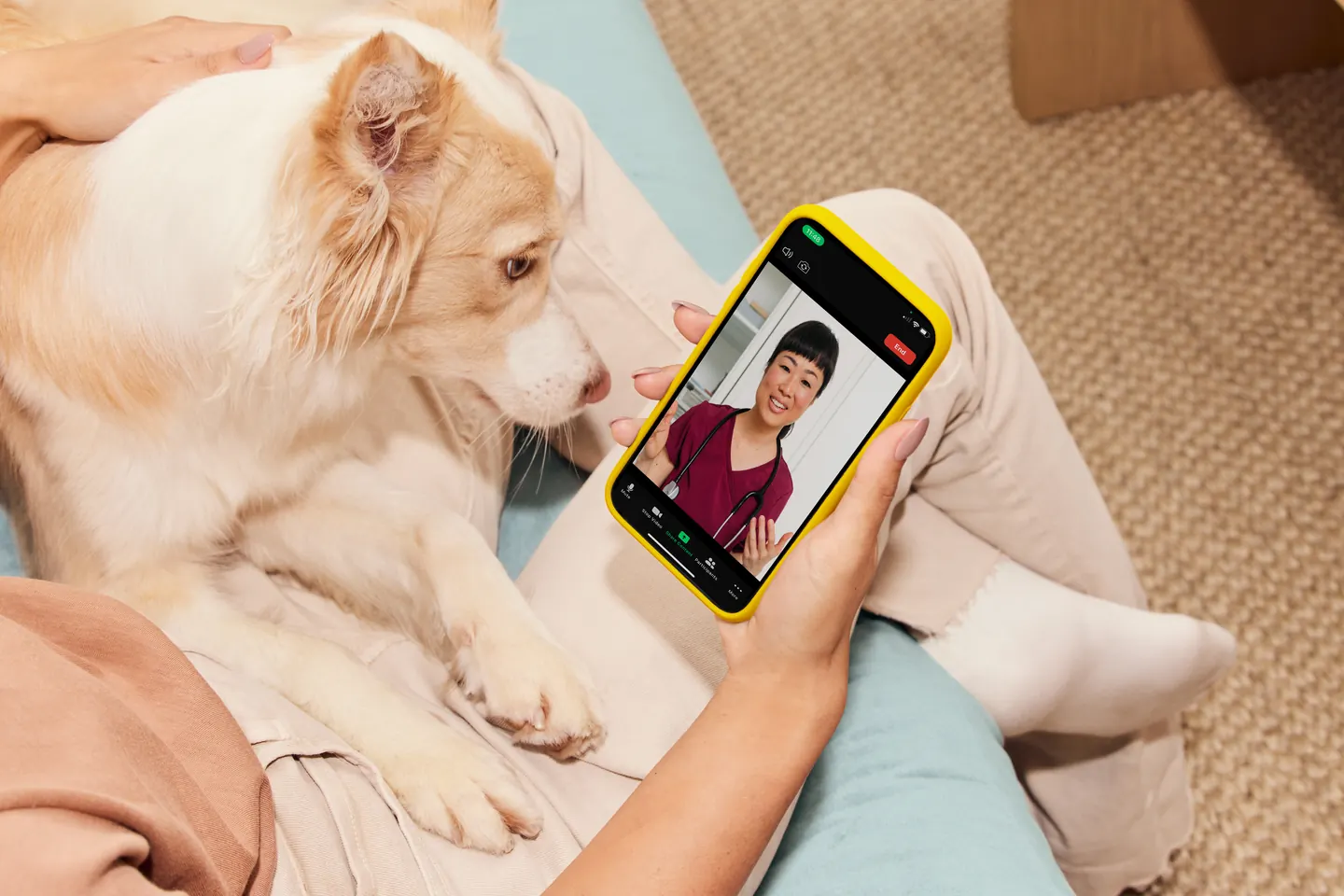
Vet care that's always there
Unlimited video calls and messaging with licensed vets for less than a typical vet visit. One membership covers up to five pets.
Use code Pets60
Plans start at $12/month · covers up to 5 pets
- Licensed vets in most states
- Rx for 150+ conditions
- 4.7 on Trustpilot
Eye Drops & Medications for Dog Conjunctivitis: OTC vs. Prescription
Owners searching for conjunctivitis in dogs eye drops usually want one bottle that fixes everything. There is no such bottle. The drops for conjunctivitis in dogs split cleanly into two groups: over-the-counter comfort products you can buy today, and prescription conjunctivitis in dogs medication your vet chooses after an exam.

Over-the-Counter Options That Are Genuinely Safe
Over the counter treatment for conjunctivitis in dogs is limited to supportive care. These products rinse, lubricate, and soothe. None of them kills bacteria or calms an immune reaction, so they buy comfort while you get a diagnosis.
- Sterile saline eye rinse: flushes pollen, dust, and discharge off the surface without stinging.
- Veterinary artificial tears or lubricant gel: coats a dry, gritty surface and reduces rubbing.
- Antimicrobial eye wash made for pets: cleans debris from the lids and lashes around the eye.
- Warm compresses: soften crust so wiping does not drag across inflamed tissue.
Prescription-Only Medications
Anything that actually treats the cause is prescription only, and antibiotics for conjunctivitis in dogs are the clearest example. The best eye drops for conjunctivitis in dogs are simply the ones matched to a confirmed cause, which is why a fluorescein stain comes before the prescription pad.
- Topical antibiotics: drops or ointment for confirmed bacterial infection. Terramycin for conjunctivitis in dogs is a common prescription ophthalmic antibiotic, dispensed by a veterinarian rather than guessed at.
- Steroid or steroid-combination drops: reserved for allergic and immune-driven cases, and only once a corneal ulcer has been ruled out.
- Cyclosporine tear-stimulant drops: for dry eye, where antibiotics alone will never hold the eye comfortable.
- Oral antibiotics or antihistamines: used when the eye is part of a wider infection or allergy rather than a standalone eye problem.
| Medication type | What it treats | OTC or Rx |
|---|---|---|
| Sterile saline rinse | Debris, pollen, surface discharge | OTC |
| Artificial tears / lubricant gel | Surface dryness and grit | OTC |
| Topical antibiotic (e.g. Terramycin) | Confirmed bacterial infection | Rx |
| Steroid or combination drop | Allergic and immune-driven inflammation | Rx |
| Cyclosporine tear stimulant | Dry eye (KCS) | Rx |
| Oral antibiotic or antihistamine | Systemic infection or allergy | Rx |
Over-the-counter options earn a place in the recovery routine, not in place of a diagnosis. If a bottle you bought yourself is the only thing treating a red eye after 48 hours, that eye needs a veterinarian.
Home Care vs. When to See a Vet (Triage Framework)
Can I treat my dog's conjunctivitis at home? Sometimes, briefly, for a mild irritant flare with no pain. But because pink eye is so often a symptom of something bigger, home care is a short holding pattern, not a substitute for a diagnosis. There is no safe dog conjunctivitis home remedy for a painful or non-improving eye.

Use this simple triage. Home care is reasonable when all of these are true:
- Your dog is bright, comfortable, and not pawing hard at the eye.
- The eye opens normally with no squinting.
- Discharge is clear or watery, not thick yellow-green.
- The cornea looks clear, not cloudy or blue.
- The redness is improving within 24 hours.
See a vet promptly if any of these appear:
- Obvious pain, holding the eye shut, or intense rubbing.
- A cloudy, hazy, or bulging eye, or any vision change.
- Thick colored discharge or redness that lasts more than a day or two.
- Both eyes suddenly affected, or a known eye condition flaring.

For step-by-step guidance, see our walkthrough on how to clean dog eyes. If you are unsure whether the redness is conjunctivitis or a broader infection, our dog eye infection guide covers the wider triage of when an eye can and cannot wait.
During the recovery window, a soothing lubricant such as Optixcare Eye Lube Plus can keep the surface comfortable between doses of any prescribed medication, especially in dry-eye-prone dogs.
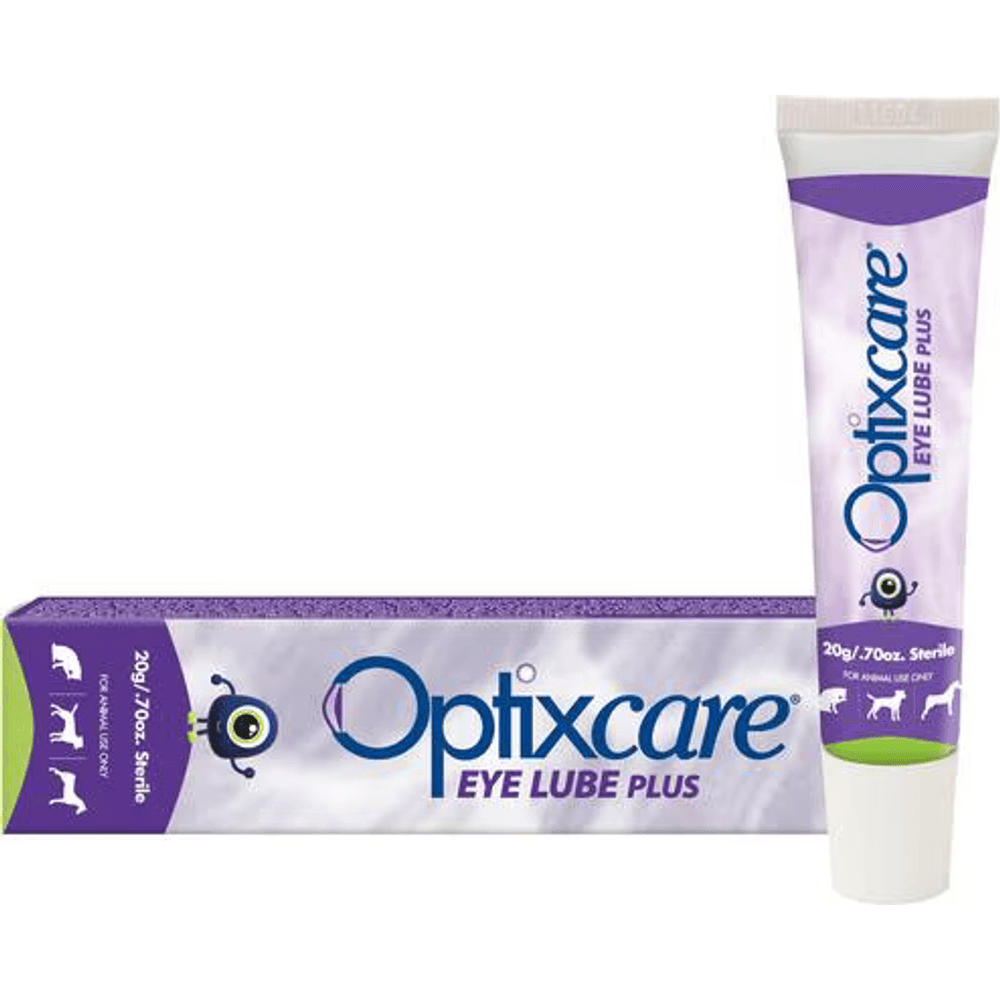
A sterile lubricating gel that soothes and moisturizes dry, irritated eyes and helps support the tear film in dogs and cats prone to dryness. A gentle, vet-shelf staple for everyday eye comfort.
Webvet may earn a commission when you click through to Chewy, at no extra cost to you.
Dog Conjunctivitis Home Treatment: What to Skip
Searches for dog conjunctivitis home treatment and dog pink eye home remedy turn up folk fixes that do more harm than good. Knowing how to treat conjunctivitis in dogs at home is mostly knowing what never belongs in the eye.
- Tea bags: brewed tea is not sterile, and the tannins irritate an already inflamed conjunctiva.
- Coconut oil: it traps debris against the eye surface and is not an ophthalmic product.
- Apple cider vinegar or diluted baby shampoo: acidic and detergent solutions burn exposed tissue.
- Human redness-relief or allergy drops: formulated for a different eye and a different problem.
A sterile saline eye rinse and a fresh cotton pad wiped from the inner corner outward remain the only home steps worth doing while you wait for an appointment. Any red flag above ends home care and starts a same-day phone call.
Cost to Treat Conjunctivitis in Dogs
The real cost to treat conjunctivitis in dogs depends heavily on the cause, and this is information most competitor pages leave out entirely. The numbers below are typical ranges in the United States, not quotes, and simple cases sit at the low end.
| Item | Typical range | When it applies |
|---|---|---|
| Vet exam | $50-$100 | Almost always |
| Fluorescein stain | $20-$50 | To rule out an ulcer |
| Schirmer tear test | $20-$40 | Suspected dry eye |
| Medication (drops/ointment) | $20-$60 | Most treated cases |
| Culture / cytology | $60-$150 | Stubborn or severe cases |
For an uncomplicated, first-time case, many owners spend roughly $100 to $250 all in. Costs climb when the underlying cause is chronic dry eye, entropion needing surgery, or a corneal ulcer, since those carry their own treatment and recheck fees.
Put plainly, how much does it cost to treat conjunctivitis in dogs comes down to three itemized lines: the vet exam, the diagnostics, and the medication. A basic exam plus a fluorescein stain and a Schirmer tear test covers most first visits, with medication drops or ointment added on top.
Ask for those three lines separately on the estimate. All costs are estimates and shift with region, clinic type, and whether the case needs a specialist.
Recovery Timeline & Prognosis
Will dog conjunctivitis go away by itself? A very mild irritant flare can settle on its own once the trigger is gone, but relying on that is risky, because you cannot tell from the couch whether you are looking at simple pink eye or an ulcer. How long conjunctivitis lasts in dogs depends almost entirely on the cause.
- Irritant or mild bacterial: often improves within 3-7 days of the right treatment.
- Allergic: flares with allergen exposure and is managed rather than cured, sometimes seasonally for life.
- Dry eye (KCS): needs lifelong tear support; the eye is controlled, not fully "cured."
- Secondary to ulcer, entropion, or illness: recovery follows the underlying condition and can take longer.
The overall prognosis is good when the cause is identified and treated. The danger is not conjunctivitis itself, it is missing the serious look-alike hiding underneath it, which is why a non-improving eye always earns a vet visit.
How long does conjunctivitis last in dogs? An uncomplicated case treated correctly often improves within 3-7 days and resolves inside two weeks. Allergic flares track the allergen season instead, and dry-eye cases need lifelong tear support rather than a finish date.
Is There a Cure for Conjunctivitis in Dogs?
Owners looking for a conjunctivitis in dogs cure deserve a straight answer, and it is a split one. Some causes genuinely resolve and never come back. Others are controlled for life. Nothing on a shelf cures this condition, and the cause decides which group your dog falls into.
A useful definition of cured: the eye looks white and comfortable, discharge has stopped, and it stays that way once the medication finishes. If the redness returns as soon as treatment stops, the case was managed rather than cured, and the real trigger is still there.
Causes That Usually Resolve Completely
- Secondary bacterial infection: a full course of vet-prescribed antibiotic drops normally clears it, provided the reason bacteria moved in is also addressed.
- Foreign body or irritant: removing the grass seed, sand, or shampoo is the cure, and the eye typically settles within days.
- Single-trigger allergic flares: a one-off pollen or dust reaction resolves once exposure ends and the inflammation is treated.
Causes That Are Managed, Not Cured
- Dry eye (KCS): tear-stimulant drops control it well, but tear production rarely recovers on its own, so treatment is usually lifelong.
- Chronic or year-round allergic conjunctivitis: expect good seasons and bad ones rather than a finish line.
- Immune-mediated forms such as plasma cell conjunctivitis: long-term immune-modulating drops hold the eye quiet, and stopping them usually brings the inflammation back.
What Happens If Dog Conjunctivitis Goes Untreated?
Untreated conjunctivitis in dogs rarely stays a cosmetic problem. Is conjunctivitis in dogs dangerous on its own? Usually not. The danger is the escalation that follows when nobody works out why the eye is inflamed in the first place.
- Constant rubbing and pawing causes self-trauma, and a scraped cornea becomes a corneal ulcer.
- An untreated ulcer deepens, and in the worst cases progresses toward a ruptured eye that needs surgery.
- Infection moves deeper into the eye, producing painful uveitis rather than simple surface irritation.
- Long-running inflammation scars and pigments the conjunctiva, leaving chronic conjunctivitis in dogs that never fully settles.
- A missed underlying cause such as dry eye, entropion, or glaucoma keeps advancing quietly, which is where sudden vision loss actually comes from.
So can conjunctivitis in dogs cause blindness? Not usually by itself. The blindness risk comes from what pink eye hides: an ulcer, glaucoma, or dry eye left untreated behind the redness.
Recurrent conjunctivitis in dogs is the clearest signal that the root cause was never found. An eye that clears with drops and relapses weeks later needs a tear test, pressure check, and eyelid assessment, not another identical course of medication.
Preventing Conjunctivitis in Dogs
You cannot prevent every case, but you can cut the frequency, especially in allergy-prone and flat-faced breeds. Small, consistent habits do most of the work.
- Control allergens: wipe your dog down after high-pollen walks and keep bedding clean.
- Groom around the eyes: trim long hair that sweeps the eye and traps debris.
- Rinse after exposure: flush the eyes after dusty, sandy, or smoky environments.
- Use an e-collar after any eye injury or surgery: it stops self-trauma while the eye heals.
- Know your breed risk: brachycephalic and loose-lidded breeds are more prone and benefit from routine eye checks.
- Address structural problems early: treating entropion or dry eye prevents repeat conjunctivitis flares.
FAQs
How do I treat my dog for conjunctivitis?
A: Treat the cause, not just the redness. Bacterial cases need vet-prescribed antibiotic drops, allergic cases use antihistamines or steroids only after an ulcer is ruled out, irritant cases need flushing, and dry eye needs tear-stimulant drops. Always get a diagnosis before medicating the eye.
Will dog conjunctivitis go away by itself?
A: A very mild irritant flare can settle once the trigger is removed, but you cannot safely tell simple pink eye from a corneal ulcer at home. If redness lasts more than a day or two, or there is pain or thick discharge, see a vet rather than waiting it out.
How contagious is conjunctivitis in dogs?
A: Most cases (allergic, irritant, and dry-eye related) are not contagious at all. Only certain infectious cases can spread dog-to-dog in close contact, and transmission to humans is very rare. Wash your hands and use a fresh cloth per eye as a sensible precaution.
What gets mistaken for conjunctivitis?
A: Corneal ulcers, dry eye (KCS), entropion, uveitis, and glaucoma all begin with a red, weepy eye. Some are vision-threatening emergencies, which is why a vet uses a fluorescein stain, tear test, and pressure check to confirm plain conjunctivitis rather than one of these look-alikes.
Can I treat my dog's conjunctivitis at home?
A: Only briefly, and only for a mild, pain-free irritant flare. Gentle saline cleaning and removing the irritant are reasonable holding steps, but there is no safe home remedy for a painful, colored-discharge, or non-improving eye. Those need professional care within a day.
Is there a vaccine for conjunctivitis in dogs?
A: There is no vaccine for conjunctivitis itself, because it is a symptom with many causes rather than a single disease. However, core vaccines like distemper protect against illnesses that can cause conjunctivitis, so keeping vaccines current lowers one infectious pathway.
Can I catch pink eye from my dog?
A: Almost never. The everyday causes of canine conjunctivitis are allergies and irritants, which cannot pass to people, and even infectious cases rarely transmit to humans. Routine hand-washing after handling the eye is enough to stay safe.
Are some dog breeds more prone to conjunctivitis?
A: Yes. Flat-faced (brachycephalic) breeds and those with loose eyelids or prominent eyes, such as bulldogs, pugs, and spaniels, are more prone because their eyelid conformation and exposed eyes irritate more easily and predispose them to entropion and dry eye.
Can I use human eye drops on my dog?
No. Human redness-relief drops constrict blood vessels and hide a worsening eye, and human steroid or antibiotic drops can cause real harm if a corneal ulcer is present. Plain sterile saline rinse is the only human-shelf product that is reasonably safe, and it cleans rather than treats.
What is the best over-the-counter treatment for conjunctivitis in dogs?
There is no over-the-counter product that cures conjunctivitis. A sterile saline eye rinse and veterinary artificial tears are the safest choices, and they only flush debris and ease surface discomfort. Antibiotic and steroid drops that treat the actual cause are prescription only in dogs.
What happens if dog conjunctivitis goes untreated?
Untreated conjunctivitis in dogs usually escalates rather than resolves. Rubbing can open a corneal ulcer, infection can spread deeper, and chronic inflammation scars the conjunctiva. Most importantly, a hidden cause such as dry eye, entropion, or glaucoma keeps progressing and is where genuine vision loss comes from.
Is there a cure for conjunctivitis in dogs?
It depends on the cause. Bacterial infections, foreign bodies, and one-off allergic flares usually resolve completely with the right treatment. Dry eye, chronic allergies, and immune-mediated forms are controlled with ongoing medication instead of cured. No over-the-counter product cures any of them, so a diagnosis comes first.
Sources

Editor
The Webvet Editorial Team is the in-house group of pet-care editors and writers behind Webvet, operated by Smart Pet Collective. The team researches, writes, and maintains Webvet's pet health, behavior, and medication content. Every article follows a defined editorial process: research from reputable veterinary and scientific sources, careful drafting, mandatory review of medical content by a credentialed veterinarian, and dated publication. Health and medication articles are medically reviewed by a licensed veterinary professional before they go live and are kept current over time.
Veterinarian · BVMS MRCVS
Dr. Pippa Elliott, BVMS, MRCVS, is a veterinarian with nearly 30 years of experience in companion animal practice. Dr. Elliott earned her Bachelor of Veterinary Medicine and Surgery from the University of Glasgow. She was also designated a Member of the Royal College of Veterinary Surgeons. Married with 2 grown-up kids, Dr. Elliott has a naughty Puggle named Poggle, 3 cats and a bearded dragon.


