Best Dog Eye Drops: Allergy, Infection & Lubricating Relief
A vet-reviewed roundup of the best dog eye drops for allergies, infections, and dry eye, with a comparison table, safe application steps, human-drop safety guidance, cost ranges, and clear red flags for when to see a veterinarian.

BVMS MRCVS
Medically reviewed by Dr. Pippa Elliott, BVMS MRCVS · Last reviewed

This article contains affiliate links. Webvet may earn a commission when you buy through them, at no extra cost to you.
WebVet may earn a commission from qualifying purchases made through links on this page, at no additional cost to you.
Watery eyes, squinting, redness, or a crust of green goop in the corner: eye trouble is one of the most common reasons dogs end up at the vet, and the right dog eye drops can bring fast relief for the mild cases. The hard part is matching the product to the problem. An allergy flare, a bacterial infection, and chronic dry eye each call for a different formula, and reaching for the wrong bottle can make things worse.
This vet-reviewed roundup walks through our top picks for allergy, infection, and lubricating relief, how to tell which type your dog actually needs, and the red flags that mean you should skip the store shelf and call your veterinarian today.
- 1Our overall top pick for everyday redness and gunk is a steroid-free antimicrobial eye wash like Vetericyn Plus, because it is safe to keep on hand and treats the most common mild irritations.
- 2The best dog eye drops depend on the cause: eye wash for infection-related discharge, a soothing gel for allergies, and a dedicated lubricant for dry eye.
- 3Never put human redness-relief drops (Visine-type products with tetrahydrozoline) in your dog's eyes; the vasoconstrictors in them are unsafe.
- 4Squinting shut, a cloudy or cracked cornea, or sudden vision loss are emergencies that no over-the-counter drop can fix.
- 5Corneal ulcers, glaucoma, and true infections need a veterinary diagnosis and often prescription eye drops for dogs, not a guess at the pet store.
 Sponsored
Have a health question about your dog?
Talk to a licensed vet at Dutch over video or message, including nights and weekends.
Use code Pets60
Plans start at $12/month · covers up to 5 pets
- Licensed vets in most states
- Rx for 150+ conditions
- 4.7 on Trustpilot
Quick Answer: Best Dog Eye Drops at a Glance
For a calm, itchy, or slightly gunky eye with no pain or vision change, a non-prescription product usually does the job. Our five picks below cover the three jobs owners search for most: infection-related discharge, allergy irritation, and dry-eye lubrication, plus a budget option and a long-term vision supplement.
Use the guide below as a starting point only. If your dog is in pain, holding the eye shut, or the problem does not improve within a day or two, the safest and often cheapest next step is a veterinary exam before you keep dropping anything into the eye.
When Does My Dog Need Eye Drops? Common Causes
Eye drops treat symptoms on the surface of the eye. Before you buy, it helps to guess the likely cause, because that decides whether you need dog eye drops for infection, dog eye drops for allergies, or a simple lubricant. Here are the common culprits and how they usually look:
- Allergies: itchy, red, watery eyes, often with face-rubbing, sneezing, and a seasonal pattern. This is the classic reason for watery eyes in dogs.
- Bacterial or viral infection: thick yellow or green discharge, swelling, and squinting, sometimes in both eyes. See green or yellow eye discharge for color clues.
- Dry eye (keratoconjunctivitis sicca, or KCS): sticky ropey mucus, a dull-looking cornea, and reduced tear film. Learn more on our dry eye in dogs page.
- Conjunctivitis (pink eye): a red, inflamed lining around the eye with discharge, covered fully in dog conjunctivitis and pink eye.
- Corneal ulcer: a painful scratch or erosion on the surface, with heavy tearing and squinting. Review corneal ulcer symptoms to spot it early.
- Foreign body or irritant: sudden pawing and watering in one eye after a walk or a dusty room.
When drops are the wrong tool
Some eye problems look like a drop-treatable issue but are not. Cloudy eyes in an older dog are often lenticular sclerosis rather than a treatable disease, and a bluish or milky lens can signal cataracts in dogs, which drops cannot dissolve. Deep, internal inflammation such as uveitis in dogs and pressure-driven glaucoma in dogs are painful, vision-threatening, and strictly veterinary problems.
Eye Drops for Conjunctivitis (Pink Eye) in Dogs
Pink eye is a symptom, not a diagnosis, which is why searches for eye drops for dogs conjunctivitis rarely have one clean answer. What actually helps depends on whether the inflammation is allergic, bacterial, or viral, and that call belongs to your veterinarian.
- Allergic: a steroid-free soothing gel plus rinsing the allergens out usually settles it, and this is the one scenario where an over-the-counter dog eye drops for pink eye pick is reasonable.
- Bacterial: thick yellow or green discharge needs prescription antibiotic drops, not a wash. A rinse alone will not clear it.
- Viral: managed by your vet with supportive care. Drops address comfort, not the virus itself.
- Irritant or foreign body: flush with sterile saline and have the eye checked if squinting continues past a few hours.
Skip the home-remedy shortcuts. Chamomile tea, breast milk, and human redness-relief drops circulate widely as dog conjunctivitis treatment advice, and none of them are sterile or dose-tested for a dog's eye. A plain saline flush is the only safe holding step while you wait for an appointment.
Our full guide to conjunctivitis in dogs owns the diagnosis path, treatment timelines, and whether it can spread to other pets or people.
Do Cataract Eye Drops Actually Work?
No. Searches for eye drops dog cataracts and best dog cataract eye drops turn up a busy marketplace, but no topical product dissolves or reverses a formed cataract in a dog. Surgery to remove the clouded lens is the only treatment that restores vision.
That includes the heavily marketed lanosterol and N-acetylcarnosine formulas. Can-C dog eye drops and similar products are sold with confident claims, yet peer-reviewed veterinary evidence has not shown they clear cataracts in dogs. Absence of proof is the honest answer here, not a promising maybe.
Staging, surgery, recovery, and real cost figures live on our full cataracts in dogs page.
Glaucoma Eye Drops: Why They're Prescription-Only
There is no over-the-counter option here. Glaucoma is a pressure emergency that can destroy vision within hours, so queries for dog eye drops for glaucoma and best eye drops for dog glaucoma have exactly one safe answer: same-day veterinary care.
Veterinarians lower intraocular pressure with prescription drugs such as dorzolamide, timolol, and latanoprost, chosen after measuring the pressure with a tonometer and rechecked as treatment continues. The drug matters far less than how fast the pressure comes down.
- A bulging or visibly enlarged eyeball
- A cloudy, hazy, or blue-tinged cornea
- A dilated pupil that does not shrink in bright light
- Obvious pain: squinting, head-shy behavior, lethargy, or loss of appetite
- Sudden vision loss in one or both eyes
Causes, breed risk, and long-term management are covered on our glaucoma in dogs page.
Home Care vs. Vet Visit: When OTC Drops Are Enough
Owners often ask how they can treat a dog's eye infection without going to the vet. The honest answer: mild irritation and light discharge can often be managed at home with a saline eye wash and gentle cleaning, but a true infection usually needs a veterinary diagnosis to pick the correct antibiotic.
Home care is reasonable when the eye is open, comfortable, and only mildly red or watery, and when your dog is otherwise bright and eating. Flushing with a sterile eye wash and wiping away debris (our how to clean dog eyes guide walks through the technique) can settle a minor irritation within a day or two.
You should stop home care and see a veterinarian if the discharge is thick, colored, or worsening, if the eye is painful, or if there is no improvement after 24 to 48 hours. For a full breakdown of infection care and whether a dog eye infection will clear on its own, see our dedicated dog eye infection page, which owns that topic in depth.
Best Dog Eye Drops: Our Top Picks by Need
Every product below is a non-prescription option you can buy without a vet visit, chosen for a specific job. These are the best dog eye drops for owners who have already ruled out the red flags above and want targeted, over-the-counter relief. So when readers ask what eye drops can I give my dog, the answer is: match the formula to the symptom.
Our vet-review criteria were simple. We prioritized steroid-free formulas safe for at-home use, ingredient transparency, a strong track record with veterinarians, availability (most are stocked on Chewy and Amazon, so a quick dog eye drops Chewy search will surface several), and a clear single purpose so owners are not guessing. We did not rank any product that requires a prescription, and we flag where a vet visit should come first.
| Product | Best For | Type | Typical Price | OTC or Rx |
|---|---|---|---|---|
| Vetericyn Plus Antimicrobial Eye Wash | Infection-type discharge and debris | Antimicrobial rinse | $10-20 | OTC |
| Vetericyn Plus Pet Eye Gel | Allergy redness and irritation | Steroid-free gel | $10-20 | OTC |
| Optixcare Eye Lube Plus | Dry eye and tear-film support | Lubricating gel | $12-22 | OTC |
| Pet Drops Ultra Lubricant Eye Drops | Budget daily lubrication | Lubricating drops | $8-15 | OTC |
| Ocu-GLO Vision Supplement | Long-term vision support | Oral antioxidant chew | $30-55 | OTC |
Best for Eye Infections & Discharge: Vetericyn Plus Antimicrobial Eye Wash
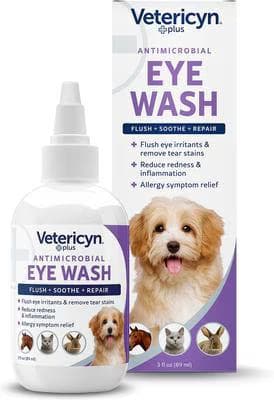
A sterile antimicrobial rinse that flushes irritants, pollen, and discharge out of the eye and helps lift tear stains. A sensible at-home first step for mild irritation, though it does not replace a vet exam for a painful eye.
Webvet may earn a commission when you click through to Chewy, at no extra cost to you.
When an eye is producing gunk and mild discharge, a dedicated dog eye wash is the smartest first move. Vetericyn Plus Antimicrobial Eye Wash uses a steroid-free hypochlorous-acid formula that rinses away debris and discourages surface bacteria without stinging, which makes it easy to use on a wiggly dog.
It will not cure a deep bacterial infection (that still needs a vet and, often, antibiotic eye drops for dogs), but it is an excellent everyday flush for irritation, light discharge, and post-walk debris. It also pairs well with the cleaning routine in our dog eye discharge triage guide.
- Pros: gentle, non-stinging, steroid-free, safe for frequent use, doubles as a tear-stain wipe rinse.
- Cons: a rinse, not a medicine, so it will not resolve a true infection on its own.
- Best for: owners who want a safe, keep-on-hand rinse for mild gunky eyes and routine cleaning.

 Sponsored
Vet care that's always there
Unlimited video calls and messaging with licensed vets for less than a typical vet visit. One membership covers up to five pets.
Use code Pets60
Plans start at $12/month · covers up to 5 pets
- Licensed vets in most states
- Rx for 150+ conditions
- 4.7 on Trustpilot
Best for Allergy & General Irritation: Vetericyn Plus Pet Eye Gel
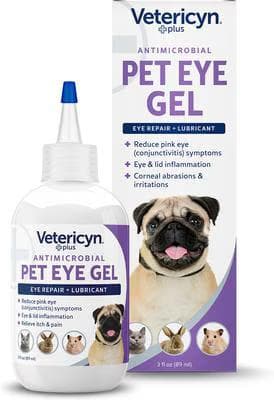
A lubricating antimicrobial gel that clings to the eye surface longer than a rinse, easing conjunctivitis symptoms, lid inflammation, and irritation from minor corneal abrasions. For dogs, cats, and small pets.
Webvet may earn a commission when you click through to Chewy, at no extra cost to you.
For the itchy, red, watery eyes of seasonal allergies, a soothing gel clings to the surface longer than a thin rinse and gives more lasting comfort. Vetericyn Plus Pet Eye Gel is steroid-free, so it calms everyday allergy irritation without the risks that come from putting steroids on an undiagnosed eye.
Because it is thicker, this dog eye gel is a good choice for dogs who paw at their faces during pollen season. It targets the surface discomfort of dog eye drops for allergies without masking a more serious problem, but if redness keeps returning, an allergy work-up with your vet is worth it.
- Pros: steroid-free, soothing, longer contact time than a rinse, easy to apply.
- Cons: does not treat the underlying allergy, so heavy or year-round cases still need a vet plan.
- Best for: dogs with mild, occasional allergy or environmental irritation.

Best Lubricating Drops for Dry Eye: Optixcare Eye Lube Plus
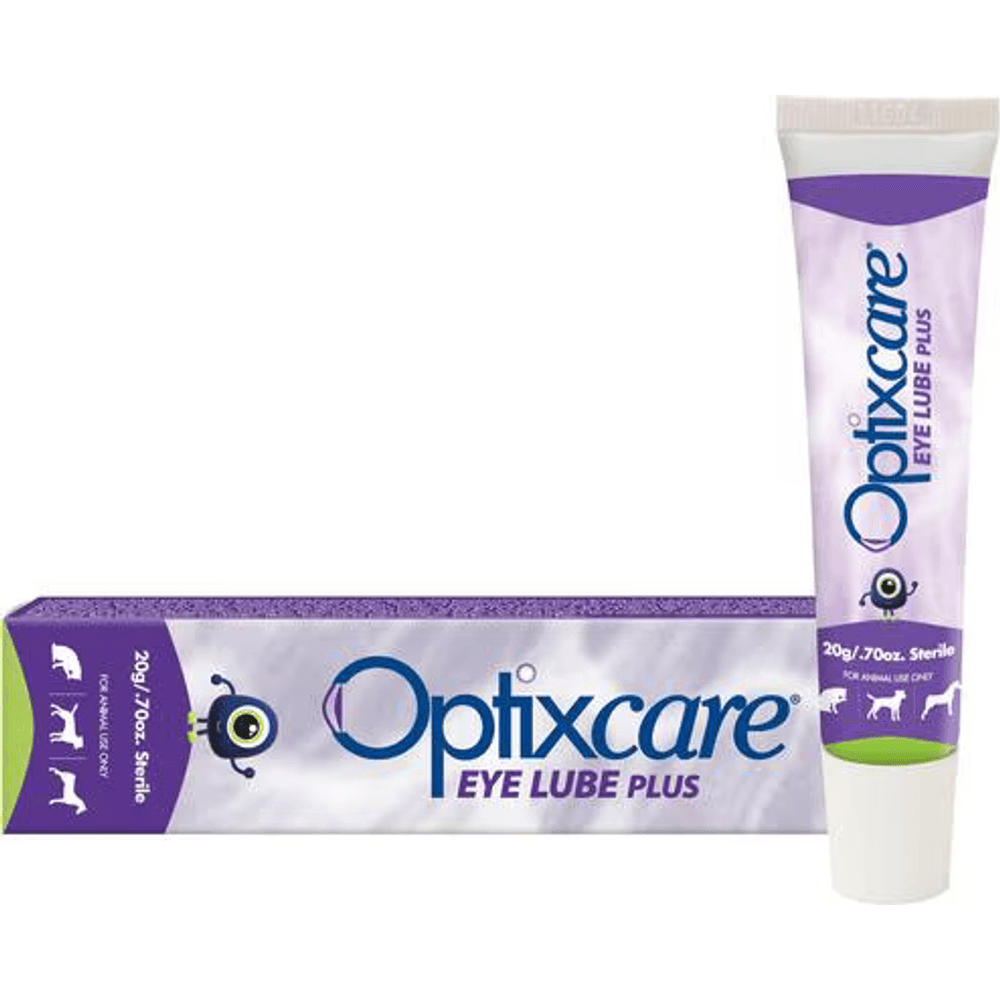
A sterile lubricating gel that soothes and moisturizes dry, irritated eyes and helps support the tear film in dogs and cats prone to dryness. A gentle, vet-shelf staple for everyday eye comfort.
Webvet may earn a commission when you click through to Chewy, at no extra cost to you.
Dry eye happens when a dog does not make enough quality tears, leaving the surface irritated and sticky. Optixcare Eye Lube Plus is a lubricating gel built for exactly this: it coats the cornea, holds moisture, and eases the gritty discomfort of tear-film problems. It is one of the most reliable lubricating eye drops for dogs on the shelf.
Lubricants manage the symptoms of dryness, but true KCS is a diagnosable disease that often needs prescription tear-stimulating medication alongside the lubricant. Read our full dry eye in dogs page before you assume a lubricant alone is enough.
- Pros: long-lasting hyaluronic-acid-based coverage, soothing, good for daily use.
- Cons: a support product, not a cure, for diagnosed dry eye.
- Best for: dogs with occasional dryness or as ongoing support for a vet-managed KCS case.

Best Budget Lubricating Option: Pet Drops Ultra Lubricant Eye Drops
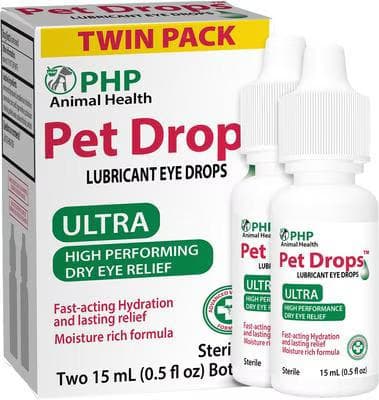
High-viscosity lubricant drops built for dry eye, giving faster hydration that lasts longer than a basic saline rinse. Twin pack of two 15-mL sterile bottles for dogs and cats.
Webvet may earn a commission when you click through to Chewy, at no extra cost to you.
If you need daily lubrication without the premium price, Pet Drops Ultra Lubricant Eye Drops deliver simple, watery relief at the lowest cost per bottle in this roundup. They are thinner than a gel, so they spread quickly and are easy to use several times a day on dogs who tolerate a quick drop better than a sticky gel.
This budget pick is ideal for high-frequency use, occasional dryness, or flushing out dust and pollen. It is a basic lubricant rather than a medicated product, so pair it with a vet visit if dryness is constant.
- Pros: inexpensive, thin and fast-spreading, fine for frequent daily use.
- Cons: shorter contact time than a gel, purely lubricating with no added support ingredients.
- Best for: budget-conscious owners needing simple, frequent lubrication.

Best Long-Term Vision Support Supplement: Ocu-GLO Vision Supplement
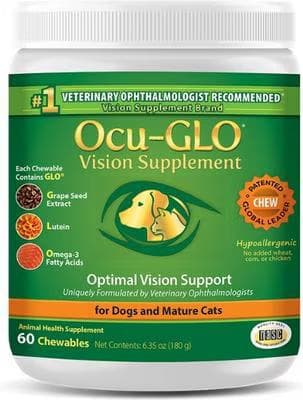
A chewable version of Ocu-GLO for dogs and mature cats, useful when a pet refuses gelcaps. Hypoallergenic with no added wheat, corn, or chicken, and formulated by veterinary ophthalmologists.
Webvet may earn a commission when you click through to Chewy, at no extra cost to you.
Not every eye problem is solved with a drop. For senior dogs and dogs with chronic dryness or early lens changes, Ocu-GLO is an oral antioxidant chew developed with veterinary ophthalmologists to support long-term eye and vision health from the inside out.
It is not a treatment for an active infection or ulcer, and it will not replace prescribed medication. Think of it as a daily support option that complements, rather than substitutes for, your vet's plan for aging or at-risk eyes.
- Pros: ophthalmologist-formulated antioxidant blend, easy soft-chew dosing, supports whole-eye health.
- Cons: a supplement, not a medicine, and it takes weeks of consistent use to matter.
- Best for: senior dogs or breeds prone to eye disease needing long-term nutritional support.

Can You Use Human Eye Drops on a Dog? Safety Guide
This is one of the most searched safety questions, so let us be direct. Can you use human eye drops on a dog? Sometimes, but only plain lubricating artificial tears, and ideally only after your veterinarian confirms it is appropriate for your dog's specific problem.
Plain, preservative-light artificial tears (the kind whose only active ingredients are lubricants such as carboxymethylcellulose or a sterile saline rinse) are generally the only human eye product considered reasonable for occasional canine use. So when owners ask what human eye drops are safe for dogs, the short list is basic lubricating tears and saline, nothing medicated.
Everything else is a different story. Medicated and redness-relief human drops can be harmful because they were formulated for human eyes and human doses:
- Redness-relief drops (Visine and similar) that contain tetrahydrozoline, naphazoline, or other vasoconstrictors: unsafe, and toxic if the dog swallows the runoff.
- Antihistamine or decongestant combination drops: not dosed or tested for dogs.
- Any steroid or antibiotic human drop: only under veterinary direction, never as a guess, especially with an undiagnosed ulcer.
Saline and Artificial Tears: The Conditional Exceptions
Two brand questions come up constantly. Refresh and Systane both sell plain lubricant formulas a veterinarian may okay for occasional use, but both lines also sell medicated and redness-relief versions, so the brand name on its own tells you nothing about safety.
- Read the active ingredients, never the front of the box: lubricants only, no vasoconstrictors, no antihistamines, no decongestants.
- Preservative-free single-use vials are the gentlest choice for a dog's eye.
- Sterile saline eye drops for dogs are a safe flush at any time, while artificial tears for dogs address dryness only and do nothing for an infection.
How to Apply Eye Drops to Your Dog (Step-by-Step)
Good technique makes the difference between a dose that helps and a struggle that wastes the bottle. Work calmly, keep treats close, and stop if your dog panics.
- Wash your hands and gather the product, a few treats, and a clean, damp cloth.
- Gently wipe away any discharge first so the drops reach the eye surface, using the method in our how to clean dog eyes guide.
- Position your dog facing away from you, back against your legs, and cup the chin in one hand to steady the head.
- Rest your dosing hand on the top of the skull, tilt the nose slightly upward, and hold the bottle close but not touching.
- Pull the upper lid up gently and squeeze the prescribed number of drops onto the white of the eye, never directly onto the pupil, and never let the tip touch the eye.
- For a gel or ointment, lay a thin ribbon along the inside of the lower lid, then let your dog blink to spread it.
- Release and reward immediately so the next dose is easier.
On frequency, follow the label or your vet: simple lubricants are often used two to four times daily, while medicated products follow a strict prescribed schedule. If you are giving two different products, apply the thin, watery one first, wait about five minutes, then apply the thicker gel so the second does not wash the first away.
When Your Dog Won't Let You Put Eye Drops In
If your dog ducks, dodges, or snaps, the problem is almost always the hand coming at the face rather than the drop itself. Rebuild the habit before you fight it.
- Approach from behind and above so the bottle never crosses your dog's line of sight.
- Pair every session with a high-value treat, and spend a day or two just touching the face and rewarding before you dose again.
- Use two people when you can: one steadies the body and chin, the other doses.
- For a dog that bites, introduce a comfortable basket muzzle in advance as a routine tool rather than a punishment, and ask your vet or a certified trainer for a hands-on demo.
- Never wrestle a painful eye. If your dog cannot be dosed safely, tell your veterinarian so the plan can change to a longer-acting or injectable option.
Prescription vs. Over-the-Counter: What Requires a Vet Visit
Over-the-counter washes, gels, and lubricants handle mild, surface-level irritation. The moment an eye is painful, infected, or losing vision, you have crossed into prescription territory, and prescription eye drops for dogs exist for good reason.
A veterinarian may prescribe a medicated ointment such as Terramycin (an antibiotic for confirmed bacterial infections), a tear-stimulating drug like cyclosporine for diagnosed dry eye, or pressure-lowering drops for glaucoma. These are matched to a diagnosis your vet reaches with a stain test and pressure check, not by guessing at the pharmacy.
Some conditions are not drop problems at all. A rolled-in eyelid, or entropion in dogs, is corrected surgically, and a corneal ulcer that is not healing may need advanced care rather than another bottle. If OTC products are not helping within a day or two, that lack of response is itself the signal to escalate to your veterinarian.
Common Antibiotic Eye Drops Vets Prescribe
Most guides stop at "ask your vet," so here are the drugs actually behind a dog eye drops antibiotic prescription. Your veterinarian picks one based on the fluorescein stain result, the discharge, and the organism suspected.

- Ofloxacin: a fluoroquinolone reached for when a corneal ulcer is infected or at risk, and ofloxacin dog eye drops are among the most commonly dispensed.
- Ciprofloxacin: a related fluoroquinolone for stubborn or gram-negative surface infections. Ciprofloxacin dog eye drops are usually a human-labeled generic used off-label by prescription.
- Neomycin with polymyxin B and bacitracin (triple antibiotic): broad first-line cover for routine bacterial conjunctivitis, so neomycin dog eye drops and ointments are a frequent starting point.
- Gentamicin: an aminoglycoside used more selectively because of corneal irritation risk, so gentamicin dog eye drops are typically reserved for specific gram-negative infections.
- Oxytetracycline, sold as Terramycin antibiotic ointment: a long-standing broad-spectrum ointment for surface bacterial infection.
There is no true non-prescription version of any of these. Hunting for antibiotic eye drops for dogs over the counter in the US is a dead end, because every genuine antibiotic eye product is prescription-only. An antimicrobial eye wash like the Vetericyn pick is the closest OTC step, and it rinses rather than treats.
That distinction costs time you may not have. An eye that needs antibiotic drops for dog eye infection is an eye that needs a stain test first, and days spent shopping are days a bacterial infection has to work deeper into the cornea.
How Much Do Dog Eye Drops Cost?
Cost is the piece most guides skip, so here is a realistic picture of how much dog eye drops cost across the tiers. Prices vary by region and brand, so treat these as typical ranges rather than quotes.
- Over-the-counter washes, gels, and lubricants: typically $8 to $25 per bottle.
- Prescription medicated eye drops and ointments: often $20 to $60 and up, with specialty formulas like cyclosporine sometimes higher.
- The veterinary exam that gets you the correct diagnosis: commonly $50 to $100 for a general-practice visit, more for a board-certified ophthalmologist.
Frequently Asked Questions
What eye drops can I give my dog?
A: For mild, non-painful eyes, safe over-the-counter options include an antimicrobial eye wash for discharge, a steroid-free gel for allergy irritation, and a dedicated lubricant for dryness. Match the product to the symptom, and see a vet if the eye is painful, colored-discharge heavy, or not improving in a day or two.
Can you use human eye drops on a dog?
A: Only plain lubricating artificial tears or sterile saline, and ideally with your vet's okay. Never use medicated or redness-relief human drops such as Visine, because their vasoconstrictors (tetrahydrozoline and naphazoline) are unsafe for dogs.
What human eye drops are safe for my dog?
A: Basic artificial tears and saline rinses whose only job is lubrication are the safest human products for occasional canine use. Anything with antihistamines, decongestants, steroids, antibiotics, or redness relief should be avoided unless a veterinarian specifically directs it.
What can I give my dog for gunky eyes?
A: Light, occasional gunk can be flushed with a saline or antimicrobial eye wash and wiped away with a clean, damp cloth. For the full home-care routine and when goop signals something more, see our complete guide to dog eye boogers.
How can I treat my dog's eye infection without going to the vet?
A: You can gently clean the eye and rinse it with a sterile eye wash to manage mild irritation, but a true infection usually needs a veterinary diagnosis and the correct antibiotic. Our dog eye infection page covers exactly when home care is safe and when it is not.
Will a dog's eye infection go away on its own?
A: Some very mild irritations settle with cleaning, but genuine bacterial or viral infections often need treatment and can worsen without it. We cover the full answer, including warning signs, on our dog eye infection guide.
Where can I buy dog eye drops?
A: Most of the picks here are stocked at major retailers, and searching dog eye drops on Chewy or Amazon will surface the exact products in this roundup. Prescription drops come from your veterinarian or a licensed pet pharmacy.
Can I buy antibiotic eye drops for dogs over the counter?
No. Every true antibiotic eye drop or ointment for dogs, including ofloxacin, gentamicin, neomycin combinations, and Terramycin, requires a veterinary prescription in the US. The closest over-the-counter step is a steroid-free antimicrobial eye wash, which rinses the surface but does not treat an established infection.
Do cataract eye drops work on dogs?
No eye drop dissolves or reverses a formed cataract in a dog. Lanosterol and N-acetylcarnosine products such as Can-C are marketed for it, but peer-reviewed veterinary evidence has not shown they clear cataracts. Surgery is the only treatment that restores vision, so ask your vet about an ophthalmology referral.
What eye drops treat conjunctivitis in dogs?
It depends on the cause. Allergic conjunctivitis often responds to a steroid-free soothing gel, bacterial cases need prescription antibiotic drops, and viral cases need veterinary management. Because those look similar to the eye, get a diagnosis before you medicate rather than guessing at the shelf.
Are there eye drops for glaucoma in dogs I can buy myself?
No, and trying to treat glaucoma at home risks permanent blindness. Pressure-lowering drugs such as dorzolamide, timolol, and latanoprost are prescription-only and are dosed against measured eye pressure. A bulging, cloudy, or suddenly painful eye is an emergency that needs same-day care.
Sources

Editor
The Webvet Editorial Team is the in-house group of pet-care editors and writers behind Webvet, operated by Smart Pet Collective. The team researches, writes, and maintains Webvet's pet health, behavior, and medication content. Every article follows a defined editorial process: research from reputable veterinary and scientific sources, careful drafting, mandatory review of medical content by a credentialed veterinarian, and dated publication. Health and medication articles are medically reviewed by a licensed veterinary professional before they go live and are kept current over time.
Veterinarian · BVMS MRCVS
Dr. Pippa Elliott, BVMS, MRCVS, is a veterinarian with nearly 30 years of experience in companion animal practice. Dr. Elliott earned her Bachelor of Veterinary Medicine and Surgery from the University of Glasgow. She was also designated a Member of the Royal College of Veterinary Surgeons. Married with 2 grown-up kids, Dr. Elliott has a naughty Puggle named Poggle, 3 cats and a bearded dragon.


