Glaucoma in Dogs: Emergency Signs, Treatment & Cost
Glaucoma in dogs is a painful, sight-threatening emergency. Learn the warning signs, diagnosis, treatment and surgery costs, and how to keep a dog comfortable long term.

BVMS MRCVS
Medically reviewed by Dr. Pippa Elliott, BVMS MRCVS · Last reviewed

This article contains affiliate links. Webvet may earn a commission when you buy through them, at no extra cost to you.
WebVet may earn a commission from qualifying purchases made through links on this page, at no additional cost to you.
Glaucoma in dogs is one of the few eye conditions that counts as a true medical emergency. When pressure inside the eye spikes, the optic nerve and retina can be permanently damaged within hours, and a dog can lose sight in the affected eye before you finish the drive to the clinic.
That urgency is exactly why this guide leads with the decision that matters most: how to recognize an emergency, what treatment and surgery realistically cost, and how to keep a dog comfortable for the long haul. Dog glaucoma is manageable when caught fast, but it is rarely curable, so knowing the warning signs is the single best thing you can do for your dog's vision.
- 1Glaucoma is a rise in intraocular pressure (IOP) that damages the optic nerve; sustained high pressure can cause permanent blindness within 24 to 48 hours, sometimes sooner.
- 2The classic emergency signs are a suddenly red, cloudy, or bulging eye, a dilated pupil, squinting, and pain; any of these means an emergency vet visit today.
- 3There is no cure, but medication and surgery can lower pressure, relieve pain, and slow vision loss when started early.
- 4Costs typically run from a few hundred dollars for diagnosis and monthly drops to several thousand for advanced surgery.
- 5Most dogs live comfortably even after losing sight; glaucoma pain can almost always be controlled, so euthanasia is rarely required for glaucoma alone.
 Sponsored
Have a health question about your dog?
Talk to a licensed vet at Dutch over video or message, including nights and weekends.
Use code Pets60
Plans start at $12/month · covers up to 5 pets
- Licensed vets in most states
- Rx for 150+ conditions
- 4.7 on Trustpilot
What Is Glaucoma in Dogs?
Glaucoma is a group of eye diseases in which fluid pressure inside the eyeball rises above the healthy range and begins to injure the optic nerve and retina. The eye constantly produces a fluid called aqueous humor and drains it at a matching rate. When drainage slows or blocks, fluid backs up, pressure climbs, and the delicate nerve tissue that carries vision to the brain starts to die.
Normal canine intraocular pressure sits roughly between 10 and 20 mmHg. In glaucoma, that number can climb past 30, 40, or even 50 mmHg. The higher the pressure and the longer it stays elevated, the faster vision is lost. This is why canine glaucoma is treated as a race against the clock rather than a wait-and-see condition.

A boric acid rinse that flushes everyday dust and pollen from a dog's eyes and helps reduce the tear staining that follows chronic watering. Not a treatment for infection.
Webvet may earn a commission when you click through to Chewy, at no extra cost to you.
There are two broad forms, covered in detail below: primary glaucoma, which is inherited, and secondary glaucoma, which develops because of another eye problem. Both raise pressure, both threaten sight, and both hurt.
What is glaucoma in dogs, in plain terms?
If you want the short version of what is glaucoma in dogs, picture the eye as a sink with the tap always running. Dog glaucoma is what happens when the drain clogs. Fluid keeps arriving, pressure climbs, and the optic nerve is squeezed from the inside.
- Glaucoma in dogs is raised pressure inside the eyeball, not an infection, and it cannot pass from one pet to another
- Dog glaucoma usually hits one eye first, so a sudden difference between the two eyes is the earliest clue most owners notice
- Canine glaucoma is progressive: left alone, pressure keeps climbing and the nerve damage becomes permanent
- The eye itself is often structurally normal at the start, which is why the condition can appear overnight in a dog who seemed fine yesterday
That mechanical picture explains the urgency. Nothing about glaucoma in dogs improves on its own, and every hour of high pressure removes vision you cannot get back.
Emergency Warning Signs: When to Get to the ER Right Now
Knowing how to tell if a dog has glaucoma can save its eye. The signs of glaucoma in dogs often appear suddenly, and an acute attack looks dramatic because the pressure spike is genuinely painful. If you notice one eye that changed within hours, do not wait for a routine appointment.

The most common glaucoma in dogs symptoms include:
- A suddenly red or bloodshot eye, with visible engorged blood vessels on the white
- A cloudy, hazy, or bluish cornea (the clear front of the eye looks steamy)
- A dilated pupil that does not shrink in bright light, or two pupils of different sizes
- Squinting, blinking, or holding the eye closed
- Pawing or rubbing at the eye and face
- Obvious pain: whining, hiding, lethargy, or a dropped appetite
- A watery or teary eye, sometimes with clear discharge
- An eye that looks larger or is bulging (a sign of longer-standing pressure)
- Bumping into furniture or sudden clumsiness, hinting at vision loss
Watery, clear tearing can overlap with milder problems, so it helps to know how glaucoma differs from an ordinary weepy eye. If you are unsure whether you are seeing an emergency or a routine issue, our guides to dog eye discharge and green or yellow eye discharge can help you tell watery glaucoma tearing from an infection. A red, painful eye can also look like conjunctivitis (pink eye), which is far less urgent, but when redness comes with cloudiness or a dilated pupil, treat it as glaucoma until a vet rules it out.
While you arrange care, you can keep the eye comfortable, but you cannot treat glaucoma at home. A sterile lubricant such as Optixcare Eye Lube Plus can soothe surface irritation and stop the eye from drying while you drive in, but it does nothing to lower pressure. Never apply leftover medicated drops from a past problem, because the wrong drug can make pressure worse.
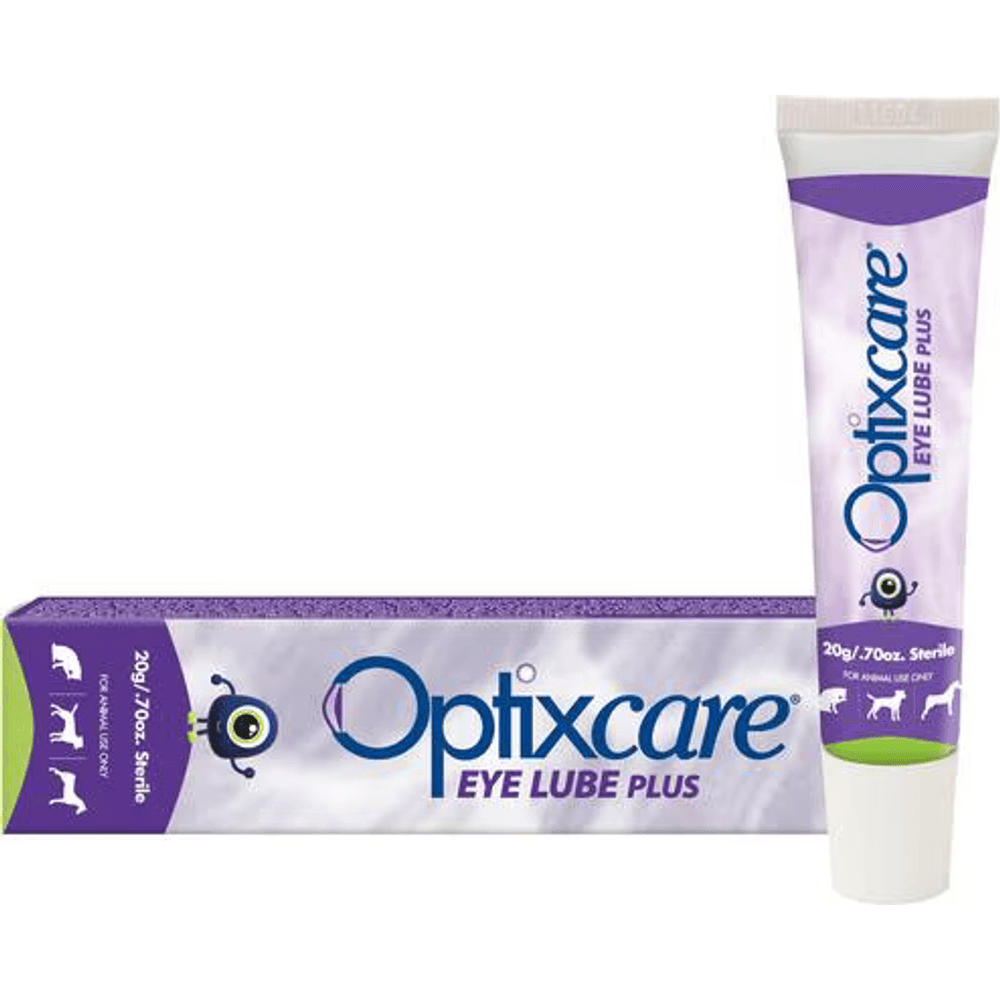
A sterile lubricating gel that soothes and moisturizes dry, irritated eyes and helps support the tear film in dogs and cats prone to dryness. A gentle, vet-shelf staple for everyday eye comfort.
Webvet may earn a commission when you click through to Chewy, at no extra cost to you.
Primary vs. Secondary Glaucoma: Causes & Breed Risk
Understanding primary vs secondary glaucoma in dogs matters because the cause changes the treatment and the outlook. Both types share the same core problem of poor fluid drainage, but they start in different ways.
Primary glaucoma
Primary glaucoma is inherited. Affected dogs are born with an abnormally narrow or malformed drainage angle (the iridocorneal angle) where aqueous humor is supposed to exit. Pressure eventually builds even though the eye itself started out healthy. Primary glaucoma usually strikes one eye first, but because the trait is genetic, the second eye is at high risk and is often treated preventively.
Secondary glaucoma
Secondary glaucoma develops when another eye disease clogs or damages the drainage system. It is the more common form overall. Leading causes include:
- Inflammation inside the eye, or uveitis in dogs, which is one of the most frequent triggers
- Cataracts in dogs, especially advanced or swelling cataracts that crowd the drainage angle
- Lens luxation, where the lens slips out of position and blocks fluid flow
- Long-standing corneal disease or a deep corneal ulcer in dogs that leads to inflammation
- Bleeding inside the eye or intraocular tumors
Because these conditions feed directly into glaucoma, treating them early is a real prevention strategy, not just good hygiene.
Which breeds are prone to glaucoma?
Certain breeds carry a much higher genetic risk, so knowing the common glaucoma in dogs breeds matters if you own one. If you own one of these breeds, learn the emergency signs by heart. The table below shows commonly predisposed breeds and the typical pattern.
| Breed | Primary Risk | Notes |
|---|---|---|
| Cocker Spaniel | High (primary) | One of the most frequently affected breeds; often both eyes over time |
| Basset Hound | High (primary) | Classic narrow-angle anatomy; sudden acute attacks common |
| Beagle | High (primary) | Well-documented inherited form |
| Chow Chow | High (primary) | Narrow drainage angles from a young age |
| Shar-Pei | High (primary) | Predisposed to both primary glaucoma and entropion |
| Siberian Husky | Moderate to high | Inherited angle abnormalities reported |
| Samoyed | Moderate to high | Similar northern-breed angle risk |
| Boston Terrier | Moderate | Also prone to lens luxation-driven secondary glaucoma |
| Jack Russell Terrier | Moderate | Lens luxation raises secondary-glaucoma risk |
| Shih Tzu | Moderate | Brachycephalic eye shape adds surface risk |
Age plays a role too: primary glaucoma most often appears in middle-aged dogs, while secondary glaucoma can strike at any age once the underlying disease sets in.
Is Glaucoma Painful for Dogs?
Is glaucoma in dogs painful? Yes, and understanding that pain helps owners act quickly instead of waiting. The high pressure stretches the eye wall and compresses internal structures, producing a deep ache that has been compared to a severe migraine in people. A dog with glaucoma is in real, sustained pain even when it does not cry out.
Dogs are hardwired to hide discomfort, so the pain is easy to miss. Instead of obvious yelping, look for behavioral cues:
- Lethargy, sleeping more, or reluctance to play
- Reduced appetite or eating more slowly
- Hiding, clinginess, or a change in temperament
- Holding the head at a tilt or pressing it against surfaces
- Squinting or keeping the eye partly closed
- Rubbing the face on the floor or with a paw
Because dogs mask pain so well, the absence of whining does not mean the eye is comfortable. Any dog with a red, cloudy, or bulging eye should be assumed to be hurting until a veterinarian confirms otherwise. The good news is that relieving that pain, whether with medication or by treating the pressure directly, is a central goal of every treatment plan.
How Fast Does Glaucoma Progress in Dogs? Stages and Timeline
How fast does glaucoma progress in dogs depends on how high the pressure climbs and how long it stays there. An acute attack moves in hours. A partly controlled eye can decline over weeks. Knowing the stages of glaucoma in dogs helps you judge how urgently your dog needs to be seen.

The three stages of glaucoma in dogs
- Acute crisis, roughly the first 24 to 72 hours: pressure spikes, the eye turns red and hazy, and permanent blindness can begin within hours once pressure is sustained above about 40 to 50 mmHg. This is the only window in which emergency treatment reliably saves sight.
- Subacute decline, days to weeks: pressure is partly controlled but still above normal, remaining vision fades, and the dog grows quieter, sleeps more, and plays less as the ache becomes constant.
- Chronic end stage, weeks to months: the eye is permanently blind and often stretched by buphthalmos, the enlarged eye appearance of long-standing pressure. That eye can still hurt, and enucleation or a prosthesis is usually what makes the dog comfortable again.
How fast can glaucoma kill a dog?
Owners searching how fast can glaucoma kill a dog are usually asking out of fear, and the honest answer is reassuring. Glaucoma is not directly fatal. It attacks vision and causes real pain, but it does not shut down the body the way a systemic illness does.
The worry behind how fast can glaucoma kill a dog without surgery is really about blindness and uncontrolled pain. Both are manageable. Without surgery an eye may go permanently blind, yet medication and, when needed, eye removal still end the pain and let the dog live a full life.
- 1Acute glaucoma can destroy vision within hours; treat any sudden red, cloudy, or painful eye as a same-day emergency.
- 2Glaucoma is rarely fatal on its own, so the real race is against blindness and pain, not against death.
- 3An end-stage, blind, enlarged eye is still treatable for comfort, and most dogs do very well once the pain is gone.
 Sponsored
Vet care that's always there
Unlimited video calls and messaging with licensed vets for less than a typical vet visit. One membership covers up to five pets.
Use code Pets60
Plans start at $12/month · covers up to 5 pets
- Licensed vets in most states
- Rx for 150+ conditions
- 4.7 on Trustpilot
How Vets Diagnose Glaucoma
Diagnosing glaucoma is fast and usually painless, which is one more reason not to delay a visit. The cornerstone test measures the pressure inside the eye, and it takes only seconds.
The typical diagnostic workflow includes:
- Tonometry: a handheld tonometer (such as a TonoVet or TonoPen) gently touches or taps the surface of the eye to read intraocular pressure in mmHg. This is the definitive test and the number that confirms glaucoma.
- A full ophthalmic exam: the vet checks the pupil's light response, the cornea, the lens, and the retina for the cause and the extent of damage.
- Gonioscopy: a specialized lens lets the vet inspect the drainage angle, which helps classify primary glaucoma and assess risk to the healthy eye.
- Ocular ultrasound: used when the eye is too cloudy to see inside, to look for tumors, lens luxation, or bleeding.
Many general practitioners stabilize the eye first and then refer to a board-certified veterinary ophthalmologist for gonioscopy, advanced imaging, and a long-term plan. Keeping the area around the eye clean and free of crust helps every exam go smoothly; a gentle product like Vetericyn Plus Antimicrobial Eye Wash is handy for wiping away discharge before and after appointments, though it is a hygiene aid and not a treatment.

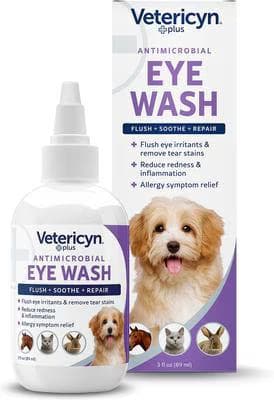
A sterile antimicrobial rinse that flushes irritants, pollen, and discharge out of the eye and helps lift tear stains. A sensible at-home first step for mild irritation, though it does not replace a vet exam for a painful eye.
Webvet may earn a commission when you click through to Chewy, at no extra cost to you.
How to diagnose glaucoma in dogs: the numbers vets look for
There is no way to diagnose glaucoma in dogs at home, because the diagnosis is a number rather than an appearance. Normal canine eye pressure runs roughly 10 to 25 mmHg, and a healthy dog's two eyes usually read within a few points of each other.
- A reading held above about 25 to 30 mmHg confirms glaucoma and calls for pressure-lowering treatment straight away
- Readings above 40 to 50 mmHg are a sight-threatening emergency measured in hours, not days
- A difference of more than roughly 8 mmHg between the two eyes is a warning sign even when both numbers look acceptable
- Pressure is rechecked after treatment starts, because the goal is a number that stays down, not one good reading
This is why how to diagnose glaucoma in dogs always ends at a clinic with a tonometer. No visual check, phone app, or home test substitutes for the measurement, and guessing costs the vision the test would have saved.
Treatment Options: Medications, Eye Drops & Surgery
So what can you do for dogs with glaucoma? Treatment has two jobs: drop the pressure fast in an emergency, then keep it controlled long term to preserve comfort and any remaining vision. The right plan depends on whether the eye still sees, the cause, and how high the pressure has climbed.
Emergency pressure reduction
In an acute crisis, the vet works to lower intraocular pressure within hours. This often means intensive topical drops plus, in severe cases, an intravenous osmotic medication that pulls fluid out of the eye. The faster pressure normalizes, the better the odds of saving sight.
Long-term medications and dog glaucoma eye drops
Most dogs go home on one or more daily dog glaucoma eye drops. The main drug classes are:
- Carbonic anhydrase inhibitors (for example dorzolamide as a drop, or methazolamide by mouth) that reduce fluid production
- Beta-blockers such as timolol, often combined with dorzolamide in a single bottle
- Prostaglandin analogues such as latanoprost, which rapidly boost drainage and work especially well for primary glaucoma, though they are not used for every cause
Your veterinarian selects the combination based on the cause, so never assume a drop that helped one dog is safe for another. These prescription medicines treat the pressure itself. Over-the-counter lubricants and washes only support surface comfort. If you want to compare gentle, non-medicated options for everyday eye care alongside the prescriptions, our roundup of the best dog eye drops breaks down what each type does.

Surgery for dogs with glaucoma
When medication cannot hold pressure, or when an eye is already blind and painful, surgery becomes the better path. Options fall into two groups:
- Vision-sparing procedures for eyes that still see, such as laser cyclophotocoagulation (which reduces fluid production) and gonioimplants or drainage shunts (which create a new outflow route)
- Comfort procedures for blind, painful eyes, such as enucleation (removal of the eye), an intrascleral prosthesis (the eye is hollowed and a sphere inserted), or chemical ablation of the fluid-producing tissue
Choosing between ongoing medical management and surgery is a genuine trade-off, so it helps to weigh them side by side.
| Approach | Best For | Trade-offs |
|---|---|---|
| Medical management (daily drops) | Early or still-seeing eyes; buying time | Lifelong dosing, ongoing cost, may eventually stop working |
| Vision-sparing surgery | Eyes with remaining sight and controllable pressure | Higher upfront cost, referral needed, vision not guaranteed long term |
| Enucleation or prosthesis | Blind, painful eyes | Ends the pain permanently and is often the kindest, most cost-effective choice; sight is not restored |
Can Glaucoma in Dogs Be Cured or Reversed?
There is no cure for glaucoma in dogs. Primary glaucoma is an inherited drainage defect, and no drop or procedure rebuilds the drainage angle. Vision already destroyed by optic nerve damage does not return, so treatment aims at pressure control, comfort, and protecting whatever sight is left.
- Can glaucoma in dogs be cured? No. Primary glaucoma is managed for life, and lifelong medication or surgery is the realistic plan
- Is glaucoma curable in dogs when it is secondary? Closer to it, because treating the underlying cause, such as inflammation or a luxated lens caught early, can resolve the pressure spike
- Glaucoma in dogs cannot be reversed once the optic nerve is damaged, no matter how well pressure is later controlled
- Success is a comfortable, pain-free dog with stable pressure, not a restored eye
Because the secondary form hinges on the underlying disease, the sibling guides matter here: see uveitis in dogs for the inflammation that most often triggers it, cataracts in dogs for the lens changes that crowd the drainage angle, and corneal ulcers in dogs for the surface wounds that can set the whole chain in motion.
What Does Glaucoma Treatment Cost?
Cost is one of the biggest questions owners have and one of the hardest to find answered honestly, so here is a realistic breakdown. Glaucoma in dogs treatment cost varies widely by region, by whether you see a general vet or a specialist, and by whether medication or surgery is needed. The figures below are typical U.S. ranges to help you plan, not quotes.
| Service or Treatment | Typical Cost Range | Notes |
|---|---|---|
| Emergency exam + tonometry | $100 to $300 | First visit to confirm pressure and pain |
| Veterinary ophthalmology referral | $150 to $450 | Specialist consult, often with gonioscopy |
| Monthly prescription eye drops | $30 to $150+ | Ongoing; multiple drops raise the total |
| Laser cyclophotocoagulation | $1,500 to $3,500 per eye | Vision-sparing, specialist procedure |
| Gonioimplant / drainage shunt | $1,800 to $4,000 per eye | Often combined with laser |
| Enucleation (eye removal) | $500 to $1,500 per eye | Ends pain in a blind eye |
| Intrascleral prosthesis | $1,500 to $2,500 per eye | Cosmetic alternative to removal |
Glaucoma surgery for dogs cost climbs quickly at the specialist level, which is why many families choose enucleation for a blind, painful eye: it permanently ends the pain and often costs far less than repeated vision-sparing attempts. Pet insurance purchased before diagnosis can offset these numbers substantially, and many specialty hospitals offer payment plans, so ask before you rule out care on price alone.
What each line of the glaucoma bill actually covers
Costs land in a predictable order, and knowing what each stage buys makes the total easier to plan for and easier to question.
- Emergency exam and tonometry: the same-day visit that confirms the pressure reading and the pain, before any treatment is chosen
- Veterinary ophthalmology referral: the specialist consult, usually including gonioscopy and a long-term plan for both eyes rather than just the sick one
- Monthly prescription eye drops: the recurring line that continues for the rest of the dog's life and is the cost owners most often underestimate
- Enucleation eye removal: a one-time surgical cost that permanently ends pain in a blind eye, and over several years often totals less than medication that is slowly failing
Ask for a written estimate at each step and ask what happens if pressure is not controlled, since the follow-on plan is where budgets usually break. Insurance bought before diagnosis, payment plans, and veterinary school teaching hospitals can all meaningfully lower what a family actually pays.
Recovery and Long-Term Management
Glaucoma is a lifelong condition, so recovery is really about steady management. After the crisis passes, success depends on consistency at home and regular rechecks, because pressure can creep back up silently.
Long-term management usually involves:
- Giving every prescribed drop exactly on schedule, since even one missed dose can let pressure rebound
- Rechecking intraocular pressure often, commonly every few weeks at first and then every three to six months once the eye is stable
- Watching the second, unaffected eye closely, because primary glaucoma frequently becomes bilateral over time
- Reporting any new redness, cloudiness, squinting, or behavior change right away rather than waiting for the next appointment
- Keeping the eye area clean and calm, and protecting a recovering eye from rubbing with an e-collar if advised
Many veterinary ophthalmologists also recommend an antioxidant vision-support supplement such as Ocu-GLO alongside standard therapy, on the theory that it may help protect stressed retinal cells. It is supportive care, not a substitute for pressure-lowering medication, and you should always clear any supplement with your vet first. Set phone reminders for drop times, and keep a simple log of doses and recheck results so nothing slips.
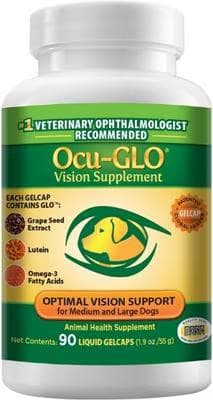
A veterinary ophthalmologist formulated blend of grape seed extract, lutein, and omega-3 fatty acids aimed at supporting retinal health in medium and large dogs. Supportive care, not a treatment for cataracts or glaucoma.
Webvet may earn a commission when you click through to Chewy, at no extra cost to you.
Can You Treat Dog Glaucoma at Home?
No. Searching how to treat dog glaucoma at home is understandable, but nothing sold without a prescription lowers pressure inside the eye. Comfort care is possible at home; there is nothing to lower pressure with until a veterinarian prescribes it, and time spent experimenting is time the optic nerve is dying.
What does not work, and what wastes sight-saving time
- Natural remedies for glaucoma in dogs, including herbal tonics, bilberry, and antioxidant blends, have no proven effect on intraocular pressure
- Home remedies for glaucoma in dogs such as saline rinses, warm compresses, or cold packs may soothe the surface but do nothing to the pressure underneath
- Over the counter glaucoma eye drops for dogs do not exist. Every OTC eye product is a lubricant or a wash, and no OTC product treats a vision-threatening condition
- CBD for glaucoma in dogs is not a proven pressure-lowering treatment and must never stand in for prescribed medication
- Leftover medicated drops from an earlier eye problem can push pressure higher and turn a bad eye into a lost one
What genuinely helps at home
- Give every prescribed drop on schedule, using the lower-lid pocket technique and leaving five minutes between different medications
- Keep the fur and skin around the eye clean and crust-free so new redness or cloudiness is easy to spot early
- Switch from a collar to a harness, since leash pressure on the neck can raise pressure in the eye
- Keep the home layout stable and the routine calm, which helps a dog with reduced vision move confidently and lowers stress-driven pain
- Call the same day if redness, haze, squinting, or bulging returns, and keep every recheck appointment even when the eye looks fine
Framed that way, home care is real and it matters. It is the delivery system for veterinary treatment and the early-warning system for the next flare, not a replacement for either. Anything that promises more than that is selling you a delay you cannot afford.
Living With Glaucoma: Quality of Life and When to Consider Euthanasia
This is the question owners are most afraid to ask, so let us answer it directly and kindly. Can a dog live comfortably with glaucoma? In most cases, yes. Once pain is controlled, whether by medication or by removing a blind, painful eye, dogs adapt remarkably well and go on to live full, happy lives.
Dogs rely far more on scent and hearing than on sight, so even total blindness is not the tragedy people fear. Blind dogs navigate familiar homes with ease, especially when you keep furniture in place, use scent and texture cues, and speak before you touch them. Vision loss alone is not a reason to consider euthanasia.
Understanding end-stage glaucoma
Glaucoma in dogs end stage describes the point where the affected eye is permanently blind, and often the eyeball has stretched and enlarged (a condition called buphthalmos). An end-stage eye can still be painful even though it can no longer see. The key point is that this pain is treatable: enucleation or a prosthesis reliably ends it, which is why glaucoma by itself is only rarely a reason to say goodbye.

When to put a dog down with glaucoma
Deciding when to put a dog down with glaucoma is rarely about the eye alone, because eye pain can almost always be resolved with surgery. Euthanasia becomes a compassionate option when pain cannot be controlled and surgery is not possible, or when glaucoma is one of several serious problems weighing on an older dog. Honest quality-of-life signs to discuss with your vet include:
- Persistent pain despite medication and after surgical options have been offered
- No longer eating, drinking, or engaging with the family
- Inability to rest comfortably, with constant pacing, hiding, or head pressing
- Other advanced illnesses stacking on top of the eye disease
- A realistic look at whether needed care is achievable for your family
Can Glaucoma Be Prevented?
You cannot prevent inherited primary glaucoma, but you can change how early it is caught and how much damage it does. For secondary glaucoma, prompt treatment of the underlying cause is genuinely preventive.
Practical steps for at-risk dogs include:
- If you own a predisposed breed, ask your vet about periodic intraocular pressure screening and gonioscopy, especially in middle age
- Treat eye inflammation, cataracts, and injuries promptly before they can clog the drainage angle
- When one eye develops primary glaucoma, use the preventive drops your vet prescribes for the second eye to delay its onset
- Choose breeders who screen breeding dogs through recognized eye-certification programs
- Book a same-day visit for any sudden eye change rather than watching and waiting
Routine eye hygiene supports these habits for predisposed dogs, and a gentle option like Nutri-Vet Dog Eye Rinse and Drops can help keep the periocular area clean between screenings. It supports comfort and cleanliness only and is not a way to lower or monitor eye pressure, which requires a veterinarian's tonometer.
Related Eye Conditions Linked to Glaucoma
Glaucoma rarely travels alone. Several other eye conditions either trigger it, mimic it, or share early symptoms, and knowing the difference helps you triage faster. Rather than re-cover each one here, these deep-dive guides explain the look-alikes and the true secondary causes:
- Uveitis in dogs: internal eye inflammation and a top cause of secondary glaucoma
- Cataracts in dogs: a cloudy-lens disease that can crowd the drainage angle and cause pressure to rise
- Corneal ulcer in dogs: a painful surface wound that can lead to inflammation and secondary glaucoma
- Cloudy eyes in senior dogs: often harmless aging haze (nuclear sclerosis) that owners confuse with glaucoma's corneal cloudiness
- Dry eye in dogs: a chronic red, irritated eye that can be mistaken for a glaucoma emergency
- Dog eye discharge: a symptom-overlap guide to help you read watery versus infected eyes
A cloudy or bluish tint from glaucoma comes on fast and with pain, while the gentle gray haze of aging appears slowly in both eyes and does not hurt. When in doubt, treat sudden change as urgent.
Glaucoma in Dogs FAQs
Frequently Asked Questions
How painful is glaucoma in dogs?
A: Very. The pressure stretches the eye and compresses internal tissue, causing a deep, constant ache often compared to a severe human migraine. Because dogs hide pain, a dog with glaucoma may only show lethargy, a reduced appetite, squinting, or hiding rather than crying out, so assume any red, cloudy, or bulging eye is painful until a vet says otherwise.
How quickly does glaucoma cause blindness in dogs?
A: Fast. Sustained high pressure, especially above roughly 40 to 50 mmHg, can permanently damage the optic nerve within 24 to 48 hours, and sometimes within hours. That short window is why sudden eye redness, cloudiness, or pain is an emergency that needs a vet the same day, not the next morning.
Can glaucoma in dogs be cured?
A: No, there is no cure, but it can be managed. Medication and surgery lower intraocular pressure, relieve pain, and slow vision loss. For a blind, painful eye, removing it permanently ends the discomfort. The goal of every plan is comfort and preserving whatever vision remains for as long as possible.
How can I tell if my dog has glaucoma?
A: Look for a suddenly red or bloodshot eye, a cloudy or bluish cornea, a dilated pupil that does not respond to light, squinting, pawing at the face, or an eye that looks enlarged. Any of these warrants an immediate vet visit for a tonometry test, which is the only way to confirm glaucoma.
Is glaucoma in dogs contagious to people or other pets?
A: No. Glaucoma is a pressure and drainage problem inside the individual dog's eye, not an infection, so it cannot spread to humans or to other animals in the household.
What is end-stage glaucoma in dogs?
A: End-stage glaucoma means the affected eye is permanently blind and often enlarged (buphthalmos) from long-standing pressure. The eye can still hurt, but that pain is treatable through enucleation or a prosthesis, so end-stage glaucoma in one eye is not by itself a reason for euthanasia.
How fast does glaucoma progress in dogs?
It varies with pressure. An acute attack can begin causing permanent blindness within hours and usually does irreversible damage inside 24 to 72 hours at pressures above roughly 40 to 50 mmHg. A partly controlled eye may decline over weeks to months instead. Either way, sudden changes need same-day veterinary care.
Can glaucoma in dogs be reversed?
No. Pressure can be lowered and pain can be relieved, but vision already lost to optic nerve damage does not come back, so glaucoma in dogs cannot be reversed. In secondary glaucoma, treating the underlying disease early can resolve the pressure spike itself and protect the sight that remains.
Do natural remedies for glaucoma in dogs work?
No. Herbal supplements, antioxidant blends, CBD, and compresses have no proven effect on intraocular pressure, and over the counter glaucoma eye drops for dogs do not exist. Relying on them delays the prescription medication or surgery that actually lowers pressure, which is how eyes are lost.
Can I check my dog's eye pressure at home?
No. Diagnosing glaucoma requires a tonometer reading in mmHg, which is why how to diagnose glaucoma in dogs always ends at a clinic. Normal canine pressure runs roughly 10 to 25 mmHg, and only a veterinarian can measure it, interpret it, and compare it against the other eye.
Sources

Editor
The Webvet Editorial Team is the in-house group of pet-care editors and writers behind Webvet, operated by Smart Pet Collective. The team researches, writes, and maintains Webvet's pet health, behavior, and medication content. Every article follows a defined editorial process: research from reputable veterinary and scientific sources, careful drafting, mandatory review of medical content by a credentialed veterinarian, and dated publication. Health and medication articles are medically reviewed by a licensed veterinary professional before they go live and are kept current over time.
Veterinarian · BVMS MRCVS
Dr. Pippa Elliott, BVMS, MRCVS, is a veterinarian with nearly 30 years of experience in companion animal practice. Dr. Elliott earned her Bachelor of Veterinary Medicine and Surgery from the University of Glasgow. She was also designated a Member of the Royal College of Veterinary Surgeons. Married with 2 grown-up kids, Dr. Elliott has a naughty Puggle named Poggle, 3 cats and a bearded dragon.


