Cataracts in Dogs: Surgery Cost & Is It Worth It?
A vet-reviewed guide to cataracts in dogs: full surgery cost breakdown, signs by stage, causes, and a clear framework for whether surgery is worth it by age and health.

BVMS MRCVS
Medically reviewed by Dr. Pippa Elliott, BVMS MRCVS · Last reviewed

This article contains affiliate links. Webvet may earn a commission when you buy through them, at no extra cost to you.
WebVet may earn a commission from qualifying purchases made through links on this page, at no additional cost to you.
If your dog's eye has turned cloudy, the first questions are usually about money and whether treatment is even worth it. Cataracts in dogs are a clouding of the lens that can progress to blindness, and surgery to remove them typically runs $3,000 to $6,000 or more all-in. The good news: surgery restores functional sight in roughly 85% to 90% of suitable candidates.
This vet-reviewed guide leads with the cost breakdown and a plain decision framework, then walks through signs, causes, diagnosis, and how to keep a dog comfortable if surgery is not the right call.
- 1A cataract is an opacity in the lens; it is not the same as the harmless blue-gray haze of aging (nuclear sclerosis).
- 2Full surgical treatment (exam, workup, phacoemulsification, and recovery) typically costs $3,000 to $6,000 or more, whether one eye or both.
- 3Surgery is the only proven way to restore vision; no eye drop dissolves or reverses a cataract.
- 4Success rates are high (around 85% to 90%) when a dog passes the pre-surgical workup for retinal function and overall health.
- 5Age alone is not a disqualifier; a healthy 14-year-old can be a better candidate than a sick 6-year-old.
- 6Untreated cataracts can trigger painful lens-induced uveitis and glaucoma, so monitoring matters even if you skip surgery.
 Sponsored
Have a health question about your dog?
Talk to a licensed vet at Dutch over video or message, including nights and weekends.
Use code Pets60
Plans start at $12/month · covers up to 5 pets
- Licensed vets in most states
- Rx for 150+ conditions
- 4.7 on Trustpilot
What Are Cataracts in Dogs?
A cataract is a clouding of the lens inside the eye, the clear structure that focuses light onto the retina. As lens proteins clump together, that clarity is lost. Light can no longer pass through cleanly, so vision fades in proportion to how much of the lens is affected.
Cataracts in dogs range from a tiny fleck to a fully white, opaque lens. A mature cataract blocks light entirely, leaving the affected eye functionally blind until the lens is surgically removed.
The single most important thing to sort out first is whether you are actually looking at a cataract at all. Many owners of aging dogs panic over a cloudy eye that is really nuclear sclerosis, a normal aging change.

A boric acid rinse that flushes everyday dust and pollen from a dog's eyes and helps reduce the tear staining that follows chronic watering. Not a treatment for infection.
Webvet may earn a commission when you click through to Chewy, at no extra cost to you.
Nuclear Sclerosis vs Cataracts in Dogs
The nuclear sclerosis vs cataracts in dogs distinction trips up nearly every senior-dog owner, so it is worth being clear:
- Nuclear sclerosis (also called lenticular sclerosis) is a bluish-gray, see-through haze from lens fibers compressing with age. It does not significantly impair vision and needs no treatment.
- A cataract is white and opaque, blocks light, and can lead to blindness.
- Only a veterinarian can tell them apart with certainty, because light and angle can make either one look worse than it is at home.
If you are not sure which one you are seeing, our guide to cloudy eyes in senior dogs breaks down the visual differences in detail. A white or bluish film can also be corneal scarring rather than a lens problem, which is why a cloudy surface sometimes turns out to be a healed corneal ulcer in dogs instead of a cataract.
Signs & Stages: How to Tell If Your Dog Has Cataracts
The earliest signs of cataracts in dogs are visual, not behavioral. You may notice a cloudy, white, or crushed-ice look deep in the pupil before your dog acts any different. As the lens clouds further, behavior starts to change.
Common signs of cataracts in dogs include:
- A cloudy, white, or bluish-white appearance inside the pupil
- Bumping into furniture, especially in dim light or new places
- Hesitation on stairs, curbs, or jumping onto the couch
- Startling easily when approached from the side
- Clinginess or reluctance to move in unfamiliar spaces
- Eye redness, squinting, or pawing (a red flag for a complication, not a simple cataract)

Do Cataracts Cause Blindness? The Four Stages
Whether your dog goes blind depends on how far the cataract progresses. Veterinary ophthalmologists describe four stages:
- Incipient: less than about 15% of the lens is cloudy; vision is essentially normal.
- Immature: a larger portion is affected; vision is blurred but some sight remains.
- Mature: the entire lens is opaque and that eye is functionally blind.
- Hypermature: lens proteins break down and can leak, which is where painful complications begin.
Not every cataract marches through all four stages, and some progress slowly over years while others (especially diabetic ones) go from clear to mature in weeks. Because the timeline is unpredictable, a diagnosed cataract deserves periodic rechecks even when your dog seems fine.
If you are monitoring a mildly cloudy eye at home before any surgical decision, a gentle, veterinarian-formulated rinse such as Vetericyn Plus Antimicrobial Eye Wash can help you keep the area clean and flush out routine debris while you watch for changes. It does not treat the cataract itself, but it supports comfort during the watch-and-wait phase.
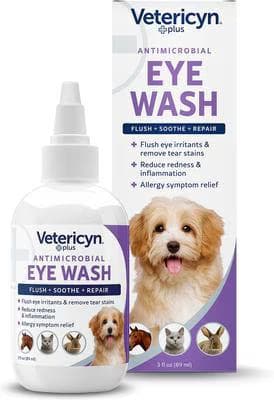
A sterile antimicrobial rinse that flushes irritants, pollen, and discharge out of the eye and helps lift tear stains. A sensible at-home first step for mild irritation, though it does not replace a vet exam for a painful eye.
Webvet may earn a commission when you click through to Chewy, at no extra cost to you.
What Causes Cataracts in Dogs?
Cataracts are not a single disease with one trigger. The main causes are:
- Genetics: inherited cataracts are the most common cause in dogs, affecting breeds like Cocker Spaniels, Poodles, Bichon Frises, Boston Terriers, and Siberian Huskies, sometimes at a young age.
- Diabetes: high blood sugar draws water into the lens and clouds it, often extremely fast.
- Aging: age-related cataracts overlap with, but are distinct from, harmless nuclear sclerosis.
- Trauma or other eye disease: an injury, chronic inflammation, or retinal disease can cause a secondary cataract.
- Nutritional issues in puppies raised on certain milk replacers.
Diabetic Dog Cataracts
Diabetic dog cataracts deserve special attention because they are so common and so fast. Roughly 75% of dogs diagnosed with diabetes develop cataracts within the first year, and some lose clear vision within days to weeks of a blood-sugar spike. This is why a sudden cloudy eye in any adult dog should prompt a diabetes check.
Cataracts in Older Dogs
Cataracts in older dogs are common but should never be assumed. Because senior eyes so often show nuclear sclerosis at the same time, a true age-related cataract needs a veterinary exam to confirm. Older dogs are also more likely to have other health conditions that influence whether surgery is wise, which we cover in the decision framework below.
Juvenile & Hereditary Cataracts: Young Dogs and At-Risk Breeds
Cataracts are not only an old-dog problem. Veterinarians sort them by age of onset, so the answer to what age do dogs get cataracts depends entirely on the underlying cause.
- Congenital cataracts in dogs are present at birth or appear within the first weeks of life, sometimes across a whole litter.
- Juvenile cataracts in dogs appear from a few months old up to roughly six years, and are usually inherited.
- Senile cataracts develop from about eight years on, typically alongside normal nuclear sclerosis.
Hereditary cataracts in dogs run strongly in specific lines, which is why cataracts in young dogs are far more common in some breeds than others. The breeds seen most often include:
- Boston Terrier
- Miniature Poodle
- Cocker Spaniel
- Maltese, where cataracts in maltese dogs are frequently inherited and can show up well before middle age
- Bichon Frise
- Siberian Husky
- Labrador Retriever
Responsible breeders screen breeding stock with annual eye certification exams performed by a veterinary ophthalmologist. If a young dog's eye clouds over, book an exam promptly: juvenile cataracts often progress faster than senile ones, and an early diagnosis keeps surgery on the table.
Are Dogs in Pain With Cataracts? Vision Loss & Comfort
A simple, uncomplicated cataract is not painful. The lens has no pain fibers, so the clouding itself does not hurt. What can hurt is a complication (inflammation or pressure) that develops when a cataract is left to advance, which is a separate issue we cover under risks.
Are dogs in pain with cataracts day to day? Usually no. Dogs also adapt to gradual vision loss far better than people expect, leaning on their strong sense of smell and hearing and their memory of familiar spaces.
Can Dogs Live With Cataracts?
Can dogs live with cataracts? Yes. Many dogs live full, happy lives with cataracts, and plenty of blind dogs do beautifully with a consistent home layout and a calm routine. The key is comfort and safety, not perfect eyesight.
To support an at-risk or diagnosed dog, antioxidant vision supplements such as Ocu-GLO Vision Supplement are marketed to help maintain lens and retinal health, and are a common choice for diabetic and senior dogs. No supplement reverses a cataract, but many owners use one as part of a broader eye-health routine under veterinary guidance.
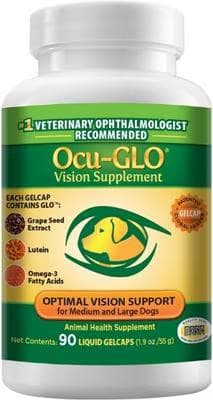
A veterinary ophthalmologist formulated blend of grape seed extract, lutein, and omega-3 fatty acids aimed at supporting retinal health in medium and large dogs. Supportive care, not a treatment for cataracts or glaucoma.
Webvet may earn a commission when you click through to Chewy, at no extra cost to you.
Is My Dog Blind From Cataracts?
Wondering "is my dog blind from cataracts" is fair once an eye clouds over. A single mature cataract blinds that one eye, but a dog with one good eye often navigates normally. Simple home tests, like tossing a cotton ball (silent) versus a treat, can hint at vision, but only a veterinary exam confirms how much sight remains.
 Sponsored
Vet care that's always there
Unlimited video calls and messaging with licensed vets for less than a typical vet visit. One membership covers up to five pets.
Use code Pets60
Plans start at $12/month · covers up to 5 pets
- Licensed vets in most states
- Rx for 150+ conditions
- 4.7 on Trustpilot
Diagnosis: How Vets Confirm Cataracts
A general veterinarian can spot a cataract, but confirming it and deciding whether surgery is possible takes an ophthalmology workup. The exam separates a cataract from nuclear sclerosis and screens for the complications that change the plan.
More importantly, the workup answers one question: is the retina behind that cloudy lens still healthy enough to see? There is no point removing a cataract if the retina no longer works.
The Surgical-Candidacy Checklist
Before approving surgery, an ophthalmologist typically checks:
- Electroretinogram (ERG): confirms the retina still responds to light behind the opaque lens.
- Ocular ultrasound: rules out a retinal detachment hidden by the cloudy lens.
- Bloodwork and general health screen: confirms the dog is safe for anesthesia.
- Blood-glucose control: any diabetes must be well regulated.
- Adequate tear production: rules out dry eye (KCS), which complicates healing. If tear tests are low, dry eye in dogs is managed before surgery is scheduled.
- No active uveitis or glaucoma: existing inflammation or high pressure must be controlled first.

Cataract Surgery for Dogs: What It Involves
Cataract surgery for dogs is a specialist procedure performed by a board-certified veterinary ophthalmologist under general anesthesia. It is the same core technique used in human cataract surgery.
The standard method is phacoemulsification:
- A tiny incision is made in the eye.
- An ultrasonic probe breaks up the cloudy lens and gently suctions it out.
- In most cases an artificial intraocular lens (IOL) is placed to restore focus.
- The incision is closed with microscopic sutures.
Most dogs go home the same day or the next morning. Both eyes are usually done in the same session when both are affected, since the anesthesia and facility costs are the largest part of the bill either way. The procedure itself takes under an hour per eye in experienced hands.
Can Cataracts Be Removed in Dogs?
Yes. Cataracts removal in dogs is a routine specialist procedure, and the clouded lens is physically taken out rather than cleared up with medication. Can cataracts be removed in dogs at any age? Candidacy is set by the workup results, not by the birthday on the chart.
- With an artificial intraocular lens implanted, most dogs regain close to normal focus.
- Without an implant, the eye still registers light, movement, and shape but stays farsighted, which is usually a large gain over a mature cataract.
- When both eyes are affected, each eye is done during the same anesthetic session rather than on separate days.
Removal cannot undo damage further back in the eye. If the retina has already failed, taking the lens out will not restore sight, which is exactly what the electroretinogram is there to rule out before anyone schedules surgery.
Dog Cataract Surgery Cost: Full Price Breakdown
So how much does dog eye surgery cost in practice? Dog cataract surgery cost is best understood as a stack of separate charges, not one flat number. That is where competitor pages stop; here is the itemized picture.
| Cost component | Typical price range | What it covers |
|---|---|---|
| Specialist eye exam | $150 to $400 | Initial ophthalmologist consult and cataract confirmation |
| Pre-surgical workup (ERG + ocular ultrasound + bloodwork) | $500 to $1,500 | Confirms the retina works and the dog is a safe candidate |
| Surgery, one eye | $2,700 to $4,000 | Phacoemulsification, anesthesia, artificial lens, facility fee |
| Surgery, both eyes | $3,000 to $5,500 | Same-session removal in both eyes (often only modestly more than one) |
| Post-op medications and rechecks | $200 to $600 | Weeks of eye drops and multiple follow-up visits |
| Estimated all-in total | $3,000 to $6,000+ | Exam through recovery, one eye or both |
Two budgeting notes matter. First, doing both eyes is often only a little more than one, because you pay for anesthesia and the facility once. Second, prices vary widely by region and by the specialty hospital, so always ask for a written estimate. Pet insurance purchased before the diagnosis can offset a meaningful share of these totals.
Free & Low-Cost Dog Cataract Surgery Options
The average cost to remove cataracts lands near $3,500 to $4,500 all-in, and the surgical line alone typically runs $2,700 to $4,000 per eye. That is a genuine barrier, so it helps to know that cataracts in dogs surgery cost is more negotiable in practice than most owners assume.
Start by asking every clinic for an itemized quote that separates the pre-surgical workup, the surgeon's fee, the anesthesia, and the take-home medications. Two hospitals quoting a similar total can differ by hundreds of dollars once you compare them line by line.
- Veterinary teaching hospitals: university ophthalmology services often price below private specialty practice, and a search for low cost cataract surgery for dogs near me usually surfaces the nearest vet school first.
- Nonprofit and breed-rescue assistance funds: several grant programs help with vision-saving procedures, though truly free cataract surgery for dogs is rare and normally tied to hardship criteria.
- Clinical trials at veterinary ophthalmology programs: enrolled dogs may receive discounted or fully covered care in exchange for scheduled follow-up visits.
- Pet insurance: this only helps when the policy was already in force before the cataract was diagnosed, since it counts as pre-existing afterward.
- Third-party financing and in-house payment plans: these spread the bill without pushing the decision past the point where the lens turns hypermature.
Price pressure is real, but do not let it steer you toward an unproven product. Waiting while you gather quotes is reasonable. Treating a cataract with something bought online instead of getting an exam is not.
Is Cataract Surgery Worth It? A Decision Framework by Age & Health
Is dog cataract surgery worth it? For a healthy dog who is a good surgical candidate, the honest answer is often yes: it is the only treatment that actually restores sight, and outcomes are strong. But "worth it" depends on the individual dog, not a rule of thumb. Here is how veterinary ophthalmologists weigh it.
| Dog's situation | Surgery often makes sense | Non-surgical management often makes sense |
|---|---|---|
| Healthy dog, no or well-controlled diabetes | Strong candidate, high success odds | If cost is prohibitive or owner declines |
| Senior but healthy, good retinal function | Often yes; age alone is not a barrier | If anesthesia risk is raised by other disease |
| Uncontrolled diabetes or active uveitis | Not until the condition is stabilized | Manage the underlying disease first |
| Serious heart, kidney, or cancer comorbidity | Higher anesthetic risk; weigh carefully | Frequently the kinder, safer choice |
| Already blind, adapted, and comfortable | Optional, owner's judgment | Reasonable to monitor and support |
The case for surgery is straightforward: restored vision, a lower long-term risk of the painful complications below, and a better quality of life for an active dog. The case against is real too: cost, anesthesia risk in a frail dog, weeks of intensive eye-drop aftercare, and the fact that a calm, already-adapted blind dog may not gain much.
Should a 14-Year-Old Dog Have Cataract Surgery?
Should a 14-year-old dog have cataract surgery? Possibly yes. Age is a number, not a disqualifier. What matters is whether that specific dog passes the health and retinal workup and can safely handle anesthesia. A robust 14-year-old with a working retina can do very well, while a sick 6-year-old may not be a candidate. Ask your ophthalmologist to frame the decision around health status and quality of life, not birthdays.
Non-Surgical & Home Management Options
When surgery is not chosen (by circumstance, cost, or candidacy), the goal shifts to comfort, safety, and catching complications early. Be clear-eyed about one thing: cataracts in dogs treatment without surgery does not restore vision or dissolve the cataract. It manages the dog living with it.
On the subject of cataract eye drops for dogs: no eye drop reverses or dissolves a cataract, despite marketing claims for antioxidant or "lanosterol" products. What drops and gels can do is keep the eye lubricated and calm inflammation on veterinary advice. A hyaluronan lubricating gel such as Optixcare Eye Lube Plus is a common comfort choice for dogs not undergoing surgery or awaiting a specialist referral.
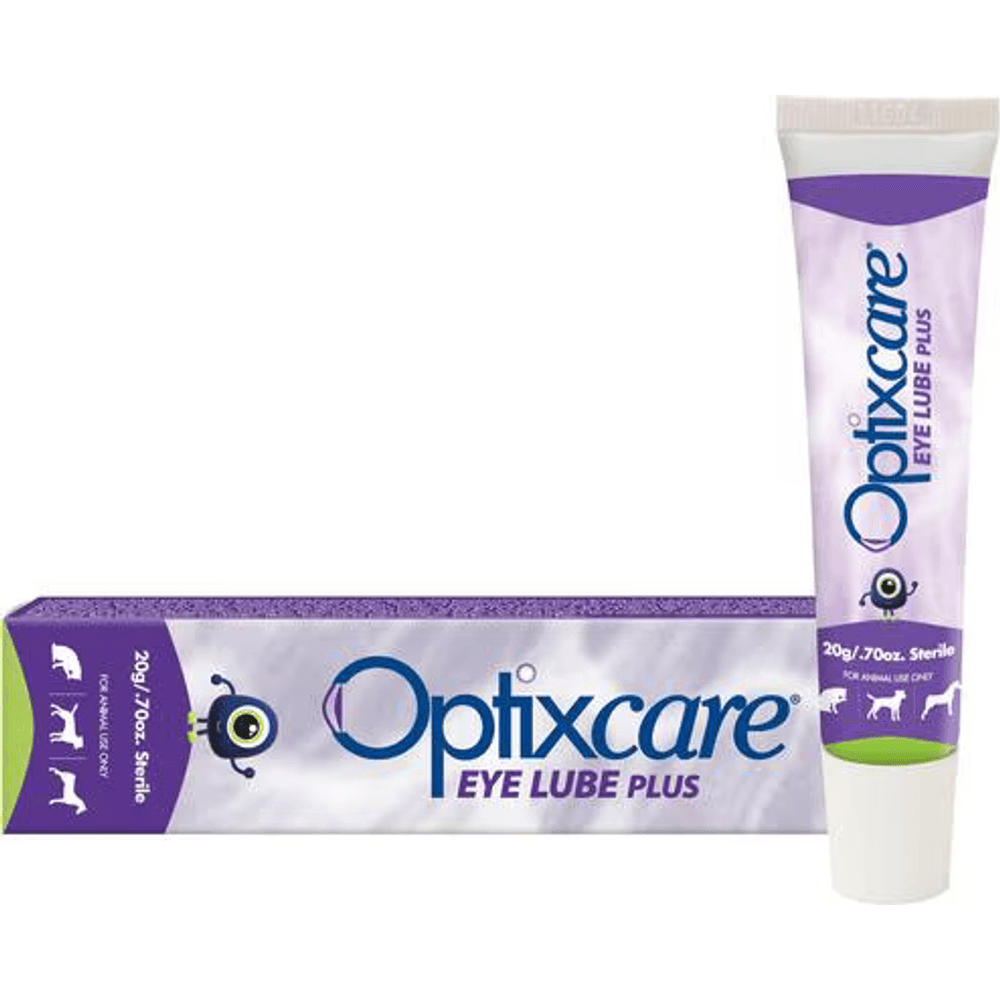
A sterile lubricating gel that soothes and moisturizes dry, irritated eyes and helps support the tear film in dogs and cats prone to dryness. A gentle, vet-shelf staple for everyday eye comfort.
Webvet may earn a commission when you click through to Chewy, at no extra cost to you.
Practical non-surgical management includes:
- Veterinarian-directed anti-inflammatory drops if early lens-induced inflammation appears
- Lubricating gels or drops to keep the surface comfortable
- Managing the underlying cause, especially tight diabetes control
- Regular ophthalmology rechecks to catch uveitis or glaucoma before they hurt
For a broader look at lubricating and anti-inflammatory options, our roundup of the best dog eye drops covers what each type does and does not do.
Do Eye Drops for Cataracts in Dogs Work?
The short answer is no. Searches for eye drops for cataracts in dogs and for lanomax eye drops for dogs mostly lead to lanosterol products, which showed early laboratory promise but have never cleared a controlled clinical trial showing they reverse an established cataract in dogs.
Surgery remains the only proven cure. Any label promising to dissolve or clear the lens is describing a result that no cataract eye drops have demonstrated in a peer-reviewed canine study, and best eye drops for dog cataracts is a category that does not exist yet.
- Hyaluronan lubricating gels ease surface dryness and keep a cloudy eye comfortable.
- Prescription anti-inflammatory drops control lens-induced uveitis while a dog is monitored or waits for a surgery date.
- Prescription pressure-lowering drops treat secondary glaucoma, which is a separate emergency rather than a cataract treatment.
Recovery Timeline & Success Rate After Surgery
Dog cataract surgery recovery time is short in the clinic but demanding at home. The eye heals over several weeks, and the aftercare is where owners do the real work.
A typical recovery looks like this:
- First 24 hours: home the same day or next morning, groggy from anesthesia.
- Weeks 1 to 4: an Elizabethan collar (cone) worn at all times to prevent rubbing.
- Weeks 1 to 6: multiple daily eye drops (anti-inflammatory and antibiotic), tapering over time.
- Ongoing: strict rest, no rough play or swimming, and several recheck visits.

To support long-term eye health once healing is done, palatable maintenance options like the Ocu-GLO Optimal Vision Support Soft Chew are marketed for ongoing vision support and can fold into a dog's routine after surgery. A rare but real recovery-phase risk is infection inside the eye (endophthalmitis); any sudden redness, swelling, or pain warrants an urgent call, and our guide to dog eye infection explains what to watch for.
Dog Cataract Surgery Success Rate
Dog cataract surgery success rate is genuinely encouraging. Veterinary ophthalmologists report that roughly 85% to 90% of dogs regain functional vision, with the best odds in healthy dogs whose cataracts were treated before the hypermature stage. Committed aftercare and follow-up rechecks are a major reason some dogs maintain vision long-term while others develop late complications.

Risks of Leaving Cataracts Untreated
The reason "wait and see" can backfire is that an advancing cataract does not just stay a vision problem. As a cataract becomes hypermature, leaking lens proteins can inflame the eye and spike its pressure. These complications are painful, and they are the strongest argument for monitoring even a dog you never plan to operate on.
The two complications that matter most:
- Lens-induced uveitis: inflammation triggered by the breaking-down lens, which is also why vets screen for it before surgery.
- Secondary glaucoma: a painful rise in eye pressure that can permanently destroy the eye if not caught fast.
Do not re-diagnose these at home. Instead, learn the red flags and act on them, because both are managed as separate conditions: uveitis in dogs and glaucoma in dogs.
Whatever you decide about surgery, keep a veterinarian in the loop. This article is educational and does not replace a hands-on exam. Any cloudy eye, and especially any red or painful one, should be evaluated in person so the right diagnosis and plan are set for your individual dog.
Can You Prevent Cataracts in Dogs?
Partly. Inherited cataracts cannot be prevented, so how to prevent cataracts in dogs really means managing the two drivers you can actually influence: blood sugar and eye inflammation.

Diabetes is the big one. Roughly three in four diabetic dogs develop cataracts within about a year of diagnosis, so tight glucose regulation starting at diagnosis protects vision more than any supplement on the shelf.
- Hold a diabetic dog's blood glucose steady using the insulin, diet, and monitoring schedule your veterinarian sets.
- Treat eye injuries, corneal ulcers, and uveitis promptly, because chronic inflammation drives secondary cataracts.
- Book annual exams, and twice-yearly exams for seniors, so a lens change is caught while vision is still good.
- Ask your veterinarian whether an antioxidant vision supplement is worth adding for a diabetic or high-risk breed.
- Keep expectations honest: preventing cataracts in dogs means controlling risk factors, not buying a cure.
Surface problems deserve the same urgency. New redness or eye discharge in dogs is worth an exam rather than a wait-and-see week, since untreated inflammation is a real route to a secondary cataract.
Owners also ask how fast do cataracts progress in dogs. The honest answer is that it tracks the cause: diabetic cataracts can mature in days to weeks, while a senile cataract may barely change across several years. The same diagnosis can carry very different urgency.
Cataracts in Dogs FAQs
Frequently Asked Questions
How long can my dog live with cataracts?
A: A cataract itself does not shorten your dog's life. Many dogs live for years with cataracts, and even fully blind dogs live normal lifespans when their home is kept safe and predictable. What you are managing is comfort and the risk of complications, not survival. Schedule periodic rechecks so painful problems like uveitis or glaucoma are caught early.
Is it worth doing cataract surgery on a dog?
A: For a healthy dog who passes the pre-surgical workup, it is often worth it, because surgery is the only treatment that restores vision and lowers the risk of painful complications. Success rates run around 85% to 90%. It is less clearly worth it for a frail dog with serious other illness, or for a calm dog already well adapted to blindness. The decision should turn on health status and quality of life, not price alone.
How much does it cost to remove cataracts from a dog's eyes?
A: Removing cataracts typically costs $3,000 to $6,000 or more all-in, covering the specialist exam, the pre-surgical workup (ERG, ocular ultrasound, and bloodwork), the phacoemulsification surgery, and weeks of post-op medications and rechecks. Doing both eyes is often only modestly more than one, since anesthesia and facility fees are charged once.
What is the average cost to remove cataracts from a dog?
A: The average total commonly lands around $3,500 to $4,500 for surgery plus workup, though regional pricing and the specialty hospital move that number substantially. The surgery portion alone usually runs $2,700 to $4,000 per eye. Always request a written estimate, and remember that pet insurance bought before the diagnosis can offset a large share.
Do dogs with cataracts eventually go blind?
A: Not always. Small incipient cataracts may never meaningfully affect vision, while a mature cataract blinds the affected eye until it is surgically removed. Progression is unpredictable, and diabetic cataracts in particular can advance from clear to blind within weeks. Regular veterinary monitoring is the only way to track where an individual dog is heading.
Are dogs in pain with cataracts?
A: A simple, uncomplicated cataract is not painful, because the lens has no pain fibers. Pain enters the picture only when a cataract advances and triggers complications such as lens-induced uveitis or secondary glaucoma. That is exactly why signs like redness, squinting, or pawing at the eye warrant prompt veterinary care.
Should a 14-year-old dog have cataract surgery?
A: Possibly, yes. Age by itself is not a reason to rule out surgery. What matters is whether a 14-year-old passes the retinal-function and general-health workup and can safely undergo anesthesia. A healthy senior with a working retina can recover well, whereas a dog with significant heart, kidney, or other disease may be better served by non-surgical comfort care. Let your ophthalmologist frame it around health, not age.
How fast do cataracts progress in dogs?
It depends on the cause. Diabetic cataracts can go from clear to mature in days to weeks, age-related cataracts often change slowly across years, and inherited ones fall somewhere in between. Because progression is unpredictable, a diagnosed cataract deserves scheduled rechecks even when your dog still seems to be seeing fine.
Is there free cataract surgery for dogs?
Genuinely free cataract surgery for dogs is rare and usually tied to a clinical trial at a veterinary ophthalmology program or a hardship grant from a nonprofit or breed rescue. More realistic savings come from veterinary teaching hospitals, comparing itemized quotes across clinics, and payment plans. Pet insurance helps only if the policy predates the diagnosis.
Do eye drops for cataracts in dogs actually work?
No eye drop has been shown to reverse an established cataract in a controlled canine trial, including the lanosterol products marketed for that purpose. Drops still have a real role: lubricants keep a cloudy eye comfortable, and prescription anti-inflammatories control lens-induced uveitis. Have any cloudy, red, or painful eye examined before starting anything.
Sources

Editor
The Webvet Editorial Team is the in-house group of pet-care editors and writers behind Webvet, operated by Smart Pet Collective. The team researches, writes, and maintains Webvet's pet health, behavior, and medication content. Every article follows a defined editorial process: research from reputable veterinary and scientific sources, careful drafting, mandatory review of medical content by a credentialed veterinarian, and dated publication. Health and medication articles are medically reviewed by a licensed veterinary professional before they go live and are kept current over time.
Veterinarian · BVMS MRCVS
Dr. Pippa Elliott, BVMS, MRCVS, is a veterinarian with nearly 30 years of experience in companion animal practice. Dr. Elliott earned her Bachelor of Veterinary Medicine and Surgery from the University of Glasgow. She was also designated a Member of the Royal College of Veterinary Surgeons. Married with 2 grown-up kids, Dr. Elliott has a naughty Puggle named Poggle, 3 cats and a bearded dragon.


