Corneal Ulcer in Dogs: Emergency Signs, Treatment and Cost
A corneal ulcer in dogs is a painful, sight-threatening eye emergency. Learn the warning signs that mean a same-day vet visit, how ulcers are treated, how long healing takes, real cost ranges, and what you must never put in your dog's eye.

BVMS MRCVS
Medically reviewed by Dr. Pippa Elliott, BVMS MRCVS · Last reviewed

This article contains affiliate links. Webvet may earn a commission when you buy through them, at no extra cost to you.
A corneal ulcer in dogs is an open sore on the clear front surface of the eye, and it is one of the most painful and time-sensitive eye problems a dog can have. If your dog suddenly has a red, watering, squinting, or cloudy eye, treat it as a same-day veterinary emergency. Left alone, a corneal ulcer in dogs can deepen within hours, rupture the eye, and cause permanent blindness.
- 1A corneal ulcer is a painful open sore on the eye surface and is always a same-day vet visit.
- 2Watch for squinting, redness, cloudiness, heavy tearing, and pawing at the eye.
- 3Never use leftover or human eye drops; steroid drops can make an ulcer far worse.
- 4Most simple ulcers heal in about 5 to 7 days with prescribed drops and an e-collar.
- 5Deep or infected ulcers can perforate and blind the eye, so keep every recheck.
This guide is the overview hub for our dog eye ulcer cluster. It walks through what a corneal ulcer in dogs is, how to spot the emergency signs, what causes it, how vets diagnose and treat it, healing timelines, cost ranges, and the home-care mistakes that can cost your dog its eye. Where a topic has its own in-depth guide, we summarize it here and link you to the full article.

What is a corneal ulcer in dogs?

The cornea is the transparent, dome-shaped window at the front of the eye. According to VCA Animal Hospitals, it has three layers: a thin outer layer of skin cells (the epithelium), the main supportive middle tissue (the stroma), and the deepest layer (Descemet's membrane) just above the fluid-filled inside of the eye. A corneal ulcer is an erosion through the outer epithelium and into the deeper layers, and when it reaches all the way to Descemet's membrane it forms a descemetocele, a serious condition.
Vets describe ulcers by depth, because depth drives both danger and treatment:
- Superficial ulcer: only the outer epithelium is lost. These are the most common and usually the least dangerous.
- Deep (stromal) ulcer: the erosion extends into the stroma. This is more serious and can progress fast.
- Descemetocele: the ulcer has eroded all the way down to Descemet's membrane, the last thin layer before the eye ruptures. This is a true emergency.
Corneal ulcer vs abrasion in dogs: an abrasion is a shallow scrape that has not yet broken through into a true erosion, while an ulcer is a defined open wound with tissue loss. In everyday use the terms overlap, and both are diagnosed and treated the same way at the start. What matters is not the label but getting the eye examined quickly.
A corneal ulcer in a dog's eye is not a cosmetic issue. Because the cornea is packed with nerve endings, even a small ulcer hurts a lot, and a deep one can threaten the whole eye.

A lightweight, padded fabric cone that gently blocks a pet from pawing, scratching, or rubbing a healing eye, wound, or hot spot, and it is far softer and less stressful than a hard plastic cone.
Webvet may earn a commission when you click through to Chewy, at no extra cost to you.
Is a dog corneal ulcer an emergency? (read this first)
Yes. Assume it is an emergency until a vet tells you otherwise.
The reason is speed. A superficial ulcer can heal well with prompt treatment, but a deep or infected ulcer can progress to a descemetocele or a full rupture. According to VCA Animal Hospitals, if Descemet's membrane ruptures, the liquid inside the eyeball leaks out, the eye collapses, and irreparable damage occurs, so vision is often lost once the eye perforates. Some of the most aggressive ulcers, called melting ulcers, can worsen dramatically within a single day.
What happens if you don't treat a dog's corneal ulcer? An untreated corneal ulcer in dogs tends to get deeper and often becomes infected. Possible outcomes include intense ongoing pain, a spreading infection, scarring that clouds vision, rupture of the eyeball, and permanent blindness. Can a corneal ulcer cause blindness in dogs? Yes, especially deep, infected, or untreated ulcers. In the worst cases the eye is damaged beyond saving and has to be removed. None of this is meant to scare you into panic. It is meant to make one point clearly: do not wait.
Dog eye ulcer rupture symptoms to treat as a drop-everything emergency include a visibly cloudy or dished-out spot on the eye surface, a jelly-like or dark blister bulging from the cornea, sudden severe pain, or fluid leaking from the eye. If you see any of these, go to an emergency vet now.
Symptoms of a corneal ulcer in dogs
The corneal ulcer symptoms in dogs are usually obvious once you know what to look for, because the eye is so painful. Common dog eye ulcer symptoms include:
- Squinting or holding the eye shut (the single most common early sign)
- Excessive tearing or watery discharge, sometimes with yellow or green pus if infected
- Redness of the white of the eye or the surrounding tissue
- Cloudiness or a bluish, hazy film over part of the cornea
- Pawing at the eye or rubbing the face on the floor or furniture
- Sensitivity to light and reluctance to open the eye in bright rooms
- A visible dent, spot, or rough area on the normally smooth eye surface
- Behavioral changes such as hiding, irritability, or being off food from pain
How painful are corneal ulcers in dogs? Very painful. The cornea is one of the most densely nerved tissues in the body, so even a small ulcer can hurt as much as a scratch on your own eye. Dogs are stoic, so persistent squinting or a held-shut eye is a strong sign of significant pain and should never be dismissed.
Our sibling guide breaks the warning signs down in more detail with photos and a symptom-severity guide. See our full dog corneal ulcer symptoms breakdown, and if you want to compare what different stages look like, see our photos of dog eye ulcers. Photos can help you recognize a problem, but they cannot diagnose depth or infection, which is why the eye still needs a vet exam.

Presoaked sterile pads that gently wipe away everyday debris, discharge, and tear stains from around a dog's or cat's eyes as part of routine grooming. An easy way to keep the eye area clean and comfortable between baths.
Webvet may earn a commission when you click through to Chewy, at no extra cost to you.
What causes corneal ulcers in dogs? (plus at-risk breeds)
Most corneal ulcers in dogs start with an injury to the eye. According to the Merck Veterinary Manual, common causes of corneal ulcers in dogs include:
- Trauma: a scratch from a cat claw, a stick, a thorn, running through brush, or rough play
- Foreign objects: grass seeds, sand, or debris trapped under the eyelid
- Chemical or irritant exposure: shampoo, cleaning products, or spray in the eye
- Dry eye (keratoconjunctivitis sicca / KCS): too little tear film leaves the cornea unprotected and prone to ulcerate
- Eyelid and lash abnormalities: rolled-in eyelids (entropion) or misdirected lashes that rub the cornea
- Infections: bacterial infection that follows an initial injury and drives a shallow ulcer deeper
At-risk breeds. Flat-faced (brachycephalic) breeds such as Pugs, Bulldogs, Boxers, Shih Tzus, and Pekingese are especially prone to ulcers because their large, prominent eyes and shallow sockets leave the cornea more exposed and harder to fully close over. Breeds predisposed to dry eye, and older dogs, also carry higher risk. If you own a flat-faced breed, learn the warning signs, because these dogs can go from a normal eye to a serious ulcer quickly.
 $65 · no membership
Have a health question about your dog?
A licensed vet can assess your dog over video and prescribe online when it's appropriate.
 Talk to a vet
- Licensed vets
- All 50 states
- same-day Rx
Webvet may earn a commission if you book.
How vets diagnose a corneal ulcer (the fluorescein stain)

The core diagnostic test is quick, painless, and something your vet can do in the exam room. How are corneal ulcers diagnosed in dogs? With a fluorescein stain: the vet places a drop of harmless orange dye on the eye, and the dye sticks to any area where the protective epithelium is missing. Under a blue light, that ulcerated area glows bright green, so the vet can see the exact size and shape of the ulcer, as described by VCA Animal Hospitals.
A full eye exam usually also includes:
- Checking for a cause such as a trapped foreign body, rolled-in eyelid, or stray lash
- A tear test (Schirmer test) if dry eye is suspected
- Measuring eye pressure to rule out glaucoma, which can look similar to an owner
- Assessing depth to decide whether the ulcer is superficial, deep, or a descemetocele
- A culture of the eye surface if the ulcer looks infected or is not healing, to guide antibiotic choice
If the ulcer is deep, complicated, or not responding, your vet may refer you to a veterinary ophthalmologist, a specialist in eye disease. Because depth and infection determine everything about treatment, this exam is not something to skip or replace with online photos.
Corneal ulcer treatment for dogs

Treatment for a corneal ulcer in dogs depends on depth, cause, and whether infection is present, but the goals are always the same: control infection, control pain, support healing, and protect the eye from further damage.
For a simple, superficial ulcer, the Merck Veterinary Manual notes that treatment is typically topical antibiotics to prevent or treat infection while the cornea heals on its own. VCA Animal Hospitals describes a standard plan of topical antibiotics plus pain relief and an E-collar, with most superficial ulcers healing within a few days.
Typical components of medication for a corneal ulcer in dogs include:
- Antibiotic eye drops or ointment. Common eye drops for corneal ulcers in dogs include broad-spectrum options such as tobramycin or ofloxacin, chosen by your vet. Antibiotics for a corneal ulcer in dogs may be given several times a day, and a culture can guide the choice for stubborn or infected ulcers.
- Pain control. This may include atropine drops to relax a painful eye spasm, plus oral pain relief prescribed by your vet.
- An Elizabethan collar (cone). Non-negotiable. It stops your dog rubbing and re-injuring the eye.
- Recheck visits and repeat staining to confirm the ulcer is closing.
For deep corneal ulcer dog treatment and infected or worsening cases, more intensive therapy is used. This can include very frequent drops, a serum-based drop made from the dog's own blood. Autologous serum for corneal ulcers in dogs (also searched as blood serum for a dog eye ulcer) contains natural factors that help slow the enzymes that break down the cornea, and it is used for deeper or melting ulcers. Melting corneal ulcers in dogs, where enzymes rapidly liquefy the tissue, are aggressive emergencies that need immediate, intensive care and often specialist involvement, sometimes including surgery.
For the full step-by-step medication schedule, drop-timing tips, and what each medication does, see our complete corneal ulcer treatment guide.

Presoaked wipes that gently clean the fur and skin around a dog's or cat's eyes, lifting away tear stains, discharge, and daily debris as part of routine grooming. A quick, no-rinse way to keep the eye area clean and tidy between baths.
Webvet may earn a commission when you click through to Chewy, at no extra cost to you.
When a corneal ulcer will not heal (indolent / SCCED ulcers)
Sometimes a superficial ulcer just will not close, even with correct antibiotic treatment. Dog eye ulcer won't heal and dog corneal ulcer not healing are common searches for a real and specific condition: a non-healing superficial ulcer, also called an indolent ulcer, an SCCED (spontaneous chronic corneal epithelial defect), or a Boxer ulcer.
According to MSPCA-Angell Animal Medical Center, these ulcers fail to re-epithelialize on their own because the new surface cells cannot attach to the underlying cornea. The key point for owners: these ulcers do not respond to antibiotics alone, and simply continuing drops for weeks will not fix them.
Instead, MSPCA-Angell explains they are managed with a procedure: debridement of the loose, unhealthy edge, usually followed by a grid keratotomy or a diamond-burr treatment that helps a healthy new surface anchor down. Many of these are done with local numbing in a specialist's office.
If your dog's ulcer has been treated for a couple of weeks without healing, that is a signal to ask your vet about an indolent ulcer or seek a referral, not to keep waiting. For the full picture, see our dedicated guide on a dog corneal ulcer that is not healing and, when surgery is on the table, our dog eye ulcer surgery cost breakdown.
Healing timeline and recovery: what to expect
Can a dog recover from a corneal ulcer? In most cases, yes. With prompt, correct treatment, the outlook for a simple superficial ulcer is good, and dogs typically make a full recovery with their vision intact.
What is the recovery time for a corneal ulcer in dogs? It depends on depth:
- Superficial ulcers often heal in about 3 to 5 days with topical antibiotics, pain control, and an E-collar, per VCA Animal Hospitals.
- Deeper ulcers take longer, often a couple of weeks or more, and need close monitoring. Their medical treatment is similar to that of shallow ulcers, but many deep ulcers also require grafts of conjunctival tissue to strengthen the cornea, per the Merck Veterinary Manual.
- Indolent (non-healing) ulcers may need a procedure and additional weeks before they finally close, according to MSPCA-Angell.
Will a corneal ulcer heal itself in dogs? A very minor scratch might, but you cannot know from the outside whether an ulcer is shallow, deep, or infected, and a wrong guess can cost the eye. That is why the safe answer is always: let a vet stain it, confirm the depth, and start the right treatment. Signs a dog eye ulcer is healing include the dog opening the eye more comfortably, less squinting and tearing, and a smaller or absent green stain uptake on recheck.
Our sibling article walks through the recovery week by week with what to expect at each point. See the full healing stages, week by week.
How much does treating a dog corneal ulcer cost?

Corneal ulcer in dogs treatment cost varies widely by region, the depth of the ulcer, and whether surgery is needed. Simple ulcers treated with drops are relatively affordable; deep, infected, or non-healing ulcers that need specialist care and surgery cost substantially more. How much does it cost to treat a dog's corneal ulcer? Use the ranges below as a general planning guide and always ask your own clinic for an estimate.
| Service | Typical US cost range | What it covers |
|---|---|---|
| Exam + fluorescein stain test | $50 to $250 | Diagnosing the ulcer and confirming depth |
| Medical treatment (simple ulcer) | $150 to $500 | Antibiotic drops, pain meds, E-collar, rechecks |
| Serum drops / intensive medical care | $300 to $1,000+ | Deeper or melting ulcers needing frequent therapy |
| Surgery (grid keratotomy / burr / graft) | $800 to $3,000+ | Non-healing or deep ulcers needing a procedure |
| Specialist (ophthalmologist) referral | $150 to $500+ per visit | Advanced diagnostics and surgical care |
These figures are general ranges, not quotes, and emergency or after-hours visits cost more. The most cost-effective move is almost always the earliest one: a same-day exam for a superficial ulcer is far cheaper than treating a deep, ruptured eye later. For a full surgical breakdown, see our detailed surgery cost breakdown.
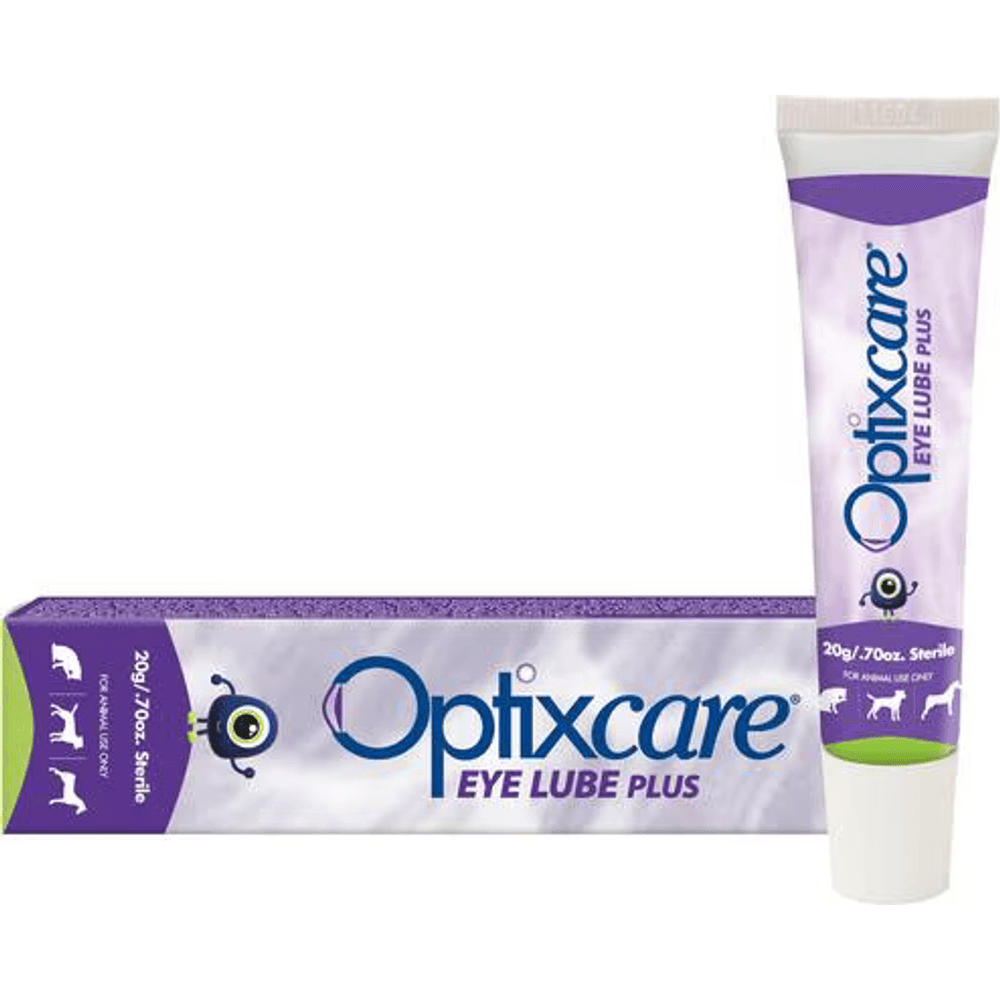
A sterile lubricating gel that soothes and moisturizes dry, irritated eyes and helps support the tear film in dogs and cats prone to dryness. A gentle, vet-shelf staple for everyday eye comfort.
Webvet may earn a commission when you click through to Chewy, at no extra cost to you.
Home care and prevention (what NOT to do)
Let's be direct about the searches for corneal ulcer in dogs home treatment, dog eye ulcer treatment at home, corneal ulcer in dogs natural treatment, corneal ulcer dog home remedy, and homeopathic remedy for corneal ulcer in dogs. Here is the honest, safety-first answer:
There is no safe do-it-yourself cure for a corneal ulcer. The only safe home care is following a vet-prescribed plan: giving the exact drops your vet dispensed, on schedule, and keeping the E-collar on. Do not rinse the eye with anything, apply human ointments, use honey, herbal drops, saline, or homeopathic products, or try to "wait and watch." A wrong product can drive infection deeper or, in the case of steroid drops, slow or stop healing and cause serious complications, per VCA Animal Hospitals.
Safe home care during recovery looks like this:
- Keep the cone on at all times, including overnight, until your vet says otherwise
- Give every prescribed dose on time, and wait a few minutes between different drops
- Stop the dog rubbing or pawing the eye and limit rough play
- Watch for warning signs of worsening (more pain, more cloudiness, a bulging spot) and call your vet immediately if you see them
- Keep all recheck appointments so your vet can confirm the ulcer is closing
How can corneal ulcers in dogs be prevented? You cannot prevent every ulcer, but you can lower the risk: keep dogs away from sharp brush and rough play that risks eye pokes, rinse the eye promptly with sterile saline if a chemical or shampoo gets in (then call your vet), treat dry eye and eyelid problems as directed, keep flat-faced breeds' faces clean, and act on any squinting or redness early. Prevention is mostly prompt action, catching a small problem before it becomes a deep one.
If your dog has recently had eye surgery or a spay/neuter and is wearing a cone, the same rules apply: keep the cone on and restrict activity, and call your vet for any opened incision, discharge, swelling, bleeding, lethargy, vomiting, or not eating.
The dog eye ulcer cluster: more detailed guides
This page is the overview. For deeper reading on a specific stage, use these dedicated guides:
- Full corneal ulcer treatment guide for the complete medication plan and schedule
- Healing stages, week by week for what recovery looks like over time
- Dog corneal ulcer symptoms for a detailed symptom guide
- Photos of dog eye ulcers to help recognize the problem visually
- Dog corneal ulcer not healing for indolent and SCCED ulcers
- Dog eye ulcer surgery cost for a full surgical cost breakdown
The bottom line
A corneal ulcer in dogs is painful, can worsen fast, and is a same-day emergency. Most simple ulcers heal well with prompt vet care, antibiotic drops, pain relief, and a cone, but delay, home remedies, or the wrong drops can cost your dog its sight. If your dog's eye is red, watering, squinting, or cloudy, do not experiment at home. Get to a vet or an emergency hospital today, and let a fluorescein stain and a proper exam guide the treatment.
Frequently Asked Questions
Can a dog recover from a corneal ulcer?
Yes, in most cases. With prompt, correct veterinary treatment, simple superficial ulcers usually heal fully within a few days and the dog keeps its vision. Deeper or infected ulcers take longer and need closer monitoring, but many still recover well. The key is early treatment: the sooner a vet stains the eye and starts antibiotics, pain control, and an E-collar, the better the outcome, per VCA Animal Hospitals.
What happens if you don't treat a dog's corneal ulcer?
An untreated corneal ulcer tends to get deeper and often becomes infected. It can cause ongoing severe pain, spreading infection, scarring that clouds vision, and progression to a descemetocele or a full rupture of the eye. VCA Animal Hospitals notes that if Descemet's membrane ruptures the eye collapses and irreparable damage occurs, and this progression can result in blindness; in the worst cases the eye must be removed. This is why it should never be left to heal on its own.
How much does it cost to treat a dog's corneal ulcer?
Costs vary by region and severity. A general planning guide: exam plus fluorescein stain runs roughly $50 to $250; medical treatment for a simple ulcer $150 to $500; intensive or serum-based care $300 to $1,000 or more; and surgery for deep or non-healing ulcers $800 to $3,000 or more. Specialist visits add $150 to $500 or more each. Always ask your own clinic for an estimate, since after-hours emergency care costs more.
How painful are corneal ulcers in dogs?
They are very painful. The cornea is one of the most densely nerved tissues in the body, so even a small ulcer causes significant pain, comparable to a scratch on your own eye. Because dogs are stoic, the usual signs are squinting, holding the eye shut, tearing, and pawing at the face. Persistent squinting is a strong pain signal and should prompt a same-day vet visit.
What is the 1 2 3 rule for corneal ulcers?
There is no single, universally standardized "1-2-3 rule" for corneal ulcers in veterinary medicine, so be cautious about any fixed numeric formula you see repeated online. What matters is recognizing the documented red flags that mean an ulcer needs more than routine care or a specialist. Refer to a veterinary ophthalmologist or escalate if a superficial ulcer is not healing after treatment (VCA Animal Hospitals notes uncomplicated superficial ulcers usually heal within three to five days), if the ulcer is deep or reaches Descemet's membrane as a descemetocele, or if it shows any melting or bulging appearance. When in doubt, let the vet examining the eye decide, since depth and infection cannot be judged by a rule of thumb from the outside.
When should I take my dog to the vet for a corneal ulcer?
The same day you notice a problem. Any red, watering, squinting, cloudy, or light-sensitive eye, or a dog pawing at its eye, warrants an urgent visit. Go to an emergency hospital right away if you see a bulging or jelly-like spot on the eye, a visible dent, sudden severe pain, or fluid leaking from the eye, since these can signal a rupture. Corneal ulcers can deepen within hours, so waiting is the main thing that turns a treatable eye into a lost one.
How can corneal ulcers in dogs be prevented?
You cannot prevent every ulcer, but you can lower risk. Keep dogs away from sharp brush and rough play that risks eye pokes, rinse the eye promptly with sterile saline if a chemical or shampoo gets in and then call your vet, treat dry eye and eyelid abnormalities as directed, keep flat-faced breeds' faces clean, and act quickly on any squinting or redness. Prevention is largely about catching a small problem before it becomes a deep one.
How are corneal ulcers diagnosed in dogs?
The main test is a fluorescein stain. The vet places a drop of harmless orange dye on the eye; the dye sticks to areas where the protective surface layer is missing and glows bright green under blue light, revealing the ulcer's size and shape, as VCA Animal Hospitals describes. The exam usually also checks for a foreign body or eyelid problem, measures tear production and eye pressure, assesses ulcer depth, and may culture the eye if it looks infected or is not healing.
What is the recovery time for a corneal ulcer in dogs?
It depends on depth. Superficial ulcers often heal in about 3 to 5 days with topical antibiotics, pain control, and an E-collar, per VCA Animal Hospitals. Deeper ulcers commonly take two weeks or more and need close monitoring; their treatment is similar to that of shallow ulcers, but many also require conjunctival grafts to strengthen the cornea, per the Merck Veterinary Manual. Non-healing (indolent) ulcers may require a procedure and additional weeks before they finally close, according to MSPCA-Angell. Keeping every recheck appointment is how your vet confirms the eye is truly healing.
What is the prognosis for corneal ulcers in dogs?
For simple superficial ulcers treated promptly, the prognosis is good, and most dogs recover fully with vision intact. Deep, infected, melting, or non-healing ulcers carry a more guarded prognosis and may need intensive care or surgery, but many are still saved with specialist treatment. The biggest factor in the outcome is time: prompt, correct veterinary care protects the eye, while delay or the wrong drops, especially steroid drops, can risk permanent blindness.
$65 · no membershipHave a health question about your dog?
A licensed vet can assess your dog over video and prescribe online when it's appropriate.
Talk to a vet- Licensed vets
- All 50 states
- same-day Rx
Webvet may earn a commission if you book.

Editor
The Webvet Editorial Team is the in-house group of pet-care editors and writers behind Webvet, operated by Smart Pet Collective. The team researches, writes, and maintains Webvet's pet health, behavior, and medication content. Every article follows a defined editorial process: research from reputable veterinary and scientific sources, careful drafting, mandatory review of medical content by a credentialed veterinarian, and dated publication. Health and medication articles are medically reviewed by a licensed veterinary professional before they go live and are kept current over time.
Veterinarian · BVMS MRCVS
Dr. Pippa Elliott, BVMS, MRCVS, is a veterinarian with nearly 30 years of experience in companion animal practice. Dr. Elliott earned her Bachelor of Veterinary Medicine and Surgery from the University of Glasgow. She was also designated a Member of the Royal College of Veterinary Surgeons. Married with 2 grown-up kids, Dr. Elliott has a naughty Puggle named Poggle, 3 cats and a bearded dragon.


