Dog Eye Ulcer Surgery Cost: 2026 Price Guide by Procedure
A vet-reviewed 2026 breakdown of dog eye ulcer surgery cost by procedure, plus what drives the price, insurance coverage, financing, success rates, and when a red or squinting eye is a same-day emergency.

BVMS MRCVS
Medically reviewed by Dr. Pippa Elliott, BVMS MRCVS · Last reviewed

This article contains affiliate links. Webvet may earn a commission when you buy through them, at no extra cost to you.
Most owners land on this page in the same stressful moment: the vet just said your dog needs eye surgery, and now you are trying to figure out what it will cost. The short version is that dog eye ulcer surgery cost typically runs from about $300 for a simple in-clinic procedure to $3,000 or more for advanced grafting done by a specialist. This vet-reviewed guide breaks down the real 2026 price ranges by procedure, explains what pushes the bill up or down, and walks through insurance, financing, and success rates so you can make a fast, informed decision.
Prices below are typical US ranges for planning purposes. Your actual bill depends on your region, your dog, and how deep the ulcer is, so always confirm the number with your own vet.
How Much Does Dog Eye Ulcer Surgery Cost? (Quick Answer)
Dog eye ulcer surgery cost usually falls between $300 and $3,000 or more, depending on the procedure. A minor in-clinic debridement or grid keratotomy for a stubborn surface ulcer can be a few hundred dollars, while a conjunctival graft for a deep or "melting" ulcer performed by a board-certified ophthalmologist commonly runs $1,500 to $3,000+. Removing a ruptured, blind, or unsalvageable eye (enucleation) typically costs $600 to $1,800.
Here is the fast way to think about it: the deeper and more complicated the ulcer, the more specialized the surgery, and the higher the cost. Superficial ulcers often heal with medication alone. Deep and melting ulcers threaten the structure of the eye and usually need surgery for structural support, which is why the price jumps (Merck Veterinary Manual).
If you only remember three numbers, remember these:
- Simple surface procedure (debridement / grid keratotomy): roughly $200 to $1,000
- Deep ulcer graft (conjunctival flap or graft): roughly $1,500 to $3,000+
- Eye removal (enucleation), if the eye cannot be saved: roughly $600 to $1,800
The rest of this article shows exactly what sits behind each of those numbers, and where you can realistically save.

A lightweight, padded fabric cone that gently blocks a pet from pawing, scratching, or rubbing a healing eye, wound, or hot spot, and it is far softer and less stressful than a hard plastic cone.
Webvet may earn a commission when you click through to Chewy, at no extra cost to you.
Dog Eye Ulcer Surgery Cost by Procedure (Cost Table)

Not all eye ulcer surgery is the same. The procedure your dog needs is dictated by how deep the ulcer is and whether it is healing, which is decided by your vet or an ophthalmologist (Merck Veterinary Manual). The table below is the anchor of this guide: typical 2026 US price ranges for each procedure, plus what it treats.
| Procedure | What it treats | Typical 2026 cost (US) | Where it's usually done |
|---|---|---|---|
| Ophthalmologist consultation / exam | Diagnosis, staining, depth assessment before surgery | $150 to $275 | Specialist / referral |
| Debridement (cotton-swab / diamond burr) | Indolent, non-healing surface ulcers | $200 to $600 | General vet or specialist |
| Grid keratotomy | Chronic indolent (superficial non-healing) ulcers | $300 to $1,000 | General vet or specialist |
| Conjunctival flap or graft | Deep, melting, or descemetocele (near-perforation) ulcers | $1,500 to $3,000+ | Board-certified ophthalmologist |
| Corneal / conjunctival transplant grafts | Severe structural loss | $2,000 to $3,500+ | Board-certified ophthalmologist |
| Enucleation (eye removal) | Ruptured, blind, or unsalvageable eye | $600 to $1,800 | General vet or specialist |
A few notes so these numbers make sense:
- Debridement and grid keratotomy are minor procedures often done under sedation and topical anesthetic. They treat indolent ulcers, meaning surface ulcers that will not heal on their own (Merck Veterinary Manual). Because they are quick and don't always need general anesthesia, they sit at the low end.
- Conjunctival flaps and grafts move healthy tissue over a deep defect to give the cornea structural support and a blood supply to heal. Many deep ulcers require conjunctival and/or synthetic grafts to strengthen and maintain the integrity of the cornea, and any melting ulcer involving more than half the cornea merits surgical intervention by a specialist (Merck Veterinary Manual). General anesthesia, an operating microscope, and specialist fees drive the higher cost.
- Enucleation is removing the eye. It sounds drastic, but for an eye that has already ruptured or gone permanently blind and painful, it is often the most humane and, notably, sometimes the less expensive path than repeated attempts to save a lost eye.
Every figure here is a planning estimate. Get a written estimate from the clinic that will actually do the surgery.
Medical Therapy vs. Surgery: What You'll Actually Pay

Before surgery is even on the table, many ulcers are treated medically. The single biggest factor in your total dog eye ulcer treatment cost is whether your dog's ulcer can heal with drops and time, or whether it needs the operating room.
Superficial, uncomplicated ulcers frequently heal with medical therapy alone: antibiotic drops to prevent infection, pain control, and sometimes drops to relax the eye (VCA Animal Hospitals). Deep and melting ulcers are a different story and typically require surgical grafting for structural support (Merck Veterinary Manual).
Here is a side-by-side of what each path tends to cost:
| Path | What's included | Typical total cost |
|---|---|---|
| Medical therapy only | Exam, fluorescein staining, antibiotic + pain drops, 1 to 2 rechecks | $300 to $1,000 |
| Surgery + medical care | Consult, procedure, anesthesia, meds, follow-up rechecks | $1,000 to $3,000+ |
The takeaway: the price jumps when the ulcer gets deep. A surface ulcer caught early and treated with drops is the cheapest outcome by far, which is one more reason a red or squinting eye is a same-day visit and not a "wait and see." Waiting can turn a $400 medication case into a $2,500 surgery case, or worse, a lost eye.
One critical safety point that also protects your wallet: never reach for leftover or human eye drops, and never use a steroid-containing drop. Used too soon, steroids slow or stop the healing process and can cause serious complications (VCA Animal Hospitals). In fact, corticosteroids are contraindicated whenever a corneal ulcer is present, because they inhibit epithelial regeneration and can augment the action of collagenase, leading to a melting corneal ulcer (Merck Veterinary Manual). That can convert an inexpensive medical case into an emergency surgery or enucleation.
For a full walkthrough of non-surgical options, see our sibling guide on dog eye ulcer treatment.

Presoaked sterile pads that gently wipe away everyday debris, discharge, and tear stains from around a dog's or cat's eyes as part of routine grooming. An easy way to keep the eye area clean and comfortable between baths.
Webvet may earn a commission when you click through to Chewy, at no extra cost to you.
What Drives the Price Up or Down (Cost Factors)

Two dogs with "an eye ulcer" can get bills that differ by thousands of dollars. These are the factors that move the number.
Ulcer depth and complication
This is the number one driver. A superficial ulcer may need only drops. A deep, melting, or near-perforating ulcer (a descemetocele) needs grafting surgery and is a serious emergency (VCA Animal Hospitals). Depth decides the procedure, and the procedure decides the price.
General vet vs. veterinary ophthalmologist
Simple debridement or a grid keratotomy can often be done by your regular vet. Any melting ulcer involving more than half the cornea merits surgical intervention by a specialist, and many deep ulcers need conjunctival or synthetic grafting to hold the cornea together (Merck Veterinary Manual). A veterinary ophthalmologist cost is higher because of specialist training, an operating microscope, and dedicated surgical staff, but for a deep ulcer that specialist care is what saves the eye.
Anesthesia
Minor procedures may use sedation plus topical numbing. Grafts require general anesthesia, pre-anesthetic bloodwork, and monitoring, all of which add to the bill.
Geography and clinic type
A referral hospital in a major metro area costs more than a general practice in a rural county. Emergency and after-hours care carries a premium.
One eye vs. both, and repeat surgery
Bilateral cases or ulcers that fail a first procedure and need a second attempt raise the total. This is exactly why chasing a lost eye can cost more than a single enucleation.
Diagnostics and rechecks
Fluorescein staining, cultures for melting or infected ulcers, and multiple post-op rechecks all add up. Deep ulcers need closer monitoring, which means more visits.
Bold rule of thumb: the earlier and shallower the ulcer, the cheaper and simpler the fix. Every day of delay risks pushing your dog into a deeper, pricier tier.
 $65 · no membership
Have a health question about your dog?
A licensed vet can assess your dog over video and prescribe online when it's appropriate.
 Talk to a vet
- Licensed vets
- All 50 states
- same-day Rx
Webvet may earn a commission if you book.
Does Pet Insurance Cover Dog Eye Ulcer Surgery?
Yes, most accident-and-illness pet insurance policies cover dog eye ulcer surgery, as long as the ulcer is not a pre-existing condition. Corneal ulcers usually start from an accident (a scratch, a foreign body, dry eye, or trauma), which falls squarely inside standard accident-and-illness coverage.
The catch is timing and fine print:
- Pre-existing conditions are excluded. If your dog had eye trouble before the policy started or during a waiting period, the insurer can deny that claim. Buy coverage before problems appear.
- Waiting periods apply. Most policies have a short waiting period after enrollment before illness claims are eligible.
- Reimbursement, not upfront payment. You typically pay the clinic, then get reimbursed 70 to 90 percent after your deductible, depending on your plan.
- Breed-specific eye clauses. A few policies limit coverage for hereditary eye conditions in breeds prone to them, so read the eye-and-hereditary section closely.
If you already have a policy, call before surgery and confirm the ulcer will be covered, and ask whether they offer direct payment to the vet. If you do not have insurance yet and your dog already has an ulcer, insurance will not help for this event, so focus on the financing options below.
How to Lower the Cost (Financing, CareCredit, Nonprofits)
A deep-ulcer surgery bill is scary, but there are real, legitimate ways to make it manageable without delaying care. Delaying is the one thing that reliably makes it worse and more expensive.
- Ask for a written estimate and a payment plan. Many clinics and most referral hospitals will break the total into stages or offer in-house payment plans. Ask directly.
- CareCredit and Scratchpay. These are health-and-veterinary financing lines that many vets accept, often with promotional interest-free periods if paid within the term. Apply before the appointment so funds are ready.
- Nonprofit and charitable aid. Organizations like RedRover, The Pet Fund, and Frankie's Friends offer need-based grants for emergency veterinary care. Breed-specific rescues sometimes help too. These have applications and limited funds, so start early.
- Ask about a general vet for the simple procedures. If your vet is comfortable doing a debridement or grid keratotomy in-house for an uncomplicated indolent ulcer, that can be cheaper than a specialist referral. Deep and melting ulcers, though, are worth the specialist: a melting ulcer involving more than half the cornea merits surgical intervention by a specialist (Merck Veterinary Manual).
- Veterinary teaching hospitals. University vet schools often provide specialist-level ophthalmology care at reduced cost because residents (supervised by faculty) participate.
- Compare estimates, but not at the cost of time. Searching "dog eye ulcer surgery cost near me" for two or three quotes is reasonable for a scheduled, stable case. It is not reasonable for a same-day painful eye. When in doubt, treat first and negotiate the bill after.
The goal is to act fast and finance smart, never to postpone a time-sensitive surgery to save money.

Presoaked wipes that gently clean the fur and skin around a dog's or cat's eyes, lifting away tear stains, discharge, and daily debris as part of routine grooming. A quick, no-rinse way to keep the eye area clean and tidy between baths.
Webvet may earn a commission when you click through to Chewy, at no extra cost to you.
Is the Surgery Worth It? Success Rates and Recovery

For most dogs, the answer is a clear yes: surgery to repair a deep ulcer or resolve a stubborn indolent ulcer has a strong track record and preserves both the eye and the dog's comfort.
What is the success rate of eye ulcer surgery in dogs?
Success rates are high, especially for the common procedures. Grid (or diamond-burr) keratotomy resolves most indolent (chronic non-healing) surface ulcers, with a single-procedure success rate reported at around 75 percent (Clinician's Brief) and higher when combined with a bandage contact lens; an ulcer that does not heal after one keratotomy can be repeated. For deep and melting ulcers, many need conjunctival or synthetic grafting to strengthen and maintain the integrity of the cornea, and any melting ulcer involving more than half the cornea merits surgical intervention by a specialist (Merck Veterinary Manual). The biggest variable is timing: the sooner a deep ulcer is repaired, the better the outcome.
Recovery time and after surgery
Expect a recovery window of roughly two to several weeks depending on the procedure and depth. During that time your dog will need:
- An Elizabethan collar (cone) worn at all times to stop self-trauma to the healing eye. This is non-negotiable, as one rub with a paw can undo the repair.
- Topical medications on a schedule, often multiple times a day.
- Activity restriction to keep pressure and impact off the eye.
- Follow-up rechecks so the vet can confirm the graft or ulcer is healing. These rechecks are part of the total cost, so budget for them.
For a stage-by-stage picture of what healing should look like, see our sibling guide on dog eye ulcer healing stages. If the eye is not improving on schedule, do not wait for the next appointment. Read what to do when a dog corneal ulcer is not healing and call your vet.
Weighing worth: a repaired eye means a comfortable, sighted dog. Even when an eye must be removed, dogs adapt remarkably well to one eye and live full, happy lives once the pain source is gone.
What Happens If You Don't Treat It (Emergency Warning)
This is the part of the guide that matters most, so we will repeat the safety message plainly.
Can a dog live with an eye ulcer?
A dog should not be left to "live with" an active corneal ulcer. Superficial ulcers can heal fully with prompt treatment, but an untreated or worsening ulcer causes ongoing pain and can destroy the eye. Living with an ulcer is not the goal; treating it quickly is. If the eye ultimately cannot be saved, a dog can absolutely live a full, comfortable life after the eye is removed, but that decision belongs with your vet, not to waiting it out.
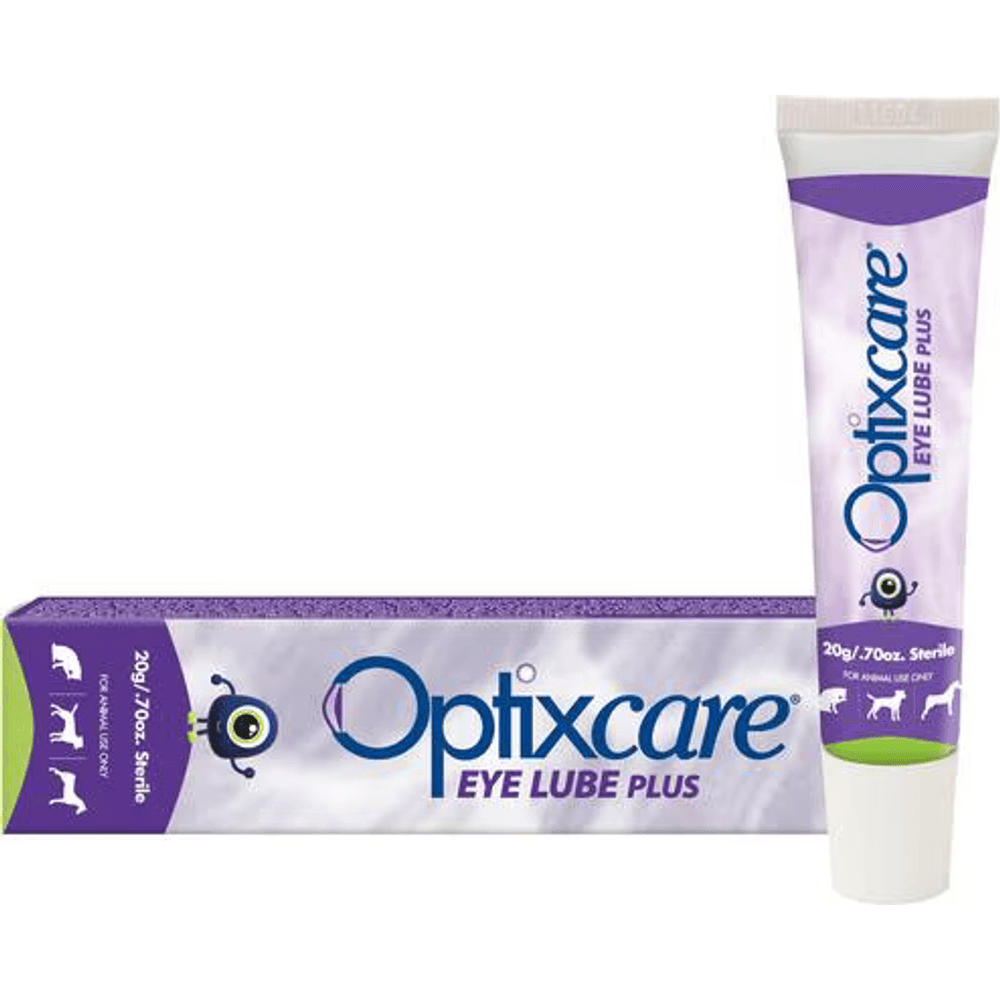
A sterile lubricating gel that soothes and moisturizes dry, irritated eyes and helps support the tear film in dogs and cats prone to dryness. A gentle, vet-shelf staple for everyday eye comfort.
Webvet may earn a commission when you click through to Chewy, at no extra cost to you.
How painful is a dog's eye ulcer?
Very. Corneal ulcers are among the more painful conditions a dog can have, which is why squinting, holding the eye shut, and rubbing are such reliable warning signs (VCA Animal Hospitals). Pain this consistent is your cue to go in today.
Do not do this at home:
- Do not use leftover, old, or human eye drops.
- Do not use any steroid-containing drop (including leftover triple-antibiotic-with-hydrocortisone or human allergy/steroid drops); corticosteroids are contraindicated when a corneal ulcer is present because they inhibit epithelial regeneration and can augment the action of collagenase, leading to a melting corneal ulcer (Merck Veterinary Manual).
- Do not attempt any home or DIY treatment beyond putting an Elizabethan collar on your dog to stop self-trauma while you head to the vet.
To learn what an ulcer looks like and how to recognize one early, see our siblings on dog corneal ulcer symptoms and dog eye ulcer pictures. For the full medical overview of the condition, start with our pillar guide on corneal ulcers in dogs. We do not diagnose here; a red, painful, or cloudy eye needs to be seen by a vet or a board-certified ophthalmologist (find one through the ACVO directory) the same day.

Costs Outside the US (UK, Canada, Australia)
Prices vary by country and currency, and the ranges below are rough planning estimates only. Local currency, region, clinic type, and severity all shift the final bill, so confirm with a local vet.
| Region | Simple procedure (approx.) | Deep-ulcer graft (approx.) |
|---|---|---|
| United States | $200 to $1,000 | $1,500 to $3,000+ |
| United Kingdom | GBP 300 to 900 | GBP 1,200 to 2,500+ |
| Canada | CAD 400 to 1,200 | CAD 1,800 to 3,500+ |
| Australia | AUD 400 to 1,200 | AUD 2,000 to 4,000+ |
| Ireland | EUR 350 to 1,000 | EUR 1,400 to 3,000+ |
Wherever you are, the same rules apply: depth drives the procedure, specialists cost more but a melting ulcer over half the cornea genuinely needs specialist surgery to save the eye (Merck Veterinary Manual), and a painful eye is a same-day visit. Currency conversions and local vet fees change often, so treat these as ballpark figures and get a written estimate locally.
The Bottom Line
Dog eye ulcer surgery cost ranges from a few hundred dollars for a simple in-clinic procedure to $3,000 or more for advanced grafting by a specialist, with enucleation in the middle. The single biggest lever on that number is how deep the ulcer is when it is treated, and the single biggest thing you control is how fast you act.
A red, squinting, cloudy, or painful eye is a same-day emergency. Skip the leftover drops, keep a cone on your dog if there's any delay, and get to a vet. Treating early is cheaper, safer, and gives your dog the best shot at keeping a comfortable, sighted eye.
- 1Dog eye ulcer surgery cost runs roughly $300 to $3,000+, driven mostly by how deep the ulcer is when treated.
- 2Simple surface procedures (debridement / grid keratotomy) run about $200 to $1,000; deep-ulcer grafts run $1,500 to $3,000+; enucleation runs $600 to $1,800.
- 3A red, squinting, cloudy, or painful eye is a same-day emergency, not a price-shopping situation.
- 4Never use leftover, old, human, or steroid-containing eye drops; they can trigger a melting ulcer.
- 5Most accident-and-illness pet insurance covers eye ulcer surgery if it is not pre-existing; CareCredit, Scratchpay, nonprofits, and vet teaching hospitals can lower the cost.
Frequently Asked Questions
How to lower the cost of dog eye ulcer surgery
If the estimate is more than you can pay up front, ask your clinic about medical financing such as CareCredit or Scratchpay, which spread the bill over monthly payments. Nonprofit and charity clinics and university veterinary teaching hospitals often perform advanced eye procedures for less than a private specialty practice, so ask for a referral if cost is a barrier.
Pet insurance can reimburse a large share of eligible costs, but it will not cover a condition your dog already has, so a policy bought after the ulcer is diagnosed will not pay for this treatment. Always ask for a written, itemized estimate and whether your general-practice vet can manage a simple ulcer medically before a referral is needed. The most reliable way to keep costs down is speed: treating a shallow ulcer early with drops is far cheaper than surgery on a deep or perforated eye, so same-day care protects both the eye and your budget.
Frequently Asked Questions
Can a dog live with an eye ulcer?
A dog should not be left to live with an active, untreated corneal ulcer because it is painful and can worsen, perforate, and blind the eye. Superficial ulcers heal well with prompt treatment. If an eye ultimately cannot be saved and must be removed, dogs adapt very well and live full, comfortable lives, but that is a vet's decision, not a reason to delay care.
What is the success rate of eye ulcer surgery in dogs?
Success rates are high. Grid (or diamond-burr) keratotomy for chronic indolent (non-healing) surface ulcers has a single-procedure success rate reported at around 75 percent, and it can be repeated or paired with a bandage contact lens if the ulcer does not heal the first time. Deep and melting ulcers often need conjunctival or synthetic grafting to hold the cornea together, and a melting ulcer over half the cornea merits specialist surgery. Faster treatment means better outcomes.
How painful is a dog's eye ulcer?
A corneal ulcer is extremely painful, which is why affected dogs squint, hold the eye shut, paw at it, and tear heavily. That level of consistent pain is a clear signal to see a vet the same day.
What happens if I don't treat my dog's eye ulcer?
Untreated ulcers can deepen rapidly, become infected, and perforate, permanently damaging or blinding the eye. A deep ulcer reaching Descemet's membrane (a descemetocele) is serious: if that membrane ruptures, the fluid inside the eye leaks out, the eye collapses, and irreparable damage occurs. Delay also raises the cost, turning a possible medication case into surgery.
What happens if you don't treat a dog's corneal ulcer?
The same risks apply as with any untreated eye ulcer: worsening pain, infection, deepening, perforation, and possible permanent blindness. Deep and melting ulcers need surgical grafting for structural support. This is not a wait-and-see condition; it is a same-day vet visit.
How soon should a corneal ulcer start healing, and when should it be rechecked?
A simple, superficial ulcer should begin healing quickly once treatment starts. Your vet will usually recheck the eye and repeat the fluorescein stain, and a dog is typically re-examined after two to three days of treatment to confirm healing is progressing well. The practical takeaway for owners: if an ulcer is not visibly improving on the schedule your vet gave you, or the eye looks worse, call your vet right away, because a deep or melting ulcer can worsen fast.
Can dogs live with eye ulcers?
Dogs should not be left to live with active, untreated ulcers because of the pain and the risk of losing the eye. With prompt treatment, most superficial ulcers heal completely. If an eye is beyond saving and is removed, dogs live happily with one eye. Either way, the answer is treat it now, not live with it.
How much does dog eye ulcer surgery cost on average?
On average, expect $300 to $1,000 for a simple in-clinic procedure like debridement or grid keratotomy, $1,500 to $3,000+ for a conjunctival graft on a deep or melting ulcer, and $600 to $1,800 for enucleation if the eye cannot be saved. Depth, specialist involvement, anesthesia, and region all move the price, so get a written estimate from your clinic.
What makes the cost vary, and how to manage it
No two corneal-ulcer bills look alike, because the price tracks how severe the ulcer is and how much care the eye needs. A simple superficial ulcer treated with drops and a recheck or two sits at the low end. A deep, infected, or melting ulcer that needs frequent monitoring, serum or compounded eye drops, or referral to a veterinary ophthalmologist for surgery sits far higher.
The biggest cost drivers are the depth and type of ulcer (superficial versus deep, indolent, or melting), whether specialist surgery such as a conjunctival graft is required, how many recheck visits and stain tests healing takes, the medications prescribed (serum and compounded drops cost more than a basic ointment), and your region and clinic type, since emergency and specialty hospitals charge more than a general practice.
To manage it, ask your vet for a written estimate up front and whether your general practice can treat the ulcer or a referral is truly needed, ask about generic or compounded medication options, and look into payment tools. Many families use pet insurance (only if the policy was already in place, since a current ulcer counts as a pre-existing condition) or a medical-credit option to spread the cost. The one thing that reliably makes an eye more expensive is waiting: a small ulcer treated early is far cheaper than the deep, infected, or ruptured eye it can become.
$65 · no membershipHave a health question about your dog?
A licensed vet can assess your dog over video and prescribe online when it's appropriate.
Talk to a vet- Licensed vets
- All 50 states
- same-day Rx
Webvet may earn a commission if you book.

Editor
The Webvet Editorial Team is the in-house group of pet-care editors and writers behind Webvet, operated by Smart Pet Collective. The team researches, writes, and maintains Webvet's pet health, behavior, and medication content. Every article follows a defined editorial process: research from reputable veterinary and scientific sources, careful drafting, mandatory review of medical content by a credentialed veterinarian, and dated publication. Health and medication articles are medically reviewed by a licensed veterinary professional before they go live and are kept current over time.
Veterinarian · BVMS MRCVS
Dr. Pippa Elliott, BVMS, MRCVS, is a veterinarian with nearly 30 years of experience in companion animal practice. Dr. Elliott earned her Bachelor of Veterinary Medicine and Surgery from the University of Glasgow. She was also designated a Member of the Royal College of Veterinary Surgeons. Married with 2 grown-up kids, Dr. Elliott has a naughty Puggle named Poggle, 3 cats and a bearded dragon.


