Signs a Dog Eye Ulcer Is Healing: Stages, Timeline, and Red Flags
Wondering whether your dog's corneal ulcer is getting better? Learn the encouraging signs a dog eye ulcer is healing, the day-by-day healing stages, how long recovery takes, and the red flags that mean you need a vet the same day.

BVMS MRCVS
Medically reviewed by Dr. Pippa Elliott, BVMS MRCVS · Last reviewed

This article contains affiliate links. Webvet may earn a commission when you buy through them, at no extra cost to you.
If your dog has already been diagnosed and started on eye medication, you are watching for the signs a dog eye ulcer is healing and, honestly, watching that eye like a hawk. The good news is that most simple corneal ulcers heal quickly and completely. The tricky part is that the encouraging signs a dog eye ulcer is healing can look similar to the warning signs that it is getting worse, so it helps to know exactly what to look for.
Below you will find the reassuring signs of recovery, the day-by-day healing stages, what a recovering eye actually looks like, how long healing takes, and the red flags that mean you call the vet the same day. Everything here is meant to help you monitor between vet-directed rechecks. It is never a reason to stop medication early or skip the follow-up exam.
Signs Your Dog's Eye Ulcer Is Healing (Quick-Check List)
Here is the short answer. A corneal ulcer that is healing well usually shows less pain, a more comfortable and open eye, clearing cloudiness, and fading redness over a few days. You may also see faint pink blood vessels creeping in from the edge of the eye, which is a normal part of repair rather than a warning sign.
Watch for these encouraging changes between rechecks:
- Less squinting and blinking. As pain eases, your dog holds the eye open more normally instead of clamping it shut. Pain is one of the classic clinical signs of an active ulcer, so reduced pain is a meaningful improvement, according to the Merck Veterinary Manual.
- Less pawing and rubbing. A dog that stops swatting at the eye or rubbing its face on the carpet is usually more comfortable.
- Clearing cloudiness. The bluish or hazy film (corneal edema) begins to fade and the surface looks clearer. With a corneal ulcer, fluid accumulates in the cornea and gives the eye a cloudy appearance, so a clearing eye is a positive shift (VCA Animal Hospitals).
- Fading redness. The whites of the eye and surrounding tissues look less angry and inflamed.
- Less discharge, and it looks clearer. Thick, colored discharge should be decreasing, not increasing.
- Faint new blood vessels. Fine pink-red vessels growing in from the edge are a normal repair response and can be a sign the body is actively healing the cornea.

A lightweight, padded fabric cone that gently blocks a pet from pawing, scratching, or rubbing a healing eye, wound, or hot spot, and it is far softer and less stressful than a hard plastic cone.
Webvet may earn a commission when you click through to Chewy, at no extra cost to you.
Dog Eye Ulcer Healing Stages: What Happens Day by Day

Owners often ask about the 4 stages of a corneal ulcer and how the eye changes over time. Healing is a continuous process rather than four crisp steps, but breaking it into stages makes it easier to track. Timelines assume a simple, superficial ulcer that is being treated correctly and the underlying cause has been addressed.
| Stage | Roughly when | What is happening | What you may notice |
|---|---|---|---|
| 1. Active / injury | Day 0 to 1 | The surface layer (epithelium) is broken. Pain, cloudiness, and inflammation are at their peak. | Squinting, tearing, redness, pawing, a cloudy or hazy eye. |
| 2. Early epithelial repair | Day 1 to 3 | Healthy epithelial cells at the edge migrate across the defect to cover it. | Squinting and discharge start to ease, the eye looks a little more comfortable. |
| 3. Neovascularization / active repair | Day 3 to 7+ | For deeper or slower ulcers, tiny blood vessels grow in to support healing. | Faint pink-red lines creeping in from the edge, steadily clearing cloudiness. |
| 4. Confirmed healed | When your vet re-stains | The surface is intact again and repels the dye. | Comfortable, open, clear eye and a negative fluorescein stain at the recheck. |
Two points matter here. First, not every ulcer forms visible blood vessels. Many simple superficial ulcers heal by fresh surface (epithelial) cells spreading across the defect. Therapy for shallow ulcers is usually topical antibiotics plus correction of the cause, such as removing a foreign body, and these ulcers usually heal within about a week, per the Merck Veterinary Manual.
Second, vascularization is one of the clinical signs of ulceration (Merck Veterinary Manual), so seeing gentle vessel growth means the eye is actively repairing, not that something new is wrong.
For a deeper look at the underlying condition and how ulcers are graded and diagnosed, see our overview: corneal ulcer in dogs.
What a Healing Eye Ulcer Looks Like (Photos + Neovascularization Explained)

When people search for what a healing dog eye ulcer looks like, they are usually trying to tell benign repair apart from something worse. Here is how to read the visuals.
A recovering eye trends toward:
- A more open, relaxed eyelid instead of a squeezed-shut squint.
- Clearing haze, so the surface looks glassier and more transparent day by day.
- Calmer, less red surrounding tissue.
- Discharge that is thinning and lightening, not thickening.

Neovascularization is the word for those faint pink-red blood vessels that grow across the cornea during healing. They can look alarming, but in a treated, improving eye they are usually a sign that the body is doing its repair work. The vessels tend to advance from the outer edge toward the ulcer. Contrast that with a dense white spot or infiltrate right at the ulcer margin, which can signal infection and worsening rather than healing (Merck Veterinary Manual).
Because still photos can only take you so far, and because a picture cannot measure the depth of an ulcer, use images to understand the trend and always confirm with your vet. If you want a dedicated visual reference, our dog eye ulcer pictures gallery is built for that, and for the classic look of an active ulcer see dog corneal ulcer symptoms.
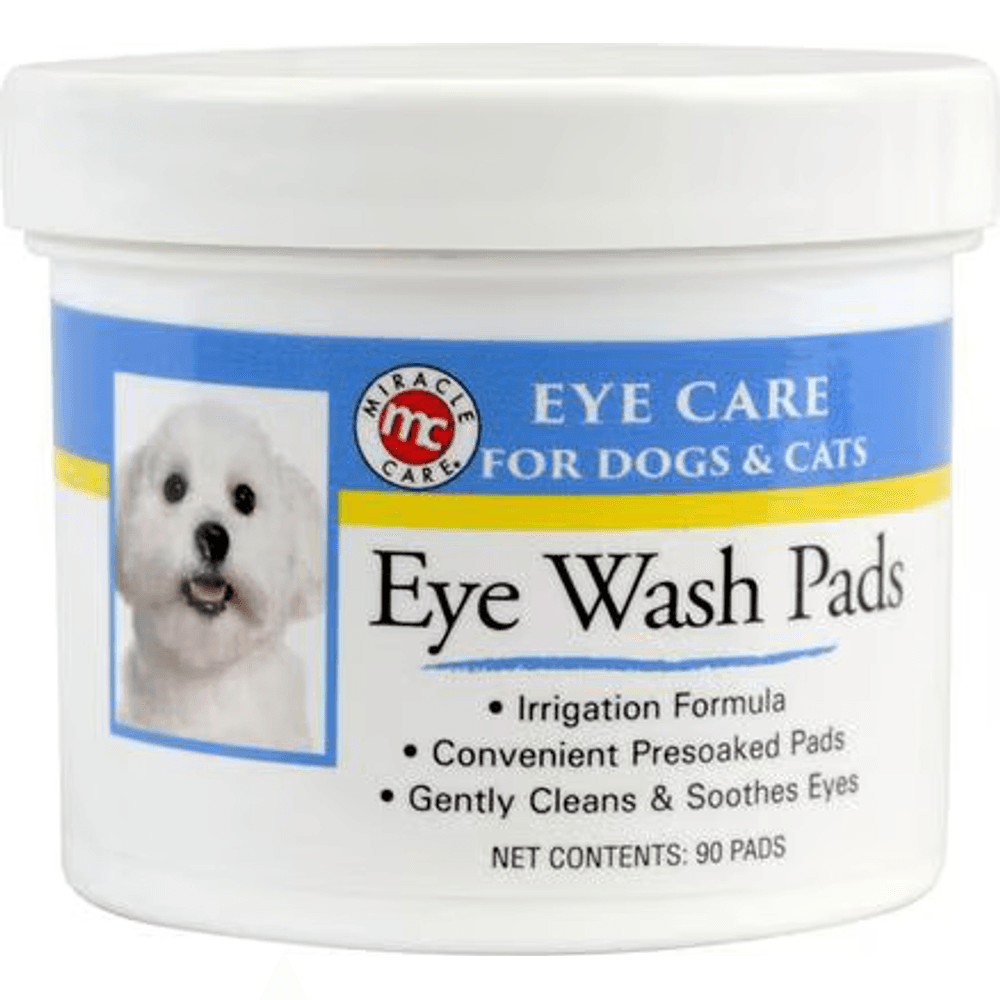
Presoaked sterile pads that gently wipe away everyday debris, discharge, and tear stains from around a dog's or cat's eyes as part of routine grooming. An easy way to keep the eye area clean and comfortable between baths.
Webvet may earn a commission when you click through to Chewy, at no extra cost to you.
 $65 · no membership
Have a health question about your dog?
A licensed vet can assess your dog over video and prescribe online when it's appropriate.
 Talk to a vet
- Licensed vets
- All 50 states
- same-day Rx
Webvet may earn a commission if you book.
How Long Does a Dog Eye Ulcer Take to Heal?
Timelines depend heavily on how deep the ulcer is and what caused it.
Simple, superficial ulcers generally heal within 3 to 5 days once the underlying cause is removed and appropriate treatment is started. As VCA Animal Hospitals states, corneal abrasions and superficial ulcers generally heal within three to five days. During that window the fresh surface cells spread across the defect, and the Merck Veterinary Manual notes shallow ulcers are treated with topical antibiotics and correction of the cause.
Deeper, infected, or complicated ulcers take longer and need close veterinary supervision. Some slow-to-heal ulcers, including certain non-healing surface ulcers in older dogs, can drag on for weeks. So yes, a dog's eye ulcer can take weeks and occasionally longer than a month to fully resolve, especially if it is a non-healing type or becomes infected.
| Ulcer type | Typical healing time | Notes |
|---|---|---|
| Simple / superficial | About 3 to 5 days | Generally heals within three to five days once the cause is removed and treatment starts (VCA). |
| Deep / stromal | Longer, close monitoring | Higher risk, needs frequent vet rechecks; can be an emergency. |
| Non-healing (indolent / SCCED) | Weeks | Surface will not stick down; often needs a specific vet procedure. |
| Infected / melting | Variable, urgent | Can worsen fast; treat as an emergency. |
If your dog's ulcer is dragging on past the expected window, it needs re-evaluation rather than more patience. Our companion guide on a dog corneal ulcer not healing covers indolent and SCCED ulcers in depth. Breed also matters. Flat-faced and prominent-eyed breeds, and small breeds like the Shih Tzu, can be more prone to eye injuries and to slower healing, which is worth discussing with your vet.
Warning Signs the Ulcer Is Getting WORSE (Same-Day Emergency)
This is the most important section. Some changes are not part of healing and mean you need a vet the same day.
Red flags that point to worsening, not healing:
- Sudden increase in pain or squinting after a period of improvement.
- Deepening or spreading redness, or the eye looking more inflamed than before.
- Increasing cloudiness, especially a dense white spot or infiltrate at the ulcer margin, which can signal infection (Merck Veterinary Manual).
- Thick yellow or green discharge that is increasing.
- A surface that looks like it is softening, dissolving, or developing a divot (a "melting" or deep stromal ulcer or a descemetocele). This is a globe-threatening emergency (Merck Veterinary Manual).
- No improvement at all by the timeframe your vet expected, or the ulcer that will not heal.
Do not try to ride these out. Corneal ulcers can deepen and perforate quickly, and a perforated eye can mean permanent vision loss. When in doubt, treat a worsening eye as an emergency and get it seen the same day.

Presoaked wipes that gently clean the fur and skin around a dog's or cat's eyes, lifting away tear stains, discharge, and daily debris as part of routine grooming. A quick, no-rinse way to keep the eye area clean and tidy between baths.
Webvet may earn a commission when you click through to Chewy, at no extra cost to you.
What Speeds Up (and What Slows Down) Healing

Owners frequently look up what speeds up dog eye ulcer healing and corneal ulcer home remedies. Here is the honest, safe answer: the single most effective thing you can do is follow your vet's plan exactly. Corneal ulcers should be evaluated and treated by a veterinarian, whose therapy for a shallow ulcer is usually topical antibiotics plus correction of the cause, per the Merck Veterinary Manual.
What genuinely helps healing:
- Give every prescribed medication on schedule. Missed doses give infection a foothold.
- Keep the recovery cone (E-collar) on at all times until your vet says otherwise, so your dog cannot rub or scratch the eye.
- Prevent self-trauma. Limit rough play and keep the eye clean of debris.
- Go to every recheck, including the final fluorescein re-stain.
- Address the underlying cause your vet identified, whether that is a foreign body, dry eye, an eyelid issue, or an in-turned lash.
About "treatment at home": the safe version of home care is administering only what your vet prescribed, keeping the cone on, and following up for the recheck. Do not use DIY rinses, honey, human antibiotic ointments, or any internet remedy on an active ulcer. There is no safe home remedy that replaces veterinary care for a corneal ulcer.
Watch the depth, not just the timeline. Not all ulcers behave the same way. Shallow ulcers usually respond to topical antibiotics and correction of the cause, while deep ulcers can also need conjunctival grafts to strengthen the cornea, per the Merck Veterinary Manual. That is why any ulcer that looks deeper, spreads, or fails to improve on schedule needs prompt re-evaluation rather than more home care. If you have heard a numeric shorthand for grading ulcers and are unsure what it means, ask your vet to explain how they are grading your dog's specific ulcer.
Is my dog in pain? Almost certainly yes at the start. Pain is a hallmark clinical sign of corneal ulceration (Merck Veterinary Manual), which is why squinting, tearing, and pawing are so common. Easing pain is one of the clearest early signs the eye is recovering. For the full medication picture, see our guide to dog eye ulcer treatment.
If your dog is also recovering from another procedure and wearing a cone, the same protection rules apply, and our general guides on spay/neuter recovery and cone alternatives after spay/neuter cover cone comfort and compliance.
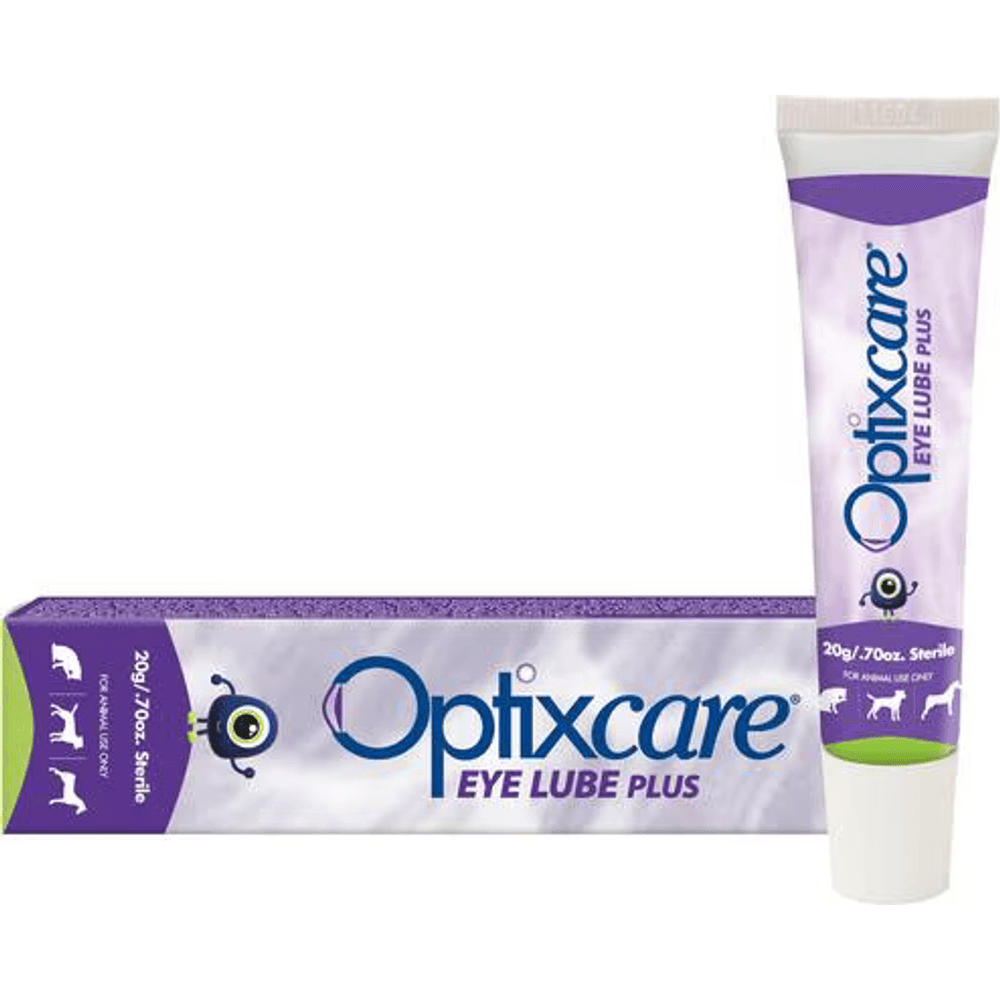
A sterile lubricating gel that soothes and moisturizes dry, irritated eyes and helps support the tear film in dogs and cats prone to dryness. A gentle, vet-shelf staple for everyday eye comfort.
Webvet may earn a commission when you click through to Chewy, at no extra cost to you.
The Only Way to Confirm It's Fully Healed: The Fluorescein Stain Test

Here is the point that ties everything together. A comfortable, clear, open eye is encouraging, but it is not proof of healing. The surface can look fine while a defect remains.
The definitive test is repeating the fluorescein stain. Your vet places a drop of harmless green dye on the eye. A healed cornea repels the dye and stays clear, while any remaining ulcer traps the dye and glows green under a blue light. As VCA Animal Hospitals puts it, the best way to determine whether the cornea has healed is to repeat the fluorescein stain test.
This is exactly why you should never stop the eye drops early just because the eye looks better. Only the re-stain confirms the surface is intact. Finish the full course, keep the cone on until you are told otherwise, and go to the recheck. If the ulcer still stains, your vet will adjust the plan. If it is clear, you are genuinely done.
If the ulcer keeps failing the stain test despite good care, it may be a non-healing type that needs a specific procedure. Our dog corneal ulcer not healing guide explains those options, and if surgery is ever discussed, dog eye ulcer surgery cost breaks down what to expect.
The Bottom Line
The reassuring signs a dog eye ulcer is healing are less squinting and pain, a more comfortable and open eye, clearing cloudiness, fading redness, decreasing discharge, and sometimes faint new blood vessels moving in from the edge. Simple ulcers often heal in about 3 to 5 days (VCA Animal Hospitals), while deeper or non-healing ones take longer.
- 1Use these signs to monitor between rechecks, never to stop treatment early.
- 2Watch closely for the emergency red flags.
- 3Never use leftover or human drops.
- 4Only your vet's fluorescein re-stain confirms the cornea has truly healed.
When to worry that an ulcer is not healing on schedule
A simple superficial corneal ulcer should improve fast. VCA Animal Hospitals notes that corneal abrasions and superficial ulcers generally heal within three to five days. Your vet confirms healing by repeating the fluorescein stain: as the ulcer closes it takes up less dye, and a fully healed cornea takes up none.
Here is the practical rule for owners. If your dog's eye is not visibly more comfortable within a couple of days of starting treatment, or a recheck shows the ulcer is the same size or larger, call your vet rather than waiting for the next scheduled visit. A superficial ulcer that has not healed in about a week is no longer behaving like a simple ulcer.
At that point your vet looks for why it stalled. In middle-aged and older dogs, the most common reason is an indolent ulcer (also called a SCCED or Boxer ulcer), where new surface cells cannot anchor to the cornea. MSPCA-Angell explains these do not respond to antibiotics alone and need a procedure such as debridement with a grid keratotomy or a diamond-burr treatment so healthy cells can attach. Deep or infected ulcers are the other reason healing stalls, and they need more aggressive care, sometimes surgery, on a shorter timeline.
The takeaway: an eye that is trending the wrong way, or a superficial ulcer still open past a week, is a reason to escalate, not to keep waiting.
Frequently Asked Questions
Are there home remedies for a dog's corneal ulcer?
No. A corneal ulcer should be evaluated and treated by a veterinarian, and there is no safe do-it-yourself substitute. According to VCA Animal Hospitals, treatment relies on antibiotic eye drops or ointment to prevent infection along with pain relief, and steroids used too soon will slow or stop healing and may cause serious complications. The safe version of home care is giving only what your vet prescribed, keeping the recovery cone on, protecting the eye from rubbing, and attending every recheck. Do not use rinses, honey, human ointments, or leftover drops on an active ulcer.
What speeds up dog eye ulcer healing?
The most effective thing you can do is follow your vet's plan precisely: give every prescribed medication on schedule, keep the recovery cone on so your dog cannot rub the eye, prevent rough play, address the underlying cause your vet identified, and attend every recheck including the final fluorescein re-stain. Simple superficial ulcers generally heal within about 3 to 5 days once the cause is removed and treatment starts. Never use leftover, old, or human eye drops, and never rely on home remedies, because there is no safe DIY substitute for veterinary care.
Is my dog in pain with an eye ulcer?
Almost certainly yes, at least early on. Pain is a hallmark clinical sign of corneal ulceration, which is why dogs with ulcers commonly squint, tear, and paw at the eye. As the ulcer heals under treatment, that pain eases, so a more comfortable, open eye is one of the clearest early signs of recovery. If pain suddenly increases after a period of improvement, contact your vet the same day.
How long do eye ulcers last in dogs?
Simple, superficial ulcers generally heal within about 3 to 5 days once the underlying cause is removed and appropriate treatment begins, according to VCA Animal Hospitals. Deeper, infected, or non-healing ulcers take longer and need close veterinary supervision, sometimes weeks. Only a repeat fluorescein stain test at your vet confirms that the ulcer has fully healed.
What are the 4 stages of a corneal ulcer?
Healing is continuous, but it is often described in stages: (1) the active or injury stage, when pain, cloudiness, and inflammation peak; (2) early epithelial repair, when healthy surface cells migrate across the defect and squinting eases; (3) neovascularization or active repair, when faint blood vessels may grow in to support deeper healing; and (4) confirmed healed, when the eye is comfortable and clear and a fluorescein re-stain comes back negative. Not every ulcer forms visible blood vessels, since many simple ulcers heal by epithelial cells spreading across the surface.
What are signs of a worsening corneal ulcer?
Warning signs that an ulcer is worsening rather than healing include a sudden increase in pain or squinting, deepening or spreading redness, increasing cloudiness (especially a dense white spot at the ulcer margin, which can signal infection), thick yellow or green discharge that is increasing, and a surface that looks like it is softening, dissolving, or developing a divot. A deep or rapidly progressing "melting" ulcer is an emergency that can perforate the eye. Any of these means you should see a vet the same day.
Can a dog's eye ulcer take months to heal?
Simple superficial ulcers usually heal in about 3 to 5 days, but deeper, infected, or non-healing ulcers can take much longer. Certain non-healing surface ulcers (indolent or SCCED ulcers), which are more common in older dogs and some breeds, can drag on for weeks and occasionally longer than a month. If an ulcer is not healing on the timeline your vet expected, it needs re-evaluation rather than more waiting, because it may require a specific procedure to heal.
$65 · no membershipHave a health question about your dog?
A licensed vet can assess your dog over video and prescribe online when it's appropriate.
Talk to a vet- Licensed vets
- All 50 states
- same-day Rx
Webvet may earn a commission if you book.

Editor
The Webvet Editorial Team is the in-house group of pet-care editors and writers behind Webvet, operated by Smart Pet Collective. The team researches, writes, and maintains Webvet's pet health, behavior, and medication content. Every article follows a defined editorial process: research from reputable veterinary and scientific sources, careful drafting, mandatory review of medical content by a credentialed veterinarian, and dated publication. Health and medication articles are medically reviewed by a licensed veterinary professional before they go live and are kept current over time.
Veterinarian · BVMS MRCVS
Dr. Pippa Elliott, BVMS, MRCVS, is a veterinarian with nearly 30 years of experience in companion animal practice. Dr. Elliott earned her Bachelor of Veterinary Medicine and Surgery from the University of Glasgow. She was also designated a Member of the Royal College of Veterinary Surgeons. Married with 2 grown-up kids, Dr. Elliott has a naughty Puggle named Poggle, 3 cats and a bearded dragon.


