Dog Eye Ulcer Won't Heal? Causes, Danger Signs, and How Vets Fix It
If your dog's eye ulcer won't heal, something is usually blocking it. Learn why corneal ulcers stall, the emergency danger signs of a worsening or rupturing eye, why you must never use leftover or human eye drops, and the debridement and surgery options that actually work.

BVMS MRCVS
Medically reviewed by Dr. Pippa Elliott, BVMS MRCVS · Last reviewed

This article contains affiliate links. Webvet may earn a commission when you buy through them, at no extra cost to you.
If your dog eye ulcer won't heal after a week or two of drops, that is a signal, not a setback. A corneal ulcer that stalls almost always has an underlying cause driving it, and some non-healing ulcers can deepen and threaten the eye. This vet-reviewed guide explains why a dog eye ulcer won't heal, how to spot a worsening or rupturing eye, the treatments that actually fix stubborn ulcers, and the home-care mistakes that make things worse.
- 1An ulcer that has not healed in 7 to 10 days may be an indolent (SCCED) ulcer or infected.
- 2Non-healing surface ulcers often need debridement or a diamond-burr or grid procedure.
- 3Recheck stains track progress; loose edge tissue must be removed to heal.
- 4Hidden causes like dry eye, entropion, or diabetes can stall healing.
- 5Keep the e-collar on and never skip prescribed drops.
Emergency first: when a non-healing dog eye ulcer can't wait
A dog eye ulcer not healing is not the same as a stable, minor scratch. When an ulcer fails to improve on treatment, it may be getting deeper, becoming infected, or turning into a "melting" ulcer, and those are the eyes that rupture.
Call your vet or an emergency clinic the same day if you see any of these dog eye ulcer rupture symptoms or danger signs:
- Sudden, severe pain: hard squinting, holding the eye shut, or yelping when the face is touched.
- A dark spot, bubble, or divot in the center of the cornea, or any tissue that looks like it is bulging outward.
- A gush of tears, thick yellow-green discharge, or blood-tinged fluid from the eye.
- The colored part of the eye looking hazy, blue-grey, or milky, or the surface looking gel-like and soft ("melting").
- A visibly enlarged, sunken, or collapsed eye, or your dog suddenly unable to see on that side.
A deep ulcer can progress to a descemetocele (the last, thinnest membrane bulging forward) and then perforate the globe, which threatens vision, so it warrants a same-day exam rather than home treatment (VCA Animal Hospitals). Do not wait for a scheduled recheck if the eye looks worse today than it did yesterday.

A lightweight, padded fabric cone that gently blocks a pet from pawing, scratching, or rubbing a healing eye, wound, or hot spot, and it is far softer and less stressful than a hard plastic cone.
Webvet may earn a commission when you click through to Chewy, at no extra cost to you.
Why won't my dog's eye ulcer heal? The main reasons
A simple surface (superficial) corneal ulcer usually re-covers itself with new surface cells within about 3 to 7 days, and up to roughly one to two weeks with treatment. An ulcer that fails to show healing in that window almost always has an underlying cause or is a complicated or indolent ulcer, and it needs re-evaluation (Merck Veterinary Manual). In other words, when a dog eye ulcer won't heal, the drops are not usually the problem: something is blocking healing.
The most common reasons a dog eye ulcer won t heal with antibiotics alone are treatable underlying problems (ACVO course handout):
- Dry eye (KCS): too little tear film starves the cornea and prevents healing.
- Entropion: the eyelid rolls inward so lashes constantly rub the cornea.
- Distichiasis or ectopic cilia: abnormal lashes growing where they scrape the eye.
- A retained foreign body: a grass seed, grit, or hair trapped under the third eyelid.
- Infection or a "melting" ulcer: bacteria and enzymes actively breaking the cornea down.
- An indolent (SCCED) ulcer: the surface cells cannot anchor to the layer beneath (see next section).
Will a dog eye ulcer heal on its own?
A tiny, uncomplicated scratch in an otherwise healthy eye can sometimes re-cover quickly, but you cannot safely tell at home whether an ulcer is superficial or deepening. That is exactly why vets use a fluorescein stain and, when needed, a specialist exam. Do not assume a wait-and-see approach when you wonder will a dog eye ulcer heal on its own: an ulcer that is not clearly better within the expected window needs a recheck, and a painful or cloudy eye needs to be seen now.
Indolent (SCCED) ulcers: the No. 1 reason drops alone fail

If your dog is otherwise healthy, the eye has been treated correctly, and the ulcer still will not close, the most likely culprit is an indolent eye ulcer dog owners often describe as one that "just won't heal." The medical name is a spontaneous chronic corneal epithelial defect, or SCCED.
In a SCCED, new surface (epithelial) cells grow but cannot stick down to the stroma beneath them, so a loose, non-adherent lip of epithelium forms around the edge and lifts off instead of sealing. Because the cells cannot anchor, drops alone will not resolve an indolent ulcer. Treatment requires debriding that loose epithelium and then a procedure (a cotton-swab or grid keratotomy, or a diamond-burr) to create a surface the new cells can grip (ACVO course handout).
This is the key reason a corneal ulcer dog home remedy cannot fix an indolent ulcer: no drop, ointment, or natural product changes whether the epithelium can physically anchor. Only a mechanical procedure does that. Indolent ulcers are most common in middle-aged and older dogs, and Boxers are so classically affected that the condition is sometimes called a "Boxer ulcer."
Infected and melting ulcers vs. simple ulcers
Not every stubborn ulcer is indolent. Some are stalling because they are actively getting worse. Understanding the difference helps you judge urgency, but only a vet can confirm which type your dog has.
| Feature | Simple superficial ulcer | Indolent (SCCED) ulcer | Infected / melting ulcer |
|---|---|---|---|
| What's wrong | Shallow surface scratch | Surface cells can't anchor | Bacteria + enzymes dissolving cornea |
| Typical healing | About 3 to 7 days on drops | Weeks; won't close without a procedure | Emergency; can worsen within hours |
| Pain level | Mild to moderate | Mild but persistent | Severe |
| Appearance | Small clear defect | Loose epithelial lip at edge | Gel-like, soft, hazy, gray-white surface |
| What it needs | Prescribed drops + recheck | Debridement + keratotomy/burr | Intensive drops, sometimes surgery, urgent referral |
A melting eye ulcer dog emergency happens when bacteria and the eye's own enzymes break down the corneal collagen, so the surface looks soft, glassy, or gel-like. Melting can deepen within hours, so a dog melting ulcer healing time is not measured in the same relaxed days as a simple scratch: it is an eye that needs intensive, frequent medicated drops and often same-day specialist care. An infected eye ulcer dog with thick discharge and rapidly increasing cloudiness is in the same urgent category. If you suspect melting, this is an emergency, not a recheck.
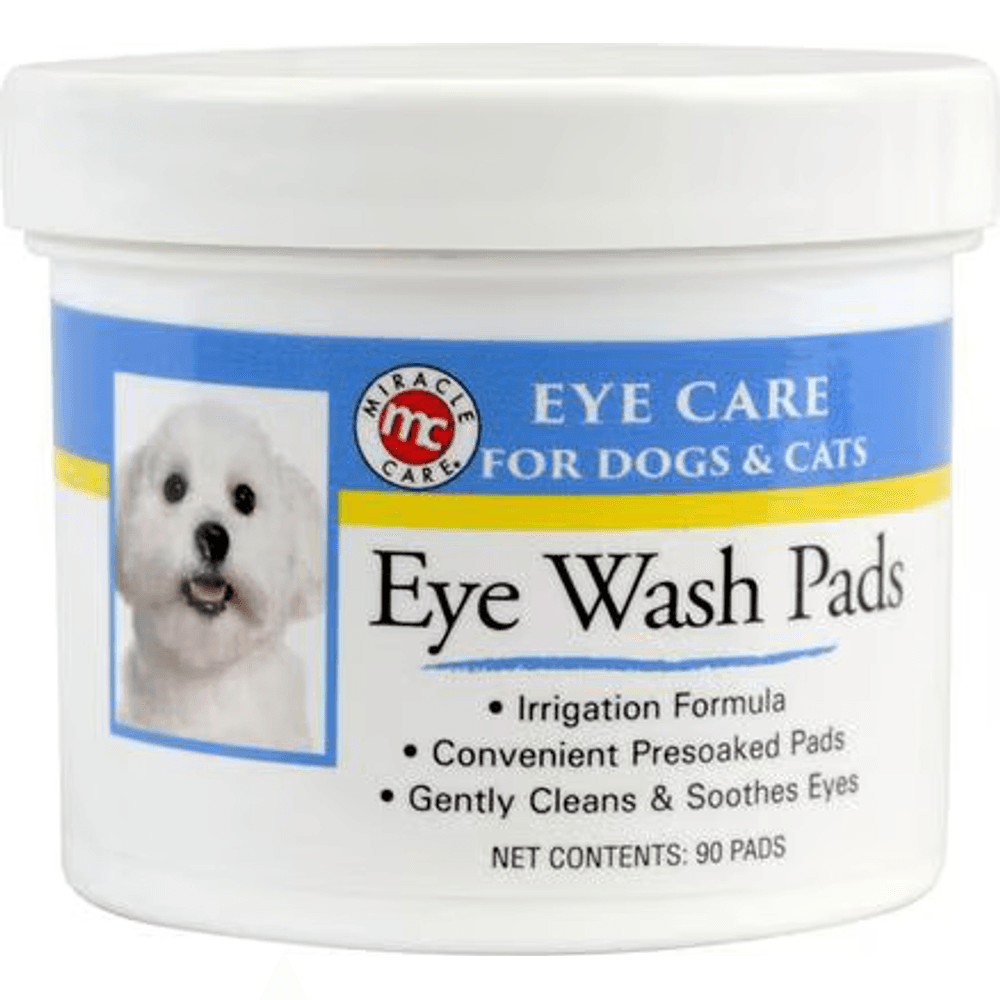
Presoaked sterile pads that gently wipe away everyday debris, discharge, and tear stains from around a dog's or cat's eyes as part of routine grooming. An easy way to keep the eye area clean and comfortable between baths.
Webvet may earn a commission when you click through to Chewy, at no extra cost to you.
Deep ulcers, descemetocele, and rupture (the danger stages)

The cornea is layered, and how deep an ulcer goes decides how dangerous it is. This is the framework behind the common what are the 4 stages of a corneal ulcer question.
The 4 depth stages of a corneal ulcer:
- Superficial erosion (corneal abrasion): only the outer epithelium is lost. These usually heal in about 3 to 7 days when nothing is blocking them (Merck Veterinary Manual).
- Stromal ulcer: the defect reaches into the thick middle layer (the stroma). Deeper stromal loss is more serious and can progress.
- Descemetocele: the ulcer has eroded down to Descemet's membrane, the last thin layer before the eye's fluid. This is a pre-rupture emergency.
- Perforation (rupture): the cornea gives way, eye fluid leaks, and internal structures can prolapse. This threatens vision and the eye itself.
A deep corneal ulcer dog treatment plan is aggressive and time-sensitive because the next step down is a descemetocele or a ruptured corneal ulcer dog emergency. A deep ulcer can progress to perforation and blind a dog, so it needs prompt attention from a vet or ophthalmologist (VCA Animal Hospitals). The dog eye ulcer rupture symptoms to watch for are the same danger signs listed at the top: sudden severe pain, a bulging or leaking spot, a collapsing eye, or acute vision loss. Any of them means go now.
 $65 · no membership
Have a health question about your dog?
A licensed vet can assess your dog over video and prescribe online when it's appropriate.
 Talk to a vet
- Licensed vets
- All 50 states
- same-day Rx
Webvet may earn a commission if you book.
How long should a dog eye ulcer take to heal?
For a straightforward surface ulcer, expect visible improvement fast. Most simple superficial corneal ulcers re-epithelialize within about 3 to 7 days, and up to roughly one to two weeks; an ulcer that has not shown healing in that window has an underlying cause or is indolent or complicated and needs re-evaluation (Merck Veterinary Manual).
That single fact answers most dog eye ulcer how long to heal and corneal ulcer dog healing time worries: the calendar itself is a diagnostic tool. If your dog is past that window and the eye is not clearly better, the takeaway is not "give it more time," it is "get it re-examined." Deep, infected, melting, or indolent ulcers all take longer and, critically, will not resolve on drops alone.
Timelines shift by ulcer type:
- Simple superficial: about 3 to 7 days, up to 1 to 2 weeks.
- Indolent (SCCED): often weeks, and only after a debridement procedure.
- Deep or infected: variable and closely monitored, sometimes with surgery.
- Melting: an emergency measured in hours, not a healing "timeline."
For a full day-by-day picture, see our sibling guide on dog eye ulcer healing stages.

Presoaked wipes that gently clean the fur and skin around a dog's or cat's eyes, lifting away tear stains, discharge, and daily debris as part of routine grooming. A quick, no-rinse way to keep the eye area clean and tidy between baths.
Webvet may earn a commission when you click through to Chewy, at no extra cost to you.
How vets treat an ulcer that won't heal (debridement and surgery)

When you ask how do you treat a deep corneal ulcer in a dog or a stubborn one, the answer depends on why it stalled. A vet first re-stains the eye, checks for the underlying causes above (dry eye, entropion, abnormal lashes, foreign body, infection), and treats the root problem. From there, the procedure matches the ulcer type.
For indolent (SCCED) ulcers, the loose epithelium is debrided and a procedure roughens the surface so new cells can anchor. Reported success rates give a realistic picture (Davies Veterinary Specialists):
| Procedure | What it does | Reported success |
|---|---|---|
| Grid or punctate keratotomy | Fine surface scoring to anchor new epithelium | About 60 to 70% |
| Diamond-burr debridement | Motorized burr removes loose epithelium and smooths surface | About 70 to 80% |
| Superficial keratectomy (under general anesthesia) | Surgical removal of the affected surface layer | 95%+ |
A dog eye ulcer debridement is often done at the general practice with topical anesthetic, while a superficial keratectomy is a surgical, general-anesthesia procedure usually done by a specialist (Davies Veterinary Specialists). If a first debridement does not work, vets step up to the higher-success options.
For deep, infected, or melting ulcers, treatment is more intensive. Vets may use frequent broad-spectrum antibiotic drops such as a topical fluoroquinolone (for example ofloxacin) or tobramycin (ACVO course handout), atropine eye drops to ease the painful spasm inside the eye, and anti-collagenase therapy such as autologous serum (blood serum for dog eye ulcer), made from the dog's own blood to slow the enzymes that melt the cornea. When the cornea is dangerously thin or perforated, dog eye ulcer surgery to place a graft or conjunctival flap can save the eye. Any dog eye ulcer debridement or dog eye ulcer surgery decision belongs to your vet or a veterinary ophthalmologist, not a home protocol. For the full treatment picture, see dog eye ulcer treatment and, for the surgical route, dog eye ulcer surgery cost.
Why you must never use leftover or human/steroid eye drops

This is the single most important safety point for any dog eye ulcer treatment at home.
The trouble is that you cannot tell from the bottle. Many combination eye drops prescribed for allergies, redness, or a past eye issue contain a steroid, and leftover or human eye drops may too. Putting the wrong drop in an ulcerated eye is one of the fastest ways to turn a treatable ulcer into a lost eye.
So, some hard rules:
- No leftover drops. Do not reuse a medication from a previous eye problem, this dog or another pet.
- No human eye drops. Redness relievers, allergy drops, and "get the red out" products are not for canine ulcers.
- No steroid drops of any kind on an active ulcer.
- No DIY debridement, no home "scraping," and no wait-and-see.
- Saline is for gentle flushing of debris only, not a cure. It does not treat an ulcer.
There is no legitimate natural remedies for dog eye ulcer or home treatment for dog eye ulcer that closes an ulcer. Honey, herbal washes, coconut oil, and similar products are not a treatment for corneal ulceration and can delay the care that actually works. The only safe home care is strict adherence to your vet's prescribed drops on schedule, keeping the Elizabethan collar (cone) on at all times so your dog cannot rub or scratch the eye, and attending every recheck so the vet can confirm the ulcer is closing.
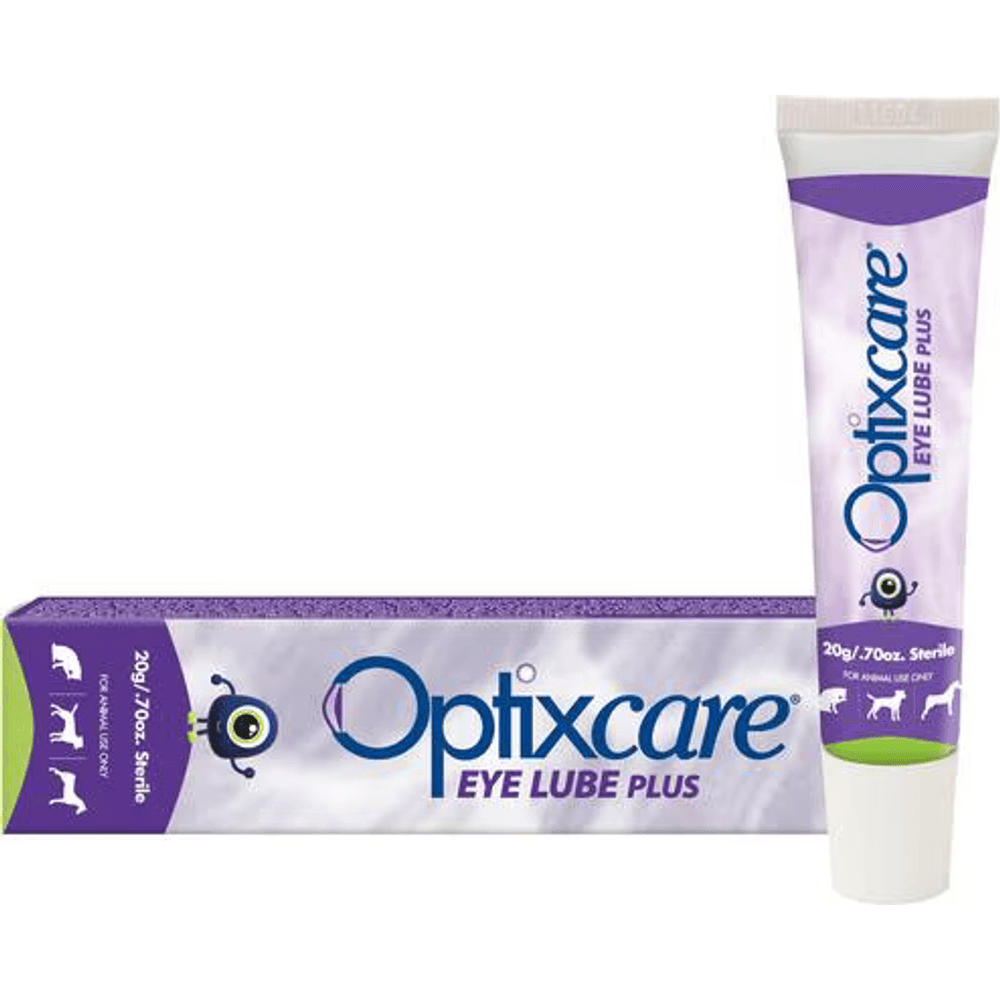
A sterile lubricating gel that soothes and moisturizes dry, irritated eyes and helps support the tear film in dogs and cats prone to dryness. A gentle, vet-shelf staple for everyday eye comfort.
Webvet may earn a commission when you click through to Chewy, at no extra cost to you.
Signs your dog's eye ulcer IS finally healing

Owners want reassurance, and there are real, encouraging signs, though the fluorescein stain at a recheck is the only way to confirm an ulcer has truly closed. Here is how to tell if dog eye ulcer is healing:
- Less squinting and less pain: the eye opens more normally and your dog stops guarding it.
- Less redness: the whites and the tissue around the eye look calmer.
- Less tearing and cleaner discharge: watery, thick, or colored discharge tapers off.
- A clearer cornea: the surface looks less cloudy or hazy over time.
- Less light sensitivity: your dog stops turning away from bright light.
- Normal behavior returning: eating, playing, and comfort improve.
Improvement should be a steady trend, not a single good hour. If any sign reverses, the eye clouds over again, or pain spikes, treat it as a possible worsening and call your vet. The signs a dog eye ulcer is healing pictures owners search for are helpful context, but they never replace a stain test. For a visual, stage-by-stage walkthrough, see our siblings on dog eye ulcer healing stages and the dog eye ulcer pictures gallery.
Cost of treating a non-healing eye ulcer
Cost varies widely by region, ulcer type, and whether a specialist is involved, so treat any figure as a rough guide and get a written estimate from your own clinic. The pattern is predictable: the deeper or more complicated the ulcer, the higher the cost, because it means more visits, advanced procedures, and sometimes surgery.
In general terms:
- A simple superficial ulcer managed with drops and a recheck or two is the least expensive tier.
- An indolent (SCCED) ulcer adds the cost of a debridement procedure (grid keratotomy or diamond-burr), and sometimes a repeat if the first does not take.
- A deep, infected, or melting ulcer is the most expensive, because it can require intensive medications, autologous serum, specialist referral, and corneal surgery under general anesthesia.
Because the numbers depend so heavily on where you are and who does the procedure, our dedicated sibling breaks the ranges down in detail: see dog eye ulcer surgery cost. The most cost-effective move is almost always the earliest one, because catching a stalled ulcer before it deepens keeps you out of the surgical tier.
Where this fits in our dog eye ulcer guides
This article is the deep dive on the won't-heal, non-healing, and indolent (SCCED) angle. For the rest of the picture, lean on our sibling guides so you get the full detail on each subtopic without repetition:
- The big-picture overview: corneal ulcer in dogs.
- Spotting an ulcer early: dog corneal ulcer symptoms.
- Full treatment options: dog eye ulcer treatment.
- Day-by-day recovery: dog eye ulcer healing stages.
- What it looks like: dog eye ulcer pictures.
- Budgeting for surgery: dog eye ulcer surgery cost.
Frequently asked questions
What is the 1-2-3 rule for corneal ulcers?
The 1-2-3 rule is an informal memory aid some vets use for how quickly to refer or worry about a corneal ulcer based on its features; it flags that a stromal or deepening ulcer should not be given open-ended time. There is no universal, standardized version, so the reliable rule is simpler: any ulcer that is deepening, painful, cloudy, or not healing on schedule needs a vet, and a deep ulcer needs one urgently before it can perforate (VCA Animal Hospitals).
What is the 3-2-1 rule for corneal ulcers?
Like the 1-2-3 rule, the 3-2-1 rule is informal clinical shorthand, not a fixed protocol, and clinicians use these phrases differently, so do not rely on a memorized number sequence to manage your dog's eye at home. The dependable, evidence-based rule is that a simple ulcer should improve within about 3 to 7 days, and anything that stalls past that window, or looks or feels worse, needs re-examination (Merck Veterinary Manual).
What happens if a corneal ulcer doesn't heal?
A corneal ulcer that does not heal can deepen from the surface into the stroma, progress to a descemetocele, and ultimately perforate the eye, threatening vision and the globe itself (VCA Animal Hospitals). More often a non-healing ulcer is stuck because of a treatable underlying cause (dry eye, an eyelid or lash problem, a foreign body, or infection) or because it is an indolent SCCED that needs a debridement procedure to close (ACVO course handout). Either way, non-healing means go back to the vet, not wait.
How do you treat a deep corneal ulcer in a dog?
A deep corneal ulcer is a time-sensitive problem treated by a vet, often with referral to an ophthalmologist. Care can include frequent broad-spectrum antibiotic drops, atropine for pain relief, and anti-collagenase therapy such as autologous serum to slow melting; when the cornea is dangerously thin or has perforated, surgery to place a graft or conjunctival flap can save the eye (VCA Animal Hospitals). A deep ulcer is never a home-care situation.
What are signs of a worsening corneal ulcer?
Warning signs include increasing pain and squinting, more redness, thick or colored discharge, the cornea turning cloudier or gel-like (melting), a visible dark spot or bulge in the surface, and any loss of vision. Any of these means a same-day emergency exam, because a worsening ulcer can perforate and blind a dog (VCA Animal Hospitals). Never use leftover, human, or steroid drops on a worsening eye, as steroids can accelerate the damage (ACVO course handout).
What are the 4 stages of a corneal ulcer?
The four stages describe increasing depth: (1) a superficial erosion of the outer epithelium, (2) a stromal ulcer reaching the thick middle layer, (3) a descemetocele, where only the last thin membrane remains, and (4) perforation, where the cornea ruptures. Superficial erosions usually heal in about 3 to 7 days, while a descemetocele or perforation is a sight-threatening emergency (Merck Veterinary Manual).
How long should a corneal ulcer take to heal in a dog?
Most simple, superficial corneal ulcers re-cover within about 3 to 7 days, and up to roughly one to two weeks with treatment. An ulcer that has not shown healing in that window has an underlying cause or is indolent or complicated and needs re-evaluation rather than more time (Merck Veterinary Manual). Deep, infected, melting, and indolent ulcers all take longer and will not close on drops alone.
Why won't my dog's eye ulcer heal with antibiotics?
Antibiotic drops prevent or treat infection but cannot fix the reason many ulcers stall. If the eye has an untreated underlying cause (dry eye, an inward-rolling eyelid, an abnormal lash, or a foreign body), the antibiotic cannot overcome it; and if the ulcer is an indolent SCCED, the surface cells physically cannot anchor, so no drop makes them stick, only a debridement procedure does (ACVO course handout).
Can I treat my dog's eye ulcer at home with natural remedies?
No. There is no natural remedy, honey, herbal wash, or human eye drop that closes a corneal ulcer, and using one delays the care that works while risking a deeper, sight-threatening ulcer. Steroid-containing drops in particular can worsen an active ulcer, and veterinary ophthalmology guidance is explicit that you should never use topical steroids on corneal ulcers (ACVO course handout). Safe home care is limited to giving your vet's prescribed drops exactly on schedule, keeping the Elizabethan collar on so your dog cannot rub the eye, and going to every recheck.
This article is for general information and is not a substitute for veterinary care. If your dog's eye is painful, red, squinting, cloudy, or not healing, contact your veterinarian or an emergency clinic the same day.
$65 · no membershipHave a health question about your dog?
A licensed vet can assess your dog over video and prescribe online when it's appropriate.
Talk to a vet- Licensed vets
- All 50 states
- same-day Rx
Webvet may earn a commission if you book.

Editor
The Webvet Editorial Team is the in-house group of pet-care editors and writers behind Webvet, operated by Smart Pet Collective. The team researches, writes, and maintains Webvet's pet health, behavior, and medication content. Every article follows a defined editorial process: research from reputable veterinary and scientific sources, careful drafting, mandatory review of medical content by a credentialed veterinarian, and dated publication. Health and medication articles are medically reviewed by a licensed veterinary professional before they go live and are kept current over time.
Veterinarian · BVMS MRCVS
Dr. Pippa Elliott, BVMS, MRCVS, is a veterinarian with nearly 30 years of experience in companion animal practice. Dr. Elliott earned her Bachelor of Veterinary Medicine and Surgery from the University of Glasgow. She was also designated a Member of the Royal College of Veterinary Surgeons. Married with 2 grown-up kids, Dr. Elliott has a naughty Puggle named Poggle, 3 cats and a bearded dragon.


