Dog Eye Ulcer Treatment: What Vets Do and When It's an Emergency
A squinting, red, or cloudy eye is a same-day emergency. Here is what real dog eye ulcer treatment looks like, from antibiotic drops and atropine to surgery, plus the danger signs that mean go now and why you must never treat an eye ulcer at home.

BVMS MRCVS
Medically reviewed by Dr. Pippa Elliott, BVMS MRCVS · Last reviewed

This article contains affiliate links. Webvet may earn a commission when you buy through them, at no extra cost to you.
If your dog is squinting, pawing at a red or watery eye, or the surface looks cloudy, do not wait and do not reach for old eye drops. A painful eye is a same-day veterinary emergency. Effective dog eye ulcer treatment is always vet-led, because a corneal ulcer can worsen rapidly and become a serious, vision-threatening problem, and a deep ulcer can rupture or perforate the eye (American College of Veterinary Ophthalmologists). If an ulcer eats all the way through and Descemet's membrane ruptures, the fluid inside the eyeball leaks out, the eye collapses, and irreparable damage occurs (VCA Animal Hospitals). Hours can be the difference between a quick office visit and losing the eye.
- 1Treatment depends on depth: simple ulcers get antibiotic drops and pain relief, deep ones may need surgery.
- 2Give every drop on schedule and never stop early or switch to human or steroid drops.
- 3Keep the e-collar on 24/7 so your dog cannot rub the eye.
- 4Return for the recheck; a melting ulcer can worsen within hours.
- 5Call your vet if the eye looks worse, more painful, or cloudier.
This guide explains exactly what a veterinarian does to diagnose and treat a corneal ulcer, which medications and surgeries are used, how long healing takes, what it costs, and why every "home remedy" for a dog eye ulcer is the wrong move. It is a spoke in our corneal ulcer in dogs hub, so we link out to deeper guides rather than repeat them.
Dog eye ulcer treatment: what a vet actually does

A corneal ulcer is an erosion or crater in the cornea, the clear dome at the front of the eye. The single most important thing to understand about treatment is that it starts with an accurate diagnosis you cannot make at home. The best treatment for a dog eye ulcer depends entirely on how deep the ulcer is, whether it is infected, and why it happened, and those answers come from an exam, not a guess.
Here is how to treat a dog eye ulcer, step by step, as a veterinary team does it.
- Exam and pain assessment. The vet checks for foreign material, eyelid problems, and abnormal lashes that keep re-injuring the eye.
- Fluorescein stain. A drop of orange dye is placed on the eye. It sticks to any ulcerated area and glows green, which confirms the ulcer and maps its size and edges (VCA Animal Hospitals).
- Depth grading. The vet judges whether the ulcer is superficial (surface layer only) or deep (reaching into the stroma or down to Descemet's membrane). Depth decides everything that follows.
- Culture or cytology when melting or infection is suspected, so the right antibiotic is chosen.
- A treatment plan built around antibiotics, pain control, protection, and rechecks.
For a simple superficial ulcer, treatment is usually straightforward: topical antibiotic drops or ointment, atropine to ease pain, and an E-collar, with most of these ulcers healing within about a week (Merck Veterinary Manual). Deep, melting, or non-healing ulcers need more aggressive medical therapy and sometimes surgery. The sections below walk through each path.
For how to recognize an ulcer in the first place, see our guide to dog corneal ulcer symptoms.

A lightweight, padded fabric cone that gently blocks a pet from pawing, scratching, or rubbing a healing eye, wound, or hot spot, and it is far softer and less stressful than a hard plastic cone.
Webvet may earn a commission when you click through to Chewy, at no extra cost to you.
Is a dog eye ulcer an emergency? When to go now

Yes. Treat any painful eye as an emergency until a vet says otherwise. Corneal ulcers can worsen rapidly and become serious, vision-threatening problems, and deep ulcers can rupture or perforate the eye (ACVO). The difference between a quick office visit and a surgical globe-saving procedure can be a matter of hours.
Go to a vet or emergency clinic the same day if you see any of these:
- Squinting or a held-shut eye (blepharospasm), the most common sign of eye pain
- Redness of the white of the eye
- Cloudiness, a blue-gray haze, or a dull, no-longer-shiny surface
- Discharge or heavy tearing, clear, yellow, or green
- Pawing at or rubbing the eye on furniture or the floor
- A visible divot, dent, or bulge on the eye surface
- Bleeding in or around the eye, or a red film creeping across the cornea (early blood vessels or, worse, a bleed)
Rupture and "burst" ulcer warning signs
A "burst" or ruptured ulcer is the emergency behind the emergency. When an ulcer eats down to Descemet's membrane, that last thin layer can protrude (a descemetocele) or give way. If Descemet's membrane ruptures, fluid inside the eyeball leaks out, the eye collapses, and irreparable damage occurs (VCA Animal Hospitals). Signs that demand an immediate emergency visit include a sudden change in the eye's shape, a fluid leak, a jelly-like or dark spot bulging from the cornea, or a dramatic increase in pain.
 $65 · no membership
Have a health question about your dog?
A licensed vet can assess your dog over video and prescribe online when it's appropriate.
 Talk to a vet
- Licensed vets
- All 50 states
- same-day Rx
Webvet may earn a commission if you book.
What causes an ulcer on a dog's eye
Trauma is the most common cause of corneal ulcers in dogs, including nail scratches, foreign objects, and chemicals or irritants that reach the eye (Merck Veterinary Manual). Beyond a direct scratch, ulcers also develop from:
- Dry eye (keratoconjunctivitis sicca), where too little tear film leaves the cornea exposed
- Eyelid and lash abnormalities (entropion, distichiasis, ectopic cilia) that scrape the cornea with every blink
- Foreign bodies trapped under the eyelid or third eyelid
- Infection (bacterial, and sometimes viral or fungal)
- Reduced blink or nerve problems that stop the eye from protecting itself
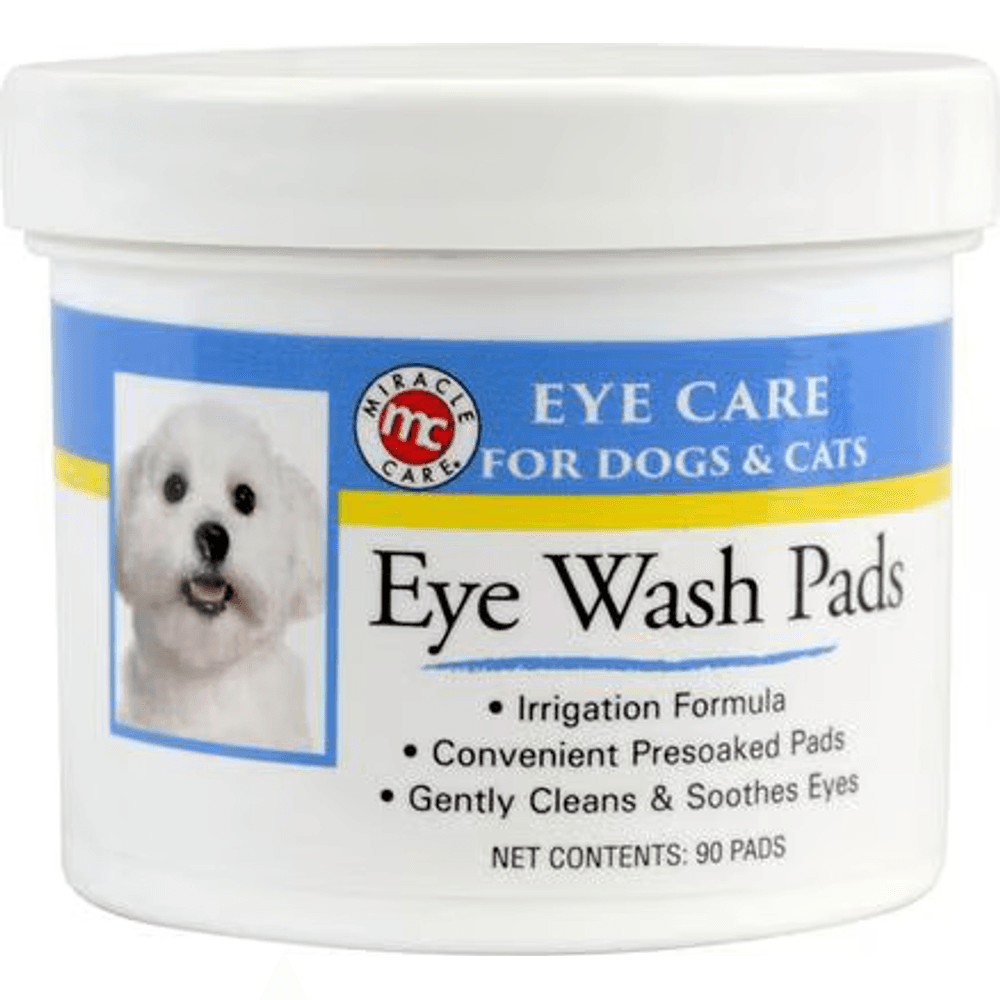
Presoaked sterile pads that gently wipe away everyday debris, discharge, and tear stains from around a dog's or cat's eyes as part of routine grooming. An easy way to keep the eye area clean and comfortable between baths.
Webvet may earn a commission when you click through to Chewy, at no extra cost to you.
Why flat-faced breeds are high risk
Brachycephalic (short-nosed) breeds like Boxers, Shih Tzus, Pugs, Bulldogs, and Pekingese are especially prone to corneal ulcers. Their large, prominent eyes, shallow sockets, and incomplete blink leave more cornea exposed and easier to injure. A Boxer eye ulcer or a Shih Tzu eye ulcer can also be slower to heal, which is why these dogs deserve a same-day visit rather than a wait-and-see approach. If you own a flat-faced breed, learn the early signs and keep your vet's number handy.
For what an ulcer looks like at different stages, our dog eye ulcer pictures guide shows real examples, and the full symptom breakdown lives in dog corneal ulcer symptoms.
Ulcer vs. discharge vs. conjunctivitis: a quick differential
Not every goopy or red eye is an ulcer, but you cannot reliably tell them apart at home. A quick orientation:
- Corneal ulcer: usually painful (squinting), often cloudy, and confirmed only by fluorescein stain.
- Plain eye discharge: may be from allergies, mild irritation, or tear-duct issues, and is not always painful, but a painful, cloudy eye is never "just discharge."
- Conjunctivitis: redness and discharge of the eyelid linings, which can occur with or without an ulcer.
The safe rule: any painful, cloudy, or persistently red eye gets a same-day exam so the vet can rule an ulcer in or out with a stain.
Medications for a dog eye ulcer (drops, ointments, atropine, serum)

Medical therapy is the backbone of dog eye ulcer treatment. Every medication below is prescription-only and vet-directed. There is no safe over-the-counter or "best eye drops for a dog eye ulcer" you can buy yourself, and using the wrong drop can blind your dog. We deliberately give no doses here, because dosing is set by your vet for your dog's specific ulcer.
Antibiotics for a dog eye ulcer
Topical antibiotics prevent or treat bacterial infection while the cornea heals (VCA Animal Hospitals). Common vet-prescribed choices include ofloxacin, ciprofloxacin, and tobramycin drops, or ointments such as triple-antibiotic (neomycin-polymyxin-bacitracin) formulations for simpler cases. Melting or heavily infected ulcers are treated more intensively and sometimes with fortified antibiotics compounded by the clinic. The choice, strength, and frequency are all set by the vet based on the ulcer and any culture results.
Atropine for pain
Atropine eye drops are used to dilate the pupil and relax the painful muscle spasm inside the eye that a corneal ulcer triggers, which reduces pain (Merck Veterinary Manual). Atropine is for pain relief, not to heal the ulcer, and it is used only when a vet prescribes it.
Serum or plasma drops for melting ulcers
For melting (rapidly deepening) ulcers, vets often prescribe autologous serum drops, made from the dog's own blood. Serum contains anti-collagenase factors that help block the enzymes dissolving the cornea. These are prepared and directed by the clinic, kept refrigerated, and used alongside antibiotics.
Pain medication and protection
Oral pain relief may be added, and an E-collar is standard to stop self-trauma while the eye heals. Skipping the cone is one of the most common reasons a treatable ulcer gets worse at home.
The one class of drops that can blind your dog
Never use a steroid-containing eye medication on an ulcer. Corticosteroids (cortisone, dexamethasone, prednisolone, and combination products like neomycin-polymyxin-dexamethasone) must not be used in the eye too soon, because they slow or stop the healing process and can cause serious complications (VCA Animal Hospitals). Many leftover "eye drops" from a previous ear or eye problem, and most human anti-redness or allergy eye drops, contain steroids. Applying one to an ulcer can let the wound deepen instead of heal, so a treatable surface ulcer can turn into a deep, sight-threatening one. If a steroid ever is used and the eye becomes painful again, discontinue it immediately and have your vet re-examine the eye (VCA Animal Hospitals). This is the single biggest reason not to use leftover, expired, or human eye drops on your dog.

Presoaked wipes that gently clean the fur and skin around a dog's or cat's eyes, lifting away tear stains, discharge, and daily debris as part of routine grooming. A quick, no-rinse way to keep the eye area clean and tidy between baths.
Webvet may earn a commission when you click through to Chewy, at no extra cost to you.
Medication comparison table
| Medication | What it does | Used for | Prescription only? |
|---|---|---|---|
| Antibiotic drops/ointment (ofloxacin, tobramycin, triple antibiotic) | Prevents or treats bacterial infection | Nearly all ulcers | Yes |
| Atropine drops | Relaxes eye muscle spasm to relieve pain | Painful ulcers | Yes |
| Autologous serum/plasma drops | Blocks collagenase enzymes dissolving the cornea | Melting ulcers | Yes, clinic-prepared |
| Oral pain medication | Systemic pain relief | Moderate to severe pain | Yes |
| Steroid drops (any) | Anti-inflammatory | Contraindicated on ulcers, slow or stop healing and can cause serious complications | Never on an ulcer without a vet |
When surgery is needed (melting, indolent, and deep ulcers)
Most simple ulcers never need surgery. Surgery becomes necessary when an ulcer is deep, melting, refuses to heal, or has already threatened the structure of the eye.
Indolent (SCCED) ulcers
An indolent ulcer, also called a spontaneous chronic corneal epithelial defect (SCCED) or refractive/non-healing ulcer, is a superficial ulcer whose new skin cells will not stick down to the cornea. It looks shallow but lingers for weeks. Treatment involves removing the loose, non-adherent epithelium and often a minor procedure called a keratotomy (grid or diamond-burr), where the ulcer bed is lightly scored to give healing cells something to grip (VCA Animal Hospitals). A soft contact-lens-style bandage may be placed to protect the eye afterward.
Deep and melting ulcers
Deep stromal ulcers, descemetoceles, and melting ulcers are surgical emergencies. When an ulcer is very deep or the cornea is at risk of perforating, the eye needs structural reinforcement. Many deep ulcers require a graft of conjunctival tissue to strengthen the cornea (Merck Veterinary Manual). Surgery may involve a corneal graft or a third-eyelid flap to support and protect the healing surface (VCA Animal Hospitals). These procedures are often performed by or with a veterinary ophthalmologist.
Procedure comparison
| Ulcer type | Typical procedure | Goal |
|---|---|---|
| Indolent / SCCED (non-healing surface ulcer) | Epithelial debridement +/- grid or diamond-burr keratotomy, bandage lens | Get new cells to adhere |
| Deep stromal ulcer | Conjunctival graft | Add tissue and blood supply to strengthen the cornea |
| Descemetocele / near-perforation | Conjunctival or corneal graft, third-eyelid flap | Save the globe from rupture |
| Perforated (ruptured) eye | Emergency graft or referral | Preserve the eye and vision where possible |
For a deeper look at the operations and recovery, see our guide to dog eye ulcer surgery.

How long a dog eye ulcer takes to heal (and healing stages)
Healing time depends on depth and type. Corneal abrasions and superficial ulcers generally heal within three to five days (VCA Animal Hospitals), and simple ulcers usually resolve within about a week with proper treatment (Merck Veterinary Manual). Deep, infected, indolent, or post-surgical ulcers take longer, sometimes several weeks, and require repeat rechecks with fluorescein staining to confirm the eye is truly healed.
Signs that a dog eye ulcer is healing generally include less squinting, less discharge, and a clearer, more comfortable eye. But the only reliable proof of healing is a negative fluorescein stain at a recheck. Never assume it is healed and stop the drops early.
We cover the full timeline, week by week, and what each phase looks like in dog eye ulcer healing stages. Rather than repeat that here, the key point for treatment is simple: finish every medication and attend every recheck, even if the eye looks better.
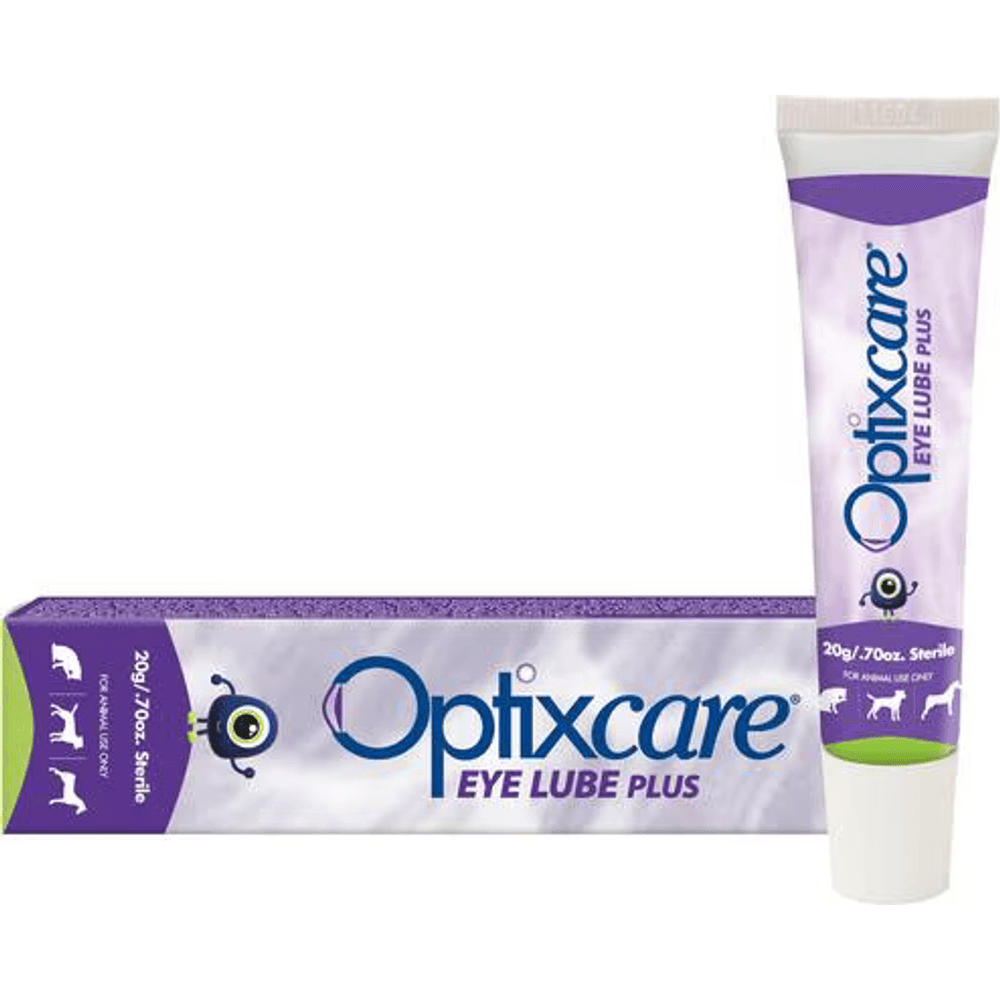
A sterile lubricating gel that soothes and moisturizes dry, irritated eyes and helps support the tear film in dogs and cats prone to dryness. A gentle, vet-shelf staple for everyday eye comfort.
Webvet may earn a commission when you click through to Chewy, at no extra cost to you.
When a dog eye ulcer won't heal
A superficial ulcer that has not healed in a week or two is a red flag, not a reason to keep waiting. The usual culprits are an indolent (SCCED) ulcer, an untreated eyelid or lash problem still scraping the cornea, a resistant infection, a missed foreign body, or under-treatment at home (missed doses, no E-collar). A non-healing ulcer needs re-examination and often the debridement or keratotomy described above, not more of the same drops.
If your dog's eye ulcer is not getting better, do not extend the same plan on your own. Go back to the vet for re-staining and a fresh look. Our dedicated guide, dog corneal ulcer not healing, walks through each cause and what your vet will do next.

What dog eye ulcer treatment costs
Cost varies widely by region, ulcer severity, and whether a specialist or surgery is involved. A simple superficial ulcer treated with drops and a couple of rechecks sits at the low end. Deep or melting ulcers, referral to a veterinary ophthalmologist, and surgery (grafts, keratotomy) sit much higher. Emergency after-hours visits add to the total.
Because prices differ so much by clinic and case, we keep the numbers in a dedicated guide rather than quote a figure that may not fit your situation. See dog eye ulcer surgery cost for detailed ranges. The one thing every case shares: treating early is almost always cheaper than treating a ruptured eye later, so cost is a reason to go sooner, not to delay.
Why you must never treat a dog eye ulcer at home

Search results are full of "natural remedies," "home remedies," and "homeopathic treatment" for dog eye ulcers, including potato juice, honey, herbal rinses, and human eye drops. None of these treat an ulcer, and several can cause permanent harm. A corneal ulcer is a physical wound that can deepen and rupture fast; it needs a diagnosis (fluorescein stain), the right prescription antibiotic, pain control, and rechecks, none of which exist in a kitchen cabinet.
Here is the only correct at-home role, which is protection, not treatment:
- Do put an E-collar (cone) on to stop rubbing and pawing.
- Do keep your dog calm and away from bright light and dust.
- Do get to a vet or emergency clinic the same day.
- Do not put water, saline, human drops, leftover pet drops, or any home remedy in the eye.
- Do not use any steroid-containing drop, which can slow or stop healing and let the ulcer deepen.
- Do not wait to "see if it clears up." Ulcers can worsen within a day.

Frequently asked questions
Treating a melting or rapidly worsening ulcer
Some corneal ulcers turn into a keratomalacia, or melting, ulcer, where bacterial and the eye's own enzymes break down the collagen in the cornea. These can worsen within hours, so they are treated aggressively. Alongside antibiotic drops, your vet may prescribe anti-collagenase treatment, most commonly autologous serum drops made from a small sample of your dog's own blood, applied as often as every one to four hours. A melting ulcer is a common reason a vet refers a dog to a veterinary ophthalmologist for possible surgery.
Expect close follow-up. Your vet will usually recheck the eye and repeat a fluorescein stain within a couple of days of starting treatment, then again as it heals, tapering the drops only when the stain shows the surface has sealed. The e-collar stays on until your vet confirms the ulcer is fully healed, because one hard rub can undo days of progress. If the eye looks more painful, cloudier, or develops a dark spot on the surface, call your vet the same day rather than waiting for the scheduled recheck.
Frequently Asked Questions
Can dog eye ulcers heal on their own?
Some very shallow scratches re-epithelialize quickly, but you cannot tell at home whether an ulcer is simple or already deepening. Simple superficial ulcers usually heal within about a week, but only with proper treatment and protection (Merck Veterinary Manual). Left alone, an ulcer can become infected, melt, or perforate. Because ulcers can worsen rapidly into a vision-threatening problem (ACVO), never gamble on self-healing. Have a vet stain the eye and guide treatment.
What is the most common cause of corneal ulcers in dogs?
Trauma is the most common cause, including nail scratches, foreign objects, and chemicals or irritants that reach the eye (Merck Veterinary Manual). Other frequent causes are dry eye, eyelid and eyelash abnormalities that scrape the cornea, trapped foreign bodies, and infection. Flat-faced breeds are at higher risk because their prominent, exposed eyes are easier to injure.
How much does it cost to treat a dog's corneal ulcer?
It depends heavily on severity and location. A simple superficial ulcer treated with drops and a recheck or two is at the low end, while deep or melting ulcers, specialist referral, and surgery cost substantially more, and emergency visits add to the bill. See our dog eye ulcer surgery cost guide for detailed ranges. Treating early usually costs far less than treating a ruptured eye, so cost should push you toward a prompt visit, not away from one.
What is the fastest way to heal an eye ulcer?
The fastest, safest route is a same-day veterinary exam, a fluorescein stain to confirm and grade the ulcer, and prescribed treatment started immediately, typically antibiotic drops, atropine for pain, and an E-collar for a simple ulcer (Merck Veterinary Manual). Give every dose on schedule, keep the cone on, and attend every recheck. There is no faster shortcut, and home remedies or leftover drops slow healing or make it worse.
What happens if an ulcer in a dog's eye goes untreated?
An untreated ulcer can get infected, deepen into the stroma, and progress to a descemetocele or a full-thickness rupture. If Descemet's membrane ruptures, the eye's internal fluid leaks out, the eye collapses, and irreparable damage occurs (VCA Animal Hospitals). Ulcers can worsen rapidly and become vision-threatening (ACVO). The realistic worst cases are loss of vision or loss of the eye, which is why a painful eye is always a same-day emergency.
What is the 1 2 3 rule for corneal ulcers?
There is no single standardized 1-2-3 rule in veterinary ophthalmology. Some clinics use informal rules of thumb, for example that a superficial ulcer should improve within a few days and be reassessed if not healed in a week or two, or shorthand for grading depth, vessels, and reflex. Do not rely on any memorized rule to decide whether to seek care. The reliable rule is simpler: a painful, red, cloudy, or squinting eye needs a same-day vet visit, and only a negative fluorescein stain confirms an ulcer has healed (VCA Animal Hospitals).
Can a dog live with a corneal ulcer?
With prompt treatment, most dogs recover fully and keep their vision, and simple ulcers heal within days to about a week (VCA Animal Hospitals). A corneal ulcer is not something a dog should live with untreated, though, because it is painful and can deepen and rupture (ACVO). Even after an eye is removed in a severe case, dogs adapt well and live comfortably, but the goal is always to treat early and save both comfort and sight.
Can I use human eye drops or leftover drops on my dog's eye ulcer?
No. Many human and leftover pet eye drops contain steroids, and corticosteroids used on an ulcer slow or stop the healing process and can cause serious complications (VCA Animal Hospitals). Instead of healing, the wound can keep deepening, so a treatable surface ulcer becomes a deep, sight-threatening one. Even non-steroid products can sting, mask symptoms, or delay proper care. Put nothing in the eye except what your veterinarian prescribes for this specific ulcer.
Are flat-faced breeds like Boxers and Shih Tzus more prone to eye ulcers?
Yes. Brachycephalic breeds such as Boxers, Shih Tzus, Pugs, and Bulldogs have prominent, exposed eyes and an incomplete blink, which makes trauma and dry-eye ulcers more likely, and some (Boxers in particular) are prone to indolent, slow-to-heal ulcers. Owners of these breeds should treat any squinting or cloudy eye as urgent and get a same-day exam rather than waiting.
$65 · no membershipHave a health question about your dog?
A licensed vet can assess your dog over video and prescribe online when it's appropriate.
Talk to a vet- Licensed vets
- All 50 states
- same-day Rx
Webvet may earn a commission if you book.

Editor
The Webvet Editorial Team is the in-house group of pet-care editors and writers behind Webvet, operated by Smart Pet Collective. The team researches, writes, and maintains Webvet's pet health, behavior, and medication content. Every article follows a defined editorial process: research from reputable veterinary and scientific sources, careful drafting, mandatory review of medical content by a credentialed veterinarian, and dated publication. Health and medication articles are medically reviewed by a licensed veterinary professional before they go live and are kept current over time.
Veterinarian · BVMS MRCVS
Dr. Pippa Elliott, BVMS, MRCVS, is a veterinarian with nearly 30 years of experience in companion animal practice. Dr. Elliott earned her Bachelor of Veterinary Medicine and Surgery from the University of Glasgow. She was also designated a Member of the Royal College of Veterinary Surgeons. Married with 2 grown-up kids, Dr. Elliott has a naughty Puggle named Poggle, 3 cats and a bearded dragon.


